12 minMarch 10, 2020

Our tools monitor millions of native, push, pop, and TikTok advertising campaigns.
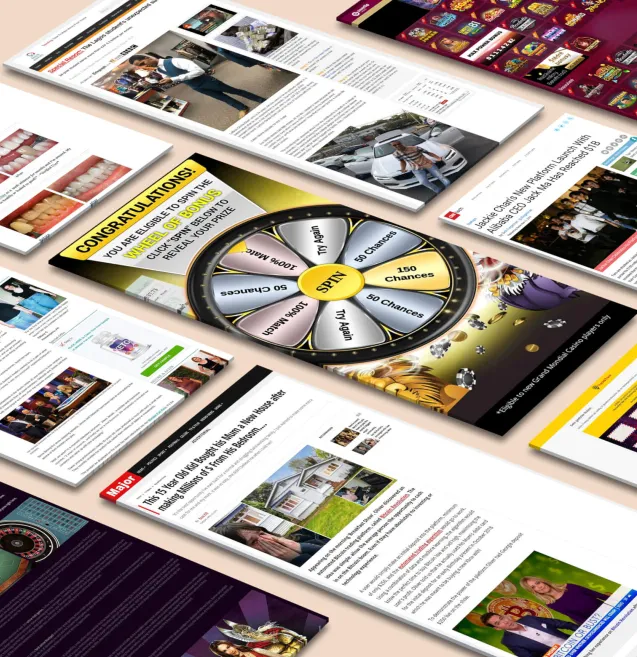
Get StartedThe landing page is a crucial part of any campaign – and if you want yours to get the right traction, you need to know how to build those pages to ensure that they convert like there’s no tomorrow.
Landing pages can make or break your campaign because not only are these the main source of information for your audience, this is also the place where you can “communicate” with them. To “communicate” in this sense is to appeal to your consumers and get them to act on something: purchase, respond, or inquire about whatever it is that you’re offering.
Most online advertisers, YouTubers, or social media influencers would say that “content is king” – but what they don’t tell you often enough is that their audience won’t get to their content unless there is a good headline to hype up that ad.
In sales and marketing, you need to at least get your foot in the door – which in ad marketing translates to getting your audience interested in what you have. In this regard, the headline is what brings your audience to you – and a weak headline will not ensure great conversion rates even with millions of impressions. In writing headlines, psychology plays a huge part simply because it connects to audiences more efficiently.
For instance, a headline that says “Your Life Is At Risk: 3 Ways To Save Yourself” would be more appealing than “Ways To Ensure Your Safety” as the former appeals better to that “fear” about one’s life.
The sample above also uses a specific number: something more tangible and more realistic than a vague phrase about safety. If you apply this strategy in any part of your ad, be it the headline or the content itself, your ad campaign could be more successful simply because the audience would be able to imagine the situation and therefore relate to it more easily.

Any sales pitch starts off with something that encourages your audience to inquire, research, or even disprove the claims that you are making. This also applies to native ads and landing pages, as your consumers are here to find out more about what you have to offer.
Simply stating your product and what it does is not enough – you should also be able to clearly explain what features and benefits it brings to your target customer. You can do so by making comparisons with your competition, simplifying information into easy-to-digest numbers, or just plainly creating a “need” for your customers.
In the example above, the native ad headline itself offers a solution – 3 specific pointers to be exact – as to how the target consumers can avoid putting themselves in danger.
Marketers make the common mistake by “pushing” their products instead of engaging their audience. To engage an audience, you have to think more as a consumer and not as an advertiser.
Most marketers tend to have a blatant disregard for user interface and user experience – so set yourself apart by giving your designs enough thought and effort. It might seem like a very minor thing, but people are wired to engage in activities that are not only easy-to-use but are also appealing to the eyes.
As an online marketer, web design plays a huge part in your success – so if you really want those conversions going, you need to pay attention not only to your content, but also to how it appears on your consumer’s end.
Gone are the days when simple text and flashing buttons are captivating enough to convert clicks – nowadays, a clean, clear, and concise layout and design make for better conversion rates because these factors give off a vibe that you have a legitimate business and a reliable product.
You could earn your target consumers’ trust by just having a great design – sometimes it is even more effective in improving conversion rates than good content.
Tying it all together in a way that will boost your campaign’s success can be done by giving your audience specific options on how to proceed: what to do or where to go next. If you combine the layout, the benefits, and the captivating headline, you can be assured that your ad campaigns will get better conversions than traditional advertising.
Receive top converting landing pages in your inbox every week from us.
Guide
Discover why out-of-home (OOH) talent pipelines overlook competitive intelligence and how smart affiliates can capitalize on this gap. Learn how to analyze competitor activity, interpret digital auction signals, build a cost-effective intelligence stack, and turn market insights into profitable advertising opportunities.
David Kim
7 minOct 9, 2026
Guide
Discover how OOH professionals can turn traditional billboard roles into high-ROI performance marketing careers. This guide shows how to reframe OOH work around measurable outcomes, competitor intelligence, landing-page optimization, and data-backed offers.
Liam O’Connor
7 minOct 8, 2026
Guide
Discover why OOH job boards are struggling to keep pace with the rise of data-driven media buying. This guide explores the modern skills OOH partners need, from audience intelligence and programmatic workflows to cross-channel measurement and performance strategy.
Priya Kapoor
7 minOct 8, 2026