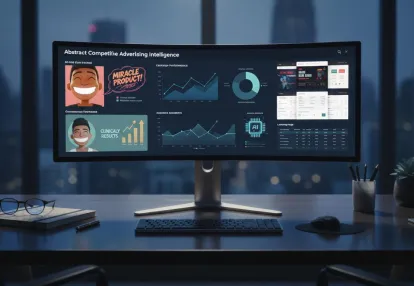
Discover how performance marketers can apply competitive ad intelligence to improve brand visibility across AI-powered search and answer engines. Learn how to track AI citations, reverse-engineer competitors’ visibility strategies, build trustworthy content and landing pages, and connect AI discovery insights with measurable marketing outcomes.

Our spy tools monitor millions of TikTok ads from over 55+ countries. Biggest TikTok Ad Library in E-commerce and Mobile Apps!
Learn how competitor complaint searches, cancellation keywords, customer reviews, and CRM insights can reveal high-intent opportunities that traditional keyword research often overlooks. Discover how to use Anstrex and competitive research workflows to identify competitor pain points, develop targeted switching offers, and create landing pages that make changing providers easier.
Discover how marketers can use retail media, connected TV (CTV), and checkout advertising to uncover promising holiday campaign angles before scaling into native, push, pop, and TikTok traffic. Learn how to analyze winning messages, offers, creative formats, and funnel sequences with competitive ad intelligence and apply those insights to faster, more disciplined campaign testing.
Discover how multi-location brands can unify local SEO, out-of-home (OOH) advertising, and native ad intelligence to make smarter marketing decisions across every market. Learn how to connect location data, search intent, creative testing, and performance measurement to identify winning messages, improve local visibility, and allocate budgets more effectively.
Discover how performance marketers can use AI to accelerate paid media campaigns in healthcare, finance, and legal services without losing control of compliance. Learn to establish AI guardrails, generate concepts from approved benefit language, and use Anstrex competitive ad intelligence to research advertising patterns while keeping human review, disclosures, and accountability at the center.
Discover how AI-driven search and agentic shopping are reshaping traffic, advertising visibility, and the performance marketing funnel. Learn how to use competitive ad intelligence and AI search insights to uncover emerging buyer priorities, strengthen campaign messaging, build more effective landing pages, and identify opportunities beyond traditional clicks.
Learn how to build a responsible competitive ad intelligence workflow for an advertising landscape increasingly shaped by AI-generated creatives, disclosure labels, and digital watermarks. Discover how to analyze competitors’ AI usage, identify creative patterns, and develop ethical guardrails that support transparent, compliant, and differentiated campaigns.
Learn how to use competitive intelligence and ad spy tools ethically while navigating evolving rules around web scraping, AI training, publisher permissions, and content ownership. Discover practical ways to analyze competitor campaigns, identify market gaps, and develop original advertising strategies without copying assets or creating unnecessary legal and reputational risks.
Discover how AI-powered media buying can expose advertisers to budget overruns, brand safety issues, and legal risks when autonomous systems operate without clear controls. Learn how to build safer advertising workflows with standardized prompts, mandatory checklists, human oversight, and contractual safeguards that keep AI-driven campaigns accountable.
Discover how AI-generated advertising, exaggerated product claims, and viral marketing trends can undermine consumer trust and damage brand reputation. Learn how Anstrex ad spy tools help marketers analyze competitor campaigns, identify credible advertising strategies, and build evidence-backed messaging for stronger performance and AI search visibility.
Discover how to reverse-engineer competitors’ ChatGPT advertising strategies by analyzing sponsored cards, conversational entry points, landing pages, and retargeting funnels. Learn how to use native ad and TikTok intelligence to uncover competitor offers, identify cross-channel opportunities, and build higher-converting performance marketing campaigns.
Discover how performance marketers can turn the post-holiday advertising period, known as Q5, into an opportunity for lower-cost testing and smarter campaign optimization. Learn how to use Anstrex ad spy data to identify winning creatives, analyze competitor funnels, launch original landing pages, and turn Q5 insights into scalable Q1 campaigns.
Discover how AI-generated ad fatigue is making native, push, and TikTok campaigns increasingly look alike, weakening engagement and reducing competitive advantage. Learn how to use competitive ad intelligence tools to identify repetitive creative patterns, develop more distinctive ads, and stand out in AI-driven advertising auctions.