12 миндекабря 17, 2025

Наши инструменты отслеживают миллионы всплывающих и pop-under объявлений из более чем 90 стран и у тысяч издателей.
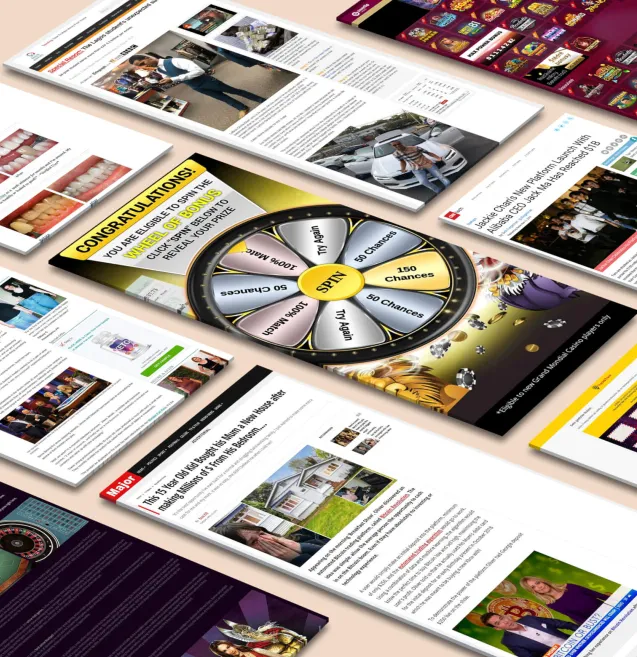
НачатьYou've launched a pop ad campaign that initially performed brilliantly—strong click-through rates, solid conversions, and manageable costs. Then, seemingly overnight, those metrics start sliding downward. Your audience has hit pop ads creative fatigue, a phenomenon where repeated exposure to identical ad creatives causes engagement to plummet and costs to spike.
Creative fatigue doesn't just nibble at your campaign performance—it devours it. When your audience sees the same visuals repeatedly, they develop banner blindness, scroll past your ads without a second glance, and your cost per acquisition climbs while conversions drop. The impact becomes especially pronounced during the year-end holiday season when competition intensifies and consumer attention fragments across countless promotional messages.
This critical period demands a holiday ad creative refresh strategy that cuts through the noise. You need fresh visuals that re-engage your audience while maintaining the brand consistency that built trust in the first place.
In this guide, you'll discover five actionable visual refresh strategies specifically designed for pop ad campaigns. You'll learn how to identify creative fatigue early, implement rotation schedules that prevent audience burnout, leverage automation tools for efficient testing, and measure the effectiveness of your refreshes. These tactics will help you maintain campaign momentum as the year wraps up and position you for sustained success heading into 2025.
Creative fatigue in pop ads is a specific challenge in digital advertising where your audience becomes desensitized to your ad creatives through repeated exposure. Unlike traditional display advertising, pop ads demand immediate attention through their intrusive nature—which means when fatigue sets in, the decline in performance can be swift and severe.
The mechanics behind this phenomenon are straightforward: your target audience sees the same visual elements, messaging, and offers repeatedly until these elements blend into background noise. Your once-compelling creative becomes invisible, triggering a cascade of negative performance indicators that directly impact your bottom line.
Declining CTR in pop ads serves as your primary red flag. When you notice your click-through rates dropping week over week despite maintaining the same targeting parameters, creative fatigue has likely taken hold. This metric alone can signal that your audience has grown immune to your messaging.
The signs of ad fatigue extend beyond CTR deterioration:
Ignoring these warning signals creates a domino effect across your campaigns. Your advertising costs spiral upward while returns diminish, creating an unsustainable economic model. Your brand perception suffers as audiences associate your messaging with annoyance rather than value. The competitive advantage you've built through effective targeting evaporates when your creatives fail to capture attention.
Ad fatigue solutions for 2025 require proactive monitoring and swift action. The data tells a clear story: campaigns that address fatigue early maintain healthier metrics and preserve audience goodwill, while those that delay intervention face exponentially higher recovery costs.
The holiday season changes how audiences interact with advertising. Consumers are more likely to buy, actively looking for deals, gifts, and seasonal offers. They expect timely and relevant messages that directly address their immediate needs. Your pop ads need to convey this urgency and holiday mindset, or they risk being ignored in the decision-making process.
Ad strategies during the year-end face unprecedented competition. Every advertiser increases their spending during this time, flooding ad networks with campaigns competing for the same audience. The high number of ads means your creatives must work harder to grab attention. Outdated visuals that did well in October will struggle against fresh, holiday-themed creatives from competitors who understand the importance of optimizing campaigns for the season.
The numbers tell a compelling story. Ad inventory costs spike during November and December as demand surges. You're paying premium CPMs whether your creatives are fresh or tired. Running worn-out visuals during this costly period essentially wastes budget without maximizing potential returns. New creatives give you the best chance to justify those higher costs with better engagement and conversion rates.
Year-end presents a unique opportunity to test your advertising strategy. Audience behavior patterns during the holidays provide valuable insights into what resonates with your market. The increased traffic volume means you can gather statistically significant results faster than during slower periods. Testing new visual approaches, messaging angles, and creative formats now prepares you with proven winners for the new year. You're not just refreshing for immediate holiday gains—you're building a collection of high-performing creatives for 2025 campaigns.
The battle against creative fatigue requires a strategic arsenal of visual refresh strategies that breathe new life into your campaigns without alienating your established audience. These five approaches address the core challenge of refreshing pop ad creatives while maintaining the delicate balance between innovation and brand recognition.
Your brand identity in ads serves as the foundation that audiences recognize and trust. The key to successful visual refreshes lies in evolving your creative approach without abandoning the elements that make your brand memorable. Think of your brand's visual identity as a house—you can redecorate the rooms, change the furniture arrangement, and update the color scheme, but the structure remains recognizable.
When refreshing pop ad creatives, you need to identify which brand elements are non-negotiable. Your logo placement, primary brand colors, and signature fonts should remain consistent even as you introduce new visual themes. The refresh happens in the supporting elements: background imagery, graphic styles, model demographics, product staging, and compositional layouts.
Consider a fitness app that typically uses bright, energetic imagery with people in workout gear. A thematic shift for the holiday season might introduce cozy home settings with warm lighting, showing people exercising in festive sweaters or near decorated spaces. The brand's signature color palette and logo treatment stay intact, but the context creates a fresh emotional connection that resonates with year-end sentiments.
Dynamic creative optimization changes the way you refresh your pop ad creatives by removing the guesswork from your campaigns. These advanced tools automatically rotate different combinations of headlines, images, calls-to-action, and visual elements based on real-time performance data. Instead of manually creating and testing numerous variations, DCO platforms do the hard work by showing the most effective creative combinations to specific audience segments.
The automation feature of DCO is especially valuable when managing multiple pop ad campaigns at the same time. You can upload various creative assets—different background colors, product images, promotional messages, and design layouts—and the system intelligently tests combinations to find winning formulas. This method keeps your brand identity in ads while constantly trying out new visual presentations that fight against creative fatigue.
Key benefits of using DCO in your visual refresh strategies include:
DCO tools work smoothly with most ad networks, automatically stopping underperforming variations and allocating more budget to creatives that drive conversions. This continuous optimization cycle ensures your pop ads stay fresh and engaging throughout long campaign periods, especially during high-competition seasons when audience attention becomes increasingly fragmented.
Authenticity cuts through the noise of traditional advertising, and user-generated content videos in pop campaigns deliver exactly that raw, genuine appeal your audience craves. When you feature real customers using your products or sharing their experiences, you're not just refreshing pop ad creatives—you're building trust through social proof that polished studio shots simply can't replicate.
The power of UGC in visual refresh strategies lies in its relatability. Your audience sees themselves in these authentic moments, creating an emotional connection that static images struggle to achieve. A customer's unfiltered reaction to unboxing your product or a genuine testimonial captured on smartphone video carries more weight than a professionally produced commercial. This approach directly addresses Pop Ads Creative Fatigue: Refreshing Visuals as the Year Wraps Up by introducing fresh perspectives that feel less like advertising and more like recommendations from friends.
Short-form video formats—particularly reels and vertical videos—inject energy into campaigns suffering from creative fatigue. These dynamic formats:
You can maintain brand identity in ads while leveraging UGC by establishing clear content guidelines. Provide creators with brand colors, key messaging points, and product angles you want highlighted. This framework ensures consistency while preserving the authentic voice that makes user-generated content so effective. The varied visual approaches keep your campaigns fresh without sacrificing the recognition your brand has built.
Managing ad frequency through systematic creative rotation is one of the most powerful pop ad optimization tips you can implement. When you repeatedly show the same visual to your audience, you're essentially training them to ignore your message. The solution is to maintain a strong rotation schedule that keeps your campaigns fresh without sacrificing brand identity in ads.
Your rotating creatives schedule in advertising should align directly with your campaign parameters:
These intervals aren't random—they're based on how quickly audiences exhaust creative content at different exposure levels. Larger budgets mean faster audience saturation, requiring more aggressive visual refresh strategies.
You need at least 4-6 distinct creative variations ready to deploy at any moment. This approach to refreshing pop ad creatives ensures you're never scrambling when fatigue signals appear. Each variation should test different elements:
The key to successful rotation is preparation. Create your creative bank during campaign planning, not when performance metrics start declining. This proactive stance on Pop Ads Creative Fatigue: Refreshing Visuals as the Year Wraps Up prevents the panic-driven creative decisions that often compromise brand consistency.
Audience segmentation in pop ads is a powerful solution to creative fatigue. It allows you to show different ads to different groups of viewers, preventing the same users from seeing the same ads over and over again. This directly tackles one of the main reasons why engagement declines.
Think of segmentation as having separate conversations with different groups—each group receives messages tailored to their specific interests and behaviors.
Expanding your targeting approaches further enhances the effectiveness of refreshing pop ad creatives by introducing your campaigns to new audiences who haven't experienced creative fatigue. One of the most effective strategies for expansion is targeting lookalike audiences—these are users who share similar traits with your best-performing customers, bringing in qualified traffic without the downside of overexposure.
Another way to expand your reach is through layered interests. Instead of focusing on single interests, you combine multiple relevant interests to target more specific audience segments. This approach maintains brand identity in ads while allowing you to test visual refresh strategies across different viewer profiles. For example, a user interested in both fitness and sustainable products may require different creative hooks than someone primarily interested in budget shopping.
By combining segmentation and expansion, you create a sustainable ecosystem where your refreshing pop ad creatives reach the right people at the right frequency. It's not just about changing visuals—it's about strategically placing them across a diverse audience landscape that naturally resists fatigue.
Refreshing your pop ad visuals is just the first step in optimizing your campaign. The real work begins when you start tracking performance metrics after the refresh to see if your new creatives are getting the results you want.
You need to keep an eye on specific metrics that directly show whether your refreshed visuals are effectively combating Pop Ads Creative Fatigue: Refreshing Visuals as the Year Wraps Up:
You should set up a systematic review process within the first week of launching refreshed creatives. Compare baseline metrics from your fatigued ads against new performance data to quantify improvement. Set up automated alerts when KPIs deviate beyond acceptable thresholds—typically a 20% variance from expected performance.
Create a testing calendar that schedules performance reviews every 3-5 days during the critical year-end period. This cadence allows you to quickly identify underperforming variations and reallocate budget to winning creatives. Document which visual elements, color schemes, or messaging angles generate the strongest response rates to inform future refresh cycles.
Not all ad networks experience creative fatigue at the same pace. Understanding Facebook ad fatigue cycles vs Pinterest ad lifecycle differences becomes essential when planning your refresh schedule across multiple platforms.
Facebook's algorithm and user behavior patterns create a particularly aggressive fatigue timeline. Your pop ads on Facebook typically show signs of exhaustion within 7-14 days of continuous exposure. The platform's high-frequency environment means users encounter the same ads multiple times in their feeds, stories, and right-column placements. You'll notice CTR drops accelerating rapidly after the first week, with CPM increases following shortly after. This compressed timeline demands a proactive refresh strategy—waiting until performance tanks means you've already lost valuable budget and momentum.
Pinterest operates on an entirely different rhythm. The platform's discovery-focused nature and longer content lifespan allow your pop ads to maintain effectiveness for 30-45 days or even longer. Users actively search for inspiration and ideas, creating multiple touchpoints with your creatives over extended periods without the same negative fatigue effects. The visual search behavior on Pinterest means your ads can resurface organically through related pins and boards, extending their useful life beyond initial impressions.
Platform-specific refresh strategies should account for:
You need to build separate creative calendars for each platform rather than applying a one-size-fits-all approach. Track platform-specific KPIs independently, allowing Facebook campaigns to rotate on weekly schedules while Pinterest creatives refresh monthly. This tailored approach maximizes your creative assets' longevity while maintaining optimal performance across your entire pop ad portfolio.
The year-end holiday rush presents both challenges and opportunities for your pop ad campaigns. Creative fatigue doesn't have to derail your performance when you implement the strategies we've covered. You now have a roadmap for revitalizing pop ad campaigns 2025 with visual refreshes that maintain brand consistency while capturing renewed audience attention.
Start planning your creative refresh schedule now. Map out your visual variations, set up your DCO tools, and prepare multiple creative assets before the holiday surge intensifies. The advertisers who succeed during this critical period are those who anticipate fatigue before it impacts their bottom line.
Your action plan should include:
The difference between a struggling campaign and a thriving one often comes down to timing. You can't afford to wait until your CTRs plummet or your CPMs spike. Pop Ads Creative Fatigue: Refreshing Visuals as the Year Wraps Up requires proactive execution, not reactive scrambling.
Take these five visual refresh strategies into 2025 with confidence. Your campaigns will maintain momentum, your audience will stay engaged, and your ROAS will reflect the effort you invested in staying ahead of creative fatigue.
Получайте лучшие конверсионные лендинги каждую неделю на свою почту.
Самое читаемое
Узнайте, как связать данные рекламного шпиона с поведением на сайте, информацией из CRM и результатами выручки, чтобы выявить реальные факторы рентабельности инвестиций. Узнайте, как превратить Anstrex из инструмента копирования креативов в замкнутую систему для тестирования выигрышных рекламных подходов, воронок и клиентских путей.
Dan Smith
7 минсент. 9, 2026
Обязательно к прочтению
ИИ-боты становятся новым слоем поиска в вебе, однако многие промо-страницы по сути невидимы для них из-за рендеринга на JavaScript, цепочек редиректов, маскировки (cloaking), глубоких URL и кратковременной жизни рекламных кампаний. В этой статье объясняется, почему рекламодателям по модели push, pop и нативной рекламе следует пересмотреть использование одноразовых промо-страниц, устранить технические проблемы с индексацией и создавать постоянные «якорные» страницы, которые ИИ-системы способны понимать и цитировать. Также затрагиваются вопросы инфраструктурных и аналитических издержек от нежелательного трафика ботов и предлагается двухуровневый план действий по повышению обнаруживаемости промо-страниц для ИИ без ущерба для конверсии.
Priya Kapoor
7 минавг. 25, 2026
Гайд
Реклама методов push и pop может предлагать детальную аналитику, но многие медийные покупатели по-прежнему оптимизируют кампании, используя неполные метрики, сообщаемые платформой. В данной статье рассматривается разрыв в измерениях на уровне операторов и устройств, где различия в мобильных сетях, устройствах, операционных системах, отображении и поведении трафика могут существенно влиять на итоговые результаты. Приводится практическая структура для сегментации исторических данных, сравнительная оценка креативов по сегментам высококачественного трафика, а также использование независимой верификации для выявления расхождений между заявленными и подтверждёнными конверсиями.
Rachel Thompson
7 минавг. 21, 2026