6 minNovember 21, 2026

Our tools monitor millions of native, push, pop, and TikTok advertising campaigns.
Get StartedAuthenticity used to be a differentiator. Now it’s a décor style.
Scroll any feed and you’ll see the same hand-on-heart founder video, the same “no makeup, just real talk” selfie confession, the same shot of diverse colleagues laughing around a laptop. What began as a rebellion against glossy, over-produced advertising has hardened into a visual template — a predictable grammar of “relatability” that audiences can spot, and ignore, from three swipes away.
Mark Schaefer describes this as a broader “AI firehose” problem: most marketing has become “copies, copies, copies,” endlessly recycling formats, takes, and even facial expressions while machines pump out “warm, vulnerable, hand-made-feeling content” at industrial scale, complete with “a tasteful typo for atmosphere” to appear more real than real humans themselves. In other words, authenticity — at least the way brands have been performing it — has already been industrialized.
This is the authenticity trap: when “real” becomes just another lookalike to A/B test.
The trap has two parts. First, marketers mistake aesthetics for intent. User-generated-style images and lo-fi production are treated as proof of honesty. Native advertisers, for example, have learned to “mix and match images,” pairing slick product shots with phone-quality photos because those raw visuals create an “impression of real-world use” and make a product “seem legit.” As one guide to boosting app installs through native ads admits, the point of those rougher photos is to “give the impression” of authenticity so users believe you’re “the real deal,” not necessarily because there’s a real story behind them at all. That is authenticity as costume, not as conviction, and savvy audiences feel the gap the moment your product experience doesn’t match the promise you staged in that casual snapshot.
Second, we confuse participation with relevance. In the race to “be part of the conversation, not interrupt it,” brands lunge at every meme, PR stunt, or micro-moment that trends for more than six minutes. The barrier to entry has fallen; lighter production and AI tools mean campaigns can be conceived and launched in days or even hours. As Lucy Markowitz notes, this speed is exactly what’s fueling the explosion of brands jumping into viral cultural moments. Yet she also points out that the only efforts that work are the ones with “a clear connection between the cultural moment and the brand’s identity” and “a credible reason to join the conversation.” When that connection isn’t obvious in the creative, the participation doesn’t read as agile — it reads as opportunistic trend-chasing that audiences instantly recognize as inauthentic, no matter how “real” the format or tone may feel on the surface.
Meanwhile, the context in which “authentic” stories appear has never been more suspect. AI agents now plan, target, and optimize a huge share of digital ad delivery. More than half of new online content is synthetic, and nearly 60% of web requests are generated by bots and automated systems. In that environment, it’s no surprise that 93% of consumers say they actively question whether what they’re seeing online was created by a person or an AI system. As one industry keynote bluntly put it, advertisers are operating in a media ecosystem where “we ask – what is real? What is AI? What content and ads can we trust?” The irony is brutal: the more brands talk about authenticity in their content, the less authentic the surrounding environment feels.
So when marketers declare that their edge is “being human” or “feeling vulnerable,” they’re often just adding another coat of authenticity paint to an already over-painted wall. AI can simulate the visual cues and tonal signals that used to signify realness; social platforms can flood every niche with infinite variations of the same “relatable” trope; and audiences, tired of being sold to in increasingly personal ways, are growing wary of anything that looks too much like a script about being unscripted.
Authenticity hasn’t lost its power. But the shorthand we’ve relied on for it — lo-fi visuals, confessional captions, rapid-fire trend participation — has. When every brand uses the same authenticity template, “real” stops feeling like a promise and starts looking like a preset.
Authenticity only became a “vibe” once marketers stopped treating it as something you could prove.
You can’t manage what you refuse to measure, and right now most brands talk about authenticity the way they talk about “edginess” or “cool”: as a mood, not an asset with inputs, outputs, and risk. Meanwhile, audiences are already doing the math for you. They’re just using different numbers.
A crisis of trust is the backdrop. Only 21% of consumers trust AI companies and their promises, and just 20% trust AI itself, according to research cited by Jeff Bullas. When people know something is AI-generated, 62% say they’re less likely to engage with it on social media. That is not a cosmetic problem. It’s a structural drag on reach, engagement, and ultimately revenue.
At the same time, people can’t accurately identify what’s AI and what’s not. In one study, only 31% could reliably spot AI-generated images, worse than a coin flip, even though they felt very sure they could, as Bullas notes. The net effect: your audience is walking around with a generalized suspicion of “content” and a hair-trigger instinct for anything that feels over-sanitized or oddly generic. Authenticity isn’t a warm glow; it’s a risk offset.
The industry is starting to codify that. The IAB’s updated “AI Transparency and Disclosure Framework” draws a formal line around what changes consumer perceptions of “what’s real.” It calls for disclosure when AI use materially affects authenticity, identity, or representation, such as realistic synthetic people or manipulated real individuals in fabricated scenarios, as MarTech explains. Behind-the-scenes AI that doesn’t change the perceived realness of the story is treated differently. In other words: authenticity is already being regulated, not just romanticized.
So how do you treat authenticity as an asset?
First, define it in operational terms: authenticity is the degree to which your stories are grounded in verifiable reality, told by credible messengers, in formats that match audience expectations for honesty. That breaks into measurable components:
When you monitor these levers, authenticity looks less like a mood board and more like a balance sheet. You can quantify:
Fashion marketers are already doing a version of this. Leaders at brands like Gap and Béis talk about using “data as guardrails” to guide emotional storytelling: grounding bold creative choices in an intimate understanding of real people, not just trend-chasing, as discussed in an Adweek Brandweek conversation. Authenticity becomes something you protect with constraints, not just something you signal with visual tropes.
The brands that will win in a world flooded with lookalikes and AI slop aren’t the ones that look the most “real.” They’re the ones that can prove, at scale, that their stories are anchored in reality—and can show, with numbers, how much that reality is worth.
In theory, lookalike and nostalgia ads promise efficiency: “Find me more people like this” or “Make them feel what they felt then.” In practice, both behaviors tend to collapse into something much blunter once they hit the ad platforms and performance dashboards.
Lookalike advertising is built on pattern replication. Feed a platform enough conversions and it will assemble an audience that behaves similarly. But when creative teams try to mimic that same logic in the content itself—copying the format, language, and aesthetic of what “worked”—they don’t just clone targeting, they clone humanity. The result is the parade of near-identical “authentic founder” monologues and lo-fi confessionals that crowd the feed. These aren’t coincidences; they’re what happens when brands treat authenticity as a bid strategy instead of a brand strategy.
At Cannes this year, marketers kept returning to the tension between using AI to scale creativity and maintaining something recognizably human. As one programming lead noted in an Equativ-hosted discussion, vulnerability and even small mistakes are part of what makes communication feel real. But when those mistakes are templated—intentionally shakier camera work, canned “I wasn’t going to share this” intros, calculated pauses—they cease to be evidence of humanity and become just another optimization variable. The creative starts to behave like the media: constantly A/B-tested into sameness.
Regulators and standards bodies are already drawing a line around when that sameness becomes deception. The updated IAB “AI Transparency and Disclosure Framework” explicitly ties disclosure obligations to whether synthetic content changes what people reasonably believe is real, focusing on any use of AI that materially affects perceived authenticity, identity, or representation. That tells you how these campaigns behave at scale: they don’t just recycle looks; they risk recycling trust. Once audiences suspect that the “relatable founder” is an AI-assisted composite or that the “customer review” is synthetic, the entire category of similar ads starts to feel unreliable.
You can see the fallout clearly in performance-oriented ecosystems like affiliate marketing. As one practitioner explained on the Ahrefs blog, AI now makes it trivial to produce hundreds of fake “I actually tested this” product reviews. On paper, those pages look like the high-intent content that used to convert so well. In the wild, they’re driving people to seek out formats that are harder to fake—TikTok hauls, YouTube reviews, and other video-heavy content where proof of real use is visible. Younger audiences, in particular, are voting with their thumbs against the lookalike review site, not because the layout or keywords are wrong, but because the signals of authenticity have been industrialized.
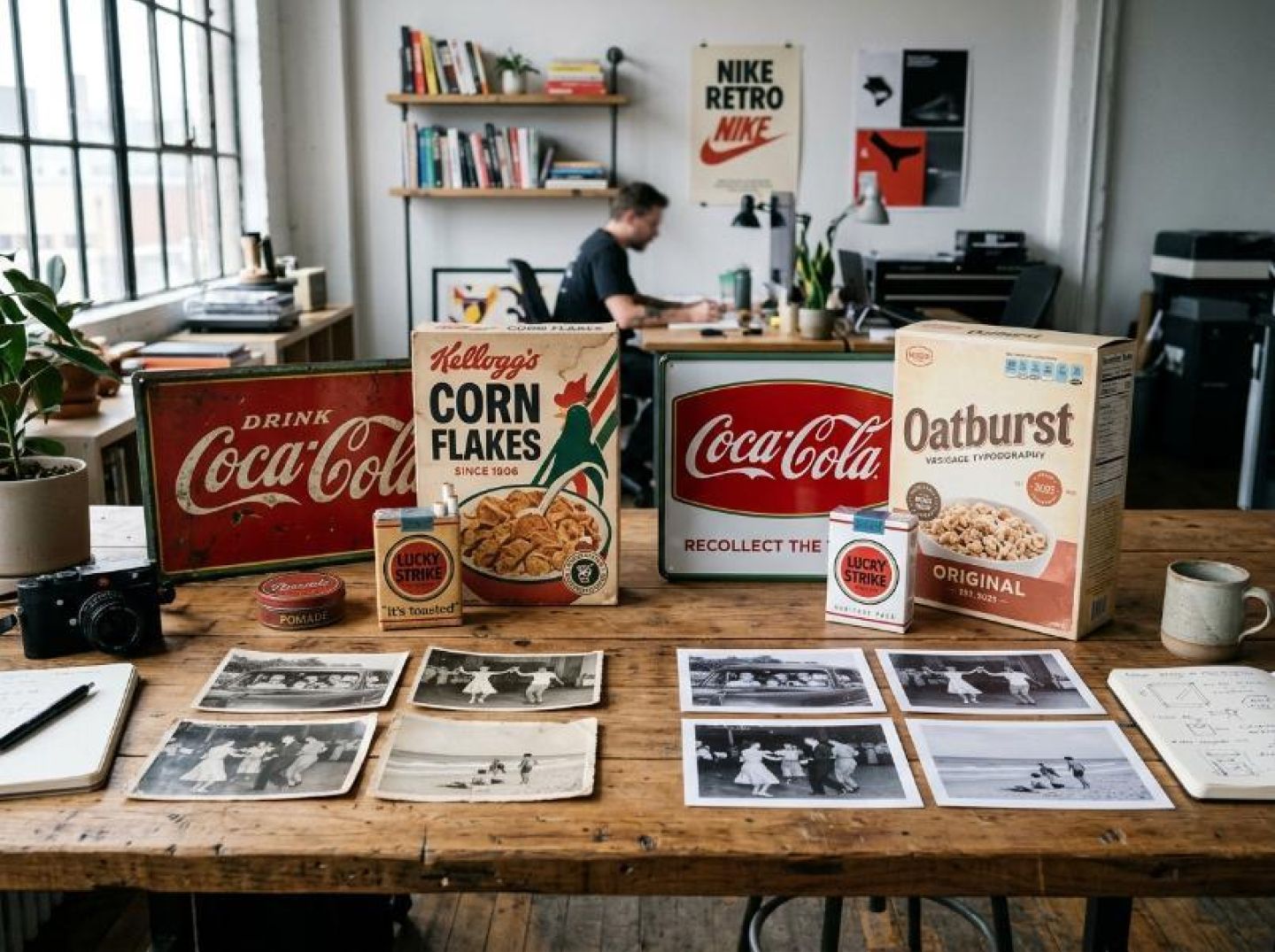
Nostalgia campaigns follow a similar curve. Strategically, nostalgia should be one color in the palette—a way to borrow “memory equity” while still showing who you are today. Tactical reality often looks like perpetual reruns. Brands chase the engagement spikes that come from remixing a ’90s jingle or reviving a mascot, then keep pressing that button until the work feels less like a shared memory and more like a rerun of someone else’s childhood. As one analysis of nostalgia marketing put it, the strongest throwbacks are grounded in verifiable truth—a product lineage, a real customer story, an actual archive photo—rather than generic retro aesthetics or borrowed logos and taglines.
When nostalgia is treated as a targeting filter (“people who loved X in 2004”) instead of a narrative device, it too starts behaving like lookalike media. The same fonts, the same VHS filters, the same “only ‘90s kids remember” captions spread across unrelated categories. People may respond in the short term because the reference is familiar, but they don’t come away with a clearer sense of what the brand stands for now. The campaign effectively lends its emotional lift to the past, not the present.
Meanwhile, brands that resist this gravitational pull tend to use data differently. In a live conversation with fashion marketers, one global CMO described a “data as guardrails” approach, where analytics help validate ideas without dictating that every success be turned into a creative franchise template. Instead of cloning a single viral moment, they invite communities to co-create new ones—through music, style, or in-person experiences that can’t be easily faked.
So in the wild, lookalike and nostalgia advertising behave less like creativity and more like gravity. Left unchecked, they pull brands toward whatever is easiest to copy: a familiar face, a familiar format, a familiar memory. The more those patterns are automated, the more important it becomes to measure not just reach or ROAS, but the erosion—or reinforcement—of something harder to regenerate: the belief that there is a real, specific “you” on the other side of the screen.
Before you can tell a more authentic story, you need to see clearly how inauthentic your current story looks in the marketplace. That’s where ad intelligence stops being “competitive snooping” and becomes an authenticity tool.
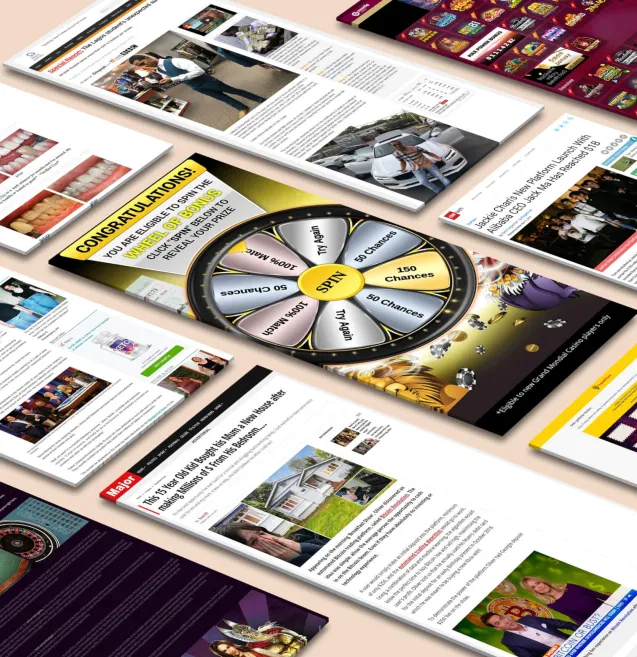
Anstrex is essentially a live feed of the ad unconscious: the images, headlines, and landers that are actually getting spend, not just applause on LinkedIn. Used well, it becomes a spyglass for diagnosing where you’ve drifted from “inspired by” into “indistinguishable from.”
Start with a brutally simple question: “If my logo vanished, would anyone know this ad was mine?” In Anstrex, pull your vertical and filter down to top-spending creatives. Now strip the logos mentally and look at what’s left: the same three stock models, the same retro color palettes, the same “Remember when…” hooks. This is the visual equivalent of what Mark Schaefer describes as “copies, copies, copies” flooding every niche. If your current ads could be dropped into that grid and no one would notice, you’re not just competing; you’re dissolving.
Next, zoom in on formats where “authenticity” is already a performance lever. Native advertisers have long known that mixing polished and raw imagery beats perfection alone. The team at Brax points out that successful campaigns blend studio-worthy visuals with phone-shot, user-generated-style images because that rougher texture signals real use and real people. Anstrex lets you quantify that texture instead of hand-waving at it. Tag competitor creatives as “polished,” “UGC-style,” or “meme/lo-fi,” and track which buckets recur in high-spend, long-running ads. You’ll quickly see which brands are leaning into believable imperfection and which are still trapped in glossy sameness.
Then, look at language. AI slop has a tell: it’s grammatically flawless and emotionally empty. As Jeff Bullas notes, audiences feel “the absence of a specific, idiosyncratic perspective” long before they can prove a piece was machine-written. Use Anstrex to scan hooks and headlines across your category. Count how often you see the same empty calories: “Revolutionary,” “Game-Changing,” “You Won’t Believe…,” “The Future of X.” When 20 different brands in your feed are promising “the #1 solution” with zero concrete detail, you’re looking at a copycat language market that trains customers not to believe anyone.
Anstrex’s landing-page previews are where authenticity problems really surface. Click through the best-performing nostalgia or lookalike ads in your space and ask:
In parallel, pay attention to where other brands are successfully injecting real stakes and context. When Marketing Dive covers IRL streamers, the lesson isn’t “work with Kai Cenat.” It’s that creators who protect their own brand fit are trading on credibility they can’t afford to dilute. Within Anstrex, you can spot the brands that understand this by their creator-driven and live-feeling creatives: ads that look like organic clips, not pre-cleared storyboards. Log how often those show up relative to generic studio spots and you’ll have a working map of who is buying into spontaneity versus who is still directing from the script.
You can also contrast what shows up in feed with how it might feel in more public, physical contexts. OOH leaders argue that their medium forces brands into the “sunshine,” where a fake promise earns “tomatoes thrown at the screens,” as OOH Today recounts. When you review creatives in Anstrex, ask: would this ad survive on a giant street-level screen, or is it the kind of vague, AI-smoothed claim that only works when no one can talk back?
Over time, the spyglass work turns into a scorecard. You’re not just seeing who’s copying whom; you’re quantifying where your own ads have drifted into the visual, verbal, and structural clichés of your category. That diagnosis is the prerequisite for the next step: deliberately designing creative that can still scale, still win on performance, but carries a point of view specific enough that no one could mistake it for anyone else’s.
Start with the niche, not the platform. Before you touch a brief or a moodboard, define the cultural lane you’re actually in: “clean beauty,” not “skincare”; “better-for-you snacks,” not “CPG.” Then you can use Anstrex like a rifle instead of a leaf blower.
In practice, pulling top ads in a niche is less about “show me winners” and more about “show me the clichés this category can’t stop repeating.” That means three deliberate passes:
1. Tighten the search until it hurts.
In Anstrex, don’t just type “beauty” and call it a day. Stack filters the same way you’d stack targeting:
You’re not only looking for volume; you’re looking for what’s actually getting backed with budget. Anstrex’s spend and duration indicators give you a proxy for “this message is working well enough that someone keeps paying for it.” That’s exactly the “data as guardrails” idea global fashion leads describe when they talk about using numbers to support creative instincts rather than dictate them; data narrows your field so you can be more intentional about where you break it, just as those brand leaders explain in their conversation on democratized style and emotional storytelling.
2. Build a Cliché Board, Not Just a Swipe File.
Once you’ve pulled the top-spend ads in your niche, resist the urge to copy and paste them into your deck as “inspiration.” Instead, tag what you’re seeing:
You’re making visible what Mark Schaefer calls the “copies, copies, copies” problem: competence that all blurs together. In a world where AI can generate believable, hand-made-feeling content on demand, simply matching the prevailing tone of your niche is the shortest path to indistinguishability.
3. Extract the Real Human Tension Hiding Under the Sameness.
Once you’ve surfaced the clichés, sort them into underlying tensions:
Then ask: where is everyone telling the exact same story about that tension? That’s your opening.
If every clean beauty ad is whisper-soft and reverent, there may be room for one that’s more clinical, or even irreverent, while still being truthful. If every better-for-you snack ad is framed as guilt relief, consider elevating joy or performance instead of absolution. If all Y2K fashion ads are stuck in cosplay, what would it look like to use that aesthetic to talk about something contemporary and uncomfortable — cost of living, burnout, climate anxiety?
This is where authenticity and creativity intersect. Social leaders note that the content people actually remember is the stuff that makes them feel something new — surprise, discomfort, recognition — and that those ideas originate with humans who deeply understand their audience, as the marketers discussing human creativity as the true competitive edge argue. Your job with Anstrex isn’t to steal lines; it’s to see what the machine (and your competitors) keep outputting, so you can choose a different emotional note to play.
From there, you can brief creative with precision: “Here are the five dominant visual and copy tropes in our niche. Here’s the tension they’re all circling. Here’s how we’re going to stay inside the category promise but outside the category performance.” You’re not rejecting what works; you’re refusing to let the top ads in your niche become the ceiling of your imagination.
Once you’ve got a board full of “winning” ads in your niche, the next move is to strip them for parts. That’s where tagging each creative across three dimensions—aesthetic, core benefit, and narrative angle—turns chaos into something you can actually brief against.
Start with aesthetic because that’s what hits the scroll first. For each ad, tag whether the look is polished vs. raw and user-generated vs. studio. Polished doesn’t just mean “shot on a RED.” It’s anything that feels lit, layered, color-graded, and concepted. Raw is imperfect framing, ambient audio, jump-cuts, screen recordings, messy rooms. The point isn’t to decide which is “better”; it’s to see what a given audience currently believes. When Getty’s VisualGPS research shows that nearly every consumer claims “authentic” imagery matters for trust, but feeds are drowning in AI-smoothed sameness, the line between “polished” and “fake” gets thin fast. In some categories—like prestige fashion—the right kind of polish still reads as aspirational and credible. In others—like supplements, creator tools, or anything Gen Z-skewing—too much gloss pushes you into “generated, not lived” territory.
Then layer on whether the creative leans into UGC or studio logic. UGC isn’t just vertical video with a selfie cam; it’s the social grammar of hesitation, side-eye, interruption, and casual language. Studio work has blocking, continuity, and a clearly controlled environment. Across your swipe file, count how many “top” ads rely on each. If you see a wall of faux-UGC where every “customer” talks in the exact same cadence, you’re looking at the aesthetic of authenticity, not the reality of it—and your opportunity may be to show fewer scripts and more actual humans. As social leads in fashion have argued, the campaigns that move culture tend to “put employees, founders, and real customer stories front and center,” not just better lit models.
Next, tag the core benefit: what is the ad actually promising in a single, concrete sentence? Ignore the adjectives; translate the claim. “Feel like yourself again” becomes “reduces bloating within 48 hours.” “Designed for doers” becomes “lighter carry-on that fits more stuff.” If you can’t rewrite the message into a tangible benefit, tag it as “vibe-only.” This matters, because we’re in a moment where AI can churn out unlimited “experiential” copy and even fake first-hand product details at scale. As one affiliate marketing teardown noted, AI can now fabricate the kind of sensory specifics (“after 50 miles the cushioning still felt fresh”) that used to signal a real review. Users know this—and they are moving purchase research to channels where they can see and hear proof. So, when you map benefits, also mark whether the ad offers any verifiable evidence: a demo, a side-by-side, a timestamped claim, a real person showing the thing in context. High-performing ads with strong benefits and visible proof tell you the bar for “realness” your own creative must clear.
Finally, tag each ad’s narrative angle. Don’t overcomplicate it; build a simple taxonomy and apply it ruthlessly:
Nostalgia deserves its own special tag. In a culture hooked on reboots, your ad intelligence board will almost certainly show a pile of retro fonts, VHS filters, and 90s song licenses. Tag not just “nostalgia,” but whose nostalgia is being invoked (millennial childhood vs. Gen X teen years vs. early-internet memes) and whether the brand is actually entitled to that memory. As one long-form look at nostalgia marketing points out, the nostalgia that works is anchored in something true: a real product lineage, a shared cultural ritual, or a customer memory the brand genuinely owns. When you see lookalike brands slapping pixel art on their landers with no real connection to that era, that’s your warning sign not to add one more derivative “retro” concept to the pile.
Once your wall of ads is tagged across these three dimensions, patterns emerge fast. You might notice that 80% of “winners” are polished studio ads selling status, while raw UGC is mostly being wasted on vague “vibes.” Or that the entire category is leaning on nostalgia to dodge the question of “what does this actually do?” That’s the gap where your next brief lives: pick the aesthetic your audience reads as real, articulate a benefit you can prove on camera, then choose a narrative angle that reflects your actual story instead of the category’s favorite costume.
Finding the patterns is only half the job. The real value of ad intelligence comes from what you do after discovering that every competitor is telling essentially the same story.
Once you understand the dominant aesthetics, benefits, and narrative angles in your niche, you can use that information to build a creative strategy that is recognizable without being derivative.
Start by identifying the category expectations you actually need to satisfy. Every market has certain conventions customers understand. A skincare brand may need to demonstrate product texture and ingredients. A software company may need to show how its product solves a specific workflow problem. A fashion brand may need to communicate fit, styling, and identity.
Those conventions are not automatically clichés. They become a problem when every brand uses the same visual language and emotional promise to communicate them.
Use your Anstrex research to separate the category's essential signals from its repetitive creative habits. Keep the information that helps customers understand the product. Challenge the parts that exist only because competitors have repeated them.
Then build your campaign around three questions:
For example, if every competitor in a beauty niche uses soft lighting, beige backgrounds, and vague promises about natural ingredients, you do not necessarily need to abandon the category's visual language. You might instead create a more informative campaign showing the actual formulation process, explaining ingredient choices, and featuring real customers discussing their experiences.
The goal is not to be different for the sake of being different. It is to make the reason for choosing your brand easier to understand.
Your ad intelligence research should eventually become a practical creative brief.
A useful brief should include:
This process helps creative teams use competitor research as context instead of a template.
It also creates a more useful relationship between performance marketing and brand strategy. Performance data can show which messages attract attention and generate action. Creative research can explain why those messages work and whether they are helping build a recognizable brand.
A campaign should not be considered successful simply because it resembles an existing winner. It should be evaluated on whether it communicates a credible promise and gives customers a reason to remember the brand behind it.
Nostalgia can still be a powerful creative tool, but it needs a genuine connection to the brand.
Before building a retro campaign, ask what the reference actually means to your audience and why your brand has a reason to use it. Is it connected to your product history? Does it reflect a real customer memory? Does it represent a cultural experience your community recognizes?
If the answer is simply that a particular decade is trending, the concept may generate attention without creating meaningful brand recognition.
Use Anstrex to investigate how competitors are using nostalgic themes across their campaigns. Compare recurring references, visual treatments, headlines, and landing-page experiences. Look for patterns that have become so common that the original emotional connection has disappeared.
Then consider how your brand can make the reference more specific. A real archive photograph, an authentic product milestone, or a customer story can provide a stronger foundation than another generic retro filter.
The most effective nostalgia campaigns do not simply recreate the past. They use something meaningful from the past to communicate something relevant in the present.
Authenticity should not become an excuse to stop measuring advertising performance.
A campaign can be honest and still fail to connect with its audience. Equally, an ad can generate clicks while creating expectations that the actual product experience cannot meet.
The challenge is to evaluate both performance and credibility.
Traditional advertising metrics remain important:
But these numbers do not explain everything about how an audience experiences a brand. A high click-through rate, for example, does not automatically mean the creative established trust. A campaign might attract attention through an exaggerated promise but struggle to convert or retain customers.
That is why marketers should add authenticity-related indicators to their creative evaluation process.
A practical scorecard can help teams assess whether a campaign is grounded in something real.
Consider evaluating each creative across five dimensions:
1. Source credibility
Can the campaign trace its claims to an actual product experience, customer, employee, founder, or verifiable source?
2. Message clarity
Can customers understand what is being promised, who is making the promise, and what evidence supports it?
3. Brand alignment
Does the creative reflect the brand's actual identity, values, product experience, and customer expectations?
4. Creative originality
Does the campaign introduce a distinctive point of view, or does it reproduce the same visual and verbal formulas found throughout the category?
5. Experience consistency
Does the landing page, product, and post-purchase experience deliver what the advertisement leads customers to expect?
You can score each dimension using a consistent internal scale, such as one to five. The score is not an industry-standard authenticity measurement; it is an internal decision-making framework that helps teams compare creative concepts and identify weaknesses before launch.
One of the most useful experiments is to compare creative approaches rather than assuming that one aesthetic will always outperform another.
For example, test:
Keep the audience, offer, placement, and testing conditions as consistent as possible. Change the creative variable you want to evaluate, and measure the results over a meaningful period.
Track both immediate performance and downstream indicators where available. These may include conversion quality, refund rates, repeat purchases, customer feedback, and the consistency between the advertisement and the actual experience.
Do not assume that a single test proves a universal rule. Results will vary by audience, category, platform, product, and execution.
The point is to discover which forms of communication generate attention while also supporting customer confidence.
Authenticity is not a one-time creative exercise. It needs to be maintained as competitors, platforms, formats, and audience expectations change.
Use Anstrex to periodically revisit the competitive landscape. Review new high-spend creatives, identify emerging visual and messaging patterns, and compare them against your own campaigns.
A simple recurring workflow can look like this:
This turns ad intelligence into an ongoing feedback loop between market observation, creative development, and campaign evaluation.
The objective is not to follow every new trend or copy every successful competitor. It is to understand the market well enough to make more deliberate decisions about what your brand should communicate.
The advertising world has reached a strange point. Brands have more tools than ever to create content that looks personal, emotional, spontaneous, and authentic. Yet the more easily those signals can be reproduced, the less they guarantee that a story is actually meaningful.
Lookalike creative, recycled nostalgia, synthetic testimonials, and templated UGC can make campaigns appear familiar. But familiarity is not the same as credibility, and a realistic-looking advertisement is not necessarily a truthful one.
For marketers, the opportunity is to move beyond authenticity as an aesthetic and treat it as something that can be examined, supported, and protected.
That means understanding what competitors are doing, identifying the creative formulas that dominate a niche, and finding the real stories your brand can tell differently.
Anstrex helps make that competitive landscape easier to investigate. By studying active advertising creatives, recurring messages, and landing-page experiences, marketers can recognize where a category is becoming repetitive and where there may be room for a more distinctive approach.
Use that intelligence to understand the market, not imitate it.
Because when every brand can manufacture the appearance of being real, the strongest advantage belongs to the brands that have something genuine to show.
Receive top converting landing pages in your inbox every week from us.
In-Depth
Authenticity is becoming harder to recognize in a world of AI-generated content and recycled creative. Learn how marketers can use ad intelligence to uncover category clichés, analyze competitor campaigns, and build advertising that feels genuinely different.
Samantha Reed
7 minNov 21, 2026
Must Read
AI answer engines are changing how buyers discover and evaluate brands. Learn how marketers can use competitor ad intelligence to uncover market language, identify buyer questions, improve landing-page clarity, and build answer-ready content. This guide connects performance marketing with answer-engine optimization through a practical 90-day strategy.
Dan Smith
7 minNov 18, 2026
Featured
Agentic AI can do more than optimize individual campaigns. Learn how to connect competitor ad intelligence with governed AI agents to identify market changes, develop cross-channel decision rules, and make better-informed media decisions without handing over strategic control.
David Kim
7 minNov 18, 2026