7 minDecember 17, 2020

Our tools monitor millions of native, push, pop, and TikTok advertising campaigns.
Get StartedHave you ever seen an ad that is so enticing, you couldn’t help yourself but click on it even though you know it’s an ad?
Expert marketers are able to manipulate you into viewing their marketing promotions with the help of an all-encompassing technique: psychology. If you want your campaigns to be as effective as theirs, then best dive into the concepts of marketing psychology.
They’re not that hard to apply, actually. To make it easier for you to understand these concepts, we’ve included some live ad samples we’ve collected from our database.
There are actually several marketing psychology principles, but only a handful are being utilized today. The seven principles we will discuss below are some of the most popular ones, and are also the simplest to apply.
People have the innate fear of being left out. We survive and thrive if we are part of a community. To be left behind is a no-no, hence we have this Fear of Missing Out (FOMO).
If you feel like other people are “surviving” better than you by having a better life, having material possessions that you don’t have, or enjoying events that you cannot attend, then you may fall into despair. To avoid the chances of “falling in despair”, people will grab on the opportunity to belong.
Here are some examples of ads that use the FOMO concept.




We humans perceive something of short supply to be of higher value. Take gem stones, for instance. The rarer the gem, the higher the price. And if something is of short supply, people will grab the opportunity to get them.
According to Robert Cialdini, author of Influence, The Psychology of Persuasion, scarce supply gives a message of “threat to freedom”. To preserve one’s freedom, a person will do anything, including clicking an ad.
When it comes to ads, you can utilize the principle of scarcity by stating that something is of limited supply. Here are some examples:
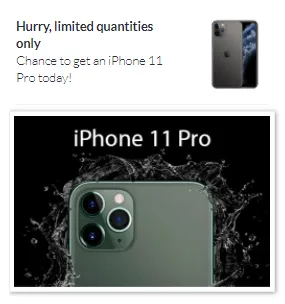
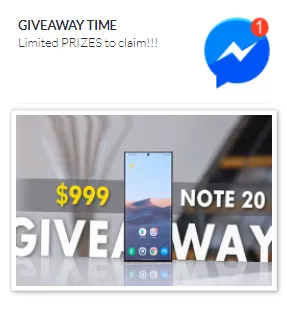
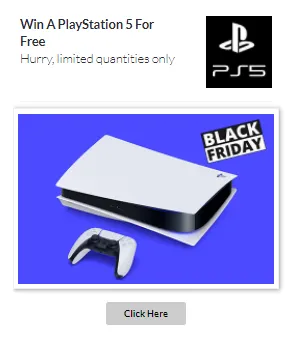
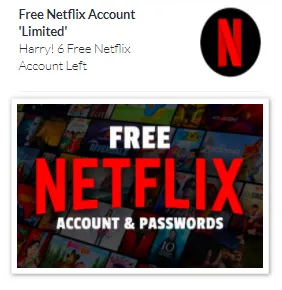
This is one of the most commonly-used psychological tactics in ads. Urgency means using time limitation to convince potential customers to grab the offer before the time runs out.
Making you feel that this opportunity comes but once in a lifetime can “force” you to jump on the opportunity right away.
The best way to induce urgency in your ad is to add a countdown or a limited-time offer. Using words like “until midnight only”, or “24-hour sale”, or “this offer expires in 15 minutes”. Flash sales are great examples of advertisers using the principle of urgency.
Here are some live ads that use this concept:



Have you ever noticed that many article headlines leave some information out? They do this intentionally to trigger your innate need to fill in the gap in information.
This principle is called the Curiosity Gap. As part of our survival instincts, we tend to want to fill in some missing information so that our existence will not be “threatened”.
It also applies to marketing. To incorporate the principle of curiosity into your push notifications or native ads, you must create a “gap” in the information. This can be done by blurring images, not finishing your sentence, and adding an ellipsis (the three consecutive dots that indicate that there’s something more). You can further include mystery by saying “you won’t believe this”, or “find out how”.
Here are some examples of ads using curiosity:

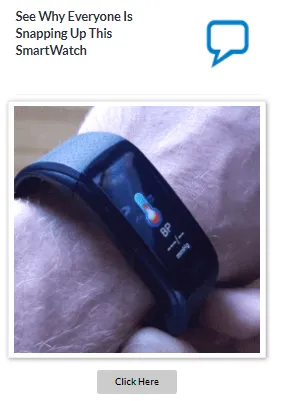
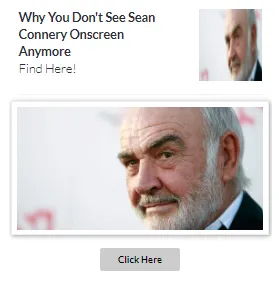
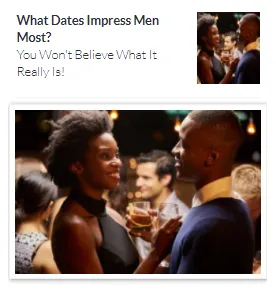
Chances are one or all of these four techniques have been used on you in the past. You never even realized that these are marketing strategies, have you?
We have three more marketing psychology concepts to show you in the second part of this topic.
Have you absorbed the concepts above and are ready to check the next part out? Click here for the next part: Using Psychology to Increase Ad Clicks and Conversions: Part 2
Receive top converting landing pages in your inbox every week from us.
Guide
Discover how OOH professionals can turn traditional billboard roles into high-ROI performance marketing careers. This guide shows how to reframe OOH work around measurable outcomes, competitor intelligence, landing-page optimization, and data-backed offers.
Liam O’Connor
7 minOct 8, 2026
Guide
Discover why OOH job boards are struggling to keep pace with the rise of data-driven media buying. This guide explores the modern skills OOH partners need, from audience intelligence and programmatic workflows to cross-channel measurement and performance strategy.
Priya Kapoor
7 minOct 8, 2026
Guide
Discover why high-concept campaigns like “Break Conferences” and “World Menu Heists” can generate outsized attention without requiring massive media budgets. This guide breaks down how to build ownable campaign IP, use familiar cultural formats, and turn a simple idea into a scalable, social-first marketing world.
Samantha Reed
7 minOct 7, 2026