11 минмая 18, 2026

Наши инструменты отслеживают миллионы нативных объявлений из более чем 60 стран и у тысяч издателей.
НачатьDrive through any mid-sized American city and you'll witness the same surreal gallery: a procession of billboards featuring stern-faced attorneys pointing at you, arms crossed, superimposed over gavels, scales of justice, and the obligatory phone number in 200-point type. Personal injury firms, DUI lawyers, insurance brokers — they all converge on an identical visual formula as if working from the same Canva template. The result isn't advertising so much as wallpaper. When every billboard on a fourteen-mile stretch of highway looks like it rolled off the same assembly line, drivers stop seeing any of them. The outdoor advertising industry crossed $9 billion in U.S. revenue and still faces this fundamental paradox: the more participants crowd into the medium using the same creative shorthand, the less any single message registers. It's collective blindness by consensus.
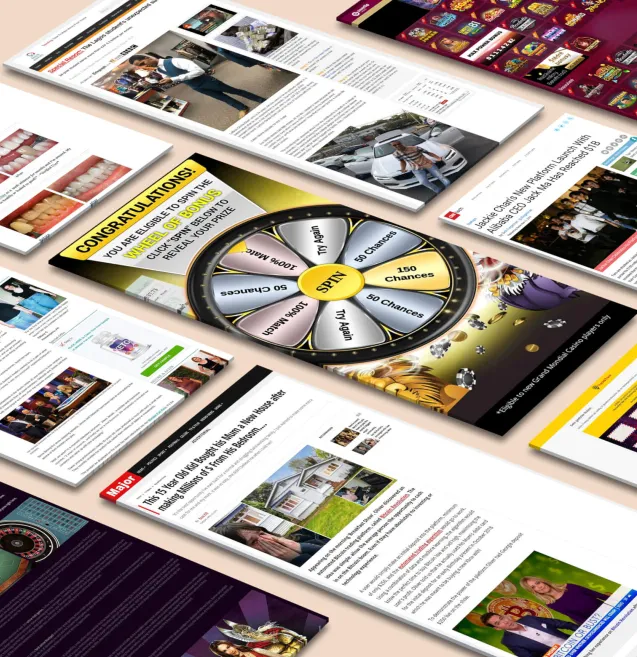
Now scroll to the bottom of any major news article — past the editorial content, into the recommendation widgets powered by Taboola, Outbrain, or MGID — and you'll feel an eerie déjà vu. A grid of thumbnails stares back at you: the shocked doctor with her hand over her mouth, the "before and after" split image with a red circle highlighting some alleged transformation, the close-up of a mysterious device "they don't want you to know about." The headlines are interchangeable. "Doctors Are Speechless." "This Simple Trick Changes Everything." "You Won't Believe What Happens Next." Swap the product and you could be looking at the same ad repeated fifteen times. You are, effectively, staring at a digital billboard corridor — and you've already trained yourself to look away.
This is deeply ironic. As AdPushup has explained, the entire philosophy of native advertising revolves around making ads appear less like ads, offering a corrective to the phenomenon of "banner blindness" that rendered traditional display formats nearly invisible. Native was supposed to be the antidote — paid media so well-integrated into editorial environments that audiences engaged with it willingly, even enjoyably. And for a time, it worked. Basis has noted that native display advertising stands out from other ad types precisely by blending in with surrounding content, offering a user experience that feels less disruptive than traditional banners. U.S. native ad spend now accounts for nearly 60 percent of total display spending, a testament to how thoroughly the industry bought into the promise.
But promises corrode when everyone executes them the same way. The medium that was engineered to cure banner blindness has incubated its own mutant strain of the disease. When every advertiser in a feed deploys the same curiosity-gap headline, the same emotionally manipulative thumbnail, and the same bait-style angle, the feed itself becomes a wall of sameness — indistinguishable from the highway billboard corridor where every lawyer wears the same power suit. As Brax has warned, the native advertising landscape rewards creativity and punishes stagnation, and the right phrase today can become a misfire tomorrow in a rapidly changing digital environment.
What makes the native version of this problem measurably worse than the billboard version is speed. Outdoor advertisers iterate on campaigns quarterly, maybe monthly. Native ad platforms run on algorithmic feedback loops that reward high click-through rates in real time. The moment one "Doctors Are Speechless" variant outperforms, dozens of competitors reverse-engineer the formula within hours. The algorithm then serves all of them to the same audience segments simultaneously, accelerating the piling-on cycle until the entire feed collapses into visual and linguistic monotony. The billboard problem took decades to metastasize. The native ad version accomplishes the same saturation in weeks — and resets the cycle with every new trending angle that briefly outperforms before it, too, gets cloned into oblivion.
Open any ad spy tool — Anstrex, AdPlexity, SpyFu, it doesn't matter which — and the dominant workflow is nearly identical. Filter by longest running. Sort by network or geo. Find the creative that's survived thirty, sixty, ninety days. Assume longevity equals profitability. Dissect the headline structure, the thumbnail aesthetic, the emotional hook. Swap a few adjectives, reshoot the image with a slightly different angle, maybe tweak the call-to-action from "Learn More" to "See How." Launch. Wait for data. Repeat.
This is the "spy and deploy" mental model, and it has become so embedded in affiliate and media-buying culture that questioning it feels almost heretical. The logic is seductive: if a creative has been running for months, someone is profiting from it, so reverse-engineering the formula should yield a share of that profit. And in fairness, the logic isn't entirely wrong. Competitive intelligence is a legitimate discipline. The problem emerges when every serious buyer in a vertical treats the same spy tool output as a finished creative strategy rather than a starting input.
Here's how the flywheel spins. One media buyer in, say, the joint-supplement vertical discovers a winning angle — perhaps a thumbnail of an elderly woman hiking paired with a curiosity-gap headline about a "kitchen spice." The ad performs well. Within days, the spy tools surface it. Within a week, a dozen affiliates have cloned the angle with cosmetic variations: a different hiker, a different spice jar, the same emotional architecture. Within a month, the feed is choked with near-identical creatives. Users see the same implied promise over and over, and the very thing that made the original ad effective — its ability to blend in as unique content that the audience finds more appealing than a traditional ad — evaporates. Click-through rates collapse across the board, not just for the copycats but for the originator too. The winner dies faster than it would have in a less transparent competitive environment, and everyone's cost per click inflates in lockstep.
This is creative decay operating as a self-defeating prophecy. The spy tool faithfully reports what was working, and the collective response to that intelligence ensures it stops working. It's the observer effect applied to media buying: the act of measurement — and the mass behavioral response it triggers — changes the outcome being measured.
What makes native advertising particularly vulnerable to this cycle is the mechanism that makes it effective in the first place. Unlike banner ads competing for attention through disruption, native ads succeed precisely because they feel organic, contextual, and fresh. As Basis explains, native display advertising stands out from other ad types by "blending in" with the content around it, offering a user experience that feels less disruptive. The moment a feed is saturated with interchangeable variations of the same angle, that chameleon quality is destroyed. The ads stop feeling like content and start feeling like what they are — a coordinated swarm of commercial messages wearing the same disguise. And as Brax has noted, native advertising is a landscape that rewards creativity and punishes stagnation — the right phrase today might be a misfire tomorrow in a rapidly changing digital wordscape.
None of this means you should stop using spy tools. It means you should stop using them the way everyone else does. When competitive intelligence is your only creative input — when "spy and deploy" is your complete strategy rather than one layer within a broader process — you aren't outsmarting the market. You're accelerating the very saturation that erodes your margins. Most media buyers scrolling through Anstrex right now are unwitting participants in a collective race to the bottom, each one copying the creative that the last person copied, each one shaving a few more basis points off the CTR that made the original worth copying at all.
Most marketers approach ad spy tools the way a tourist approaches a bestseller list — they want to know what's popular so they can consume the same thing. But the data that reveals what's working also reveals what's exhausted. You just have to read it differently.
Here's the counterintuitive move: stop using spy data to find creatives worth copying, and start using it to map creative saturation the way a cartographer maps terrain. The crowded peaks — those clusters of near-identical headlines, thumbnail styles, and emotional angles — don't show you where to plant your flag. They show you where the oxygen has already been consumed. The open valleys, the white space that everyone is ignoring, sit in the negative space surrounding those clusters.
This matters especially in native advertising because the format's entire value proposition depends on trust. As AdPushup explains, native ads take a soft interactive approach to their audience and carry an automatic higher foundation of trust — a trust that erodes the moment users see the same angles recycled across every content recommendation widget on every publisher page they visit. When forty different advertisers in the supplements vertical are running thumbnails of a close-up hand holding a capsule against a white background, paired with a headline structure like "[Body Part] Doctors Don't Want You to Know About," each successive iteration chips away at the implicit contract native advertising makes with the reader: this content is worth your attention.
Creative fatigue leaves fingerprints, and spy tools are the forensic kit. Here's a concrete framework for reading those signals inside Anstrex.
Step one: Map thumbnail archetype frequency. Filter by your vertical and sort by the number of active creatives. Don't look at individual ads — look at visual categories. How many ads use the "shocked face" thumbnail? How many use clinical before-and-after imagery? How many rely on stock-photo lifestyle shots? When you see a single archetype commanding 40+ active creatives, that's not validation. That's a saturation signal. The white space is everything that format is not.
Step two: Measure headline pattern density. Copy the headlines of the top fifty creatives in your niche into a spreadsheet and tag their structural pattern — listicle ("7 Signs Your…"), fear-based curiosity gap ("What Doctors Won't Tell You"), or social proof authority ("Millions Are Switching To…"). As Brax's research into marketing language makes clear, the right phrase today might be a misfire tomorrow in our rapidly changing digital wordscape. When one headline pattern dominates more than 60% of the active creatives in a vertical, its emotional trigger has already been dulled by repetition.
Step three: Read the longevity curve. Sort creatives by run duration and track how many new entrants are copying a format versus how many originals are still active. A creative wave is peaking when imitation density is high but the original's run duration has plateaued or shortened. It's declining when the oldest versions start disappearing while clones proliferate — a classic signal that the economics no longer support the format for sophisticated buyers, even as less experienced advertisers pile in.
Step four: Identify the negative space. Once you've mapped the dominant archetypes, headline structures, and emotional registers, list what's absent. If every thumbnail is clinical and cold, warmth is your opening. If every headline leads with fear, genuine curiosity or humor becomes the differentiator. If every angle is third-person authority, first-person vulnerability stands out.
The goal isn't contrarianism for its own sake. It's recognizing that when you see a densely packed cluster of identical creative approaches, you're looking at a niche where the audience has already been trained to tune out the dominant signal. Being the 41st version of the same ad doesn't give you the benefit of a proven format — it gives you the penalty of pattern-matched indifference.
Let's complete the billboard analogy from earlier. Picture a stretch of highway where every personal injury attorney bought the same template: navy blue background, arms crossed, bold sans-serif font, some variation of "We Fight For You." Now picture one firm that runs a billboard with a close-up of a crumpled bicycle wheel, no headline, and a single phone number in small white type. That's the one you remember three exits later. Not because it found an empty highway — the competition was identical. It found an empty creative pattern within a saturated market.
White space, in the context of native advertising, isn't the absence of competition. It's the absence of a specific aesthetic, emotional register, or structural format in a space crowded with competitors all copying each other. And you can map it systematically.
Step 1: Audit the Dominant Creative Patterns in Your Vertical
Pick your niche. Open your spy tool of choice. Pull every active creative running across your target networks for the last sixty days. Don't analyze individual ads yet — just collect. You want volume. Fifty creatives minimum, ideally over a hundred. The goal is to see the field, not a single player.
Step 2: Categorize Across Four Dimensions
Sort every creative into buckets across four axes: thumbnail style (stock photo, UGC-style, illustration, before/after split), headline formula (curiosity gap, listicle, fear-based, aspirational), emotional trigger (anxiety, hope, outrage, FOMO, relief), and landing page format (advertorial, quiz funnel, video sales letter, longform story). As Brax has noted, the right phrase today might be a misfire tomorrow in our rapidly changing digital wordscape — and the same principle applies to visual and structural patterns, not just copy.
Step 3: Identify the 2–3 Patterns That Account for 70%+ of Active Creatives
This is where the saturation map crystallizes. In most verticals, you'll find a stunning lack of variety. Supplement advertisers, for instance, overwhelmingly default to the same cocktail: close-up of a worried face, curiosity-gap headline ("Doctors Are Speechless…"), anxiety trigger, advertorial landing page. Finance advertisers lean on calculator screenshots, number-driven headlines, and FOMO. When two or three combinations dominate the landscape, you've found the saturated pattern — and its negative space.
Step 4: Deliberately Build Creatives That Violate Those Patterns
Here's a hypothetical before/after. Before: A weight-loss supplement ad uses a thumbnail of a tape measure around a waist, the headline "Dietitians Hate This One Trick," a fear/shame trigger, and a standard advertorial. It looks like every other creative in the feed. After: The same product runs a thumbnail of a half-eaten birthday cake shot in warm, inviting light. The headline reads "She Stopped Counting Calories on Her 50th Birthday." The emotional register is joy and relief, not shame. The landing page is a first-person narrative, not a pseudo-medical article. Everything about it violates the category norm — and that violation is precisely what restores the novelty that made native advertising powerful in the first place.
This works because of a foundational truth about the format. Native ads succeed by being unintrusive and adaptable, connecting with users through format comfort rather than disruption. But comfort has a shelf life. When every ad in the feed uses the same emotional palette and visual shorthand, that uniformity itself becomes a form of disruption — it triggers the same pattern-recognition fatigue that banner ads created years ago. A deliberately different creative doesn't abandon the native principle; it reclaims it by reintroducing the sense of organic discovery that a wall of identical thumbnails destroys.
You don't need a market no one has found. You need the creative approach no one in your market is using. That's the white space worth claiming.
Most advertisers think about native ad performance as a two-player game: their brand versus the consumer. But there's a critical third player at the table — the network itself — and understanding its incentives explains why creative sameness isn't just an aesthetic problem. It's a structural penalty baked into the system.
Native ad networks exist in a delicate equilibrium. On one side, they need advertisers buying inventory. On the other, they need publishers supplying that inventory. And publishers will only keep supplying it if their audiences stick around. As AdPushup explains, native advertising's core value proposition for publishers is that it creates "a larger loyal user base who are at a lesser risk of unsubscribing and backing out." That loyalty depends entirely on the user experience remaining clean, relevant, and non-repetitive. The moment a publisher's content feed starts feeling like a wall of identical clickbait — the same stock-photo thumbnails, the same "one weird trick" headlines, the same before-and-after grids — readers disengage, bounce rates spike, and the publisher's entire monetization model starts to crack.
This is why networks can't afford to be agnostic about creative quality. Their survival depends on protecting the feed.
Think about it from the network's engineering perspective. Every impression served is a micro-bet: will this ad generate engagement (a click, a scroll-pause, a read) or will it generate friction (an eye-roll, a bounce, an ad-blocker installation)? When an algorithm detects that a particular creative pattern — say, a specific combination of headline structure, thumbnail style, and CTA format — has been replicated across dozens of advertisers in the same vertical, it has strong reason to start suppressing that pattern. Not because the network is punishing any individual advertiser, but because it's protecting the ecosystem. Repetitive creatives degrade click-through rates across the feed, which lowers publisher eCPMs, which makes publishers consider switching to a competing network.
The result is an algorithmic feedback loop that structurally rewards differentiation. Fresh creative signals — an unexpected image angle, an unconventional headline cadence, a format that doesn't match the prevailing template — earn better initial placements because the algorithm predicts higher engagement novelty. Higher engagement means better quality scores. Better quality scores mean lower CPCs and more favorable auction dynamics. This is why native advertising is widely described as a landscape that rewards creativity and punishes stagnation — it's not a platitude, it's a description of how the underlying systems actually work.
And the creative opportunity here is genuine, not just theoretical. The native format inherently opens up space for creativity and provides unique content that audiences find more appealing than traditional display, which is precisely why the format has scaled so dramatically — accounting for nearly 60% of total US display ad spending in recent years. But that scale also means the algorithms governing these networks have become more sophisticated at identifying and deprioritizing creative fatigue.
Here's the takeaway most media buyers miss: when your CPC starts climbing and your CTR starts falling, the instinct is to blame audience exhaustion or bid competition. Sometimes that's accurate. But often, what you're actually experiencing is the network itself recognizing that your creative looks like everything else in the feed and quietly downranking it. The billboard saturation problem doesn't just bore consumers — it triggers a systemic response from the infrastructure delivering your ads. Novelty isn't a luxury in this environment. It's the price of algorithmic access.
Получайте лучшие конверсионные лендинги каждую неделю на свою почту.
Обязательно к прочтению
Узнайте, как мероприятие Pure Leaf «Break Conference» можно использовать в качестве стратегии, охватывающей весь воронку продаж, включая Native, Push и Pop-рекламу. В этом руководстве показано, как маркетологи могут использовать контент создателей, TikTok Instream, Anstrex, поисковые данные и PR-сигналы, чтобы превратить позитивную акцию бренда в измеримый механизм эффективности.
Priya Kapoor
7 минсент. 27, 2026
Обязательно к прочтению
Узнайте, как превратить один сильный бренд-момент в масштабируемые воронки Native, Push и Pop, вместо того чтобы полагаться на одно главное объявление. В этом руководстве рассматриваются модульный креатив, построение воронок в TikTok, конкурентная разведка с Anstrex, тестирование на разных каналах и повторяемая цепочка поставок креативов.
Dan Smith
7 минсент. 26, 2026
Выбор редакции
Узнайте, как специалисты в области наружной рекламы могут применить свои навыки продаж, операционного управления, креатива и организации мероприятий в эффективной нативной и пуш-рекламе. В этом руководстве объясняется, как опыт работы с билбордами можно использовать при закупке цифровых медиа, управлении каналами, создании цепляющего креатива, построении воронок продаж и достижении измеримых результатов.
Rachel Thompson
7 минсент. 26, 2026