11 minSeptember 14, 2026

Our tools monitor millions of native, push, pop, and TikTok advertising campaigns.
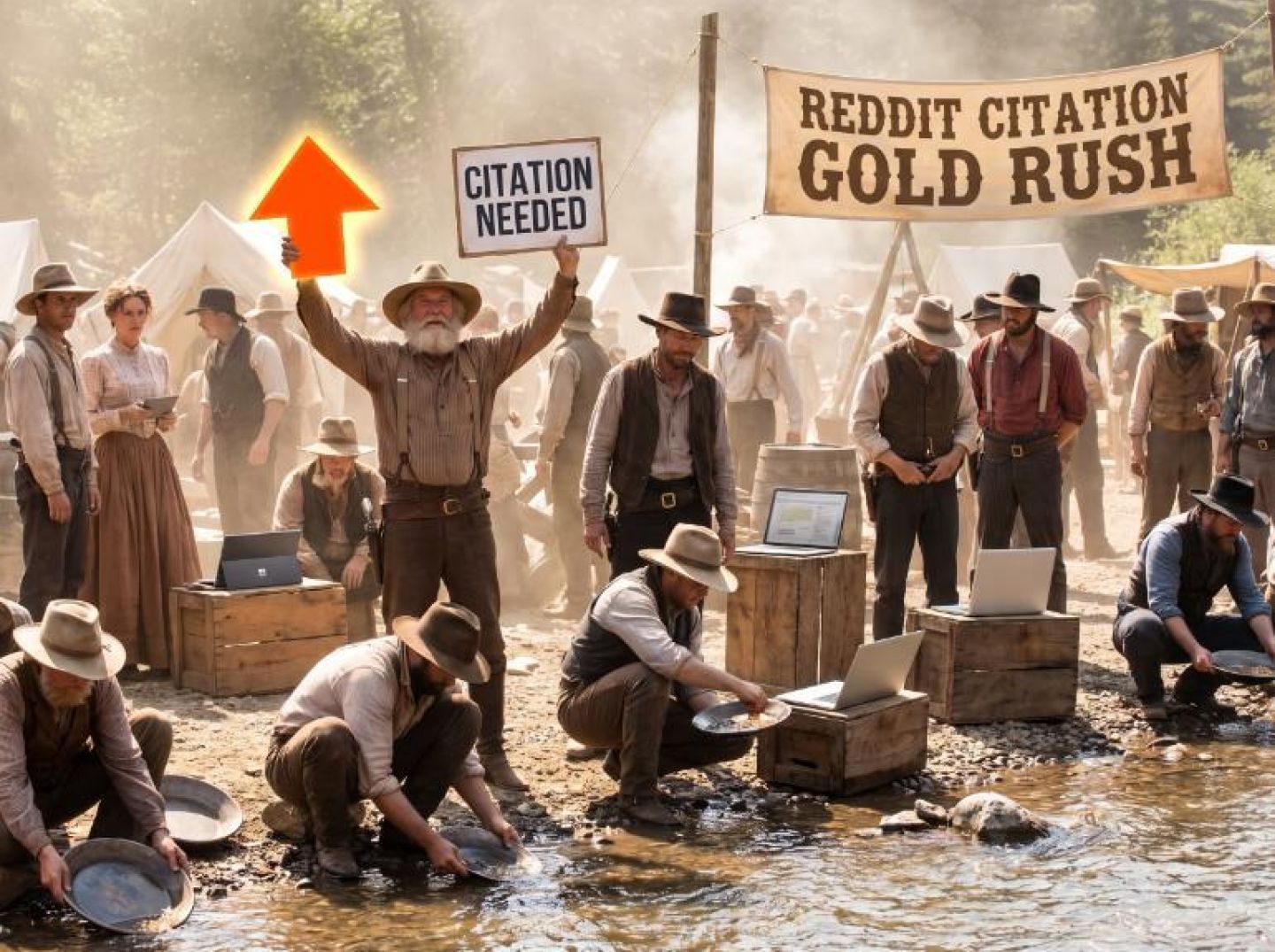
Get StartedEvery hype cycle in search starts the same way: a new signal becomes the shortcut to visibility, an industry springs up to manufacture that signal at scale, and then the cleanup arrives. Anchor text, guest post networks, private blog networks, “link wheels” — each had its moment, and each eventually met a wave of penalties, de-indexing, and algorithmic filters. The only genuine innovation this time is the surface. The signal is AI citations. The surface is Reddit.
Right now, large language models pull heavily from TikTok-bots-friend-or-foe" target="_blank" rel="noreferrer noopener">user-generated content. One recent analysis found that about one in every five off‑page citations in AI answers comes from Reddit, with that share growing roughly 30% year over year, a trend unpacked in detail by Amanda Kusner and Peter Wischmann. For multi‑location brands, those Reddit mentions can be the difference between being recommended in an AI answer and disappearing entirely from the new “no‑click” reality, where roughly half of searches now end without a single visit to your site.
That kind of concentration always attracts arbitrage. As one analysis of the emerging “answer engine optimization” industry describes it, AI models cite Reddit “more heavily than almost any other source,” and that has already spawned a cottage market of aged accounts, paid upvotes, and ghostwritten threads sold as a direct path to AI visibility, turning Reddit into the new “link farm” for citations. The scheme is simple: manufacture a plausible-looking thread, stuff it with brand and product language, inflate its visibility with synthetic engagement, and wait for AI scrapers to pick it up so your domain gets echoed as a “trusted” source.
We’re already seeing the fallout. When peptide and hormone-replacement vendors flooded r/Biohackers with thinly veiled pitches, the subreddit’s moderators concluded that the humans weren’t the audience anymore — the machines were. They explicitly called out brands for using the community as an AEO surface and locked promotional content into constrained megathreads, a defensive move against being turned into an AI training honeypot, as documented in reporting on Reddit‑seeding abuse in biohacking communities. This is what “success” looks like for manipulative tactics: short‑term visibility followed by community backlash and platform countermeasures.
Meanwhile, the broader AI ecosystem is becoming more selective about which surfaces it trusts. Early data on AI “citation share” shows that social platforms — with Reddit prominent among them — already capture a sizable portion of citations, but the underlying pattern is that AI systems lean on a small set of ecosystems they perceive as credible, from Amazon and major retailers to large, well‑governed UGC hubs, as recent MarTech analysis of AI dashboards explains. A citation surface you can simply buy is, by definition, a surface that can be modeled, scored, and filtered.
At the same time, marketers are chasing Reddit because they can feel the ground moving under traditional search. AI overviews are soaking up intent; some publishers are seeing referral traffic fall by as much as 60% as users get their answers without ever clicking through, a shift described in recent coverage of how AI is reshaping visibility and elevating Reddit and YouTube as training sources. With that much traffic disappearing, the lure of a quick win — a handful of manufactured threads that “guarantee” you show up in Gemini or ChatGPT screenshots — is extremely hard to resist.
But this is exactly the trap. When your AI visibility strategy depends on manipulating a single, highly scrutinized platform, you’re building on sand. Reddit has strong commercial incentives to protect the perceived authenticity that drives its $762 million in quarterly ad revenue and 60%+ growth, as well as the licensing deals that make its data so valuable to AI companies, dynamics that Marketing Dive’s breakdown of Reddit’s momentum underscores. The more obviously marketers try to game that authenticity, the more aggressively Reddit — and the AI models consuming it — will respond with throttling, quarantining, and down‑weighting.
More importantly, Reddit is just one node in a much larger citation graph. AI models assemble answers from a blend of owned sites, third‑party publications, review platforms, and community spaces. As one framework for AI citation audits puts it, the majority of citations come from independent sources, and the highest‑leverage move is embedding your brand across that broader content ecosystem through expert contributions, authoritative guides, and original data — not by brute‑forcing a single venue with synthetic chatter, a perspective explored in depth in.
Treating Reddit as the new backlink farm misses what’s actually changed: the shift from ranking to being recommended. AI systems are hunting for credible, corroborated, human‑anchored signals across the entire web. If you only show up where you can pay to play, you’re marking yourself as exactly the kind of noise these systems are being trained to ignore.
AI search doesn’t treat every citation equally. It doesn’t even treat the same citation equally across engines. It assigns roles.
BrightEdge’s analysis of ChatGPT and Google AI Overviews shows that identical sources are cast in different “jobs” depending on the query and the engine evaluating them. In their words, AI systems are “assigning sources specific jobs within the answer-generation process,” with platforms like Reddit sometimes functioning as authority, other times as social proof, and still others as how‑to guidance or comparison fodder, depending on context and co‑citations in the answer environment, according to their research.
That nuance is easy to miss if you only look at whether you’re cited, not how you’re used.
For example, BrightEdge found that the same Reddit thread can appear alongside Mayo Clinic and Healthline in ChatGPT answers roughly a third of the time, which positions Reddit as quasi‑authoritative medical commentary. But when Google’s AI Overviews pull that same thread, it’s far more likely to appear next to YouTube, TikTok, or Instagram, cast as social context or crowd sentiment rather than a primary reference, a pattern they describe as a “6x authority flip.” One platform, two completely different jobs.
Zoom out, and a pattern emerges:
This is why “get mentioned on Reddit” as a strategy is dangerously blunt. You’re not just trying to appear; you’re trying to be cast correctly.
AI engines are, in effect, building a mental model of the web where each domain, platform, and even individual author entity has a default job description. Some are “primary explainer.” Some are “peer review.” Some are “real‑world friction report.” Others are “credentialed arbiter.” The same citation can be a footnote or the backbone of the answer, depending on which job it’s assigned.
Earned media shows the same pattern. Large‑scale analyses of what AI actually cites indicate that journalism and independent editorial coverage are massively overrepresented. In Muck Rack’s multi‑engine “What is AI reading?” study, summarized by MarTech, earned media accounted for 84% of all citations across ChatGPT, Claude, and Gemini, with paid and advertorial content barely registering. That’s not an accident; it’s a reflection of the job these models have learned to give newsrooms: default validator and summarizer of institutional reality.
Editorial pieces about your brand end up doing double duty in this system. First, they serve as external evidence that you exist and matter, a kind of third‑party due diligence that models lean on, as MarTech explains, because it’s the one credibility signal you can’t self‑manufacture. Second, they’re highly “extractable” — neatly structured claims, clear attribution, a known author entity — which makes them ideal raw material for AI to quote, paraphrase, and stitch into answers.
This is the real shift: AI visibility is no longer a flat race for blue links. It’s a labor market where sources are hired into specific roles inside the answer. A subreddit might be brought in as the “voice of the crowd,” a niche blog as the “deep explainer,” a Gartner note as the “enterprise validator,” a product teardown thread as the “risk disclosure.”
If you’re still thinking in terms of “show up somewhere in the citations,” you’re playing the wrong game. You need to engineer what job your brand, your content, and the platforms that mention you are most likely to be hired for — and by which engine. The next generation of “hidden” AI citation hubs will be built around that job market, not around any single platform’s current hype cycle.
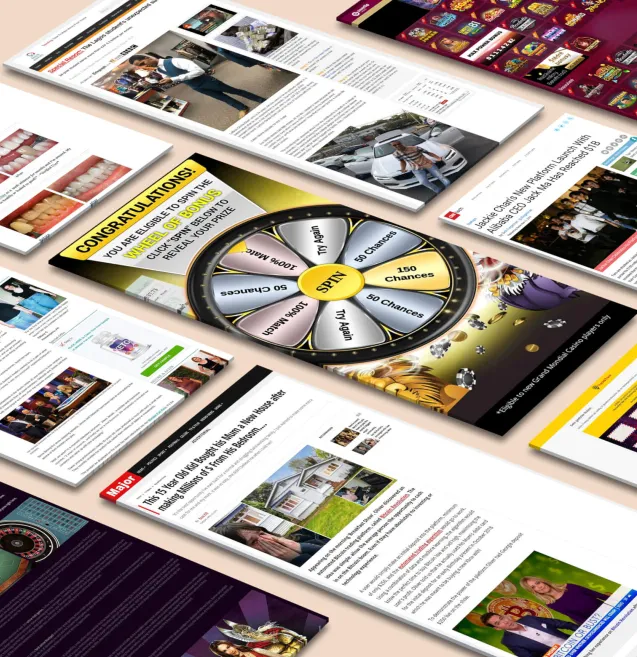
If Reddit is the new link farm, the real upside is hiding in places most marketers barely track: arbitrage sites, long-tail review hubs, and what you could call “synthetic communities” — properties that look like social proof at a glance, but are actually ad machines with just enough content structure to feel trustworthy.
Trendos’ analysis of 107 million AI answers, published via Search Engine Journal, makes one thing uncomfortably clear: AI engines lean heavily on “community & UGC” and “independent editorial & reference,” and far less on brand-owned pages, especially in B2B and services. In IT and solutions services, for example, only 2% of leading citations come from brand and retail domains, versus 51% from community content and 47% from independent editorial sources. Marketers see those numbers and immediately think “Reddit, YouTube, forums.” But there’s a whole shadow ecosystem feeding those same citation buckets that doesn’t look like a classic community at all.
Start with arbitrage sites: comparison pages, quasi-editorial blogs, and “best X tools” roundups designed primarily to capture search demand and monetize it through affiliate links or lead reselling. Historically, they lived or died on Google rankings. Now they’re being retooled as AI citation honey traps — long-form, FAQ-rich, and obsessively structured for machines, not humans. The logic is the same one driving Time’s AI-only ad inventory, where an entire layer of the site is written specifically for AI crawlers instead of readers, as MarTech uncovered. Once you accept that models, not humans, are the primary audience, you start to see why an “independent” SaaS comparison site happily invests in 4,000-word explainers no human will scroll through: they’re optimized as training and retrieval fodder.
Then there are niche review hubs, the modern equivalent of micro-directories and specialist buyer guides. Trendos’ breakdown shows that in consumer goods, brand and retail domains contribute 46% of leading citations, but “independent editorial & reference” barely registers at 4% across engines like ChatGPT, Gemini, and Google AI Overviews, according to their report. That 4% is not just Wirecutter and Wikipedia. It’s also dozens of mid-tier review properties that have quietly standardized their schema, built robust comparison tables, and seeded thousands of “how to choose X” pages that read like buying guides but function like structured reference data for AI systems.
The most interesting group, though, are the “synthetic communities.” These are sites that imitate the surface patterns of real user discussion — Q&A layouts, comment threads, user handles, voting widgets — without actually being organic communities in the Reddit sense. Answers are often seeded or fully written by staff (and increasingly by AI), with a thin layer of genuine user interaction on top. To a crawler, and often to an answer engine, they register as UGC: multiple voices, disagreements, contextual stories, and a dense web of internal links. To a strategist running an AI citation audit of their space, the pattern is familiar: your brand doesn’t show up on Reddit, but it appears repeatedly on these pseudo-forums, because someone figured out they’re easier to control and less likely to spark the moderation backlash now hitting manufactured Reddit content, as Search Engine Journal warned.
What makes these overlooked players powerful is not their human traffic — many of them have very little — but their role assignment in AI answers. As Neil Patel’s team has argued in the context of AI citation audits, engines aren’t just picking sources; they’re slotting them into specific jobs: the “definition,” the “step-by-step how-to,” the “comparative authority,” the “peer voice.” Arbitrage sites and synthetic communities are increasingly manufactured to specialize in those jobs. One domain becomes a go-to for pros-and-cons tables. Another is built entirely around “Is X worth it?” threads. A third dominates “which tool should I choose?” formats. For models that prize consistency and pattern recognition, that specialization makes them highly reusable.
Importantly, this entire layer sits outside the Reddit/YouTube arms race that marketers are currently obsessing over. While brands argue over whether to pour resources into subreddits or channels, AI systems are quietly learning that a cluster of mid-tier comparison sites is a reliable place to grab structured context, and that a handful of Q&A-style properties can stand in for “community consensus” without the volatility and manipulation risk of mainstream platforms. Meanwhile, AI crawlers are already being treated as a distinct audience segment worth targeting with bespoke content, as Time’s AI-only ad initiative shows, according to.
For brands, the takeaway is not to start churning out fake communities or to throw money at every affiliate comparison site that sends a sponsorship deck. It is to recognize that the “independent” and “community” buckets in AI citation data are far more diverse than the big logos suggest. If you only think in terms of Reddit and YouTube, you’ll miss the quiet, structured, and highly machine-readable properties that are already seeding the next generation of AI answers — and that will become the real leverage points as platforms crack down on the obvious manipulation plays.
Before you can seed the next wave of AI citation hubs, you need to see the web the way ad arbitrageurs and media buyers already do: as a lattice of “money pages” and traffic pipes, not a flat list of websites. Spy tools like Anstrex, Adplexity, and Similarweb’s affiliate intelligence features are built to expose that lattice. With a bit of retooling, they double as reconnaissance systems for finding tomorrow’s AI-favored surfaces.
The logic is simple: wherever arbitrage operators, comparison publishers, and niche review networks are quietly buying and selling attention today, AI models will over-index tomorrow. We’re already seeing that bias in how social ecosystems like Reddit are disproportionately cited in AI answers; MarTech’s analysis of citation share shows social platforms and marketplaces absorbing an outsized share of AI trust in many categories. Your job with spy tools is to find the sub-Reddit equivalents: properties that haven’t hit the mainstream radar yet, but are already being treated as “signal-rich” by serious advertisers.
Start with vertical filters, not keywords. In Anstrex or any native/affiliate spy platform, select your core industry (e.g., “health & fitness,” “home improvement,” “B2B software”) and sort by spend or longevity of creatives. Then ignore the brands for a moment and click into the publishers and landing pages they’re buying on. You’re looking for three patterns:
3. Obvious arbitrage economics. Properties running a dense mix of native widgets, programmatic slots, and outbound affiliate CTAs, yet still attracting persistent ad spend. If experienced media buyers are willing to keep paying to appear there, it’s a signal that these pages sit on strong intent pathways—exactly the sort of behavior-driven ecosystems AI systems tend to over-sample when building their answer graphs.
Once you’ve surfaced a batch of these sites, cross-check them against AI visibility, not just human traffic. Use prompt-based testing to see whether they already show up as citations or are referenced implicitly in AI answers. This is where the concept of “citation share,” discussed in MarTech’s coverage of AI reporting, becomes a tactical metric: you’re less concerned with how much traffic these hubs have today, and more with how often they’re shaping answers inside AI systems.
Spy tools also help you spot something subtler: AI-only surfaces masquerading as ordinary pages. When MarTech reported that Time had created crawler-specific sponsored experiences for AI agents like ClaudeBot and OAI-SearchBot, it validated a direction ad tech has been drifting toward for years—segments of the web written primarily for machines. If a mainstream publisher can stand up a machine-facing layer in partnership with an adtech vendor, you can assume performance marketers are experimenting with quieter versions of the same move. Watch for domains where ad spy screenshots don’t quite match what you see in a real browser session, or where “ghost” subdirectories only seem to appear in scraped creative previews. Those are early signs of AI-oriented surfaces you won’t find via traditional SEO tools.
Finally, treat Anstrex and its peers as hypothesis engines, not gospel. When your AI citation audit, the kind Neil Patel describes, shows that models lean heavily on independent, third-party sources for your category, use spy intel to ask: Where are those third parties getting their demand and monetization from? Which smaller hubs are quietly sitting one or two hops upstream of the obvious players? That’s where you seed: expert contributions, co-authored guides, original data drops, and structured comparison content that can be syndicated or reinterpreted across the network.
In other words, ad intelligence doesn’t just tell you where ads run. It maps the commercial backbone of the web—the same backbone AI systems increasingly treat as their ground truth. If you can trace where capital is already flowing, you can usually see where the next generation of “hidden” AI citation hubs is forming before anyone bothers to talk about them on Reddit.
If Section 4 was about reconnaissance, this phase is about occupation.
Once you’ve identified future AI citation hubs with tools like Anstrex and Similarweb, the work shifts from “spot the arbitrage farm” to “quietly become part of its scaffolding.” You’re not just buying placements; you’re shaping properties so they evolve into durable, AI-friendly reference layers where your brand is structurally hard to remove.
Think of three overlapping plays: content embedding, structural influence, and crawler-facing optimization.
1. Treat arbitrage sites like third‑party editorial, not disposable ad inventory
The Trendos study of 107 million AI answers showed that community and UGC sources account for roughly half of leading citations across industries, but independent editorial and reference sites still make up as much as 47% of AI citations in IT and services, according to their industry breakdown. Most arbitrage and long‑tail review properties sit somewhere between “UGC veneer” and “independent editorial,” which is exactly the gray zone AI systems love.
Approach them the way an AI citation audit would tell you to approach high‑value third parties: as places where you want to be embedded in the content ecosystem, not just appear in banner rotations. As one AI visibility guide explains, the leverage comes from contributing expert commentary, supplying reference‑worthy explainer content, and becoming a recurring example inside their evergreen guides and comparisons, not from a single sponsored post that disappears after a campaign flight.
Concretely:
You’re not trying to “own” the site; you’re trying to quietly own the parts that AI is most likely to quote.
2. Co‑design page structures that are extraction‑ready by default
Most arbitrage operators optimize for RPM, not retrieval. They want ad impressions, not citations. Your job is to make it trivially easy for them to adopt layouts that are also perfect for AI extraction: clean headings, explicit Q&A blocks, comparison matrices, and concise summaries that an answer engine can lift in one gulp.
AI search practitioners have already noted that pages need to be “extraction‑ready, not just rank‑ready,” and that clear, structured copy is what turns a page into a reliable citation asset. You can smuggle that thinking into arbitrage ecosystems by:
If you’re the partner handing them higher‑converting templates, they’ll roll those designs out across thousands of pages. Your brand then lives inside the default sentence patterns and tables that AI systems learn to trust and reuse.
3. Build synthetic “community” signals without faking authenticity
The Trendos data shows that community and UGC sources are the single largest chunk of citation share, hovering at about 50% across industries. That’s why the smartest arbitrage operators simulate community—ratings widgets, comment snippets, pseudo‑Q&A blocks—without actually hosting a messy forum.
Your opportunity is to steer those synthetic communities so they emit the same trust signals AI systems already over‑weight from Reddit and YouTube, which one overview of AI search shifts has described as rising citation sources in their own right.
Instead of ghost‑writing fake reviews, you:
You’re effectively helping arbitrage sites cosplay as thin communities—just enough signal for AI models, without the overhead of real moderation.
4. Don’t ignore the crawler‑only layer
Finally, there’s a parallel universe you can’t see in the browser: content served only to AI crawlers. Time’s experiment with “agent ads”—a separate, AI‑only layer of sponsored banking content shown to ChatGPT, Claude, and Perplexity bots while hiding it from human visitors—illustrates how aggressively publishers are starting to shape the machine‑visible version of their sites.
Arbitrage operators are natural candidates to adopt similar tactics, because they already segment traffic ruthlessly. If you’re the one bringing them this play, you can:
This moves you from merely being well‑represented in synthetic communities to actively shaping what the next generation of answer engines even believes about the category.
Infiltration here isn’t a one‑time campaign. It’s a slow, structural renovation of properties that already sit in the slipstream of AI crawlers—until your definitions, comparisons, and data are so baked into their templates that any answer assembled from those hubs ends up citing you by default.
Receive top converting landing pages in your inbox every week from us.
Recently Updated
AI citation visibility is moving beyond Reddit and major forums toward niche review hubs, comparison sites, and other structured third-party properties. This guide shows how ad intelligence can uncover emerging citation hubs and how marketers can build durable, extraction-ready content ecosystems around them.
Dan Smith
7 minSep 14, 2026
Editor’s Pick
Most user-first strategies stop at keywords, missing the real journeys people take across ads, landing pages, emails, and multiple channels. This guide shows how to use competitor ad intelligence and mystery shopping to uncover those journeys and turn them into people-first content briefs and conversion-focused funnels.
David Kim
7 minSep 14, 2026
Must Read
Learn how to turn competitor funnels into structured training data for your own AI ad engine. Using Anstrex, you can identify consensus patterns, uncover information gaps, and generate differentiated campaigns that are built to outperform generic AI-generated creative.
Marcus Chen
7 minSep 10, 2026