12 minOctober 1, 2026

Our spy tools monitor millions of native ads from over 60+ countries and thousands of publishers.
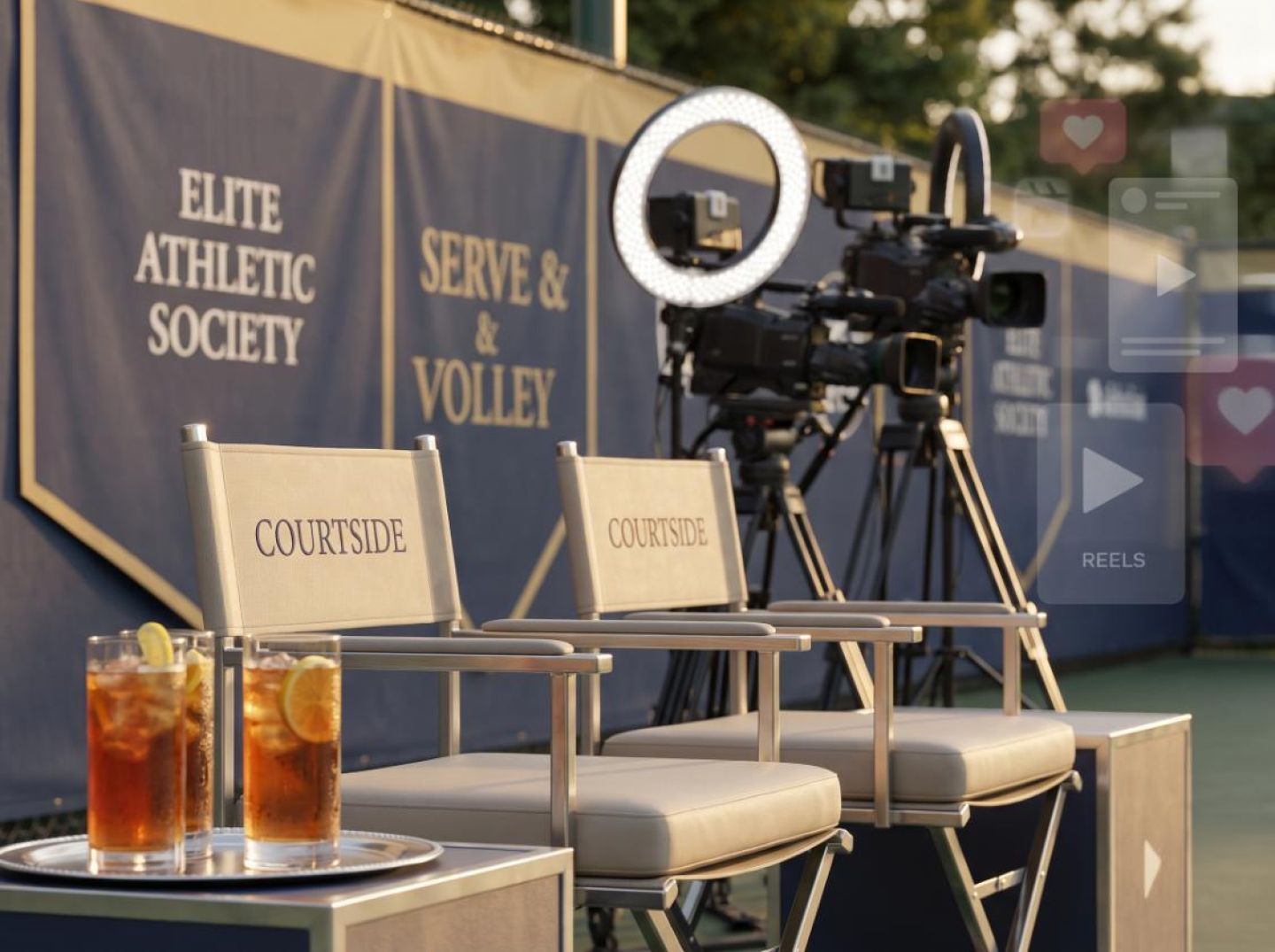
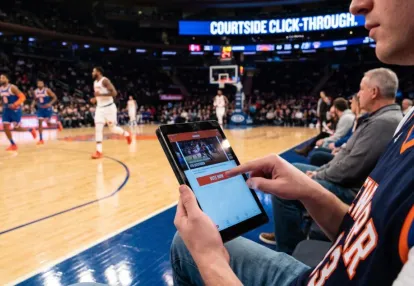
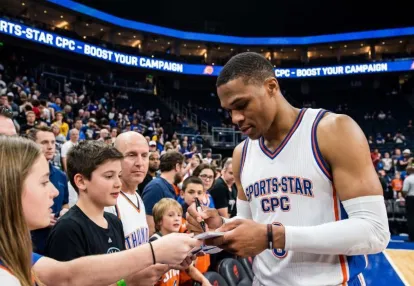
Get StartedThe photos from Pure Leaf’s “Break Conference” with Amanda Anisimova are flawless. Courtside shots at a marquee tennis event. Tasteful logo placement. Glossy reels of athletes reflecting on “pressure” and “taking a break.” Brand-safe, culture-adjacent, and tailor‑made for an internal recap deck that screams: this is what good marketing looks like.
But if you live inside performance dashboards instead of hospitality suites, you see a different story.
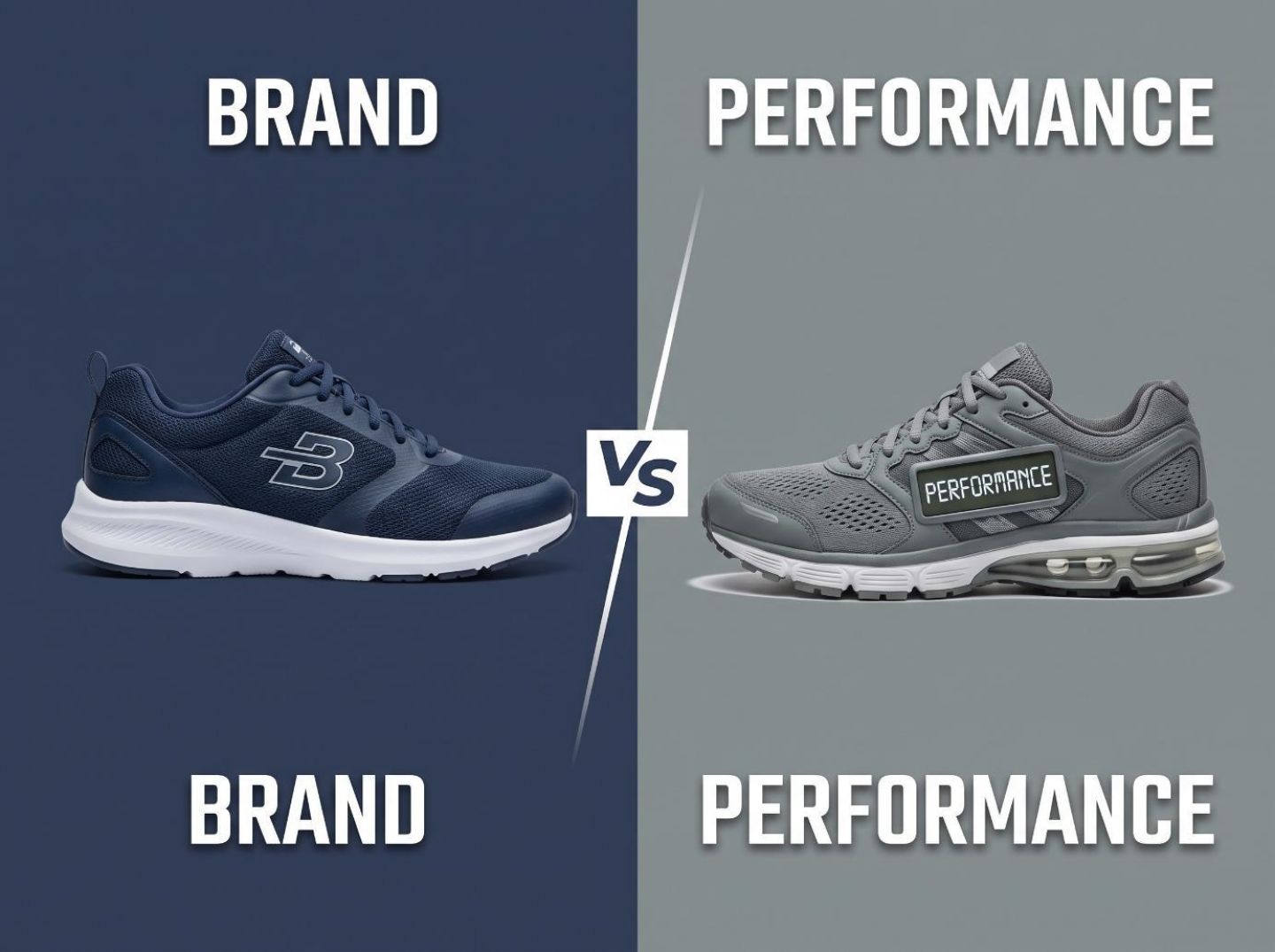
The distance between campaigns that impress CMOs in VIP boxes and campaigns that quietly mint profit in native, push, and TikTok has never been wider. One plays to perception; the other plays to the auction. One is engineered for sizzle reels; the other is engineered for anstrex.com/blog/measuring-what-matters-active-time-and-scroll-depth-in-ad-performance" target="_blank" rel="noreferrer noopener">scroll depth, click-through, and downstream revenue. Pure Leaf’s Amanda Anisimova partnership is a case study in that gap: a pristine sponsorship wrapped around a sports “moment” with almost no visible connection to the messy, iterative work that actually drives acquisition.
Look at how winning brands are treating TikTok. When Gana Energia tested polished brand assets against creator‑led content built through TikTok One, the scrappier, more “native” videos didn’t just win an engagement trophy — they produced a 632% increase in lead volume and a 64.5% drop in cost per lead. That’s not vibes. That’s performance. The difference wasn’t courtside access or production value; it was respecting the platform’s language, briefing creators like strategic partners, and wiring every view to a measurable call to action.
Meanwhile, media leaders wrestling with fragmentation are increasingly clear that you can’t just “show up in culture” and call it a strategy. In a recent Brandweek conversation, Carat North America’s CEO and Papa John’s SVP of marketing described a media reality that looks less like a neat funnel and more like a “bowl of spaghetti” of touchpoints. Their answer wasn’t another shiny sponsorship; it was a playbook that explicitly connects cultural moments to creators, aggregators, organic social, and — crucially — a single north‑star metric that keeps brand and performance work pulling in the same direction. In other words: if it can’t be instrumented, it doesn’t get to call itself success.
Pure Leaf’s “Break Conference” lives on the wrong side of that line. It borrows the surface codes of modern marketing — athlete influencers, mental health narratives, social content — without tapping into what actually makes performance channels lethal. There is no clear signal that the content was designed for native environments, no evidence of creator A/B testing, no aggressive offer architecture, no affiliate rails to turn affinity into first‑party data. It’s the spiritual descendant of an old‑school TV sponsorship repackaged for TikTok and Instagram, built for screenshots in a brand book, not for auctions run by opaque algorithms.
And those algorithms are not sentimental. As automation eats more of the buying mechanics, the levers that still matter are precisely the ones this kind of campaign ignores: creative that is ruthlessly native to the feed, clean first‑party signals, and an obsessive focus on business outcomes over impressions. As one recent MarTech panel put it, legacy engagement metrics and surface‑level attribution are increasingly unreliable in an AI‑mediated landscape; if you’re not feeding platforms the right inputs and optimizing to hard outcomes, your “breakthrough” campaign is just expensive content.
From the outside, Pure Leaf’s tennis play looks like the future: polished athlete content in a premium sports environment. From the inside — from the perspective of performance marketers grinding on native, push, and TikTok — it looks like the past: a beautiful, brand‑safe story with no spine of measurement, no creator‑driven experimentation, and no real plan to turn courtside applause into click‑through, conversion, and repeat revenue.
Pure Leaf’s “Break Conference” with Amanda Anisimova is everything a big-brand marketer is trained to admire. It has a clear emotional territory (“pressure” and the need to “take a break”), a culturally relevant backdrop (tennis, wellness, mental health), a recognizable athlete, and a visual language built for social thumb‑stopping. It looks like a Cannes case study in miniature: strong insight, cinematic execution, tasteful purpose.
That’s precisely the problem.
Conceptually, the Break Conference is a brand‑platform move, not a performance system. It’s a one‑off spectacle grafted onto a calendar moment, rather than an engine designed to predictably generate leads, purchases, or repeat behavior. There’s no obvious spine of measurable actions running underneath the hero content: no clearly defined audience segments, no observable journey from awareness to trial, no instrumentation that would let a CMO say, “This many people who engaged with the conference went on to buy, subscribe, or advocate.”
On paper, this kind of campaign gets justified as “upper‑funnel.” But modern performance thinking doesn’t accept “upper‑funnel” as a hall pass from accountability. Performance‑oriented teams are expected to translate impressions and engagement into business language—incremental revenue, margin, lead quality, and lifetime value—as agencies like Stream Companies argue when they describe accountability as the real heart of marketing performance and emphasize the need to connect clicks and views to financial outcomes in a way leadership can interrogate and trust (Stream Companies).
The Break Conference, as presented, isn’t built for that level of scrutiny. It’s structurally fuzzy:
That’s why it feels powerful in a deck yet evaporates the moment you ask performance questions. Who exactly was this for, beyond “tennis fans who like vibes and wellness”? How many of them were reachable again after the event? What specific behaviors did the campaign aim to change, and how would you distinguish those changes from the noise of everything else happening in sports and retail during the same period?
Data‑driven marketers have been moving in the opposite direction. In a world where algorithms handle a growing share of targeting and bidding, the levers that still matter are the inputs you can control—creative structure, data quality, and how clearly your campaigns map to core business outcomes. That’s why performance‑oriented frameworks increasingly push teams to look beyond surface metrics and ask whether campaigns, regardless of how glossy they look, are actually configured to influence measurable revenue drivers, as a recent MarTech panel on the “AI performance shake‑up” notes when it urges marketers to pivot from vanity engagement toward core outcomes that algorithms can optimize against (MarTech).
The best performance systems—even when they start from a big cultural idea—are engineered backwards from those outcomes. They define a narrow audience, choose channels that can actually reach and re‑reach that audience, design creative assets for testable hypotheses, and build measurement plans that survive executive scrutiny. They also treat data not as after‑the‑fact reporting but as the architecture of the campaign itself, aligning the content, placements, and calls to action with the way audiences actually move across platforms, something marketers like Rand Fishkin and Amanda Natividad stress when they talk about using data more strategically to reach audiences and experimenting beyond default media buys (Convince & Convert).
The Break Conference reverses that order of operations. The idea leads; performance is an afterthought. The energy goes into producing a beautiful, self‑contained moment—hero videos, photo ops, panel quotes—rather than into designing a modular system that can be iterated, scaled, and attributed. The campaign’s story is sharp, but its performance architecture is soft. And in a landscape where executive teams now expect unified, transparent, and accountable measurement even for brand plays, that softness is more than a creative quirk—it’s a structural flaw that makes it nearly impossible to prove whether the campaign did anything beyond looking good on Instagram.
Big CPG loves a good show. The Pure Leaf “Break Conference” checks all the boxes of brand theater: a courtside presence at a premium tennis event, a rising‑star athlete, soft‑focus conversations about pressure and self‑care, and a visual identity that looks flawless in a Cannes sizzle reel and an internal QBR deck. The entire construct is optimized for how marketing feels inside the organization, not for how it performs in the market.
Performance marketers and top affiliates would never play this game on these terms.
Enterprise brands over‑index on “moments” because the feedback loop is emotional and political, not financial. Executives can see the logo on center court. They can forward the recap video. They can talk about “owning the conversation around breaks” in a category where every beverage is clawing for a thin slice of mental availability. It’s theater designed to be admired, not interrogated.
And because it lives in the hazy territory of “upper funnel,” the metrics stay conveniently fuzzy: estimated reach, social engagement, brand lift, sentiment. Those are useful inputs, but when they’re the entire scorecard, there is no real accountability. As one agency bluntly put it, marketing only becomes performance when teams can connect activity to “revenue growth, margin protection, lead quality, customer acquisition, service retention, and lifetime value,” and can explain how specific campaigns contributed to those outcomes in a language the CFO respects, not just in impressions and engagement curves, as the team at Stream Companies argues.
Affiliates and direct‑response marketers live on a different planet. They do not care if the creative looks like a sports documentary or like a lo‑fi UGC clip shot in someone’s kitchen. They care about EPC, AOV, LTV/CAC, and whether a given funnel step returns more cash than it consumes. They choose formats and messages the way a card counter chooses bets: by what the numbers say over thousands of hands, not by what sounds classy in a conference room.
When a performance marketer taps a creator or an athlete, it’s not to make a “moment.” It’s to test whether this specific person, with this specific hook and this specific call to action, reliably moves people from impression to click to lead to purchase. Creator‑led assets that look a little messy but feel native often win these tests by huge margins; one TikTok lead‑gen campaign saw creator content beat brand‑produced assets so decisively that it delivered a 632% increase in total lead volume while cutting cost per lead by 64.5%, according to HubSpot’s breakdown of the campaign. That is the kind of result only a performance mindset discovers, because only a performance mindset is constantly A/B testing not just creative, but funnels, incentives, and landing experiences.
Notice the contrast with a courtside partnership. Big brands tend to treat the talent and the placement as the point—the proof that they’re “in culture.” But the most sophisticated sports marketers are already moving toward frameworks where talent is just one variable in a larger, measured system. When Publicis built its Tekta NIL offering, it didn’t pitch it as “access to athletes” and stop there; it positioned the network around faster speed to market and a “unified measurement framework” for advertisers, promising that investment decisions and deployments of talent would be guided by fan intelligence and data‑driven impact, as Marketing Dive reported. That is much closer to how affiliates think: talent is a lever in a performance engine, not a trophy on the wall.
Affiliates also do something brand teams rarely do around tentpole events: they define success and measurement architecture before they spend a dollar. When they buy around live sports, they build incrementality tests, conversion windows, and cross‑screen attribution into the plan from day one, because a spike in traffic that can’t be tied to sales is just expensive vanity. That mindset mirrors the way outcome‑oriented buyers are starting to treat live sports more broadly—using tools like geo holdouts, multi‑day attribution windows, and cross‑channel journey stitching so the World Cup or Wimbledon isn’t just a “media moment” but a live experiment that teaches where the next dollar should actually go, as outcome‑focused planners described in an.
In affiliate land, if a tennis‑themed pre‑roll doesn’t hit ROAS targets within a defined test budget, it gets cut. If a scrappy UGC testimonial driving to a simple offer page outperforms a glossy athlete spot, the money follows the UGC. There is no sentimental attachment to the thing that “feels like a brand moment.” The only loyalty is to profitability.
That is what Pure Leaf’s Break Conference gets wrong about performance marketing. It borrows the aesthetics of modern culture—athletes, pressure, breaks—but keeps the logic of old‑school sponsorship: assume exposure equals impact and let the recap deck do the rest. A top affiliate would flip the script. Start with a concrete outcome. Build the funnel backward from that goal. Treat athlete access and courtside inventory as test variables, not as the campaign itself. And if the numbers don’t work, take a break from the theater and move the budget to where the math says it belongs.
Inside a big brand machine, a campaign like “Break Conference” rarely fails. At least, not on paper. Within a week of launch, the recap decks write themselves: total impressions, social video views, earned media hits, influencer engagements, maybe a “share of voice” slide from the PR team. Everything glows green. Screenshots of glowing comments stand in for insight. The story becomes, “People loved it. We showed up in culture. Job done.”
That’s the measurement mirage: a wall of soft metrics that look like momentum but never quite connect to what a performance marketer would call a result.
You can see the same pattern in how many teams still treat their dashboards. As one performance-focused shop points out, clicks, impressions, and traffic are only useful when they’re explicitly tied to downstream outcomes like lead quality, customer acquisition, and lifetime value, not just “awareness” in the abstract, as the team at Stream Companies explains. Yet brand campaigns like “Break Conference” are often declared successful long before anyone asks, “Did this move units of tea? At what margin? Across which channels? And compared to what?”
Instead, the reporting cadence rewards “buzz.” A few glossy clips on sports TV, some tennis journalists mentioning the activation, a spike in branded search during the tournament window — all of it gets rolled up as evidence that the idea “worked.” The problem is that none of those artifacts, in isolation, tell you whether the campaign actually generated incremental demand or simply entertained people who were never going to buy.
Real performance teams are staring at something messier and more uncomfortable: nuanced, delayed, cross-channel effects that don’t fit on a one-page victory slide.
They worry about attribution in a world where algorithms and AI already blur cause and effect. When performance spikes in a given week, they know it might be the creative, or a fresh audience seed, or a quiet optimization inside Meta or Google — not necessarily the courtside stunt leadership is excited about. As a recent MarTech session description notes, click-based metrics and platform dashboards now offer an increasingly partial view, especially as discovery shifts into AI summaries and opaque optimization models.
That ambiguity gets even louder with something like a tennis sponsorship. A fan might see the Pure Leaf logo on a backwall, scroll past a “Break Conference” highlight on Instagram, then two weeks later respond to a retail promotion or an Instacart coupon. Which touch mattered? The attribution model inside your ad platform would love to give itself the credit, but that doesn’t mean it’s right. Relying on platform-flattering attribution is precisely how marketers end up over-investing in the last click and under-investing in the brand work that set up the sale months earlier, a pattern performance shops warn about when they push for cleaner, cross-channel data standards and transparency.
Performance thinkers also recognize that impact often shows up in strange places and on a lag. A big brand moment might not spike immediate DTC conversions, but it could:
Those are the kinds of second-order effects performance teams chase: not “did people talk about us?” but “did this shift our unit economics across channels in a way we can at least model, if not perfectly prove?”
That requires discipline. It means building campaigns with traceable pathways — unique offers for tournament viewers, retailer codes tied to the creative idea, creator content that can be A/B tested against generic brand spots, and standardized naming so that every break-themed asset is trackable in the same way. Without those guardrails, the data gets noisy, every stakeholder sees a different “truth,” and you’re left waving around a highlight reel to justify a spend you can’t really defend.
The tragedy of something like “Break Conference” isn’t that it’s a bad idea. It’s that the measurement scaffolding around it usually stops at the edge of the tennis court. Inside the building, the campaign will live forever as a sizzle reel. In the channels that actually have to convert, it will register — if at all — as a handful of uncredited lifts that no one is allowed to attribute back to the expensive brand moment that created them.
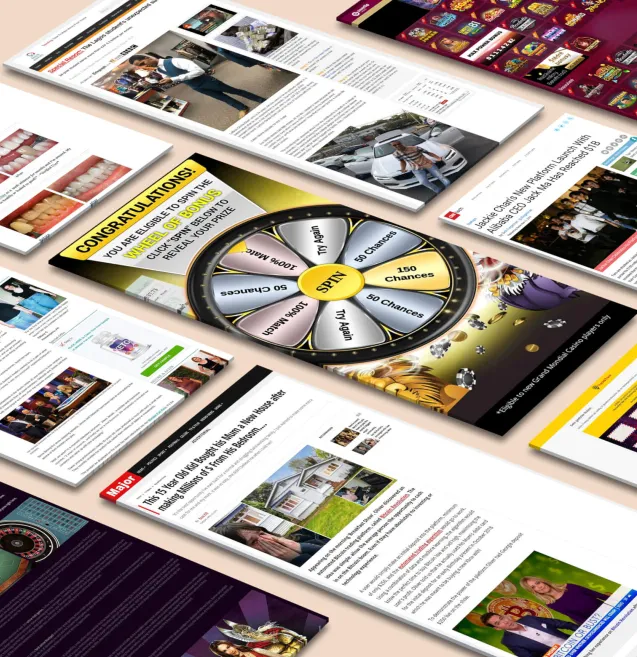
If you pull up Anstrex or any decent spy tool and filter for “tea,” “wellness,” or “functional beverage,” what jumps out isn’t vibes. It’s ruthless, patterned intent: creatives and funnels that exist for one reason — to buy a customer at a profit.
Across native widgets, push networks, and TikTok, the winners in this category converge on a few repeatable plays.
On native (Taboola, Outbrain, Revcontent), profitable tea and wellness offers overwhelmingly lead with advertorials, not brand films.
The creative anatomy is boringly consistent:
Click one of these and you almost never land on a homepage. You land on a long-form pre-sell article built to:
The CTA goes to a focused product page or quiz funnel with:
This is precisely the kind of cause‑and‑effect clarity performance marketers crave when, as one MarTech panel put it, legacy metrics obscure “which lever actually caused the shift.” In these funnels, there’s no confusion: the lever is the advertorial and the offer. Every pixel exists to push a user one step closer to purchase.
On push networks, the tone sharpens.
Successful tea and wellness pushes lean on:
Unlike native, push winners more often drive directly to short-form landers:
The throughline: zero ambiguity about what happens next. When AdExchanger warns that channels closer to conversion get too much credit if you can’t connect exposure to action, these funnels sidestep the ambiguity altogether — exposure and action are welded together on the same page.
Scroll TikTok ads in this space and a different pattern appears, but the discipline is the same. The highest-volume, longest-running ads aren’t brand manifestos; they’re creator-led problem/solution clips.
High-performing funnels on TikTok reflect what TikTok’s own experts describe: brand assets consistently underperform creator-led content when both are tested head-to-head. In one campaign, a utility brand saw creator assets drive a 632% lift in leads and a 64.5% drop in CPL versus polished brand videos, as HubSpot’s marketing team documented. Tea and wellness brands that show up in spy tools are running the same play:
Under the hood, the best of these campaigns look a lot like what strategic data thinkers recommend in other contexts. Instead of drowning in surface metrics (views, likes), they engineer for measurable outcomes and then let algorithms handle the tactical execution. As automation expands, high‑leverage inputs like creative strategy and first‑party data become the true performance levers, a point MarTech’s analysts hammer home when they talk about “new levers of growth.”
Across native, push, and TikTok, winning tea, wellness, and beverage campaigns:
Contrast that with a courtside “Break Conference” execution: beautiful assets, diffuse objectives, and measurement that can’t isolate what, if anything, moved the needle. The brands quietly printing money with tea funnels aren’t more “growth-hacky.” They’re simply more honest about what performance marketing is supposed to do — and they build backwards from that reality.
If affiliates had been in the room when “Break Conference” was pitched, the deck would have looked violently different from the jump.
First, the brief wouldn’t start with “culture” or “conversation.” It would start with a spreadsheet. Specifically: projected CAC, allowable CPA by retailer, contribution margin by pack size, and a target LTV window to break even. Before talking about stages, panels, or lighting, we’d lock a single north-star metric that ladders to revenue — not “sentiment,” not “engagement,” not “time spent in the activation.” That’s the same discipline performance leaders are pushing when they argue that impressions and clicks are only useful once they’re translated into business outcomes like revenue growth, margin, and lifetime value.
From there, the “Run of Show” becomes a funnel architecture, not an events agenda.
Every IRL moment gets mapped to a measurable conversion step:
Affiliates would insist on hard attribution rules before anyone booked talent. If Travis Kelce is in the mix, it’s not because he’s “culturally relevant.” It’s because his NIL presence plugs into a system that can be measured at the partner, offer, and placement level — the same way Publicis is selling its Tekta NIL network on speed to market and unified measurement across thousands of athletes. You don’t pay for hype; you pay for a framework that tells you which creator, channel, and creative variant actually moved product.
The content itself would look different too. Instead of a brand monologue about “taking a break,” the stage and side rooms would be engineered as content farms feeding an always-on ad engine:
Affiliates would also flatten the artificial wall between “brand” and “performance” that events like Break Conference love to romanticize. When Carat talks about meeting consumers “in culture” while still balancing brand and performance in a fragmented media landscape, they’re really describing what affiliates do by default: use culture as a traffic source, not a KPI. Culture is the hook; profitability is the filter.
Behind the scenes, the governance changes completely:
Most importantly, if affiliates ran Break Conference, the recap deck would be almost boring. Less “people loved it,” more “here’s the CAC delta versus paid social, here’s the lift in repeat rate on exposed cohorts, here’s which partner and angle we’re scaling 10x next quarter.” The work wouldn’t be judged by whether it felt big in the room. It would be judged by whether it can be quietly, predictably turned into a tea and wellness funnel that prints for the next 18 months.
Receive top converting landing pages in your inbox every week from us.
In-Depth
Explore what Pure Leaf’s “Break Conference” reveals about the gap between polished brand marketing and measurable performance. This guide breaks down how Native, Push, TikTok, and affiliate-style funnels use creative testing, clear offers, first-party data, and hard performance metrics to turn cultural moments into revenue.
Rachel Thompson
7 minOct 1, 2026
Must Read
Explore why traditional OOH experience is no longer enough as out-of-home advertising becomes more data-driven, measurable, and connected to digital channels. This guide outlines the cross-channel, measurement, AI, and competitive-intelligence skills modern OOH employers and candidates need.
David Kim
7 minSep 25, 2026
How-To
Learn how to measure whether sports-star and celebrity advertising actually delivers efficient CPC, CPA, search lift, and downstream conversions. This guide shows how to test celebrity creative against creator alternatives and use competitive intelligence and measurement to turn expensive star power into a measurable performance asset.
Elena Morales
7 minSep 25, 2026