8 minSeptember 20, 2026

Our tools monitor millions of native, push, pop, and TikTok advertising campaigns.
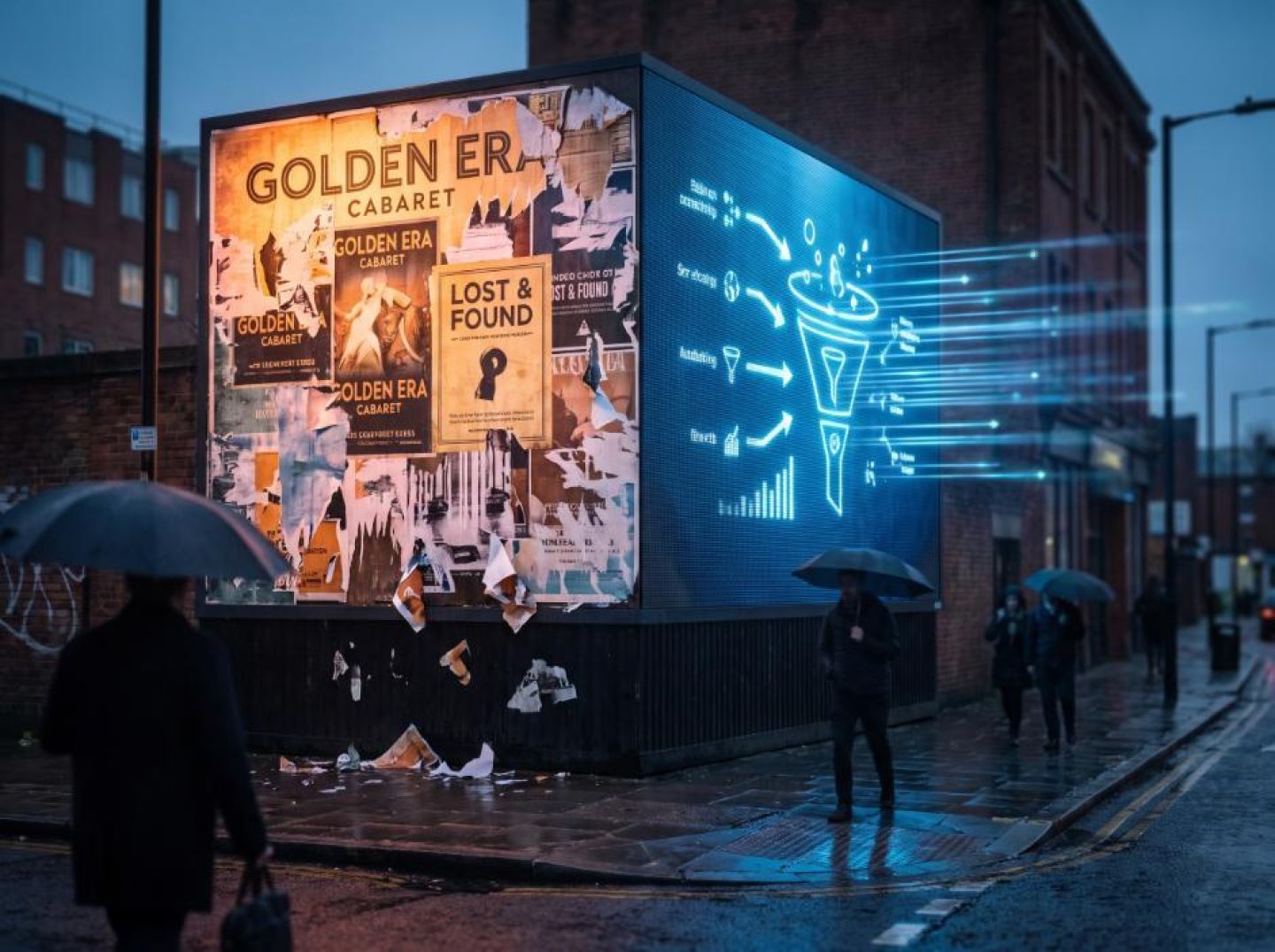
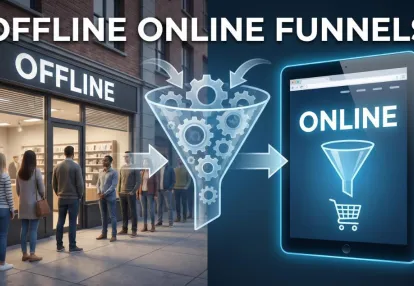
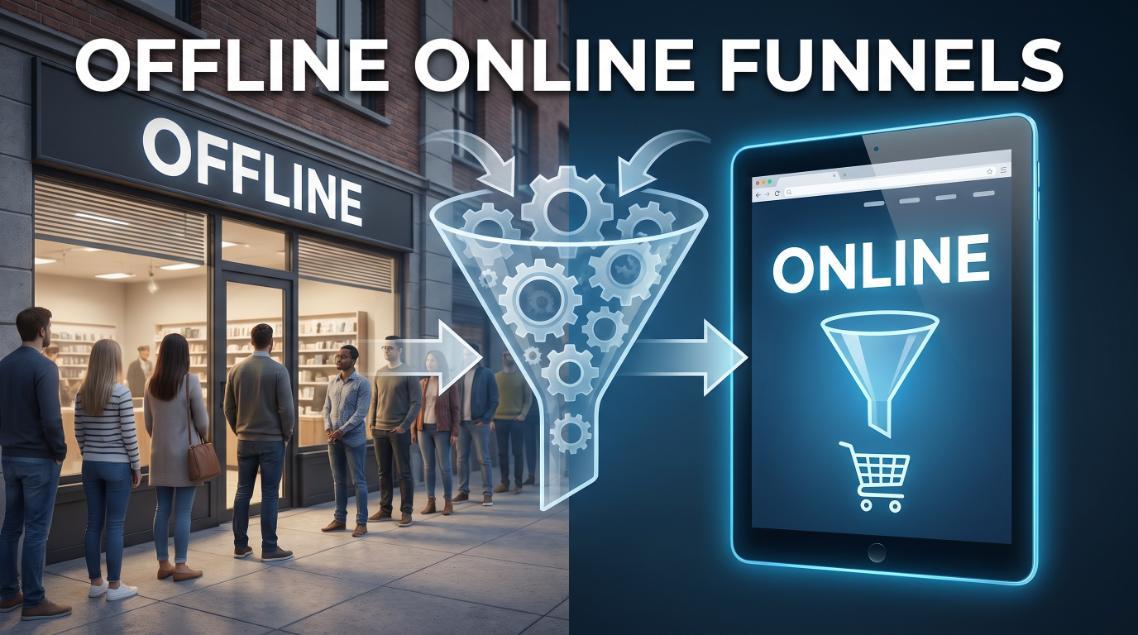
Get StartedOut-of-home is racing ahead on screens and data, but its hiring language is frozen in amber—still chasing “billboard sales reps” and “truck-side account execs” while brands now buy OOH as a trigger for measurable, digital-first funnels. As place-based networks prove that the physical world can reliably drive digital action and software-led players like Trillboards wire intelligence layers into their signage networks, the real opportunity isn’t to add more traditional OOH roles—it’s to invent hybrid jobs that treat every wallboard, window cling, and digital screen as the first step in a trackable online journey.
Read any random batch of OOH job listings and a strange pattern jumps out: the work has changed, but the words have not. Titles still default to “Account Executive – Outdoor Advertising,” “Billboard Sales Representative,” or “Transit Media Account Manager.” Responsibilities obsess over inventory and rates: sell faces, fill avails, hit quota. Meanwhile, the way brands actually buy out-of-home has shifted to something much closer to “upper-funnel performance media” that’s expected to light up QR scans, search lift, and retargetable audiences down the line.
That dissonance is the gap no one mentions in OOH job descriptions: roles are written as if the job ends when the contract is signed, but value is now proven weeks later inside an online funnel.
You can see this clearly in how the most forward-leaning players describe their own businesses versus how the wider market hires. When a software-first network like Trillboards talks about upgrading with a machine learning–driven intelligence layer, the emphasis is on structuring market behavior, verifying campaign history, and predicting demand across the ecosystem. That’s language borrowed from programmatic media and CRM, not from a classic billboard rate card. Yet if you looked only at the typical sales job post in OOH, you’d think the competitive edge was still who can cold-call more car dealers, not who can interpret modeled demand and connect it to a client’s digital outcomes.
The same disconnect shows up in how “results” are framed. At the World Out of Home Organisation Global Congress, panelists emphasized that the industry’s debate is no longer about whether OOH works, but about how specialists prove accountability, measurement, and business impact across the marketing funnel. Leading independent shops are repositioning themselves as strategic consultants who use data to guide smarter decisions and demonstrate outcomes, not just as buyers of space. Yet the majority of OOH job descriptions still define success almost entirely in terms of “selling more posters” instead of “driving more attributable action.”
Underneath that is a more subtle gap: OOH roles rarely acknowledge that they now sit upstream of digital performance teams. When a campaign is built “OOH-first,” the media plan assumes that impressions in the physical world will generate measurable digital signals—site visits, branded search, social follows, app opens—that can be nurtured and converted. But job listings almost never mention collaboration with growth marketers, data analysts, or CRM owners. There’s no expectation that an account lead can speak the language of downstream KPIs, understand what happens inside a client’s customer data platform, or design placements explicitly to feed retargeting pools and lookalike audiences.
Instead, the implicit model is still a linear handoff: sales sells a board, ops posts it, reporting sends a photo, and everyone moves on. The nuance of “What did this do to your cost per acquisition?” or “How did this shift your branded search curve?” is treated as someone else’s problem—or, more often, not considered at all.
Another overlooked dimension is how fast intelligence is supposed to flow now. As networks integrate systems like hellOOH’s predictive demand signals, the constraint is no longer whether a rep can manually assemble a proposal; it’s whether your people can interpret real-time signals about who is in-market, what formats are outperforming, and which placements are primed to drive digital lift. Current job descriptions almost never ask for that capability. They want “relationship builders” and “self-starters,” while the actual work increasingly demands someone who can sit between a demand-side platform, a sales forecast, and a client’s funnel metrics and make sense of it.
Ironically, even the industry’s own public conversations acknowledge that human expertise now needs to be layered with automation and AI. At the Congress, speakers stressed that tools should streamline routine tasks so specialists can focus on strategy, local nuance, and client relationships. Yet if you scan hiring copy, “automation” shows up mostly in the tech stack section, not in the skill set. There is almost no language about how an OOH strategist should use algorithmic insights to shape creative, placements, and timing for maximum downstream performance.
This is the quiet hiring gap at the heart of OOH’s evolution. The market is rewarding networks that treat the physical world as a programmable input into digital funnels, supported by systems that, as Trillboards’ adoption of hellOOH illustrates, turn fragmented behavior into actionable intelligence. But the roles most organizations post are still scoped for a world where selling space was the finish line, not the starting point of a measurable, multi-channel journey. Until job descriptions catch up—explicitly defining OOH as the opening move in a performance-driven funnel—teams will keep hiring for yesterday’s tasks to solve tomorrow’s problems.
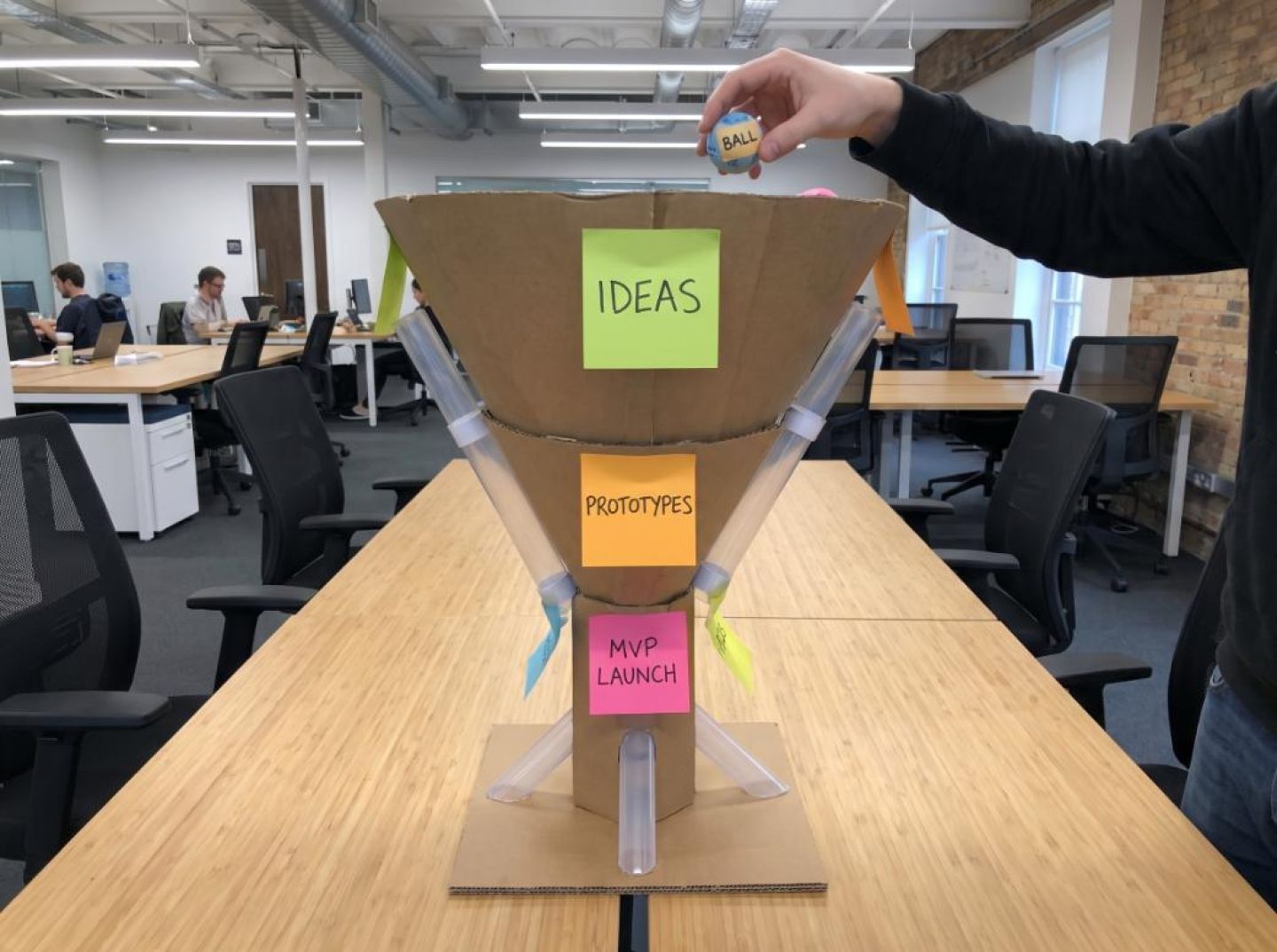
OOH has quietly become the physical MVP of the post-cookie world, but there’s still no clear “funnel owner” on the org chart to match it. The medium is doing its job—creating real-world moments that spark digital behavior—but the people paid to sell, plan, and optimize it are still organized around panels and placements, not pipelines and paths to conversion.
Look at how marketers describe OOH’s role today. In a recent study from OAAA and Winterberry Group, nearly every marketer surveyed—an astonishing 98%—said they now use OOH in purchase-driven commerce initiatives, and most expect to increase spending over the next two years. They cite cost-efficient reach and consistent messaging across channels as core strengths, but they also emphasize that OOH is increasingly used to support what happens next online by nudging consumers into digital journeys they can then measure and scale, as industry coverage of that research makes clear.
Place-based environments sharpen that role even further. A wallboard in a physician’s office, a screen in a workplace, or signage in a retail aisle doesn’t just “reach eyeballs”; it positions the brand inside a specific context where a search, a scan, or a site visit is only a few seconds away. When companies like Encompass Media Group expand from non-traditional static placements into thousands of digital screens, they’re not chasing novelty—they’re betting on the idea that the physical world can reliably drive digital action. The MVP is the moment: the right message, in the right environment, timed to trigger the next digital step.
Mobile and DOOH are pushing this even closer to a true full-funnel engine. In one campaign, Lime Media used a single LED truck for the San Jose Earthquakes and paired GPS-traced exposure with mobile retargeting and sales data. The result wasn’t just lift in awareness—it was a direct, traceable line from someone seeing a truck on the street to buying a ticket, creating what the campaign recap calls “physical scale, digital proof”. That’s not a vanity metric; that’s full-funnel performance.
Yet if you read the average OOH job description, you’d never know this is what the medium is now capable of. The people booking that LED truck are still titled “Billboard Sales Rep.” The person negotiating the physician’s-office wallboard is an “Outdoor Account Executive.” Their success is measured by sell-through, not by how efficiently they turn an exposure into a search, a site visit, or a sale. Nobody “owns” the funnel that starts when a commuter looks up from their phone at a screen and ends when they tap the “Buy” button later that night.
This is the structural gap: OOH has evolved from a one-way awareness channel into a reliable on-ramp for digital journeys, but the roles around it are frozen in a pre-funnel era. Marketers are treating OOH as a key lever in purchase-driven commerce, as research on how the medium supports downstream digital behavior shows. Measurement partners are proving that a single physical asset can move real revenue, as the Earthquakes case study demonstrates. But inside most OOH organizations, no one is explicitly chartered to design, own, and optimize that bridge from street-level impression to digital outcome.
Until that changes, OOH will keep over-delivering on its physical MVP role and under-claiming its full-funnel value. The medium is already built for a post-cookie world; the missing piece is a new kind of OOH-first role that treats every board, truck, and screen as the start of a measurable funnel—rather than the end of a media buy.
The industry doesn’t need a better OOH “buyer.” It needs someone who treats billboards, place-based screens, and posters as the first mile of a digital funnel and is accountable for everything that happens after a passerby looks up.
That’s the shift from “OOH Buyer” to “OOH-to-Digital Funnel Architect.”
The Funnel Architect starts with a different question set. Instead of “How many faces can I get in this market at this CPM?” they ask, “What physical moments can we own that reliably trigger search, site visits, app installs, or store traffic—and how will we recognize those outcomes when they show up in the data?”
In other words, they treat every wallscape, transit shelter, or physician-office poster as the upstream event in a measurable journey, not as a disconnected awareness blast. When a brand appears in a workplace screen or neighborhood business, that placement becomes a designed touchpoint to spark a specific downstream action: scanning a QR code, typing a branded query, opening a banking app, or visiting a retailer the same day. As one analysis of how the physical world drives digital action points out, OOH works best when it reinforces what people have seen online or prompts something they’ll go investigate later—not when it lives in a silo.
This is a fundamentally different workflow than classic outdoor planning. The traditional OOH buyer is inventory-centric: negotiate locations, juggle avails, push rate cards, make sure the campaign posts on time. Success is judged on impressions delivered and maybe a brand-lift study if the budget is big enough.
The OOH-to-Digital Funnel Architect is demand-centric and behavior-centric. Their canvas includes:
To operate this way, they need better intelligence than “this unit gets 400,000 weekly impressions.” They need to see patterns in how markets respond, which placements reliably feed the funnel, and which combinations of context and creative produce outsized downstream value.
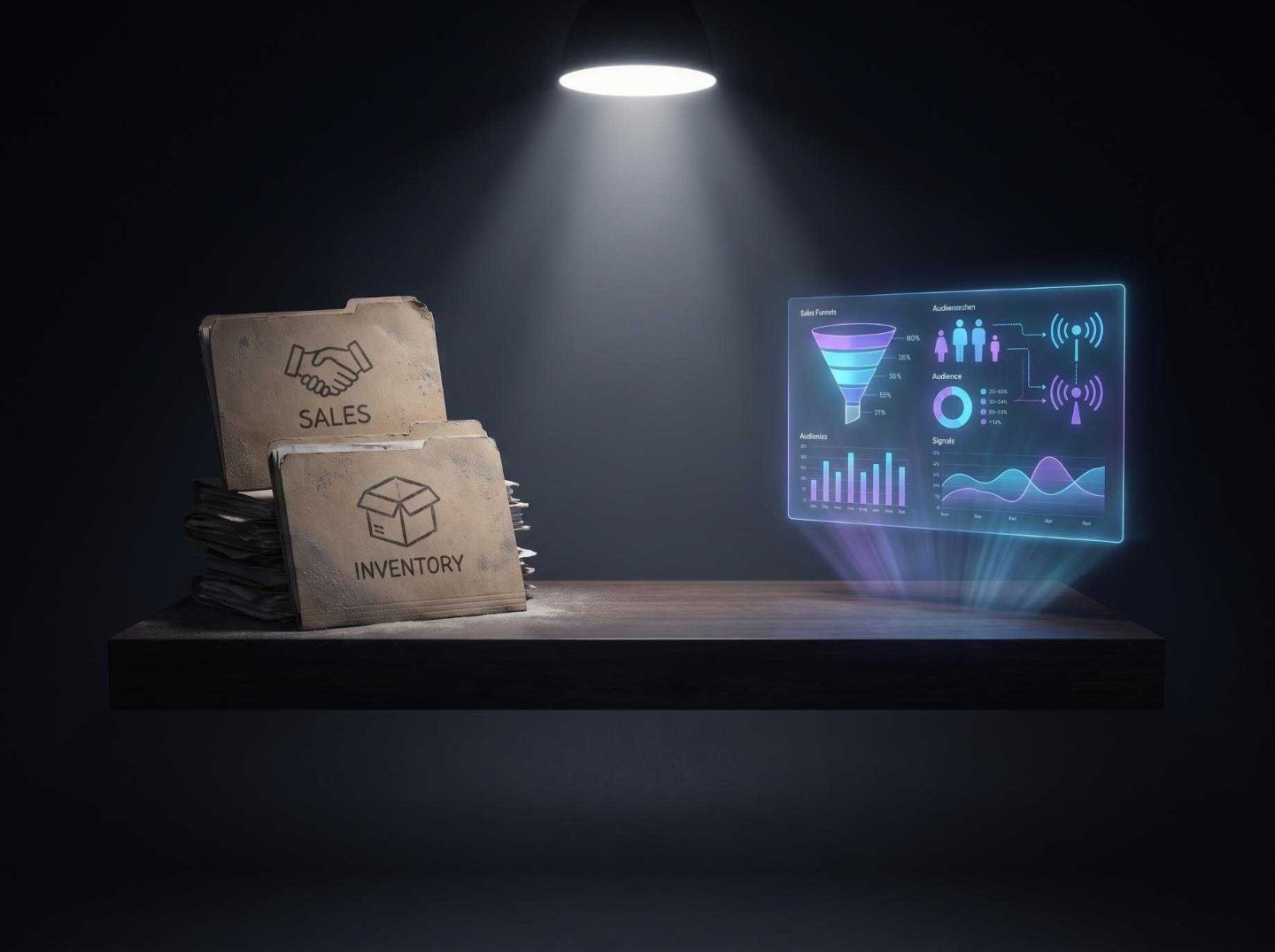
That’s where the emerging “intelligence layer” around OOH becomes critical. When companies like Trillboards adopt systems such as hellOOH’s machine learning–driven demand intelligence, they’re not just modernizing operations; they’re creating the raw material for a new kind of role. By structuring market behavior, verifying campaign history, and mapping decision-maker relationships, these platforms transform fragmented signals into predictive models of where demand is likely to show up next. A Funnel Architect can use that to decide which physical touchpoints to prioritize for a given digital objective—and to update the plan in near real time when demand shifts.
This is also why the best place-based networks are evolving their product story. When operators expand beyond non-traditional static placements into thousands of digital screens across everyday environments, they’re giving brands more precise ways to connect real-world exposure to online journeys. As one profile of an established non-traditional specialist notes, vendors that pair static reach with flexible DOOH are explicitly building for “purchase-driven commerce initiatives,” using physical presence to support what happens next online. That only reaches its full potential when someone on the team is responsible for designing and owning the funnel those screens feed into.
Crucially, this role is not a rebranded programmatic trader or a slightly more technical OOH AE. A Funnel Architect sits at the intersection of media, analytics, and growth:
In a post-cookie world, every brand will be forced to rebuild how it generates intent and captures demand without the crutch of hyper-targeted third-party data. OOH already has the advantage in the physical world: it can be everywhere people actually make decisions. The missing piece is the architect whose job is to make sure those physical moments are engineered as the opening move in a coherent, measurable funnel—one that starts on the street or in the store and ends in a CRM record, a cart, or a conversation that the business can see.
The most interesting OOH jobs in the next five years won’t be “media buyers.” They’ll be people whose entire mandate is to turn physical experiences into always-on, self-feeding digital funnels.
Call that role the Experiential Performance Strategist.
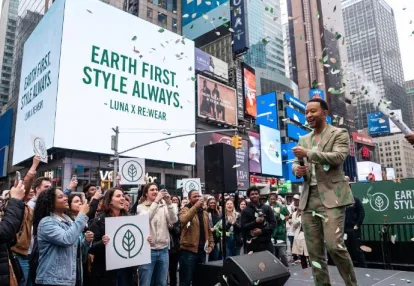
This isn’t an event producer with a nicer title. It’s a specialist who treats pop-ups, brand activations, and place-based networks as performance media—designed, measured, and iterated like a high-output landing page.
Pop-ups have traditionally been judged on vibes: footfall, social buzz, maybe a PR clip reel. The Experiential Performance Strategist starts instead with funnel math:
They design the space around those answers. Every wall, mirror, counter, and screen becomes a touchpoint with a job: capture an email, trigger a QR scan, drive an app install, collect a preference, or route someone into a retargetable audience.
This is where OOH’s physical presence becomes a performance advantage. As one analysis of the medium’s role in commerce noted, brands are increasingly using place-based formats in the environments “where people actually spend their time” to trigger the online behaviors that matter next, from search to site visits to online purchase flows, and they’re doing it specifically as part of purchase-driven initiatives with rising investment forecasts across the next two years, according to research on the physical world’s ability to drive digital action.
The Strategist doesn’t just sit inside the pop-up; they architect the bridge out of it.
In a post-cookie world, every experiential moment is an opportunity to earn durable, permissioned data. The Experiential Performance Strategist is accountable for that pipeline.
Their toolkit looks much closer to a growth marketer’s than a traditional experiential producer’s:
Done well, the pop-up doesn’t disappear when the lease ends. It lives on as a segmented, tagged audience with known behaviors and preferences.
For this role to exist, it has to be measured like performance media. That’s where the next generation of OOH specialists is already headed. At recent global gatherings of the sector, leaders argued that the category’s future lies in specialists who move “beyond traditional buying roles to become strategic consultants,” using data and independent expertise to demonstrate business outcomes across the full funnel and leaning on automation and AI to offload rote tasks so humans can focus on strategy and client impact, as.
The Experiential Performance Strategist is that idea applied to physical activations:
Most brands still treat pop-ups as isolated bets. The Experiential Performance Strategist treats them as versioned product: each activation is an experiment in creative, offer, sequencing, and data capture design, and the results become a playbook for the next one.
Over time, that turns experiential from a cost center into a compounding growth engine:
In a world where third-party data is fading and performance channels are increasingly constrained, the brands that win will be those that treat the physical world as their most powerful source of digital signal. The Experiential Performance Strategist is the person hired to make that signal reliable, repeatable, and relentlessly tied to revenue.
If the Experiential Performance Strategist is responsible for what happens on the street, the next critical hire is the person responsible for what happens in the data.
Call this role the Demand Signals & Attribution Lead.
This isn’t a traditional analytics manager buried three levels deep in a performance team. It’s a specialist who treats OOH as a live sensor network—reading demand signals in the wild, stitching them to digital behavior, and turning those insights into media, creative, and product decisions.
Historically, out-of-home measurement was a rear‑view mirror: estimated impressions and recall studies arriving weeks after the spend was locked. But as mobile OOH has evolved, the toolset has shifted from dull instruments to precision telemetry. As one recent case with the San Jose Earthquakes showed, a single GPS‑traced LED truck can now be linked not just to reach but to verified ticket purchases, connecting “a truck on a street” directly to transactions at the register, as.
The Demand Signals & Attribution Lead treats that kind of measurement not as a novelty but as table stakes. Their remit:
In practice, this means turning every truck, wallscape, and place‑based screen into a test node in a distributed lab.
The uncomfortable reality for digital‑native marketers is that cookies and deterministic user‑level tracking are fading. OOH, paradoxically, is better suited to that world than many purely digital channels, because its measurement DNA has always been probabilistic, cohort‑based, and geo‑anchored.
The Demand Signals & Attribution Lead leans into that strength:
Because they are accountable for telling a credible story to both brand and performance budget owners, their job is as much storytelling as statistics.
If you scan recent out-of-home job boards, you’ll see the market still over‑indexes on sales, operations, and creative—roles like Sales Managers, National Account Executives, and Directors of Operations dominate the openings that sites like OOH classifieds roundups chronicle. What’s missing almost entirely is a standardized role whose sole accountability is “prove that OOH is driving performance and learn fast enough to improve it.”
The Demand Signals & Attribution Lead fills that gap, borrowing from multiple disciplines:
This person must be comfortable in field data (footfall, traffic patterns), digital analytics (GA4, MMPs, CDPs), and business intelligence (SQL, dashboards, modeling). But the differentiator is not just technical skill—it’s ownership. Instead of simply “tagging campaigns,” they own the number that performance‑minded CMOs care about most: incremental revenue, deal volume, or customer value attributable to OOH.
A Demand Signals & Attribution Lead who only ships pretty dashboards has failed. Their value is realized when those dashboards trigger action:
In a post‑cookie world, this is the role that keeps OOH from being pushed back into “nice to have awareness” land. By designing robust, privacy‑safe attribution and continuously mining real‑world demand signals, the Demand Signals & Attribution Lead turns offline impressions into the first, measurable, and optimizable mile of your digital funnel.
Receive top converting landing pages in your inbox every week from us.
Most Read
The post-cookie world is pushing OOH beyond traditional awareness media and toward measurable digital funnels. This guide explores new OOH-first roles that connect physical placements to digital actions, experiential data, attribution, and real-time demand signals.
Rachel Thompson
7 minSep 20, 2026
Must Read
Celebrity campaigns can create massive short-term demand, but affiliates need to know when and where that attention can be captured without simply cannibalizing brand traffic. This guide explains how to use ad spy data, search signals, creative angles, and disciplined bidding to turn celebrity-driven buzz into measurable affiliate opportunities.
Liam O’Connor
7 minSep 19, 2026
In-Depth
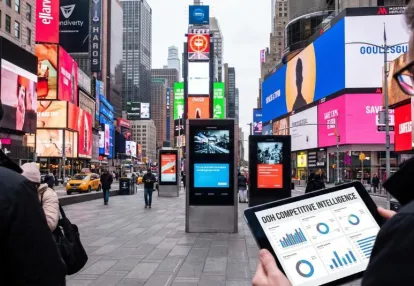
OOH is becoming a data-driven, performance-focused channel, but many job descriptions still overlook competitive intelligence as a core skill. This guide explains how OOH teams can build intelligence loops, use ad spying as market research, and turn competitive signals into smarter sales, planning, and positioning decisions.
Liam O’Connor
7 minSep 19, 2026