10 minNovember 12, 2026

Our spy tools monitor millions of native ads from over 60+ countries and thousands of publishers.
Get StartedChatGPT advertising is introducing a new layer to the performance marketing landscape. As conversational AI becomes part of how people research products, compare solutions, and make decisions, marketers have another source of insight into the questions, objections, and language shaping consumer demand.
But there is an important distinction between collecting those insights and knowing how to turn them into profitable campaigns.
AI-generated recommendations, conversational search patterns, and advertising interactions can reveal useful research signals. They do not automatically expose private model-training data, prove that a particular audience is profitable, or guarantee that a creative concept will work on another platform.
The opportunity is to treat AI as a research environment rather than a complete media-buying solution. By studying how people describe problems, what questions they ask, and which benefits or concerns appear repeatedly, performance marketers can develop stronger creative hypotheses for Native, Push, Pops, and TikTok campaigns.
Instead of relying entirely on an AI platform's automated campaign recommendations, marketers can use those observations to develop, test, and refine their own advertising strategies.
Most marketers approach a new advertising platform by asking the same question: How much budget should we allocate to it?
That is a reasonable starting point, but it can overlook a more interesting opportunity. Conversational AI is not simply another place to display an advertisement. It is also an environment where users explain problems, compare solutions, and refine their requirements through multiple interactions.
That makes conversational AI useful as a source of research signals.
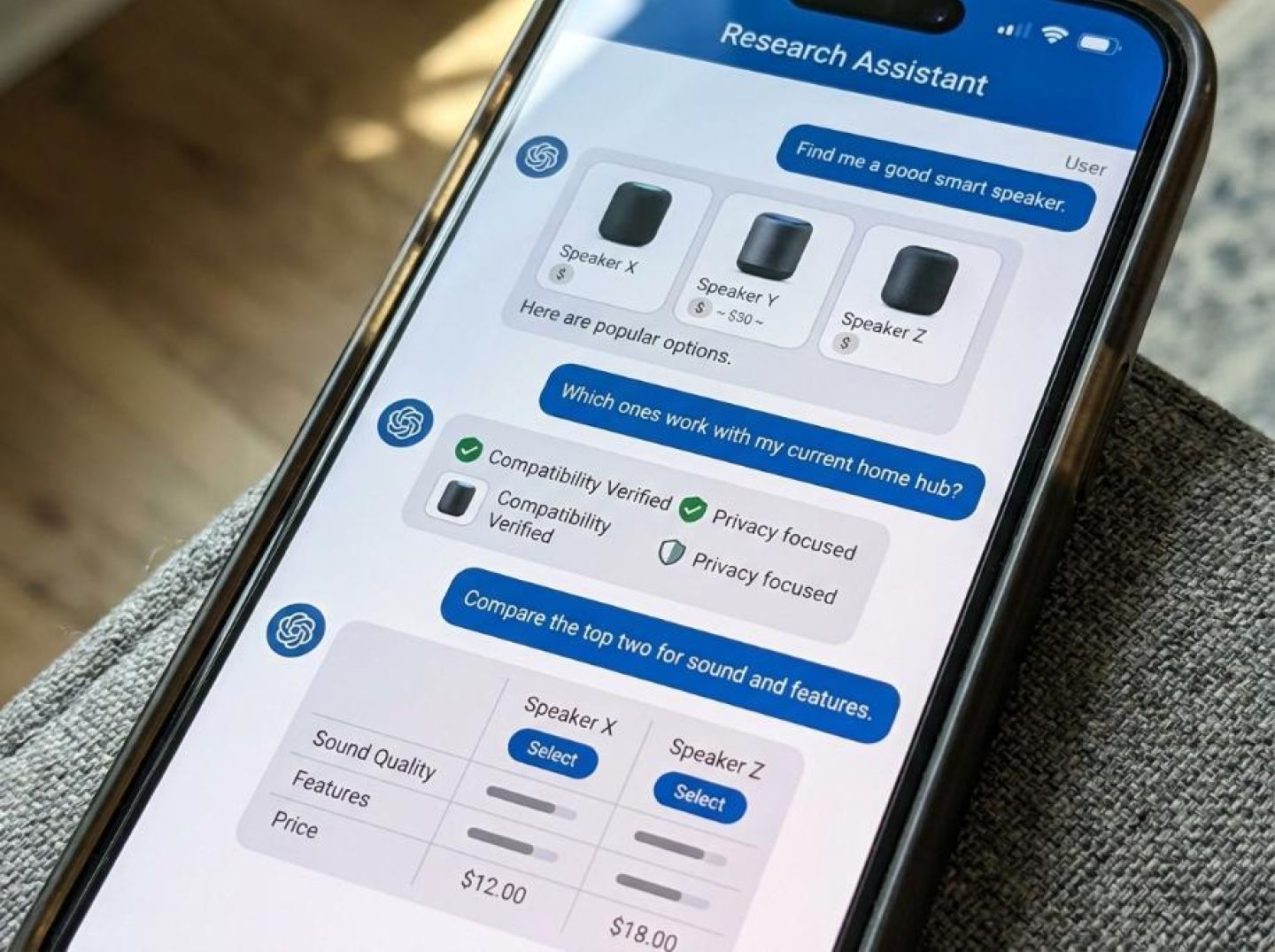
Traditional search often begins with a relatively short query. Social media feeds expose users to content while they browse. Conversational AI works differently: people can describe a situation, ask follow-up questions, reject suggestions, and narrow their options over several turns.
Consider someone researching a VPN for international travel.
The conversation might develop like this:
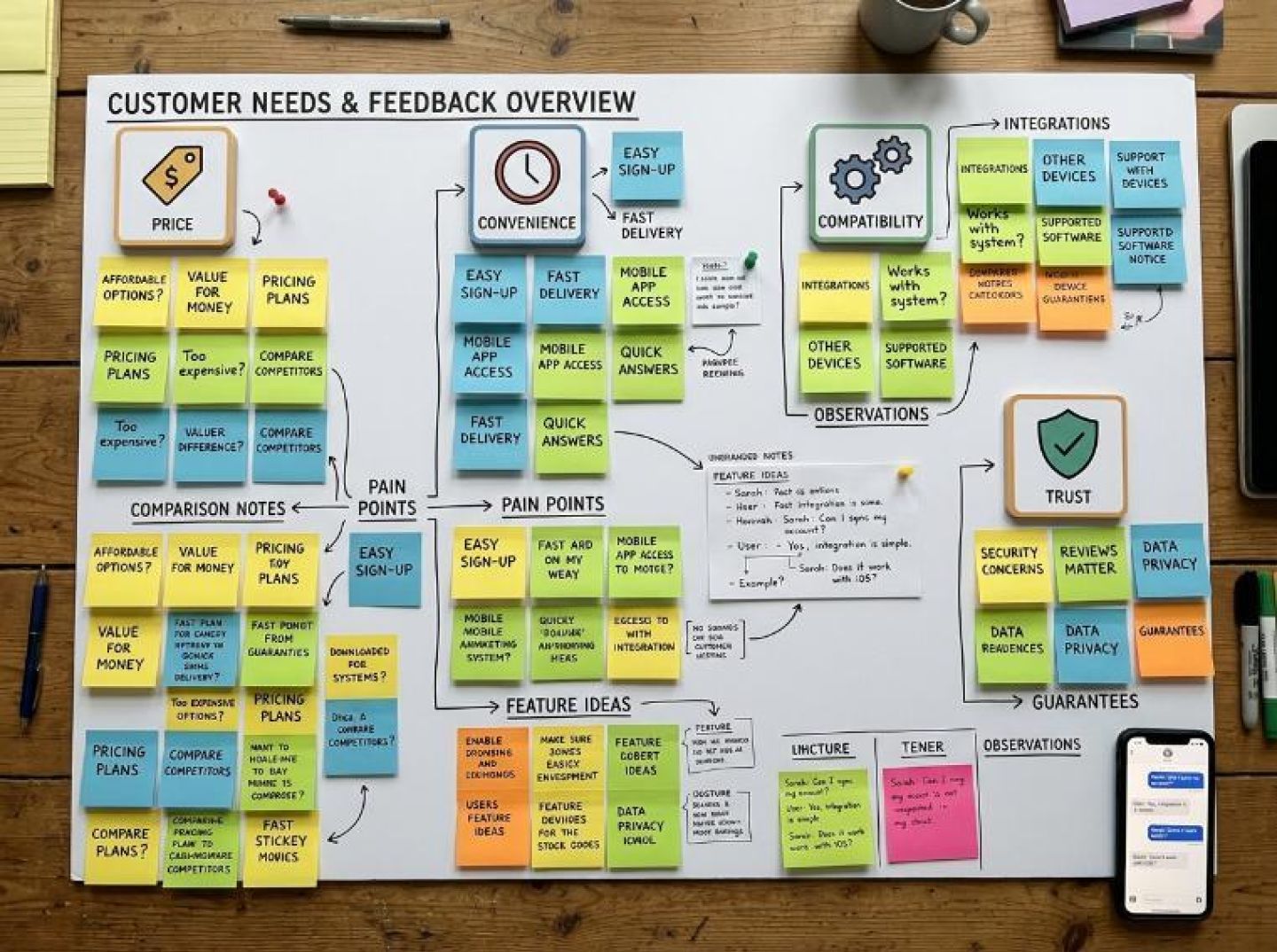
Each question reveals a different concern. Price matters, but so do compatibility, reliability, privacy, and ease of use.
For advertisers, these questions can help identify the practical considerations that shape a buying decision.
The draft's cited coverage describes OpenAI's advertising product development, including campaign setup, bidding, measurement, and conversion tracking.
For advertisers, these developments matter because they could make conversational environments more accessible to performance campaigns. A simpler onboarding process may reduce the effort required to test an advertising channel, while conversion measurement can help marketers evaluate whether clicks and interactions lead to meaningful business outcomes.
However, campaign automation should not be confused with complete transparency.
A platform may generate campaign suggestions from a website and its business information without revealing every conversation, targeting decision, or optimization signal behind its delivery system.
Likewise, conversion tracking can improve measurement without making every stage of a customer journey visible.
For a deeper look at the advertising developments and revenue claims discussed in the source material, see MarTech's coverage of OpenAI's advertising ambitions and Neil Patel's ChatGPT Ads Manager breakdown.
A single search phrase can tell you what someone is looking for. A sequence of questions can reveal why they are looking, what alternatives they are considering, and which concerns could prevent them from taking action.
That distinction is valuable for creative research.
For example, a person searching for a budget VPN may initially appear to be motivated by price. Follow-up questions could reveal that the real concern is whether the service works on public Wi-Fi or supports a particular destination.
Those details suggest different advertising angles:
These are creative hypotheses, not confirmed winning messages. Their value comes from testing whether the concerns observed during research also influence responses to advertising.
ChatGPT and other conversational AI tools can help marketers explore how people describe problems and evaluate potential solutions.
That does not mean every prompt becomes advertising data available to competitors, or that every interaction trains an advertising model in a way marketers can inspect.
The practical advantage is more straightforward: marketers can use conversational research to develop a richer understanding of demand, then validate those insights through their own campaign results.
AI advertising can make campaign setup easier, but automated recommendations do not eliminate the limitations of measurement, targeting, or creative strategy.
In fact, the more a platform automates, the more important it becomes for advertisers to understand what information they can actually observe.
Conversational intent is complicated.
A person comparing products may care about price, reliability, convenience, compatibility, safety, and customer support at the same time. Their priorities can also change as they learn more.
An advertising platform must translate available information into decisions about relevance and delivery. That process necessarily simplifies a much richer human situation.
For advertisers, this creates a research opportunity.
A broad category such as budget travel may contain several different groups:
Treating all of these people as one audience can produce generic creative that fails to address their actual concerns.
Rather than assuming an AI system has identified every valuable micro-segment, marketers can use their own research to create more specific hypotheses.
Conversion reporting is essential, but it rarely tells the complete story by itself.
A click or conversion can show that a measurable action occurred. It does not necessarily explain every conversation, consideration, comparison, or external interaction that influenced the decision.
The original draft points to the challenge of understanding prompt-level insights and customer suppression controls in ChatGPT advertising. These are important operational questions because advertisers need to understand which signals are available before deciding how much confidence to place in automated optimization.
AdExchanger's reporting on advertiser feedback about ChatGPT Ads explores some of these measurement and control concerns.
The practical lesson is not that the platform cannot optimize campaigns. It is that advertisers should evaluate the reporting and controls actually available to them rather than assume they have the same visibility they may be accustomed to on mature search and social platforms.
The source material highlights CallRail's efforts to connect ChatGPT campaigns with calls, texts, and form submissions.
This type of integration can help businesses connect advertising interactions with leads and downstream outcomes. It can also improve the quality of information available for campaign evaluation.
Read Search Engine Journal's coverage of CallRail's ChatGPT Ads measurement integration.
However, adding another tracking integration does not automatically produce a complete picture of customer behavior.
Different platforms may use different attribution windows, identifiers, conversion definitions, and reporting methods. A conversion recorded by one system may not be represented identically in another.
Marketers should therefore compare measurement systems carefully and distinguish attributed conversions from independently verified business results.
Not every valuable interaction leads to an immediate purchase.
Someone researching a family vacation, comparing business software, or considering a major home improvement project may spend days or weeks evaluating alternatives.
During that process, they may encounter multiple ads, revisit product pages, speak with sales representatives, or ask additional questions through AI tools.
A last-click report may assign credit to the final interaction, even when earlier research played an important role.
This is not unique to ChatGPT. It is a broader challenge in performance marketing.
Advertisers should evaluate immediate conversions alongside qualified leads, repeat visits, assisted interactions, and longer-term customer outcomes where those measurements are available.
These limitations do not prove that ChatGPT is systematically overlooking profitable audiences or that other traffic sources will always be cheaper.
They do suggest that marketers should avoid relying on a single platform's recommendations as their entire research strategy.
A useful competitive advantage can come from combining several forms of evidence:
The most useful question is not simply whether marketers should advertise on ChatGPT.
It is whether the research insights gathered from conversational AI can help them develop better campaigns across other traffic sources.
This is where Native, Push, Pops, and TikTok become relevant.
Conversational AI can help reveal how people describe their needs. Other advertising channels provide opportunities to test different ways of presenting solutions to those needs.
The goal is not to copy a platform's private targeting signals. It is to turn observable research into practical campaign hypotheses.
Start with the questions people might ask before buying a product or choosing a service.
Look for language that reveals:
For example, a person researching a VPN could ask:
These questions can become the foundation of a creative research library.
Do not treat your own ChatGPT experiments as proof that thousands of people are asking the same questions. Record them as research observations, then compare them with keyword data, customer feedback, search trends, and campaign results.
A question is useful because it points toward a possible motivation.
For example:
| Conversational question | Possible insight | Creative hypothesis |
|---|---|---|
| What is the cheapest VPN for travel? | Price sensitivity | Lead with affordability and transparent pricing |
| Will it work on my iPhone? | Compatibility concern | Show a simple device setup |
| Is a free VPN safe? | Trust and security concern | Explain what to evaluate before choosing |
| What happens when I travel abroad? | Destination-specific requirements | Focus on travel scenarios and practical preparation |
| Is it difficult to cancel? | Subscription concern | Highlight verified cancellation terms |
Each row is a possible direction to test, not a proven audience segment or winning advertisement.
The next step is to find out whether those concerns appear in the market beyond your own research sessions.
This is where tools such as Anstrex can support the process.
Instead of starting with a blank creative document, investigate how advertisers are already presenting similar offers.
Look for:
For example, if conversational research repeatedly surfaces concerns about VPN compatibility, you can investigate how advertisers communicate device support, installation steps, and travel use cases in their visible advertisements and landing pages.
The objective is to identify patterns worth investigating, not to assume that an advertiser's campaign is profitable because it has been visible for a long time.
Anstrex can help marketers research observable advertising activity in supported sources. It does not reveal private advertiser budgets, conversion rates, customer records, or return on ad spend unless that information is independently available.
Once you have a set of research-backed creative ideas, adapt them to the format and audience of each traffic source.
The same insight should not necessarily become the same advertisement everywhere.
| Traffic source | Potential creative approach | Example |
|---|---|---|
| Native | Editorial storytelling and educational pre-sells | "What to Check Before Choosing a VPN for Travel" |
| Push | Short, focused hooks that create curiosity | "Traveling Soon? Check These VPN Features First" |
| Pops | A relevant landing-page or offer introduction | A comparison page explaining key travel VPN considerations |
| TikTok | Short-form demonstrations and scenario-based videos | A quick walkthrough of setting up a VPN before a trip |
Each channel has its own audience expectations, creative limitations, targeting options, and compliance requirements.
A detailed educational angle may work well in a native pre-sell but be too long for a push notification. A product demonstration may be more effective in short-form video than in a pop-style placement.
Adapt the message rather than simply duplicating it.
The final step is to determine whether the ideas actually work.
Give each major creative hypothesis a clear identity so you can compare its performance across campaigns and traffic sources.
Track the metrics that matter to the objective:
Where possible, use consistent conversion definitions and attribution rules across your reporting.
A creative angle that generates inexpensive clicks may still produce poor-quality leads. Another angle may attract fewer visitors but convert a higher proportion into customers.
The objective is not simply to find the cheapest traffic. It is to find the combination of message, audience, offer, and placement that produces sustainable business results.
The first practical step is to build a collection of questions that reflect the decisions your potential customers are trying to make.
Do not begin with generic conversation starters. Focus on the questions that could lead to a purchase, subscription, booking, or other valuable action.
For a VPN affiliate, examples might include:
For an auto repair lead-generation campaign, the questions might be:
These examples represent different levels of urgency and commercial interest. They should also be treated carefully when a topic involves safety, medical issues, financial decisions, or other regulated areas.
1. List 20–50 commercial-intent phrases.
Start with the language people might use when comparing, buying, fixing, replacing, or researching a product or service.
Useful starting patterns include:
2. Explore each topic through realistic follow-up questions.
Use ChatGPT as a research assistant and ask follow-up questions that reflect ordinary customer concerns.
For example:
Record the questions and answers that are relevant to your research. Do not assume the generated response represents an actual survey of customer behavior.
3. Tag each prompt by funnel stage and compliance risk.
A question about comparing prices may indicate stronger commercial interest than a broad educational question.
However, commercial intent and advertising suitability are not the same thing. A topic can be commercially valuable while also requiring additional compliance review.
For example, health-related products, financial offers, and claims involving safety require careful handling. Avoid turning sensitive questions into unsupported promises or misleading advertising.
4. Cluster the questions into themes.
You may discover groups such as:
These themes can become creative research categories and campaign hypotheses.
Understanding what people ask is only one part of the research process.
The way potential customers describe their concerns can also help marketers develop stronger advertising language.
When someone asks for the best budget VPN for travel, they may be looking for more than a list of product features. They may want reassurance that the service will work, that the price is reasonable, and that setup will not become a problem.
Those concerns can guide creative development.
A feature describes what a product offers. A benefit explains why that feature matters to the customer.
For example:
Or:
This distinction is useful when reviewing product descriptions, competitor landing pages, and AI-generated advertising suggestions.
However, every feature and benefit must be supported by the actual product. Do not turn a generic AI-generated statement into a factual product claim without checking it.
Customer concerns can reveal useful creative angles.
A potential buyer might worry about:
These concerns can inspire educational content and more relevant landing-page messaging.
For example, instead of using a vague headline such as "Get More From Your VPN," an advertiser might test:
"Five Things to Check Before Choosing a VPN for Your Next Trip."
The second headline gives the reader a clearer reason to click without making an unsupported performance promise.
Advertising often uses guarantees to reduce purchase hesitation. But guarantees must reflect actual commercial terms.
Examples of potentially verifiable assurances include:
Do not invent claims such as "twice the speed in seven days" or promise a specific outcome unless the advertiser can substantiate it and the offer genuinely provides that commitment.
A strong creative angle does not need an exaggerated guarantee. Clear terms, specific product information, and honest expectations can be persuasive without misleading customers.
Once you understand the features, benefits, and concerns appearing in your research, develop multiple creative directions.
For example, a VPN campaign could test:
| Creative direction | Example headline |
|---|---|
| Price | Looking for an Affordable VPN for Your Next Trip? |
| Convenience | Check These VPN Setup Steps Before You Travel |
| Compatibility | Choosing a VPN for Your Phone? Start Here |
| Trust | What to Know Before Signing Up for a VPN |
| Education | Five Features Worth Comparing Before You Buy |
The purpose is to discover which message resonates with the intended audience and generates valuable conversions.
AI-generated answers and advertising suggestions can make certain messaging patterns easier to recognize. If many advertisers rely on similar generic benefits, a marketer may find an opportunity to differentiate through more specific, relevant, and better-supported creative.
But differentiation alone does not guarantee better performance.
The winning approach still needs to be tested against real audiences, landing-page behavior, conversion data, and business outcomes.
ChatGPT and other conversational AI platforms are changing how people explore products, compare alternatives, and describe their needs.
For performance marketers, that creates another valuable source of research.
The opportunity is not to assume that AI exposes private audience data or that its automated recommendations reveal a guaranteed path to profitable campaigns. It is to study the questions, concerns, and decision-making language that emerge during research, then use those observations to develop stronger advertising hypotheses.
A practical workflow is straightforward:
AI can help marketers discover better questions. Competitive ad intelligence can help them understand how advertisers are presenting similar offers. First-party campaign data determines which ideas deserve further investment.
The real advantage comes from connecting all three—not from allowing any single platform or model to make every decision.
Receive top converting landing pages in your inbox every week from us.
How-To
ChatGPT is changing how people research products and make decisions. Learn how to study conversational intent, identify creative patterns, and test those insights across Native, Push, Pops, and TikTok.
Elena Morales
7 minNov 12, 2026
Trending
TikTok can reveal creative angles, audience problems, and offers worth investigating. Discover how to use Anstrex In-Stream to research TikTok campaigns, build in-app funnel experiences, and adapt the strongest messaging patterns for Native, Push, and Pop advertising.
Dan Smith
7 minNov 7, 2026
How-To
AI-powered search is changing how users discover products and services. Learn how to analyze competitor advertisements, landing pages, and cross-channel creative patterns with Anstrex to build more relevant campaigns and content.
Liam O’Connor
7 minNov 5, 2026