12 minNovember 16, 2026

Our dropship tool integrates with Shopify and Woo-Commerce stores and automates your entire dropshipping business!
Get StartedImagine a customer telling an AI assistant: “Find me the best option and buy it.”
Instead of opening ten tabs, comparing product pages, reading reviews, and completing checkout manually, the customer delegates much of that work to an agent. The assistant researches options, evaluates information, and may help complete the transaction.
Personal AI agents such as Meta’s Muse and OpenAI’s Dots point toward this kind of browser-based assistance. As Search Engine Journal’s coverage of personal AI agents describes, these systems raise important questions about how automated assistants interact with websites and complete multi-step tasks.
The implications extend beyond user experience. They may change how brands are discovered, how products are compared, and what marketers need to understand about the people—or systems—interacting with their websites.
In parallel, AI-driven discovery is changing how consumers find information. Platforms such as Gemini, ChatGPT, and Perplexity can summarize options, answer questions, and influence which brands enter a buyer’s consideration set. An AdExchanger analysis of non-human audiences argues that advertisers need to rethink how they value traffic when automated systems increasingly participate in discovery and decision-making.
Search is not disappearing. But the path from a question to a purchase may involve more AI-mediated steps and fewer traditional website visits.
For marketers, that creates a new challenge: understanding not only which advertisements competitors run, but also how their websites, offers, and product information are interpreted by automated assistants.
Trust, consistency, and clear information become important parts of that experience. A brand's claims may be compared with reviews, product details, and information from other sources. As MarTech explains in its discussion of trust and AI search visibility, credibility is becoming an important consideration in AI-mediated discovery.
This article explores how personal agents could reshape the buying journey, why traditional competitive ad spying may leave important blind spots, and how marketers can prepare. It also examines where Anstrex and other competitive research tools fit into a world where the journey may increasingly be mediated by software.
Personal AI agents could change the buying journey by compressing several traditional steps into a single instruction.
A customer might ask an assistant to find a suitable product, compare prices, review important features, and complete a purchase. Instead of manually moving between search results, comparison pages, and checkout screens, the customer delegates much of the research and execution.
This does not mean every consumer will immediately stop browsing. It means marketers should prepare for more journeys in which an automated assistant performs some of the work traditionally done by a human visitor.
Browser-based agents interact with websites differently from people.
A human visitor may scan a page visually, explore images, and navigate based on design cues. An automated agent may rely more heavily on page structure, headings, labels, accessible controls, and clearly identified form fields.
Coverage of Meta Muse and OpenAI Dots in Search Engine Journal highlights the importance of these browser interactions, particularly when an agent must move through a multi-step task.
That creates a practical challenge for website owners. The same page may need to support:
These visitors do not necessarily interpret or interact with the page in the same way.
Your analytics may also become harder to interpret. Automated activity can include legitimate shopping assistance, search crawlers, monitoring tools, and malicious bots. A session should not automatically be treated as a human visitor—or as a valuable potential customer—just because it reaches a product page.
AI-driven discovery can influence which brands consumers consider before they visit a website.
A user may ask an assistant to recommend a product, compare several services, or identify the best option for a particular budget. The assistant may summarize available information and present a shortlist without sending the user to every source it consulted.
MarTech's analysis of AI search and brand trust discusses how credibility and consistent information can affect brand visibility in this environment.
An AdExchanger analysis of non-human audiences also raises a broader measurement question: how should advertisers value interactions when the immediate visitor may be an automated system acting on behalf of a person?
The answer is not simply to count every agent interaction as a customer. Marketers need to understand which interactions represent genuine buyer intent and which are automated activity with no direct commercial value.
Traditional marketing often treats discovery, evaluation, purchase, and post-purchase engagement as separate stages.
An agent-assisted journey may connect these stages more closely.
For example, a consumer could ask an assistant to compare several travel options. The assistant may evaluate prices and reviews, help complete a booking, and later check whether a better option becomes available.
That creates the possibility of repeated evaluation after the initial purchase decision.
The same general concept applies to subscriptions, software, household products, and other categories where consumers compare changing prices, features, and alternatives.
MarTech's discussion of AI-managed campaign decisions describes how AI-supported systems can use ongoing signals to inform budget allocation. Consumer agents may apply related decision-making principles to personal tasks, although campaign-management agents and consumer shopping agents are different types of systems.
For marketers, the important question becomes: how does your brand remain a credible option when a buyer's assistant evaluates alternatives more than once?
An AI assistant may consider information from product pages, reviews, public documentation, and other available sources when helping a user evaluate a brand.
That makes consistency important.
If a company describes a hotel as family-friendly but its reviews repeatedly report problems with children's facilities, the difference between the brand's claims and customer experiences may undermine confidence.
MarTech's discussion of trust as an AI visibility signal emphasizes the importance of credible information in AI-mediated discovery. An AdExchanger analysis of non-human audiences similarly explores why marketers should reconsider how they evaluate automated audiences.
The practical lesson is not to manufacture reviews or manipulate what an assistant sees. It is to make sure your public claims accurately reflect your product, service, and customer experience.
Interest in agentic AI is growing, and marketers are beginning to monitor how brands appear in AI-generated answers.
Ahrefs' 2026 AI marketing trends report discusses the growing attention around agentic AI and the ways marketers are tracking AI-driven brand mentions.
This does not prove that AI agents will replace traditional search or that automated browsers will become the majority of visitors in every category. Adoption will vary by task, product type, platform, and consumer preference.
But it does show why marketers should start preparing.
The question is no longer simply whether customers find your brand through search or social media. It is whether your brand can be discovered, understood, compared, and trusted when an AI assistant participates in the decision.
Personal AI agents do not only change how people buy. They may also change how websites interact with automated visitors.
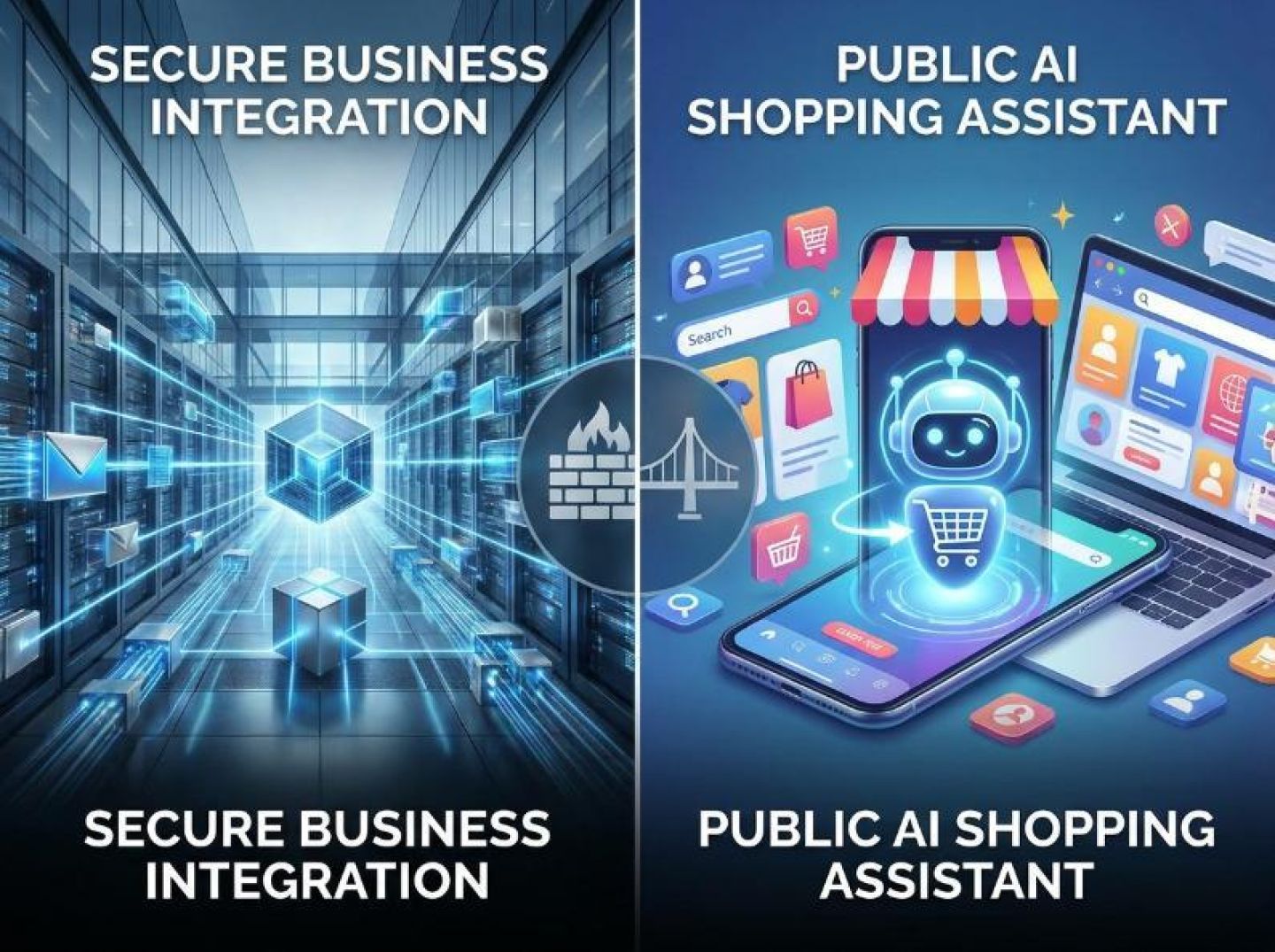
A useful way to understand this shift is to consider two possible types of agent interaction:
These are different ways for automated systems to access information. They should not be confused with a universal division between trusted and untrusted websites.
Some publishers and businesses are experimenting with ways to make their information available to AI systems through structured formats and commercial arrangements.
For example, AdExchanger's reporting on Time's bot-targeted advertising experiments discusses FAQ-style sponsored content designed to reach AI systems.
This is an early example of how publishers may explore monetization and brand visibility when automated systems retrieve information on behalf of users.
The broader idea is that businesses may provide structured product information, offers, inventory, or other data through approved channels. Commercial integrations may also influence how information is distributed, although the precise arrangements will vary.
Other agents may use ordinary browser interactions to research products and complete tasks.
They can encounter a brand through search, read its public content, inspect available product information, and interact with forms or checkout controls.
Search Engine Journal's overview of Muse and Dots describes the potential for agents to perform multi-step browser tasks on behalf of people.
For a website owner, this raises practical questions:
These are increasingly relevant considerations for commerce and conversion teams.
Traditional competitive ad research focuses on observable activity.
Marketers examine advertisements, landing pages, offers, and destination URLs to understand how competitors attract and convert customers.
Anstrex and similar tools can help with this research by making visible advertising activity easier to inspect.
However, browser-based competitive research has limits. A researcher may see a public landing page without seeing every variation, audience segment, retargeting experience, or private integration behind it.
If a competitor offers products through a private partner feed or an authenticated integration, those details may not appear on its public website.
That is a potential blind spot—not proof that every major competitor already has exclusive agent-only pricing or private AI auctions.
As agent integrations develop, some information may be available only through authenticated or approved channels.
Potential examples include:
Likewise, an AI assistant may summarize several sources and present one recommendation rather than showing the entire research journey.
Illumin's analysis of AI-driven brand discovery explores how AI can influence the way brands are discovered and evaluated.
The important implication is that visible ads and landing pages remain useful research inputs, but they may not represent every factor influencing an AI-mediated recommendation.
Competitive intelligence should therefore distinguish between what can be observed and what remains unknown.
In an agent-assisted web, competitive intelligence may need to expand beyond identifying which advertisement a competitor runs.
Marketers should also understand how a buyer's assistant discovers, evaluates, and interacts with different brands.
Call this agent journey intelligence.
Traditional competitive ad spying often focuses on three assumptions:
These assumptions are not universally true, and agent-assisted journeys introduce additional complexity.
A buyer may tell an assistant to find the best product for a specific need. The agent then performs a sequence of tasks: interpreting the request, selecting sources, comparing options, reading product information, and possibly assisting with checkout.
Search Engine Journal's coverage of Meta Muse provides an example of why these browser-based workflows deserve attention.
The marketing challenge is to understand where your brand fits into these journeys.
Traditional SEO research often starts with keywords. Agent journey research should also consider the natural-language requests customers give their assistants.
For example:
These prompts express a task, a problem, and a set of constraints.
Ahrefs' AI marketing trends report discusses the growing attention around agentic AI and AI-related search behavior.
Marketers can use representative customer questions to examine whether their brand appears in AI-generated responses and whether the information presented is accurate.
This is not a conventional rank-tracking exercise. AI answers can vary across tools, prompts, sessions, and available sources. Treat the results as directional observations, not a fixed ranking.
Not every AI assistant will influence every purchase.
A general-purpose assistant may help compare products, while a specialized vertical tool may focus on travel, finance, shopping, or another category.
Start by identifying the systems your customers are likely to use. Then test representative tasks to understand whether those systems:
The purpose is to understand the experience from the buyer's perspective—not to assume every assistant uses the same ranking or recommendation logic.
Traditional website usability asks whether a person can understand the page and complete the intended task.
Agent-oriented usability adds another question:
Can an automated assistant reliably understand the information and perform the permitted action?
That means reviewing:
The same improvements can help human users, screen-reader users, and automated systems.
This also connects with the idea of building focused landing pages that answer specific buyer questions. Real FiG Advertising & Marketing's analysis of ChatGPT's impact on search behavior discusses how detailed landing pages can provide useful context for search and advertising journeys.
Competitive intelligence should not stop at the search results page.
A visitor may discover your product but leave after encountering unclear pricing, confusing shipping terms, or a difficult checkout process.
An AI assistant may encounter similar obstacles while attempting to compare or purchase products.
Competitive monitoring can help identify changes in rival pricing pages, product information, reviews, and offers. MarTech's discussion of AI agents for marketing workflows describes how automated tools can help teams monitor competitor information and surface relevant changes.
A more advanced research process could also test how representative buyer agents interact with your own site and publicly accessible competitor pages.
However, a simulated journey does not prove how every real customer or agent behaves. It is a controlled research exercise that can reveal usability issues and generate testable hypotheses.
The opportunity is to move from simply asking, “What ads are competitors running?” to asking, “What information and experiences help buyers—or their assistants—choose one option over another?”
If agent-assisted journeys become more common, competitive research needs to consider both advertising creative and the destination experience.
Tools such as Anstrex, AdPlexity, and similar platforms can help marketers examine visible advertising activity, creative formats, messaging, and landing pages across supported sources.
The goal is not to claim that an advertisement is specifically optimized for a personal AI agent simply because its landing page has clean headings or structured information.
Instead, look for patterns that make the entire customer journey easier to understand, compare, and complete.
Begin by filtering advertising research by:
Once you have a collection of relevant campaigns, examine both the ad and its destination page.
Instead of asking only, “Which advertisement has the strongest hook?” ask:
These questions are useful for human conversions" target="_blank" rel="noreferrer noopener">conversion optimization as well as agent-oriented usability.
Some advertisers use detailed advertorials, comparison pages, and educational landing pages to explain a product before presenting an offer.
These pages can provide more context than a short product page.
Real FiG Advertising & Marketing's analysis of ChatGPT and search behavior discusses the role of detailed landing pages in providing context for search and advertising traffic.
When examining competitor destinations, look for:
Do not assume that a long page is automatically better or that its length proves agent optimization. Evaluate whether the information is genuinely useful and relevant.
When reviewing a public landing page, examine how its information is organized.
Look for:
Search Engine Journal's overview of personal AI agents discusses how browser-based agents interact with page structures and form elements.
These patterns are not exclusive to AI agents. They are also established accessibility and usability practices.
Some publishers are experimenting with sponsored content designed to reach automated systems.
AdExchanger's reporting on Time's bot-targeted advertising experiments describes FAQ-style content intended for AI systems retrieving information.
These experiments are worth watching because they raise questions about how paid information may be delivered inside AI-mediated discovery.
However, a structured FAQ on a competitor's landing page does not prove that the company is participating in an agent-specific advertising auction. It may simply be useful content for human visitors and search engines.
After examining visible advertisements and destination pages, test the questions your customers are likely to ask across relevant AI assistants.
For each question, record:
Ahrefs' AI marketing trends report discusses how marketers are beginning to track prompts and AI-generated brand mentions.
Comparing these observations with your advertising research can help identify areas for further investigation.
A competitor appearing frequently in your advertising research and in AI-generated answers may have strong visibility across several channels. That does not prove its ads caused its AI visibility. Other factors—including brand authority, product information, reviews, and independent coverage—may contribute.
Use three practical steps:
1. Map the likely buyer journey.
Document the visible sequence:
At each stage, ask what information would help a buyer or assistant make a confident decision.
2. Turn useful patterns into templates.
Create reusable page structures such as:
Use these as starting points, not as copied versions of competitor pages.
3. Test your own website and measure meaningful outcomes.
Use representative tasks to test whether an assistant can find product information, interpret prices, and complete permitted actions.
Separate legitimate automated activity from ordinary bots and suspicious traffic. Where appropriate, use server-side analytics and CRM integration to connect qualified enquiries and completed transactions with your measurement system.
AdExchanger's analysis of non-human traffic discusses why the industry needs better ways to distinguish valuable agent activity from other automated traffic.
Anstrex can support the competitive research stage by helping you inspect visible advertisements and destination experiences. It does not reveal private agent integrations, internal recommendation logic, or competitor conversion data.
The goal is to understand observable market patterns and use them to improve your own customer experience.
If personal agents become more common participants in online shopping and research, businesses will need websites that are understandable to both people and automated systems.
That does not require rebuilding every website around AI. It means strengthening the information architecture, policies, and usability practices that already support good digital experiences.
Three areas deserve attention.
Personal agents need reliable information about products, prices, policies, and available actions.
As Search Engine Journal's coverage of Muse and Dots explains, page structure can affect how browser-based agents identify information and interact with controls.
In practice, focus on three areas.
Use appropriate structured data.
Product, Offer, Review, Organization, FAQ, and HowTo schema can help describe information in a standardized format when the page meets the relevant requirements.
Structured data does not guarantee that an agent will use your information, recommend your brand, or complete a purchase. It provides a clearer representation of information that other systems may be able to interpret.
Maintain consistent facts.
Check that product details agree across:
Conflicting prices, product names, or delivery terms can create confusion for both human visitors and automated systems.
Create focused problem-and-solution content.
Detailed pages should answer real customer questions, explain relevant trade-offs, and make product information easy to verify.
Real FiG Advertising & Marketing's analysis of AI and search behavior discusses the value of detailed landing pages in providing useful context.
Think of search engines as systems that retrieve and rank documents. Think of shopping agents as systems that may also need to interpret available actions.
Your website should explain both what you offer and how a legitimate customer can proceed.
As browser agents become more capable, businesses may need clearer rules about how automated systems can interact with their websites.
Some sites may welcome approved shopping assistants. Others may restrict automated access to protect accounts, personal information, inventory systems, or infrastructure.
Search Engine Journal's coverage of personal AI agents discusses the emerging distinction between agent integrations and browser-based interactions.
MarTech's discussion of AI agents and ecommerce also explores the challenges that arise when agents begin interacting with retailers and checkout systems.
A clear policy can help reduce uncertainty.
Consider creating a public page explaining:
You can also document the technical requirements for legitimate integrations where your business supports them.
The original draft proposes an agents.txt convention or JSON policy document as a possible way to communicate these rules. Treat these as proposed approaches rather than universally adopted web standards. A clear policy page, supported API documentation, and existing technical controls are more useful than implying that a particular convention is already mandatory.
A website can look excellent while remaining difficult for automated systems—and some people—to navigate.
Review your interface for:
Semantic, descriptive controls
Use real buttons and links with accessible names. A visually styled element that lacks meaningful semantics may be difficult for browser automation and assistive technologies to interpret.
For example, use clear labels such as:
Predictable flows
Keep important actions consistent across product categories.
If every product uses a different checkout structure, users and automated systems may find the experience harder to navigate.
Document your standard purchase, subscription, enquiry, and cancellation flows.
Fail-soft interactions
Avoid unnecessary obstacles such as confusing popups, hidden navigation, and forms that provide no useful error guidance.
Security controls are still necessary. Captchas, authentication, and rate limits may be appropriate when protecting sensitive actions or preventing abuse. The goal is to provide a legitimate alternative for authorized users and integrations, not to remove safeguards simply to accommodate automation.
Accessible, predictable interfaces benefit people as well as automated systems.
Structured information explains what you offer. Clear policies explain which actions are permitted. Good interface design makes it easier to complete those actions safely.
Media buying has traditionally focused on reaching people through impressions, clicks, and audience segments.
As AI assistants become more involved in discovery and comparison, marketers may need to consider another layer: how advertising, public information, and brand credibility influence the options an agent presents to a user.
This does not mean that every AI assistant has an advertising auction or that advertisers can directly control its recommendations. It means the relationship between paid media, public brand information, and AI-mediated discovery deserves careful attention.
Historically, marketers bought reach through demographic, behavioral, or interest-based audiences, then optimized toward clicks, leads, and conversions.
In an AI-mediated journey, another question becomes important:
Does your brand appear among the options an assistant presents for a particular customer request?
An AdExchanger analysis of non-human audiences discusses the idea that advertisers may need to measure whether brands are included in an agent's decision set.
This is a useful strategic concept, but the measurement is still developing. Different AI systems may use different sources, ranking methods, and recommendation criteria.
Marketers should therefore monitor AI visibility as an additional discovery signal rather than a replacement for established performance metrics.
There are two related but distinct areas to consider.
1. Reach people and build credible public information.
Advertising can help introduce a product to human audiences. Those people may then create reviews, discussions, product comparisons, and other public information.
These sources can contribute to the wider information environment that AI systems may retrieve.
The important requirement is that the claims are truthful and the customer experience supports the promise.
For example, if a hotel promotes itself as family-friendly, its facilities and service should support that claim. Otherwise, customer feedback may contradict the marketing message.
An AdExchanger analysis of non-human audiences and credibility discusses why marketers need to consider how public information and user sentiment affect automated recommendations.
2. Evaluate emerging agent-facing commercial formats.
Publishers and technology companies are experimenting with ways to deliver sponsored information to automated systems.
AdExchanger's reporting on Time's bot-targeted advertising experiments describes one example of FAQ-style sponsored content designed for AI systems.
These experiments raise important questions about how sponsorship should be disclosed and how paid information may affect recommendations.
They should not be treated as proof that all major AI assistants currently offer agent-targeted advertising or that advertisers can directly buy their way into organic recommendations.
Traditional metrics such as cost per acquisition, customer acquisition cost, conversion rate, and return on ad spend remain important.
However, marketers may also want to track whether their brand is visible in AI-assisted discovery.
Ahrefs' AI marketing trends report discusses how marketers are monitoring prompts, brand mentions, and citations in AI-generated answers.
Possible additional metrics include:
These measures require consistent testing conditions and clear definitions.
For example, an increase in brand mentions after a campaign does not prove the campaign caused the increase. Other factors—such as product changes, news coverage, reviews, and changes to an AI system—may have influenced the result.
Agent visibility should complement business outcomes, not replace them.
When an automated assistant helps someone make a decision, transparency becomes especially important.
Consumers may trust an assistant because they expect it to compare options on their behalf. If paid placements influence what the assistant recommends, users should be able to recognize that commercial relationship.
Privacy is equally important.
The source draft references AdExchanger's reporting on the FTC case involving Hims & Hers as an example of the scrutiny that can arise when sensitive information is shared with advertising platforms. Any specific legal allegations or regulatory developments should be checked against the original reporting and official records before publication.
For marketers, the practical principles are:
Require clear sponsorship disclosure.
If you participate in an agent-facing sponsored placement, make sure the commercial relationship is disclosed to the end user in understandable language.
Avoid misleading machine-readable claims.
Do not fill structured data or product feeds with exaggerated superlatives, unsupported comparisons, or misleading product information simply to influence an automated system.
Respect consent and sensitive data.
Server-side tracking and CRM integrations can support measurement, but data collection and sharing must respect user consent, privacy requirements, and sector-specific rules.
Keep human confirmation for consequential actions.
Purchases, financial decisions, healthcare-related actions, and other sensitive transactions may require additional safeguards and explicit authorization.
You do not need to replace your existing media strategy overnight. Start by adding a small, measurable research and testing layer.
1. Map agent-mediated journeys.
Identify the questions buyers in your category are likely to ask an AI assistant.
Compare those questions with the searches, advertisements, and landing pages you already monitor.
Real FiG Advertising & Marketing's analysis of ChatGPT's impact on search behavior discusses changes in search behavior and the continuing importance of transactional intent.
2. Monitor relevant AI visibility.
Test a defined set of buyer prompts across relevant assistants. Record which brands appear, what information is presented, and whether the answers are accurate.
Repeat the tests under consistent conditions. Avoid treating one generated answer as a stable ranking.
3. Test agent-friendly website improvements.
Review structured product information, pricing clarity, accessibility, and checkout usability.
Use representative tasks to see whether an assistant can interpret the information and complete permitted actions.
4. Keep human and agent-facing media objectives distinct.
Continue measuring human-facing campaigns through appropriate business metrics.
If agent-facing sponsored placements become available in your market, evaluate them separately. Define the commercial relationship, disclosure requirements, audience, and measurement approach before allocating significant budget.
5. Brief creative for both people and machine interpretation.
Your advertisements should still communicate emotionally and visually to people. Your landing pages and product information should also explain the offer clearly enough for automated systems to interpret.
Use explicit benefits, accurate comparisons, readable specifications, and supporting evidence.
You are not simply buying media to change minds one impression at a time. You are building a brand that can be discovered, understood, and trusted across an increasingly automated decision environment.
The teams that prepare early—without confusing speculation with proven performance—will be better positioned as personal agents become a more important part of the buying journey.
Personal AI agents are creating new possibilities for how consumers research, compare, and purchase products. They may reduce the number of manual steps in a buying journey and change how brands are discovered.
That does not make traditional advertising, search, or competitive research obsolete.
It makes the information behind your advertising more important.
Marketers should continue studying visible competitor campaigns through tools such as Anstrex, while also paying attention to landing-page structure, product information, customer trust, and AI-assisted discovery.
Build websites that are clear and accessible. Keep product details and policies consistent. Test how representative agents interact with your pages. Monitor how your brand appears in AI-generated answers. Measure real business outcomes rather than assuming every automated interaction represents a customer.
Most importantly, separate what you can observe from what you cannot. Public advertising research can reveal creative and funnel patterns, but it cannot expose private agent integrations, hidden recommendation logic, or competitor profitability.
The next competitive advantage will not come from chasing every new AI trend. It will come from understanding how customers make decisions, making your brand easier to evaluate, and building a research system that adapts as the buying journey changes.
The future may be less about getting found in search results—and more about being the option an assistant can confidently serve.
Receive top converting landing pages in your inbox every week from us.
Recently Updated
As personal AI agents begin researching, comparing, and completing tasks for consumers, marketers must rethink how they study competitors. Explore agent-driven buying journeys, machine-readable websites, competitive intelligence, and the opportunities and risks of marketing to AI-mediated audiences.
Marcus Chen
7 minNov 16, 2026
Most Read
Traditional keyword research shows what people search for. AI prompt research can reveal how buyers compare options, express concerns, and evaluate solutions. Learn how to turn those insights into stronger paid-media creative with Anstrex.
Priya Kapoor
7 minNov 14, 2026
How-To
As advertising platforms automate targeting and measurement, competitive intelligence is becoming more important. Learn how to track creative, landing pages, auction signals, and market shifts beyond the walled gardens.
Marcus Chen
7 minNov 13, 2026