10 minJuly 8, 2026

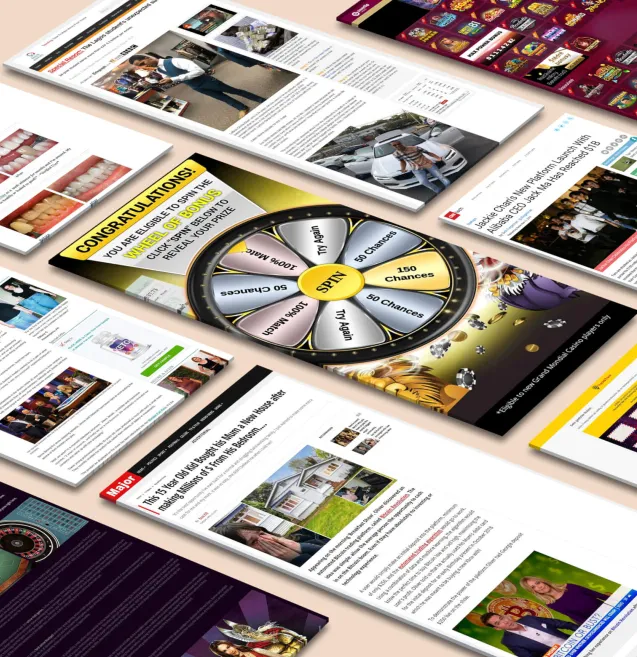
Our spy tools monitor millions of native ads from over 60+ countries and thousands of publishers.
Get StartedEvery year, the world's most iconic brands pour billions into cultural research, creative testing, and audience psychology — and most affiliate marketers treat that investment as if it belongs to a different universe. It doesn't. The creative strategies pioneered by companies like Absolut, Adidas, and Nike follow a remarkably predictable diffusion pattern: what starts as a bespoke, big-budget brand campaign quietly migrates into the performance marketing ecosystem, where savvy affiliates strip it down to its core narrative mechanics and redeploy it across native ad networks in adjacent verticals. Understanding this trickle-down effect isn't just intellectually interesting — it's one of the most reliable competitive edges available to anyone running native campaigns today.
The ground has shifted in ways that make this diffusion faster and more potent than ever. Native advertising has become the dominant format, accounting for 62% of all display spend — a staggering figure that reflects a fundamental change in how consumers engage with paid content. Audiences have grown increasingly skeptical of traditional advertising, and brands have responded by creating content that meaningfully integrates into what Basis describes as the "passion points" of their target audiences. The result is a creative landscape where authenticity and editorial fluency outperform hard selling by significant margins. A joint study by ShareThrough and IPG Media Lab found that native ads registered an 18% higher lift in purchase intent compared to banner ads, with a corresponding 9% lift in brand affinity — proof that the format's non-disruptive DNA rewards the kind of culturally-informed storytelling that major brands have spent years perfecting.
Here's the critical insight affiliates miss: that cultural R&D doesn't stay proprietary. Consider the case of Adidas, which used native advertising to promote their BOOST technology products by building and sharing informative videos across premium publisher sites. Rather than defaulting to product shots and discount codes, Adidas leaned into educational storytelling that introduced consumers to the innovation behind the technology. The result was a 50% increase in click-through rate — a massive performance gain driven not by a bigger budget but by a smarter narrative framework. Within weeks of campaigns like this gaining visibility, affiliate marketers running offers in supplements, fitness gear, and lifestyle products begin mirroring the same structure: lead with the science, contextualize the innovation, and let curiosity — not a coupon — drive the click.
This pattern repeats with almost mechanical regularity because native advertising's core design principle accelerates it. The format demands content that blends naturally into the editorial environment where it lives — which means the cultural hooks and storytelling angles that major brands test and validate translate almost directly into affiliate contexts without significant adaptation. When Adidas proves that educating the audience about a product's underlying technology outperforms a straightforward sales pitch, that insight is immediately applicable to an affiliate promoting a nootropic supplement or a new running shoe from a DTC brand. The narrative skeleton — curiosity-driven headline, educational angle, credibility through innovation storytelling — is format-native in the truest sense.
The smartest affiliates treat every major brand campaign not as a competitor's advantage but as a free signal. They monitor which creative frameworks Fortune 500 companies are testing on native platforms, identify the structural patterns behind outperforming ads, and deploy adapted versions before the rest of the affiliate ecosystem catches on. The billions that brands invest in understanding what makes audiences lean in rather than scroll past become, in effect, a publicly available creative intelligence brief — one that most performance marketers inexplicably ignore. Those who don't ignore it gain a window of asymmetric advantage that can last weeks or even months before the approach saturates.
Most affiliates hear "icon-driven" and immediately picture a celebrity holding a product. That instinct is understandable — and almost entirely wrong. The real power of icon-driven creative has never been about fame; it's about symbolic compression, the ability to pack an entire emotional narrative into a single visual or verbal cue that audiences decode instantly, without conscious effort.
Consider what Absolut actually did for the better part of four decades. The brand never relied on a spokesperson's face to sell vodka. Instead, it turned its own bottle silhouette into a cultural canvas — mapping it onto the Manhattan skyline, Warhol's pop-art palette, a Swedish midsummer meadow, a DJ's turntable. Each execution borrowed the emotional weight of something people already cared about and fused it with the product shape. The bottle became a symbolic shorthand for cosmopolitanism, artistic taste, and belonging. No explanation was needed. The audience did the interpretive work themselves, and that participation made the association stickier than any endorsement deal ever could.
For direct-response marketers running native campaigns, this distinction is not academic — it is the difference between ads that get scrolled past and ads that get clicked. The reason comes down to native advertising's prime differentiator. As Basis explains, the most effective native ads blend naturally into the form and function of the editorial habitat in which they live, offering hyper-relevant content that exudes authenticity. An ad built around a celebrity face often fails this test spectacularly: it screams endorsement, trips the reader's skepticism reflex, and breaks the illusion of editorial continuity. But an ad built around a cultural moment — a nostalgic visual motif, an aspirational archetype, a universally understood symbol — passes that same test effortlessly because it feels like cultural commentary, not a pitch.
Think about what this means in practice. A thumbnail featuring a rotary phone doesn't need a headline explaining nostalgia; the object is the emotion. A split image showing a cramped apartment next to a sun-drenched terrace doesn't need to spell out aspiration; the contrast does the storytelling. These are the affiliate-level equivalents of Absolut mapping its bottle onto a cityscape — visual shorthand that hijacks pre-existing emotional associations the viewer already carries.
This is also why creativity matters far more than budget in native environments. Not every campaign requires the kind of large-scale bespoke production championed by major publishers with specialized content teams and complex UX. Subtler approaches can be just as impactful when they tap the right symbolic register. Meanwhile, as Voluum notes, what differentiates one marketer from another in native is creativity — since everyone gets the same number of pixels, the edge belongs to those who find visual and conceptual tweaks that grab attention without breaking the editorial frame.
The actionable lesson for performance marketers is straightforward: stop searching for icons in talent databases and start searching for them in culture. Seasonal rituals, generational touchstones, universally recognized objects, color palettes associated with specific emotions — these are the building blocks of icon-driven native creative. They require no licensing fees, no brand budgets, and no permission. They only require the discipline to ask a different question before designing every ad: What does my audience already feel about this image, before they even read the headline?
Affiliates who internalize that question will find themselves building thumbnails and hooks that function exactly the way Absolut's bottle silhouettes did — as containers for meaning the viewer fills in themselves, willingly, and without ever feeling sold to.
Spotting the trickle-down from brand campaign to affiliate creative isn't guesswork — it's a systematic surveillance operation that demands the same rigor brands apply to their own campaign tracking. The affiliates who consistently catch icon-driven trends before saturation aren't luckier than everyone else; they've simply built a repeatable intelligence process and committed to running it weekly.
Here's the methodology, step by step.
Step One: Build Your Brand Watchlist
Before you open any spy tool, establish a curated watchlist of 10–15 major brand native campaigns currently running on platforms like Taboola and Outbrain. Focus on brands known for icon-driven creative — luxury spirits, athletic wear, consumer tech, skincare. As the Brax Blog emphasizes, setting clear objectives before diving into data is paramount; without a defined target, you'll drown in noise. Your objective here is specific: identify which visual motifs, headline structures, and narrative angles these brands are deploying right now, so you can detect when those same elements appear in affiliate campaigns weeks later.
Step Two: Set Your Spy Tool Filters Strategically
Inside Anstrex, the filter combination that matters most is counterintuitive. Run two parallel searches: one sorted by "newest" and another sorted by "longest running." Individually, neither filter tells you much. But when you cross-reference them — finding ads that launched recently and are already scaling in duration and placement count — you've identified something critical: a creative concept that a sharp affiliate has borrowed from the cultural zeitgeist and immediately validated with spend. That simultaneous signal of novelty and endurance is your confirmation that a brand-tested hook has entered the affiliate ecosystem.
Step Three: Monitor Adjacent Verticals for Creative Migration
Icon-driven motifs rarely migrate within the same vertical. A spirits brand's minimalist bottle silhouette won't show up in another spirits ad — it'll surface in a supplement landing page or a fintech advertorial that borrows the same visual grammar of aspiration-through-simplicity. Scan verticals adjacent to the brand's category: health, finance, lifestyle, dating. Look for matching elements — not identical imagery, but the same symbolic compression strategy discussed in the previous section. A bold single-object hero image. A headline built around identity rather than features. A color palette that signals premium without saying the word.
Step Four: Validate the Trend Against Performance Data
Not every borrowed motif signals a genuine trend. Some are one-off experiments that die within days. To identify what's working versus what isn't, track whether the ads you've flagged survive past the two-week mark. If three or more unrelated affiliates in different verticals adopt a similar icon-driven approach within the same 2–6 week window following a brand campaign launch, you're looking at a validated pattern, not an anomaly.
Step Five: Build Iteration Into Your Weekly Cadence
The Voluum Blog stresses the importance of testing frequently and refreshing creatives every few days, noting that there is a strong correlation between regularly updating ads and performance. Apply the same discipline to your intelligence-gathering. Block 90 minutes every Monday to run your watchlist through Anstrex, screenshot emerging patterns, and catalog them in a shared swipe file organized by motif type — not by vertical. Over time, this archive becomes your private trend radar, letting you spot creative migration patterns that most affiliates won't notice until the approach is already commoditized.
The window between a brand validating an icon-driven concept and the affiliate ecosystem saturating it is narrow — typically six to ten weeks. Affiliates who treat spy tool research as a structured ritual, rather than an occasional browsing session, position themselves inside that window consistently. Everyone else arrives after the arbitrage has already collapsed.
The difference between a profitable affiliate and a copycat who burns budget is a single skill: the ability to deconstruct a cultural hook and rebuild it for direct response without losing the emotional charge that made the original work. This isn't aesthetic mimicry. It's structural adaptation, and it follows a repeatable three-layer framework.
Layer 1: Extract the Symbolic Core. Every icon-driven brand campaign is organized around a single emotional archetype — nostalgia, rebellion, transformation, belonging. Your job is to name it, not replicate the surface imagery. When Absolut built decades of advertising around the silhouette of its bottle, the icon wasn't the glass — it was the archetype of sophisticated belonging, the idea that taste signals identity. When you spot a brand campaign migrating into affiliate creatives through your spy tools, ask one question: what feeling does the audience walk away with if you strip out the logo, the product, and the color palette? That feeling is the symbolic core, and it's the only element worth carrying forward.
Layer 2: Translate, Don't Copy. This is where most affiliates fail. They screenshot a high-performing brand thumbnail, swap the product, and wonder why compliance flags their ad or audiences scroll past it. Translation means triggering the same emotional response through different visual and verbal cues calibrated to your specific offer and audience. If the symbolic core is transformation, a brand might show a before-and-after of a celebrity face; your affiliate thumbnail might show a kitchen counter shifting from cluttered to minimalist, or a bank balance notification that implies a life change. The headline follows the same logic. Instead of lifting a brand's curiosity gap verbatim, rebuild it using formulas that preserve emotional resonance while fitting the editorial tone of native placements. The strongest native ads succeed because they offer hyper-relevant content that exudes authenticity, providing education and entertainment all at once — a dual mandate that copycats violate the moment their creative feels borrowed rather than original.
Layer 3: Wire It to a Conversion Mechanism. Brand campaigns can afford to leave the story open-ended because they're chasing awareness. Affiliates cannot. Your cultural hook must create a narrative gap — a question, a tension, an incomplete transformation — that only the landing page can resolve. The thumbnail and headline open the gap; the landing page closes it with a specific offer. This is the fundamental structural difference between branding and direct response, and it's why every element of your creative — thumbnail, headline, CTA, and landing page URL — must be treated as a discrete, testable variable rather than a fixed package.
Treating these elements as testable hypotheses is non-negotiable. Set SMART goals for each creative variation — a specific CTR target within a defined timeframe, a measurable cost-per-acquisition threshold — and let the data arbitrate between your intuitions. Run thumbnail variants against each other while holding the headline constant. Test two headline formulas against the same landing page. Isolate the CTA language that converts the cultural curiosity into the click. The affiliates who win aren't the ones with the best first instinct; they're the ones who test systematically enough to discover which translation of the symbolic core actually resonates with a specific audience segment at a specific moment in time.
This framework — extract, translate, wire — is what separates adaptation from theft. It lets you ride the emotional momentum of icon-driven campaigns without tripping compliance filters, fatiguing audiences, or building creative that looks like a knockoff. The cultural hook gets you attention. The conversion mechanism gets you paid. The testing discipline tells you which version of both to scale.
Cultural hooks have a shelf life, and the affiliates who profit most from icon-driven native campaigns are the ones who understand that timing isn't just about getting in early — it's about knowing when to get out. A cultural reference that feels fresh and provocative in week one can feel derivative by week six and actively repellent by week twelve. The difference between a campaign that prints money and one that hemorrhages budget often comes down to a single variable: when you chose to press the throttle and when you chose to cut it.
The Entry Window: Ride the Ascending Curve. The ideal moment to launch an icon-driven native campaign is during what you might call the "recognition gap" — the brief period when a cultural reference is familiar enough to trigger instant emotional resonance but hasn't yet been commoditized by every media buyer in your vertical. This is the window where your creative stands out precisely because it feels timely rather than trendy. To hit this window, you need the intelligence process described earlier running on a weekly cadence, but you also need pre-built creative frameworks ready to deploy. The affiliates who win here aren't starting from scratch when a moment arrives; they've already extracted the symbolic core from adjacent campaigns and can swap in a new cultural reference within forty-eight hours.
Reading the Plateau: Metrics That Signal Saturation. As Brax has outlined, tracking campaign performance isn't merely about monitoring spend — it's about ensuring every dollar is working effectively to generate meaningful results. When a cultural hook begins to saturate, the first metric to deteriorate is typically click-through rate on your highest-volume placements, followed by a creeping rise in cost per acquisition. If your CTR drops more than fifteen percent week over week while impression volume holds steady, the audience is telling you they've seen this reference enough. Another reliable signal is creative fatigue across competitive spy tools: when you spot five or more distinct advertisers using the same cultural hook on the same native platform, the novelty premium has already evaporated.
The Exit Decision: Cut Ruthlessly, Pivot Strategically. Abandoning a cultural hook doesn't mean abandoning the structural insight behind it. The symbolic core you extracted in the deconstruction phase — aspiration, rebellion, nostalgia, whatever emotional axis powered the original — remains valid long after a specific icon or reference has been exhausted. Smart affiliates treat the exit not as a loss but as a rotation: they kill the specific creative angle, preserve the emotional architecture, and immediately begin testing a fresh cultural reference mapped to the same underlying tension.
Timing also means respecting the cadence of the platforms themselves. When launching on networks like Taboola, for example, the campaign setup process involves scheduling, device targeting, and bid optimization that all interact with timing decisions — as detailed in Voluum's walkthrough of native campaign launches, everything from your bid strategy to your audience suppression lists should reflect where you are in the cultural hook's lifecycle. Early in the wave, you bid aggressively and target broadly to capture maximum volume at low competition. As saturation approaches, you narrow targeting to your highest-converting segments and shift budget toward testing the next hook.
Receive top converting landing pages in your inbox every week from us.
In-Depth
Explore what Pure Leaf’s “Break Conference” reveals about the gap between polished brand marketing and measurable performance. This guide breaks down how Native, Push, TikTok, and affiliate-style funnels use creative testing, clear offers, first-party data, and hard performance metrics to turn cultural moments into revenue.
Rachel Thompson
7 minOct 1, 2026
Must Read
Explore why traditional OOH experience is no longer enough as out-of-home advertising becomes more data-driven, measurable, and connected to digital channels. This guide outlines the cross-channel, measurement, AI, and competitive-intelligence skills modern OOH employers and candidates need.
David Kim
7 minSep 25, 2026
How-To
Learn how to measure whether sports-star and celebrity advertising actually delivers efficient CPC, CPA, search lift, and downstream conversions. This guide shows how to test celebrity creative against creator alternatives and use competitive intelligence and measurement to turn expensive star power into a measurable performance asset.
Elena Morales
7 minSep 25, 2026