9 minJune 1, 2026

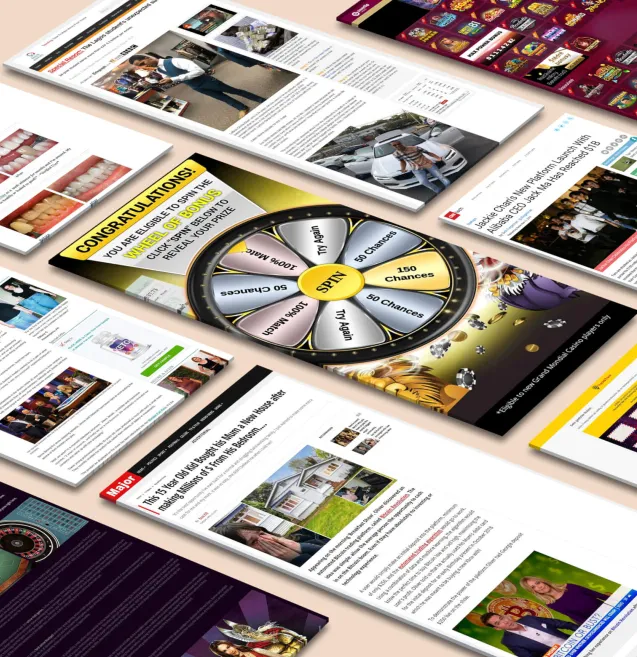
Our spy tools monitor millions of native ads from over 60+ countries and thousands of publishers.
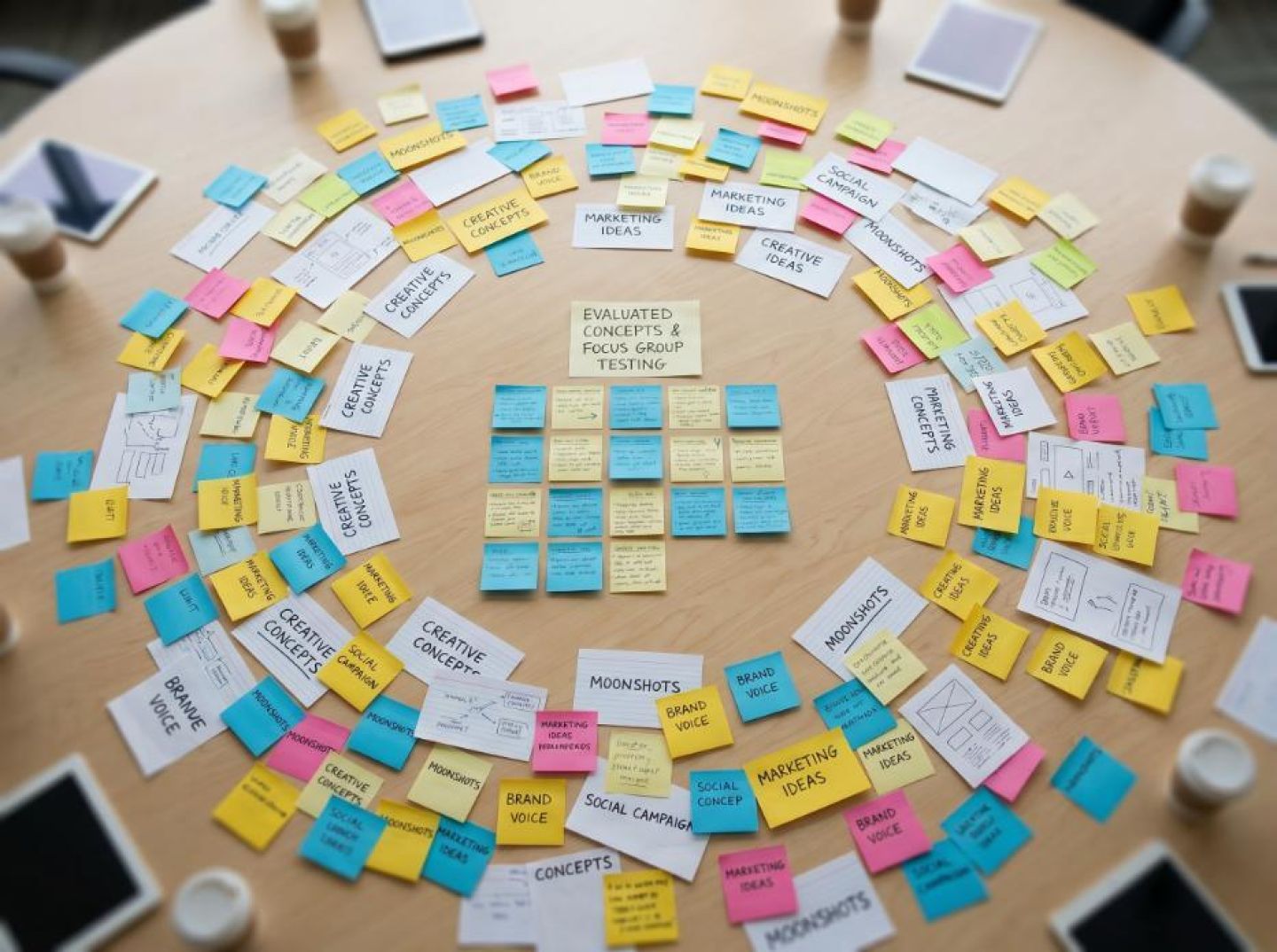
Get StartedEvery affiliate media buyer knows the feeling. You're staring at a dashboard full of dying ads, so you do the only thing that feels productive: you make more. Ten new hooks. Five new thumbnails. Three new angles that are really just the same angle wearing different fonts. You push them live, scatter your budget across all of them, and wait for the algorithm to crown a winner. This is the content factory mindset, and it's the default operating mode for the vast majority of performance marketers — the deeply held belief that more creatives tested equals more chances to win.
It sounds rational. It even sounds data-driven. But it produces exactly the kind of failure that has nothing to do with output and everything to do with alignment.
Consider what happened when a multi-brand healthcare technology company tried the same playbook at an enterprise scale. As the Content Marketing Institute detailed, the company — a house of brands assembled through a decade of acquisitions — had six distinct brands, each with its own marketing leader, its own content history, and its own definition of what "good" looked like. Three of those brands were essentially telling the same story to the same buyer audience on the same channels. The content team called these overlap areas "collision zones." Assets were being produced at high volume, but the output was diffuse, redundant, and undifferentiated. The audience couldn't tell the brands apart, so they simply stopped trying.
That diagnosis should sound uncomfortably familiar to any affiliate running fifty or a hundred ad variants without a strategic thesis. When every creative is a slight permutation of the same surface-level hook — "doctors hate this," "I tried it for 30 days," "you won't believe the results" — you aren't testing. You're generating noise. Your audience scrolls past the fourth variation the same way that healthcare company's buyers scrolled past the third brand saying the same thing. Volume without intelligence doesn't create signal; it buries it.
The structural failure isn't laziness. It's misdirected effort. The healthcare company's content function was a centralized team of five talented, overworked people doing ninety-five percent reactive work. The loudest brand got the most attention; quieter brands went silent for months. In affiliate campaigns, the same dynamic plays out in miniature: the loudest creative — the one that spends the fastest in the first hour — absorbs the remaining budget, and everything else dies quietly, untested in any meaningful way. You end up optimizing for volume of attempts rather than quality of insight.
This isn't a niche problem. It's an industry-wide pattern. A report cited by TopRank Blog found that 91% of marketers are increasing content output, with nearly half producing three to five times more than the previous year — often on budget increases of just one to ten percent. More content being developed with the same resources has, predictably, created an undifferentiated and noisier market. The bottleneck was never production capacity. It's the strategic thinking that should precede production — understanding which message, for which segment, at which stage of awareness, will actually earn a scroll-stop.
Affiliates who recognize this pattern early gain an asymmetric advantage. Not because they work less, but because they refuse to confuse motion with progress. The content factory feels productive. The dashboard stays full. The Slack channel hums with new creative uploads. But when every variant is a guess dressed up as a test, the only thing scaling is your ad spend — not your understanding of what makes people buy.
Most affiliates operate under an implicit assumption that every new ad they launch has a roughly equal probability of becoming a winner. It doesn't. The base rate for untested creative is brutal — the vast majority of ads you push live will fail to beat your current control, and you'll pay full price for every one of those losers before you have enough data to know they're losers. This isn't a mindset problem. It's a math problem, and the math gets worse the more variations you throw into the mix.
Here's how the economics actually work. Say you're testing a hundred new creatives with no pre-launch intelligence. Each ad needs a minimum viable sample before you can declare statistical significance — enough impressions, clicks, and conversions to distinguish real signal from noise. Depending on your vertical and offer, that floor might be $50 per ad or $500 per ad. At the low end, you're burning $5,000 just to learn which ninety-plus ads were duds. At the higher end, you've lit $50,000 on fire in a single testing cycle. And here's the compounding cruelty: every dollar you spend on a loser is a dollar that could have been spent scaling your existing control or funding the handful of creatives that actually had a shot. The cost isn't just the spend — it's the opportunity cost of delayed scaling.
This is exactly why the DAIVID and ADIN.AI partnership exists. When Unilever announced its shift toward a 300,000-creator network with 71% of those creators using AI tools, the evaluation infrastructure that used to separate good creative from bad simply stopped working. As Search Engine Journal reported, A/B testing individual pieces of content across a network of that size is "logistically impossible," and traditional brand-tracking surveys only capture what happened last quarter. The real danger is that budget gets allocated to the wrong places before anyone has enough signal to course-correct. If a $60 billion company with virtually unlimited resources recognized that testing everything blindly doesn't scale, a solo media buyer running $500 a day on a single offer certainly can't afford it either.
The problem compounds organizationally, not just financially. Content Marketing Institute documented a multi-brand healthcare company where the content team was doing 95% reactive work — the loudest brand got the most attention, quieter brands went silent for months, and nobody had the bandwidth to step back and ask whether the work they were doing was actually the right work. That's the content factory in its purest form: a team so consumed by production velocity that evaluation becomes an afterthought. For affiliates, this plays out in miniature every single day. You're so busy building the next batch of creatives that you never properly interrogate why the last batch failed.
The counterintuitive move — the one that separates profitable media buyers from busy ones — is to front-load your intelligence rather than your production queue. Spend the time and energy before you launch understanding what's actually working in your vertical, why it's working, and what structural elements your winning controls share. Every dollar you invest in pre-launch analysis reduces the number of expensive losers you have to fund post-launch. The lottery ticket approach feels productive because you're always shipping. But shipping without intelligence isn't velocity. It's waste with a workflow.
There's a reason the highest-earning affiliates seem to produce fewer ads yet consistently outperform the teams grinding out dozens of variations a day. The difference isn't talent or budget — it's operating model. They've made the same leap that the Content Marketing Institute describes when distinguishing between teams that run content like a series of campaign-shaped projects and those that build genuine orchestration — an approach where strategic intelligence determines what gets built, rather than a production calendar that simply demands more.
Translate that into affiliate terms and you get a clear divide. On one side sits the content factory: a workflow where the default response to declining performance is another batch of creatives. On the other side sits what you might call a media operation — a workflow where competitive intelligence is the foundation, and creative production is the output of research rather than the input to testing.
Here's what the media operation looks like in practice. Instead of opening your design tool first thing Monday morning, you open your ad intelligence platform and pull up ten competitor campaigns in your vertical that have been running for thirty days or more. Longevity is your performance proxy. Nobody pays to run an unprofitable ad for a month. Those ten survivors have already absorbed weeks of someone else's split-testing budget, audience feedback, and platform optimization. Your job now is to deconstruct them.
You start by cataloging what's actually there — the hooks, the visual treatments, the offer positioning, the calls to action. This mirrors the competitive content analysis framework that TopRank Blog outlines for B2B brands: begin with competitor identification, move into a content inventory of what they're running, then evaluate performance by measuring what resonates with the audience. For affiliates, the inventory step means screenshotting every element, not just glancing. You're noting that three of the ten campaigns lead with a fear-based hook while two use curiosity gaps. You're noticing that the longest-running ad buries the product until the third frame and leads entirely with a problem-agitation sequence. You're recording which offers position on price versus which position on outcome.
The final step is gap analysis — identifying angles, audiences, or emotional territories that none of those ten campaigns have touched. Maybe every competitor targets women over forty but the offer's landing page clearly converts men too. Maybe every hook is negative ("stop doing X") and nobody has tested an aspirational frame. Those gaps aren't random guesses. They're informed hypotheses drawn from a market that has already voted with its wallet.
This is the maturity leap, and it's crucial to understand what it isn't. It isn't about doing less. The affiliates running media operations often work just as many hours as the factory operators. The difference is allocation. Where the factory spends eighty percent of its time producing creatives and twenty percent analyzing results, the media operation inverts that ratio. Research is the main event. Production becomes the brief, focused execution phase that follows — and because each creative is built on a foundation of observed market evidence rather than gut instinct, the hit rate per creative climbs dramatically.
When you study ten campaigns that have already survived market selection, you inherit weeks of real-world testing data without spending a dollar. Your first creative isn't a guess. It's a thesis backed by evidence — and that changes the economics of every ad you launch from that point forward.
Let's get the obvious objection out of the way: studying your competitors' winning ads isn't stealing. It isn't lazy. And it doesn't make your work derivative. If anything, the opposite is true — the affiliates who refuse to study what's already working in their vertical are the ones most likely to accidentally produce something derivative, because they have no idea what "same" looks like in their category.
This discomfort around competitive intelligence is uniquely concentrated among solo operators and small affiliate teams. In every mature marketing discipline, it's simply table stakes. TopRank Blog outlines what professional agencies actually deliver under the umbrella of competitive content analysis: competitor identification, content inventories, performance evaluation, SEO assessment, and content gap analysis. Notice that last item. The entire purpose of studying what competitors have published isn't to mirror it — it's to find the topics and questions they haven't adequately covered. Gap analysis is the engine of originality. You can't find what's missing if you haven't first mapped what's there.
The affiliate who pulls ten top-performing campaigns from a spy tool and studies their hooks, their emotional triggers, their offer framing, their visual pacing — that affiliate isn't preparing to clone. They're building a negative space map. They're asking: What pain point does every one of these ads hit, and what adjacent pain point do none of them touch? What objection do they all preemptively handle, and which one do they all ignore? What audience segment are they all speaking to, and who is being left out of the conversation entirely?
This is exactly the distinction TopRank draws when discussing concept development: generative tools are good at remixing what already exists, but they can't tell you what's frustrating your buyers that nobody in your category has addressed yet. That insight applies to AI-assisted ad creation just as much as it applies to B2B content strategy. You can feed a language model every winning ad in your niche and ask it to produce variations, and what you'll get back is a competent remix of the existing landscape. What you won't get is the angle that breaks the pattern — the one that works precisely because it doesn't look like everything else in the feed.
Finding that angle requires human judgment layered on top of competitive data. As Shelley Walsh argued when examining the evaluation challenges of AI-scaled content, what stays constant is the need to measure what's actually working and make decisions based on that measurement rather than assumptions. The same principle governs ad research. You don't assume you know what's winning in your vertical. You measure it, catalog it, study the structural patterns — and then you make a deliberate, informed decision to go somewhere different.
This is why competitive intelligence paradoxically makes you more original. The affiliate who has never studied the competitive landscape is guessing blindly, and blind guesses tend to land in the center of the distribution — the safest, most generic territory. The affiliate who has studied it thoroughly knows exactly where the center is and can aim for the edges. They know which emotional registers are overplayed, which visual styles have been strip-mined into meaninglessness, which CTAs have become invisible through repetition. That knowledge doesn't constrain creativity. It focuses it. It transforms the creative process from "what might work?" into "what hasn't been tried yet?" — and that second question is the one that produces breakout ads.
Here's the uncomfortable truth about affiliate marketing in 2026: your production capacity is no longer your bottleneck. It hasn't been for at least a year. Any affiliate with a laptop and a subscription to the right AI tools can generate a hundred ad variations by tomorrow morning — polished copy, on-brand visuals, platform-native formatting, the works. The barrier to creating more has effectively collapsed to zero. And that's precisely why creating more has stopped being a competitive advantage.
When everyone can produce at scale, scale stops differentiating you. What separates the affiliates who are compounding their returns from those drowning in their own output is something far harder to automate: the judgment to know which concepts deserve production resources before a single dollar gets spent testing them.
This is the evaluation problem, and it's eating the industry alive. As Shelley Walsh argued in her analysis of AI content scaling, enterprise brands face a specific trap — they know they want to scale content production, but they don't know how to do it without sacrificing the quality signals that make the content worth producing in the first place. The same dynamic plays out at the affiliate level, just with smaller teams and tighter margins for error. You can spin up fifty hooks by lunch, but if you can't tell which five are worth running, you've just multiplied your testing costs by ten while your signal-to-noise ratio craters.
The evaluation problem is arguably more urgent than the production problem because bad evaluation compounds. Every mediocre ad you push into testing consumes budget, dilutes your account data, and — on platforms with quality-score mechanisms — actively degrades your future delivery. Production mistakes are cheap to fix. Evaluation mistakes bleed you slowly, and most affiliates don't realize the bleeding has started until they're reviewing a month of flat returns wondering where the spend went.
Consider what the Content Marketing Institute documented in a multi-brand healthcare company that was losing market share. The content function operated as a centralized team of five — talented, overworked, and doing 95% reactive work. Production wasn't the constraint. Strategic decision-making was. The loudest brand got the most attention. Quieter brands went silent for months. Content meetings happened regularly and kept everyone informed, but they rarely decided anything that hadn't already been determined elsewhere. The team had no shortage of capacity to make things. What they lacked was the infrastructure to decide what was worth making.
Affiliates who run content factories operate under the same structural failure. They've optimized for throughput when they should be optimizing for filtration. The affiliate who studies ten competitor ads, identifies the two structural patterns driving performance, and produces three variations of each isn't being lazy — they're being economically rational. They've front-loaded the evaluation work that their competitor will pay for later in wasted ad spend and polluted data.
This is why creative evaluation infrastructure — the frameworks, the research habits, the systematic competitor analysis we covered in the previous section — is becoming more valuable than creative production capacity. Production is a commodity. Judgment is the moat. And the affiliates who build their operations around evaluation first, production second, are the ones whose cost-per-acquisition curves keep bending downward while the content factories burn cash chasing volume that no longer correlates with results.
Receive top converting landing pages in your inbox every week from us.
In-Depth
Explore what Pure Leaf’s “Break Conference” reveals about the gap between polished brand marketing and measurable performance. This guide breaks down how Native, Push, TikTok, and affiliate-style funnels use creative testing, clear offers, first-party data, and hard performance metrics to turn cultural moments into revenue.
Rachel Thompson
7 minOct 1, 2026
Must Read
Explore why traditional OOH experience is no longer enough as out-of-home advertising becomes more data-driven, measurable, and connected to digital channels. This guide outlines the cross-channel, measurement, AI, and competitive-intelligence skills modern OOH employers and candidates need.
David Kim
7 minSep 25, 2026
How-To
Learn how to measure whether sports-star and celebrity advertising actually delivers efficient CPC, CPA, search lift, and downstream conversions. This guide shows how to test celebrity creative against creator alternatives and use competitive intelligence and measurement to turn expensive star power into a measurable performance asset.
Elena Morales
7 minSep 25, 2026