8 minOctober 6, 2026

Our tools monitor millions of native, push, pop, and TikTok advertising campaigns.
Get StartedPerformance marketers did not suddenly discover billboards. They discovered that out‑of‑home now behaves like a performance channel.
The obsession starts where every performance marketer lives: attribution, accountability, and control. For years, OOH sat in the “nice to have” brand bucket—great for awareness, impossible to measure with any rigor. That story is breaking. Modern platforms now deliver impression, movement, and lift data in real time, putting OOH “into parity with modern performance channels,” as an AdQuick overview describes it. When you can track the “halo effect” OOH has on search, social, or direct traffic and see it at the cadence you’re used to in paid media dashboards, the channel stops feeling like a gamble and starts feeling like a lever.
Performance marketers are also wired to hunt for underpriced attention. Digital auctions get more competitive and more expensive every quarter; CPMs creep up, targeting gets throttled by privacy changes, and creative fatigue hits faster. In that context, OOH is a rare arbitrage opportunity: a mass‑reach medium that can now be targeted with far more precision than the old “buy the big board on the highway and hope” playbook. By using machine learning to analyze trillions of possible unit combinations against demographic and behavioral data, platforms like AdQuick’s planning and optimization engine let performance teams buy OOH the way they already buy programmatic—systematically, test‑and‑learn, and ruthlessly optimized.
That shift in mindset is bleeding back into how OOH is sold and managed. Traditional OOH pipeline reviews tended to be static, backward‑looking rituals: a manager opens a spreadsheet, a rep walks through late‑stage deals, everyone nods, and nothing in the funnel actually changes. As Jonathan “JG” Graviss points out, a status‑only review simply documents the pipeline; it does not improve it, because it cannot see the categories and deals that should exist but don’t yet, like the seasonal advertisers who needed outreach last month, not this one, for a Q4 push (as he argues in this breakdown of better pipeline reviews). Performance marketers are allergic to that kind of passive reporting. They want the same kind of forward‑looking, gap‑hunting rigor in OOH that they use for search and paid social.
The digital buying mindset is also reshaping how OOH operators show up online. Performance teams rarely “wait to be found” in other channels—they engineer discoverability. Yet in many markets, buyers actively looking for OOH solutions still can’t easily find or evaluate local inventory. That’s starting to change as operators realize that clear, first‑time‑buyer‑friendly explanations of formats, pricing, and process are exactly what both search engines and AI tools reward, turning quiet online research into inbound leads that arrive warmer and more intent‑driven than cold outbound calls, as one analysis of OOH operators’ search visibility makes clear.
Put all of this together and the reason for the obsession is obvious: OOH is no longer an outlier. Programmatic DOOH, real‑time data, and AI‑powered placement have transformed it into a strategic, optimizable channel that fits neatly into the performance marketer’s operating system. The same people who live and die by ROAS and incremental lift are realizing that the once‑“unmeasurable” medium can now be bought, tested, and scaled with the same precision they expect everywhere else—and that realization is quietly rewriting what “good” looks like in OOH sales, strategy, and measurement.
Scroll any job board and you’ll see the fiction in real time.
“Out-of-Home Media Planner.”
“Brand Marketing Manager, OOH.”
“Director of Outdoor Advertising.”
You’d think these roles still live in a world of GRPs, gut feel, and twelve‑month flights. But read past the title and a different job emerges: one that looks a lot less like Madison Avenue and a lot more like performance marketing.
The responsibilities tell on themselves.
You’ll see lines like:
Those are not brand advertising verbs. Those are performance verbs.
What’s happening is simple: job descriptions are lagging behind the channel. OOH has become measurable, targetable, and optimizable, but HR and legacy org charts are still labeling it as “brand.”
Behind the scenes, the expectations have quietly flipped.
Historically, OOH roles were about coverage and craft: negotiate the right locations, maintain relationships with vendors, keep the brand guidelines tight. Success was measured in impressions and presence, not in pipeline or revenue.
Now, the medium itself has changed. As Jawad Hassan describes in his piece on OOH’s significant transformation, the growth of digital formats, data integration, and AI has made the channel “more dynamic and responsive,” closing the gap between OOH and digital media. That evolution doesn’t just change how campaigns run; it changes what it means to do the job.
Modern OOH specialists are expected to:
You can’t do any of that if you’re just “the billboard person.” You’re effectively a performance marketer whose playground happens to be physical space.
The biggest tell in these job listings isn’t the tech stack; it’s the KPIs.
Where OOH roles once talked about “awareness,” “visibility,” and “supporting brand campaigns,” they now quietly demand accountability: “drive measurable lift in site traffic,” “improve blended CAC,” “increase conversion rates in exposed markets.”
This shift is fueled by the same data infrastructure that’s dragging OOH into a single, comparable measurement language. Hassan points to fragmentation in legacy OOH measurement as a “strategic constraint on growth,” because it makes it hard to align with the standards used in other channels. The inverse is also true: as OOH gets closer to a single source of truth, it becomes easier to judge it on the same terms as search, social, or programmatic display.
That’s exactly what performance‑minded CMOs want. They don’t care that a board is “premium.” They care that it reduces CAC in a region, lifts brand search, or accelerates revenue in target accounts. Platforms that bring “real‑time data” and programmatic execution to OOH, as AdQuick’s performance framing makes explicit, are rewriting the scorecard for the people managing those budgets.
The irony is that many of these roles are still housed on the “brand” side of the house, even as their mandate is to make the growth math work harder.
The 60/40 brand‑to‑performance rule has long argued for a balance between demand creation and demand capture. Yet, as one analysis of the 60/40 rule and OOH points out, most brands have inverted that ratio—running 80% performance, 20% brand—and are now hitting growth ceilings as their performance audiences saturate.
Modern OOH sits right in that tension. Job descriptions still pitch it as a “brand” function, but the real brief is to fix what over‑optimized performance has broken: expand reach, rebuild future demand, and do it in a way that shows up in the spreadsheet next quarter.
That’s why performance language keeps leaking into “brand” OOH roles. CMOs want the best of both worlds. They’re hiring people who can run LED truck campaigns that build real‑world share of voice while also instrumenting the halo effect on digital—search lifts, higher retargeting performance, better conversion rates—using the same attribution muscles they expect from their growth teams.
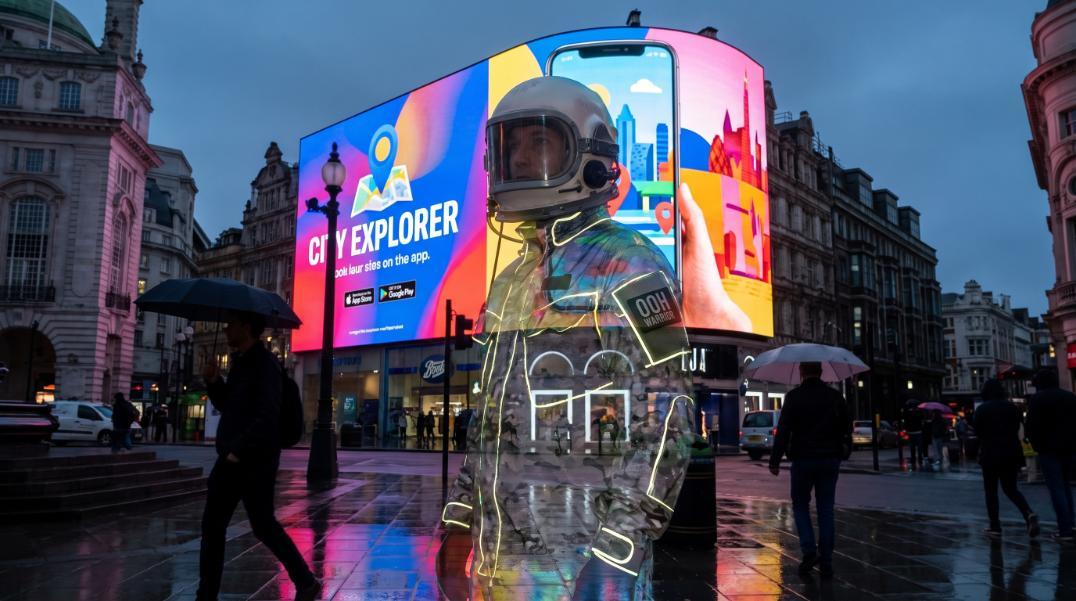
The title on the req might still say “OOH Manager.” But the person who succeeds in that seat is not an old‑school outdoor buyer. They are, functionally, an invisible performance warrior embedded in a legacy channel—measured on outcomes, fluent in data, and quietly rewriting what it means to work in out‑of‑home.
The new OOH job description isn’t written in HR software; it’s written in the tools performance marketers quietly bring to the table. On paper, they’re “media planners.” In practice, they’re closer to growth hackers with a street‑level lab: scraping demand signals, wiring funnels into boards, and running full‑stack tests against assets that used to be sold by the month, not by the metric.
The first thing you notice in their toolkit is a new breed of “spy tools.” Where yesterday’s outdoor buyer squinted at traffic counts, today’s operator is staring at market‑intelligence dashboards. Platforms like hellOOH don’t just list inventory; they ingest fragmented demand signals, model them with machine learning, and surface where decision‑makers are actually moving budget. When Trillboards chose hellOOH as its preferred intelligence layer, the company framed it as a shift from execution to predictive strategy: the constraint in OOH is no longer “Can we fulfill?” but “Do we know where demand is going next?” That’s classic performance thinking—optimize on the frontier of intent, not in the rearview mirror of last quarter’s buys.
On the buy‑side, platforms like AdQuick act as a universal adapter, turning static boards into something that behaves more like a performance network. By analyzing trillions of potential unit combinations and layering in demographic and behavioral data, AdQuick lets marketers plan OOH with the same precision they expect from paid social or programmatic. Real‑time delivery and AI‑powered optimization mean a “billboard flight” can now be sliced, paused, and reallocated based on live performance data, not just contract dates. For the person in the OOH seat, that means you’re no longer just a space buyer—you’re an architect of a constantly learning system.
But spy tools and planning precision only matter if you wire them into a funnel. The invisible OOH warrior starts backwards from a revenue model, not forward from a media kit. A localized campaign might run bus shelters to a vanity URL tagged with UTMs, retarget visitors via mobile IDs exposed near the placement, and then feed that audience into a sequence of paid social and email touches. The board becomes the top of a measurable funnel, not a “brand moment” floating in isolation. When platforms can show the “halo effect” OOH has on adjacent digital campaigns, that funnel view gets even sharper: a lift in search and social conversion can be attributed back to specific placements, flight dates, or creative treatments.
On the supply side, the same performance mindset is reshaping how operators present themselves to those buyers in the first place. As one OOH‑focused consultancy put it, buyers increasingly begin with quiet online research and arrive saying “I found you online,” because a clear, honest, search‑optimized web presence reduced their uncertainty before the first sales call even happened. That insight, shared in an OOH Today analysis of operator visibility, is pure performance doctrine: your digital footprint is part of the conversion path, even if the product lives on a highway.
Tie all of this together and you get the third pillar of the new toolkit: full‑stack testing. Creative isn’t approved; it’s hypothesized. Locations aren’t “locked”; they’re prioritized for experimentation. A performance‑minded OOH lead will:
Crucially, this testing loop doesn’t just live in media dashboards. It reaches into sales scripts, landing page variants, even how inventory is packaged on an operator’s site. The same OOH Today piece that urged operators to fix “invisibility” in search also described how consistent digital presence compounds advantage over quarters, not days. That’s exactly how performance marketers think: every test, every incremental improvement to discoverability or conversion, makes the next deal cheaper and faster to close.
What emerges is a toolkit that looks strangely familiar to anyone running growth for a SaaS product: intelligence systems instead of static lists, funnels instead of flights, and continuous testing instead of annual plans. The only difference is that the “ad server” is made of steel and vinyl—and the person quietly running it like a performance channel is still, on paper, just your “OOH planner.”
Performance‑literate OOH doesn’t start with a media plan; it starts with a feedback loop. The invisible OOH warrior isn’t buying “awareness” and waiting for a post‑buy recap. They are wiring every board they touch into an intelligence system that behaves more like a performance dashboard than a traditional media schedule.
The first visible shift is from snapshots to live telemetry. Instead of planning against static reach models and getting a PDF six weeks after the campaign, performance‑literate buyers expect real‑time signals: impressions modeled from mobility data, on‑the‑fly audience shifts, creative rotation reports, and even the “halo effect” OOH has on adjacent digital campaigns, as AdQuick’s platform overview puts it. OOH is no longer quarantined in its own measurement universe; it’s benchmarked against search lift, social engagement, incremental site traffic, and conversions.
Crucially, those signals don’t just answer “What happened?” They answer “What should we do next?” Traditional OOH measurement has been mired in fragmented, backward‑looking methodologies that make cross‑campaign comparison painful and cross‑channel integration nearly impossible, as Jawad Hassan argues in his call for a single source of truth. Performance‑literate practitioners treat that fragmentation as a design problem: they build an internal layer that normalizes disparate OOH metrics into a common language that can sit beside CPA, ROAS, and LTV.
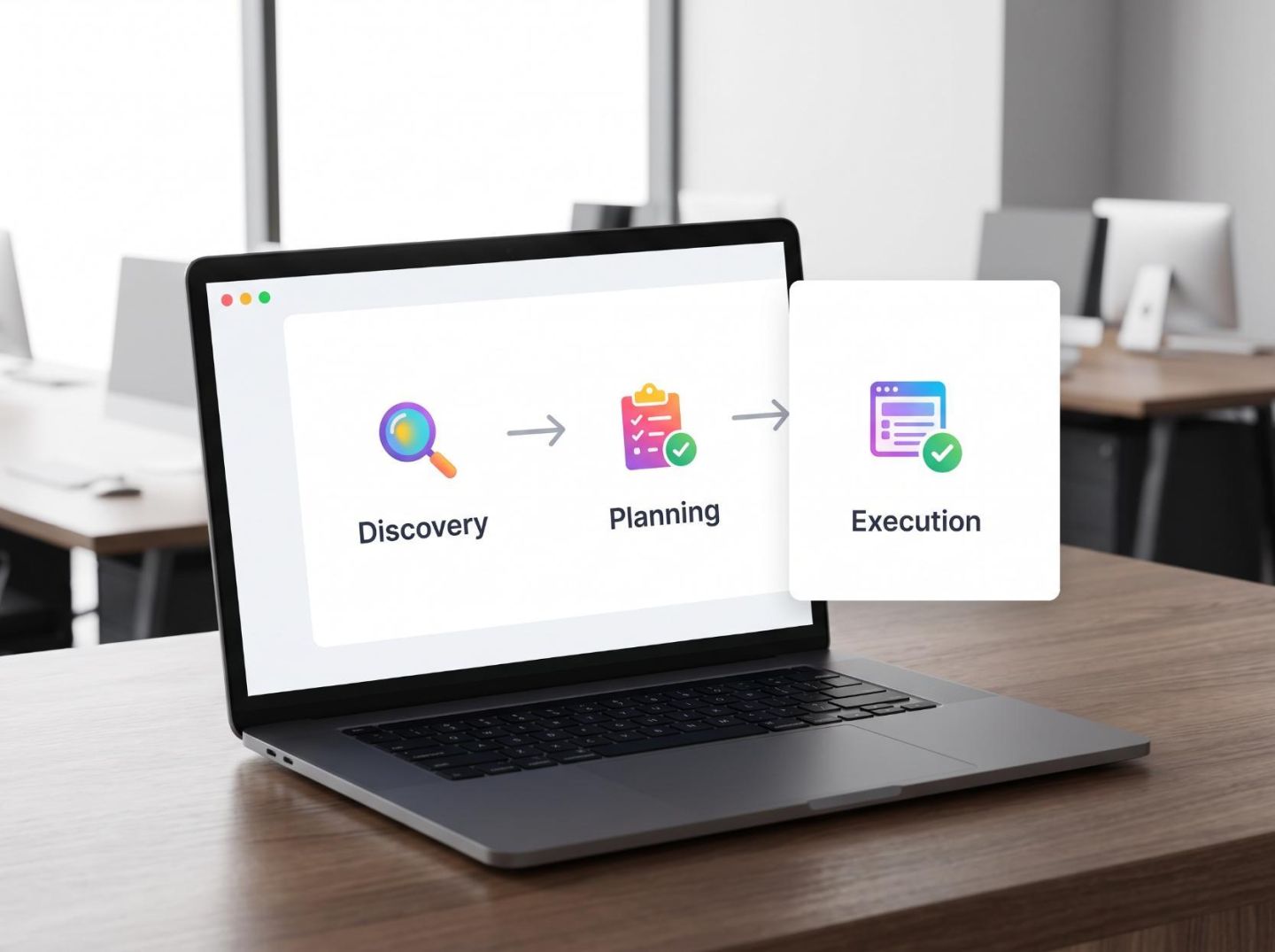
That’s where the “intelligence loop” really emerges. Instead of a linear flow — plan → buy → run → report — you get an always‑on cycle:
3. Execution with built‑in adaptability. Programmatic DOOH and flexible buying windows enable in‑flight changes that used to be impossible. Platforms that analyze trillions of potential unit combinations and optimize against demographic and behavioral data, as AdQuick describes, push OOH toward the same adaptive execution muscle marketers expect from paid social or search. The invisible warrior isn’t locked into a 12‑month board; they’re running rolling waves with change baked in.
4. Attribution and cross‑channel read‑through. Performance‑literate teams treat OOH as a cause in a multi‑touch chain, not an isolated “branding” line item. That means tying exposure geography and timing to store visits, app installs, CRM entries, and revenue — and then reading how digital channels respond. When OOH drives a measurable jump in search and social effectiveness, that measurable halo becomes part of the loop: the case for more budget, or for different sequencing of channels.
5. Learning that actually compounds. The real upgrade isn’t just better reporting; it’s faster learning. Intelligence systems that answer “What is happening, why, and what is likely to happen next?” — the three questions hellOOH is built around — turn OOH from a series of isolated campaigns into a compounding dataset. Performance‑literate practitioners log every test: which creative formats produced store‑visit lift in urban vs. suburban corridors, which inventory types correlate with higher repeat conversion, which markets require heavier frequency to move the needle.
Importantly, this intelligence loop doesn’t wait for a perfect, industry‑wide single source of truth. While the broader ecosystem still wrestles with inconsistent methodologies, as OOH Today highlights, the invisible OOH warrior builds a pragmatic one inside their own stack. They reconcile vendor reports, mobility data, campaign logs, and revenue outcomes into a custom truth layer that’s “good enough to decide” — and then they iterate.
In other words, performance‑literate OOH isn’t about bolting an attribution slide onto a traditional campaign. It’s about treating every board, screen, and transit shelter as a node in a living system that senses, decides, acts, and learns. Once that loop is in place, OOH stops being the slowest, fuzziest line on the plan — and starts acting like one of the smartest.
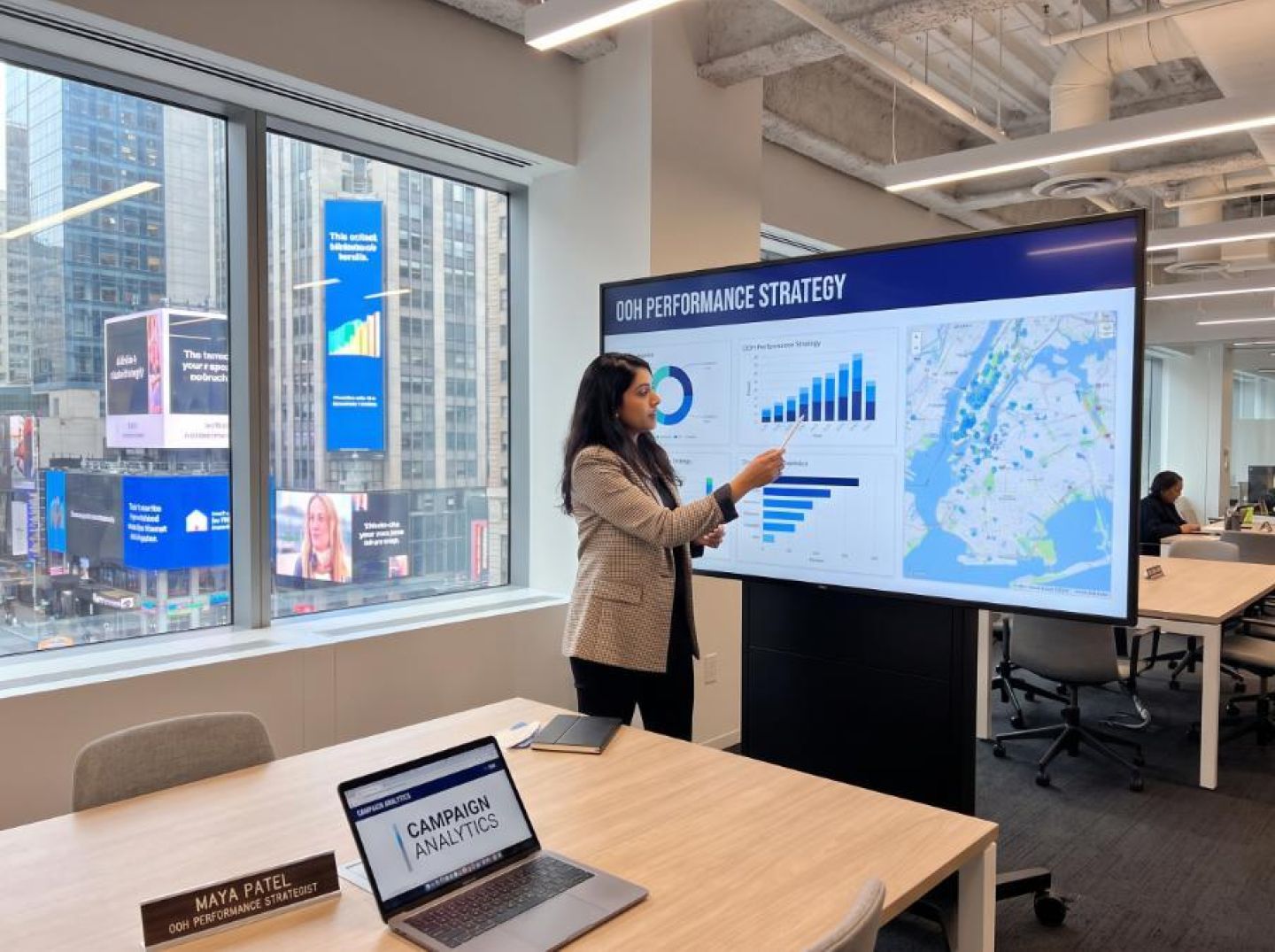
The OOH performance strategist is the industry’s newest hybrid: part media planner, part growth marketer, part sales engineer. Their job is not to “buy billboards.” It’s to turn physical inventory into a measurable, optimizable performance channel that plugs cleanly into the same stack as search, paid social, and programmatic.
On any given day, their work falls into four overlapping buckets.
1. Translating funnels into physical space
The strategist starts with revenue mechanics, not with a panel list. They map the brand’s funnel and ask: where can out-of-home shorten time-to-purchase, lift conversion, or make other channels cheaper?
That means:
In practice, this person thinks like a CRO who happens to speak OOH. They design paths where a board is one touch in a system that can be forecast, tested, and scaled.
2. Wiring measurement and feedback into every placement
A performance strategist treats every frame like a node in an intelligence network. They are responsible for designing how each unit is measured and how those signals flow back into planning.
That includes:
They don’t wait for a recap deck. They run OOH like a living experiment, with decisions made on telemetry instead of tradition.
3. Owning the performance operating rhythm
The strategist also shapes how the team meets, reviews, and decides. Instead of treating pipeline and performance reviews as status updates, they push for sessions that actually improve the work.
Borrowing from the kind of diagnostic mindset advocated in pipeline reviews that emphasize gaps and next steps, they structure reviews around:
Their calendar is anchored by weekly and monthly performance rituals where decisions are made in the room—budgets shifted, tests greenlit, creative swapped—not just discussed.
4. Bridging sales, search, and street‑level reality
Finally, the OOH performance strategist is a connector. They sit between sellers, marketers, and operations, and they make sure the offline footprint and online discoverability reinforce each other.
On the sales side, they help reps shift from generic pitches to category‑specific plays built around real performance use cases and measurable outcomes. On the marketing side, they ensure that the same clarity used to explain offerings in “honest, well‑organized digital” language—exactly the kind of presence that helps operators capture high‑intent inbound demand when buyers are “already searching” for them, as one search‑focused OOH perspective argues—is mirrored in how OOH packages and performance stories are presented.
On the ground, they translate all of this into simple, executable briefs for operations: which units to prioritize, what data needs to be captured, which tests take precedence when inventory is tight.
In short, an OOH performance strategist is the person who makes sure your billboards don’t just look good in photos—they perform like a channel your CFO can believe in.
If you strip away the mythology, using Anstrex with modern OOH data is not mysterious. It’s a set of repeatable workflows that any performance marketer can run, over and over, until outdoor behaves like search and paid social: test, learn, redeploy.
Here are four concrete workflows to make that real.
1. Use Anstrex to “reverse‑engineer” OOH‑driven funnels
Start where you’re already strong: landing pages and creatives.
You’re not copying; you’re importing conversion logic that’s already cleared the market. The whole point, as the team at AdQuick has argued in describing OOH’s new “parity with modern performance channels”, is to stop treating outdoor as a special case and start using the same evidence‑based playbook you use everywhere else.
2. Turn billboard locations into performance audiences
Once you know what you want people to do, you need to decide who sees it. That’s where OOH data comes in.
A modern OOH platform will let you:
Your workflow:
You’ve effectively turned boards into audience seeds that plug back into the same stack as your digital campaigns.
3. Wire Anstrex + OOH into a continuous creative feedback loop
The invisible OOH warrior doesn’t wait for a QBR to learn. They watch the loop every week:
This is the “fastest intelligence loop” version of OOH that leaders at platforms like hellOOH describe when they argue that the next era won’t be won by who has the most inventory, but by who has the tightest, machine‑driven market intelligence.
4. Build OOH into your standard performance playbooks
Finally, operationalize it so it’s not a one‑off experiment:
If you do this consistently, you’re no longer “running a billboard campaign.” You’re extending an already‑optimized performance funnel into the physical world, instrumented by OOH data on one side and Anstrex‑driven creative intelligence on the other.
Receive top converting landing pages in your inbox every week from us.
Guide
Discover how performance marketers are transforming OOH into a measurable, optimizable performance channel. This guide explores the emerging OOH performance strategist, the tools and intelligence loops they use, and how Anstrex data can extend proven digital funnels into physical advertising.
Elena Morales
7 minOct 6, 2026
Guide
Discover why OOH teams still struggle to connect physical advertising exposure with measurable digital outcomes. This guide explains how recruiters can build attribution-ready OOH teams using spy tools, tracking infrastructure, controlled testing, and cross-channel measurement.
Liam O’Connor
7 minOct 6, 2026
In-Depth
Explore the recurring themes and arguments embedded in OOH Today’s job classifieds, from the industry’s sales-first mindset to its reliance on traditional hiring structures. This article examines the tension between OOH’s increasingly digital, experiential media and the limited emphasis on strategy, data, analytics, and future-facing skills in its talent market.
Samantha Reed
7 minOct 5, 2026