12 minJune 2, 2026

Our spy tools monitor millions of native ads from over 60+ countries and thousands of publishers.
Get StartedPerformance marketers tend to think of billboards as relics — expensive, unmeasurable canvases built for brand awareness and little else. You can't click a billboard. You can't retarget someone who glanced at one while waiting for a light to change. So why would anyone optimizing for cost-per-acquisition bother studying out-of-home campaigns?
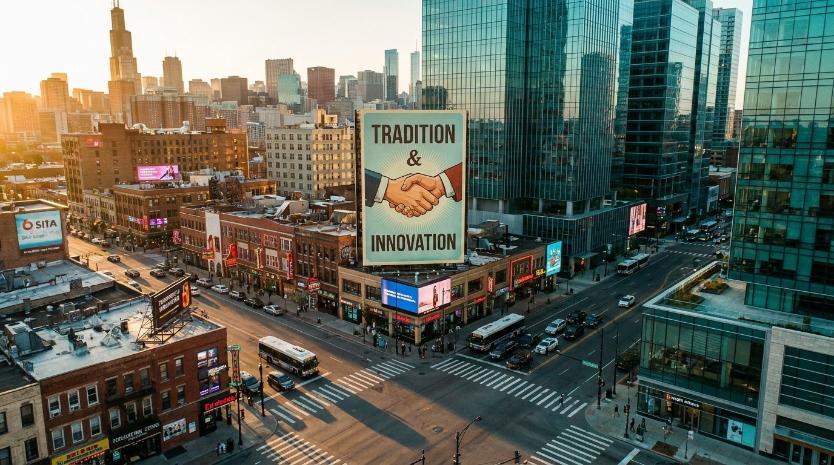
Because billboards and native ads share a creative constraint that matters more than any tracking pixel: both must earn attention inside an environment the viewer chose to enter, without hijacking that environment.
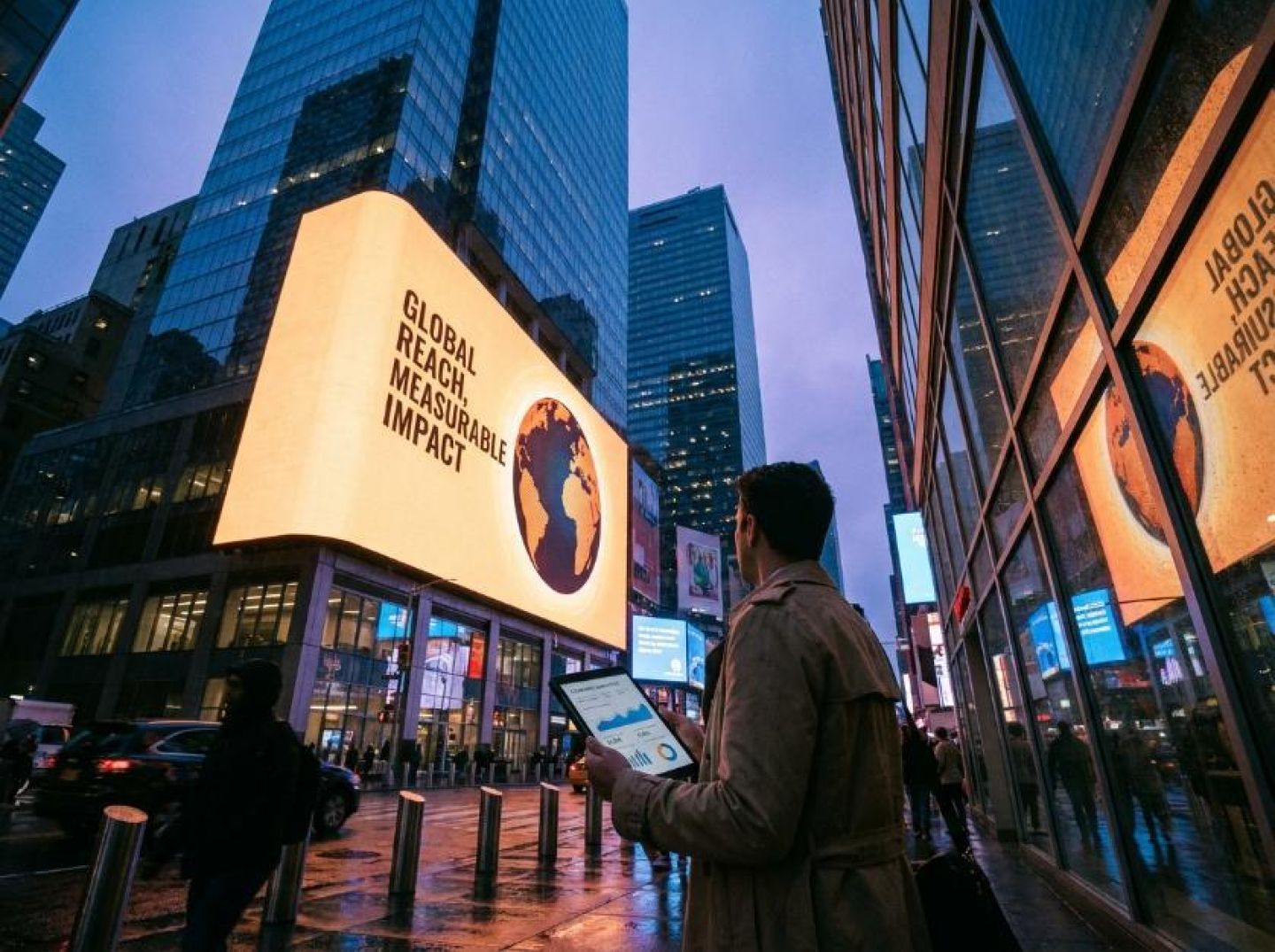
Think about what a billboard actually is. It's a message embedded in a cityscape — a context the viewer is already navigating for entirely personal reasons. They're commuting, running errands, walking to lunch. The billboard doesn't get to pause the street, dim the surrounding buildings, or force eye contact the way a pre-roll video forces a five-second hostage situation. It either earns a look or it doesn't. Now think about a native ad widget sitting beneath an article on a news site. The reader came for the journalism, not the ad. The thumbnail and headline have no pop-up power, no autoplay audio, no interstitial takeover. They exist alongside editorial content, competing with it on near-equal visual footing. The ad either halts the scroll or vanishes into the page.
The parallel runs deeper than surface similarity. As Basis notes, the most effective native ads abide by the medium's prime differentiator — non-disruption — blending "naturally into the form and function of the editorial habitat in which they live." Replace "editorial habitat" with "urban landscape" and you have a perfect description of why the best billboards work, too. They don't fight the streetscape; they become part of it, then subvert expectations just enough to make someone look twice.
The same principle shows up in how Voluum describes native's core advantage: the format "seamlessly combines with the fabric of the website" and "simply looks like another part of its content," which is precisely what lets it bypass the ad blindness that plagues more intrusive formats. A billboard must accomplish the exact same trick against a far noisier backdrop — competing with traffic, storefronts, phone screens, and every other visual stimulus the city throws at a pedestrian. If it can win that battle, the underlying creative principle is almost certainly transferable to a calmer, more contained feed environment.
This is the insight most performance teams miss. Every major OOH campaign that launches across a city is, in effect, the largest real-world A/B test of attention-earning creative happening in plain sight. Brands spend millions iterating on copy length, image composition, color contrast, and emotional hooks — all optimized for the single hardest creative brief in advertising: make a stranger care in under two seconds, without annoying them. That brief is functionally identical to the one every native ad creative must answer when it appears in a Taboola or Outbrain widget.
The campaigns we'll examine from Ally, Primark, and Purito each solved this brief in distinct ways — through wit, visual minimalism, or product-first storytelling. None of them relied on disruption. All of them operated inside a context they didn't own and couldn't control. And every lesson they offer translates directly to the thumbnail-and-headline combinations that determine whether your native campaigns print money or burn budget. The trick is knowing how to decode what made them work — and then rebuilding those principles for a feed instead of a freeway.
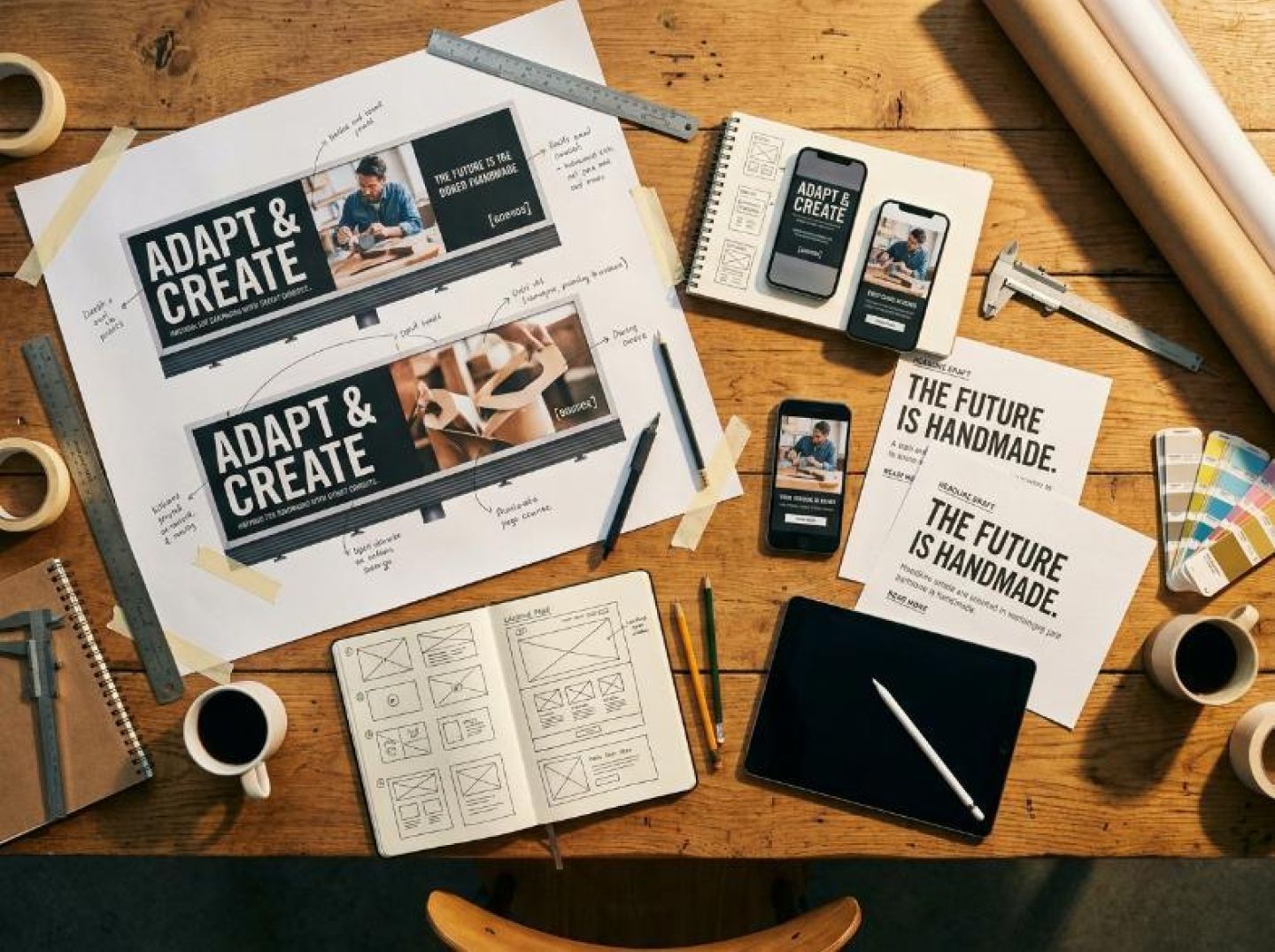
Behind every billboard that makes you look twice is a creative logic that can be named, studied, and redeployed. Strip away the media format, and what Ally, Primark, and Purito have each built is a distinct persuasion archetype — a repeatable framework that translates remarkably well to native ad creative. Let's break down all three.
Archetype 1: Bold Contrarianism (Ally)
Ally's billboard strategy is built on provocation. Its outdoor campaigns regularly feature lines that challenge conventional banking wisdom — statements like "Maybe your bank isn't really your bank" or provocations that frame traditional finance as outdated, opaque, and overdue for disruption. The creative logic is simple: pick a widely held assumption, then publicly reject it. On a billboard, this creates a double-take. In a native ad, it creates something arguably more valuable — a curiosity gap.
Contrarian headlines ("Why your savings account is actually losing you money") perform well in native environments because they disrupt the editorial feed without feeling like an ad. They read like opinion pieces or investigative features, which is precisely why native advertising works as an out-of-the-box solution that plants a product in a client's mind over the long term. When you lead with a bold claim that challenges what the reader already believes, you earn the click not through hype but through intellectual tension. Use this archetype when your product has a genuine point of differentiation from an incumbent category — and when your landing page can deliver on the argument the headline starts.
Archetype 2: Cultural Relevance (Primark)
Primark's out-of-home creative takes a different path. Rather than challenging an assumption, it acknowledges one — the growing consumer guilt around fast fashion — and repositions the brand as part of the solution. Its billboards spotlight sustainability initiatives, ethical sourcing pledges, and affordable-but-responsible messaging that taps directly into the cultural conversation happening on social media, in editorial pages, and at dinner tables. The creative doesn't ignore the tension; it leans into it.
For native advertisers, this maps to what's often called trend-jacking: anchoring your sponsored content in a cultural moment so it feels timely rather than transactional. The best native campaigns deliver hyper-relevant content for their audiences in a manner that exudes authenticity, providing education and entertainment all at once. A Primark-style native headline might read, "The surprising reason Gen Z isn't boycotting this fast-fashion brand." It feels editorial. It rides a cultural wave. And it earns engagement because the reader already cares about the topic before they ever see your ad. Deploy this archetype when your brand has a credible stake in a trending conversation — and resist the temptation to manufacture relevance where none exists.
Archetype 3: Aspirational Simplicity (Purito)
Purito's billboards are the quietest of the three, and that's exactly the point. Drawing on the visual language of K-beauty — generous white space, a single hero product, minimal copy that emphasizes ingredient transparency — its outdoor creative signals trustworthiness through restraint. In a category full of maximalist claims, Purito's simplicity becomes its loudest statement.
Translated to native, this archetype is about clean, benefit-forward thumbnails and headlines that resist sensationalism. Think "5 ingredients. No fillers. One moisturizer." In ad widgets crowded with clickbait imagery and exaggerated claims, a minimalist thumbnail with clear product photography stands out the way a Purito billboard stands out on a cluttered urban block. This approach works because native ads succeed when they blend naturally into the form and function of the editorial habitat in which they live — and nothing blends into a premium publisher's aesthetic quite like tasteful simplicity. Use this archetype for products where trust is the primary conversion barrier: supplements, skincare, financial tools, anything where the reader needs to believe before they buy.
Three billboards. Three archetypes. One creative brief template you can open the next time you sit down to write a native ad.
The gap between admiring a billboard and building a native ad that converts is bridged by disciplined translation, not imitation. Each archetype we dissected — Ally's contrarianism, Primark's cultural relevance, Purito's aspirational simplicity — carries a distinct psychological mechanism that must be re-engineered for a medium where you're uploading a thumbnail, headline, CTA, and landing page URL into a platform that demands immediate, measurable performance. Here's how to do it, archetype by archetype.
Translating Bold Contrarianism (Ally)
On a billboard, Ally can say something like "We're a bank that doesn't act like one" and let the tension hang. In a native ad, that same norm violation must resolve into curiosity within a headline's character limit. The formula: [Counterintuitive action] + [Familiar category] + [Implied payoff]. A fintech affiliate, for example, could translate this into: "Why This New Banking App Is Telling Customers to Stop Saving." The psychological mechanism — norm violation triggering curiosity — is identical, but the native format demands a promise of revelation. For the thumbnail, avoid polished brand imagery; instead, use an editorial-style photo of someone looking skeptically at their phone, mimicking the visual tone of the publisher's content feed. The landing page should open with the contrarian claim restated as a question ("What if everything your bank told you about saving was wrong?"), then pivot quickly into evidence, testimonials, and a single CTA. The tone is confident, slightly provocative, never combative.
Translating Cultural Relevance (Primark)
Primark's billboard power comes from tapping into a shared cultural moment — a trend, a season, a collective mood. In native, this becomes timeliness married to specificity. The headline formula: [Cultural moment or trend] + [Unexpected connection to product] + [Emotional hook]. For a fashion e-commerce affiliate, a Primark-inspired native headline might read: "The Airport Outfit Trend That's Replacing Athleisure This Summer." The thumbnail should feature real-world, candid-looking imagery — think street-style photography rather than studio shots — because native ads succeed when they blend naturally into the editorial habitat in which they live. The landing page tone is conversational and insider-ish, structured as a listicle or trend report that feels like editorial content with shopping links woven in rather than a product page with a veneer of journalism.
Translating Aspirational Simplicity (Purito)
Purito's billboard minimalism — clean ingredients, clean design, aspirational restraint — must survive the noisy content feed without disappearing. The headline formula: [Simple, specific benefit] + [Surprising proof point or constraint]. A skincare affiliate might write: "This Korean Sunscreen Has Five Ingredients — Dermatologists Can't Stop Recommending It." The thumbnail should be the quietest image in the feed: a single product on a white or muted background, perhaps with one human element like a hand holding the product. Counterintuitively, this visual restraint creates pattern interruption amid the cluttered, high-saturation thumbnails surrounding it. The landing page should mirror that restraint — generous white space, short ingredient explanations, and a single conversion point.
Across all three archetypes, native's decisive advantage is measurability. Where a billboard campaign measures success through foot traffic proxies and brand recall surveys, native lets you validate the creative hypothesis in real time through CTR, engagement depth, and CPA. This matters enormously because the creative layer itself — not bid strategy, not audience targeting — is where the largest performance gains hide. Research conducted by ShareThrough and IPG Media Lab found that native ads registered an 18% higher lift in purchase intent compared to banner ads, a gap that widens further when the creative resonates with genuine editorial authenticity. The billboard teaches you what to say. The native platform tells you whether anyone cared — and lets you iterate until they do.
The real competitive advantage isn't knowing what Ally, Primark, or Purito are doing on billboards — it's being the first performance marketer to translate that creative signal into a native ad before the angle gets saturated. Big-brand OOH campaigns function as public creative briefs, telegraphing which emotional levers and visual frameworks are resonating with mass audiences right now. But inspiration without intelligence is just guesswork. You need a systematic pipeline that moves from signal detection to market validation to live creative in the shortest window possible. Here's a repeatable four-step workflow that turns billboard watching into a disciplined competitive operation.
Step 1: Monitor brand campaign launches in real time. Set up Google Alerts, subscribe to trade outlets like Ad Age and Campaign, and follow brand social accounts where OOH creative is routinely shared for earned media. When a campaign like Ally's contrarian "We're a bank. No, really." or Primark's culturally charged streetwear drops starts generating PR coverage and social buzz, you've received your first signal. Treat every high-visibility billboard launch as a hypothesis worth testing in performance channels.
Step 2: Identify the core creative archetype at play. Strip the campaign down to its persuasion skeleton using the framework from our earlier analysis. Is it bold contrarianism? Cultural relevance? Aspirational simplicity? Naming the archetype matters because it determines which headline structures, thumbnail treatments, and landing-page narratives you'll build. This step takes five minutes but prevents you from copying surface aesthetics while missing the psychological mechanism that actually drives engagement.
Step 3: Use Anstrex to validate whether the angle is still a blue ocean. This is the critical validation layer. Open Anstrex's native ad spy tool and search for keywords, themes, and visual patterns related to the archetype you've identified. Filter by recency, network, and vertical. If the search returns a flood of ads already running the same contrarian angle or the same minimalist aesthetic, the opportunity is commoditized — move on. If results are sparse, you've found whitespace. As Voluum's native advertising guide emphasizes, the competition doesn't rest, so having real-time visibility into what's already live across ad networks is the difference between leading a trend and chasing one. Anstrex transforms a subjective hunch into an objective market read.
Step 4: Build and launch test creatives within 48 hours. Speed is the moat. Once Anstrex confirms the angle is uncrowded, move immediately into production. Upload your thumbnail, headline, CTA, and landing page URL into your chosen platform, configure your targeting, and set an initial test budget. As Brax has noted, setting clear campaign objectives before launch — whether that's CTR benchmarks, conversion targets, or engagement thresholds — provides the metrics needed to evaluate whether the billboard-inspired angle actually resonates in a feed environment. Without those predefined SMART goals, you'll burn through the freshness window arguing internally about what "good" looks like.
The entire cycle — signal, archetype, validation, launch — should compress into two days or less. Every hour you delay, another media buyer somewhere is running the same query in Anstrex, spotting the same whitespace, and drafting the same headline. The pipeline isn't a one-time exercise, either: continue to measure results and test new strategies against each billboard-inspired concept, iterating thumbnails and angles as the data comes in. Over time, this workflow becomes a repeatable creative engine — one where the world's most expensive ad format, outdoor media, essentially does your trend-scouting for free, and Anstrex tells you exactly when to act on what you've found.
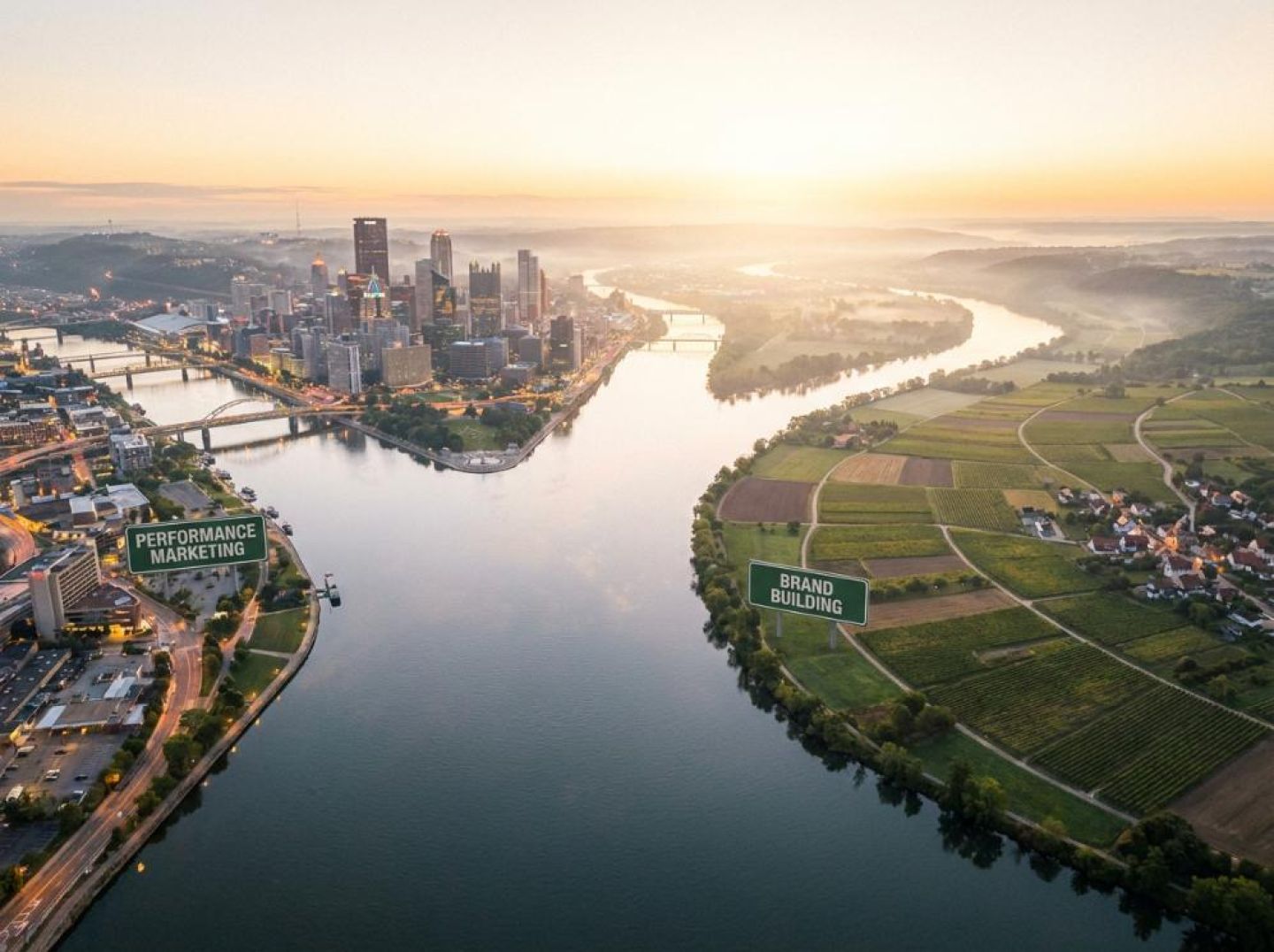
The marketing industry has spent the better part of a decade arguing over a false binary: you either build "brand" creative — lush, emotionally resonant, optimized for recall — or you build "performance" creative — ugly, direct, optimized for the click. The billboard campaigns from Ally, Primark, and Purito should put that debate to rest. Each of those OOH executions delivered unmistakable brand storytelling — contrarian wit, cultural fluency, aspirational minimalism — while simultaneously driving measurable downstream action. The lesson for native advertisers is that the same fusion isn't just possible in feed-based environments; it's increasingly mandatory.
The data supports this convergence. As a ShareThrough and IPG Media Lab study found, native ads register an 18% higher lift in purchase intent compared to standard banner ads — a metric that sits squarely at the intersection of brand affinity and performance. That lift doesn't come from bald-faced direct response tactics; it comes from creative that blends naturally into the editorial environment while still carrying enough emotional weight to shift buying behavior. The most effective native advertising, in other words, has always been doing both jobs at once. We just haven't been talking about it that way.
Part of the problem is organizational. Brand teams control budgets for awareness campaigns and measure success in impressions and recall lift. Performance teams own conversion budgets and live or die by CPA and ROAS. The creative briefs that emerge from each silo look nothing alike, which means the ads don't either. But the consumer sitting on a publisher page doesn't experience these as separate channels. She sees a thumbnail and a headline, and in that fraction of a second, the creative either earns her attention or it doesn't. Aesthetic quality, narrative intrigue, and emotional specificity — the hallmarks of brand-tier creative — are what stop the scroll. Clear value propositions, curiosity gaps, and landing-page alignment — the hallmarks of performance creative — are what convert the click. Strip away either half and the ad underperforms.
This is why setting clear campaign objectives before launch matters so much: not to choose between brand and performance, but to define the precise ratio of each that a given campaign demands. A skincare brand translating Purito's billboard simplicity into a native ad might weight 60% toward brand storytelling — clean imagery, ingredient transparency, editorial-style headline — while ensuring the remaining 40% is ruthlessly performance-oriented: a CTA-laden landing page, pixel-based retargeting, and conversion tracking tied to SMART goals. The creative feels elevated; the infrastructure beneath it is pure direct response.
The CPM model, in particular, rewards this hybrid approach. As Voluum explains, when you're paying per thousand impressions, a strong creative set can compound ROI because each additional click increases offer popularity without raising costs. That dynamic gives brand-quality creative a structural advantage: a more compelling, more aesthetically polished ad earns a higher CTR at the same CPM, effectively lowering your cost per click organically. The performance marketer who invests in better storytelling isn't sacrificing efficiency — she's engineering it.
The billboard campaigns we've analyzed throughout this article aren't anomalies. They're prototypes for a creative philosophy that refuses to accept the trade-off between beauty and conversion. The highest-performing native ads of 2024 and 2025 will be the ones that look like brand campaigns, read like editorial, and convert like direct respo
Receive top converting landing pages in your inbox every week from us.
Must Read
Discover how AI-powered media buying can expose advertisers to budget overruns, brand safety issues, and legal risks when autonomous systems operate without clear controls. Learn how to build safer advertising workflows with standardized prompts, mandatory checklists, human oversight, and contractual safeguards that keep AI-driven campaigns accountable.
Dan Smith
7 minOct 15, 2026
How-To
Discover how to reverse-engineer competitors’ ChatGPT advertising strategies by analyzing sponsored cards, conversational entry points, landing pages, and retargeting funnels. Learn how to use native ad and TikTok intelligence to uncover competitor offers, identify cross-channel opportunities, and build higher-converting performance marketing campaigns.
David Kim
7 minOct 14, 2026
Must Read
Discover how native advertisers can transform everyday moments into memorable, high-performing campaigns through eventization. Learn to use scarcity, time-sensitive offers, contextual targeting, and always-on micro-events to engage audiences, improve campaign relevance, and uncover winning competitor strategies with Anstrex.
Priya Kapoor
7 minOct 11, 2026