8 minOctober 5, 2026

Our tools monitor millions of native, push, pop, and TikTok advertising campaigns.
Get StartedOut-of-home’s job boards might look like simple hiring notices at first glance, but read closely and a very specific worldview emerges. The recurring classifieds that OOH Today publishes function less as neutral listings and more as a running argument about what this industry is, where value is created, and who gets to participate.
First, the classifieds normalize OOH as an ecosystem of specialists rather than a monolithic “billboard business.” In one installment, the site lays out a spectrum of “career opportunities in out-of-home, including printing, mobile billboards, photos, truck sides, and experiential,” a framing that expands the field far beyond static roadside signs by embedding experiential activations and mobile formats into the same mental category as traditional billboards, according to the June edition of “11 OOH Employment Opportunities — OOH Classifieds Today” from OOH Today. When a later issue repeats the formula—“career opportunities in out-of-home, including management, printing, mobile billboards, photos, truck sides, and experiential”—it quietly updates the list to foreground “management,” signaling that leadership roles are as intrinsic to the category as production or installation, as described in another OOH Today run of “11 OOH Employment Opportunities—OOH Classifieds Today”. Across both examples, the taxonomy of roles is itself an argument: OOH is diverse, modern, and increasingly experience‑driven.
Sales, however, sits at the center of this universe. Every classifieds roundup opens with a block of sales roles, before any talk of operations, creative, or installation. Positions like Business Development Representative at Liquid Outdoor Media, Ad Sales Account Executive at EyeCatch Media, and National Account Executive at SILVERCAST Media are presented not as supporting functions, but as the primary front door into the industry. In the Southern Illinois listing for a Sales Manager – Outdoor Advertising, the role is framed as “ideal for a driven leader” who can “develop and execute sales strategies to grow revenue and market share” and “lead, coach, and manage a team of sales representatives,” an emphasis that underlines how commercial growth is treated as the defining leadership competency in out‑of‑home according to the Sales Manager – Outdoor Advertising description.
Alongside that, the classifieds cultivate a distinctly local‑plus‑national mindset. Listings are tagged to specific markets—New York, Miami, Dallas, Los Angeles, Denver, Southern Illinois—yet the employers are often framed as “leading outdoor advertising” companies with “national portfolios” of digital and static assets, as Liquid Outdoor Media emphasizes in its Business Development Representative overview. This repetition reinforces the idea that OOH professionals must be hyper‑attuned to local realities while operating inside networks that scale across regions and property types, from lifestyle centers to regional highways.
Another persistent theme is the insistence that OOH is a full value chain, not just media owners and agencies. The same classified roundups that highlight executive sales roles also make room for Real Estate VP/Directors at Red Rock Outdoor, Directors of Operations at Encompass Media Group, Graphic Designers and Brand Marketing Specialists at SILVERCAST, and Sign Installers and LED Video Screen Service Techs at Formetco, all listed together in the August OOH Today update. By stacking these jobs in a single column, the publication subtly argues that site leasing, hardware, creative, and maintenance are co‑equal pillars that sustain the medium.
Accessibility is another cornerstone of this “classifieds mindset.” The presence of a “Free Agents (positions wanted)” section—explicitly described as free “subject to available space”—positions the platform as a community bulletin board, not just a paid recruitment channel, based on both June and August runs of OOH Today’s classifieds. The call to “contact [email protected]” to place an ad punctuates each issue, reinforcing the notion that anyone, from independent reps to major plant operators, can access the same marketplace of attention.
Finally, the way roles are described reveals an industry trying to brand itself as innovative and experiential, even when the job title is conventional. Liquid Outdoor Media stresses “high profile digital interactive kiosks” and “innovative digital and experiential advertising opportunities,” while the Southern Illinois operator positions its mission as “strategic, creative, and results-driven” regional campaigns, according to their respective employment listings. The medium may still be physical structures in real space, but the language around these structures is relentlessly digital‑first and brand‑experience led.
Taken together, these classifieds don’t just connect employers and candidates; they encode a set of industry assumptions: OOH is sales‑centric yet operationally complex, local yet nationally networked, hardware‑heavy yet experience‑oriented, and open to both companies and individuals who know how to plug into its community marketplace.
Look at a few weeks’ worth of OOH Today classifieds and you start to feel déjà vu. The names change, the markets shift from Miami to Denver to Southern Illinois, but the skeleton of each post is almost identical. This repetition is not just a quirk of format; it quietly lays down a template for what “real” OOH work looks like and how careers in the field are supposed to be built.
The most obvious pattern is the dominance of sales roles. In both the August roundup of “11 OOH Employment Opportunities” and the June feature on a “New Sales Opportunity,” the listings lead with a block of nearly interchangeable sales titles: “Sales Manager – Outdoor Advertising” in Southern Illinois, “Ad Sales Account Executive” in Miami, “Sales Representative” in Dallas, “National Account Executive” in Los Angeles, and “Local Media Sales Executive” in Denver, all stacked one after another in the August classifieds. The June post does the same thing, again foregrounding roles like “Business Development Representative” in New York and repeating the same Miami, Dallas, Los Angeles, and Denver sales openings in its sales section. This emphasis trains readers to see OOH as, above all, a sales machine: the protagonists of the industry story are the people bringing in revenue.
Those protagonists are also framed in almost identical narrative terms. The Southern Illinois “Sales Manager – Outdoor Advertising” listing promises a role for an “experienced and motivated” leader who “thrives on building relationships and closing deals,” and sets out a familiar litany of responsibilities: lead a team, “develop and execute sales strategies,” “build and maintain relationships” with agencies and advertisers, and “identify new business opportunities” in the region, all detailed in the position summary. The “Business Development Representative (Media Sales)” role for Liquid Outdoor in New York follows the same script, describing a “motivated, high-energy self-starter” focused on “new business development” and “proactive outreach to larger regional advertisers and ad agencies,” as laid out in the role description. Different markets, different company names, but the same character archetype: hungry, outbound, pipeline-obsessed sellers whose value is measured almost entirely in deals.
Around that central character, the structure of each post is recycled almost verbatim. Both June and August issues open with a nearly identical tagline promising “Career opportunities in out-of-home, including printing, mobile billboards, photos, truck sides, and experiential,” before directing readers “To place a classified ad, contact [email protected]” in the same boilerplate language that appears at the top of the June listing and the August one. Jobs are then sorted into the same three buckets—“Sales,” “Real Estate, Operations, Creative and Administrative,” and “Free Agents (positions wanted)”—with “Printing” and “Services” hanging at the bottom like permanent menu items. The consistency is so tight that the classifieds read less like curated opportunities and more like a templated product the publication can snap into place each time a new batch of employers pays to participate.
Even the way companies describe themselves slots neatly into a shared formula. The Southern Illinois operator is a “local Outdoor Advertising company…specializing in high-impact billboard and digital display solutions,” whose “mission is to connect businesses with their audiences through strategic, creative, and results-driven advertising campaigns” across its region, as spelled out in the company overview. Liquid Outdoor, in turn, is “a leading outdoor advertising company with a national portfolio of digital and static out-of-home media assets,” offering “high profile digital interactive kiosks and large format digital spectacular signage” plus “traditional billboards, digital billboards and wallscapes” nationwide, according to its about the company blurb. Swap out “local” for “national,” or “regional” for “lifestyle centers,” and the copy is almost interchangeable: everyone is high-impact, leading, results-driven, with digital assets and some kind of experiential twist.
This repetition does more than save time for the editorial team. It subtly defines the perimeter of legitimate OOH work. The template says: the industry is built on selling inventory; leadership is about motivating sales teams; creativity and operations are secondary categories; regional and national players are versions of the same “media company” archetype. Free agents get a small, standardized corner of the page—“Free agent listings are free (subject to available space)” appears word-for-word in both the June and August issues—reminding readers that individuals can participate, but only within the margins of a format primarily designed for employers and their recurring sales-first story.
In other words, the classifieds aren’t just recycling structure for efficiency. By repeating the same roles, section headers, and self-descriptions issue after issue, they function as a kind of industrial script—a prewritten storyboard for how out-of-home careers should look and where power sits inside the ecosystem.
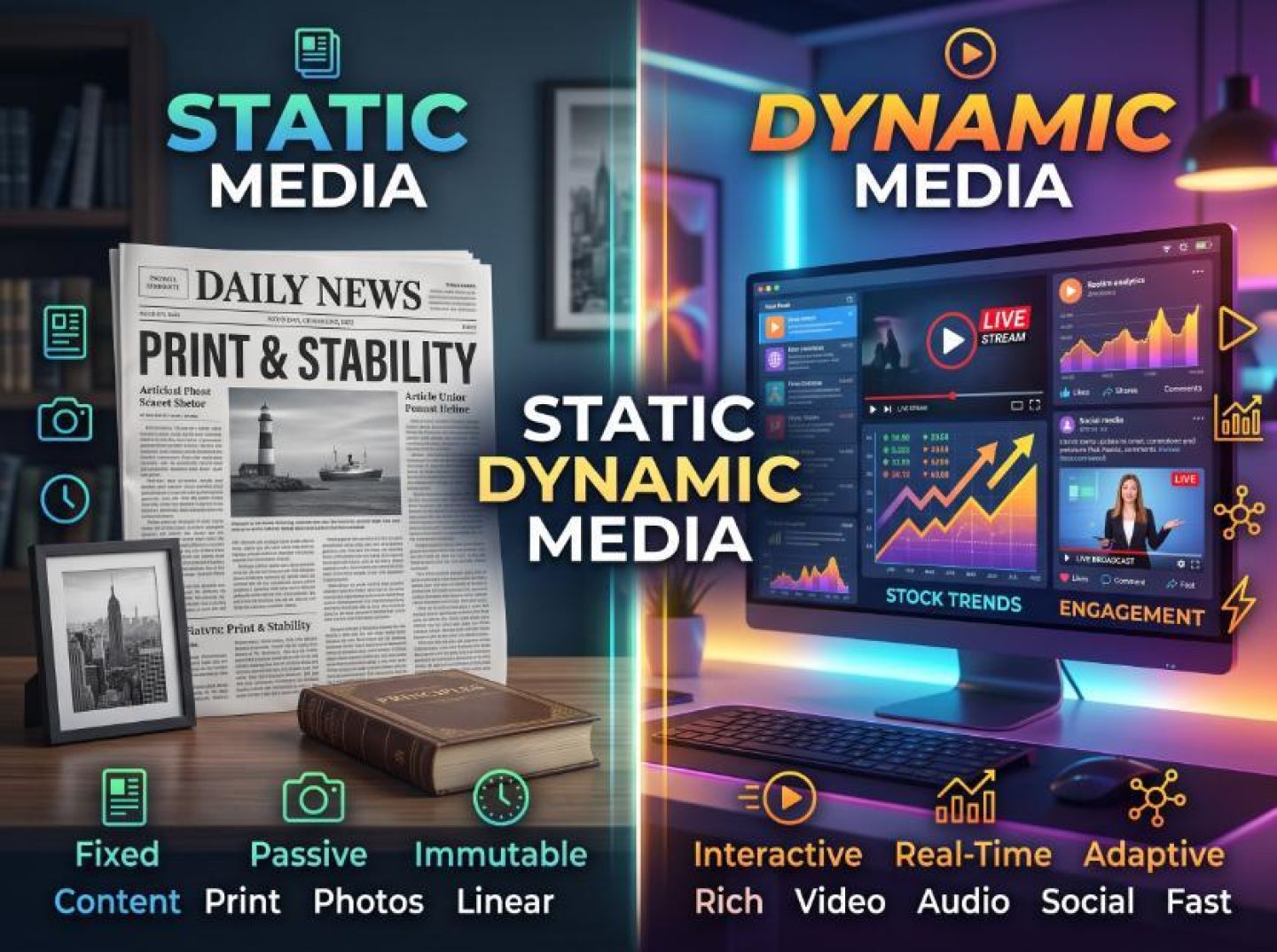
There is a quiet paradox humming underneath every OOH Today classifieds post: the industry sells itself as dynamic media, yet it organizes its labor market through some of the most static, conventional formats imaginable. That tension between movement and stasis—between “digital spectaculars” and boilerplate job blurbs—reveals a lot about how out-of-home understands its own transformation.
On the surface, these weekly roundups look like any other trade classifieds. The June 5 spread lists “11 OOH Employment Opportunities,” a string of roles from a Business Development Representative in New York to a Local Media Sales Executive in Denver and a Sign Installer for Formetco. Four days earlier, another post touts “10 OOH Employment Opportunities,” repeating nearly the same sales-heavy lineup of roles across markets from Miami to Los Angeles to Dallas, with the Liquid Outdoor Media business development job as the star attraction. Week after week, the categories barely budge—Sales, Real Estate, Operations, Creative and Administrative, plus the obligatory “Free Agents” and “Printing Services” footer.
Yet inside these static categories, the work being described is anything but fixed. Take the description of Liquid Outdoor’s portfolio. In both the June 1 and June 5 posts, the company is introduced as a “leading outdoor advertising” firm with a national portfolio of “digital and static out-of-home media assets,” including “high profile digital interactive kiosks and large format digital spectacular signage in entertainment districts and open-air lifestyle centers nationwide,” alongside traditional billboards, digital billboards, and wallscapes that fill out the rest of the OOH inventory. The media products are framed as immersive, fluid, and screen-based—interactive kiosks, experiential activations, on-site sponsorships woven “into” lifestyle center networks.
The same pattern shows up in role expectations. The Business Development Representative position is not framed as a static book-of-business manager; it is “heavily” focused on new business development, with “proactive outreach to larger regional advertisers and ad agencies across key markets,” looking for a “motivated, high-energy self-starter” to chase growth across a nationally distributed digital portfolio. The ads consistently describe OOH as a medium in motion—dynamic screens, responsive campaigns, experiential placements—and yet the labor architecture is presented as a tidy grid of roles that could have been copied from a classifieds page in 1998.
That dissonance is the paradox at the heart of these listings. On one hand, the posts need to behave like classifieds: easily scannable, rigidly formatted, broken into familiar buckets of Sales, Operations, Creative. On the other, the companies paying for placement are staking their brand on being cutting-edge, digital-first, and experiential. So the copy solves the contradiction by letting the form remain static while packing dynamism into the descriptions themselves. The job categories don’t change, but the verbs do: expanding, integrating, activating, innovating.
Look at how “experiential” gets smuggled into a medium still organized around billboards and wallscapes. Liquid Outdoor emphasizes not just media placements, but “unique sponsorship and innovative digital and experiential advertising opportunities, integrating brands into on-site activations across our nationwide lifestyle center network,” language that appears verbatim in both the June 5 and June 1 employment posts. The structure of the listing is old-school—position title, location, company, about the company, the role—but the narrative inside those boxes insists that OOH is now closer to live media or event marketing than to static posters.
Even the repeated presence of roles like LED Video Screen Service & Installation Tech or Sign Installer for Formetco forces the contradiction into view. These jobs are literally about tending to the hardware that makes “digital spectacular” possible: maintaining LEDs, installing large-format structures, ensuring that the physical substrate of dynamic media stays operational. Yet they appear in the same line-item style as a Graphic Designer/Brand Marketing Specialist or a National Account Executive. The classifieds flatten the spectrum of OOH work into a single, uniform list, where hands-on technical maintenance and high-level sponsorship sales occupy identical typographic space. That flattening is itself a kind of argument: whatever the surface dynamism of the screens, the labor underneath can still be captured in stable, interchangeable titles.
This is why the classifieds feel paradoxical. They are a static weekly ritual wrapping an industry that keeps telling a story about its own agility and transformation. The posts reassure readers that the OOH world is evolving—more digital, more interactive, more experiential—while simultaneously reassuring them that the pathways into that world remain knowable, named, and neatly categorized. In other words, dynamic media is being managed through static listings, and the classifieds teach you to hold both ideas in your head at once.
Scroll through any recent classifieds post and one pattern is impossible to miss: sales dominates the page, and everything else is an afterthought. In both the June 5 roundup of “11 OOH Employment Opportunities” and the earlier “New Sales Opportunity” digest, the layout literally leads with a bold “Sales” header, stacking role after role—“Business Development Representative,” “Ad Sales Account Executive,” “Sales Representative,” “National Account Executive,” “Local Media Sales Executive,” “Account Executive – Billboard Ad Sales”—before it ever gets around to mentioning operations, real estate, or creative work. The hierarchy on the page encodes a hierarchy of value in the industry.
Within that sales-heavy cluster, one role is framed as especially central: business development. In the New York area alone, the recurring listing for a Business Development Representative at Liquid Outdoor Media is not just another seat to fill; it is explicitly described as the engine of “new business development” and “proactive outreach to larger regional advertisers and ad agencies across key markets.” When the June 5 classifieds again foreground that same Business Development Representative role at the very top of the sales section, the repetition is doing narrative work: it positions business development as the canonical entry point into serious OOH work.
This is not simply a matter of which jobs are available; it is a story about how a career in out-of-home is supposed to start and grow. In these posts, the pathway looks linear and almost mandatory: get into sales, prove yourself as an “Ad Sales Account Executive” in a market like Miami or as a “Sales Representative” in Dallas, and then maybe graduate into national accounts or strategic leadership. The classifieds rarely, if ever, suggest an alternate storyline where someone enters through operations or creative and rises to similar prominence. Even high-level roles outside sales—like the “Real Estate VP/Director/Associate” at Red Rock Outdoor or the “Director of Operations” at Encompass Media Group—appear lower on the page, after the dense run of sales job titles has already framed the reader’s sense of what matters most.
Structurally, the ads reinforce this primacy by how they are written. The detailed description for the Liquid Outdoor Media position spends generous space on market coverage, categories of advertisers, and the breadth of their digital and static assets—“digital interactive kiosks,” “large format digital spectacular signage,” “traditional billboards, digital billboards and wallscapes”—before it ever gestures toward any other part of the business. The “About the Company” section in the June 5 employment listings reads like a sales deck itself, emphasizing “innovative digital and experiential advertising opportunities” and “unique sponsorship” integrations. The job post is selling the act of selling; the workplace is framed as a platform for hustle rather than a complex ecosystem of disciplines.
Contrast that with the treatment of non-sales roles in the same June 5 classifieds. Positions like “Graphic Designer/Brand Marketing Specialist – OOH,” “Sign Installer,” or “LED Video Screen Service & Installation Tech” are listed tersely, almost as a compliance measure to prove that other kinds of work exist. They receive none of the lush narrative about national portfolios, lifestyle centers, or experiential activations that animates the Business Development copy. In a publication that lives and dies on industry enthusiasm, story energy is reserved for roles that bring in revenue directly.
The cumulative effect is that “out-of-home” as a career field is rendered nearly synonymous with business development and account acquisition. The classifieds format may look neutral, but its ordering, repetition, and depth of description add up to a clear argument: OOH is a sales-first, sales-led domain, and if you want to matter in it—or even simply to belong—your gateway is selling something to someone, somewhere.
For an industry that spends so much time talking about programmatic buying and digital spectaculars, out-of-home still runs its talent market through some of the most analog channels imaginable. The most telling detail across both the June 5 roundup of “11 OOH Employment Opportunities” and the earlier “New Sales Opportunity” digest is not any one job title, but the quiet, almost nostalgic infrastructure that holds the whole thing together: email addresses, classifieds-style copy, and a little corner labeled “Free Agents.”
You don’t apply through an ATS or a slick, mobile-optimized portal. You “place a classified ad” by emailing a human—“contact [email protected]”—a line that appears almost verbatim in both the June 5 employment roundup and the earlier “New Sales Opportunity” digest. The posts read less like a modern job board and more like the classifieds pages of a trade weekly—dense lists of roles stacked under bold category headers, followed by a single funnel for response.
That reliance on email does more than signal habit; it encodes a particular idea of how careers move in OOH. This is not an open, search-driven marketplace where candidates discover roles through SEO and social sharing. It’s an insider bulletin. If you know to read these classifieds, you’re already in the orbit. If you don’t, the industry isn’t particularly interested in finding you.
The “Free Agents” section sharpens that point. In both the June 5 list of “11 OOH Employment Opportunities” and the June 1 “New Sales Opportunity” post, the site dedicates a small, recurring block to “Free Agents (positions wanted),” explicitly flagged as “free (subject to available space)” in the June 5 classifieds and echoed in the June 1 sales-focused digest. The phrasing is revealing. Workers are “free agents,” not applicants or candidates; they are inventory to be slotted when room allows.
This little box operates as a sanctioned “positions wanted” bulletin board, a throwback to when people would buy a few lines in the back of a trade magazine to announce they were “available.” In a labor market allegedly shaped by LinkedIn profiles and portfolio sites, the fact that OOH carves out literal physical space—“subject to available space”—for these micro self-ads suggests a remarkably spatial, analog imagination. Even as companies like Liquid Outdoor tout “high profile digital interactive kiosks and large format digital spectacular signage” in their own corporate descriptions, their hiring pipelines are still organized like a corkboard in the lobby.
The way email and “Free Agent” slots are framed also exposes a power asymmetry. For employers, the channel is a paid marketing vehicle; for job seekers, it’s a narrow, contingent courtesy. Companies buy standardized exposure in the “Sales” and “Real Estate, Operations, Creative and Administrative” sections of the June 5 employment listing, while individuals wait to see if “space” will be granted for their pitch. The digital rhetoric of openness and interactivity evaporates the moment you look at how workers are actually expected to present themselves.
At the same time, the shared structure across both posts hints at how deeply this model is normalized. The boilerplate invitation to “contact [email protected],” the repeated category stack, the consistent “Free Agents” callout—none of this is treated as experimental or transitional. It is the system. That continuity sends a quiet message: however advanced the screens get, the labor market behind them will remain a low-tech, relationship-first, gatekept channel.
Taken together, email-as-gatekeeper and the token “Free Agent” lane show an industry that has updated its surfaces but not its underlying circulation of opportunity. Out-of-home brands may sell clients on data, dynamism, and digital reach, yet when it comes to how people actually enter, exit, and move within the field, the rules look a lot like they did when classifieds really were printed on paper.
If the OOH job boards offer a clear picture of what the industry values, they also reveal what it rarely names: strategy, data, and the future-facing skills that are supposed to define “modern” advertising.
Across both June’s and August’s “11 OOH Employment Opportunities” roundups, the word that dominates is “sales.” The August digest literally opens its copy with “11 OOH Employment Opportunities — Career opportunities in out-of-home,” then immediately sorts them under a bold “Sales” header, from a Southern Illinois Sales Manager – Outdoor Advertising role to a familiar chain of “Ad Sales Account Executive,” “Sales Representative,” and “National Account Executive” listings. The June version follows the identical pattern, leading with a “Business Development Representative” post for Liquid Outdoor Media and then stacking sales roles city by city. What’s missing from both pages is any real language about planning, analytics, or audience intelligence.
Even when strategy is implied, it is never the star. The Southern Illinois Sales Manager role is framed as “ideal for a driven leader” who can “develop and execute sales strategies to grow revenue and market share,” but that strategy is defined almost entirely as team leadership and relationship-building, not as data-led market design. The listing talks about “high-impact billboard and digital display solutions” and “results-driven advertising campaigns,” yet there is no mention of impressions, attribution, footfall data, or cross-channel optimization in the position summary. Strategy here is still coded as “sell more” rather than “learn more, then design better.”
Liquid Outdoor’s New York Business Development Representative description comes closer to the rhetoric of modern OOH. The company highlights its “national portfolio of digital and static out-of-home media assets,” from “high profile digital interactive kiosks” to “large format digital spectacular signage” and even “innovative digital and experiential advertising opportunities” built around on-site activations at “nationwide lifestyle center” locations, as described in its employment listing. Yet the role itself is still framed almost entirely as “expanding its sales team” with a focus on “new business development.” The sophisticated network of digital assets and experiential formats is foregrounded; the skills to interpret performance data from those assets, or to translate mobility and behavioral insights into a smarter sales story, are nowhere to be found.
This disconnect is just as visible on the operations and technical side. Formetco repeatedly appears in both roundups with hands-on roles like Sign Installer and “LED Video Screen Service & Installation Tech,” work that literally keeps the digital infrastructure standing. Yet those descriptions focus on physical installation and maintenance, not on the software, diagnostics, or data systems that actually make a digital network “smart.” Encompass Media Group’s Director of Operations listing is grouped under “Real Estate, Operations, Creative and Administrative,” but in both the June and August digests the emphasis remains on running the machine, not on evolving it.
Even the “Free Agents” section, which might be expected to surface emerging skill sets, is framed in resolutely traditional terms. The August board notes that “Free agent listings are free (subject to available space)” and then buckets them into “Printing” and “Services,” with no separate category for data science, audience analytics, or programmatic trading anywhere on the page where the free agent listings live. If those candidates exist, they are effectively invisible within the taxonomy the industry uses to describe itself.
Taken together, these job roundups sketch a future of OOH that is bright with digital screens but dim on the capabilities needed to make those screens truly future-proof. The industry showcases its digital and experiential inventory, but continues to recruit as if reach and relationships alone will carry it forward. What these postings leave out—explicit demand for data fluency, strategic planning, measurement expertise, and cross-channel thinking—may say more about the invisible future of OOH than any glossy rendering of a new spectacular ever could.
Receive top converting landing pages in your inbox every week from us.
Guide
Discover how performance marketers are transforming OOH into a measurable, optimizable performance channel. This guide explores the emerging OOH performance strategist, the tools and intelligence loops they use, and how Anstrex data can extend proven digital funnels into physical advertising.
Elena Morales
7 minOct 6, 2026
Guide
Discover why OOH teams still struggle to connect physical advertising exposure with measurable digital outcomes. This guide explains how recruiters can build attribution-ready OOH teams using spy tools, tracking infrastructure, controlled testing, and cross-channel measurement.
Liam O’Connor
7 minOct 6, 2026
In-Depth
Explore the recurring themes and arguments embedded in OOH Today’s job classifieds, from the industry’s sales-first mindset to its reliance on traditional hiring structures. This article examines the tension between OOH’s increasingly digital, experiential media and the limited emphasis on strategy, data, analytics, and future-facing skills in its talent market.
Samantha Reed
7 minOct 5, 2026