8 minSeptember 21, 2026

Our tools monitor millions of native, push, pop, and TikTok advertising campaigns.
Get StartedIn 2025, you can still walk into most enterprise marketing orgs and tell exactly when the new VP of Creative started. The decks look sharper. The brand film has a moody piano track. There’s a fresh manifesto about “breaking category conventions.” The CMO is on LinkedIn celebrating their “visionary” hire.
Meanwhile, across the street, a quieter team is doing something far less glamorous and far more dangerous: feeding billions of behavioral data points and thousands of proven ads into systems that can mine patterns, generate variations, and auto-allocate spend before your new VP has finished rewriting the brand guidelines.
This is the real fault line opening under marketing in 2025. The decisive edge is no longer which leader has the best “taste.” It’s which team can turn creative into a governed, data-native system: continuously scoring concepts, generating new variants, and iterating in real time based on what actually moves revenue.
AI has already demolished the old excuses. A few years ago, smaller brands could reasonably claim they couldn’t afford the volume or quality of creative that Meta’s algorithm really wants. Today, as Social Media Examiner explains, product images that once cost hundreds or thousands per shoot can now be generated for cents, with static-image ads that are “nearly indistinguishable” from professional photography. The limiting factor is no longer budget; it’s whether your team knows how to train, direct, and exploit these tools.
At the same time, media environments have become too fast and too fragmented for human taste to keep up. When a company like Unilever can coordinate a 300,000‑creator network where roughly 71% of those creators use AI to generate content at speed, the old evaluation machinery breaks. Human panels are too slow. Classic A/B tests across that many assets are impossible. As Search Engine Journal describes, the only viable answer is infrastructure that scores creative at scale, links those scores to media performance in real time, and surfaces winners before the budget is gone.
In other words: brands that treat creative as a continuous data loop will outrun those betting on a single executive’s intuition.
The same shift is happening inside the walls of the company. Boards have stopped being impressed by AI slideware and are now demanding proof that the tools actually work. In the latest CMO Survey, no martech activity — including “generating ROI from marketing technologies” — scored above 5 out of 7, a signal that adoption has outpaced the ability to turn investment into results, as MarTech reports. CMOs didn’t promise their boards efficiency; they promised growth. That promise won’t be kept by adding another high-salary creative leader to a Slack workspace already crowded with underused tools.
Where advantage is emerging is in teams that wire AI directly into creative and media workflows. Leading advertisers are already running “continuous creative optimization loops” where AI evaluates engagement signals and automatically evolves messaging and assets, turning speed itself into a competitive weapon, as MarTech notes. Before a campaign even launches, platforms that connect creative intelligence to media execution can predict which concepts are most likely to succeed and allocate budget accordingly; while the campaign runs, they scale winners and kill losers in real time, creating a live feedback loop future campaigns can build on, a model outlined in.
Stack these realities together and a stark picture emerges. One CMO is polishing an org chart, convinced that the right VP will finally “fix” the brand’s creative. Another is quietly assembling a system that ingests market behavior, known winning ads, and live performance data, then uses AI to generate, test, and remix creative patterns at a velocity no individual can match.
Only one of those CMOs is building for how advertising actually works now.
In 2025, the winners won’t be the brands with the most celebrated creative leader. They’ll be the ones whose teams treat creative not as a sporadic act of genius, but as an always‑on algorithmic discipline — where tools don’t replace talent, but decisively beat talent spotting as the source of competitive advantage.
The cult of the “hero” VP of Creative survives in 2025 mostly because it feels like a safety blanket for anxious CMOs. When growth stalls, boards and founders want a narrative: “We brought in a visionary.” A big-name hire is a story you can put in a deck. Algorithmic ad intelligence is not. It looks like a dashboard, not a messiah.
The problem is that the hero-hire story is increasingly disconnected from how performance is actually created and de-risked.
On paid platforms, the center of gravity has shifted from taste to telemetry. Deep-learning systems now evaluate thousands of micro-signals in real time—bid landscapes, audience behavior, contextual cues, even sequence effects between ads—and reallocate spend based on what the model predicts will work in the next few milliseconds. As Jeremy Fain argues in his discussion of predictive advertising, the real leverage is in massive datasets, log-level signals, and continuous learning loops, not in a single executive’s intuitive sense of “what feels on brand” for the quarter’s big campaign, as outlined in his interview about how deep learning is transforming marketing.
When your ecosystem behaves like that, betting on one person’s judgment isn’t risk management; it’s concentration risk.
The VP of Creative myth assumes that better top-of-funnel taste produces safer outcomes: stronger big ideas, tighter story arcs, a more sophisticated aesthetic. None of that is bad. But these strengths solve for “looking good in the room,” not “winning the auction.” Platforms like Meta and emerging CTV environments are designed to reward variation, velocity, and feedback loops, not a small portfolio of pristine master assets.
You can see this in how publishers and platforms are retooling what “creative” even means. Streaming sellers are rolling out dynamic units—scene-level contextual targeting, dynamic headlines, and agentic experiences—explicitly built to adapt based on data. Fox’s Ad Studio and NBCU’s expanded contextual offerings are powered by large language models that connect creative to specific content moments, while Netflix touts years of using machine learning to optimize outcomes for advertisers like DoorDash and TurboTax, a shift summarized in coverage of upfronts where pitches around data and AI came into focus. None of that performance upside depends on whether your VP came from a hot agency; it depends on whether your system is feeding the right signals back into the algorithm.
Meanwhile, social platforms have structurally reduced the value of “one perfect ad.” Meta’s Andromeda update killed the old tactic of hundreds of tiny tweaks to the same creative; the system now collapses those micro-variants into a single asset. What the algorithm wants instead is genuinely different concepts and formats, delivered at scale, so it can rapidly explore and exploit performance. That’s why practitioners teaching AI-assisted workflows stress that the game is now about building a high-volume pipeline of meaningful creative variation, not polishing a single hero asset, as explained in a step-by-step framework for using.
This is where the VP myth becomes actively dangerous. The more your organization orbits a creative executive’s taste, the more likely you are to:
Algorithmic systems, by contrast, are indifferent to your org chart. They reward teams that can generate many thoughtful hypotheses and ruthlessly cull them. The brands getting compounding gains are the ones treating AI and predictive models as an “efficiency multiplier” on top of large-scale experimentation, squeezing reliable 2–3% improvements out of targeting and creative week after week, as predicted by advocates of log-level, predictive optimization.
That doesn’t mean humans are obsolete. It means your real insurance policy is not a single star hire but a system: humans setting strategy and quality bars, algorithms handling the exploration, and tools turning ideas into testable assets at industrial speed. In that world, a VP of Creative is valuable insofar as they design and steward the system. The moment they’re cast as the singular savior of performance, you’re not de-risking your ads—you’re gambling on a hero in a market that now runs on math.
Creative judgment used to be a function of “taste.” You hired the person with the best reel, the sharpest deck, the most convincing story about why this year’s work would finally “break through.” Their portfolio was the training data. Their brain was the model. And for a long time, when channels were few and campaigns were episodic, that was enough.
In 2025, the volume and velocity of creative decisions broke that model.
A single performance team can now spin up hundreds of asset variations in a week: cuts for different placements, headlines for different segments, hooks for different attention spans, language localized across dozens of markets. In creator ecosystems, the numbers go from hundreds to hundreds of thousands. When Unilever experiments with a 300,000‑influencer network where 71% of those creators are using AI tools to generate content, the old “hero creative director + occasional brand tracker” system simply can’t keep up, as Search Engine Journal’s analysis of that model makes clear.
The core issue isn’t that human taste suddenly got worse. It’s that the problem size exploded.
A VP of Creative’s gut can evaluate ten scripts in a meeting. It cannot evaluate 10,000 TikTok variants pushed out across 40 micro‑audiences before lunch. It can’t tell you which of those variants will over‑index with parents who churned last quarter but still open your emails. It definitely can’t do it in real time, while bids are being placed and budgets reallocated second by second.
Deep learning systems, on the other hand, are built for exactly that kind of combinatorial mess. As Jeremy Fain argues in his discussion of predictive advertising, the real power of AI in marketing comes from treating it as a “big data problem” that ingests log‑level signals, learns continuously, and optimizes toward outcomes rather than opinions, leveraging massive first‑party data sets and real‑time learning loops. The model doesn’t care which line was fought for in the edit bay. It cares which frame, which CTA, which rhythm of cuts moves a specific cohort one measurable step closer to purchase.
This is where “taste” quietly turns into “training data.” The more feedback cycles you can run between creative, media, and outcomes, the more your system learns what good looks like for your brand, in your category, with your audiences. Not “good” in the award‑show sense, but “good” in the compounding, incremental sense: a 3% lift in conversion here, a 6% drop in CPAs there. As Fain points out, those single‑digit improvements become a decisive competitive advantage when they’re applied across millions of impressions and thousands of micro‑decisions each day, something Adweek’s coverage of predictive ad tech underscores.
Crucially, this isn’t just about the media side. The creative layer itself needs infrastructure that can operate at the same scale. The DAIVID x ADIN.AI partnership described by Search Engine Journal is a good example: creative effectiveness models are wired directly into the buying platform, so assets are scored before launch, budgets are shifted toward predicted winners in flight, and historical performance becomes a living benchmark for the next campaign. The evaluation loop that used to take quarters now runs continuously. Human panels, brand trackers, and quarterly MMM slides are too slow for this environment; by the time a person has “a feeling” about which route is working, the spend is already gone.
None of this means humans disappear. It means their job moves up a level. The real leverage isn’t in a VP’s ability to personally anoint the hero 30‑second spot. It’s in their ability to define the constraints, narratives, and guardrails that all this scaled experimentation operates inside. That’s the same pattern Neil Patel’s team has documented in SEO: brands that win with AI support keep humans “in the loop” to enforce coherence of purpose and identity, ensuring that scaled output still carries unique insight and a point of view competitors can’t copy‑paste from a model, as their research on human‑led SEO emphasizes.
In other words, taste doesn’t go away—but it’s no longer the decision engine. It’s the prior: the strategic framing that informs what you train on, what you optimize for, and what you’re willing to ship at scale. The actual decisions about which thumbnail, which hook, which color grade gets another $50,000 in budget are better left to systems that can see all the data, all the time.
In 2025, the brands that cling to gut feel as their primary creative filter are effectively asking one person’s past experience to compete with a model trained on millions of live performance signals. That’s not a creative philosophy. It’s a risk strategy—and a bad one.
At low volumes, human judgment feels like control. A smart VP of Creative reviews ten concepts, kills seven, shapes three, and ships one. They can recall every frame, every line. They can tell a neat story in the postmortem about why “the bold choice” won.
Now zoom out to the environment you’re actually operating in.
Your team isn’t producing ten concepts; they’re pushing hundreds of variants per week across formats, feeds, and funnels. Your partners aren’t three agencies; they’re an expanding mesh of creators, publishers, and dynamic templates. Your “campaign” isn’t a flight; it’s an always-on system of micro-tests and personalized journeys. And on top of that, every platform you buy on is mutating in real time, with auction dynamics and recommendation algorithms reacting faster than any biweekly creative review could possibly keep up.
In that environment, human-only evaluation doesn’t just struggle. It collapses.
You can already see the strain in the places where volume has gone fully exponential. When Unilever tests creative across a network of 300,000 influencers, with 71% of them using AI tools to generate content at speed, the traditional machinery of panels, focus groups, and quarterly trackers simply fails. As Ian Forrester pointed out in the context of the DAIVID and ADIN.AI partnership, once content is being shipped across “dozens of platforms in hundreds of markets simultaneously,” the old evaluation infrastructure that used to separate good creative decisions from bad ones just stops working, because human panels are too slow and A/B testing each individual asset is logistically impossible, a challenge detailed in this.
The same pattern is playing out in streaming and CTV. Major publishers are standing up entire AI-powered stacks just to keep pace with the granularity of moments they can sell. Warner Bros. Discovery is pushing “Scene Level Moments” — contextual targeting against specific scenes. Fox has rolled out an Ad Studio with a large-language-model-powered contextual engine. NBCU is promising always-on AI agents for brands, while Netflix points to years of machine learning experience helping advertisers like DoorDash and TurboTax. As one iSpot report shared through Marketing Dive’s upfronts coverage put it, the environment has decisively pivoted toward “precision,” with budgets flowing to channels that can prove accountability.
Precision is just another word for “too much data for a human to see unaided.”
Every one of these systems — influencer graphs, shoppable CTV, feed-based performance media — is generating log-level signals: what was shown, to whom, in what context, with which micro-variation of copy and creative, and what happened next. You are not reviewing ten spots in a conference room; you are, whether you like it or not, presiding over millions of tiny creative decisions per week. And you have no prayer of judging those decisions by eye.
This is where algorithmic ad intelligence stops being optional.
Deep learning models purpose-built for advertising treat those firehoses of data as fuel. When Jeremy Fain talks about the future of advertising being “predictive,” he’s not talking about generative tools that spit out another headline. He’s talking about systems that ingest first-party data, granular audience signals, and historical creative performance to predict which assets will work before you buy a single impression, and then refine those predictions in real time as results come in — an approach he details in this Adweek discussion of deep learning in marketing. The point isn’t to replace human taste; it’s to triage an impossibly large search space down to the handful of moves that actually deserve human judgment.
Notice what happens to the role of a VP of Creative in that world. The bottleneck is no longer “Can we come up with three good ideas this quarter?” It’s “Can we govern thousands of live variations without flying blind or losing the plot of the brand?” Human-only evaluation breaks at two levels:
Algorithmic systems don’t make this complexity go away; they make it legible. They score every asset against predicted outcomes, link those scores directly to media performance, and keep updating the rankings as fresh data arrives, just as the DAIVID–ADIN.AI feedback loop was designed to do in the Unilever creator model described by Search Engine Journal. That’s the only way to surface the tiny percentage of work that’s truly moving the needle — and the equally important subset that’s quietly degrading your results — before you’ve burned through the quarter.
In 2025, the existential creative question is no longer “Do we have the right visionary in the seat?” It’s “Do we have the infrastructure to even see what’s happening?” Once your creative volume goes exponential, tools don’t just beat talent spotting. They become the only way talent can still matter.
Most marketing orgs are asking the wrong question: “Do we need a VP of Creative to fix our ads?” The right question in 2025 is, “How do we wire AI into the creative system so a small team can out‑produce and out‑learn competitors with twice the headcount?”
AI isn’t here to replace creative people; it’s here to replace all the waste between their ideas and in‑market learning.
Deep learning ad platforms already treat creative as a prediction problem, not a vibes problem. As Jeremy Fain explains, the real power of AI in advertising comes from models trained on massive log‑level data that can predict creative performance before you buy the impression. That flips the old model: instead of hiring more senior people to argue in conference rooms, you let the system pre‑score concepts, narrow the field, and reserve human judgment for the highest‑leverage decisions.
On the media side, platforms are already quietly doing this for you. Google’s Performance Max will ingest headlines, images, and descriptions, then experimentally recombine them to find winning pairings at a scale no creative director can manually oversee. Streaming giants are rolling out dynamic systems as table stakes: WBD’s Scene Level Moments and Dynamic Creative, Fox’s LLM‑powered contextual engine, and Netflix’s long‑running ML stack all aim to adapt creative and placement in real time, as recent upfront coverage makes clear.
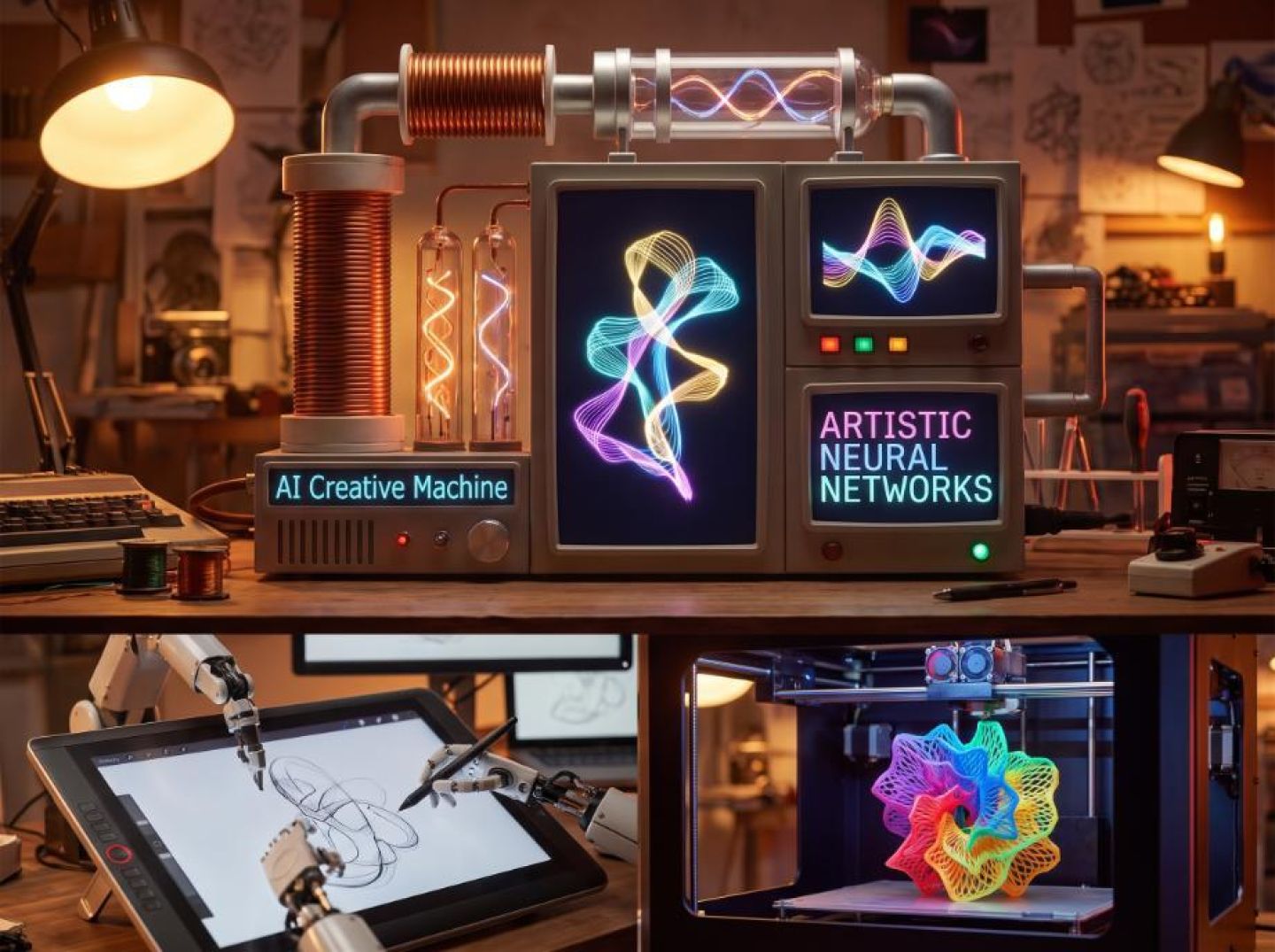
The opportunity for brands is to build an internal “creative machine” that plugs into this ecosystem instead of fighting it.
In practice, that looks like:
Critically, you still need human editors in the loop. SEO teams have already learned that automating for volume without judgment backfires: one IT software brand that flooded search with generic AI content saw rankings spike, then slide back to baseline once it drifted from its core positioning, a pattern analyzed on Neil Patel’s blog. The same dynamic applies to ads. AI can generate and test infinite creative, but only people can protect the brand’s point of view.
In 2025, you don’t win the creative race by upgrading titles at the top of the org chart. You win by treating AI as the engine that drives experimentation, optimization, and production—and treating your human creatives as pilots, not assembly‑line workers. Tools, properly wired, give you more shots on goal, faster learning, and less bloated payroll than any single “genius hire” ever will.
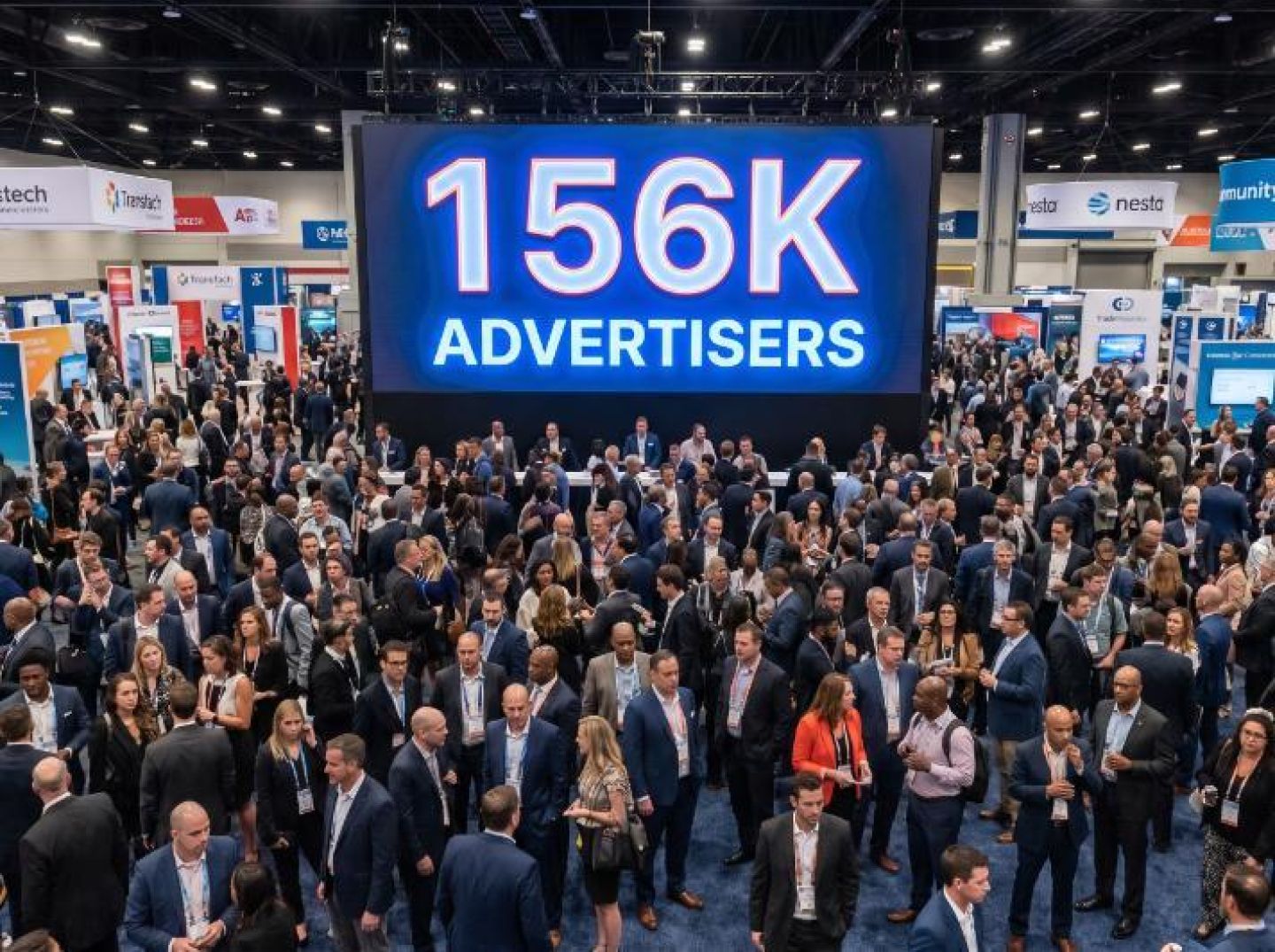
Most “creative instincts” live inside a sample size of one career. Algorithmic intelligence lives inside a sample size of 156,000+ advertisers shipping millions of ads a year.
That’s the gap you’re really managing in 2025.
A VP of Creative can remember the last dozen winners they personally launched. An ad intelligence system trained on log‑level performance data can recall thousands of winners and losers per vertical, per audience, per placement, per week. As Jeremy Fain points out in his work on deep‑learning ad platforms, the real power of AI in marketing comes from ingesting massive datasets and learning from every impression, not from a clever prompt or a single standout concept, because deep learning is fundamentally a big‑data problem, not a “creative tool” problem you sprinkle on top of a storyboard](https://www.adweek.com/brand-m...).
Reverse‑engineering those 156k+ advertisers is about turning that firehose into a playbook your org can actually use—something no hiring process, portfolio review, or reference call can replicate.
Raw paid media is noisy. You’re dealing with:
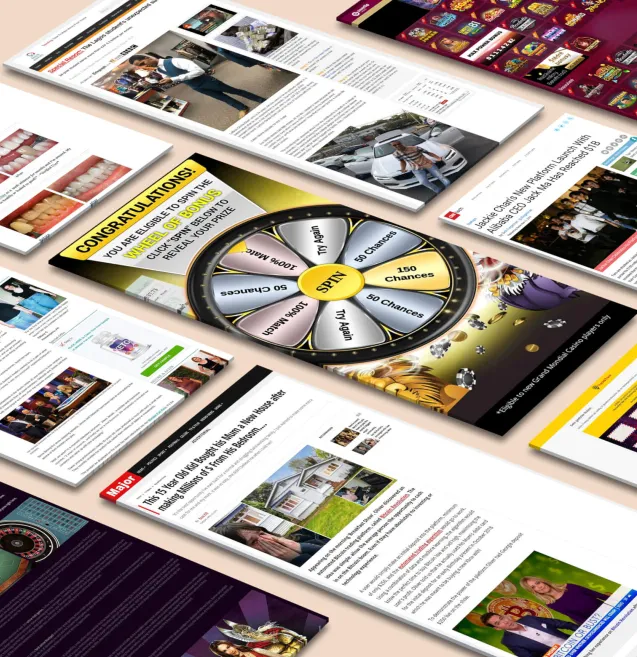
A human can peek at a competitor’s ad library and spot a few themes. An algorithmic system can crawl those same libraries weekly, fingerprint each creative (visual motifs, hooks, offers, tones, CTAs), tie them back to available performance proxies (spend velocity, creative fatigue, competitive share of voice), and normalize them into a unified taxonomy.
This is where deep‑learning infrastructure matters. Systems built on impression‑level or log‑level data, like the frameworks Fain describes for predicting creative performance before buying the impression, can map “what ran” to “what likely worked” across thousands of contexts, then generalize patterns a single creative director would never reliably see](https://www.adweek.com/brand-m...).
Once you’ve normalized the chaos, the goal is to answer questions humans are terrible at answering from memory:
Algorithmic pattern miners can cluster creatives not just by “looks similar,” but by underlying structure: narrative arcs, benefit stacks, offer framing, level of specificity, emotional register, even micro‑copy patterns. Then they can correlate those structures with survival curves and spend signals across thousands of advertisers to surface reusable playbooks like:
Human creative leads can intuit some of this from exposure. Systems fed by broad, cross‑account data see it quantitatively, at scale, and without bias toward recent wins or personal taste.
The real advantage shows up when you connect this competitive intelligence to your own creative engine.
Modern ad systems already remix components automatically—Google’s Performance Max, for example, can ingest headlines, images, and descriptions and experimentally combine them to converge on what works](https://martech.org/how-to-sus...). Now imagine feeding that kind of engine not just “our best guess” assets, but components pre‑shaped by what’s working across tens of thousands of advertisers in your niche.
Your workflow looks like this:
You’ve now built something crucial: a closed loop where market‑level intelligence (what’s working for 156k advertisers) constantly feeds into brand‑level experimentation (what works for you), without having to hire a small army of creatives or depend on a single executive’s taste.
This isn’t an argument against senior creative leadership. It’s an argument against treating talent spotting as your primary lever for performance.
In‑house models are already under pressure to prove that AI‑driven workflows translate into measurable results, not just more content. Surveys of marketing leaders show that while AI and martech adoption has surged, generating clear ROI from those investments consistently lags](https://martech.org/ai-is-putt...). The teams that close that gap are the ones that wire competitive and performance intelligence into how they brief, concept, and iterate—not the ones that assume a new VP will magically intuit the right answer from a handful of anecdotal wins.
Reverse‑engineering 156k+ advertisers isn’t about copying competitors. It’s about building an algorithmic sense of the battlefield so your humans can spend their limited cycles on what they’re uniquely good at: sharpening strategy, protecting the brand, and making decisive bets on top of an evidence base no individual career will ever be able to match.
Receive top converting landing pages in your inbox every week from us.
Featured
AI-driven ad intelligence is changing how brands evaluate creative, shifting the focus from individual creative leaders to scalable, data-driven systems. This guide explores how competitive ad intelligence, automated testing, and large-scale advertiser data can help teams generate, evaluate, and optimize creative faster.
Samantha Reed
7 minSep 21, 2026
Quick Read
OOH is increasingly becoming a measurable performance channel, but many industry roles are still built around selling inventory rather than outcomes. This guide explores how OOH careers can evolve toward performance marketing through attribution, ad intelligence, funnel design, landing-page data, and measurable campaign optimization.
David Kim
7 minSep 20, 2026
Featured
Testing only inside Google Ads and TikTok can hide platform bias, attribution problems, and misleading performance signals. This guide shows how to combine spy-tool intelligence with controlled experiments across Google, TikTok, Native, Push, and Pops to identify which creative and funnel patterns actually drive incremental results.
Priya Kapoor
7 minSep 18, 2026