Apple’s record advertising quarter and The Trade Desk’s growth slowdown may look like proof that marketers should abandon the open web for walled gardens—but this article argues the opposite. It explains how the decline of cheap, low-signal reach is creating opportunities for sophisticated performance buyers who can use competitive intelligence, auction signals, creative intelligence, and AI-driven optimization to uncover undercrowded open-web opportunities before competitors do.

Our spy tools monitor millions of TikTok ads from over 55+ countries. Biggest TikTok Ad Library in E-commerce and Mobile Apps!
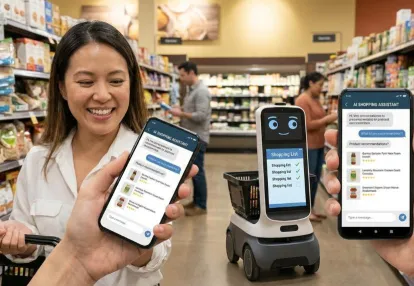
Agentic AI is moving product research and comparison upstream, often before buyers ever click a native or push ad. This article explains how marketers can adapt to the shift by making product feeds, offers, creative angles, proof points, and landing experiences easier for AI systems to understand and recommend. It also explores how high-intent clicks are changing, why AI-generated recommendations are reshaping creative angles, and how advertisers can optimize for both AI-mediated decisions and human action.
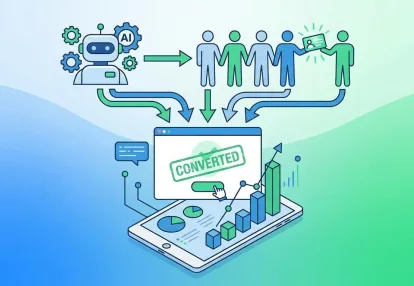
As organic clicks decline and paid acquisition becomes more competitive, advertisers need to look beyond CTR and CPC and focus on the conversion architecture connecting ad creative, landing pages, offers, and post-click experiences. This article explains how to reverse-engineer competitor funnels, identify patterns that have survived real-world testing, and use those insights to build stronger, original conversion systems.
A 20-year-old reseller making £20k a month on TikTok and a $100M+ CPG marketing machine represent two very different approaches to media: channel discovery versus channel loyalty. This article argues that the reseller's advantage isn't bigger budgets or better creative, but the ability to constantly test where attention is undervalued, move money quickly, and abandon channels when the economics change. It shows how enterprise marketers can adopt the same mindset through competitive ad intelligence, small explicit channel bets, and a rapid spy → test → decide loop.
AI-generated ad copy has made traditional competitor research increasingly unreliable because a single observed ad may be only one temporary permutation from a much larger creative system. This article explains why advertisers should move beyond snapshots and focus on patterns, recurrence, and longevity—tracking which messages, offers, landing-page structures, and creative angles survive over time. It then presents a three-layer AI-era competitive intelligence system: automated monitoring, pattern extraction, and human strategic interpretation.
AI referrals are exposing an old conversion problem: visitors arrive with highly specific intent but are often sent to generic homepages or poorly matched pages. This article explains why native advertisers solved this problem years ago through pre-sell pages, advertorials, intent-matched landing pages, and continuous competitive intelligence. It then expands the challenge into a triple-audience model—traditional search visitors, AI-informed human visitors, and autonomous AI agents—and explains why marketers need landing-page experiences that combine human persuasion with machine-readable structure.
AI visibility is becoming a major focus for SEO teams, but visibility scores, citation counts, and AI mentions can be difficult to connect directly to revenue. This article contrasts that uncertain measurement environment with performance marketing's more observable signals: competitor ad spend, creative longevity, landing pages, offers, and conversion-focused intent. It presents a practical five-step framework for using competitive ad intelligence alongside AI search data to prioritize high-intent opportunities, improve content strategy, and build a measurable full-funnel feedback loop.
BMW’s unconventional “Get Even With Corners” campaign shows how breaking category conventions can help advertisers escape creative fatigue. This article explains how affiliate and performance marketers can use competitor ad libraries to identify oversaturated hooks, visuals, and emotional angles, then apply a simple Inversion Method to create genuinely different campaigns. The goal is not to produce more minor variations, but to map the creative landscape, find the whitespace, and deliberately break one familiar pattern to regain attention and improve performance.
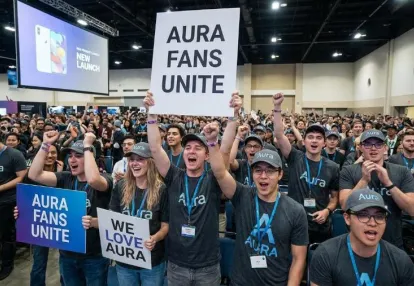
Performance marketers do not need a massive brand budget to benefit from brand fandom. By studying the emotional triggers, identity signals, rituals, and community mechanics visible in successful competitor campaigns, marketers can adapt those underlying patterns into original direct-response creative. The article presents competitive intelligence as the bridge between brand-building principles and measurable performance marketing—helping advertisers identify emotional whitespace, reverse-engineer durable creative patterns, and borrow cultural momentum without copying a brand's assets.
Most dropshippers treat TikTok virality as a buying signal when it is often already a late-stage indicator. This article explains how to look upstream at paid ad activity, advertiser entry, creative maturity, spend acceleration, and rate-of-change metrics to identify product opportunities earlier. It provides a practical scoring system and 48-hour audit to help dropshippers decide whether a viral product still has enough margin and market runway before entering.
AI search visibility tells marketers whether their brand is being mentioned, but it does not reveal what happens when high-intent buyers move from an AI-generated answer toward comparison and conversion. This article argues that competitor ad activity can provide a valuable second layer of intelligence, revealing shifts in messaging, landing-page structure, offers, and channel strategy. By combining AEO visibility data with competitive ad intelligence, marketers can build a fuller picture of the AI-driven buyer journey—from awareness through conversion.
AI agents are becoming a new layer between advertisers and consumers, researching products, comparing options, and shaping which brands make the final shortlist. This article explores how marketers can use competitive ad intelligence to identify emerging agent-friendly patterns, balance machine-readable information with human-focused creative, avoid the risks of full automation, and rethink attribution as AI-mediated discovery makes traditional performance metrics less reliable.
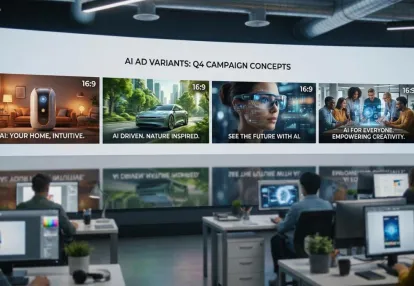
AI has enabled advertisers to generate creative at a scale that manual competitor research can no longer track effectively. Instead of reviewing individual ads, marketers need to analyze the full creative landscape, filter out short-lived tests, identify long-running survivors, and map the patterns behind winning hooks, visuals, and offers. This article presents a competitive intelligence framework for turning thousands of AI-generated ad variants into actionable strategic insights.