12 minDecember 23, 2025

Our spy tools monitor millions of popup and pop-under from over 90+ countries and thousands of publishers.
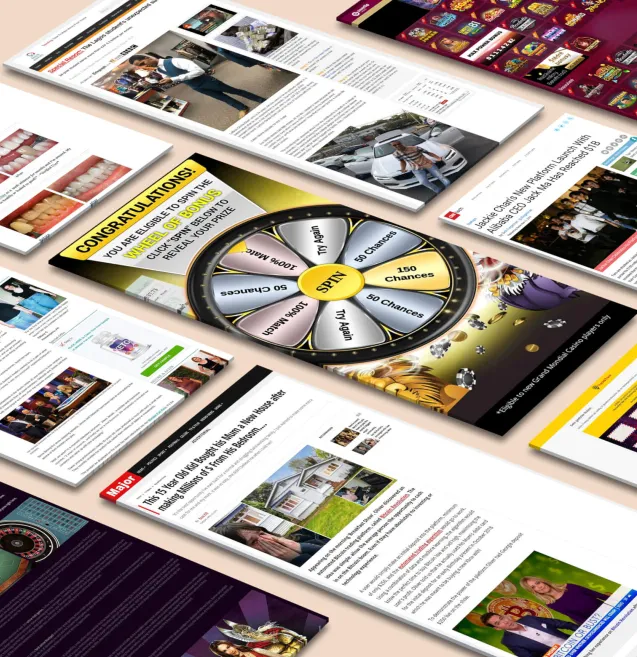
Get StartedPop ads landing pages are specialized web pages built with one goal: converting the surge of visitors arriving through pop-up advertisements. These pages serve as the critical bridge between your ad spend and actual results—whether that's sign-ups, purchases, or downloads.
When you're dealing with high traffic conversion scenarios, the stakes get higher. Every visitor represents an investment, and without proper conversion optimisation, you're essentially watching your advertising budget drain away. The difference between a mediocre landing page and an optimized one can mean the gap between profit and loss.
Landing page design for pop ads requires a specific approach. You can't treat these pages like standard landing pages because pop traffic behaves differently—visitors arrive unexpectedly, often skeptical, and ready to leave within seconds.
In this guide, I'll walk you through five proven techniques for pop ads landing page optimization that have consistently delivered results:
These strategies will transform your landing pages into conversion machines. For a more comprehensive understanding of how to improve your landing page's conversion rate and ROI, make sure to check out these 101 Landing Page Optimization Tips.
Pop ads traffic behaves differently than search or social media visitors. When someone clicks a search result, they're actively looking for a solution. Pop ad visitors, however, encounter your offer unexpectedly while browsing other content. This creates a unique dynamic where you're interrupting their current activity, which means you have mere seconds to capture their attention and demonstrate value.
Key characteristics that define pop ads traffic:
The high volume traffic challenges you'll face with pop ad campaigns include managing visitors who may not perfectly match your target demographic. Conversion rate optimization for pop traffic requires addressing skepticism quickly, as these visitors need convincing that clicking through was worthwhile.
Another significant hurdle involves the quality-versus-quantity dilemma. While pop ads deliver substantial traffic volumes, you need to filter and engage the right visitors efficiently. Your landing page must work harder to qualify leads and guide genuinely interested prospects toward conversion while gracefully handling those who aren't a fit.
To optimize pop ad campaigns in 2025, you must design high converting pop ad pages that account for these unique behavioral patterns and visitor expectations. Learning from the secrets of successful pop advertising could provide valuable insights into creating effective strategies for your campaigns.
Your hero shot serves as the first impression that determines whether visitors stay or bounce within seconds. Pop ads traffic arrives with minimal context about your offer, which means you have an extremely narrow window to capture attention and communicate value visually.
The imagery you place above the fold must work harder than traditional landing page visuals. You need a contextual hero shot that shows your product or service in action rather than generic stock photos. If you're promoting a fitness app, show someone actively using the app during a workout. If you're selling software, display the actual interface solving a specific problem. This approach helps visitors immediately understand what you're offering and how it applies to their needs.
Landing page imagery for pop ads should follow these best practices:
Videos can enhance visual engagement for pop ads when used strategically. A 15-30 second auto-playing (muted) video demonstrating your product creates dynamic movement that captures attention. You should always include a static fallback image for slower connections to prevent blank spaces that kill conversions.
When traffic floods your landing page from pop ads, you need call to action optimization that eliminates confusion and drives immediate decisions. A single, prominent CTA dramatically increases conversion rates because it removes the paradox of choice—visitors don't waste mental energy deciding between multiple options.
I've tested dozens of landing pages, and the data consistently shows that pages with one clear CTA outperform those with multiple competing actions by 20-40%. Your visitors arrive from pop ads with limited context and patience. They need to know exactly what you want them to do, right now.
Your CTA button should dominate the visual hierarchy:
This is where most Pop Ads Landing Pages: Conversion Optimisation When Traffic Is High fails. You must ruthlessly remove:
Every additional clickable element creates an exit path. When you're paying for high-volume pop ad traffic, you can't afford to give visitors escape routes. Your landing page should function as a conversion tunnel with one entrance and one desired exit—through your CTA.
Your landing page has seconds to answer one critical question: "What's in it for me?" Value proposition clarity makes or breaks your conversion rates, especially with pop ads traffic where visitors arrive with minimal context about your offer.
Start with a headline that immediately communicates the transformation you're offering. Instead of "Advanced Project Management Software," try "Complete Projects 40% Faster Without Missing Deadlines." The difference? The second headline speaks directly to the pain point and desired outcome.
Your subheadline should reinforce this promise with specific details. Think of it as your headline's supporting evidence—it adds credibility and depth to your main claim. "Join 50,000+ teams who've eliminated project chaos and recovered 15 hours per week" tells visitors exactly what they'll gain.
Benefits-oriented copywriting connects with emotions and needs rather than listing technical specifications. You're not selling a "cloud-based platform with real-time collaboration features"—you're selling peace of mind, saved time, and reduced stress. Frame every element around outcomes:
Differentiation happens through specific, measurable promises. Generic claims like "best-in-class solution" mean nothing. Instead, highlight what makes you unique: "The only tool that syncs with your existing calendar and sends smart deadline reminders based on your team's actual work patterns."
Test different value propositions with your audience. What resonates with one segment might fall flat with another. I've seen conversion rates jump 35% simply by reframing the same offer through a different benefit lens—from time-saving to revenue-generating messaging.
When visitors land on your page from a pop ad, they arrive with natural skepticism. You have seconds to establish credibility before they bounce. Social proof on landing pages transforms this skepticism into trust by showing that real people have already taken the action you're asking for.
Here are some effective types of social proof that can help build trust with pop traffic:
The key to integrating testimonials for pop ads effectively lies in strategic positioning. Place one powerful testimonial near your CTA to reinforce the decision to convert. You don't need five testimonials crowding the page—one authentic quote with a photo and name builds more trust than multiple generic statements.
Position trust badges in the footer or near form fields where security concerns naturally arise. Keep logos small and grouped together rather than scattered across the page.
Use subtle design elements like light background boxes or minimal borders to separate social proof from other content. This creates visual organization without adding clutter. The goal is making social proof visible and credible while maintaining your page's clean, focused design that drives conversions.
Mobile optimization for pop ads isn't optional—it's essential. Pop ads generate substantial mobile traffic, and if your landing page doesn't render perfectly on smartphones and tablets, you're losing conversions. I've seen campaigns lose 60-70% of potential conversions simply because buttons were too small to tap or text was unreadable on mobile screens.
Your landing page must adapt seamlessly to different screen sizes. Test your page on multiple devices—iPhones, Android phones, tablets—to ensure everything displays correctly. The CTA button should be large enough for thumb-friendly tapping, typically at least 44x44 pixels. Forms need to be simplified for mobile users who won't tolerate typing lengthy information on small keyboards.
Page load speed directly impacts your bounce rate and conversion performance. Research shows that a one-second delay in page load time can reduce conversions by 7%. When you're paying for high-volume pop ad traffic, every second counts.
Compress images without sacrificing quality using tools like TinyPNG or ImageOptim. Minimize HTTP requests by combining CSS and JavaScript files. Enable browser caching so returning visitors load your page faster. Consider using a content delivery network (CDN) to serve your landing page from servers closest to your visitors' geographic locations.
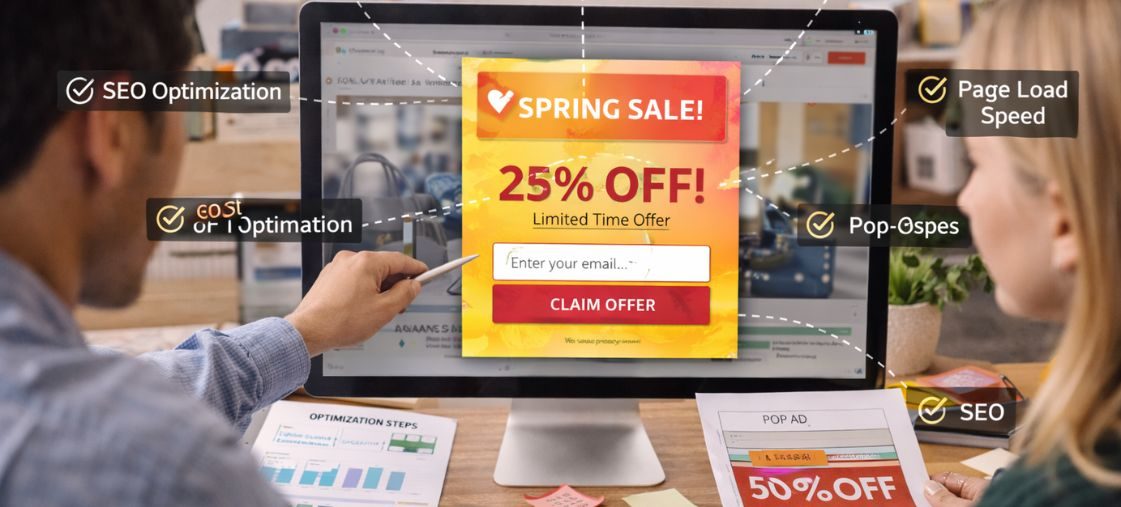
Pop Ads Landing Pages: Conversion Optimisation When Traffic Is High requires continuous technical refinement through A/B testing. Test different image formats (WebP vs. JPEG), lazy loading implementations, and hosting configurations. Use tools like Google PageSpeed Insights, GTmetrix, or Pingdom to identify specific technical bottlenecks slowing your page down.
A/B testing pop ad landing pages transforms optimization from guesswork into a data-driven process. You need to continuously experiment with different variations of your landing page elements to discover what resonates most with your audience. Testing one element at a time—whether it's your headline, CTA button color, hero image, or body copy—gives you clear insights into what drives conversions.
Start by prioritizing tests based on potential impact. Your headline and CTA typically influence conversion rates most significantly, making them ideal starting points. Run each test until you reach statistical significance, which usually requires at least 100-200 conversions per variation. Rushing to conclusions with insufficient data leads to poor decisions that can actually harm your conversion rates.
Conversion rate optimization strategies depend on interpreting your test results correctly. Look beyond simple win/loss metrics. Analyze how different audience segments respond to variations—mobile users might prefer different CTAs than desktop visitors, and traffic from different geographic regions may respond to distinct messaging approaches.
Connect your testing insights directly to campaign goals. If your objective is maximizing revenue rather than just conversions, prioritize variations that attract higher-value customers even if they generate slightly fewer total conversions. Track metrics like average order value, customer lifetime value, and cost per acquisition alongside conversion rates to get the complete picture of your landing page performance.
Pop Ads Landing Pages: Conversion Optimisation When Traffic Is High requires a comprehensive approach that combines all the elements we've discussed. You can't depend on just one method—the real magic happens when you blend together attractive design, convincing messaging, trustworthy social proof, flawless technical performance, and thorough testing.
These five proven techniques work hand in hand to create high converting pop ad pages summary that turn casual visitors into loyal customers. Your hero shot grabs attention, your focused CTA prompts action, your value proposition conveys benefits, your social proof establishes trust, and your technical optimization guarantees smooth experiences on any device.
The strategies you've discovered here will assist you in optimizing pop ad campaigns 2025 and beyond. Begin implementing these techniques in your upcoming campaign. Experiment with various combinations, analyze your data, and refine your approach based on actual results. The gap between average and outstanding conversion rates often comes down to how effectively you apply these basics. Your landing pages are set to succeed—now it's time to put these strategies into motion.
Receive top converting landing pages in your inbox every week from us.
Most Read
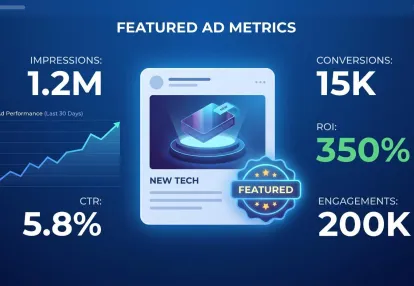
Featured ad galleries can reveal creative trends, but without performance metrics they provide little insight into what actually works. This guide shows how to use Anstrex, tracking data, and Brax to reverse-engineer native and display winners and turn their proven angles into measurable Pop and Push campaign blueprints.
Marcus Chen
7 minSep 21, 2026
Editor’s Pick
Discover how to turn food, sports, and tech trends into structured creative testing hypotheses instead of one-off ad ideas. Learn how to build vertical-specific blueprints, test them across Native, Push, Pops, and TikTok, and use performance data to continuously improve your creative strategy.
Dan Smith
7 minSep 20, 2026
Most Read
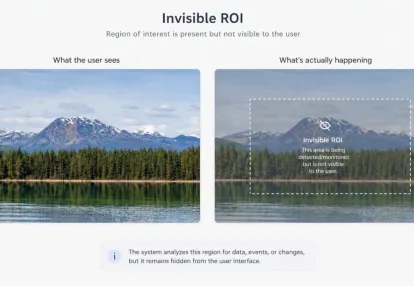
Discover how to connect ad spy data with on-site behavior, CRM insights, and revenue outcomes to uncover the real drivers of ROI. Learn how to turn Anstrex from a creative swipe tool into a closed-loop system for testing winning ad angles, funnels, and customer journeys.
Dan Smith
7 minSep 9, 2026