11 minSeptember 8, 2026

Our spy tools monitor millions of native ads from over 60+ countries and thousands of publishers.
Get StartedEvery June, the industry gathers to applaud another crop of “brave,” “cinematic,” and “emotionally rich” brand epics. Juries gush over long-form films that “build memory structures” and “refresh brand meaning,” and the winning case studies are cut to feel more like Cannes trailers than performance reports. The message is clear: this is what great advertising looks like.
But if you spend a week inside Anstrex, watching what actually scales across native widgets, push alerts, pops, and scrappy dropshipping funnels, you start to wonder whether the industry has been grading the wrong exam.
On the awards stage, creative is judged by craft and cultural aura. In the performance trenches, it is judged by whether it can survive the cold math of arbitrage. There, “great” isn’t a 12‑minute film; it’s an ugly little tile that can hold a positive EPC for 90 days straight. It’s a headline that keeps getting traffic for less than it’s worth on the back end. It’s the offer that still throws off a decent ROAS after the algorithm has burned through your warmest audiences and cheapest placements.
The performance world has already internalized something that brand juries often ignore: a click is not a win; it’s a hypothesis. As one breakdown of modern PPC argues, CTR has been downgraded from a success metric to a diagnostic indicator. In an era where algorithms are constantly probing new audiences and placements, a spiky CTR curve mostly proves that your ad can win the auction and get seen. Whether it is any good depends on what happens after the click: conversion rate, CPA trending down, revenue per visitor going up. In other words, “great” is what your profit-and-loss statement says it is.
Native buyers live in this reality every day. The teams scaling campaigns on Outbrain, Taboola, Revcontent, and dozens of second‑tier networks treat “pretty” ads the way quants treat pretty stock charts: with suspicion. Their dashboards are built around CTR, yes, but also around conversion rate, CPC, EPC, and device‑ and placement‑level profitability. As one practical guide to native optimization points out, the difference between a mediocre and a “highly successful” campaign is the rigor with which you track and compare industry benchmarks like CTR, CVR, CPC, and other KPIs—not whether the ad could pass for a short film.
Meanwhile, the brand side has wandered into its own kind of illusion. Marketers are intoxicating themselves on the promise of AI‑tailored “perfect relevance,” spinning up thousands of slightly different ads built from the same template. On paper, it sounds like craftsmanship at scale. In reality, it often devolves into what one analysis calls a “multivariate hell,” where an automated system doubles down on whichever fragmented variation wins a quick click while remaining “completely blind” to long‑term brand effects. Hyper‑personalization shatters the shared cultural experience that juries love to celebrate—without guaranteeing hard performance in return.
Layer on top of that the rise of “zero‑click” environments—AI overviews, answer boxes, shoppable media—where user intent is satisfied before they ever touch your landing page. In this landscape, as observers of the search ecosystem note, a “healthy CTR is a sign of life, not a guarantee of success,” and the smart question is no longer “Did it get clicked?” but “What did those clicks actually buy us?”
Anstrex doesn’t care how moving your manifesto was, whether your spot sparked think pieces, or if your director is “auteur‑adjacent.” Its databases quietly surface a harsher truth: in the wild, the ads that win are the ones that survive ruthless, continuous selection on CTR, EPC, and ROAS. They are designed not to impress juries but to withstand the daily auction against every other marketer trying to extract a margin from the same impression.
If you accept that, a provocative question follows: maybe the industry’s most decorated work and its most profitable work are no longer even playing the same game.
On stage at Cannes, “great” means something very specific: craft, narrative, emotional voltage. The judges are literally briefed to reward work that feels new, brave, or culturally important. They’re watching films, not funnels. The KPIs are goosebumps and tears.
In your ad account, “great” means something else entirely. It means this creative, on this placement, at this bid, drove the cheapest, highest‑quality action you care about. It means the algorithm kept spending, not because it was moved, but because it saw a statistically reliable pattern of profit.
Those are not the same job.
Cannes juries view a campaign as a story with a climax; platforms treat it as a living system. AI‑driven buying engines now evaluate millions of impressions in milliseconds, and they will happily keep pumping budget into an ugly banner if it consistently wins auctions and converts. As one overview of AI in AdTech explains, modern systems don’t follow fixed rules about what “good creative” should look like; they learn from performance data, adjusting bids, placements, and even which ad units to favor thousands of times a day. “Great” equals predictable, repeatable outcomes – not a standing ovation at the Palais.
You can see the gap most clearly wherever emotion and engagement diverge. In brandland, the World Cup promo that tops an “emotional engagement” ranking is held up as proof of effectiveness. When DAIVID tested 31 World Cup spots, Fox Sports’ “Miracle” led the field in intense positive emotional response, significantly outperforming the industry norm and earning accolades for long‑term brand impact. On a media plan, that’s only the opening salvo. The real question is: did that emotional spike translate into search volume, watch time, branded queries, and ultimately, conversions? Did the landing experience and lower‑funnel creative catch the demand that film created?
Because in the performance world, “great” often looks surprisingly transactional. Consider rewarded ads inside mobile games. No jury is going to get misty‑eyed about a 15‑second clip offering an extra life in exchange for a view. Yet those units routinely pull opt‑in rates north of 90%, with players who engage in rewarded formats being four times more likely to make an in‑app purchase and showing up to 3.5x higher retention than non‑viewers, according to mobile monetization data on rewarded ads. They’re now present in roughly 60% of top‑grossing titles and drive nearly half of ad revenue in some casual genres. That is what “great” looks like to a CFO.
Notice the pattern: in both the Fox Sports and rewarded‑video examples, emotion matters, but for different reasons. At Cannes, emotion is the endpoint – the artifact being judged. In your account, emotion is raw material. It’s valuable only insofar as it can be translated into behaviors the optimization engine can see and scale.
That’s why the operational definition of “great” has quietly shifted from “the ad everyone talks about” to “the ad stack that learns fastest.” Platforms like Reddit are acquiring creative‑intelligence tools such as Memorable AI explicitly to analyze how people react to thousands of visual variants and suggest tweaks that improve click‑through, conversions, or other hard metrics, folding those learnings into their ad stack for all advertisers. The ambition isn’t to win a Lion; it’s to win more auctions at a lower effective cost per outcome.
So when you see a glossy case study claiming a film “changed the conversation,” and a scrappy performance dashboard quietly reporting that a blunt, incentive‑driven unit doubled ROAS, you’re not looking at competing truths. You’re looking at two different definitions of greatness, optimized for two different systems of reward. The danger isn’t that one is wrong and the other is right – it’s assuming they’re talking about the same thing.
Emotion and economics aren’t opposites in advertising, but they are measured on completely different clocks.
Award juries are trained to judge how an ad makes people feel in the moment. Platforms like DAIVID literally rank campaigns by “intense positive emotional responses” and link that to long‑term brand impact, as when Fox Sports’ “Miracle” World Cup promo topped the field for emotional intensity in their tests. That’s the Cannes worldview in data form: the unit of success is a feeling, not a financial outcome.
Performance platforms and tools like Anstrex, by contrast, care almost exclusively about what happens after that feeling — or in many cases, with no visible emotion at all. A native ad spy tool is effectively a market ledger: it sees which creatives keep getting spend and scale across placements, and which ones stall out. Under the hood, those decisions are being driven by hard metrics that look nothing like a jury scorecard.
The basic divide looks like this:
Even within the “hard numbers,” though, you’re not always measuring what you think you’re measuring. Many marketers still treat CTR as the shorthand for whether an ad is “working,” but in a world of AI‑run media buying, that’s dangerously simplistic. As one analysis of modern PPC argues, a high CTR is increasingly just a “sign of life” — it proves your creative can win the auction and attract attention, but not that it can actually generate profitable customers once they click through, especially as zero‑click and AI‑assisted SERPs muddy what a “click” even means in the first place, as search specialists point out.
This is exactly where tools like Anstrex sit: between emotional engagement and economic reality. The creatives you see saturating placements there are, by definition, the ones that survived ruthless, algorithmic selection pressure. If the landing page doesn’t convert, if the earnings per click don’t cover the bid, if the lifetime value never materializes, those ads quietly disappear from rotation no matter how uplifting their narrative arc might be.
The systems making those decisions are increasingly autonomous. Rather than a media buyer manually nudging bids based on yesterday’s dashboard export, modern AdTech lets you define an economic objective — say, target CPA or ROAS — and trusts AI to continually adjust bids, placements, and even audience mixes in milliseconds, as AdTech analysts describe. These models don’t “see” your story; they see streams of impression‑level data and optimize toward the patterns that most reliably turn into revenue.
On top of that, performance analytics now benchmark you not just against your own history but against category norms. When a platform urges advertisers to compare their campaigns with “industry standards” for CTR, conversion rate, and cost metrics, it’s encouraging them to treat performance as a competitive sport with clear economic leaderboards, rather than an isolated creative exercise, as the team behind a major native analytics tool explains. Anstrex data is a similar kind of benchmark, but in creative form: not “what’s the average CTR in my vertical?” but “what kinds of hooks, formats, and promises are other buyers willing to keep funding?”
Emotion still matters in this ecosystem; it’s often the hook that earns the click or holds attention long enough for a pitch to land. But platforms like Anstrex only “see” emotional engagement once it’s been converted into measurable economic signals at scale. Juries measure the emotional spike. The market, increasingly automated and AI‑driven, measures whether that spike reliably clears the profit hurdle.
If awards shows are about stories, the Anstrex dashboards are about patterns. When you zoom out across thousands of campaigns, three things become painfully obvious: top‑grossing native, push, and pop ads are ruthlessly transactional, mechanically aligned to the click, and increasingly tuned by machines rather than “big ideas.”
First, they win by matching contextual pain to an immediate payoff. In mobile, rewarded video is the purest version of this. When a game lets you watch an ad exactly when you’ve just failed a level or are “one resource short of an upgrade,” opt‑in rates and conversions spike because the ad is surgically tied to the user’s current frustration, as the team at AppSamurai notes. Top‑grossing native and push creatives behave the same way: they don’t try to uplift humanity; they show up at the moment of discomfort and offer a shortcut.
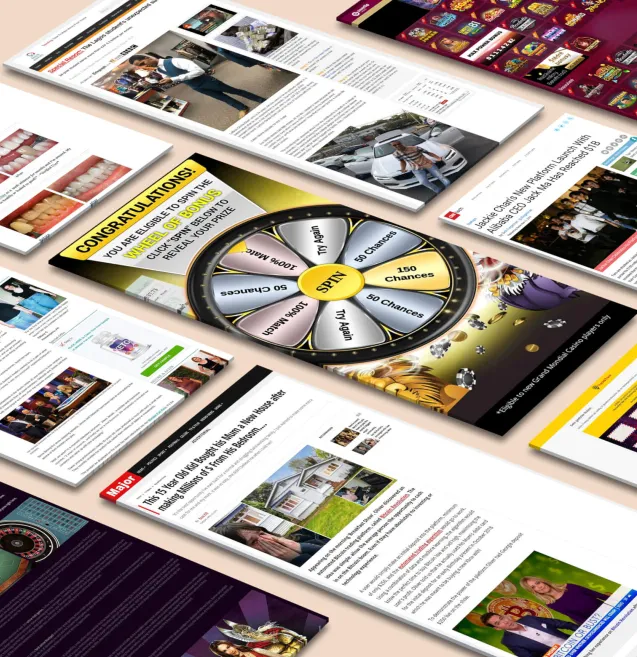
You see this in Anstrex when you filter for native winners on arbitrage or sweepstakes offers: the headlines lean hard into micro‑anxieties (“Your battery is dying faster than it should,” “Missed this government benefit?”), and the hero image either visualizes the pain (cracked phones, red error screens) or the immediate relief (a full bank balance, a perfect credit score screenshot). Pop campaigns that scale tend to double down on that interruptive jolt: the lander loads with a fake “virus warning,” a countdown timer, or a disappearing discount. None of this would impress a jury, but it quietly crushes CPM‑to‑EPC math.
Second, the pattern that really separates top‑grossing ads from “nice‑looking” ones is tight coupling between creative, intent, and follow‑through. In brand land, a gorgeous video can stop at awareness. In performance land, the most successful work behaves more like the integrated demand engines described by MarTech, where TV spots, search, and on‑site content are all choreographed to capture the surge in interest. On Anstrex, the best native funnels look eerily similar: a provocative pre‑sell advertorial that matches the angle of the teaser, a lander that mirrors the promise in the widget headline, and an order page that repeats the same benefit stack yet again. No orphaned messages. No clever detours.
Third, and most unromantically, what “wins” in the wild is increasingly what AI can iterate fastest. Where a creative director might agonize over three film edits, a performance team is spinning out hundreds of headline‑image‑copy combos and letting algorithms decide. As illumin describes, modern AdTech is shifting toward “agentic” systems that continuously analyze results and make thousands of micro‑adjustments in real time: real‑time bid optimization, dynamic audience shifts, and creative rotation based purely on outcome signals. In Anstrex, that shows up as clusters of near‑identical ads—same angle or structure, tiny differences in wording or imagery—where only a handful survive more than a few days. The winners aren’t always the prettiest; they’re the ones that got the most aggressive algorithmic backing early on.
This is where the gap with awards really yawns. Hyper‑personalized, AI‑spun creatives can generate a torrent of short‑term wins but create what AdExchanger calls a “multivariate hell”: thousands of permutations being judged on surface‑level reactions like clicks, with no clean way to know which variables matter or whether they’re building any lasting brand equity. In the Anstrex feed, that looks like chaos—blue button vs. green button, 34 vs. 37 vs. 49‑year‑old “mom” thumbnails—but economically, a handful of those permutations are making someone a lot of money.
Pull those threads together, and a few consistent traits emerge across top‑grossing native, push, and pop:
Award juries reward originality and cultural impact. The marketplace rewards relentless alignment between a tiny, specific human itch and the fastest possible scratch, executed at machine speed. Anstrex just makes that visible.
If pure emotion rarely wins the sales ledger, when does it actually move money? In the Anstrex data, those moments fall into two buckets: “rewarded” ads, where emotion is directly tied to a concrete payoff, and high‑intent journeys, where feeling amplifies a decision users are already primed to make.
Rewarded formats are the cleanest example. Think of the classic “watch this to unlock X” offer in apps and games, or a native pre‑sell article that dangles an answer to a burning question. The emotional promise isn’t abstract brand love; it’s tethered to an immediate, self‑interested win: bonus coins, a free template, early access, a discount expiring tonight. That is where a swelling score or a tug‑at‑the‑heartline does convert: when it dramatizes the reward and reduces the psychological friction between “maybe later” and “okay, now.”
On Anstrex, top‑grossing native and push campaigns with strong emotional hooks almost always anchor that feeling to a specific outcome: “feel the relief of finally sleeping through the night,” “the pride of paying off your debt,” “the joy of seeing your dog pain‑free again.” The copy paints the emotional end state, but the structure is ruthlessly performance‑driven: a clear call to action, tight message‑to‑landing‑page match, and aggressive retargeting architecture. Emotion is the accelerant, not the engine.
The same pattern shows up in high‑intent journeys like search and retargeted native. At this end of the funnel, users have already self‑selected as buyers; they’ve typed a problem into Google, clicked three comparison pages, or abandoned a cart. As Search Engine Journal points out, modern CTR is less a measure of “raw human interest” and more a diagnostic of how well the algorithm is surfacing likely converters. The money is made after the click, where a well‑timed emotional nudge—scarcity, social proof, reassurance—pushes an already‑considering user over the line.
This is exactly where AI‑driven optimization becomes dangerous and powerful. Today’s autonomous ad systems can test thousands of micro‑variations and automatically double down on whatever wins more clicks, as described in illumin’s overview of AI‑powered campaign management. Left unchecked, that machinery will happily chase the cheapest curiosity clicks and outré emotional tricks. But when you confine it to high‑intent environments and reward structures, you can harness its speed without losing the plot.
In practice, that looks like:
For award juries, the question is “Did this make people feel something?” For the Anstrex leaderboards, the question is “Did those feelings lead to profitable actions?” Emotional advertising absolutely can convert—but only when it’s tightly coupled to a tangible reward, deployed at a moment of existing intent, and disciplined by measurement frameworks that care more about downstream revenue than about how moving the story felt in the edit bay.
Start by admitting you don’t know which version will win.
Anstrex gives you an unfair advantage precisely because you can see, side‑by‑side, the kind of “ruthlessly transactional” creatives that are already printing money and the rarer, more cinematic concepts that look like they came from a festival reel. The point of this section is not to argue for one or the other, but to show you how to systematically test both — without disappearing into the multivariate chaos that plagues so much AI‑driven personalization.
As one analysis of the “paradox of personalization” put it, dumping thousands of auto‑generated ad permutations into the wild creates a “multivariate hell” where you can’t tell whether a lift came from the headline, the background color, the mood of the stock photo, or the weather the user experienced that day. Anstrex lets you avoid that trap by anchoring tests on discrete, human‑defined hypotheses instead of infinite machine‑spun variants.
A simple framework:
2. Boil each concept down to a single, testable difference.
The mistake many teams make is testing six things at once: new story, new CTA, new format, new audience. That lands you right back in the kind of muddled signal AdExchanger warns about.
3. Prototype both using live winning DNA.
Don’t write from scratch; splice. Use Anstrex’s filters to copy structures that are already scaling — for example, the pre‑lander style, the device targeting, even the widget placements in native. Then layer your competing messages:
4. Lock your variables; let the machine do the rest.
The shift to “agentic” AI in media buying means you can hand platforms a clear goal — say, target CPA or ROAS — and they’ll dynamically allocate bids and impressions across your variants, as recent coverage of AI in AdTech at illumin explains. Your job is not to out‑optimize the bidder; it’s to give it clean inputs.
5. Measure on two horizons, not one.
In Anstrex, a creative that runs stably and scales in budget is your proxy for “money in the drawer.” But you should also watch how — and where — your ads echo. Emotionally potent work can create a demand spike elsewhere: branded search, YouTube queries, or direct type‑ins. As one breakdown of integrated campaigns argued, great video spots function as a demand map: people see the ad, then immediately go search or click into a deeper journey.
6. Recycle winners in both directions.
If the emotional, “award‑ish” concept loses badly, don’t toss it. Salvage the moments that kept people from bouncing — a specific visual, a line that extends time on page — and retrofit them into your direct‑response structures. If it wins, promote it aggressively, then use Anstrex to see which competitors start echoing your angles. You’ll know you’ve hit on something that transcends a single clever line when you start spotting “your” idea in other people’s top‑spend ads.
The point is not to bet your entire budget on art or on math. It’s to use Anstrex as your lab, AI as your lab assistant, and the market as your jury — constantly pitting “award‑worthy” elegance against brutalist clarity, and stealing the best of both every time the data comes back.
Receive top converting landing pages in your inbox every week from us.
Must Read
Discover how AI-generated ad fatigue is making native, push, and TikTok campaigns increasingly look alike, weakening engagement and reducing competitive advantage. Learn how to use competitive ad intelligence tools to identify repetitive creative patterns, develop more distinctive ads, and stand out in AI-driven advertising auctions.
Liam O’Connor
7 minOct 14, 2026
How-To
Learn how to connect out-of-home (OOH) advertising with digital performance campaigns to create measurable cross-channel funnels. Discover how to plan LED truck routes, coordinate search and social ads, optimize mobile landing pages, and track conversions so physical advertising drives measurable business results.
Samantha Reed
7 minOct 13, 2026
How-To
Discover how big-brand sports sponsorships use fan behavior, geographic targeting, and cross-channel advertising to reach high-intent audiences beyond celebrity endorsements. Learn how to reverse-engineer sponsorship strategies, validate audience segments with competitive intelligence, and build cost-effective campaigns around local fandom, CTV, mobile, and creator content.
Dan Smith
7 minOct 12, 2026