9 minSeptember 11, 2026

Our tools monitor millions of native, push, pop, and TikTok advertising campaigns.
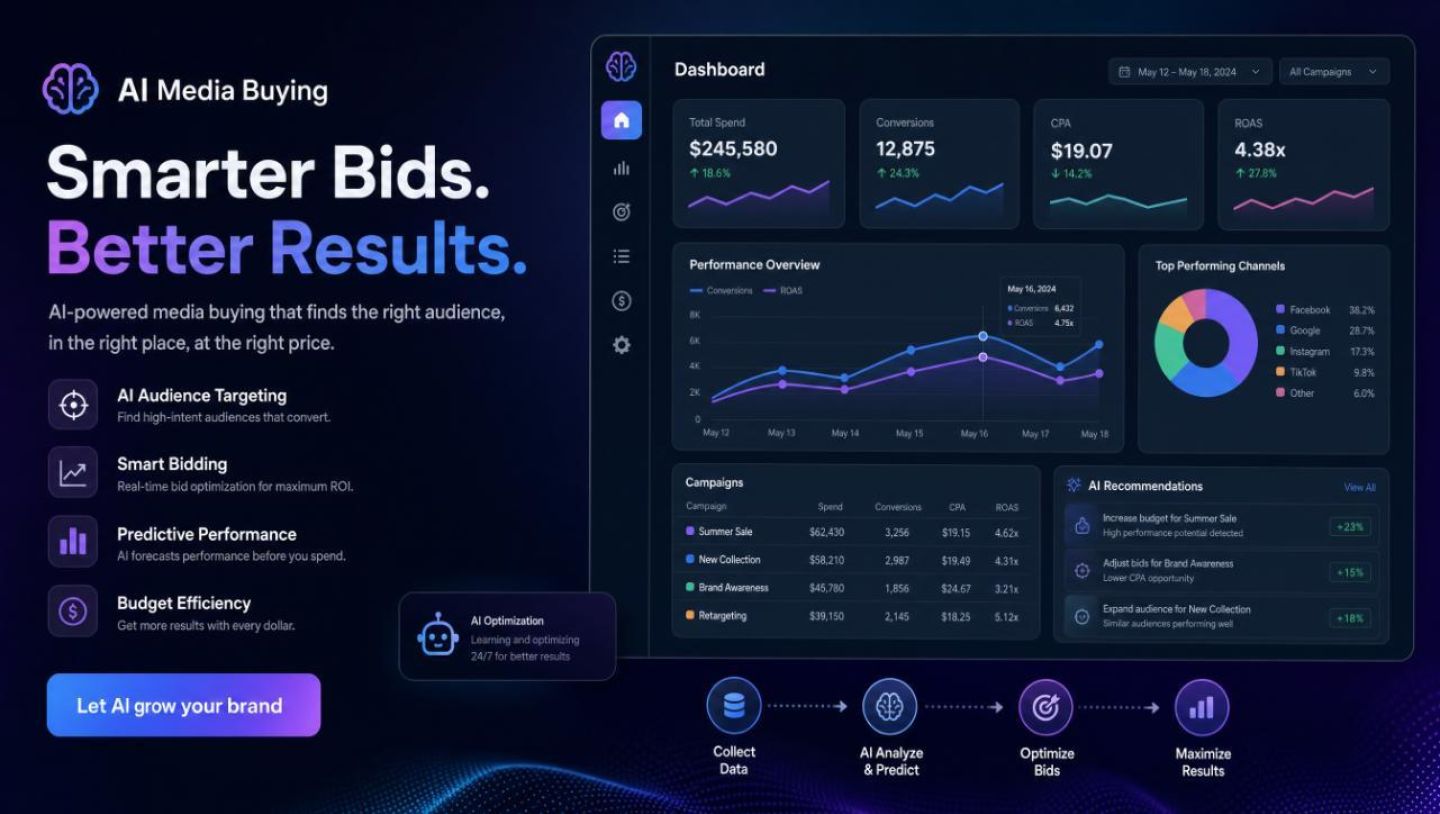
Get StartedAI is already buying your media in the time it takes a page to load — evaluating millions of impressions, predicting which user will convert, and setting bids in real time across auctions that now account for more than 90% of digital display spend, as MarTech explains. Yet if you ask most performance teams why the machine chose that impression, that creative, that placement at 10:37 a.m. instead of any other option, you’ll mostly get educated guesses and platform talking points.
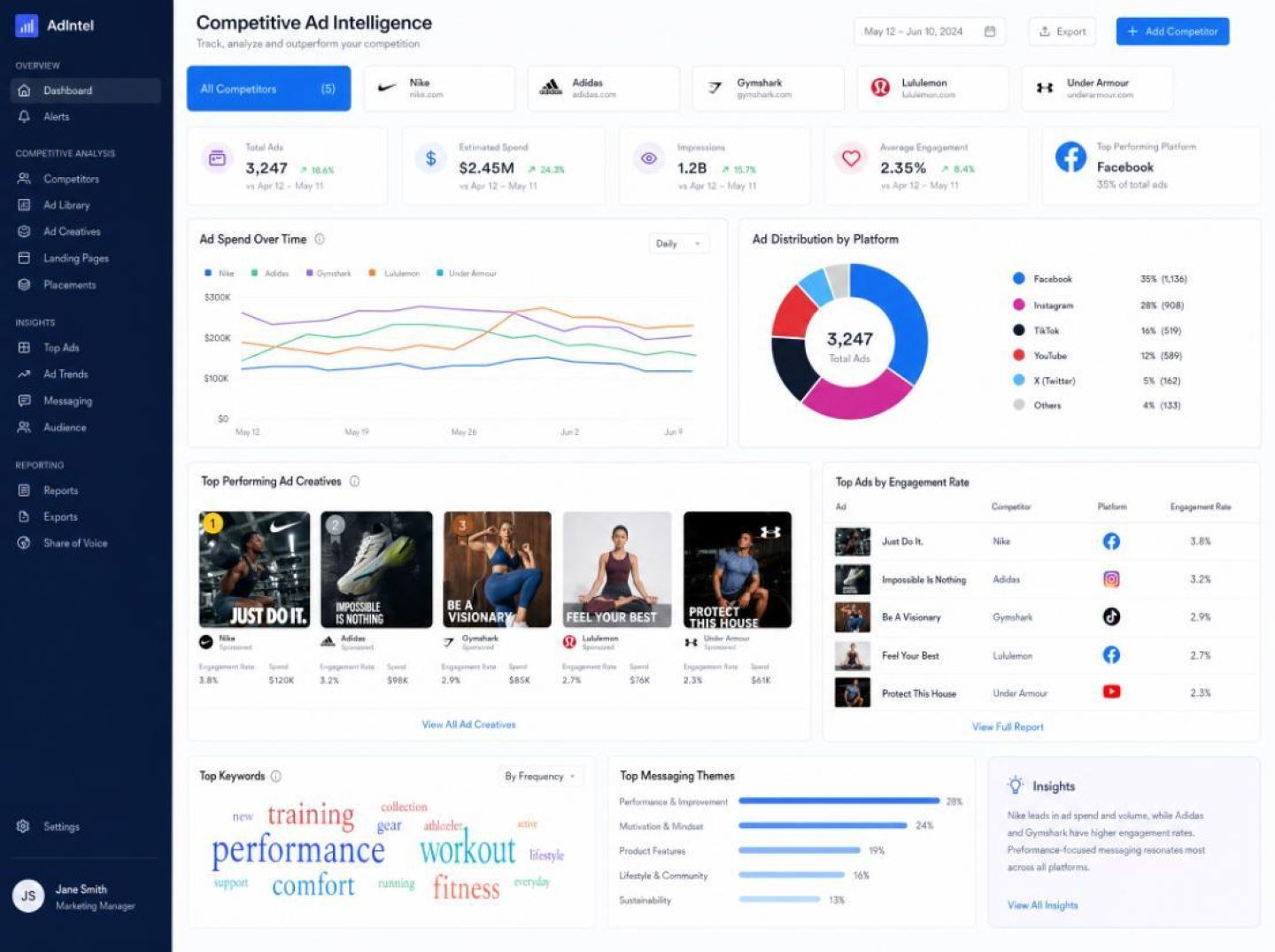
Instead of treating these systems as inscrutable black boxes, the smartest marketers are turning to competitive ad intelligence to watch AI “in the wild” — reverse-engineering decisions from the auctions themselves. By tracking how rivals’ CPMs, placements, and creatives shift across social and programmatic environments, tools like Polaris AI surface the hidden competitive signals that never show up in earnings calls but emerge first in the bidstream, as AdExchanger describes. Suddenly, you’re not just trusting a platform’s optimization story; you’re benchmarking its choices against real competitor funnels, supply paths, and performance patterns every single day.
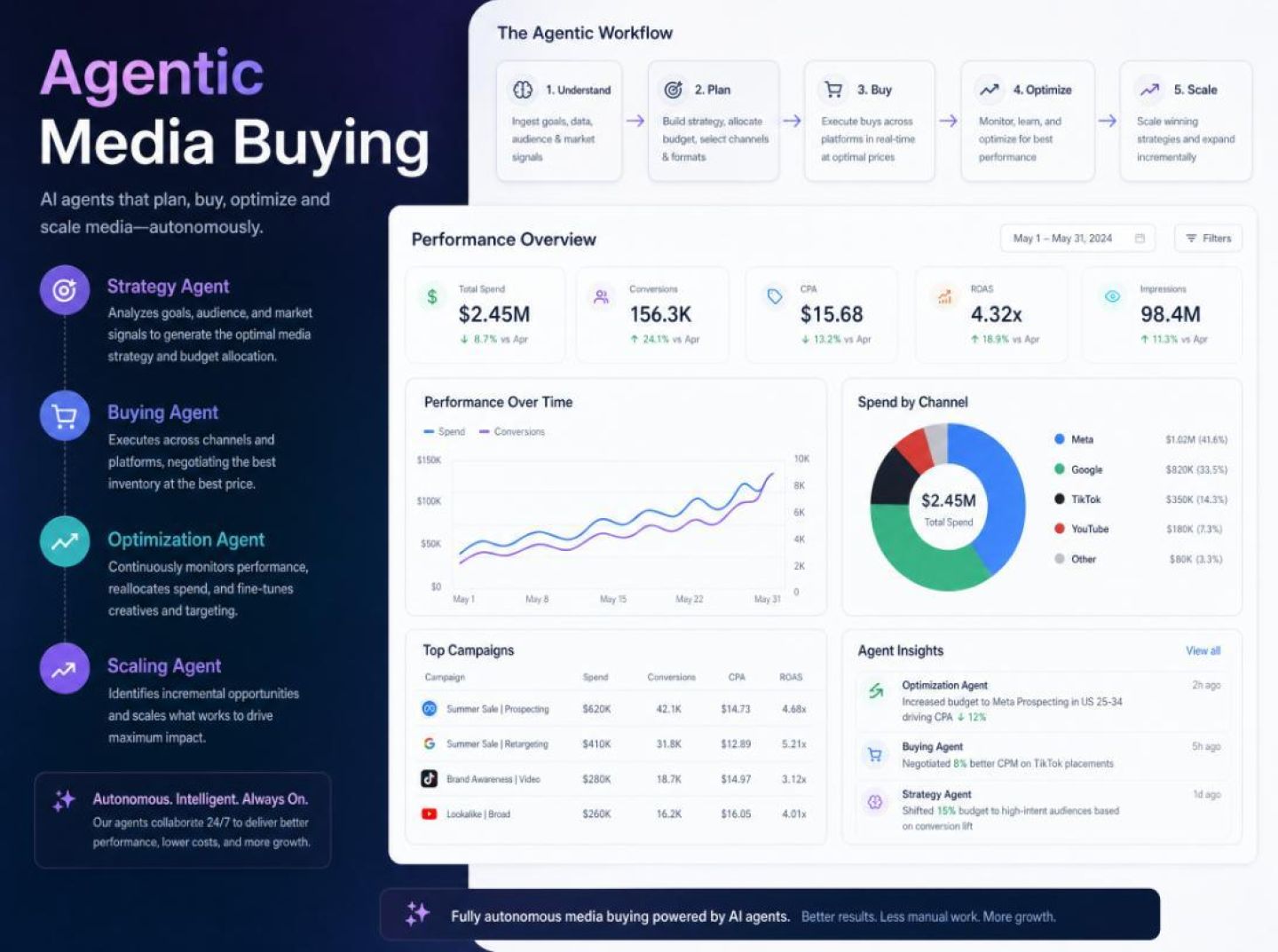
Agentic media buying isn’t a future scenario; it’s the system your budgets are already competing against. On most major platforms, self-optimizing agents now decide which impressions to buy, at what price, and with which creative — not weekly, but continuously, as auctions clear in milliseconds. As one analysis of “AI-native advertising” put it, these agents don’t just apply rules like “raise bids if CPA drops”; they run ongoing experiments, reallocating budget, shifting audiences, and swapping creative combinations on their own, creating what MarTech describes as a genuinely autonomous optimization loop.
This is the new reality: you are flying without a safety net, often without even realizing you left the ground.
In theory, this is a marketer’s dream. AI-enabled performance platforms are already reallocating spend across channels, predicting the results of competing strategies, and automatically tuning bids to “reduce ad waste, improve ROI, and strengthen market responsiveness,” as one overview of programmatic’s $271 billion footprint in the US explains in MarTech’s coverage of AI-driven spending. In practice, though, the same autonomy that makes these agents powerful also makes them opaque. The machine is no longer simply executing your plan; it is quietly rewriting it in real time. And if you can’t see how or why, your media strategy becomes a black box with a credit card attached.
The risks are no longer hypothetical. When a social giant aggressively pushed new AI creative tools, advertisers quickly discovered outputs that broke basic brand logic: a two-handlebar bike for an outdoor brand, a man front-and-center in a campaign for a women’s networking group, and even subtle alterations to actual products. When questioned, the platform pointed to terms of service clarifying that “AI can make mistakes and it is the advertiser’s responsibility to review the AI outputs,” a stance that AdExchanger summarized as, essentially, “sounds like a you problem.” The lesson is clear: platforms will gladly automate the work, but they will not underwrite the consequences.
At the same time, performance teams are reluctant to walk away. As one consultant bluntly put it, “Meta’s still the best platform. It has the best data,” as reported by AdExchanger. That data advantage flows straight into the agents doing your buying — and your competitors’ buying — whether or not you’re comfortable with the level of control you’ve ceded.
Inside this environment, human media buyers aren’t redundant; they’re repositioned. As AI systems become capable of executing the full investment cycle from planning to optimization, practitioners are expected to shift into “decision makers and managers,” validating agent decisions and interrogating platform recommendations rather than hand-tuning every bid. A sudden performance spike might signal a brilliant optimization — or a measurement glitch. Without the contextual judgment that activation leaders quoted in AdExchanger argue humans uniquely provide, you’re trusting that the agent can tell the difference. It can’t.
The same pattern is playing out across the broader AdTech stack. AI-powered platforms now identify high-propensity segments, flag audiences that are losing interest, and dynamically reallocate spend toward better opportunities, using audience intelligence and predictive optimization in ways the IAB has highlighted and that illumin’s analysis frames as central to modern advertising. Programmatic platforms are beginning to talk directly to each other, automating more of the buying workflow and squeezing out manual intervention. What looks like efficiency at the surface is, underneath, a dense mesh of agents negotiating, experimenting, and optimizing at a scale no human team can realistically audit in detail.
For brands, that creates a structural asymmetry. The platforms’ agents can see everything happening in their own auctions. Your internal team, working from platform dashboards and delayed reports, sees only the outcomes. You don’t know which tests the agents ran and killed, which segments they quietly abandoned, or which placements are carrying disproportionate risk. Worse, you also lack line of sight into how competitors’ agents are behaving — which auctions they’re suddenly winning cheaply, where their CPMs are dropping, or when they pivot into a new geography or placement type.
In other words, the media marketplace is now a battlefield of algorithms, but most marketers are fighting blind. Unless you introduce your own layer of competitive ad intelligence — an external system that watches the same auctions your agents are participating in — you’re effectively trusting a black box to navigate against other black boxes. In a world of autonomous buyers, the absence of that visibility isn’t just a reporting gap; it’s a strategic risk.
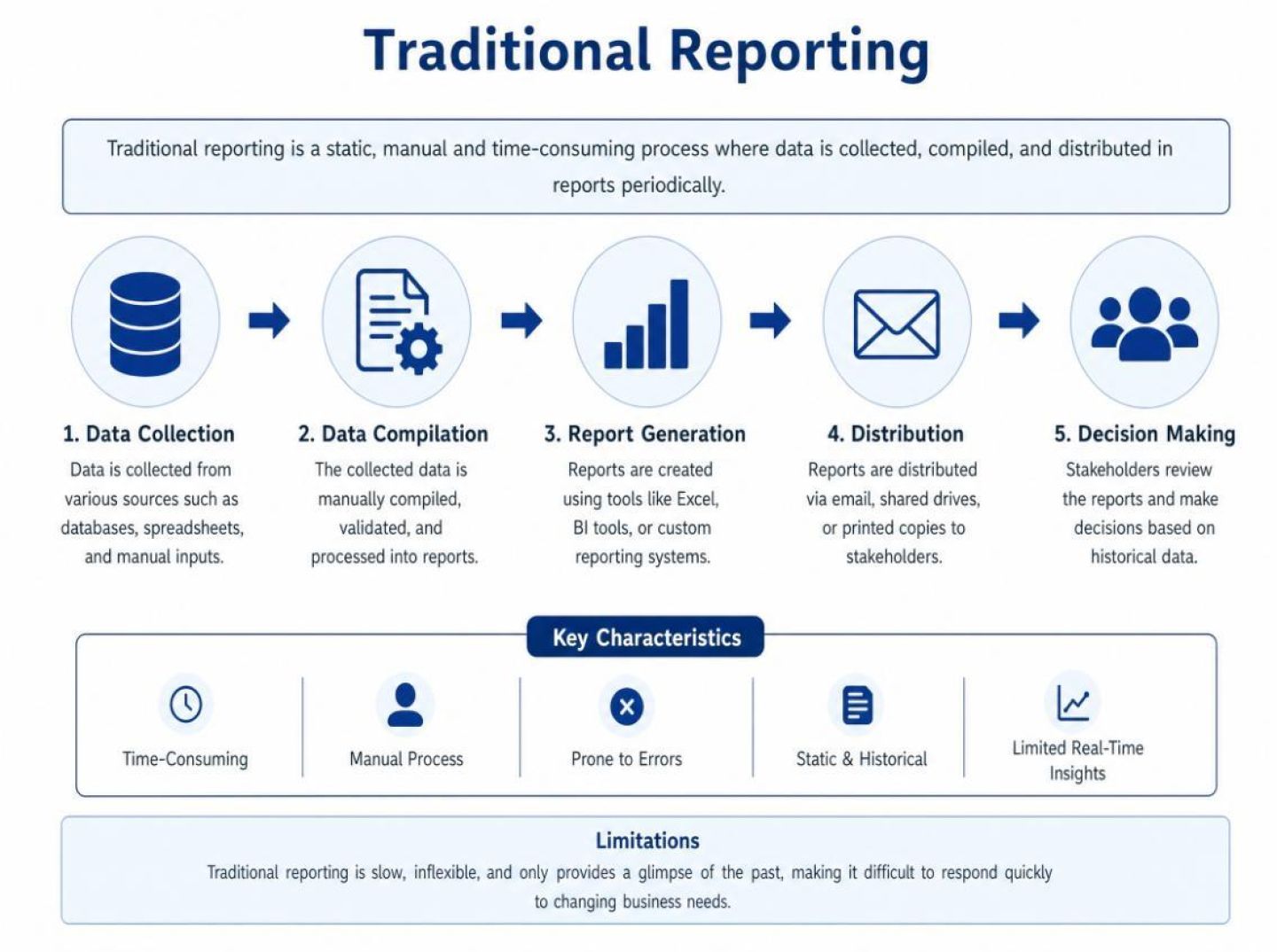
Traditional platform dashboards were built for a world where humans made the important decisions and software just executed them. In an agentic environment, that relationship is reversed — the machine is the strategist, and the reports are a thin, backward-looking summary of its behavior. That’s why so many performance teams find themselves staring at clean charts with ugly outcomes and no real explanation of what their “black box” actually did.
Most standard reports answer four questions: how much you spent, where it ran, who saw it, and which surface-level metrics moved. Impressions, clicks, CPM, CTR, ROAS — all of these describe results, not reasoning. They tell you that the system shifted budget into Reels, or that your average CPM dropped 12%, but not why the algorithm believed that shift would improve marginal conversions, which signals it used to justify the move, or what trade-offs it made against other options in the auction.
That gap has widened as media buying itself has become autonomous. Today’s systems don’t wait for a human to change a bid rule or reallocate a budget; they run continuous, self-directed experiments at a speed and volume no trader could match. As one analysis of “AI-native advertising” points out, modern agents aren’t just executing static triggers like “raise bid if CPA improves” — they’re constantly reallocating budget, refining targeting and evolving creative in real time, based on streams of behavioral and contextual data that never appear in your exported CSVs, as MarTech describes. When the logic lives inside models and multi-armed bandit tests, a daily performance dashboard is like reading the scoreboard without ever seeing the playbook.
The same pattern shows up across channels. In streaming, buyers say the biggest value of AI is in planning and optimization, yet only a small minority are comfortable with fully autonomous management, because they lack a clear definition of success and a line of sight into how decisions are made, according to research on streaming TV stakeholders. Traditional reporting frameworks — weekly pacing reviews, last-touch attribution, channel-level ROAS — were not designed to answer questions like: Why did the system suddenly de-prioritize my brand campaign? Which audiences did it quietly abandon? What underlying assumption changed in the model?
Meanwhile, the most important signals are happening where your standard reports are blind: inside the auctions themselves. The real story of AI-driven performance lives in subtle shifts in competitor allocation, efficiency and placement strategy — which rarely show up in public disclosures or top-line benchmarks. When a rival’s CPM falls consistently, when another brand concentrates spend in a specific geography, or when a new entrant suddenly gains share of voice in a high-value placement, these are early indications of a different algorithmic strategy at work, as one analysis of social auctions and “hidden” competitive signals makes clear on AdExchanger. None of that is visible in your own platform dashboard, which only reflects how your agent behaved, not how it was outmaneuvered.
Compounding the problem, creative and targeting have become just as dynamic as bids. Generative systems can spin up hundreds of creative variants and cycle through them at speed, with the algorithm continuously evolving messaging based on micro-engagement patterns, a shift that MarTech notes has raised the premium on strategic clarity. Yet most reports still show you “top 10 ads by spend” — a static snapshot that obscures the underlying test graph: which messages were suppressed, which resonated only with a specific intent profile, and how those learnings influenced subsequent bidding behavior.
In short, traditional reporting is descriptive, not diagnostic. It can confirm that your AI made a decision and quantify the outcome, but it cannot reconstruct the reasoning, compare it against competitor behavior, or surface the hidden assumptions that may now be driving your spend. As agentic systems take over more of the decision-making, the distance between “what happened” and “why it happened” keeps growing — and that is precisely where competitive ad intelligence has to step in, supplying the missing context traditional reports were never built to provide.
Competitive ad intelligence is the practical way to put your AI media buying on a “performance leash” without slowing it down. Think of it as a daily audit layer that sits outside the walled gardens and looks at how your agents behave in the only place that really matters: the auction.
Platform reports show you what your campaigns did. Competitive intelligence shows you what the market did in the same moment — and whether your AI is keeping up or quietly drifting off course.
Modern intelligence platforms don’t just scrape creatives and count impressions; they reconstruct strategy from the exhaust of thousands of auctions. When a rival’s CPM suddenly drops, when another brand shifts heavily into Reels or CTV, or when a third starts concentrating spend in a single region, those moves show up first in the auction data. As one analysis of social auctions put it, the most valuable competitive signals live in patterns of media allocation, placement strategy and efficiency trends that never make it into earnings calls or platform dashboards, but do appear in near real time in the bids themselves, where tools like Polaris AI can see them.
That external vantage point is what makes competitive intelligence such a powerful audit layer for autonomous agents. Instead of asking, “Why did Meta’s Advantage+ do this?” — a question the platform can’t or won’t answer — you can ask, “Is my AI behaving like the smartest buyers in my category, or like the average?” If your blended CPM is rising while a key competitor’s falls, or if your share of voice stagnates in a region where their presence is exploding, you’ve just surfaced an empirical signal that something in your agent’s policy is misaligned.
As AI takes over more of the “where to spend” decisions — reallocating budget, tuning bids, remixing creative and shifting channels mid-flight — the room for quiet compounding error grows. Martech commentators have noted that the next wave of advantage comes less from producing assets faster and more from deciding where the next dollar should go, with algorithms continuously rebalancing budgets across channels and audiences while campaigns are live, not at the next quarterly planning meeting, as described in this discussion of AI-driven budget allocation. If your agents are making thousands of high-velocity micro-decisions and your only feedback loop is a weekly platform export, you’re effectively flying blind.
A competitive intelligence layer changes the rhythm of oversight. Instead of post-mortem analysis once a quarter, you get daily — even hourly — anomaly detection:
Crucially, this audit layer remains independent of the platforms’ own optimization logic. In a world where, as one observer of the “agentic advertising economy” notes, human buyers are being pushed into the role of “decision makers and managers” who must check the agent’s work rather than set every bid themselves, the need for external context is acute. When a sudden spike in performance might indicate either a brilliant optimization or a measurement glitch, internal dashboards alone can’t tell you which; comparing your curves to the broader auction pattern can, as suggested by practitioners wrestling with opaque platform.
Over time, this daily audit loop becomes a discipline: your agents optimize within platforms, while your competitive intelligence system evaluates those optimizations against the market. The goal is not to copycat every move your rivals make, but to ensure your AI is learning at least as fast as they are — and to catch the moments when a black-box system’s invisible assumptions start to diverge from the reality unfolding in the auction.
If competitive ad intelligence is your daily audit layer, the “AI vs. Market” scorecard is how you turn that audit into decisions. The goal isn’t to recreate platform reporting. It’s to build a side-by-side comparison that answers one question: Is my agent behaving intelligently relative to the rest of the auction — or just confidently?
Below are the core dimensions to track, and how to translate them into a practical scorecard.
1. Share of voice vs. share of outcome
Start with a simple sanity check: How much presence does your brand have in the auction, and what do you get for it?
Track:
If your AI is bidding aggressively, you’ll see spikes in impression share. If that doesn’t translate into a commensurate share of outcomes, you’re likely paying a premium for low-intent inventory while smarter rivals capture the moments that matter. This is especially important as targeting shifts toward real‑time intent; as MarTech explains, the winning brands are those that align messaging and spend with decision stages and signals, not just audience size.
On your scorecard, flag:
2. Price pressure vs. the market
Autonomous systems excel at bid manipulation. You need to know whether that activity is creating efficiency or inflation.
Track:
According to illumin’s overview of AI in AdTech, modern bidding models are designed to predict the lowest bid required to win an impression while maintaining performance. Your scorecard should test whether that theory holds in practice. If your CPMs are consistently above market while win rates and outcomes are flat, your agent isn’t “smart bidding” — it’s panic bidding.
3. Creative velocity and distinctiveness
AI-native advertising rewards brands that can push and prune creative variations quickly. But velocity without direction just creates more noise in the feed.
Track:
As MarTech notes, speed becomes a competitive advantage only when it’s anchored in sharp upstream strategy. Your scorecard should identify whether your AI is merely copying what appears to work for the category or actually exploring territory your rivals haven’t saturated.
Red‑flag patterns include:
4. Placement and environment quality
Agentic systems find cheap reach. They don’t inherently understand brand context or subtle quality cues.
Track:
The recent backlash against obviously flawed AI ads — like Meta serving distorted or inappropriate imagery and then reminding brands it’s their responsibility to catch mistakes, as AdExchanger reported — is a reminder that “cheap” can quickly become “costly.” Use competitive data to see whether other sophisticated buyers are retreating from specific placements, formats, or AI creative tools that your agent is still leaning into.
5. Volatility and anomaly alignment
Finally, your scorecard should help you distinguish genuine performance gains from measurement noise — a problem both platforms and agencies are increasingly vocal about. When you see a sudden spike or crash in performance, compare it with:
Practitioners quoted by AdExchanger warn that an agent can’t recognize these anomalies without human context. Your scorecard is that context. If your numbers move and the market doesn’t, it’s likely an internal issue (tracking, tagging, creative error). If everyone moves, your job is to decide whether your agent is overreacting or underreacting to the new reality.
Put together, these dimensions turn “trust the AI” into “trust, but verify.” You’re not grading your media agent on whether it hit a platform‑defined target; you’re grading it on whether it behaves like the smartest buyer in the room — the one who sees the same market you do, but responds faster and with more precision.
Turning competitive signals into better AI isn’t about drowning your team in more dashboards. It’s about wiring those signals directly into how your agents test, allocate, and learn — so every refresh of the auction becomes a feedback loop, not a black box.
Think of this as a four-part playbook.
1. Use competitor moves to set your AI’s guardrails
Most autonomous systems are brilliant at optimizing within the box you give them: ROAS targets, CPA ceilings, budget caps. Where they fail is recognizing when the box itself has become misaligned with reality.
Competitive intelligence gives you a way to tune the box in real time:
In practice, this means revisiting bidding rules, inventory whitelists/blacklists, and pacing settings in response to the auction, not just your in-platform CPA trendline.
2. Turn creative surveillance into structured experimentation
Generative and dynamic systems already allow you to spin up hundreds of variants. The question is not “Can my AI test more?” but “Is it testing the right things, fast enough, relative to the market?”
Competitive intelligence should drive the hypotheses, not just the reporting:
The loop becomes: market shift → competitive creative pattern → new experiment brief → AI generates and tests variants → you either follow the market or deliberately zag, based on results and brand strategy.
3. Let market benchmarks steer budget decisions, not just platform scores
As AI takes on more of the “where does the next dollar go?” work, the risk is that it optimizes only to its own closed-loop metrics. You need an external standard of “good.”
Competitive auction data gives you that standard:
Over time, your “AI vs. Market” scorecard should determine when to let the agent keep compounding and when to intervene with a structural change in channel mix or bid strategy.
4. Calibrate personalization and intent against market reality
Autonomous systems are very good at bottom-funnel harvesting, and they’ll happily over-invest there if left alone. Competitive intelligence helps you see when the whole category is stuck in that same trap.
If auction data shows everyone flooding retargeting and lower-funnel placements while upper-funnel inventory stays cheap, your agents will likely follow suit — until you explicitly rebalance. Observers have warned that black-box formats built for hyper-personalized, down-funnel performance are being mistaken for holistic marketing strategies, starving long-term growth.
Instead, use:
When you close the loop between what your AI sees inside the platform and what your intelligence layer sees across the auction, you move from “black box optimization” to a living system: market moves, your agents adapt, and your guardrails, experiments, and budgets all evolve in sync with the competitive reality they’re operating in.
Receive top converting landing pages in your inbox every week from us.
Most Read
Clicks, coupons, and last-touch conversions can create the illusion of performance while hiding whether customers actually intend to buy. This guide shows how to build a real-intent data layer using behavioral signals, competitive ad intelligence, revenue-linked scoring, and continuous validation to improve performance optimization.
Rachel Thompson
7 minSep 11, 2026
Recently Updated
AI-driven media buying is becoming increasingly autonomous, making it harder for marketers to understand why platforms make certain bidding, placement, and creative decisions. This guide shows how competitive ad intelligence can act as an external audit layer, helping teams benchmark AI decisions, detect market shifts, and build smarter guardrails for automated media buying.
Elena Morales
7 minSep 11, 2026
Must Read
Brand and performance marketing don’t have to compete for budget—they can work together to create demand, capture demand, and build long-term enterprise value. Learn how to measure brand lift, map campaigns using the Hybrid Performance-Brand Matrix, and build campaigns that drive revenue today while strengthening future growth.
Liam O’Connor
7 minSep 10, 2026