12 minSeptember 26, 2026

Our tools monitor millions of native, push, pop, and TikTok advertising campaigns.
Get StartedScan the latest OOH classifieds and the industry’s future jumps off the page: Sales Manager – Outdoor Advertising in Southern Illinois. National Account Executive in Los Angeles. Local Media Sales Executive in Denver. Real Estate VP. Director of Operations. Sign Installer. LED Video Screen Service Tech. The market is hiring builders, sellers, and fixers at a furious clip.
But read those listings a little more closely and another story appears—one that’s far more consequential than any single role description.
Nearly every posting promises “strategic,” “results‑driven” campaigns, relationships with agencies, and revenue growth. Yet almost none of them explicitly ask for the one capability that will decide who actually wins in the next decade of out‑of‑home: the ability to run serious, systematic competitive intelligence across OOH and the digital “spy” channels where modern media decisions are really made.
That gap would be easy to dismiss if the rest of the industry weren’t quietly moving in the opposite direction.
When Trillboards announced its move to hellOOH, the language was telling. The partnership wasn’t framed as yet another reporting upgrade; it was positioned as a new kind of “market understanding” layer—one that “continuously ingest[s] and organiz[es] real‑world OOH signals” into a living model of demand. Under the hood, that means verified campaign graphs, mapped decision‑makers, and predictive engines that anticipate where spend will move before it shows up in anyone’s month‑end report.
In other words: the next era of OOH will not be won by the companies with the most inventory. It will be won by the companies with the fastest intelligence loops.
Yet if you go back to those employment listings, the must‑have skills are still framed like it’s 2012: build relationships, close deals, manage a territory, oversee installs, keep operations running. All necessary. None sufficient.
What’s missing is any explicit expectation that a Sales Manager in Southern Illinois or a National AE in Los Angeles can answer questions like:
These are not reporting questions. As the hellOOH team frames it, they are “learning” questions: What is happening, why, and what is likely to happen next?
Answering them requires that someone inside the organization—whether they carry a sales quota, run operations, or manage real estate—can fuse what’s visible on the street with what’s discoverable in the digital exhaust: programmatic bidstreams, social creative libraries, CTV placement data, and the emerging crop of OOH‑specific intelligence platforms.
The irony is that the need for this blended skill set is already baked into the job outcomes those classifieds promise. When a local operator says their mission is to “connect businesses with their audiences through strategic, creative, and results‑driven campaigns,” as one Sales Manager posting puts it, they’re implicitly acknowledging that whoever understands demand earliest will control the conversation with advertisers and agencies.
But you can’t be “strategic” in an opaque, cross‑channel market if your only tools are a CRM, a rate card, and last quarter’s proof‑of‑performance deck.
The job market may not say it out loud yet, but the signal is clear in moves like Trillboards’ embrace of predictive demand intelligence: the real competitive advantage in OOH is shifting from who can sell the most space to who can see the most market—fastest.
Classifieds tell us who the industry thinks it needs today. The real question is whether the next wave of hires will be trained—and empowered—to operate as competitive intelligence agents across OOH and digital, or whether that capability will be outsourced to the few players who recognized, early, that “sales” without spy‑grade market visibility is just guessing with better manners.
If you only glance at OOH classifieds, they look like any other job board: a rolling list of “Ad Sales Account Executives,” “Sales Representatives,” and “Business Development” roles. But read them as signals rather than openings, and they become a surprisingly precise barometer of where out‑of‑home is heading—and what competitive ad intelligence will have to keep up with.
Start with the overwhelming center of gravity: revenue. In a recent round‑up of “10 OOH Employment Opportunities,” the majority of roles are unabashedly sales‑driven—Business Development in New York, Ad Sales in Miami, National Account Executive in Los Angeles, Local Media Sales Executive in Denver, and multiple dedicated billboard sales positions across markets, all clustered in one OOH Today listing. The stack is so tilted toward revenue roles that operations, creative, and technical listings feel like supporting cast.
That bias tells you two things that rarely make it into glossy industry decks. First, OOH companies still see human‑driven selling—not self‑serve platforms—as the primary growth engine. Second, they assume competitive advantage will be won in the trenches of local and regional deal‑making: who can knock on more agency doors, who can chase more RFPs, who can package inventory more creatively. Competitive intelligence in this environment isn’t just about mapping screens and impressions; it’s about understanding the people and pockets where deals are being actively pursued.
The titles and territories also quietly redraw the competitive map. When a digital‑first operator like SILVERCAST posts for a “National Account Executive” in Los Angeles and a “Graphic Designer/Brand Marketing Specialist – OOH” on the same classified list, that’s not just headcount—it’s a signal that the West Coast isn’t merely a local billboard market; it’s a national brand battlefield that demands premium creative and enterprise‑level relationships. When a company like Social Indoor recruits a “Local Media Sales Executive” in Denver in that same round‑up, it telegraphs that restroom, bar, and venue media are maturing into structured, territory‑based sales operations rather than opportunistic add‑ons.
Look closer at how companies describe themselves and you see the industry’s real product quietly expanding. Liquid Outdoor, advertising for a New York–based Business Development Representative, doesn’t just talk about boards and signs; it highlights a national portfolio of “digital interactive kiosks,” “large format digital spectacular signage,” and “traditional billboards, digital billboards and wallscapes,” along with “unique sponsorship and innovative digital and experiential advertising opportunities” integrated into on‑site activations across lifestyle centers, all in a single job description. That language marks a quiet but decisive shift: OOH firms are repositioning themselves as multi‑format experience platforms, not inventory holders.
Yet what’s missing from these classifieds is just as telling as what’s highlighted. You rarely see explicit requirements around programmatic trading, data onboarding, or cross‑channel attribution in the sales listings, even from players pushing digital and experiential formats. The roles emphasize “new business development,” “proactive outreach,” and “building lasting client relationships,” but stay largely silent on the data and martech stack underneath. That gap suggests two competitive realities: many buyers still purchase OOH in traditional ways, and much of the digital sophistication lives behind the scenes in operations, not at the point of sale.
The non‑sales roles—Director of Operations, Sign Installer, LED Video Screen Service & Installation Tech, and specialized OOH graphic design on that same OOH Today sheet—hint at the infrastructure race powering those glossy sales promises. Operators are clearly investing in the unglamorous backbone of digital signage: installation crews, service technicians, and in‑house creative. For anyone building competitive ad intelligence, that’s the quiet signal that matters: where screens are actually being deployed, which markets justify dedicated technical staff, and which companies are internalizing design versus outsourcing it.
Even the “Free Agents (positions wanted)” section, offered at no cost “subject to available space” in multiple classified posts, is a soft indicator of talent supply and movement. A surplus of experienced sellers or operators signaling themselves to the market can foreshadow consolidation waves, shrinking local independents, or shifting commission economics before those changes surface in M&A headlines.
Read this way, OOH classifieds stop being administrative noise. They become a live feed of where capital, talent, and strategic attention are actually going—often months or years before those shifts are articulated on stage or in a trend report. For anyone serious about competitive ad intelligence in OOH, that quiet signal is where the future starts to come into focus.
Classifieds make it look like out‑of‑home is competing on who can hire the most hunters. Sales Representative in Dallas. National Account Executive in Los Angeles. Local Media Sales Executive in Denver. Business Development Representative in New York. The roles stack up like inventory: more people, more markets, more calls. But beneath the familiar job titles, there’s a quieter race underway—one that has very little to do with feet on the street and everything to do with who closes the intelligence loop fastest.
Look closely at the language in the New York–based Business Development Representative role at Liquid Outdoor Media and you see the old playbook trying to scale: “proactive outreach,” “larger regional advertisers and ad agencies,” “fast‑paced, competitive team‑oriented environment,” all pointing to volume‑driven selling across a growing pool of digital kiosks, spectaculars, and lifestyle‑center inventory as described in the original listing on OOH Today. The assumption is clear: if you put enough capable sellers in enough high‑value DMAs, you’ll win.
But the newer signals in the industry tell a different story. When Trillboards announced it was “going to hellOOH,” the subtext was not about adding more screens. It was about adding a new “intelligence layer” to the business. As the announcement on OOH Today framed it, “the current constraint is no longer infrastructure execution but intelligence asymmetry.” In other words, the bottleneck isn’t how fast you can deploy hardware; it’s how well you can sense, interpret, and act on demand compared with your competitors.
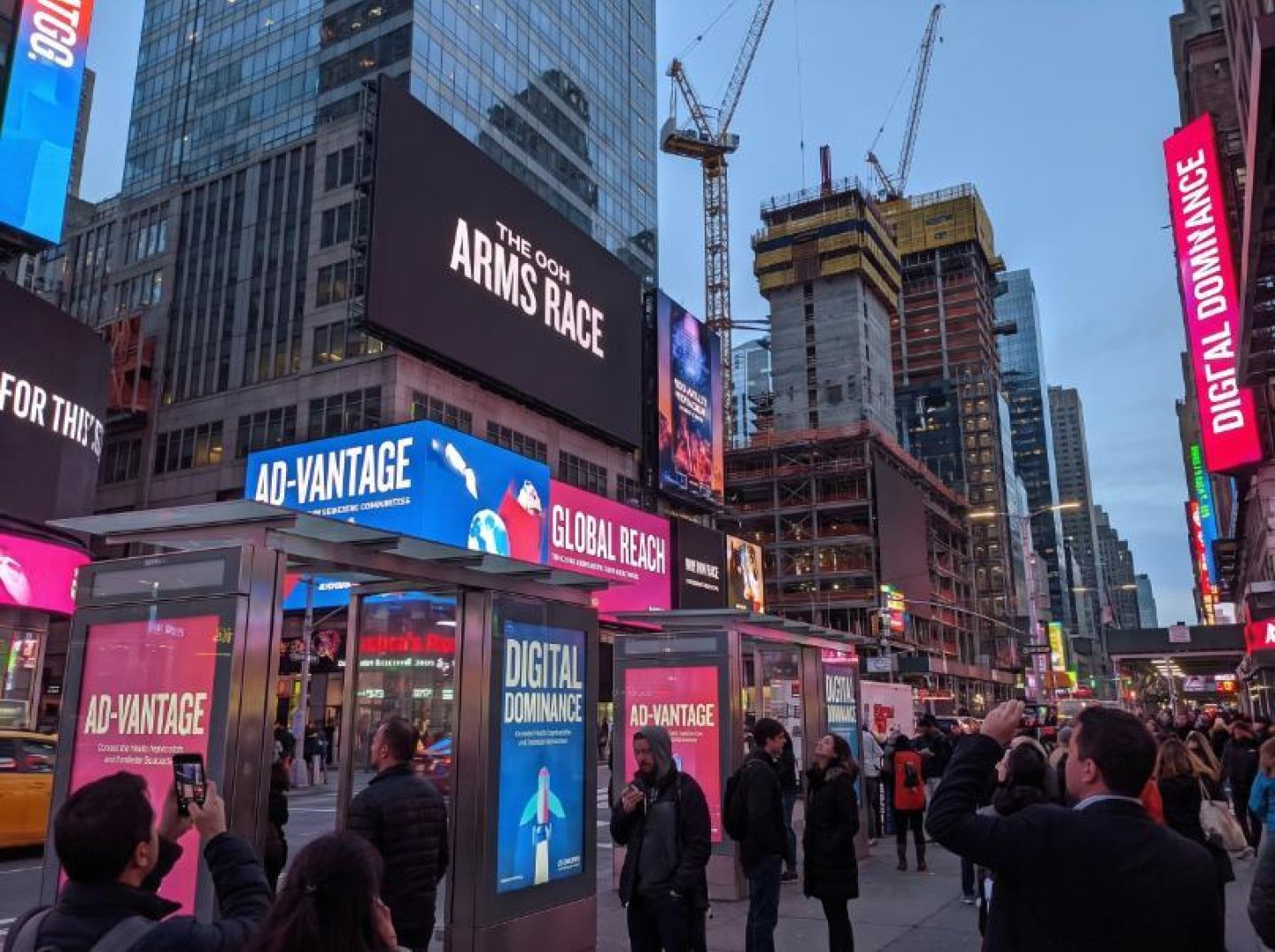
That’s the new OOH arms race: not inventory versus inventory, but intelligence loop versus intelligence loop.
In most organizations, that loop is still broken into silos. Market behavior sits in one platform, campaign history in another, agency relationships in someone’s inbox, and competitive moves in a spreadsheet updated when someone “has time.” The result is latency. Demand shifts, but sales teams feel it only weeks later in their pipeline. New local competitors pop up, but strategy hears about them only after a key account defects. Classifieds asking for “motivated, high‑energy self‑starters” are trying to compensate for what is fundamentally a systems problem: humans are being asked to bridge gaps that should never exist.
Intelligence systems like hellOOH are explicitly designed to close that gap by structuring market behavior, verifying campaign history, and mapping decision‑maker relationships into what the company calls “predictive demand signals,” as laid out in its own description of the platform. Crucially, these aren’t just dashboards for reporting; they are feedback machines. Every RFP, every buy, every under‑performing face, every sudden spike in a category becomes fuel for a model that updates how the business sees demand—often in real time.
In that context, a Sales Manager in Southern Illinois and a National Account Executive in Los Angeles are no longer just quota‑carrying roles. They are the human endpoints of an intelligence loop. Their calls, wins, and losses should be continuously informing how the network prices inventory, which segments it prioritizes, and where it deploys new screens. When those loops are tight, a network doesn’t merely react to the market; it anticipates it. When they are loose, even a large footprint becomes a blunt instrument.
This is exactly why Trillboards, described as a “software‑first digital signage network” that bridges SSPs and DSPs to help local businesses monetize their physical space, is investing upstream in machine‑modeled understanding of demand rather than just expanding its reach, as detailed in the Trillboards announcement. If you can see which categories, buyers, and geographies are about to heat up before everyone else, you can price more intelligently, prospect more selectively, and position more persuasively. You can stop treating sales as a volume game and start treating it as an information game.
For competitive ad intelligence, this shift is profound. In a world of fragmented, human‑interpreted market understanding, the advantage goes to whoever can manually piece together the most anecdotes and signals. In a world of machine‑modeled demand, the advantage compounds: whoever runs the tightest intelligence loops learns faster, and whoever learns faster reshapes the market.
The classifieds haven’t caught up to this reality yet. They still read like a contest to see who can hire the most closers in the most cities. But the real contest—and the future of competitive ad intelligence in OOH—is being decided by the networks that treat every screen, seller, and campaign as a node in a living feedback system, and then build the loops to match.
Scan the OOH classifieds on any given week and the pattern feels almost numbing: “Ad Sales Account Executive” in Miami, “Sales Representative” in Dallas, “National Account Executive” in Los Angeles, “Local Media Sales Executive” in Denver. On the surface, it reads like a volume game. Hire more hunters, make more calls, close more boards. But buried in the language of these roles is a much sharper message: sales and management in out‑of‑home are being rebuilt around strategic intelligence, not just persistence.
Look at how Liquid Outdoor Media describes its Business Development Representative in Westchester/NYC. On paper, it’s a classic new‑business role, “focused heavily on new business development, with proactive outreach to larger regional advertisers and ad agencies across key markets.” But for that outreach to work, the rep has to know far more than who buys media in New York. They need to understand where those advertisers are already spending, which competitors own the key sightlines in each neighborhood, and how Liquid’s network of “digital interactive kiosks,” “large format digital spectacular signage,” and “traditional billboards” actually fills gaps in a brand’s current plan.
In other words, the job isn’t to knock on more doors; it’s to show up already knowing what’s on the other side of the door.
The same subtext runs through the broader sales listings that stack up in OOH Today’s recurring “10 OOH Employment Opportunities.” A Miami Ad Sales Account Executive for EyeCatch Media is competing not only with other OOH vendors, but with a national mix of programmatic, social, and CTV. A Sales Representative for Daktronics in Dallas isn’t just selling LED faces; they’re selling a flexible, data‑driven canvas against a backdrop of rival digital networks. A Local Media Sales Executive in Denver for Social Indoor has to position rest‑room and venue screens against local billboards, place‑based digital, and even mobile geo‑fenced campaigns.
None of that is possible if the sales conversation starts with “Tell me about your goals.” These roles implicitly assume that the seller walks in with a working map of the buyer’s current and past campaigns, the formats they favor, and the holes their existing partners can’t fill. The “high‑energy self‑starter” language is boilerplate; the real qualifier is whether that person can synthesize competitive landscape, audience behavior, and category trends into a story that makes switching—or adding—a vendor look like the obvious move.
For sales leaders, this is the hidden requirement: hire people who can out‑smart the market, not just out‑knock the competition.
That means three practical shifts in how success is defined:
2. From “rate card” to “risk mitigation.” When Liquid Outdoor talks about “integrating brands into on‑site activations across [its] nationwide lifestyle center network,” it’s really promising marketers a hedge: less reliance on a single format, more diversity in touchpoints. A smart seller can articulate how that spread of assets reduces campaign risk compared with a competitor’s narrower footprint. That requires competitive ad intelligence at the package level, not just the panel level.
3. From hustle to hypothesis. The most valuable conversations increasingly start with a hypothesis: “We’ve seen X competitors of yours leaning into digital spectaculars around entertainment districts; you’re absent there, but over‑weighted on static highway units. Here’s what that’s costing you.” To make that claim credibly, sellers and managers need tools that continuously capture where ads are running, how long they’re live, and how formats are shifting over time. Call volume can’t replace disciplined, data‑driven hypotheses.
Management roles feel this pressure even more acutely. When a Director of Operations role appears for a company like Encompass Media Group alongside the sales listings, it signals that leadership isn’t just chasing revenue—they’re orchestrating networks, creative, and installations in a market where every mis‑timed posting or dark screen means losing share to the operator across the street. The operational leaders who win are those who give their sales teams a live view into what competitors are doing—where they’re expanding, which verticals they’re winning, and which parts of town they’re quietly abandoning.
The classifieds don’t say any of that outright. They don’t have to. The sheer density of sales roles across markets, combined with the increasingly sophisticated description of media offerings—from digital kiosks to experiential activations—tells you that “more calls” is no longer a strategy. The future of OOH sales and management belongs to the teams that can systematically out‑think their rivals, using competitive ad intelligence to make every outreach feel less like a cold knock and more like a well‑timed move in a larger game.
If sales and management roles are the obvious tip of the competitive‑intelligence spear, the rest of the OOH org chart is the shaft — quieter, less celebrated, but just as critical to how the industry sees itself and its rivals. Scan the “Real Estate, Operations, Creative and Administrative” section of the OOH classifieds and you’re looking at a live diagram of how information moves through an OOH company, and how it could be harnessed to out‑think competitors.
Take the frontline: installation and service. A “Sign Installer” at Formetco and an “LED Video Screen Service & Installation Tech” listed alongside them in the same OOH employment roundup aren’t just wrench‑turners. They are the first to see which advertisers are actually live on the street, which campaigns are getting premium placements, and which “sold out” stories from sales are reality versus spin. When they’re dispatched to swap creative or service a malfunctioning LED, they’re moving through competitors’ territories, observing rival inventory density, brightness, viewing angles, and the real‑world condition of those “premium” assets. In a disciplined organization, that observational layer gets structured: installers log what brands are dominating certain corridors, where new screens have quietly appeared, which locations seem underutilized. That’s competitive mapping, refreshed daily, disguised as maintenance.
Operations leadership sits one level up, turning those field observations into network‑wide decisions. A “Director of Operations” at a shop like Encompass Media Group, advertised in the same OOH classifieds slate, isn’t only managing trucks and timelines. They are, by definition, monitoring capacity, turnaround times, and bottlenecks versus what the market is demanding. When ops keeps hearing about last‑minute political buys or rush experiential activations, they’re hearing the pulse of categories competitors are struggling to service. If a rival keeps missing install dates or over‑promising on digital availability, you’ll see it indirectly: more reschedules, more emergency vendor calls, more “can you help us rescue this?” requests. Operations becomes an early‑warning system for where competitors are thinly staffed, over‑extended, or skating close to regulatory lines.
Creative and marketing roles close the loop between what’s happening on the street and what’s happening on the screen. A “Graphic Designer/Brand Marketing Specialist – OOH” at a digital‑heavy operator like SILVERCAST, listed among the creative‑side roles, spends their days inside client decks, spec sheets, and approvals. They see which verticals are aggressively testing motion, dynamic content, dayparting, or contextual triggers — all clues to which brands are investing in higher‑order OOH tactics versus simple reach. They also see what creative clears legal quickly and what gets bogged down. That friction is intelligence: if financial advertisers are suddenly hyper‑sensitive about rate disclosures or health‑care brands are over‑lawyering claims, it may reflect wider regulatory pressure that will affect every OOH seller in that category.
Even the way these creative roles are written betrays a competitive posture. When a company emphasizes “brand marketing specialist” and not just “designer,” they’re signaling that they want someone who can translate street‑level insight into positioning: how to present their inventory as more premium, more flexible, or more measurable than the guy across town. Internally, those people become sense‑makers. They know which formats clients are pushing for because they’ve seen the reference comps — competitors’ spectaculars, transit dominations, or digital kiosks that junior planners screen‑shot and drop into briefs. That silent mood‑board of competitor work is a powerful, if informal, intelligence feed.
What the classifieds don’t say explicitly — but telegraph in aggregate — is that every role is being hired into a data stream. The Business Development Representative in New York at Liquid Outdoor Media is expected to prospect across “key markets,” as the job description makes clear, but the same ecosystem is also standing up installers to observe those markets, operations leaders to normalize what they’re seeing, and creatives to interpret it back to agencies and brands. Competitive ad intelligence in OOH isn’t a single software platform or a single department; it’s the sum of hundreds of small, role‑specific observations that, if captured and shared, reveal who is winning, where, and why.
The next wave of advantage will go to the companies that treat every employee — from the LED tech to the designer building the mock — as a node in that network. Not as a passive cog, but as an active sensor, trained to notice, record, and relay what they see in the field and on the screen. The classifieds already show the structure; the competitive edge will come from what those people are empowered to report back.
Receive top converting landing pages in your inbox every week from us.
In-Depth
Learn why “great ads” are no longer enough in an AI-first advertising economy, where creative is increasingly used as a targeting signal and performance input. This guide explains how to build data-obsessed creative teams, replace vibes-based inspiration with live creative intelligence, and turn every campaign into a learning engine.
Liam O’Connor
7 minSep 27, 2026
Most Read
Discover why many OOH job descriptions still reflect a 2008-era, inventory-first mindset and how operators can redesign roles around data, performance, and competitive intelligence. This guide shows how sales reps, general managers, mobile OOH teams, and performance marketers can turn OOH into a measurable, full-funnel growth channel.
Marcus Chen
7 minSep 27, 2026
Recently Updated
Explore what OOH job classifieds reveal about the future of competitive ad intelligence and why traditional sales skills alone may no longer be enough. This guide shows how sales, operations, installation, and creative teams can become intelligence nodes that help OOH companies spot market shifts and competitor activity faster.
Samantha Reed
7 minSep 26, 2026