10 minAugust 5, 2026

Our spy tools monitor millions of native ads from over 60+ countries and thousands of publishers.
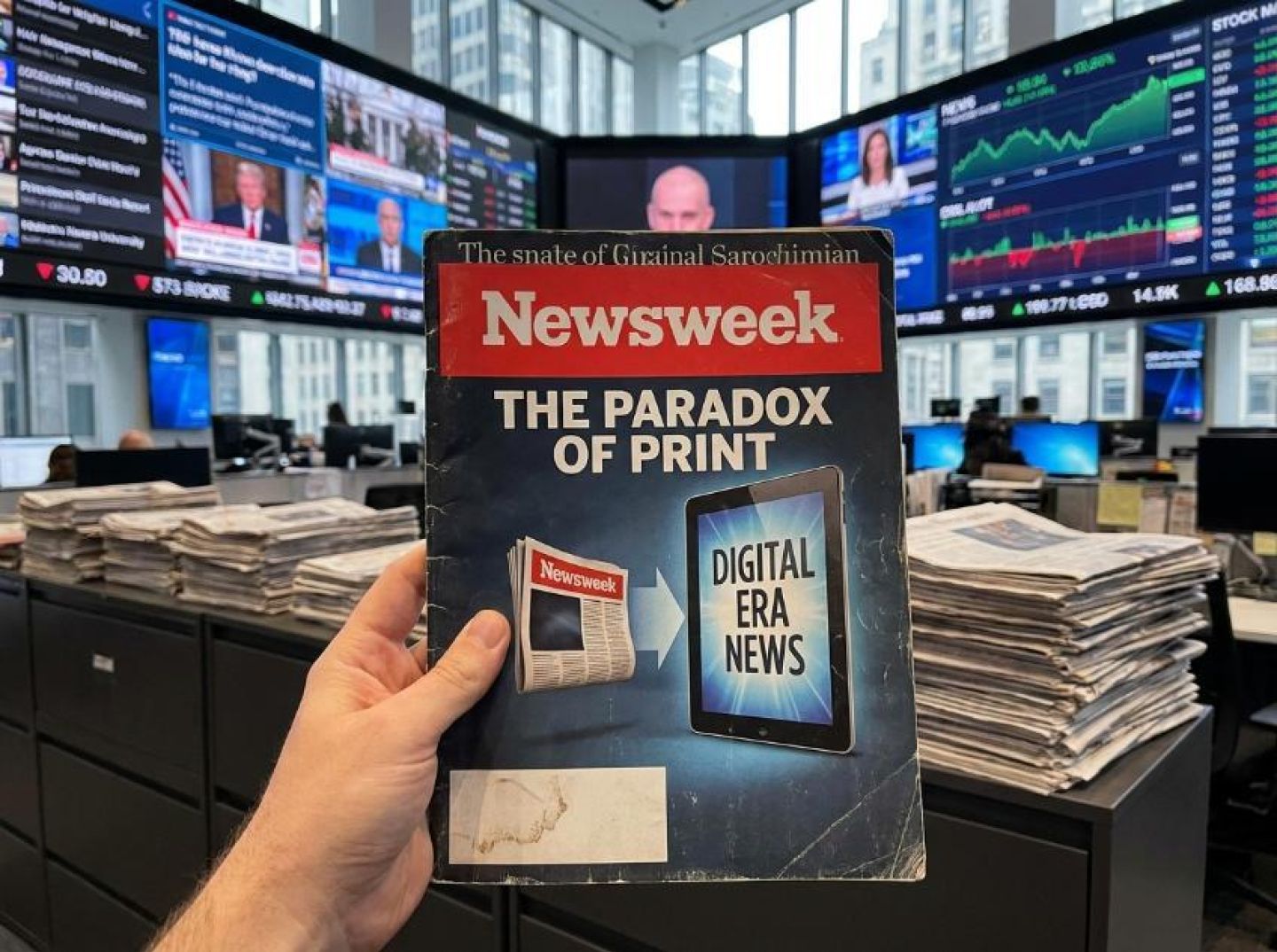
Get StartedIn the span of a single year, Newsweek lost nearly three-quarters of its web traffic — the kind of collapse that, in a previous era, would have been a death sentence. Layoffs swept through sales, rankings, and video teams. Senior executives departed. From the outside, it looked like a legacy brand in freefall. But CEO Dev Pragad offered a counter-narrative that complicates the conventional reading: despite the readership cratering, Newsweek is on pace to surpass $100 million in revenue for the first time since 2012.
Both things are true, and that's what makes this case so instructive.
The publisher's programmatic advertising business — the foundation of its post-print turnaround — eroded in lockstep with its traffic. Revenue from Newsweek's publishing division is expected to decline between 20% and 25% this year, a painful contraction by any measure. But the businesses Newsweek bolted on over the preceding two years, internally referred to as Nexus and AdPrime, have grown fast enough to more than cover the gap. The company is projecting at least 10% revenue growth in 2026, and Pragad has claimed that since taking over in 2018, Newsweek has generated more than $500 million in cumulative revenue at profit margins of roughly 20%.
The most striking element of the story isn't diversification in the abstract — it's where Newsweek diversified. The largest driver of its new revenue is AdPrime, a healthcare-focused demand-side platform the company acquired in June 2025, a moment when most publishers were divesting their adtech assets, not buying them. That unit alone is pacing to more than triple its revenue this year, growing from $14.8 million toward a figure that anchors the company's entire growth trajectory. Newsweek didn't just find a new revenue line; it acquired the infrastructure to monetize a high-value vertical at the transaction layer, bypassing the open programmatic marketplace entirely.
This is the part of the story that matters most for anyone buying, selling, or building native advertising. Newsweek's traffic collapse didn't destroy its business because the traffic had already become the lowest-value part of the operation. Anonymous pageviews monetized through open-market programmatic were always vulnerable — vulnerable to algorithm shifts, to cookie deprecation, to the slow squeeze of platform economics. What replaced them was something fundamentally different: owned adtech targeting high-intent, high-value audience segments in a specific vertical where demand signals carry real purchasing weight.
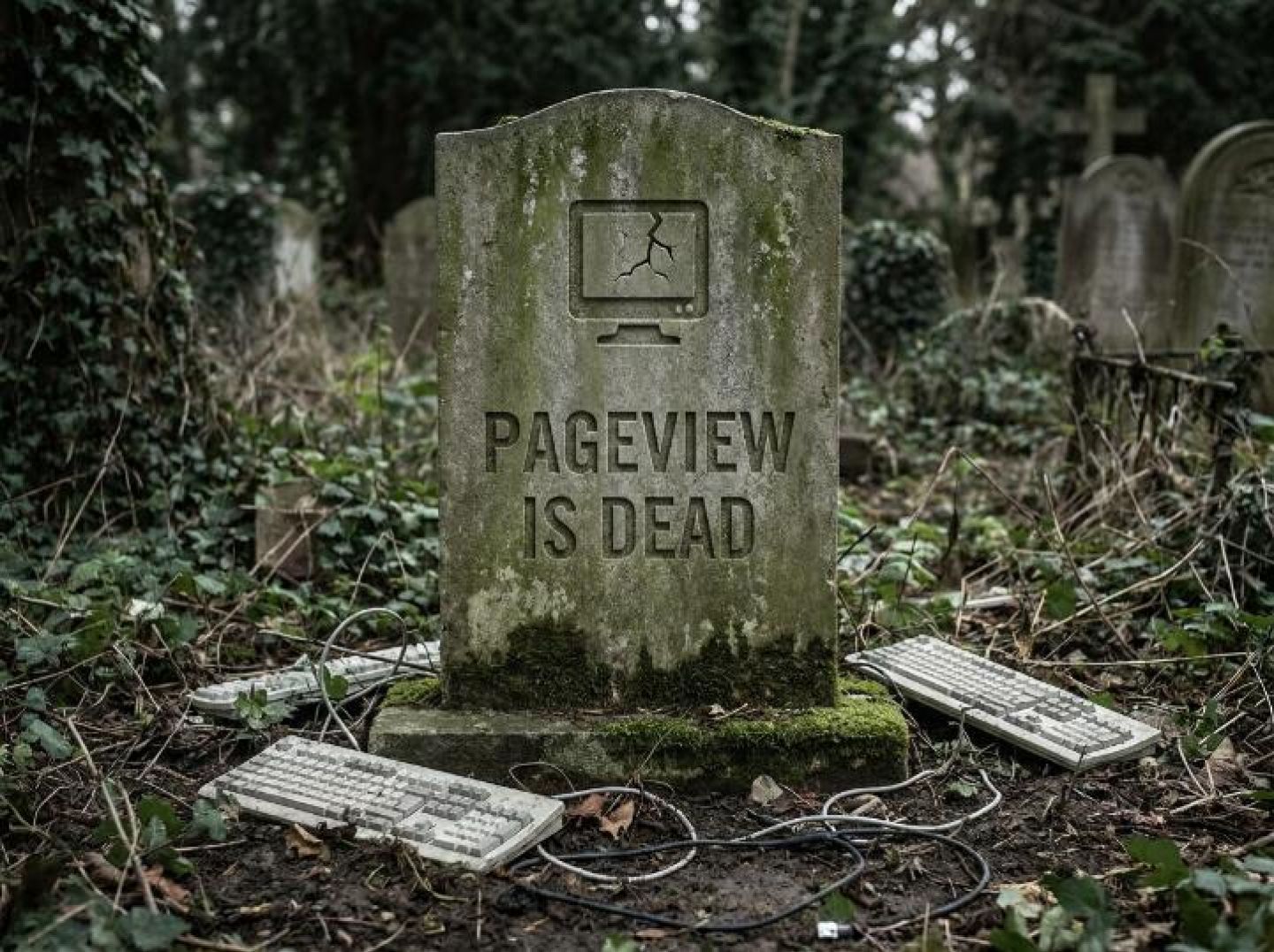
The broader pattern is no longer theoretical. As AdExchanger has argued, the pageview era is effectively dead, and Google's march toward agentic search has moved the timeline from gradual to immediate. Publishers who built their businesses on search and social referral traffic are watching that foundation dissolve. But the critical insight isn't about replacing lost traffic — it's about recognizing that a well-understood audience is worth more than the traffic ever was. A publisher that can identify procurement leads researching endpoint protection or IT directors evaluating zero-trust architecture isn't selling impressions; it's selling purchase-stage signals that advertisers will pay multiples to reach.
Newsweek's pivot isn't a turnaround story. It's a structural preview. The company didn't survive the traffic collapse despite losing its audience — it thrived because the collapse accelerated a shift from monetizing anonymous scale to monetizing identified demand. For native advertisers still optimizing around volume and click-through rates, this should be the loudest possible alarm bell: the economics of digital media are decoupling from traffic, and the winners will be those who understand what comes next.
For decades, digital media operated on a formula so intuitive it felt like a law of physics: more traffic equals more revenue equals more scale. Buy cheap impressions, optimize creative, rinse, repeat. That formula is now collapsing simultaneously from multiple directions, and native advertisers who haven't noticed are optimizing for a metric that no longer means what they think it means.
Start with the supply side. Google's accelerating shift toward an agentic search experience isn't gradually reducing referral traffic — it's moving the timeline from gradual to immediate. When an AI overview synthesizes the answer a user was looking for, the click never happens. The pageview never registers. The impression never serves. For publishers who built their monetization stack on search-driven scale, this isn't a headwind; it's a structural demolition.
Now look at the demand side. Meta's Q1 2025 results revealed that ad impressions increased 19% year over year while average ad prices rose 12%. On the surface, that looks like a platform firing on all cylinders. But the mechanism behind those numbers tells a different story. Meta is cramming more ads onto its platforms and charging more for each one — a strategy that maximizes short-term revenue while degrading the user experience that generates meaningful behavioral signals. As Search Engine Journal's analysis points out, Meta's Advantage+ suite delivers strong performance data today, but those returns depend on a healthy, engaged user base generating meaningful behavioral signals. If ad load keeps increasing while engagement quality declines, the signal degrades and performance follows. More reach, less meaning — the mirror image of Newsweek's traffic collapse.
This is the moment where the abstract becomes concrete. Consider a B2B publisher in the cybersecurity vertical with 80,000 registered users who provided verified professional information at sign-up. Through behavioral analysis, that publisher can segment its database into procurement leads researching endpoint protection, IT directors evaluating zero-trust architecture, and CISOs tracking regulatory compliance. As AdExchanger details, those are not content categories; they are purchase-stage signals — and they're worth dramatically more than the raw pageviews they used to be bundled into. A native campaign placed contextually alongside that publisher's zero-trust coverage and targeted to those verified IT directors isn't buying impressions; it's buying intent. The CPM comparison isn't just misleading — it's measuring the wrong thing entirely.
This is the economic reckoning native advertising was built for but never fully received credit for. The format's core premise — that contextual relevance outperforms raw reach — was always theoretically sound. Native ads generate an 18% higher lift in purchase intent compared to banner ads, according to research from ShareThrough and IPG Media Lab. What's changed isn't the theory; it's that the economic evidence now overwhelmingly supports it. When Google is cannibalizing the traffic that fed the pageview model, and Meta is inflating impressions while hollowing out signal quality, the CPM-obsessed media buyer isn't being conservative — they're optimizing for a unit of value that is actively decoupling from commercial outcomes.
The publishers who survive this transition will be the ones who recognize that their audience is worth more than the traffic it rode in on. And the native advertisers who thrive will be the ones who stop counting impressions and start counting intent.
The Newsweek paradox doesn't just reveal a macro shift in how publishers monetize — it hands native advertisers a specific, actionable playbook if they're paying attention. When Newsweek's parent company built AdPrime Health, a purpose-built DSP for healthcare advertisers, they weren't selling pageviews on a general-interest homepage. They were selling intent-segmented audiences in a vertical where purchase decisions carry enormous financial weight. Healthcare brands weren't buying Newsweek's traffic; they were buying a curated pathway to people actively researching conditions, treatments, and providers. That distinction — between horizontal reach and vertical intent — is the single most important concept native advertisers should extract from this story.
And yet, most competitive intelligence workflows in native advertising are oriented in exactly the wrong direction. Advertisers obsess over creative: which headlines are competitors running, what thumbnail angles are converting, how long is the landing page. These are useful questions, but they're second-order questions. The first-order question — the one that sophisticated healthcare, finance, and B2B advertisers have already answered for themselves — is where to place the spend. Placement geography, not creative execution, is the higher-leverage variable when the attention economy is fragmenting this aggressively.
The logic is straightforward once you see it. Native ads derive their power from contextual congruence — from appearing inside an editorial environment where the reader is already primed for a particular subject. Research from ShareThrough and IPG Media Lab found that native ads registered an 18% higher lift in purchase intent compared to traditional banner ads, along with a 9% boost in brand affinity. But that lift isn't distributed uniformly across every publisher in a native network. It concentrates wherever the editorial context most closely matches the advertiser's value proposition. A native ad for a Medicare supplement plan performs fundamentally differently when it appears alongside a deeply reported article on chronic disease management than when it surfaces in a celebrity gossip sidebar. The intent architecture of the surrounding content does most of the heavy lifting — the creative just needs to not fumble the handoff.
This is why the smartest advertisers in high-value verticals are migrating budget away from broad horizontal content farms and toward mid-tier, vertical-specific publishers where audience intent is densest and competition for inventory is lowest. They've realized that the collapsing traffic at large generalist outlets isn't a problem to be solved — it's a signal to be read. As horizontal traffic decays, the readers who remain on vertical-specific sites are self-selecting for intent. They're not browsing; they're researching. They're not killing time; they're making decisions.
For native advertisers, the practical implication is to stop treating competitive spy tools as creative libraries and start treating them as placement maps. When you see a well-funded healthcare brand consistently buying inventory on a niche medical publisher rather than a high-traffic generalist site, that placement decision is the intelligence. It tells you where intent lives. It tells you where contextual relevance is doing the conversion work that no amount of headline optimization can replicate on a mismatched publisher.
The economics reinforce this approach. As AdPushup has noted, maximizing the relevance of native ads to their surrounding content is the foundational optimization lever — more important than ad size, placement position, or even design sophistication. Relevance isn't just a creative property; it's a property of the publisher environment itself. Finding the right environment is the strategic decision. Everything else is tactical refinement. The advertisers who understand this aren't chasing the cheapest CPMs on the largest sites. They're hunting for intent density on sites most of their competitors haven't even discovered yet — and they're winning precisely because nobody else is bidding there.
Most media buyers running native campaigns follow a nearly identical workflow: launch on a major network like Taboola or Outbrain, upload 30 to 50 creative variants, kill the losers after 48 hours, and scale the winners. It's a perfectly rational creative optimization strategy — and it's running on commodity inventory. The Newsweek paradox exposes why that approach leaves the highest-value opportunity untouched. The real arbitrage isn't in writing a better headline. It's in finding the publishers whose traffic looks "small" by vanity metrics but whose audience composition maps directly to purchase intent.
Understanding this requires distinguishing between two fundamentally different intelligence activities: spying on creatives and spying on spend concentration. Tools like Anstrex or AdPlexity let you see which ad images and headlines competitors are running, but that data only tells you what messaging is being tested — not where the profitable spend is actually landing. When you study placement-level data instead, a different picture emerges. You'll often find that the campaigns with the longest run times — the ones that are clearly profitable — aren't concentrated on the highest-traffic publishers in a network. They're running on mid-tier and niche vertical sites where competition for attention is lower, contextual relevance is higher, and CPCs haven't been bid up by every media buyer following the same "spy and replicate" playbook.
This is where the standard advice about testing budgets needs to be reframed. Voluum's native advertising guide recommends investing at least $500 to $1,000 to learn and get data before expecting results, acknowledging the uncomfortable reality that "one solution doesn't fit all" and that practical experience is the only reliable teacher. But most buyers spend that learning budget testing creative variants on the same high-traffic placements everyone else is bidding on. The smarter allocation — the one the Newsweek story should be teaching us — is to spend that budget on placement discovery, whitelisting and blacklisting across a wide range of smaller vertical publishers to identify which editorial environments actually convert.
The reason this works comes down to native advertising's core structural advantage. The format succeeds precisely because it doesn't disrupt — it blends into the surrounding editorial context, earning attention rather than hijacking it. That non-disruption principle compounds dramatically when the editorial context itself carries deep vertical authority. A native placement for a supplement brand inside a 200,000-monthly-visitor site devoted entirely to endocrinology research doesn't just "blend in" — it inherits the trust and specificity of every article surrounding it. The same ad on a general-interest site with ten million monthly visitors is contextually diluted, competing with coverage of celebrity gossip, geopolitical conflict, and recipe roundups for the reader's cognitive frame.
This is why native ad networks should be understood as discovery mechanisms, not final destinations. They're useful for identifying which publisher verticals respond to your offer, but the real margin lives in graduating from network-mediated buys to direct publisher relationships where you can negotiate fixed CPMs, secure premium placement positions, and — critically — avoid the network's revenue share. The publishers most open to these conversations are exactly the ones the Newsweek paradox highlights: smaller outlets with loyal, high-intent audiences who've watched their programmatic CPMs erode and are hungry for direct advertiser partnerships that value their audience composition over their traffic volume.
As GM's chief global media officer confirmed at Cannes, brands investing in contextually relevant environments — particularly at the niche and local level — are seeing double-digit growth in campaign impact precisely because they stopped chasing scale and started chasing fit. The lesson for native buyers is identical: stop optimizing creative on commodity placements and start optimizing placement quality across overlooked vertical publishers. The inventory is hiding in plain sight. It's just hiding behind traffic numbers that most media buyers have been trained to dismiss.
The native advertising industry has spent a decade optimizing for a metric that measures the wrong thing. Cost-per-thousand-impressions tells you how efficiently you bought eyeballs; it tells you nothing about whether those eyeballs belonged to someone who would ever buy what you're selling. The Newsweek paradox — traffic down 75%, revenue climbing toward a record — isn't just a publishing story. It's a measurement story, and it demands that native advertisers rethink what they're actually paying for.
Start with the attention spectrum. Attention is not binary. A user who lands on a page, scrolls past a native unit in 0.3 seconds, and bounces is not the same as a user who reads 1,800 words of sponsored content in a healthcare vertical, clicks through to a product page, and downloads a comparison guide. Both register as "impressions" in most reporting dashboards. Both cost roughly the same CPM. But the revenue they generate for the advertiser differs by orders of magnitude. The metric that captures this difference isn't impressions or even clicks — it's revenue per engaged user, a measure that weights the depth of attention against the commercial outcome it produces.
This is precisely the logic that Newsweek's leadership discovered, even if they didn't frame it in these terms. As Adweek reported, the company's publishing division — the part of the business most dependent on raw traffic volume — saw revenue decline 20% to 25% this year. But its AdPrime healthcare DSP, which sells intent-segmented audiences rather than undifferentiated pageviews, is pacing to more than triple its revenue. The implicit lesson: a smaller audience with purchase-stage intent is worth dramatically more than a massive audience with ambient curiosity.
Meta's own data tells the same story from the demand side. The platform's Advantage+ advertising suite delivers a $4.52 return per dollar spent, outperforming comparable manual campaigns by 22%. But as Search Engine Journal's analysis warns, that performance depends on a healthy, engaged user base generating meaningful behavioral signals. When Meta increased ad impressions 19% year over year while raising average prices 12%, revenue per user jumped 27% — but at the cost of degrading the very user experience that makes those signals valuable. More ads crammed into the same feed doesn't create more attention. It dilutes it.
For native advertisers, the practical shift is straightforward but uncomfortable. Stop reporting on impressions delivered. Start reporting on attention-weighted conversions: how many users engaged with the content for more than 30 seconds, how many of those clicked through, and how many of those completed a downstream action within a defined attribution window. This framework treats attention as the scarce resource it actually is, rather than the commodity that CPM-based buying pretends it to be.
The publishers who will command premium native rates in 2027 and beyond are the ones who can prove that their smaller, more engaged audiences produce higher revenue per user than a mass-reach platform drowning in ad load. And the advertisers who will outperform are the ones who stop chasing cheap impressions on commodity inventory and start buying verified engagement in environments where attention is deep, contextually relevant, and proximate to a purchase decision. The Newsweek paradox didn't just reveal a new publishing model. It revealed that the entire impression-based measurement framework was always measuring the shadow on the wall instead of the thing casting it.
Receive top converting landing pages in your inbox every week from us.
In-Depth
Discover how city-level ad intelligence can help marketers build campaigns that feel local while scaling globally. Learn how to use Anstrex to uncover geographic, language, creative, and funnel patterns across Native, TikTok, Push, and Pops, then turn those insights into repeatable localized campaigns.
Elena Morales
7 minSep 16, 2026
Most Read
Demand generation is shifting from marketing automation alone toward real-time market intelligence and proven creative signals. This guide shows how to use native, push, pop, and TikTok ad intelligence to uncover winning hooks, turn them into demand gen IP, and connect those insights across ads, email, landing pages, and the full customer journey.
Elena Morales
7 minSep 13, 2026
Most Read
Discover how to connect ad spy data with on-site behavior, CRM insights, and revenue outcomes to uncover the real drivers of ROI. Learn how to turn Anstrex from a creative swipe tool into a closed-loop system for testing winning ad angles, funnels, and customer journeys.
Dan Smith
7 minSep 9, 2026