9 minSeptember 27, 2026

Our tools monitor millions of native, push, pop, and TikTok advertising campaigns.
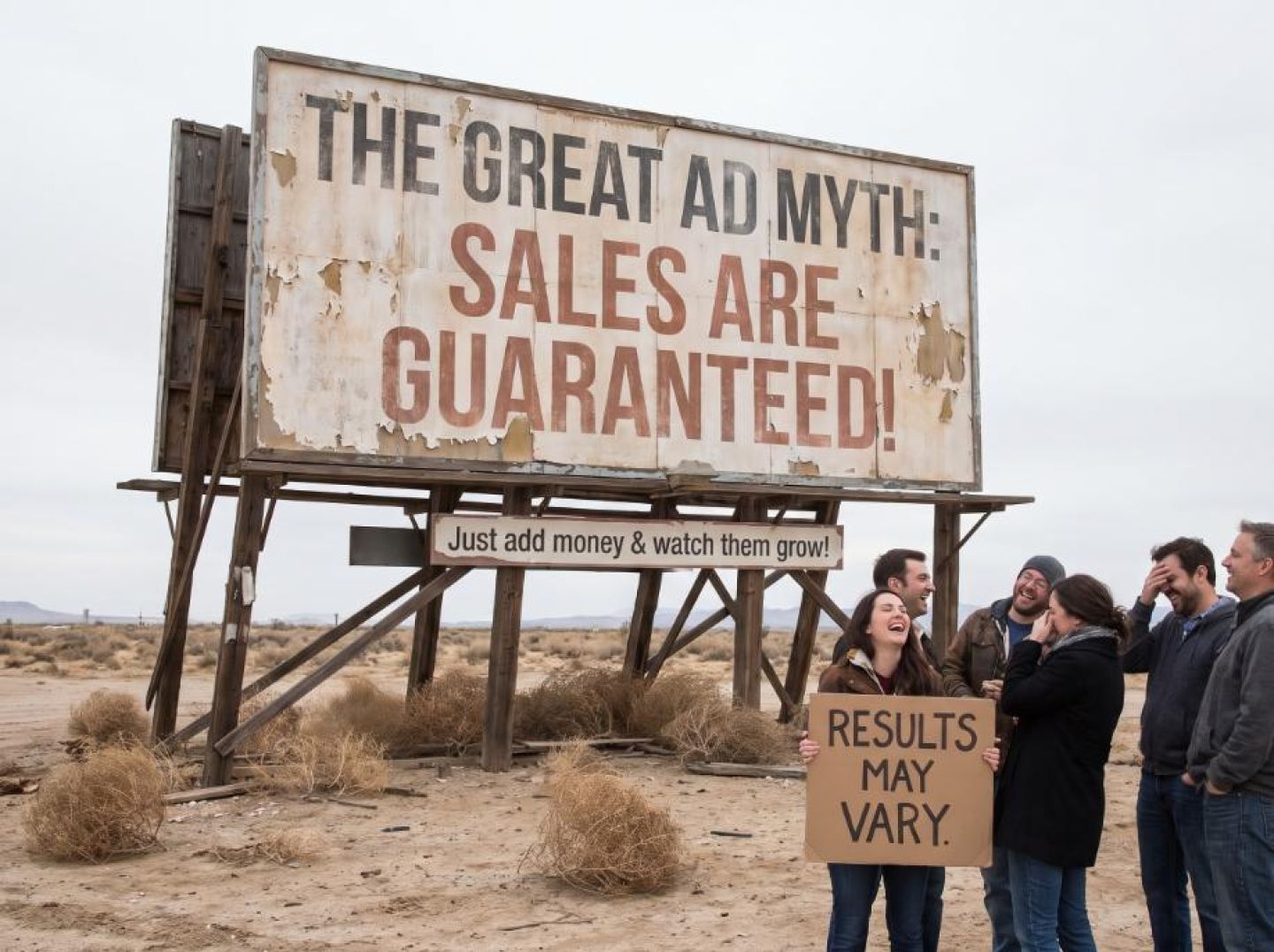
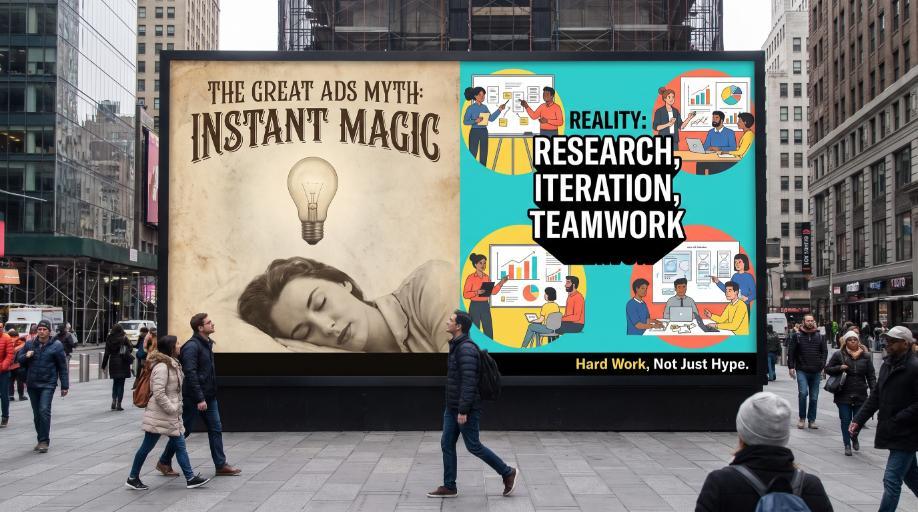
Get StartedFor most of the last century, the industry ran on a comforting story: if you could just make a truly “great ad,” everything else would take care of itself. Media was a delivery problem. Creative was the magic. Awards juries and case studies were built around the idea that the right line, the right film, the right visual could single‑handedly bend a market.
That myth is dead in an AI‑first ad economy—not because creative has stopped mattering, but because “greatness” can no longer be defined or proven the way it used to be.
The original digital promise was seductive: the right ad, to the right person, at the right time. In theory, perfect targeting would finally solve Wanamaker’s 50% waste problem. That fantasy required a permanent, universal identity layer to follow people around the open web. As AdExchanger points out, that illusion has now collapsed under the weight of privacy regulations, signal loss and walled gardens. We are not getting a single, deterministic ID graph that stitches every impression and conversion together. The “clock” the industry tried to build—turn gear A (creative) in front of person B (profile) to get result C—simply doesn’t exist.
Yet in place of that dream, we’ve embraced an even more fragile one: infinite AI‑powered personalization. With generative models and cheap compute, the new orthodoxy says every person can get their own bespoke ad, dynamically assembled in real time. On paper, it sounds like peak economic efficiency. In reality, as that same AdExchanger analysis argues, it misunderstands advertising as a “clock science” when it is, in fact, a “cloud science”—a weak force working probabilistically across populations and time.
In a cloud world, the question isn’t “Was this one ad objectively great?” but “How did this creative system shape behavior and memory across millions of messy, overlapping journeys?” That is a measurement challenge first, and a storytelling challenge second.
At the same time, the platforms you buy from no longer treat your creatives as sacred objects. They treat them as inputs to optimization loops. Google’s latest Gemini‑powered formats in Search are a textbook example. Ads are now “instantly tailored to a person’s unique query” and positioned as helpful, conversational answers rather than static units, with AI‑driven campaigns like AI Max orchestrating which assets show up, to whom and when, in real time, based on outcomes rather than opinions, as described in Google’s own Google Marketing Live update. Your lovingly crafted master video or hero headline is just one gene in a constantly recombined organism.
That shift erodes the old social hierarchy where the VP of Creative—or a Cannes jury—was the final arbiter of what was “good.” In the agentic, performance‑led environments described on Occam’s Razor, platform‑generated variants are judged almost exclusively on business outcomes. Humans are pushed up a level: from micro‑tweaking performance to designing big, clear experiments and preparing assets and taxonomies the machines can actually learn from. The optimization theater of daily bid changes and subjective “loser” creative reviews is actively value‑destroying when the platform is already running its own explore‑exploit cycles at a speed no human team can match.
Meanwhile, on the content side, the volume and fragmentation of creative has exploded to the point where intuition cannot keep up. When a single brand like Unilever can coordinate a 300,000‑creator network powered largely by AI tools, the old infrastructures for judging creative—focus groups, quarterly brand trackers, a handful of test cells—simply break. As Search Engine Journal’s coverage of the DAIVID and ADIN.AI partnership makes clear, human panels and one‑by‑one A/B tests cannot govern a world where thousands of creative variants are live across hundreds of markets simultaneously. You need live loops that score creative at scale, connect those scores to media performance in real time, and feed that learning back into what gets made next.
Put all of this together and the traditional definition of a “great ad” collapses. There is no single canonical film, banner or script that can be crowned a winner in isolation, because:
In an AI‑first ad economy, greatness is no longer a property of a single execution; it’s a property of a creative system that is instrumented, testable and adaptable. The teams that win won’t be the ones that make the prettiest 30‑second spot. They’ll be the ones that treat every idea as a hypothesis, every asset as a data point, and “creative judgment” as something earned through models and measurement, not taste alone.
When platforms do the targeting for you, your creative stops being decoration and starts being infrastructure.
Across Google, Meta, and TikTok, the default is now broad, AI-led distribution. Campaign types like Performance Max, Advantage+ and TikTok’s automated audience expansion are built so that you feed the machine a wide audience, a conversion signal, and a pile of assets, and the system decides who to hunt for. As one recent analysis argued, this shift means “creative is making the leap from persuasion layer to targeting logic” — your headlines, visuals, and videos are now among the strongest signals platforms use to decide who should see your ads and why, a trend.
That alone would be a big change. But AI doesn’t just use creative as a hint; it uses it as a qualification filter.
Historically, you wrote one broad message, then relied on hyper‑granular audience settings to do the segmentation. Need high‑intent insurance shoppers? Build audiences around age, income, recent life events, and in‑market behavior. Need prospective MBA students? Stack interest layers and lookalikes. In that world, your creative could afford to be a little generic, because the targeting pre‑filtered who would ever see it.
Now, the flow is reversed. Performance‑style systems want as few constraints as possible, plus strong conversion feedback and a diversity of assets. In that environment, the algorithm infers who your ad is “for” through the language, imagery, and offers you put into the creative. A line like “Switch your family’s coverage in 10 minutes” will be interpreted very differently than “Lock in your business policy before renewal,” even if they’re technically running to the same broad audience. One cues parents juggling household logistics; the other signals B2B decision‑makers. At scale, those micro‑differences in copy, framing, and visual context become machine‑readable signals.
This is why broad targeting actually demands more specific, intentional creative, not less. As MarTech points out, many advertisers still build assets as if audience settings will do the qualifying, so they default to safe, diluted messaging. But when your ad is the qualifier, vagueness is expensive. A “catch‑all” headline gives the algorithm no clue about who should click and no useful pattern to learn from.
The major platforms are building around this reality. At Google Marketing Live, the company showed how new Gemini‑powered formats in Search dynamically assemble ads that “answer and inspire” based on the nuances of a person’s query, with creative elements swapped in real time to better match intent, and introduced AI Max as a way to let its systems orchestrate creative, bidding, and placement across surfaces with minimal manual segmentation, framing it bluntly: “the only way to win in the age of AI, is with AI,” including AI‑designed, intent‑sensitive creative as described in Google’s Ads & Commerce updates.
Once creative is a targeting signal, your internal workflows have to change with it.
In a manual world, media set the plan, creative “filled the boxes,” and analytics did a post‑mortem. AI breaks that linear sequence. When algorithms are continuously exploring combinations of audiences, bids, and assets, creative needs to be produced and adapted in a loop, not a campaign calendar. Cross‑functional teams share one performance spine, where everyone can see in near real time which hooks, formats, and narratives are attracting which types of customers. That’s already visible inside organizations where AI is being used to centralize insights and dissolve the old silos between media, creative, and analytics — a shift documented in MarTech’s coverage of AI reshaping marketing teams.
The practical implication is that “make the ad, then target” is obsolete. Your message is your targeting. Every script, storyboard, and concept review is now an audience design decision, whether you recognize it or not. Building data‑obsessed creative teams means treating assets as structured signals the machine can learn from, not just finished pieces to be trafficked — and organizing your people, processes, and tools to deliver those signals with intent.
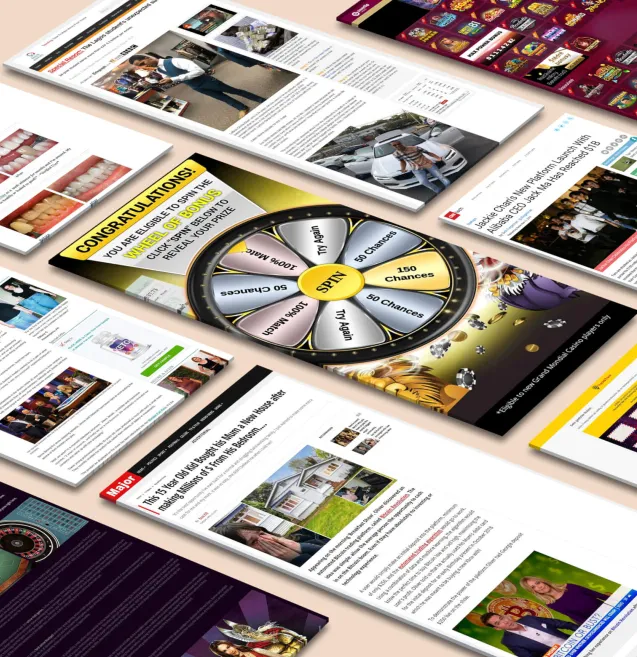
For the last decade, “ad spying” has been the creative department’s security blanket.
You scroll Meta’s Ad Library, trawl TikTok’s Creative Center, plug a competitor’s URL into a spy tool, and build a mood board from whatever looks cool or seems to be getting “a lot of engagement.” Then you brief the team: “We need something like this, but on brand.”
That workflow made sense when media buyers still acted as gatekeepers and targeting did most of the qualification work. You could afford to imitate the vibe of what seemed to be winning because the real performance levers lived in bid strategies, lookalikes, and granular audiences.
In an AI‑led ad economy, that’s upside down.
When your campaigns are running on systems like Performance Max, Advantage+ and TikTok’s automated audience expansion, creative isn’t just a wrapper for your offer; it’s one of the primary signals machines use to decide who should see an ad and in what context, as MarTech explains. Looking at what your competitors are running without knowing how those ads are actually performing is like copying someone else’s exam paper without knowing whether they passed or failed.
Most “ad inspiration” rituals are vibe‑based, not evidence‑based. You collect screenshots, assemble carousels of hooks, paste in thumb‑stopping UGC, and maybe check how many views or likes something has. But you have no idea:
At best, this gives you a loose sense of category codes and aesthetic baselines. At worst, it creates a false consensus about “what works” that’s completely unmoored from revenue.
Meanwhile, the scale problem has quietly made vibes unusable.
When Unilever experiments with a 300,000‑influencer network where 71% of creators use AI for content production, the volume of creative in market explodes, and the old evaluation infrastructure collapses. Human panels, quarterly brand trackers, and one‑by‑one A/B tests can’t tell you, in real time, which ideas are actually moving the needle across thousands of assets and dozens of markets, as the Unilever case in Search Engine Journal’s analysis points out.
That’s why you’re seeing “creative intelligence” wired directly into media platforms. DAIVID’s effectiveness models feeding into ADIN.AI’s system create exactly what most creative teams lack today: a live loop that scores creative at scale, links those scores to media performance, and updates your benchmarks as results come in, according to Search Engine Journal’s reporting on the partnership. The point isn’t more dashboards. It’s replacing guesswork with a continuously refreshed understanding of what this brand’s creative has to do to win in this channel, this week.
The platforms themselves are moving in the same direction. Google is positioning Gemini‑powered campaigns and tools like AI Max and Asset Studio as an end‑to‑end loop where you generate creative, deploy it, and then optimize based on integrated performance and analytics, all inside an AI‑assisted environment, as described in Google’s own Google Marketing Live updates. Meta’s algorithmic changes, like the Andromeda update that now treats hundreds of nearly identical creatives as a single asset, mean that “spray and pray” testing of micro‑variations is no longer a strategy; you need genuinely differentiated concepts and a way to read them.
This is the shift from spying on ads to running on live creative intelligence:
Generative AI has quietly made this more attainable even for smaller teams. Image models now produce assets nearly indistinguishable from professional photography, and can do so at a cost point that was previously unimaginable for many e‑commerce brands, as Social Media Examiner notes in its exploration of AI‑generated ad creative. But the article also stresses that quality outputs require dense context: who your customer is, how your brand speaks, what “good” looks like. In other words, you need a shared, data‑backed understanding of your creative patterns before you ask an AI to riff on them.
The takeaway for creative leaders is blunt: raiding the ad libraries is now table stakes. The teams that win aren’t the ones with the best swipe files; they’re the ones who treat every impression, click, and conversion as input into a living creative model of their brand. Inspiration is still allowed—but the vibes don’t ship until the intelligence says they should.
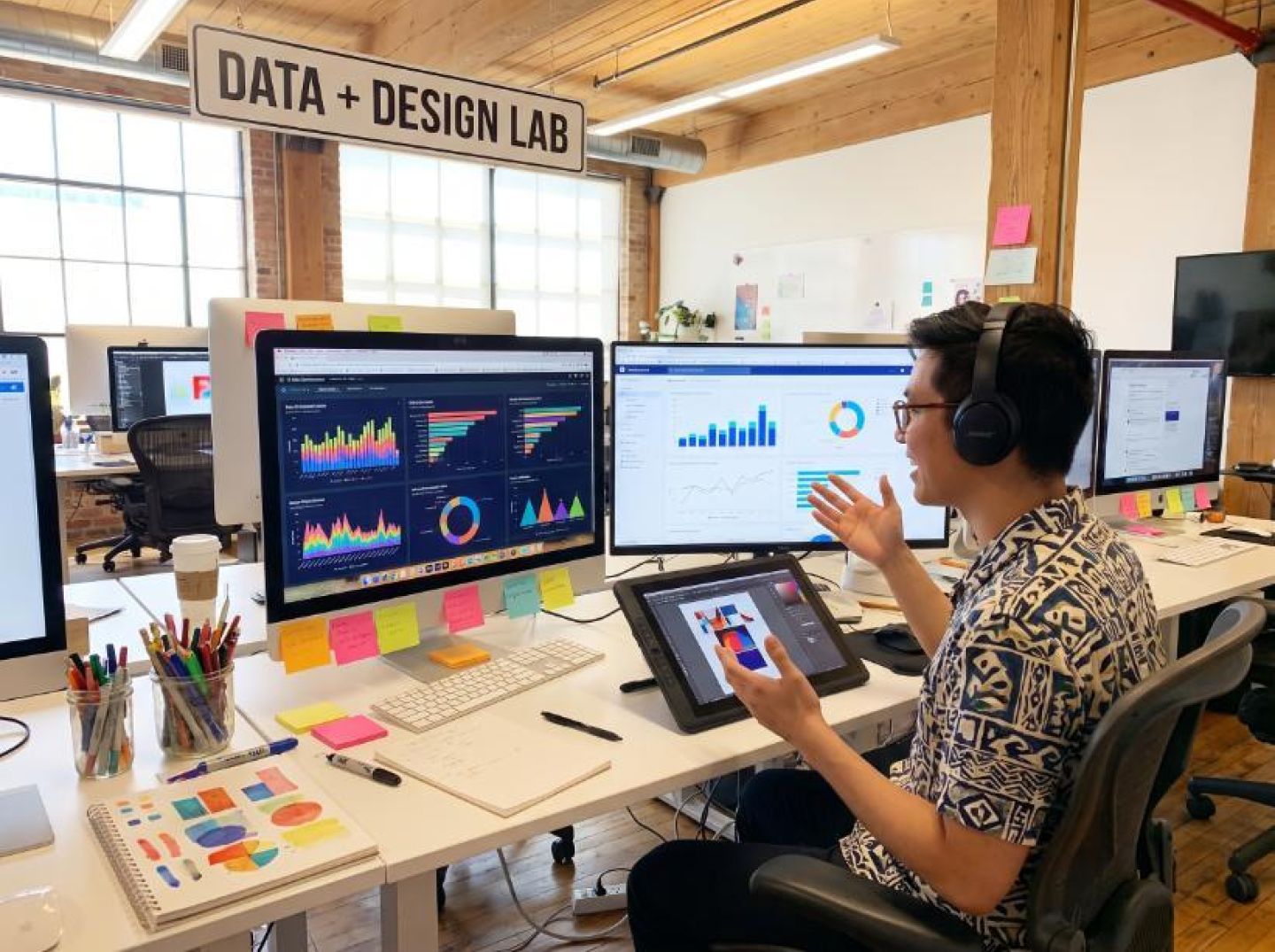
A data-obsessed creative organization isn’t just “more analysts” bolted onto the side of a design team. It’s a different operating system: new roles, new rituals, and a tooling stack built to put live creative intelligence in everyone’s hands.
Start with the org chart. In most teams, “creative” means designers, copywriters, and maybe a strategist. In a world where platforms are already mixing and matching your assets with AI, as Avinash Kaushik notes when describing how ad platforms now assemble and judge creative directly against business outcomes on his Occam’s Razor blog, you need people who can speak both design and data.
Three roles matter most:
2. AI Creative Engineer / Prompt Lead
As generative tools move from novelty to core production, someone needs to master them. This role:
3. Creative Operations / Workflow Orchestrator
As campaigns stretch across Meta, TikTok, YouTube, retail media, and beyond, coordinating creative work is as hard as the work itself. AI’s biggest value, as one AdExchanger analysis of omnichannel orchestration argues, is in taming this complexity across channels and workflows.
This role:
You don’t need a headcount explosion. On a small team, these might be “hats” people wear; on a larger team, they become dedicated roles.
Roles only matter if your weekly rhythms change. A data-obsessed creative org trades sporadic, rearview-mirror reporting for lightweight, repeating rituals.
2. Insight-to-Brief Workshop (60 minutes, biweekly)
Here, the Creative Analyst, AI Creative Engineer, and core creative leads translate performance insights into briefs:
3. Retrospective & Library Update (Monthly)
A quick cadence to:
Finally, the tools. Instead of a dozen isolated dashboards, aim for a stack that does three things:
When roles, rituals, and tools line up, you stop arguing about whose “gut feel” is right. The work becomes a continuous loop: observe, hypothesize, generate, test, and train the system again—exactly the kind of cloud-like, probabilistic practice today’s ad intelligence era demands.
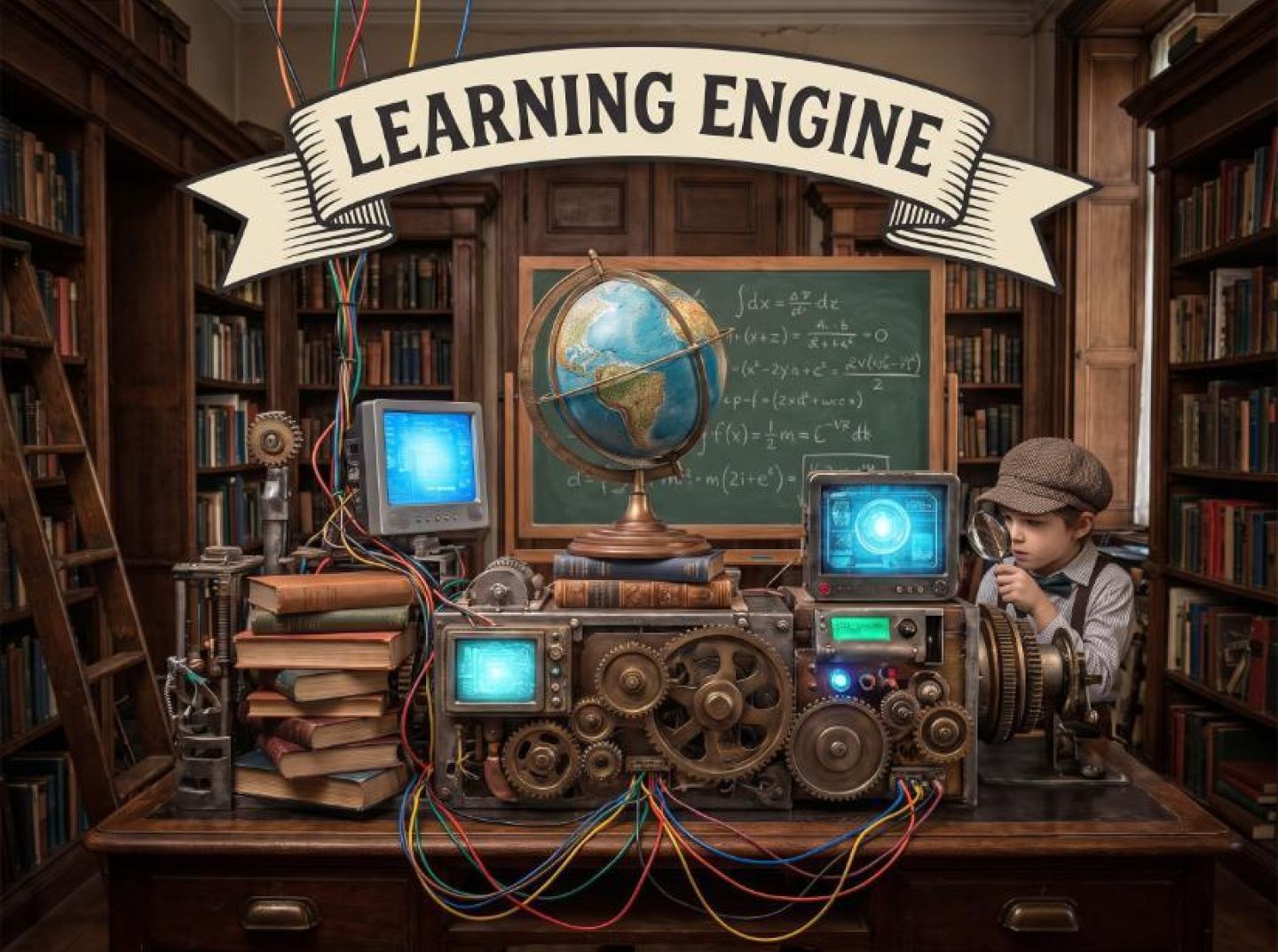
Most teams still treat campaigns as events: long build-up, big launch, post-mortem slide deck, then on to the next brief. In an AI-led ecosystem where platforms are continuously exploring and exploiting creative combinations on your behalf, that rhythm is catastrophically slow. The opportunity now is to treat every campaign as a live learning engine: a system that generates compounding creative intelligence, not just short-term performance.
That starts before launch. Instead of debating concepts in a room until the HiPPO nods, you use pre‑flight prediction and historical data to stack the deck. Platforms like DAIVID and ADIN.AI are already wiring creative-effectiveness models directly into media systems so marketers can score assets and allocate budget before a single impression is served, then feed the resulting performance back as benchmarks for the next wave of work, creating what they describe as a “live loop between creative intelligence and media execution”. You don’t need their exact stack to steal the pattern: define a minimal test set of hypotheses, map them to specific creatives, and decide in advance how you’ll read the results and roll winners into your evergreen library.
During the campaign, your role shifts from driving the car to designing the track. AI-led buying systems like Google’s new AI Max campaigns are already running their own continuous experiments, combining bids, audiences, and creative assets to “make sure businesses are an essential part of the conversation” in AI-powered search results, as Google’s marketing team describes it. If your team is still obsessing over micro-optimizations—daily creative toggles, tiny bid tweaks—you’re fighting the machine, not harnessing it.
Instead, you define a clear learning agenda at the right altitude. Avinash Kaushik argues that in an agentic-AI era, the old “optimization theater” of constant small tweaks is not just wasteful; it’s “now the most destructive thing your agency is doing”. The corrective is fewer, bigger experiments: test fundamentally different hooks, formats, or story structures—not button colors—and give the algorithms enough time and budget to resolve each bet. Your weekly ritual becomes: what did the system learn about our ideas, and how do we codify that?
To turn those answers into durable insight, you need a memory. Every campaign should deposit structured learnings into a shared creative intelligence layer: what promise, proof, and payoff pattern worked; which visual framings correlated with higher watch-through or conversion; which audiences responded to which narrative angle. Over time, this grows into the brand-specific “what good looks like” corpus that generative tools need in order to be useful. As Fraser Cottrell points out in a piece on AI ad creative, none of the volume or speed advantages matter “without one foundational step: training generative AI on your brand, on who your customers are, what your brand stands for, and what a great ad looks like,” a process he frames as building a deep brand knowledge base before production ever starts.
In that world, “great ads” are no longer the finish line. They’re training data. The competitive advantage belongs to the teams who design their campaigns so that every dollar spent buys not just clicks or conversions, but reusable knowledge about how their storytelling works in an AI-driven marketplace.
Receive top converting landing pages in your inbox every week from us.
In-Depth
Learn why “great ads” are no longer enough in an AI-first advertising economy, where creative is increasingly used as a targeting signal and performance input. This guide explains how to build data-obsessed creative teams, replace vibes-based inspiration with live creative intelligence, and turn every campaign into a learning engine.
Liam O’Connor
7 minSep 27, 2026
Most Read
Discover why many OOH job descriptions still reflect a 2008-era, inventory-first mindset and how operators can redesign roles around data, performance, and competitive intelligence. This guide shows how sales reps, general managers, mobile OOH teams, and performance marketers can turn OOH into a measurable, full-funnel growth channel.
Marcus Chen
7 minSep 27, 2026
Recently Updated
Explore what OOH job classifieds reveal about the future of competitive ad intelligence and why traditional sales skills alone may no longer be enough. This guide shows how sales, operations, installation, and creative teams can become intelligence nodes that help OOH companies spot market shifts and competitor activity faster.
Samantha Reed
7 minSep 26, 2026