Dropshipping, Pop Ads, Push Ads
11 minOctober 3, 2026

Our spy tools monitor millions of push notification ads from over 90+ countries and thousands of publishers.
Get StartedThe best ads in the world are already doing your research for you. You just keep treating them like museum pieces instead of money printers.
When a high-impact TV or brand film drops, it doesn’t just win awards and make creative directors weep. It sets off a measurable chain reaction. Viewers see a spot like Fox Sports’ emotionally loaded World Cup promo “Miracle,” then flood into Google, YouTube, and social platforms to search, compare, and click their way toward a purchase, as MarTech explains. That DAIVID table ranking “Miracle,” Lay’s “The Most Epic Watch Party,” and Coca-Cola’s “Bubbling Up” by emotional engagement isn’t just a trophy shelf; it’s a live demand map. Every spike in searches and social chatter is proof that an angle, a promise, a visual, and a story just resonated with millions of real people.
Most affiliates and dropshippers watch those moments from the sidelines, screenshotting clever lines for swipe files or sharing the Cannes reel in Slack. Then they go back to cobbling together generic “50% OFF – LIMITED TIME” banners for push and pop traffic, praying the spy tools show a winning lander before the bid prices spike.
That’s backward.
Those “great ads” are not inspiration; they are blueprints. The same emotional triggers that make a Fox Sports spot top DAIVID’s rankings can be sliced into 15-frame storyboards for TikTok UGC, reassembled as curiosity-driven native advertorials, and boiled down into three-word hooks for push alerts and pops. The only difference is the wrapper and the click path.
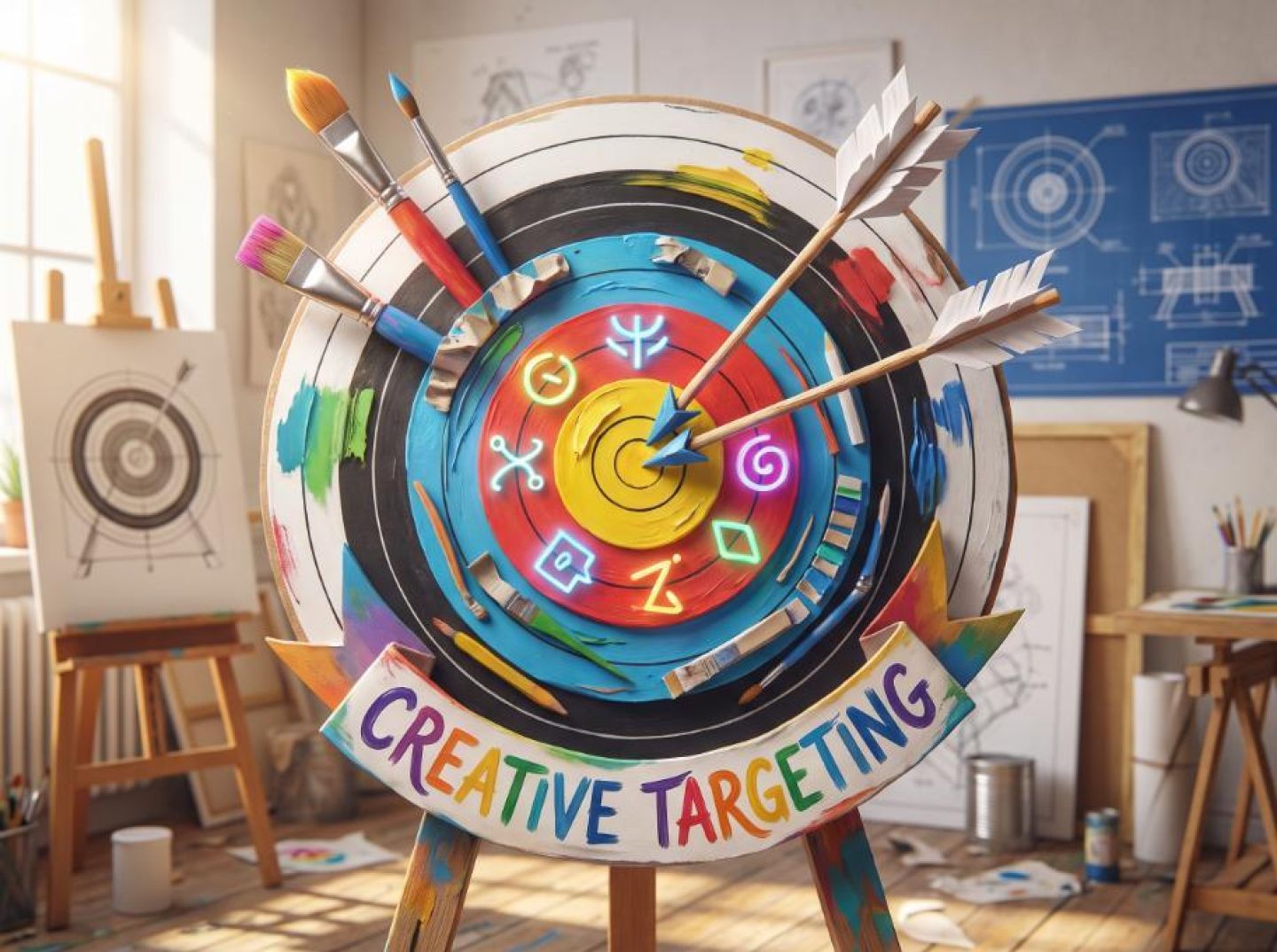
Platforms are already forcing you in this direction. As Google, Meta, and TikTok shove you toward broad, AI-driven targeting, your creative becomes the targeting, not the garnish. Campaign types like Performance Max, Advantage+ and TikTok’s automated expansion mean your headlines, images, and videos are now the strongest signals for who should see your ads, as MarTech notes. If algorithms decide where your ads go, then your job is to decide what those ads say so clearly and specifically that the machines can’t mistake who they’re for.
And you no longer need a Super Bowl budget to play that game. Generative models can now crank out studio-grade product shots and concept variations for cents, not thousands of dollars, provided you train them on what your brand is and what a strong hook looks like, as Social Media Examiner reports. That’s not “lazy”; it’s leverage. You can turn a single award-winning concept into dozens of channel-specific executions: push notification angles, TikTok scripts, in-feed native images, exit-pop headlines, all mapped back to the same emotional core that made the original ad work.
Meanwhile, the low-budget guerrilla marketers have already proven that virality and emotional resonance are not reserved for global brands. Campaigns like the Ice Bucket Challenge showed that simple, emotionally charged ideas can travel worldwide on pennies, and smart founders are cloning that playbook with engagement-driven TikTok challenges and UGC-native concepts, as the Brax blog points out. If a scrappy startup can spark a movement with a hashtag and a challenge, affiliates running paid traffic have no excuse to keep shipping plain product photos and templated headlines.
This is the bridge: spy tools to identify which big-brand narratives are actually moving people, funnel thinking to translate those narratives into direct-response flows, and AI-driven production to scale variations across push, pop, native, and TikTok without burning a hole in your wallet. The ideas that win Cannes can also quietly hit your ROAS targets; they just need to be stripped down, rebuilt, and unleashed on the traffic sources the brand teams rarely touch.
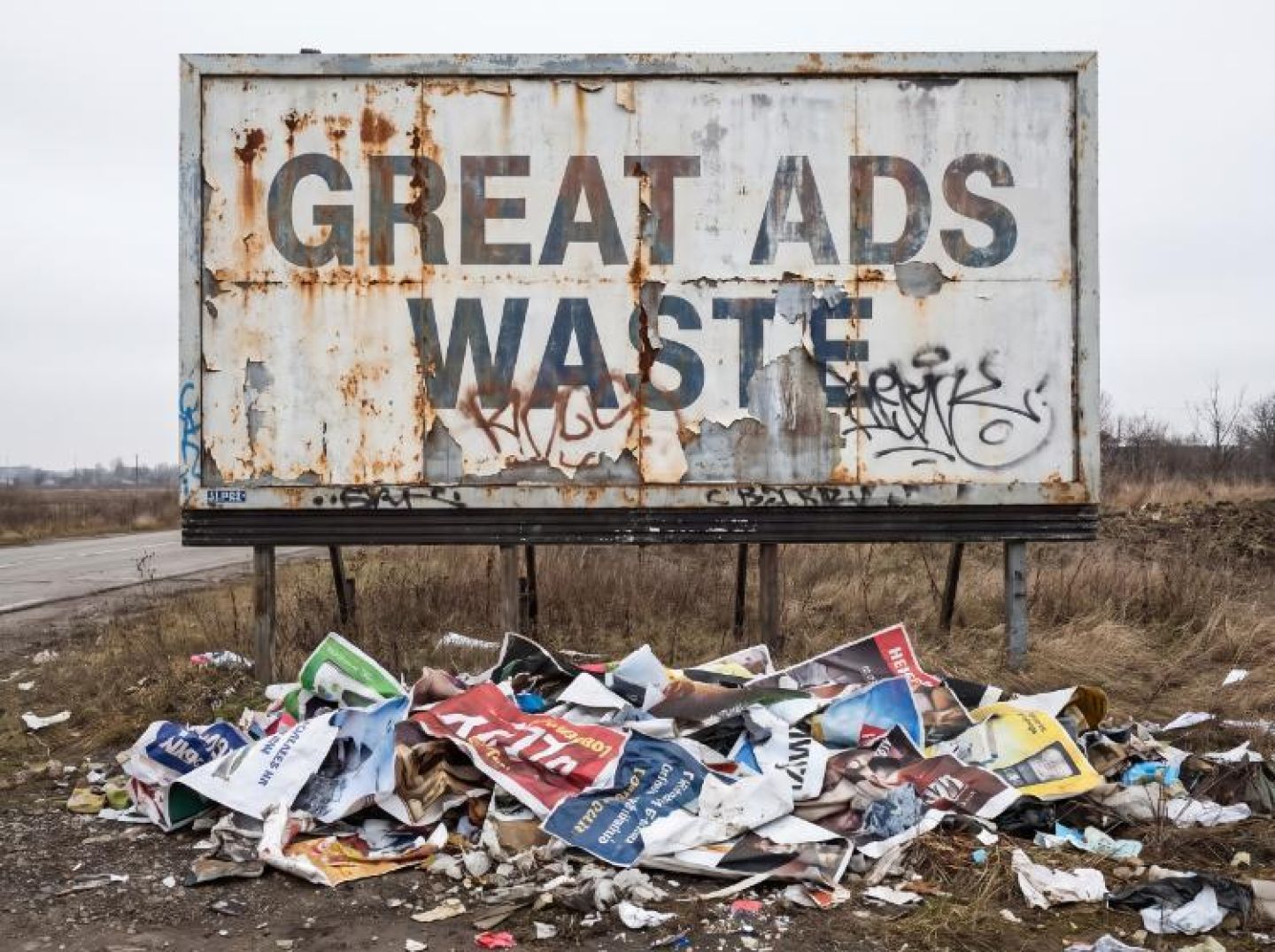
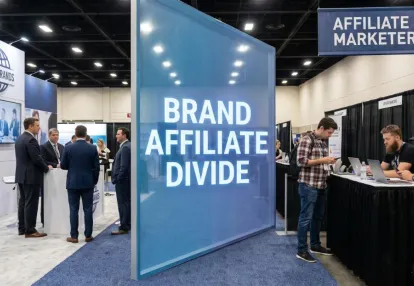
Most brands still treat their biggest campaigns like framed posters on a wall: admired, shared in Slack, maybe entered into Cannes – and then left to fade. The emotional spike they create is real, but it’s rarely harvested. That’s the waste.
A campaign like Fox Sports’ World Cup spot “Miracle” doesn’t just make people feel something; it reorganizes their intent landscape. For a few days or weeks, it redraws what you can think of as a demand map: who’s paying attention, what they’re searching for, which headlines they’ll click, what offers feel timely. If you don’t build performance flows on top of that new map, you’re essentially paying to heat the room and leaving all the windows open.
Out-of-home is an even starker example. When a network like Global rolls out a massive roadside takeover, its billboards reach more than 43 million people every fortnight and are designed, as their own positioning puts it, to make a brand “easy to recognize and impossible to ignore.” That isn’t just awareness; it’s a surge of branded searches on mobile, bursts of “brand + coupon” queries, and a measurable lift in people who are newly primed to click on anything that feels related. The emotional lift is happening in the wild. Affiliates just aren’t there to catch it.
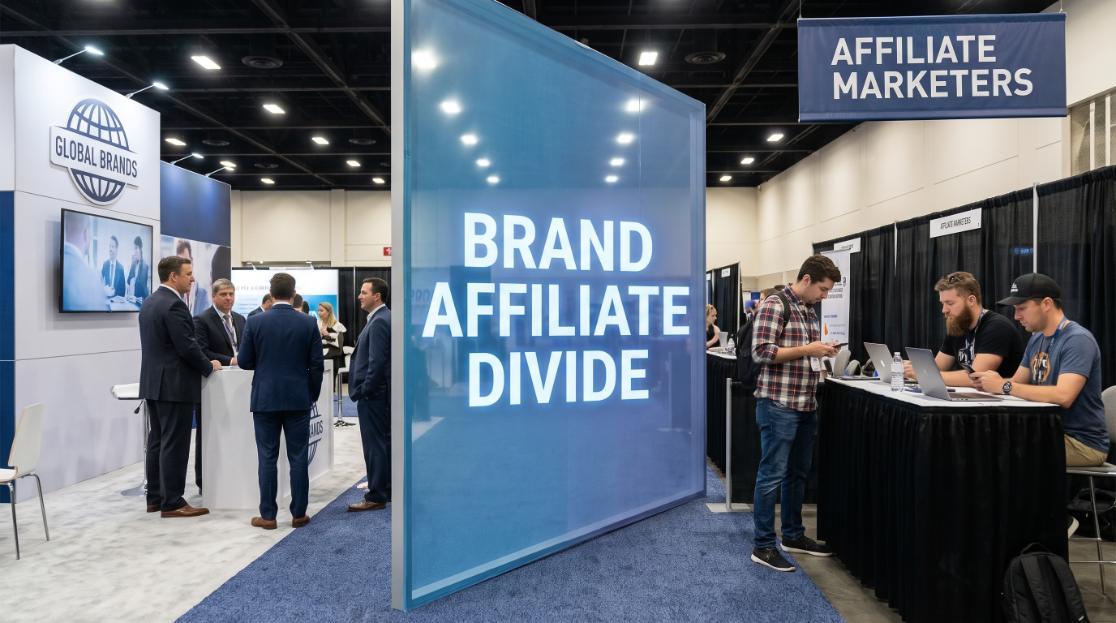
Part of the problem is cultural. Brand teams still fixate on trophies; performance and affiliate teams fixate on dashboards. At places like Cannes, marketers spend a week debating “the new way of doing things,” including how creators and brands can integrate more tightly into a single ecosystem, as coverage of the festival makes painfully clear. Yet when a high-emotion asset wins a Lion, there’s almost never a parallel plan for what native angles affiliates should run, or what search arbitrage plays should go live the moment the TV flight starts.
That disconnect is bizarre, because brand scale is exactly what makes direct response work. When a platform can claim “No.1 for Scale” with thousands of billboard sites and data-driven tools to model outcomes, it’s essentially pre-heating the market for every agile media buyer who can interpret the creative as a performance brief. If a “Miracle”-style spot is about hope, comeback stories, and underdogs, the affiliate opportunity is not to mimic the 60-second film; it’s to spin those themes into headlines, pre-landers, and quiz funnels that redirect that same emotional frame into “Which team are you?” brackets, “Win your underdog jersey” giveaways, or limited-time betting or streaming offers.
The same logic is playing out in digital creative at scale. When a brand like HelloFresh leans on AI tools to generate and deploy high volumes of ads faster, as described in coverage of Hightouch’s Ad Studio activation, they’re not doing it just to have more pretty pictures in Times Square. They’re doing it to test quickly, find what resonates, and double down on the versions that move business results. That “creative at scale” mindset is exactly what affiliates already excel at—except affiliates are usually operating blind to the rich emotional cues and distinctive assets the brand has already paid to burn into the culture.
Treating award-winning campaigns as a demand map means two things for performance and affiliate players:
2. Translate crafted storytelling into modular DR components. A 60-second brand film is not a media unit; it’s a library. Mood, narrative arc, heroes, villains, tension, payoff, distinctive assets—each of these can become a headline, an image, a scroll-stopper, a quiz question. When insurgent brands build “cultural heat” and incumbents convert it through distribution and media muscle, they’re effectively doing what affiliates could be doing at the edge of every big campaign: using broad-reach storytelling to prime desire, then deploying tightly targeted offers to harvest it, a pattern described as turning “cultural heat into scalable demand” in analysis of how established brands should borrow insurgent tactics.
The gap isn’t a lack of great creative. The gap is a lack of translation. As long as “Miracle” is treated as something to admire rather than something to deconstruct into push notifications, pop flows, dropship bundles, and arbitrageable keywords, brands will keep lighting up the sky—and affiliates will keep leaving that light unmonetized.
The best billboards in the world already work like high-performing affiliate ads – they’re just stuck on the wrong canvas.
Outdoor specialists point out that great billboards live by a ruthless rule: in a few passing seconds they must make a brand “easy to recognize, and impossible to ignore,” with distinctive assets doing the heavy lifting instead of a tiny logo in the corner, as the Billboards by Global team stresses in its launch of a new 4,500-site network. That same discipline is exactly what most push, pop, and dropship campaigns are missing.
In an AI-optimized media world, you no longer win by out-segmenting everyone else. Platforms like Meta, Google, and TikTok are increasingly broad by default, with algorithms using your actual headlines, images, and videos as the strongest signals of who should see your ad. As one practitioner describes it, creative is rapidly becoming “the new targeting,” with every visual cue and line of copy acting as a qualification signal for machine learning systems that are now doing the audience work for you, as detailed in a recent analysis of how broad targeting makes creative the main filter. If creative is the new targeting, then big-brand “billboard thinking” is the perfect raw material.
Affiliates should start by mining major brand campaigns for three things: distilled benefits, visual mnemonics, and distinctive assets.
Distilled benefits are the billboard-size truths that a brand has already spent millions crystallizing: “faster,” “safer,” “simpler,” “for people like you.” Big campaigns don’t get approved unless they reduce the product to one or two sharp promises that can survive a three-second glance. Instead of rewriting those from scratch, affiliates can lift the underlying claim and recast it into direct-response scaffolding: a problem–solution arc (“Struggling with X? Here’s how Y fixes it”), an urgency angle (“Why you need this before [season/event] hits”), or a social-proof hook (“Why [group/creator] is switching to this now”).
Visual mnemonics and distinctive assets are even more valuable in an era where algorithms “read” creative. Outdoor creatives design for instant recognition: a particular color block, a silhouette, a product close-up, a recurring icon. On billboards, those elements are the idea; they carry the brand in a fragment of a second. Affiliates can borrow that logic by building push and pop creatives around a single, repeatable visual cue that anchors every variation – the same hero object, color field, layout, or gesture – so the system can learn faster which combinations drive clicks and conversions.
This is where the convergence of brand and performance becomes powerful. Large incumbents already have the scale, distribution, and mental availability that insurgent DTC brands dream about. Commentators have argued that established players should “fall in love again with their scale” while selectively borrowing insurgent tactics like rapid feedback loops and high-affinity launches to turn cultural heat into demand, rather than trying to cosplay as scrappy upstarts, as one analysis of how legacy brands can learn from insurgents without losing their breadth explains. Affiliates sit in the perfect spot to do that translation work: take the broad, fame-building ideas and refit them into tight, testable units that performance platforms can amplify.
The process is simple, but not simplistic:
Creative testing tools already show what happens when you feed the machines more angles. One case study of a fashion brand using templated video variants found that systematically generating and testing new creatives inside an active Meta campaign produced a 59% ROAS lift versus legacy ads, proving that more varied, structured angles give the algorithm better options to scale, as seen when RenderTiger’s concepts delivered 5.51x ROAS versus 3.47x. That’s exactly the kind of incremental gain affiliates leave on the table when they ignore the “museum pieces” in a brand’s archives.
Billboards and award-winning spots already do the hardest part: compressing a brand’s meaning into something simple and unforgettable. In a world where ad platforms treat your creative as the targeting, affiliates who can translate those big ideas into problem–solution, urgency, and social-proof formats will stop riding on the margins of brand fame and start compounding it into scalable push, pop, and dropship profit.
If Section 2 is about “thinking like a billboard,” this is where you stop thinking and start stealing like an operator.
Most affiliates treat big-brand awards season as trivia. The pros treat it as a live data event and build systems to harvest the intent it creates. That system has three moving parts: spy, model, and rip/adapt.
Once an award-winning ad hits the trades or gets clipped on TikTok, you have a rough sense of the story and the emotion. What you don’t yet know is how that energy is getting monetized in your niche.
Instead of guessing, you lean on the platforms that already rank the world’s direct-response creatives for you. As media buyers like Sam Tomlinson point out in Social Media Examiner’s guide to scaling eCommerce with Facebook ads, the simplest starting point is the Facebook Ads Library plus a competitive tool like MagicBrief:
You’re not hunting for clones of the Cannes spot; you’re identifying what the market is already rewarding that rhymes with the same emotional trigger: underdog victory, relief after frustration, social belonging, safety, status, nostalgia.
The ad is just the hook. To make money on push, pop, or dropship traffic, you need to know what happens after the click.
For every long-running ad you identify, reverse-engineer the path:
This is where high-output creative systems shine. Tools that let brands spin up many ad variations from a single concept, like the dynamic video workflows described in StoreYa’s case study on RenderTiger’s higher-ROAS Meta creatives, are effectively automated versions of what you’re doing manually: test different hooks, presenters, and formats wrapped around the same core offer until you hit a winner.
Your goal isn’t to copy the funnel pixel-for-pixel. It’s to distill a funnel pattern you can port into push, pop, or native: how they warm up the click, how hard they pre-sell, how they frame the first commitment, and how they escalate value with upsells or bonuses.
Once you’ve mapped three to five proven funnels that rhyme with the brand concept, you “rip and adapt” in a way that would pass a sniff test from any reasonable compliance team.
Rip the psychology, not the pixels:
This is also where AI becomes a force multiplier. When you’ve documented multiple funnel patterns and the emotional DNA behind them, you can train generative tools on that knowledge base, then have them spit out dozens of copy and creative variations that stay on-message. As Fraser Cottrell argues in Social Media Examiner’s playbook for AI ad creative, AI is only as strong as the strategic context you feed it; your spy-and-model work is that context.
The final, often-missed step: have all of this built before the award hype peaks. You’re not trying to outbid the brand on TV. You’re building a net of push, pop, and native funnels that sit downstream, ready to catch the extra searches, the random “that ad reminded me I really should fix X” moments, and the cheap remnant traffic.
Big brands move the culture. Affiliates who systematically spy, model, and rip/adapt move the revenue.
When platforms tell you to “go broad,” they’re not asking you to be generic. They’re asking your creative to do the qualification that targeting used to do.
Across Google, Meta, and TikTok, broad and automated setups like Performance Max, Advantage+, and automated audience expansion now assume you’ll hand over most levers and let the machine hunt for converters. As one analysis of this shift put it, AI has made “creative the new targeting,” with headlines, visuals, and hooks acting as the primary signals that tell algorithms who an ad is for and what action matters most, instead of just what the product is about, as MarTech observed. For affiliates, that means the game is no longer won in the audience settings panel; it’s won in how precisely your creatives embody different buyer avatars and contexts.
Think of each ad as a niche-specific mini-billboard inside a massive, AI-driven highway. Just as great outdoor work compresses a brand’s essence into a few seconds and a few bold assets, the most effective performance creatives use ultra-specific cues—language, setting, problem, and social proof—to attract and filter the right people. The difference is that instead of a single hero board, you’re deploying dozens of “micro-billboards,” each speaking to a tightly defined slice of the market.
That’s your core operating principle: broad media, narrow creative.
Start by mapping your avatars and moments, not just demographics. If you’re promoting a high-margin snack offer as the World Cup ramps up, don’t settle for “sports fans.” Craft a variant laser-focused on “late-night World Cup snack hacks for fans who can’t leave the couch,” framed around sleep, convenience, and FOMO. That kind of contextual angle is exactly how emotionally charged campaigns end up driving downstream behavior like search, because they tap into a lived moment the audience is already in, as the World Cup work highlighted by MarTech’s analysis of Fox Sports’ “Miracle” demonstrated.
Or take a health and wellness offer: one avatar might be “construction workers with chronic back pain,” another “remote workers hunched over laptops,” a third “new parents lifting toddlers all day.” Each deserves its own creative cluster: different wardrobe, backdrop, pain language, objections, and before/after narrative. Your interests and lookalikes can be broad; the specificity lives in the stories the creatives tell.
Here’s how to translate that into execution across push, pop, native, and TikTok while keeping the core offer consistent.
Push: Curiosity and pattern interrupt
Push is the notification bar equivalent of a roadside billboard—tiny, fleeting, and competing with everything else on the screen. You win by pairing avatar-specific curiosity with a sharp, sometimes shocking, visual or emoji. The copy and icon should signal who it’s for before what it is.
You’re not explaining; you’re provoking a tap from the exact person you want. Let broad delivery push this to millions, but design the hook so only the right subculture feels irresistibly called out. This aligns with the idea that fresh, high-volume creative is now mandatory at scale, as HelloFresh’s embrace of AI-driven asset generation to continually feed new variants across channels illustrates, according to.
Pop: Aggressive urgency and instant framing
Pop traffic is interruption on steroids. You have seconds, and the user didn’t ask to see you. That calls for avatar-specific urgency and payoff, not brand poetry.
Instead of a generic “50% off today,” angle into the lived constraint:
Pop creatives should look and feel a bit louder and more direct-response than other formats. Big, contrasting typography, blunt “before/after” images, and offer stamps (“Today Only,” “Local Pilot Program”) give the algorithm obvious signals that this is for people who respond to deals, deadlines, and relief from acute pain.
Native: Story-led pre-sell for problem-aware users
Native is where you lean into long-form context. Your avatars aren’t just clicking on impulse; they’re scanning headlines and thumbnails that resemble editorial content. Here, “creative as targeting” means building mini-articles or advertorials that could plausibly live on the host site, but with a narrative tailored to one avatar at a time.
For “budget sneakerheads,” that might look like:
Native thrives on semi-UGC: reviewer-style photos, screenshots of chats, “I tried this so you don’t have to” framing. That balance between authentic, community-first storytelling and brand control mirrors how brands are leaning on creator fandom even while acknowledging the trade-offs in voice and governance, as AdExchanger’s discussion of Poppi’s community-first strategy makes clear.
TikTok: Organic-feeling creator content
On TikTok, if it looks like an ad, it dies. Your best bet is to commission or simulate creator clips that feel like they belong between a cooking hack and a meme—even if they’re tightly scripted around your avatar.
For the late-night World Cup snack angle, that might be:
For “construction workers with back pain,” it’s someone in hi-vis gear filming selfie-style at a job site, showing how they stretch or strap on a brace during a break, with on-screen copy like “For the guys who can’t call in ‘back hurts.’”
Your TikTok system should revolve around clusters: 3–10 short videos around one avatar and one core claim, each testing a different hook (joke, confession, hack, transformation). TikTok’s recommendation engine is specifically tuned to pick up on visual and behavioral signals—wardrobe, environment, tone—and route those videos toward similar users, which is exactly why your specificity becomes a targeting vector once you hand audience expansion over to the platform’s AI.
The throughline is simple: when algorithms are in charge of who sees your ads, you don’t fight that; you feed them better signals. You stop thinking “women 25–54” and start thinking “budget sneakerheads who brag about finding steals,” “back‑of‑house restaurant staff with joint pain,” “World Cup fans sneaking snacks at 2 a.m.” Then you design push, pop
Big brands have quietly solved a problem most affiliates still wrestle with: how to create an endless stream of fresh ads without an endless stream of production costs. Their answer is AI-powered creative factories—exactly the kind of system HelloFresh uses to spin one “great ad” angle into dozens of permutations for different markets, audiences, and placements. What looks like brand magic is really process: feed proven ideas into machines, then let the data decide what survives.
The good news is that affiliates can now tap the same playbook. Tools purpose-built for performance, like the AI video platform behind the RenderTiger case study, already show that machine-assisted creatives can beat human-only baselines; in that example, automated variants drove a 59% higher ROAS in a live Meta account, with the best AI-generated ads delivering both engagement and efficiency. And according to a detailed breakdown of AI workflows from Social Media Examiner, static images that used to require studio shoots can now be produced for cents—if you give the models the right context.
For affiliates, that context is your superpower. Instead of training AI on “brand guidelines,” you train it on two inputs:
You then feed both into an AI pipeline with a very specific brief: generate direct-response variants of brand-grade ideas. Not pretty mood boards—ads you can launch tomorrow.
A practical workflow looks like this:
The point isn’t to pick one “perfect” variant; it’s to manufacture volume and let the platform crown winners. You might launch 40–60 permutations of a single brand concept across push, pop, and dropship funnels. Your job is then to grade them against a strict hit definition: any creative that wins at least 10% of spend in a broad or auto-optimized setup (e.g., UAC, Advantage+, automated placements) while beating your ROAS or CPA goal graduates; everything else gets killed or cannibalized for parts.
Over time, this turns into a compounding asset:
You end up scaling like a brand—running structured, concept-led experimentation at high velocity—but with affiliate economics. No studio, no agency retainer, no Cannes table. Just a rolling factory that takes in big-brand inspiration and spits out performance-ready push, pop, native, and TikTok ads, with the algorithm and your ROAS targets acting as the only judges that matter.
Receive top converting landing pages in your inbox every week from us.
Recently Updated
Learn how to turn award-winning brand campaigns into scalable Push, Pop, Native, TikTok, and dropship performance campaigns. This guide shows how to spy on proven funnels, extract the psychology behind successful creative, adapt big-brand concepts into direct-response angles, and use AI to produce high-velocity variations that can be judged by ROAS and CPA.
Liam O’Connor
7 minOct 3, 2026
Guide
Most dropshippers treat TikTok virality as a buying signal when it is often already a late-stage indicator. This article explains how to look upstream at paid ad activity, advertiser entry, creative maturity, spend acceleration, and rate-of-change metrics to identify product opportunities earlier. It provides a practical scoring system and 48-hour audit to help dropshippers decide whether a viral product still has enough margin and market runway before entering.
Priya Kapoor
7 minAug 19, 2026
Guide
TikTok's booming sports creator ecosystem is creating new opportunities for dropshippers who know where to look. By tracking creator-led product demonstrations alongside competitor ads, sellers can identify emerging products before they become saturated. Combining organic creator trends with ad intelligence enables faster product validation, stronger creatives, and better margins in fast-moving sports niches.
Liam O’Connor
7 minAug 5, 2026