11 minSeptember 3, 2026

Our spy tools monitor millions of native ads from over 60+ countries and thousands of publishers.
Get StartedIf you’re still thinking in terms of “OOH people” versus “performance marketers,” you’re already behind.
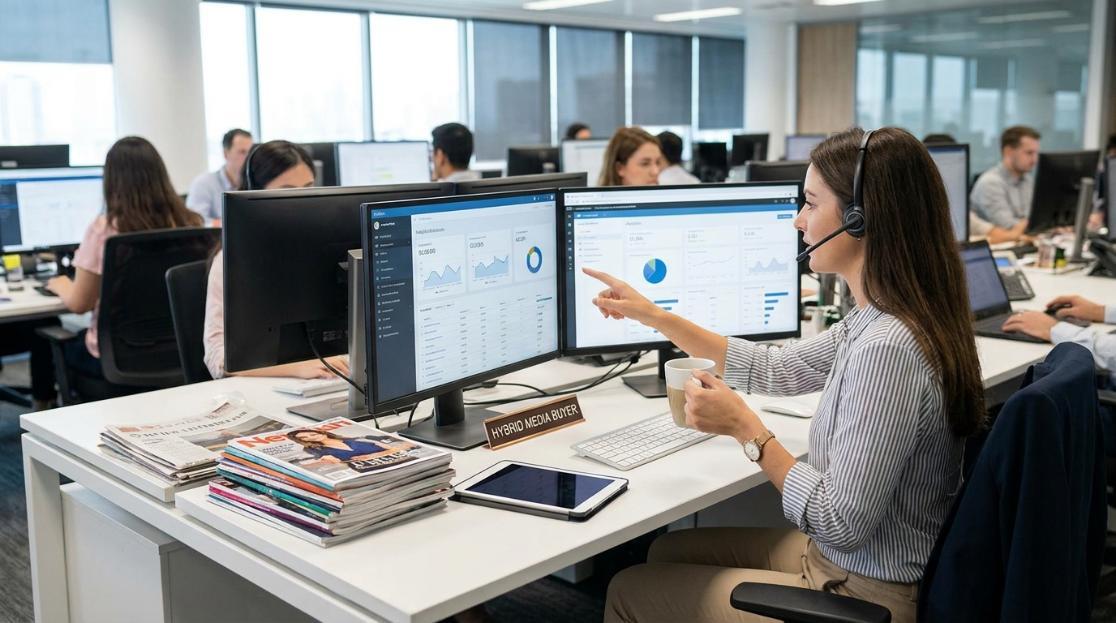
Over the next three years, the buyers who consistently win won’t live in either camp. They’ll be hybrids: part street hustler, part data spy. They’ll use truck sides and LED billboard trucks the way elite performance marketers use retargeting pixels—high-intent triggers that quietly light up spy‑informed funnels across native, push, pops, and TikTok.
Out-of-home is no longer a dumb billboard buy that sits in a brand budget line. Programmatic and AI are dragging it into the same real‑time machine that runs your display and CTV. As one deep dive into DSP/SSP convergence explains, emerging standards are being built so AI agents can buy DOOH using the same interoperability protocols as digital display. When the “OOH” button finally lands in your media planner, it’s going to behave like the “CTV” button: same pipes, same transaction logic, same ability to plug into your performance stack. That sameness is not a nuance—it’s the unlock.
At the same time, the physical canvas you can tap is exploding. Consolidation moves like Broadsign’s acquisition of Place Exchange have pushed globally bookable screens to roughly 1.8 million, with DOOH projected to grow from $22.5B in 2026 to over $56B by 2034. Programmatic guaranteed deals for DOOH surfacing right inside DV360 mean your “billboard” can now sit in the same queue as your YouTube pre‑roll and your TikTok test. OOH isn’t the weird offline cousin anymore—it’s just another line item in the biddable stack.
But the real edge isn’t just digitizing billboards. It’s weaponizing mobility.
Mobile OOH—especially LED billboard trucks and branded fleets—gives you something no walled garden can: guaranteed, in‑the‑world presence that can be aimed with surgical precision and measured with digital rigor. As one analysis of mobile OOH notes, trucks planned with audience intelligence and backed by verified measurement can be activated with the same precision and accountability as your online campaigns, while still doing the heavy lifting of brand building. No ad blockers, no skip button, no cookie apocalypse—just a screen rolling directly through your target’s daily life, feeding your funnel.
Meanwhile, OOH tech platforms are already running live experiments in the next phase: agentic AI that plans and executes multi‑channel campaigns end‑to‑end. In a recent charity lottery campaign, Broadsign and partners orchestrated what they described as the first fully agentic AI‑powered OOH campaign, with buyer and seller agents coordinating complex tasks across parties in real time. Because those same agent frameworks are designed to work across all programmatic channels, the logical next step is obvious: one AI‑assisted brain controlling both your street‑level presence and your spy‑grade digital funnel.
Now layer in competitive intelligence tools like Anstrex, and you start to see the shape of the new media buyer. Instead of guessing creative, placements, and angles, you reverse‑engineer what’s working across native, push, pops, and TikTok. Then you drop a fleet of LED trucks into the exact neighborhoods, events, and commutes where your likely converters live—and let those real‑world impressions silently retarget into the same proven funnels you’ve already spied and cloned.
The result is a campaign architecture that’s:
This playbook is for the buyer who wants that unfair advantage—the one who’s ready to fuse OOH street smarts with digital spy intelligence and build hybrid campaigns that print ROI while everyone else is still arguing about brand versus performance.
For years, OOH planning was literally done with pushpins. You bought panels, routes, and walls in isolation, then waited for a post‑campaign study to tell you whether your instincts were right. Billboards lived in one spreadsheet, Facebook in another, search and CTV in their own walled gardens. “Street” decisions were made over coffee with reps; “performance” decisions were made in dashboards. The two worlds barely spoke.
That separation is collapsing.
The money is already voting with its feet. In the U.S., out of home just delivered a record quarter, with revenue hitting $2.12 billion and notching its 20th straight period of growth, driven heavily by double‑digit gains in digital formats, according to industry coverage from OOH Today. Digital OOH now accounts for more than a third of all OOH revenue, and categories like digital transit and street furniture are growing north of 20% year‑over‑year. This isn’t branding money sloshing around; it’s performance dollars following measurability and control.
The underlying infrastructure looks less like a media plan and more like a trading stack. What used to be static billboards bought quarterly is now a global mesh of 1.8 million bookable screens stitched together through programmatic pipes, as consolidation plays like Broadsign’s acquisition of Place Exchange have shown. Digital OOH inventory can be bought via real‑time bidding, programmatic direct, and programmatic guaranteed, using the same DSP logic performance teams already apply to display and video. A sidewalk screen isn’t “a board” anymore; it’s a node in a data‑driven supply chain.
That shift—from individual units to a programmable graph—is what unlocks spy‑level intelligence.
Instead of planning around static impressions, hybrid buyers plan around trigger points: specific real‑world conditions that fire OOH the way a retargeting pixel fires display. A surge in search volume in a given ZIP. A spike in footfall around a competitor’s store. A weather swing that makes hot coffee or cold drinks suddenly urgent. These aren’t abstractions; they’re already operational in the modern DOOH ecosystem, which combines mobile location data, smart‑city sensors, and programmatic buying into a single decision layer, as outlined in.
The result is that street assets become high‑intent switches instead of passive wallpaper. Truck sides rolling past office parks can be timed to coincide with peaks in B2B search demand. LED billboard trucks outside a stadium can rotate creative in real time based on game state, ticket pricing, or app engagement. Storefront screens can be pulsed only when probabilistic models say your high‑value segments are physically nearby. You’re no longer buying “four weeks of coverage”; you’re renting tiny slices of reality when it’s most primed to convert.
Platforms like AdQuick translate this into performance marketer language. Instead of hand‑picking a handful of boards and hoping, hybrid buyers feed in audience, behavioral, and outcome data. Machine learning models then simulate trillions of potential combinations of OOH units to find the specific placements that drive measurable lift in store visits, signups, or sales. Real‑time data on exposures and downstream actions closes the loop, putting OOH on the same reporting footing as paid social or programmatic display and revealing the “halo effect” OOH has on those adjacent digital campaigns.
At the bleeding edge, the buying logic itself is becoming autonomous. In one recent campaign, fully agentic AI handled end‑to‑end OOH trading across a global supply of static and digital screens, dynamically coordinating buy‑ and sell‑side decisions with humans setting goals and guardrails, as described in coverage of an early agentic AI DOOH activation. Instead of planners manually toggling on and off dozens of micro‑buys, agents optimized screen‑level delivery based on real‑time performance data and context.
This is the real transformation: billboards and truck fleets are no longer siloed “brand” media. They’re sensors and actuators in a larger decision system.
The hybrid media buyer doesn’t start with “OOH budget” versus “digital budget.” They start with a map of high‑leverage real‑world moments, then use data and programmatic tools to wire those moments into the rest of their stack. The old game was, “Can I get on the biggest board on the highway?” The new game is, “Where are my trigger points in the wild—and how do I weaponize every panel, truck, and screen to fire exactly when those points light up?”
Street smarts in OOH isn’t about buying the biggest board on the busiest highway. It’s about treating physical media like a sequence of “intent moments” that plug cleanly into your performance funnel.
The hybrid buyer starts on the ground—literally. Instead of asking “How many impressions does this screen get?”, they ask, “What are people trying to do when they walk past this?” A truck-side on a grocery route, a digital kiosk in a commuter hub, a neighborhood LED board outside a clinic—each of these is a different intent profile. Your job is to map those profiles to funnel stages.
This is where modern DOOH mechanics give street instincts teeth. Digital screens aren’t just static rectangles; they’re addressable surfaces bought through the same kinds of workflows you use for display. As one overview of digital out-of-home explains, programmatic pipes—RTB, programmatic direct, and programmatic guaranteed deals—let you choose which screen, when, and under what conditions your ad appears. The “street” decision of where to show up is suddenly fused with the “spy” decision of who and when.
But high-intent OOH starts long before you log into a DSP. It starts with ruthless situational relevance.
You’re not just buying “screens”; you’re buying moments.
The creative and the mechanics have to reinforce that intent. Static OOH historically relied on a single hero line and logo. In a hybrid world, each unit is pre-wired to trigger digital follow‑through. Platforms that analyze trillions of combinations of OOH units against consumer and behavioral data, like the planning tools described by AdQuick’s “universal adapter” approach, make it possible to cluster placements by likely outcome: in‑store visit, search lift, app install, or email capture. That’s how you turn “brand presence” into “funnel input.”
Design-wise, that means:
The smartest hybrid buyers don’t just optimize where they run—they engineer OOH to throw off digital signals. A QR code is the blunt instrument. The sharper play is to structure campaigns so exposure correlates cleanly with downstream behaviors: spikes in branded search, lift in local store visits, higher performance for Meta or Google retargeting pools. By delivering OOH data in real time and quantifying the “halo effect” on adjacent digital campaigns, platforms like AdQuick’s intelligence layer move street media out of the “unmeasurable” bucket and into performance math.
Finally, think of high‑intent OOH as the first agent in a chain, not a one‑off blast. The industry’s early experiments with agentic AI–powered OOH campaigns show what’s coming: systems that watch how audiences respond, then automatically adjust placements, timing, and creative to sharpen strategic impact across channels. Your job, as the hybrid buyer, is to design street‑level triggers that these systems can actually work with—simple, intent‑aligned messages in high‑signal locations that naturally feed your retargeting, CRM, and attribution stack.
Do that, and OOH stops being a scenic backdrop. It becomes your most efficient source of warmed‑up prospects entering the funnel with real world intent already in motion.
If street smarts are about orchestrating intent in the physical world, digital spycraft is about reverse‑engineering how your competitors monetize that intent once people are online. This is where tools like Anstrex turn you from a media buyer into a funnel analyst with night‑vision goggles.
Anstrex scrapes thousands of native, display, and push campaigns across ad networks and geos. But the real power isn’t just “who’s running which creative.” It’s the ability to mirror the entire journey: ad → pre‑sell → landing page → checkout or lead flow. Your job as a hybrid buyer is to stitch that intelligence directly to the intent you’re manufacturing with OOH and DOOH.
Start by treating Anstrex like reconnaissance on “what works for your category.” Filter for your vertical and top‑spending competitors, then map three layers:
You’re not copying; you’re pattern‑matching. When you see the same hook, format, and flow across multiple high‑spend advertisers, you’ve uncovered a proven “conversion language” for that audience.
Now connect the dots to OOH. Modern OOH platforms already operate with a performance mindset. Systems like AdQuick’s DSP use AI‑driven planning to evaluate trillions of OOH unit combinations based on behavioral and demographic data, then push those buys programmatically just like any other biddable channel. Instead of guessing which boards “feel right,” you pick placements where a proven funnel is likely to succeed.
Here’s the play:
The key is continuity. The question is not “Did OOH work?” but “Did the OOH‑primed funnel work?” Because OOH is increasingly transacted via programmatic protocols like RTB, programmatic direct, and programmatic guaranteed, you can treat those boards and screens as top‑of‑funnel inventory that feeds a meticulously cloned digital pathway.
Hybrid buyers push this further by using spy data to match funnel sophistication to media sophistication. If Anstrex shows that your category leaders are running advanced multi‑step funnels with quizzes or pre‑sells, you can justify richer DOOH placements and dynamic creative. The DOOH ecosystem’s shift toward smarter, data‑driven trading—driven by programmatic exchanges and even agentic AI systems coordinating buys across networks—means you can trigger specific creative based on context (time of day, location, audience index) that lines up with the same segmentation logic your competitors use online.
For example, if Anstrex reveals a competitor is running separate funnels for “budget‑conscious” vs. “premium” buyers, you can:
Because platforms like AdQuick now provide OOH data in near real time and highlight the halo effect OOH has on adjacent digital campaigns, you can do what traditional buyers never could: iterate your OOH + funnel pairing based on live performance feedback. If a particular creative‑plus‑funnel combo lifts branded search or retargeting ROAS in a market, you scale both the local OOH and the corresponding digital buys.
Behind the scenes, OOH networks themselves are becoming more “spy‑like.” Intelligence layers such as machine‑modeled demand systems help sellers see which advertisers, categories, and creatives are surging where. As those models propagate into the programmatic pipes you buy through, the same kind of pattern recognition you do with Anstrex will increasingly inform how screens are priced and packaged.
The net effect: competitive intel stops being a purely digital advantage. When you mirror competitor funnels with Anstrex and plug them into programmatic OOH and DOOH, you build campaigns where the street and the screen tell the same story—and every dollar of OOH spend is pre‑wired to hit a landing page architecture that you already know can convert.
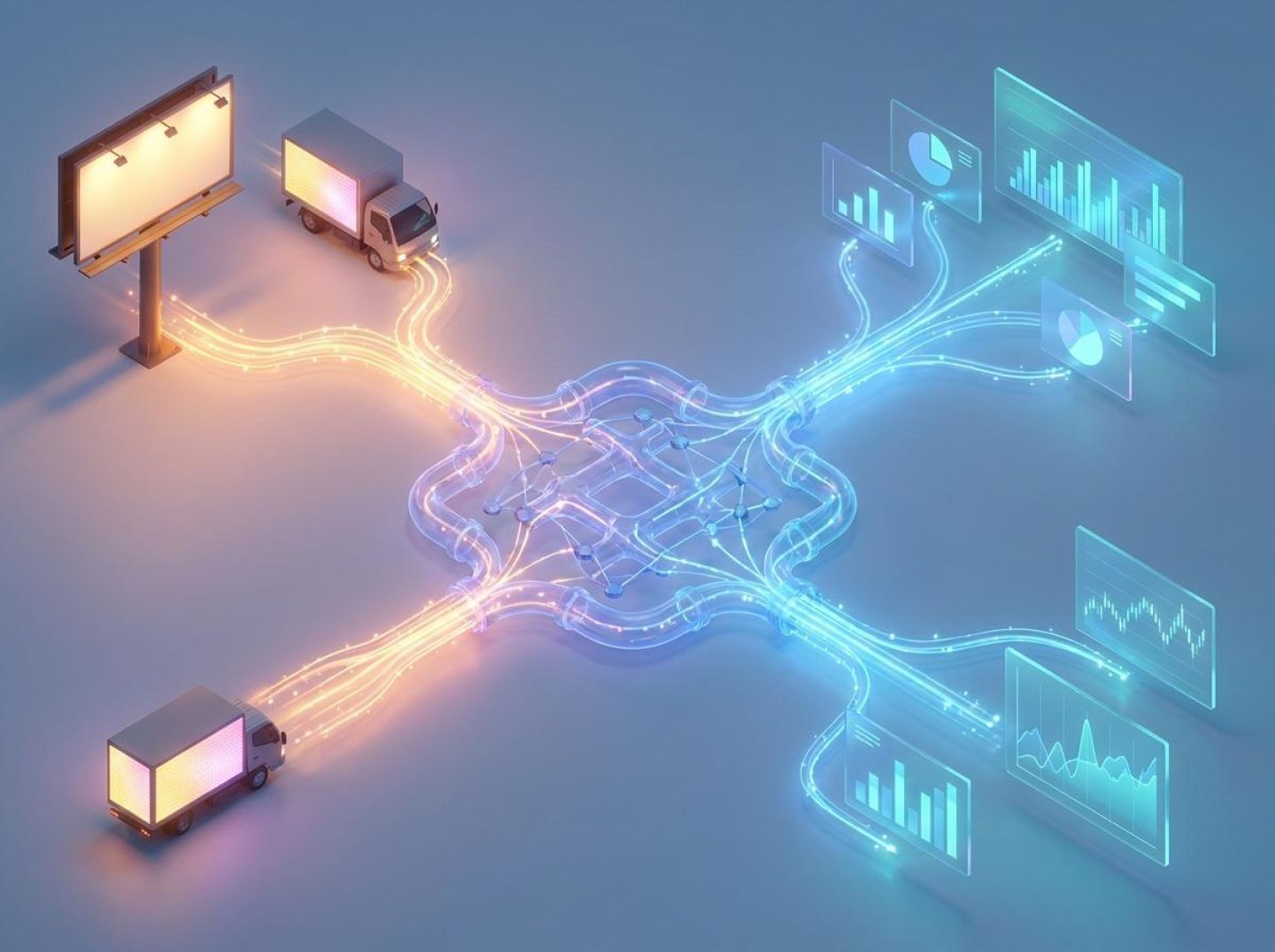
Wiring the stack starts with a simple mental shift: you’re not “doing some billboards and some retargeting.” You’re building one continuous performance system where a real‑world exposure quietly hands off to a digital spy network that harvests intent and routes budgets toward whatever is working hardest.
There are three jobs your stack has to do:
Let’s walk it like a systems architect, not a media planner.
The raw material for everything else is a time‑and‑place view of who is likely seeing your OOH.
Modern platforms like AdQuick already treat OOH as a first‑class performance channel by tying screens and placements to demographic and behavioral data, then optimizing against outcomes instead of vanity impressions. You want to steal that idea for your own stack.
Concretely, that means:
Your output isn’t “12 boards and 3 trucks.” It’s a rolling exposure graph: at 8:15–8:45 a.m., in these micro‑geos, you are very likely touching commuters with certain behaviors and incomes.
This is exactly the kind of “screen‑level audience index” the Broadsign ecosystem brought into its agentic AI OOH campaign, where buy‑ and sell‑side agents negotiated around granular predicted audiences instead of dumb reach.
You’re going to borrow that same precision, but wire it into your retargeting.
Once you know when and where exposure is happening, you translate that reality into the identifiers digital platforms understand.
There are four main bridges:
This is the on‑ramp that lets OOH behave with “the same rigor as digital,” where mobile OOH planned with audience intelligence and precision activation becomes a practical bridge from brand to performance, as one OOH Today analysis of mobile OOH put it.
2.
DOOH programmatic pipesWhen you’re in digital out‑of‑home, your exposure graph can live directly inside the programmatic stack. Platforms like Broadsign and Place Exchange have already stitched DOOH into Google’s DV360 as programmatic guaranteed deals, which means:
3.On‑asset capture (QR, short URLs, NFC)
These are your explicit bridge events:
4. Modeled exposure audiences
Sometimes you can’t reliably retarget everyone who passed your board, but you can model who they are:
The key is that every OOH plan outputs at least one actionable digital audience definition, not just a JPEG in a recap deck.
Now you have cohorts tagged as “likely exposed,” “explicitly exposed,” and “modeled from exposure.” The final step is to feed those into your arbitrage logic.
Here’s a pragmatic setup:
When you see, for example, that “OOH‑exposed + Meta retargeting” is producing 30% better payback than “search‑only,” you shift marginal dollars toward more OOH in that geo and heavier social retargeting against those IDs.
When this is wired correctly, OOH is no longer a fixed line item. It
If you want to turn OOH into a performance engine instead of a line item, you can’t treat billboards as “special.” You have to buy them the same way you buy display, CTV, and native: through a DSP that speaks the same language as the rest of your stack.
That’s exactly what an AdQuick‑style DSP does for OOH and DOOH. Under the hood, it plugs into programmatic pipes and inventory sources the same way a display DSP does, but its UI is built around real‑world objects: screens, neighborhoods, venue types, and movement patterns. You’re not just selecting sites; you’re orchestrating exposures along a path.
The timing is on your side. Digital OOH is the growth engine of the medium, climbing from $22.51 billion in 2026 to a projected $56.1 billion by 2034, powered by the trifecta of programmatic buying, mobile location data, and smart‑city infrastructure as analysts describe the DOOH market. In the U.S., DOOH is growing at multiples of static OOH, and digital formats already account for more than a third of revenue, with double‑digit increases across transit, street furniture, place‑based, and other formats, according to industry revenue data. In other words: the inventory you care about is already sitting in pipes your DSP can reach.
From a buying mechanics standpoint, you get the same spectrum of deals you’re used to in digital:
The crucial advantage of an AdQuick‑style platform is that it abstracts the complexity of the supply side. You don’t have to care which SSP sits behind a panel; the DSP already integrates across exchanges, media owners, and deal types. As coverage of DSP/SSP convergence in OOH points out, the industry is marching toward a world where DOOH trades on the same interoperability standards as display and CTV. That means your OOH button behaves like your CTV button: one set of bidding, pacing, and reporting rules governs all of it.
This is where your hybrid strategy snaps into place:
On the back end, you get unified reporting: impressions, reach estimates, and—if you’ve wired your measurement correctly—store visits, site sessions, and conversions keyed to exposure windows. That feedback loop is what’s driving more performance budgets into OOH; marketers are seeing that, when measured on lift, OOH can outperform legacy channels like TV, as recent OOH performance research highlights.
For a hybrid media buyer, the takeaway is simple: stop “ordering billboards” and start “dialing in a DOOH line item” inside a DSP that treats streets and screens as one connected performance surface. Your street instincts decide where to focus; your DSP decides exactly which pixels light up, when, and at what price — and your retargeting stack picks up the trail once those exposures hit the real world.
Receive top converting landing pages in your inbox every week from us.
Most Read
Discover why viral TikTok ads don't always translate into profitable, sustainable campaigns. Learn how performance marketers can use Anstrex ad intelligence to identify winning hooks, map audience motivations, manage brand-safety risks, and turn cultural trends into repeatable advertising strategies.
David Kim
7 minOct 17, 2026
Recently Updated
Discover how performance marketers can turn AI-generated answers into profitable creative opportunities for native, push, and TikTok advertising. Learn how to extract customer pain points, validate campaign angles with Anstrex and TikTok ad libraries, and build data-informed creative strategies that stand out from low-quality AI content.
Liam O’Connor
7 minOct 16, 2026
Featured
Discover how brands can use AI-powered native and TikTok advertising while protecting brand reputation, customer trust, and legal compliance. Learn how to build machine-readable brand rules, design safer creative workflows, enforce contextual suitability, and establish clear accountability for autonomous advertising systems.
Marcus Chen
7 minOct 16, 2026