Native Ads, Push Ads, Affiliate Marketing
6 minAugust 10, 2026

Our spy tools monitor millions of native ads from over 60+ countries and thousands of publishers.
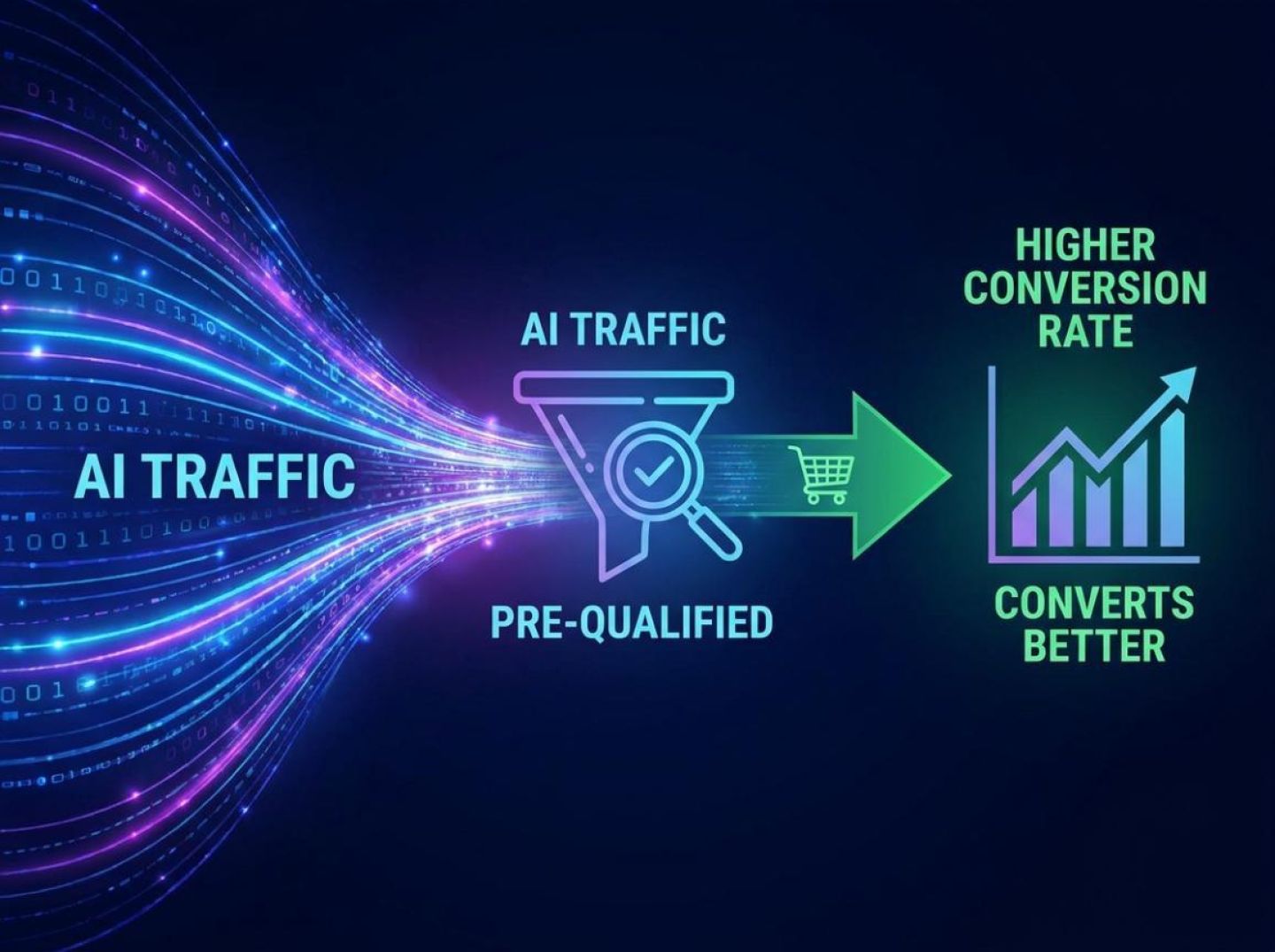
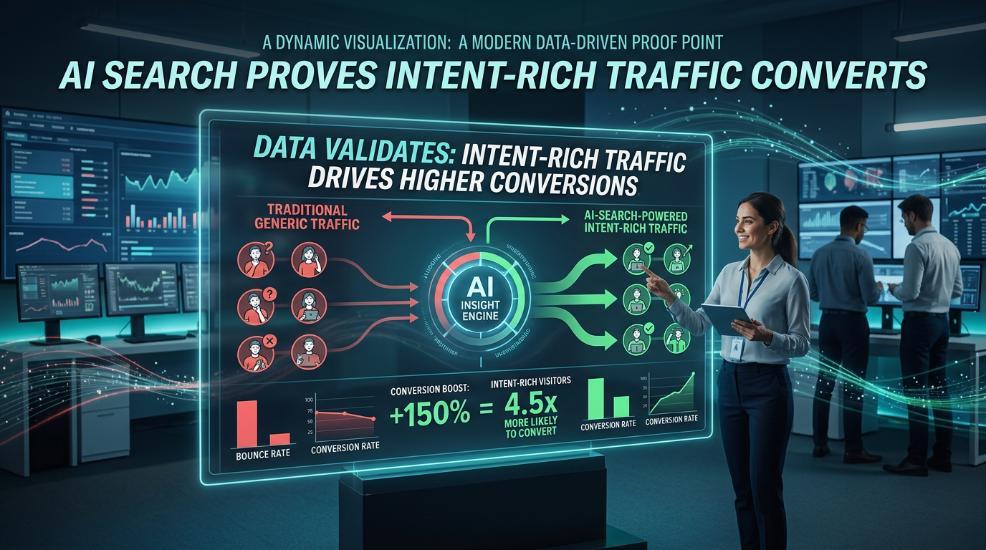
Get StartedThe data is in, and it says exactly what performance advertisers have been saying for years: a smaller audience with real intent will outperform a massive one that's merely browsing. What's new is that AI search has now produced the hard numbers to prove it at scale — and the results are striking, if entirely predictable.
A study of 97 B2B websites and 29 million visits conducted by Orbit Media Studios found that AI-referred traffic converts at dramatically higher rates than traditional organic search traffic. The pattern is consistent and pronounced: visitors arriving from ChatGPT, Perplexity, and similar tools behave like buyers, not browsers. Meanwhile, NP Digital's campaign data across more than 40 B2B and B2C campaigns quantifies the gap even further — AI-referred visitors convert at 5.97 percent compared to 0.72 percent for traditional traffic, revenue per visitor jumps from $2.56 to $18.04, and the time-to-conversion window compresses from eight days to just three. The volume is still tiny — AI traffic accounts for roughly 0.58 percent of total sessions — but it drives 5.09 percent of sales. Lifetime value clocks in at $325 versus $271 for Google-referred visitors.
If you've ever run a direct-response campaign, that "small volume, outsized revenue" signature should look deeply familiar. It's the exact profile of a well-targeted push or native ad set: a narrow slice of traffic that punches far above its weight because every click carries genuine purchase intent.
The reason this works isn't mysterious, and Orbit Media resurfaced the framework that explains it. The MECLABS conversion formula — developed over two decades ago — assigns weighted variables to the probability of conversion, and the single most heavily weighted variable is visitor motivation, which the formula's creators defined as "the magnitude and nature of the customer's demand for the product." In plainer terms: intent. When the person arriving on your page already wants what you sell, everything else — value proposition clarity, incentive, friction reduction — matters less. The formula reads C = 4m + 3v + 2(i − f) − 2a, and that coefficient of four on motivation isn't decorative. It's the dominant force in whether someone converts or bounces.
AI search doesn't manufacture that motivation. It filters for it. Orbit Media outlined four hypotheses for why AI traffic converts at such elevated rates, and the most compelling is that the AI has already done the shortlisting. By the time someone clicks through from a chatbot response, they've had a multi-turn conversation — they've asked for recommendations, compared options, and narrowed their consideration set inside the model. The consideration stage happened before the click. They arrive on your site for confirmation, not exploration. As HubSpot's own analysis puts it, a visitor who clicks after reading an AI-generated answer has typically progressed past the surface layer — they've validated their problem, seen which sources got cited, and arrived ready to verify, compare, or convert.
This is exactly what a high-performing native ad creative does when it self-selects its audience through specificity. A headline that reads "5 CRM platforms for sales teams under 20 people" doesn't generate mass clicks — it generates the right clicks. The AI chatbot functions as that same pre-qualification layer, doing the editorial shortlisting before anyone ever hits a landing page. Performance advertisers have been engineering this dynamic intentionally for years: shrink the audience, sharpen the intent, and watch conversion rates climb while cost-per-acquisition drops. The only difference is that AI search is now doing it automatically — and the broader marketing world is treating it as a revelation.
Performance advertisers running push and native campaigns have never had the luxury of hiding behind impressions. Unlike brand marketers who could point to reach and frequency as evidence of progress, the native and push buyer lives or dies by what happens after the click — the lead captured, the trial started, the sale closed. That post-click obsession, once dismissed as a niche concern of affiliate marketers and media buyers, turns out to be the exact mental model that AI-driven search now demands of everyone.
The parallel is hard to miss. As Search Engine Journal warned, a healthy click-through rate in 2026 is "a sign of life, not a guarantee of success" — and the real question advertisers should be asking is not whether their ads are getting clicked but "what those clicks are actually buying you." Native advertisers internalized that lesson years ago, not because they read a think piece, but because their margins forced them to. When you're paying per click on a native ad network and your only revenue event is a downstream conversion, an inflated CTR with no post-click quality is just a faster way to go broke. The discipline of ruthlessly killing creatives that generate curiosity clicks but no conversions isn't new wisdom; it's the baseline operating procedure for anyone who has ever scaled a native campaign profitably.
This is where competitive intelligence tools become structurally important, not just tactically useful. When experienced media buyers use a platform like Anstrex to spy on top-performing native and push creatives, they aren't browsing for ads with the highest impression counts. They're reverse-engineering which specific combinations of headline angle, image treatment, and landing page congruence are sustaining spend over time — because sustained spend is a proxy for profitability. The workflow is fundamentally analytical: identify a winning creative pattern, hypothesize why it converts, build a variation, test it against downstream actions, and kill everything that doesn't produce revenue. That cycle — creative testing, audience segmentation, conversion measurement — maps almost perfectly onto what is now being repackaged under the label "Answer Engine Optimization."
The reason the mapping is so clean is that AI search functions like a supremely efficient native ad. An AI chatbot resolves surface-level curiosity within its own interface, which means the users it does send to your site have already passed through a qualification filter. As MarTech explained, visitors arriving from an AI response "are no longer cold prospects seeking basic information, but rather highly informed visitors who already know who you are and what you offer." A well-crafted native ad does the same thing: the headline pre-qualifies intent, the creative sets expectations, and the landing page delivers on a promise already made. Both systems punish broad, generic messaging and reward precise alignment between what the user wants and what the destination provides.
The implication is significant. Marketers now scrambling to understand AEO — structuring content for direct answers, building authority signals, measuring intent rather than volume — are adopting a playbook that performance advertisers built through years of daily split-testing and spend optimization. The tools differ, but the logic is identical: stop counting eyeballs, start counting actions, and engineer every touchpoint to move a pre-qualified visitor toward a decision. The native and push advertiser's playbook didn't predict AI search, but it trained its practitioners for exactly this moment.
The attributes that earn your content a citation in an AI-generated answer are not abstract ranking signals — they're the same qualities that separate a top-performing native ad from one that bleeds budget. When you line up the criteria side by side, the overlap is almost uncanny.
As HubSpot's breakdown of answer engine optimization explains, AI answer engines select citations based on clarity, authority, structure, and content freshness. An LLM doesn't care how many backlinks point to your page in the way Google's PageRank once did; it cares whether your content is semantically clear enough to extract a reliable answer from, authoritative enough to trust, organized enough to parse, and recent enough to remain accurate. That distinction — between backlinks as a popularity contest and citations as a reliability audit — is precisely the shift that catches most SEO-trained marketers off guard.
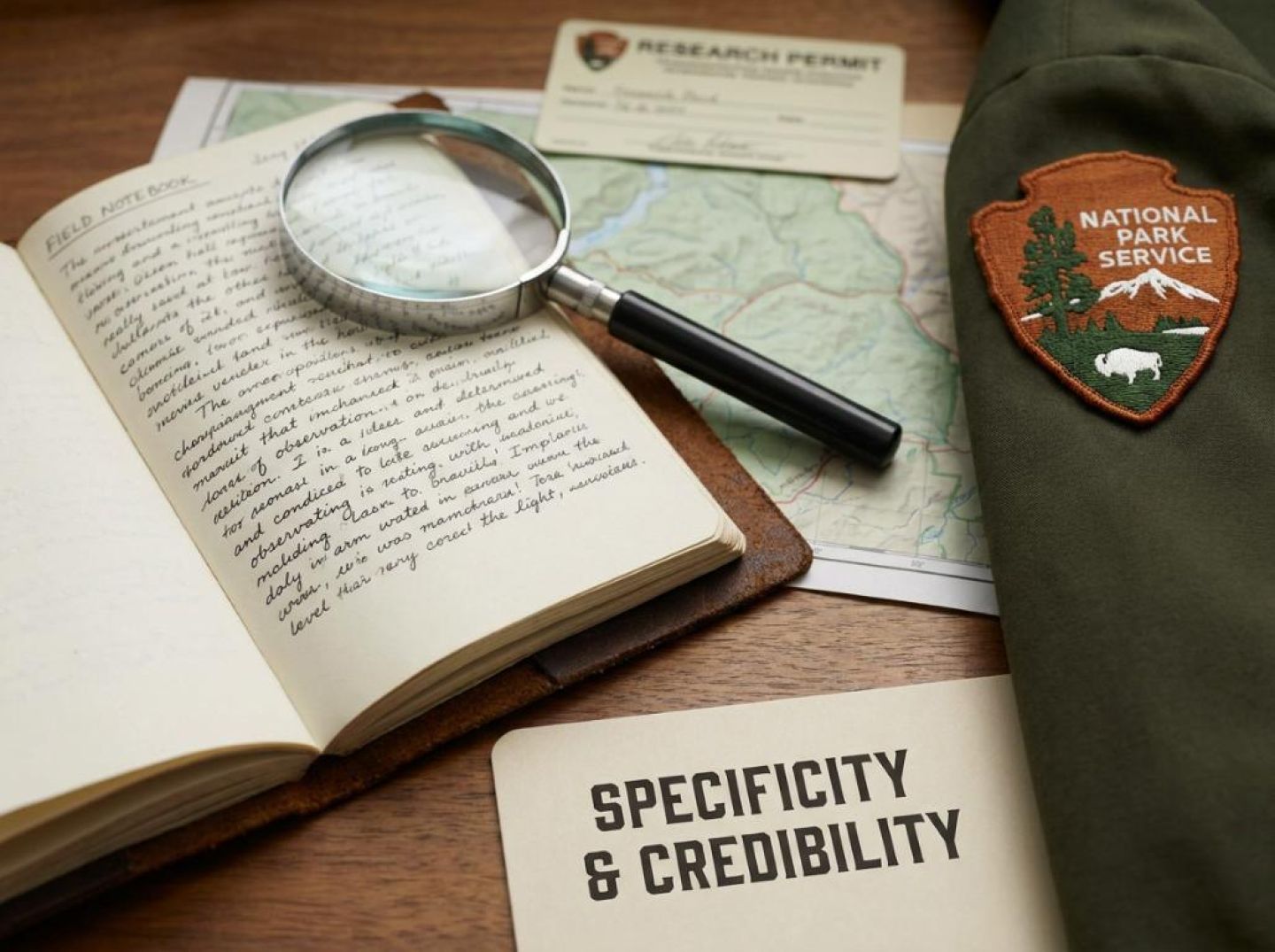
But it shouldn't catch performance advertisers off guard at all. Anyone who has spent time inside a competitive intelligence tool like Anstrex, studying which native creatives survive weeks of spend while others die within hours, already recognizes this checklist. The ads that endure are specific rather than vague — "7 Project Management Tools for Remote Teams Under 20 People" rather than "The Best Software for Your Business." They are credible, leaning on concrete claims, data points, or social proof instead of hype. Their headline-image-landing page arc is coherent and well-structured, guiding the user from curiosity to action without a jarring disconnect. And they are timely, refreshed to reflect current pricing, current features, current pain points. Clarity, authority, structure, freshness — the same four pillars, applied in a different medium.
The parallel deepens when you look at which content formats convert AI-referred traffic most effectively. Neil Patel's analysis of AEO profitability found that comparison pages convert at roughly 6.8 percent, and that first-party research earns repeat citations from AI engines — meaning the content keeps getting surfaced long after publication. Bottom-funnel content, the kind that helps a buyer choose between specific options rather than merely learn a category exists, consistently outperformed awareness-level material. This maps directly onto one of the oldest insights in native advertising: "alternatives to X" angles and data-driven advertorials crush generic awareness creatives. The native advertiser who runs an "X vs. Y" lander isn't just chasing clicks; they're qualifying intent by forcing the audience to self-select as someone actively comparing solutions. That is exactly what a comparison page cited by ChatGPT does — it filters for a narrow, high-intent reader and repels everyone else.
In both domains, specificity functions as the qualifying mechanism. A vague headline attracts vague interest. A precise one — whether it sits atop a native ad unit or earns a citation in a Perplexity summary — acts as a gate, admitting only the people most likely to convert and letting the rest scroll past. The result, as HubSpot's own data confirms, is a smaller audience that converts at three times the rate of traditional search traffic, mirroring what push and native buyers have observed for years: tighter targeting yields disproportionate returns.
The advertisers who have been using competitive intelligence tools to surface these patterns — identifying which headlines, which angles, which proof points survive the Darwinian pressure of real ad spend — have been practicing "content built for retrieval" all along. They just called it creative optimization. Now that AI engines are applying the same evaluative logic at scale, the playbook that performance advertisers refined through millions of dollars in split tests is suddenly the blueprint for earning visibility in a zero-click world.
The marketer who spends Tuesday morning inside Anstrex filtering native creatives by conversion rate and Thursday afternoon auditing which brand claims surface in ChatGPT answers might feel like they're doing two unrelated jobs. They're not. Both exercises are reverse-engineering the same question: What does a high-confidence, high-specificity claim look like to a system that filters ruthlessly for quality?
Consider what a competitive intelligence platform actually does. It crawls thousands of live ad campaigns, surfaces the creatives that survive longest (a proxy for profitability), and lets you deconstruct their angles, hooks, and landing pages. You're studying which messages earn trust — and dollars — from real audiences at scale. Now consider what an AI answer engine does when it decides which sources to cite. As Marketing Dive explains, AI systems don't reward popularity; they reward probability — specifically, how confident the model is that a brand's claims are reputable. Every assertion gets weighed against backlink quality, media coverage, domain authority, and other trust signals before it earns a spot in a generated response. The winning content in both arenas is the content that passes a credibility filter most humans never consciously articulate but immediately feel.
The methodological overlap goes deeper than analogy. When you analyze a top-performing push notification in Anstrex, you're looking at specificity of the claim, credibility of the proof element, and alignment with user intent — exactly the variables AI citation engines evaluate. When you spot that the longest-running native ad in a supplement vertical leads with a clinical trial reference instead of vague wellness language, you've learned something about what earns trust at the system level, whether that system is a human scrolling a feed or a large language model assembling an answer. The discipline of competitive intelligence — watching what wins, hypothesizing why, and applying those patterns — is the connective tissue between paid creative optimization and AI visibility strategy.
This convergence has structural consequences. Marketing Dive's reporting notes that AI engines are three times more likely to cite premium publisher content than brand-owned content, which means earned media and third-party validation aren't soft brand metrics anymore — they're the raw material AI models consume when deciding who to recommend. A competitive intel team already knows this instinctively: the native ad that links to an advertorial on a credible publisher domain outperforms the one that links to a naked squeeze page. The mechanism is the same. Authority is portable across systems.
Meanwhile, the conversion data reinforces why this dual discipline pays off financially. As Orbit Media's research across 97 B2B websites demonstrates, AI-referred visitors convert at dramatically higher rates because the model has already done the shortlisting — the consideration stage happened inside the conversation before anyone clicked. Push and native advertisers have always understood pre-qualification; a well-targeted push notification or a contextually placed native ad is itself a filtering mechanism, ensuring that only genuinely interested users arrive on the landing page.
Teams that treat competitive ad intelligence and AI content optimization as separate silos are duplicating effort while missing the pattern that connects both. The creatives that survive the longest in paid channels and the content that earns the most AI citations share a common genome: specific claims, verifiable proof, and alignment with what the audience — human or algorithmic — actually needs to hear before it acts. If your organization already invests in one discipline, the marginal cost of adding the other is low and the compounding return is enormous.
Receive top converting landing pages in your inbox every week from us.
Editor’s Pick
Discover how to turn food, sports, and tech trends into structured creative testing hypotheses instead of one-off ad ideas. Learn how to build vertical-specific blueprints, test them across Native, Push, Pops, and TikTok, and use performance data to continuously improve your creative strategy.
Dan Smith
7 minSep 20, 2026
Guide
Award-winning ads can inspire powerful performance creative, but they need to be rebuilt for the way algorithms, feeds, and users behave across Native and TikTok. This guide shows how to reverse-engineer high-profile creative into scalable hooks, angles, formats, and AI-driven testing systems that can improve performance.
Elena Morales
7 minSep 19, 2026
In-Depth
Discover how city-level ad intelligence can help marketers build campaigns that feel local while scaling globally. Learn how to use Anstrex to uncover geographic, language, creative, and funnel patterns across Native, TikTok, Push, and Pops, then turn those insights into repeatable localized campaigns.
Elena Morales
7 minSep 16, 2026