12 minSeptember 24, 2026

Our spy tools monitor millions of native ads from over 60+ countries and thousands of publishers.
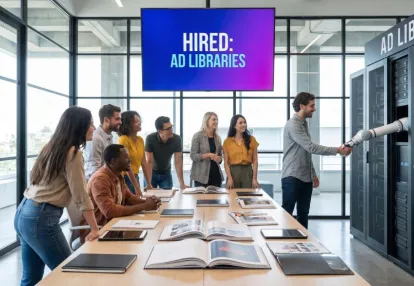
Get StartedIn performance marketing, everyone obsessively refreshes ad libraries to see what competitors are launching—but almost no one tracks who they just hired to lead creative. In a world where, as MarTech notes, creative has effectively become the new targeting layer and the opening three seconds of a TikTok can determine both delivery and qualified lead flow, pairing senior creative moves (like Dave Bullen stepping into a VP role) with Anstrex’s native and TikTok ad libraries lets you reverse‑engineer the exact hooks, concepts, and funnels those leaders are scaling—often weeks before the industry press or even the broader AI‑driven analytics ecosystem, described in Search Engine Journal’s coverage of DAIVID and ADIN.AI, catches the shift.
Performance marketers are used to hunting for early signals in bids, CTRs, and audience segments. But in an environment where algorithms handle most of the targeting, the earliest—and often most actionable—signal lives upstream: changes in who is making the creative decisions in the first place.
Platforms are already telling us that creative is now a primary performance lever. As MarTech explains, TikTok’s automation and audience expansion have pushed the opening seconds of a video to do double duty: qualify the viewer and train the algorithm on who should see that message next. In that world, the person defining the hooks, framing, and visual language isn’t just “doing the ads.” They’re effectively architecting your targeting logic. When that person changes at a competitor—whether it’s a Head of Creative Strategy, a performance-first CMO, or a native lead poached from TikTok itself—you’re looking at the earliest possible indicator that the entire creative–media system is about to be re‑written.
Recent senior hires underscore how strategic this layer has become. When Teads brought in TikTok’s former Group Agency Partnerships Lead, Jit Shergill, as Head of Sales UK, the remit wasn’t just relationships and revenue. Shergill is explicitly responsible for pipeline measurement and hitting performance and CTV targets, folding sales, inventory, and outcome-driven creative under one roof, as VideoWeek reported. That kind of appointment is a flashing red light that you should expect downstream changes in how that company briefs, tests, and scales creative for performance formats—including the native placements you’re competing in.
At the same time, AI is hard-coding creative decisions into the media layer. In Adspeak’s deep dive on predictive advertising, Jeremy Fain describes how deep learning is being used to predict creative performance before impressions are purchased, turning message and format choices into algorithmic inputs that can drive “3% incremental improvements at scale,” as Adweek notes. Once a competitor installs a leader who believes in that model—someone who thinks in terms of log-level data, creative scoring, and continuous learning loops—you’re not just facing better ads. You’re facing a system that will learn faster than yours unless you respond.
The emerging creative intelligence stack makes this even more important to track. DAIVID’s partnership with ADIN.AI, described in Search Engine Journal’s analysis, plugs creative effectiveness models directly into media execution. Marketers can predict which assets will win, route budget there automatically, and continuously update creative benchmarks in real time. When a brand appoints a creative or performance lead who understands—and insists on—this kind of “live loop” between creative and media, you can assume their native campaigns will stop behaving like slow, linear tests and start behaving like self-optimizing ecosystems.
For performance marketers, this turns leadership moves into a high-value early warning system, much like a change in Google’s core search team would signal a likely algorithm shift months before it’s visible in SERPs. The strongest campaigns already unify search, video, and creative under a single demand strategy; Fox Sports’ emotionally charged “Miracle” spot didn’t just win awards, it drove search behavior that had to be captured across Google and YouTube, as MarTech’s coverage of DAIVID’s data makes clear. When a competitor hires someone whose mandate spans creative, performance, and cross-channel integration, they’re positioning themselves to orchestrate those feedback loops more effectively than before.
In other words, by the time you notice a new style of native ad in the Meta or TikTok libraries, the strategic shift is already well underway. The decisive moment was when a board approved a new CCO with a media background, or an ad network hired a TikTok veteran to run performance, or an AI-native strategist was put in charge of creative testing. Those are the moves that tell you which creative philosophies, testing frameworks, and platform bets are about to shape the next generation of native ads—weeks or months before the first new unit ships.
For performance marketers willing to track these leadership inflection points, creative org charts become as important as creative assets. They’re not just corporate news; they’re the earliest, cleanest signal of how your competitors’ algorithms, messages, and native funnels are about to evolve.
The moment a “We’re thrilled to welcome our new VP of Creative” announcement hits the wire, you have everything you need to start a structured tracking plan. The trick is to treat that press release less like PR fluff and more like a blueprint for how your competitor’s native ads are going to change over the next 30–120 days.
Start by reverse‑engineering the person, not the title. Pull the new leader’s last 5–10 years of roles from LinkedIn and trade coverage. Someone who spent a decade in creator‑led programs at an influencer shop is going to behave differently from a VP whose background is B2B lead gen or TV brand campaigns. When Chrissie Hanson talks about creators becoming the new “marketing operating system,” she’s really describing an operating philosophy: brands that put creators at the center of the funnel, measure them like media, and optimize for “longevity over reach,” as she explains in an Adweek conversation, will brief and buy native very differently from brands that still treat creators as garnish.
Your job is to translate that career history into hypotheses:
You can also infer how aggressively they’ll lean into automation and prediction. Jeremy Fain argues that the real power of AI in advertising is not the shiny generative tools, but deep‑learning systems that can predict creative performance before you buy the impression. A leader who has worked with that kind of stack in the past is more likely to insist on structured, testable creative systems in their new role—which will show up as rapid iteration in your ad library views.
Next, map those hypotheses into a concrete watchlist. Turn that press release into a set of “if this, then that” triggers:
Then build the cadence. Influential hires rarely reshape a native program overnight. In practice, there’s a lag:
Your tracking plan should mirror that timeline. Set a recurring review of competitors’ native placements in key networks (Outbrain, Taboola, DSP‑native units, social native feeds) with specific lenses that match your hypotheses: hook structure, talent mix, formats, storytelling frameworks, and landing page continuity. If you know a brand has embraced a creator‑at‑scale model—like the Unilever example where creative is scored and linked to media in real time, described in Search Engine Journal’s coverage of DAIVID and ADIN.AI—you should expect to see far more rapid creative rotation and micro‑variations in those libraries than from a brand still operating in big‑bet bursts.
Finally, codify it. For each major competitor hire, spin up a one‑page “creative leadership change log” that captures: who they are, what they’ve done, what that suggests, which ad libraries and placements you’ll watch, and which metrics you’ll track (frequency of new ads, variant depth, creator volume, cross‑format reuse). A press release is a signal. A tracking plan is how you turn that signal into a living dataset about how creative leadership actually rewires native performance.
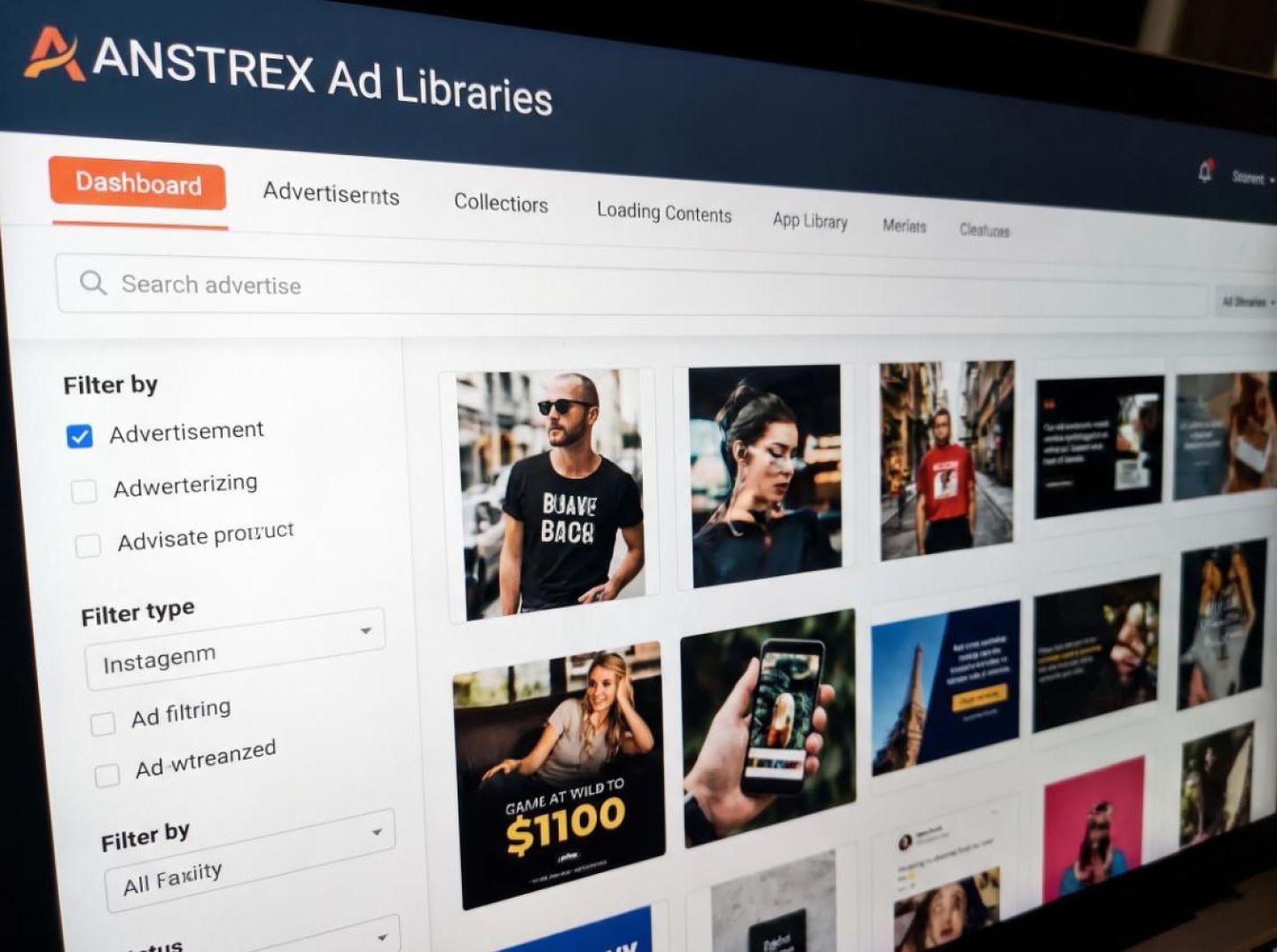
Once you know a new creative lead is in place and you’ve mapped their previous work, the next question is simple: when do their fingerprints start showing up in the wild? Anstrex’s Native and TikTok ad libraries are where you catch that very first wave of new thinking—often weeks before a case study, podcast appearance, or conference keynote spells it out for the market.
The key is to set up monitoring that mirrors how creative actually rolls out. Big shifts almost never arrive as a single “hero” ad. They arrive as a cluster of experiments: new hooks, unfamiliar angles, a different visual language, or a sudden expansion into a format (like TikTok‑style vertical video) that the brand barely touched before.
On TikTok specifically, your early-warning system should start with the opening three seconds. As MarTech explains, TikTok’s algorithm leans heavily on content signals, and those first moments do triple duty: they decide whether a user keeps watching, teach the algorithm who the content is for, and qualify or disqualify prospects on the spot. When you’re scanning Anstrex’s TikTok library for a brand that just hired a performance‑minded creative leader, you’re looking for a break from vague, lifestyle‑driven opens toward more “who‑this‑is‑for” hooks:
Flag every spot that uses these sharper qualification patterns and tag them by date. In Anstrex, build a saved search around the brand + vertical video + TikTok placement, then export new finds weekly. Within a month, you can usually see whether those tests were a blip or the beginning of a full‑funnel repositioning.
For native, the signal often surfaces first in headlines and thumbnails. Platforms are collapsing the gap between “creative” and distribution; AI‑driven buying and recommendation engines increasingly treat copy and imagery as targeting inputs themselves, not just decoration. That’s why Search Engine Journal’s coverage of creative‑intelligence loops like DAIVID plus ADIN.AI is so instructive: when creative is scored and optimized in near real time, small shifts in messaging can propagate across a huge portfolio of placements surprisingly fast.
In practice, that means you should:
To avoid getting lost in individual ads, focus on patterns and cadence. When MarTech argues that the strongest campaigns connect creative, media, search, and measurement into a single demand engine, they’re also describing how these creative waves tend to roll out: TikTok hooks that generate branded search, native articles that capture demand, and retargeting that closes the loop. In Anstrex, you can reconstruct that funnel by filtering the same brand across formats and sorting ads by first‑seen date. Look for:
Finally, anchor all of this in how distribution is evolving. As Social Media Examiner notes, TikTok is pushing its “Out of Phone” program into gyms, universities, taxis, and retail environments—essentially turning creator‑style assets into DOOH inventory. When you see a new creative lead with a background in social video or CTV, expect their early native and TikTok tests in Anstrex to be built for portability: punchy supers, minimal reliance on sound, fast visual payoffs that would work just as well on a gas‑station screen as in the feed. Tag those assets as “portable” and watch which ones get cloned or re‑cut over the next 60–90 days. Those are the pieces that will redefine the brand’s creative baseline—and the templates your own team should be prepared to counter or emulate.
Once you can see the first wave of new creative from a fresh lead, the real work is translating those qualitative shifts into hard performance signals—without ever touching their P&L.
The constraint is obvious: you don’t know their CPMs, margins, or internal ROAS targets. But you do have access to the two inputs every algorithmic media system cares about most: creative structure and behavioral response. Thanks to the way platforms are turning creative into a primary targeting signal, those two pieces are often enough to reverse‑engineer whether a new direction is working.
Modern buying platforms and walled gardens increasingly treat creative as the core of audience definition rather than something bolted on after targeting. As one analysis of AI‑driven ad platforms argues, in highly automated environments, “creative is strategy” because messages, hooks, and visual cues help systems decide who should even see the ad in the first place, not just whether they’ll click once they do, an idea explored in depth by MarTech’s account of AI making creative the new targeting. That shift is what lets you connect observable creative changes to performance, even when the actual dashboards are locked behind your competitor’s firewall.
Practically, you’re inferring three things from outside the glass:
2. How the platform’s own AI is likely to respond.
Deep learning systems don’t care about the job title on the press release; they care about patterns across massive creative and response datasets. As Jeremy Fain notes in a conversation on deep learning’s role in advertising, the real leverage comes from predictive algorithms that can “forecast creative performance before impressions are purchased,” driven by log‑level data and continuous learning loops described in Adweek’s coverage of predictive advertising. When a new creative lead rolls out a set of structurally similar variants—consistent hooks, repeated narrative beats, recurring visual metaphors—you’re watching them feed those same systems cleaner inputs. If those patterns persist and get iterated, you can infer that the models are rewarding the direction.
3. How aggressively the org is scaling winners.
You can’t see cost curves, but you can see volume, placement breadth, and recency. If a particular creative archetype—say, UGC‑style testimonial videos or question‑led native headlines—starts to appear across more publishers, more geos, and more inventory types, you’re looking at a scaled winner. Expansion into new environments, such as TikTok’s push to take creator content off‑platform into gyms, taxis, and retail screens through its Out of Phone program, signals that the brand is confident enough in those assets to follow the platform into DOOH extensions highlighted in.
To systematize this, treat each visible creative change as a hypothesis about performance:
The goal isn’t to guess their exact ROAS; it’s to know, with reasonable confidence, when this new leader’s fingerprints correlate with more spend, more reach, and more persistence. Once you can map that relationship between creative shifts and real‑time signals like volume and variation, you’re no longer just watching your competitors—you’re tracking which creative philosophies are actually beating the algorithms you’re all renting.
Reverse-engineering a competitor’s funnel isn’t about “stealing” landing pages. It’s about turning their live, paid experiments into structured insight you can adapt, stress-test, and ultimately outperform.
The starting point is simple: every winning native ad points somewhere. Once you’ve identified promising ads in Anstrex’s native library, you use the landing-page ripper to pull down the full path—pre-landers, main offer page, upsells, quizzes, and any intermediate steps. From there, you’re not copying; you’re dissecting.
Begin with funnel archetype and intent. Is this a straight advertorial into a single offer? A quiz-to-call sequence? A long-form “diagnosis” page feeding into multiple SKUs? Map each step’s job: qualify, agitate, educate, convert, or ascend. This is where you align with the idea that creative and media must be part of one coherent demand engine, not separate silos, as the integrated-planning approach outlined in the discussion of Fox Sports’ World Cup work in MarTech’s piece on unifying search and video makes clear. You’re building the same continuity—just within a single funnel instead of across channels.
Next, zoom into message sequencing and micro-conversions. Track what the user is being asked to do at each scroll depth:
You’re reverse-engineering not just copy, but the logic of how they warm traffic. This is where modern “creative-as-targeting” thinking comes in: hooks, qualifiers, and CTAs are no longer just persuasion devices—they’re how algorithms understand who should keep seeing this funnel. The argument that creative has effectively become the new targeting lever, especially as platforms lean on content and behavioral signals, is laid out in MarTech’s analysis of AI-driven creative; your ripped funnel is the practical expression of that principle.
Then, audit the behavioral instrumentation. Your competitors are leaving clues:
Don’t copy their stack; infer their strategy. If they’re wiring events into every micro-step, they’re probably feeding rich conversion signals into a deep learning bidding model to predict who will move through the entire journey. That’s exactly the kind of closed-loop optimization Jeremy Fain describes when explaining how predictive systems can forecast creative performance and optimize in real time in his conversation with Adweek on deep learning in advertising. Your job is to make your own funnel equally legible to the algorithms—even if the structure is different.
Only after you’ve extracted the underlying system should you start making the funnel yours:
2. >Recode the qualification logic. Where they filter by demographic or surface-level intent, swap in sharper, problem-aware questions that mirror how high-intent users actually talk. This is how you give platforms the same kind of high-signal behavioral data that AI-driven creative evaluation platforms use to score assets in real time, as described in.
3. Upgrade instrumentation. Implement your own analytics, event schema, and experimentation framework. Every step in the funnel should double as a measurement node so you can identify where new creative leads from your team (or agency) are actually moving the needle.
4. Localize the emotional spine. The most effective campaigns are choreographed around a specific emotional journey, not a list of features. That’s why emotionally resonant TV spots, like the Fox Sports “Miracle” World Cup ad that topped DAIVID’s creative rankings in MarTech’s analysis, don’t just generate awareness—they generate search and downstream demand. Your funnel should echo that logic: a consistent emotional throughline from hook to checkout.
Finally, build a testing roadmap that treats your ripped funnel as a hypothesis, not a finished product. Prioritize tests that put distance between you and the original: new lead hooks and angles, different proof hierarchies, altered risk-reversal, alternative upsell logic. Over time, your version should be structurally inspired by the competitor—but functionally optimized around your data, your economics, and your brand.
Reverse-engineering with a landing-page ripper is the quickest way to catch the shape of a new creative lead’s thinking. Turning that skeleton into a defensible, outperforming funnel is where you stop being a fast follower and start becoming the account everyone else is ripping.
Receive top converting landing pages in your inbox every week from us.
Guide
Track how new creative leadership can reshape competitor native campaigns by connecting executive hires with changes in ad libraries, creative patterns, and funnel strategies. This guide shows how to use Anstrex to monitor those shifts, identify emerging creative systems, and reverse-engineer competitor funnels without relying on internal performance data.
Marcus Chen
7 minSep 24, 2026
Editor’s Pick
Discover how to turn food, sports, and tech trends into structured creative testing hypotheses instead of one-off ad ideas. Learn how to build vertical-specific blueprints, test them across Native, Push, Pops, and TikTok, and use performance data to continuously improve your creative strategy.
Dan Smith
7 minSep 20, 2026
Guide
Award-winning ads can inspire powerful performance creative, but they need to be rebuilt for the way algorithms, feeds, and users behave across Native and TikTok. This guide shows how to reverse-engineer high-profile creative into scalable hooks, angles, formats, and AI-driven testing systems that can improve performance.
Elena Morales
7 minSep 19, 2026