10 minOctober 22, 2026

Our tools monitor millions of native, push, pop, and TikTok advertising campaigns.
Get StartedAI citations look like a vanity metric—one more dashboard number to screenshot for the QBR. In reality, they’re becoming one of the clearest levers performance marketers have to influence how buyers discover, evaluate, and choose brands inside AI-first journeys.
Unlike traditional rankings, AEO citations are not just about visibility; they’re about selection. When an answer engine references your content, it’s signaling that your page helped shape the answer itself. As HubSpot explains, citations function less like backlinks and more like an algorithmic endorsement: the model evaluated competing sources on that topic and chose yours as the evidence behind its recommendation. That makes every citation a micro trust signal the system can reuse in future answers.
That trust doesn’t stay inside the model. It compounds in the buyer’s head. In classic search, users skim a page of blue links and decide what looks credible. In AI search, they get a synthesized recommendation with a handful of named sources. If your brand is cited in that synthesis, you’ve shaped the buyer’s perception before they click anything. If you’re absent, the model is effectively pre-selling your competitors instead.
This pre-click influence matters because more buying decisions are happening inside AI experiences themselves. As Contently notes, systems like Google’s AI Overviews don’t just look at a single query—they fan it out into many related searches and build an answer from the pages that show up consistently across that whole pattern. A page can rank first for the “headline” keyword and still be invisible in the AI layer if it doesn’t win those citation decisions across the expanded intent. In that world, ranking is the audition; citation is the role.
For media buyers, that turns AI visibility into a performance channel, not a PR brag. Citations from ChatGPT, Perplexity, and other answer engines are already generating measurable referral traffic that appears as AI domains in analytics, but they also create a murky, untracked halo: buyers who see your brand cited in an answer, then Google you by name, type your URL directly, or drop your company into an internal Slack thread. That blend of trackable and untrackable influence is exactly the kind of “fuzzy” signal executives have historically mistrusted—yet it’s quickly becoming unavoidable.
Recent research from MarTech shows how quickly AI visibility has entered the C‑suite conversation. More than half of surveyed marketers now measure AI search visibility or brand citations in AI-generated content, and nearly as many include AI visibility or optimization in executive reporting. At the same time, boards still prize revenue impact above softer metrics like share of voice, forcing teams to connect these new AI signals to pipeline and sales, not just impressions.
That’s where disciplined AEO citation tracking comes in. Modern AI citation tools, like those profiled on HubSpot’s marketing blog, let teams:
For performance marketers, that data becomes a planning input on par with impression share or CPA. If you know which prompts your brand loses to a rival’s case study, you can build net-new content and adjust media targeting to close that gap. If you see AI repeatedly citing reviews on a third‑party marketplace, you can shift budget and merchandising strategy to win that surface instead of fighting a losing battle on your own domain.
The point isn’t to collect citations for their own sake. It’s to treat AI visibility as a new attribution layer in a fragmented path to revenue. An AI citation is a signal that your content is participating in the moment of consideration—even if the eventual visit or deal is credited to another channel. Teams that track, analyze, and act on those signals will be able to defend budgets with a story that resonates in the boardroom: not “we got mentioned,” but “we shaped the answer that shaped the deal.”
The real power of citation audits isn’t the topline count of how often you’re mentioned; it’s the map of buyer intent you can reverse‑engineer from the answers themselves. Every AI response is a stitched‑together journey: pain point framing, education, criteria‑setting, options, and next steps. If you read those answers like a strategist instead of an SEO, you can reconstruct the path high‑intent buyers are actually taking—and then buy media to meet them at each step.
Start with the prompts, not the citations. When you run a structured audit, you aren’t just asking “Do we show up?” The prompts you choose—“best enterprise ABM platforms for mid‑market SaaS,” “how to forecast paid search ROI,” “alternatives to [competitor] for B2B lead gen”—are stand‑ins for the moments that matter in your funnel. As HubSpot’s breakdown of AEO tools points out, tracking “monitor prompts” is as critical as tracking mentions, because prompts are the closest thing we have to live intent signals inside AI experiences.
Once you’ve captured answers across a representative set of prompts, mine them for journey structure:
This is where concepts like query fan‑out become gold. When an AI system deconstructs a detailed question into several sub‑queries—“B2B content marketing metrics,” “measure content marketing ROI,” “prove content ROI to executives”—it’s effectively revealing the micro‑questions users will explore as they move from “I have a problem” to “I’m ready to choose” as Contently’s analysis of AI Overviews makes clear. Collect those variants. Group them into stages. You’ve just extracted an intent‑based journey directly from the machine that’s shaping buyer decisions.
From there, you can classify every citation you see according to its job in that journey:
Neil Patel’s overview of AI citation audits emphasizes separating owned, earned, and social sources to understand where authority truly lives in each topic cluster; that same segmentation also reveals when each source is influencing the buyer and how much control you have over it, as his team explains in their guidance on what an AI citation audit can tell you about your content.
For performance marketers, this is where the media levers show up:
The final step is to turn this reconstructed journey into a measurement spine. When you know which stages and prompts drive the AI answers that cite you, you can group your media by the same stages and watch how shifts in citation presence correlate with down‑funnel performance. That’s exactly the kind of cross‑channel, AI‑aware KPI framework SEJ’s media and analytics leaders advocate: align AI visibility signals with the same revenue outcomes you use to judge paid search, paid social, and programmatic.
In other words, you’re no longer guessing at a buyer journey drawn on a whiteboard three years ago. You’re reading it out of the answers buyers actually see—and then wiring your media plan to that reality.
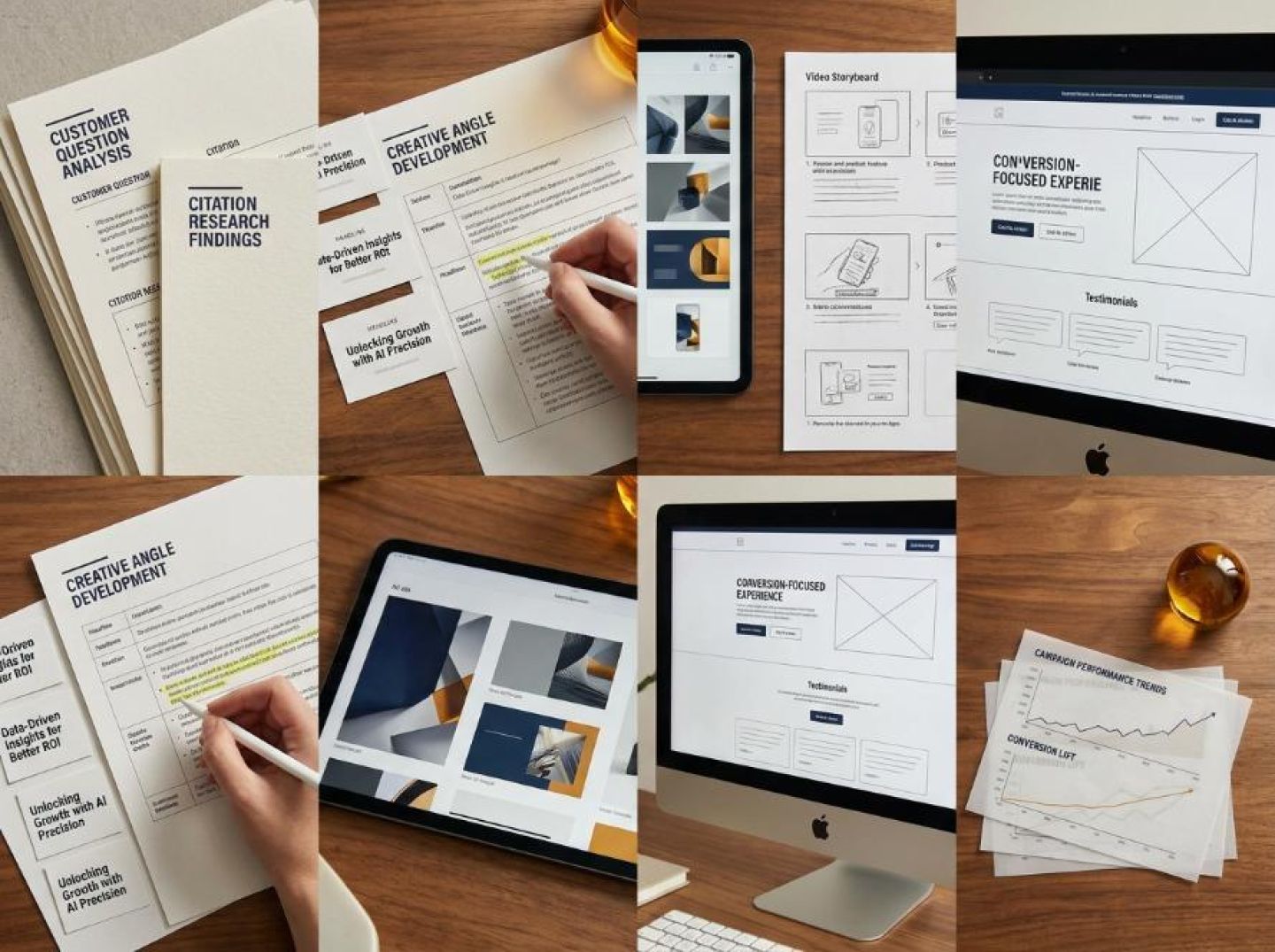
Most teams stop the AI citation conversation at, “Are we in the answer?” Performance marketers can’t afford to. The real leverage comes from turning those answers into a pipeline of angles, creatives, and landers that mirror how AI is already teaching buyers to think.
Start by treating each high‑intent answer like a deconstructed brief. When an AI system expands a query into sub‑questions through query fan‑out, it’s effectively revealing the micro‑moments inside a decision: problem definition, comparison criteria, risk objections, and next steps. Pull those sub‑themes out and map them into a modular message architecture:
Each cluster becomes a family of ad angles, not a single headline. If AI keeps emphasizing a particular concern—say, “executive trust in marketing data,” which MarTech’s budget survey shows is a real board‑level anxiety—you have a validated psychological trigger to build an entire creative stream around.
Next, convert citation patterns into creative formats the models can easily “lift” from. When AI systems prefer extraction‑ready content, you need assets where the answer is scannable enough for a model to quote directly. As Search Engine Journal notes, pages that are structured for clear pull‑through become “citation assets,” while dense, narrative pages stay invisible.
For paid, that means building:
Your creative brief should literally include copy lifted from the AI response you want to intercept, then reframed with your proof, screenshots, and outcomes. When buyers move from an AI answer to a social feed or a marketplace, the language and structure feel familiar, which can lift thumb‑stop and click‑through.
Landing pages are where citation intelligence becomes directly measurable revenue. If an AI answer repeatedly cites third‑party guides, forum threads, and your competitors for “how to choose X,” your job is to build a lander that outperforms that stitched‑together journey on three dimensions:
Create “AI‑matched landers” for your highest‑value journeys: one per intent cluster you’ve reconstructed from your citation audit. Then pipe paid search, paid social, and retargeting into those pages explicitly, instead of generic homepages or catch‑all demos. The media plan should be wired so that the same mental model a buyer sees in an AI overview is what they experience in your funnel.
Don’t ignore the third‑party and social domains that keep earning the citations you wish you had. As MarTech’s analysis of citation share shows, ecosystems like Reddit, Amazon, and vertical retailers punch far above their weight as sources. If Reddit threads dominate “best tools for X” answers, commission practitioners to publish comparison posts or case breakdowns there, then retarget engagers with creatives that extend those conversations and route them to landers designed expressly for that comparison mindset.
Finally, make AI‑shaped journeys a standing input to your testing roadmap. An AI citation audit, as outlined on Neil Patel’s blog, already tells you which topics, formats, and domains the models reward. Translate each insight into an experiment: a new angle family, a variant of “answer card” creative, or a purpose‑built lander. Tie their performance back to downstream metrics—conversion rate, pipeline created, and revenue—so AI visibility doesn’t just sit in a dashboard. It becomes the front end of a scalable, test‑driven system for buying media where AI is already shaping demand.
Once you’ve mapped which pages are getting cited, the next step is getting under the skin of how they talk. AI answer engines aren’t just picking sources; they’re absorbing and amplifying the language those sources use most consistently. That makes recurring phrasing and claims one of the most valuable byproducts of a citation audit.
When an answer engine fans out a single query into a cluster of related searches, it’s hunting for patterns it can stitch together into one confident reply. As Contently explains, Google’s AI experiences break a question like “measure B2B content ROI” into multiple sub‑queries, then assemble a summary from the pages that show up reliably across all of them. Those “most consistent” pages don’t just align on topics; they align on language. Phrases like “prove ROI to executives” or “attribute pipeline to content” become the connective tissue of the answer.
From a performance marketer’s perspective, that language is creative gold. If the same benefit statements and proof points keep surfacing across multiple cited sources, you’re looking at the messaging spine answer engines are already teaching your buyers to trust. Pull a sample of high‑intent prompts, export the cited text, and start tagging recurring claims:
The goal isn’t to copy competitors’ taglines; it’s to see which frames the model keeps reinforcing. In AI‑driven environments, visibility is a probability, not a position, and the content that wins is the content models consider authoritative in a specific context, as Neil Patel’s team argues. If every cited page around “AI sales assistant for mid‑market SaaS” leans on “shorten sales cycles” and “increase rep productivity,” you’re being handed the dominant decision language for that micro‑market.
You can make this systematic. For each cluster of prompts tied to a commercial outcome, build a simple phrase inventory:
Patterns across independent sources matter because answer engines treat those overlapping messages as higher‑confidence signals. As MarTech points out, citations function like algorithmic trust badges: the more your content helps shape an answer, the more likely the model is to pull from you again. Shared phrasing and claims across an ecosystem of sites are part of that “helping shape the answer.”
This is also where third‑party and community citations become disproportionately influential. When forums like Reddit or major marketplaces like Amazon repeatedly describe a product category with the same shorthand, models learn that this is how real users talk about outcomes. In several verticals, MarTech’s analysis found that Reddit alone accounted for a double‑digit percentage of sources, meaning the language patterns there can tilt the answer tone even if vendors themselves never use that phrasing on their own sites.
Your job is to bridge the gap between that “field language” and your funnel. Pulling from the recurring claims you see in AI answers, you can:
In other words, extracting recurring phrasing and claims from cited pages turns a passive visibility report into an active message map. Instead of guessing which promises will resonate, you’re piggybacking on what answer engines have already validated across the web—and using that to engineer creatives and landers that feel “pre‑familiar” to buyers who arrive from AI‑generated answers.
Now turn those raw phrases and claims into angles your media team can actually buy against.
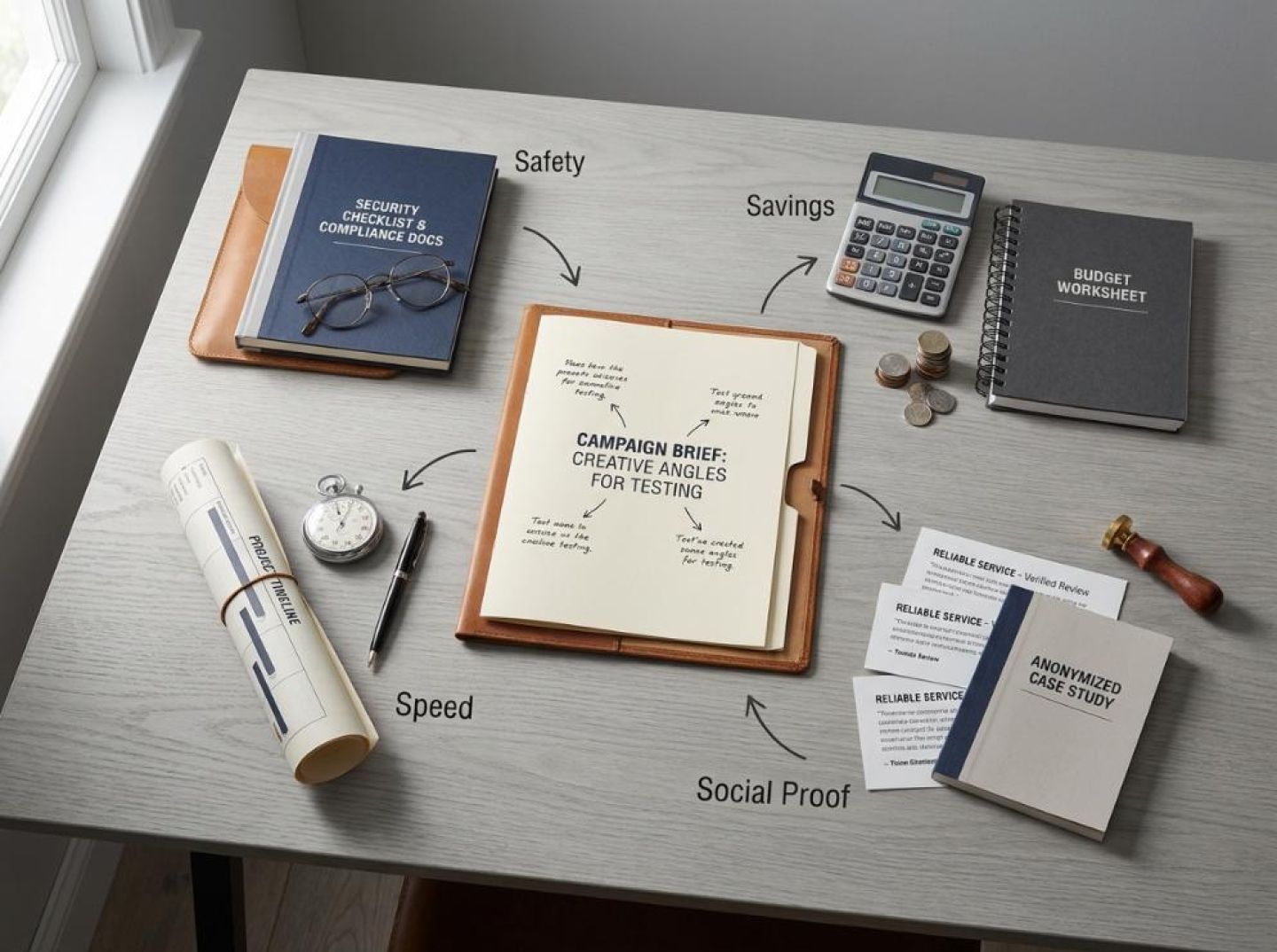
The easiest way is to bucket what AI is already saying about your category into four evergreen performance levers: safety, speed, savings, and social proof. Those levers are the bridge between “interesting language pattern” and “tested ad set with a clear KPI.”
Anytime you see phrases like “side‑effect free,” “enterprise‑grade security,” “audit‑ready,” or “churn less” in your citation audit, you’re looking at implicit risk objections the market is already trying to solve.
Because answer engines are synthesizing from the most “extractable” claims, language that consistently telegraphs reduced downside tends to surface across multiple answers, exactly the pattern Search Engine Journal’s analysis of extraction‑ready content calls out. Treat these as prompts for safety‑first angles:
For performance marketers, this becomes a full cluster of creatives: headlines that explicitly remove risk (“No new pixel. No new tracking headaches.”), proof elements that reassure buyers (certifications, audits, uptime SLAs), and landers that lead with “What won’t change if you adopt this.”
Citation-heavy sources often emphasize how quickly buyers see results: “same‑day results,” “launch in 30 minutes,” “close faster,” or “real‑time insights.” Answer engines weight these because they answer the implicit sub‑query that Contently describes in its breakdown of query fan‑out: “How long will this take to work?”
When your audit shows AI repeating speed claims around implementation, workflows, or optimization cycles, convert them into performance hooks such as:
Match the angle to the promise. If you see a lot of “close faster” language in AI descriptions of your category, architect a lander that literally visualizes a compressed sales cycle, then measure impact on pipeline velocity the same way.
Some of the strongest phrases you’ll pull from citations are explicitly economic: “reduce waste,” “lower CAC,” “replace 3 tools,” “automate manual reporting,” “do more with less.” As Neil Patel’s overview of AI citation audits points out, these recurring value claims are a direct signal of what answer engines think matters most in a buying decision.
Turn each into a specific, testable savings angle:
Your creatives should make the trade‑off explicit: “Same ROAS, 30% fewer hours,” or “Same team, 3x more optimized audiences.” On the lander, build a simple calculator or ROI module that mirrors the way AI is already framing value, so the story feels consistent from answer snippet to ad to form fill.
Answer engines lean heavily on sources that signal expertise and consensus, from practitioner posts on LinkedIn and Reddit to structured case studies on owned sites. That’s why Search Engine Journal highlights Reddit and LinkedIn as outsized citation sources: they encode social proof the model can read.
When your audit shows repeated mentions of “trusted by…,” “used by X, Y, Z,” or third‑party validations (analyst reports, awards, benchmark studies), spin these into:
In creatives, pair concrete logos or review snippets with a line that ties back to the AI behavior you’ve documented: “The same brands showing up in AI answers rely on this to plan spend.” Then, on your lander, structure testimonials and mini‑case studies in the clear, fact‑rich format that tools like HubSpot’s AEO recommendations are designed to surface, so those proof points are more likely to be cited again.
Your goal isn’t to invent new stories; it’s to codify the stories AI is already telling about your category into the four levers performance teams know how to buy, test, and scale. Safety calms objections, speed collapses time, savings sharpen the value prop, and social proof amplifies trust—each one rooted in the exact phrases that gave those pages citation power in the first place.
AI citation audits don’t just tell you which domains show up in answers. They hand you fully formed narrative skeletons: FAQs, “X vs Y” breakdowns, and neatly tiered benefit lists that answer engines keep repeating. Those structures are gold for performance marketers because they map almost one-to-one to pre-landers, quizzes, and advertorials that actually convert.
First, pay attention to how AI systems structure their own explanations. When a tool explains “Why citations matter” and then walks through subheads like “How AI engines select citations,” “What type of content gets cited,” and “Frequently Asked Questions,” it’s modeling an information architecture built to resolve buyer uncertainty in sequence, as the HubSpot team describes in its AEO guides. If you’re seeing the same 4–6 FAQs about risk, value, implementation, and proof of ROI across multiple AI answers, treat that set as the backbone of a pre-lander.
Turn that FAQ spine into a long-form comparison or “explainer” pre-lander:
This alignment matters because answer engines have already stress-tested which sequences and phrasings best resolve the confusion that blocks action. When you preserve that order but inject your product-specific proof, you’re building on a narrative scaffolding the model has effectively validated at scale, in line with how.
Next, look for “vs” language in cited content and AI answers: “traditional SEO vs AEO,” “manual reporting vs AI visibility tools,” “generic analytics vs citation tracking.” When Neil Patel breaks down an AI citation audit versus a traditional content audit, for example, he’s implicitly giving you a comparison-table brief: old way, new way, and what buyers gain when they switch.
Use that to design quiz funnels and interactive pre-landers:
Because those “vs” frames are already saturating AI answers, buyers are primed to recognize them. Your quiz simply lets prospects self-identify which side of the divide they’re on and positions your product as the bridge.
Finally, harvest benefit stacks directly from how cited sources and AI answers talk about outcomes. If multiple responses cluster benefits into buckets like “visibility, authority, and revenue impact,” that’s your advertorial layout. The HubSpot coverage of why AEO citations matter essentially stacks benefits as authority → pre-click influence → attribution. Translate that into a story-driven page:
The key is discipline: don’t freestyle structures when answer engines are already telling you what order of ideas, contrasts, and benefits they trust enough to synthesize. Treat cited FAQs as your information hierarchy, “vs” comparisons as quiz logic and table layouts, and benefit stacks as your advertorial chaptering. That’s how you turn abstract AI visibility into tangible, testable, and ultimately scalable media buying assets.
Tags
Receive top converting landing pages in your inbox every week from us.
Recently Updated
Discover how competitive ad intelligence helps marketers move beyond generic AI messaging and build more credible, differentiated advertising strategies. Learn how to analyze competitors’ creatives, uncover proven messaging patterns, and use Anstrex insights to develop AI-assisted campaigns grounded in market evidence and stronger trust signals.
Rachel Thompson
7 minOct 23, 2026
Guide
Discover how answer engine arbitrage helps performance marketers capture valuable clicks by combining AI search insights with competitive ad intelligence. Learn how to uncover hidden buyer intent, identify decision drivers, and turn proven ad creatives into targeted campaigns and landing pages that convert AI-informed audiences into customers.
David Kim
7 minOct 23, 2026
Recently Updated
Discover how AI citation intelligence can help performance marketers uncover high-intent buyer journeys, identify winning messaging, and improve paid media performance. Learn how to turn AI search citations into actionable creative angles, conversion-focused landing pages, and scalable campaigns that connect AI visibility with measurable revenue.
Elena Morales
7 minOct 22, 2026