

6 minOctober 23, 2026

Our spy tools monitor millions of native ads from over 60+ countries and thousands of publishers.
Get StartedAI search hasn’t killed demand; it has changed how, when, and where that demand surfaces before a click. Users still want answers, products, and vendors. What’s shifted is the number of layers they pass through before they ever see a traditional results page or an ad impression.
Most marketers’ mental model is still “query → SERP → click.” But the real 2026 journey looks more like “half-formed intent → AI assistant → summarized answer → occasional click.” As one media strategist put it, a growing share of users now “start their searches with AI tools instead of Google or Bing,” with 37% doing so regularly, while roughly 60% of searches already end without a click because the AI summary solves the need on the spot, according to research cited by Marketing Dive. That’s not a collapse in demand; it’s demand being intercepted earlier and more often.
Even so, the death-of-search narrative doesn’t hold up when you zoom out. Traditional engines remain the primary gateway. In a recent consumer study summarized by Search Engine Journal, 86% of online searchers had used a classic search engine in the past 30 days, and those engines were still the default starting point across every task category tested—even the ones AI is supposed to be best at. If your 2026 roadmap quietly demoted on-page SEO, schema, and technical crawlability in favor of chasing “AI visibility,” you’re swimming against how people actually behave.
The more accurate story is that AI has inserted a powerful “answer layer” above your existing funnel. That layer cannibalizes some clicks, but it also warms up others. AI Overviews in Google Search, for example, are powered by a customized Gemini model running “in tandem with [their] existing Search systems,” meaning classic SEO signals still decide a large share of which sites feed those answers, as explained on the HubSpot Marketing Blog. You are not optimizing for a separate universe; you’re optimizing for an extra gatekeeper that leans heavily on the same fundamentals.
The numbers on AI traffic underline this “layer, not replacement” reality. Answer-engine visits are still tiny as a share of total volume—around 0.14% of all visits in 2025 and still under 1% by mid‑2026, according to Semrush and Ahrefs data discussed on HubSpot’s overview of AI search optimization. Yet that sliver is growing 66% year over year and carries outsized conversion impact because answer engines pre‑qualify users through follow‑up questions and more specific sub‑queries. In other words, less traffic, more intent.
AI is also uneven in what it can safely “zero‑click.” General informational questions and simple how‑tos are easily summarized. But transactional and high‑risk decisions still push people through to sites where they can see details, compare options, and complete purchases. As one analysis of referral trends on Neil Patel’s blog pointed out, transactional content tied to explicit purchase intent continues to drive clicks precisely because AI summaries don’t resolve the final action.
So demand is not evaporating; it’s being filtered. Some queries will end at the AI layer. Others will arrive at your site more primed than before—but only if you’re present in the systems that shape those answers.
This is why treating AI search as a “replacement channel” is the wrong mental model. AI assistants are a routing layer that:
If you plan as if AI is killing search, you will underinvest in the fundamentals that still determine whether you feed the answer layer at all. If instead you see AI as rewriting the path to the click, you can start looking for the gaps—queries, segments, and intents that answer engines struggle to monetize—where arbitrage is still very much on the table.
From the user’s perspective, AI didn’t “replace search.” It made searching feel less like typing keywords into a box and more like having an assistant you can brief, refine, and argue with.
That shift—from query strings to conversations—is exactly what turns “answer engines” into a factory for new ad angles.
Traditional search is still the backbone of discovery. Eighty-six percent of online searchers used a classic search engine in the last 30 days, and it remains the default starting point even for tasks AI is supposedly best at, as YouGov data summarized by Search Engine Journal shows. But the shape of the journey has changed:
A recent analysis of ChatGPT usage found a 9% drop in traditional search queries after access was introduced, climbing to 17% after 20 weeks—almost entirely concentrated in informational lookups, research, and reference queries, according to a PPC-focused breakdown from Real FiG. At the same time, transactional and commercial searches—the ones attached to real money—remained strikingly stable.
In other words: AI is swallowing the top of the funnel, not the bottom.
For performance marketers, the interesting part isn’t just “where the clicks moved,” but how the questions changed along the way.
When someone types “best CRM for agencies” into Google, you see a compressed version of their intent. When they talk to an answer engine, you see the story behind it:
Consumers are learning to “brief” AI with those details because that’s how they get better answers. That same behavior shows up in how they search later. A user who has workshopped their problem with a chatbot is more likely to arrive at Google with a refined, long-tail query that sounds like natural language, a pattern Real FiG’s recommendations on adapting PPC to conversational language explicitly call out.
AI chat becomes the draft room where people:
By the time they reach an ad-servable environment, they’re no longer asking, “What is X?” They’re asking, “Which of these 3 X’s is right for someone like me?”
AI is frighteningly good at flattening generic information. It’s equally good at surfacing hesitations that traditional keyword tools don’t show you:
Early research into AI-assisted shopping shows that chatbots increasingly talk users out of purchases by magnifying these doubts. In one study of AI users, 57.5% reported being dissuaded from buying by chatbot interactions, and many could not reliably distinguish between an organic recommendation and an ad, according to a recent Semrush analysis of AI chatbots and purchase behavior. At the same time, a large share of consumers still return to Google to complete their product research, and many actually report using Google more over the past year, despite their AI use rising.
This is the arbitrage window: AI interviews the customer for free, exposes all the emotional and practical friction, and then hands that primed intent back to legacy channels that still monetize via clicks.
If you watch AI-influenced audiences closely, you’ll notice:
These aren’t random long tails. They’re the visible exhaust of invisible conversations.
For media buyers, the job is not to “get visibility in AI answers” and call it a day. It’s to:
AI search is compressing the generic “what is” content layer into a one-paragraph summary. What’s left—what still earns the click—is content and copy that feels more trustworthy, more specific, and more emotionally aware than what the chatbot just produced, a pattern that matches how.
In the next section, we’ll plug ad spy data into this reality and show how to reverse-engineer winning creatives from the very search patterns AI is quietly rewriting.
Answer engine arbitrage is simple in theory: you use AI-era demand signals to decide what to rank and bid on in the places AI either can’t or won’t monetize yet. In practice, that means marrying ad spy data with AEO/SEO to build an “off-exchange” media plan the answer engines haven’t priced in.
Here’s the core playbook.
AI answer engines are still a rounding error in traffic share, but they’re already punching above their weight in conversion impact. As the team at HubSpot notes, AI search drove only about 0.14% of visits while growing 66% year over year and heavily influencing purchase decisions even when users never click through to a site, according to their analysis of AI search optimization. In parallel, Google’s AI Overviews have moved rapidly from top‑of‑funnel questions toward commercial and transactional intent, with Semrush finding a sharp rise in purchase-oriented queries that now trigger AI answers, as summarized in.
That creates a structural gap: AI is “pre-selling” people on categories and criteria, but much of the actual purchase still happens through traditional search, product pages, and ad clicks. Your goal is to identify the questions answer engines are educating people on—and then own the downstream touchpoints those answers currently fail to monetize.
Ad libraries and spy tools are the closest thing you have to a public auction of other people’s conviction. If a dozen brands are hammering a specific angle—“AI bookkeeping for solo CPAs,” “non‑drowsy allergy gummies for nurses”—that’s a tell that the query set behind it converts.
But answer engines don’t index your competitors’ ad accounts, they index the open web. When you find a winning angle in an ad spy tool:
Remember, many shoppers prefer the organic‑sounding AI explanation over a native ad wrapper. In Semrush’s latest consumer survey, users were already showing more skepticism toward chatbot ads after initial optimism, reinforcing that people still trust “helpful answer first, ad second,” as discussed in their piece on how AI chatbots talk users out of buying. That skepticism is exactly what creates inventory AI can’t easily monetize but Google Ads still can.
Once you’ve mapped an angle from “this ad keeps showing up in spy tools” to “this is how people ask about it in AI,” your next move is to create pages that both answer engines and ad platforms can exploit.
You’re not just writing a landing page; you’re designing what the Content Marketing Institute has called a “database” for AI systems—highly structured, evidence‑rich content that LLMs can parse and cite, not just a glossy brochure for humans, as Nate Holmes emphasized in his discussion of how brand websites are shifting in the age of AI. Concretely, that means:
You’re creating pages that deserve to appear in AI answers—and that you can also send paid search and social traffic to when the ad math works.
Most consumers aren’t ditching Google; they’re layering AI on top of it. Semrush reports that nearly half of AI users kept their Google usage flat and over 23% actually increased it, with AI queries complementing rather than replacing traditional search, according to their study on how chatbots influence buying behavior. That means the real arbitrage is the moment after someone uses AI to define the job to be done—but before they act on a specific vendor recommendation.
Your play:
In other words, you let answer engines do the demand education for free—and you pay only for the moments where humans still need to click something to actually buy.
Harvesting prompts and answer phrasing is where answer engine arbitrage stops being theory and turns into a backlog of profitable pages and campaigns.
You’re trying to reverse‑engineer two things:
Do both well and you don’t just “optimize for AI.” You build a content and media map the answer engines are training on—then you go win the clicks they can’t monetize yet.
Start with the rawest data you can get: transcripts.
There are three scalable sources:
This is your private, high‑signal demand map. It reflects what Nate Holmes at Acquia calls the shift from a “brochure” to a “database” site, where your content exists as structured chunks that AI and humans can both parse and reuse in different contexts, as he explained in an interview with the.
Cluster these prompts into query families. You’ll quickly see patterns where AI has stolen the top‑of‑funnel informational traffic (broad “how/why” queries) while traditional search still holds firm for commercial and transactional intents, a split reflected in the PPC data analyzed by.
The arbitrage opportunity lives in the gray area between those two: complex, high‑consideration research where users start with AI but still end up on Google, Amazon, or social search before buying.
Once you have prompt families, study the answers the models give:
These aren’t just talking points; they are the criteria answer engines are teaching users to care about.
When 60% of searches already end without a click because AI overviews resolve the question on the page, as Marketing Dive reported, those criteria become your only shot at being the one brand a wary, AI‑primed shopper actually researches further.
Bake that phrasing into:
This is where answer phrasing and keyword strategy blur. The “natural conversational language users employ when talking to AI,” which a PPC analysis at Real FiG Advertising & Marketing flagged as critical for modern campaigns, becomes the long‑tail you capture in classic search.
Every time you see an answer hedging—“consult a professional,” “check the manufacturer’s website,” “policies vary by brand”—you’ve just found a prompt where:
That “somewhere” should be a page designed to out‑answer the AI: specific, updated, with clear sources and original data. Research cited by Search Engine Journal shows that AI users respond most to visible source links and “official source” framing, and that a meaningful slice of them do click through when they see something more detailed and authoritative than the AI’s summary. Your goal is to be that official source.
With prompts and phrasing mapped, turn them into production briefs that tie directly into your arbitrage plan:
You’re no longer guessing what to emphasize. You’re letting AI show you, line by line, which benefits, fears, and decision criteria it is installing in your audience’s head—and then building campaigns for the channels where those users still have to click to finish the job.
Once you’ve mapped the prompts and scraped the AI phrasing, you’re still missing the thing that actually moves money: why the user chooses anything after reading that answer. Answer engine arbitrage works when you can see past the generic summary and extract the decision drivers hiding underneath it.
Think in three buckets:
You’re not guessing these. You’re mining them.
Start by reading AI answers the way a conversion copywriter reads customer interviews. When Gemini or ChatGPT explains “how to choose” or “best options for,” underline every phrase that signals risk or anxiety: “avoid overpaying,” “don’t get locked into,” “may not be suitable if…,” “can be overwhelming for beginners.” Those are the fears AI has been trained to validate. Because AI assistants lean heavily on “competent, generic content,” they tend to repeat the most statistically common anxieties in the corpus — exactly the kind of commoditized information Nate Holmes describes as fast‑flattening in AI land.
Next, do the same for aspiration language. Anywhere the answer says “so you can…,” “this helps you…,” or “ideal if you want…,” you’re staring at a desired outcome. In many verticals, you’ll see subtle but powerful reframing: it’s no longer “buy X,” it’s “feel confident you picked the right X without spending hours researching.” That’s why AI‑referred visitors often expect the click to deliver something “more detailed, more current, and more clearly sourced” than the chatbot’s recap, as one AI trust analysis argues. They’ve already been sold on an outcome; the click is about validating it.
Constraints are the glue between fear and desire. They show up as qualifiers and caveats in AI responses: budget ranges, minimum commitments, technical skill requirements, geography, compliance, timelines. Pay attention to repeated clauses like “if you’re on a tight budget,” “for small teams without a developer,” “if you need results in under 30 days.” Those patterns matter because answer engines are effectively pre‑segmenting users by constraint, then serving different recommendation logic to each segment — the same dynamic that makes AI traffic disproportionately high‑intent in.
Now layer in ad spy data.
Pull the creative and copy from the top‑spending advertisers your spy tool surfaces for adjacent search and social. Ignore features. Highlight the phrases that keep recurring in hooks, overlays, and first lines of ad copy. The biggest spenders are paying to test language at scale, and they quietly converge on the same decision drivers AI is rehearsing for free.
You’ll notice a few things:
The arbitrage is in the gaps between those three views of reality:
Consumer research on AI behavior backs this up. A Semrush study found that AI chatbots talked 57.5% of users out of buying altogether, often because generic cautionary language amplified risk more than reward, and shoppers still preferred organic‑feeling recommendations over overt AI ads when they did buy, according to their analysis of chatbot commerce. That means a lot of purchase intent is getting stuck between “I have enough information” and “I feel safe acting on it.”
Your job is to build pages and campaigns that resolve that tension.
Concretely:
You’re not fighting the AI answer. You’re finishing the decision it started, using the emotional and economic signals your ad spy data surfaces — in the channels where nobody is charging you per impression yet.
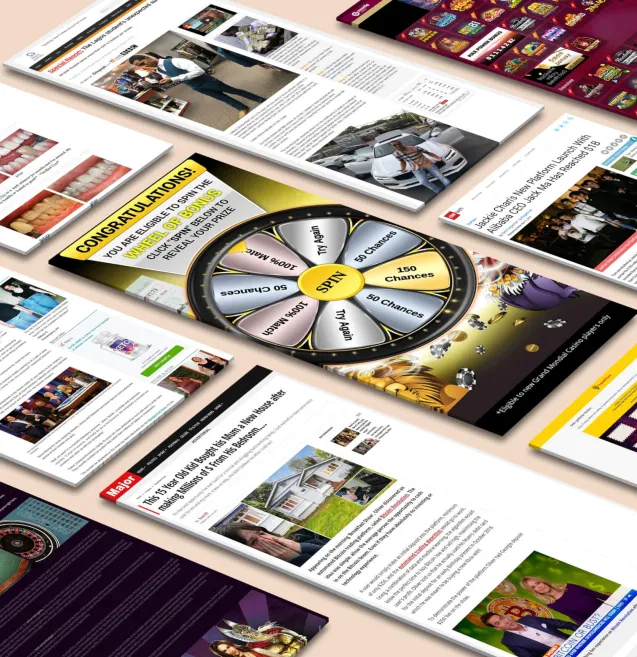
Now you’ve got decision drivers pulled out of AI answers, the next step is to “prove” them with creatives that are already making money. That’s where Anstrex’s native, push, pop, and TikTok libraries become your shortcut.
You’re not browsing ads for inspiration. You’re using them as a live‑fire lab to validate which angles, promises, and visuals actually turn that AI‑trained language into clicks and conversions.
Anstrex is built on traditional ad networks, but the user behavior feeding those networks has already been reshaped by AI. Informational and “how do I…” queries are increasingly getting resolved by AI summaries before anyone reaches a search ad or organic result, contributing to the kind of zero‑click and AI‑driven behavior shifts Marketing Dive’s analysis highlights in search. At the same time, transactional and commercial intent remains stubbornly human‑and‑click‑driven; a study summarized by Real FiG Advertising & Marketing found that while informational searches shifted to AI, buyers still flocked to traditional search when they were ready to spend.
Your research from earlier sections tells you which AI‑native prompts are killing clicks (“what’s the best X for Y,” “compare A vs B,” “create a plan for…”). You’re going to map those questions and the extracted fears/desires onto Anstrex data, then deliberately bias toward creatives that sit closest to real purchase intent.
Each Anstrex library lets you test a different hypothesis about how your audience moves from “AI answer satisfied me” to “I’m still clicking something.”
Native ads:
Native is where your “AI answer, but with teeth” angles live. People arrive from content, not hardcore search, so your creatives should:
Filter Anstrex’s native library by vertical and geography, then sort by longest‑running or highest‑affinity placements. When you see headlines repeatedly pairing the same outcome + constraint you saw in AI answers (“Quit sugar without giving up dessert,” “Retire early on an average income”), you’ve just confirmed a decision driver is strong enough to pay for.
Push and pop:
Push and pop traffic lets you lean harder into urgency, constraints, and fear of loss—the same “fears” bucket you extracted from AI, but dialed up. Use Anstrex’s push/pop data to find:
Winning push creatives show you which specific fears users will click on when they’re not in research mode. That’s crucial when more than half of AI users say chatbots have actually talked them out of buying, as Semrush’s research documented. Your push/pop angles are the antidote to that hesitation.
TikTok:
TikTok inside Anstrex is your laboratory for “how humans actually talk about this after AI.” Short‑form video is where users test and remix the language they picked up from AI answers—“lazy girl,” “no‑spend,” “Pinterest‑ready,” “quiet luxury”—into real behavior.
In the TikTok library:
This is where you discover how to turn the abstract, structured language AI favors—what Content Marketing Institute describes as legible, chunked, extractable claims—into emotionally legible micro‑stories that stop a thumb.
Don’t just save ads; dissect them into a matrix that mirrors your answer‑engine research:
For each cell, plug in 3–5 Anstrex creatives that:
You’re not copying; you’re confirming which angles have already proven they can push people off a summary and into a click in a world where referral traffic from classic search is shrinking for smaller publishers, as Neil Patel’s team has reported.
From here, every landing page and campaign you launch against AI‑era queries starts with creatives that are already validated by the market and precisely aligned with the way answer engines have trained your audience to think.
Receive top converting landing pages in your inbox every week from us.
Recently Updated
Discover how competitive ad intelligence helps marketers move beyond generic AI messaging and build more credible, differentiated advertising strategies. Learn how to analyze competitors’ creatives, uncover proven messaging patterns, and use Anstrex insights to develop AI-assisted campaigns grounded in market evidence and stronger trust signals.
Rachel Thompson
7 minOct 23, 2026
Guide
Discover how answer engine arbitrage helps performance marketers capture valuable clicks by combining AI search insights with competitive ad intelligence. Learn how to uncover hidden buyer intent, identify decision drivers, and turn proven ad creatives into targeted campaigns and landing pages that convert AI-informed audiences into customers.
David Kim
7 minOct 23, 2026
Recently Updated
Discover how AI citation intelligence can help performance marketers uncover high-intent buyer journeys, identify winning messaging, and improve paid media performance. Learn how to turn AI search citations into actionable creative angles, conversion-focused landing pages, and scalable campaigns that connect AI visibility with measurable revenue.
Elena Morales
7 minOct 22, 2026












)