11 minOctober 31, 2026

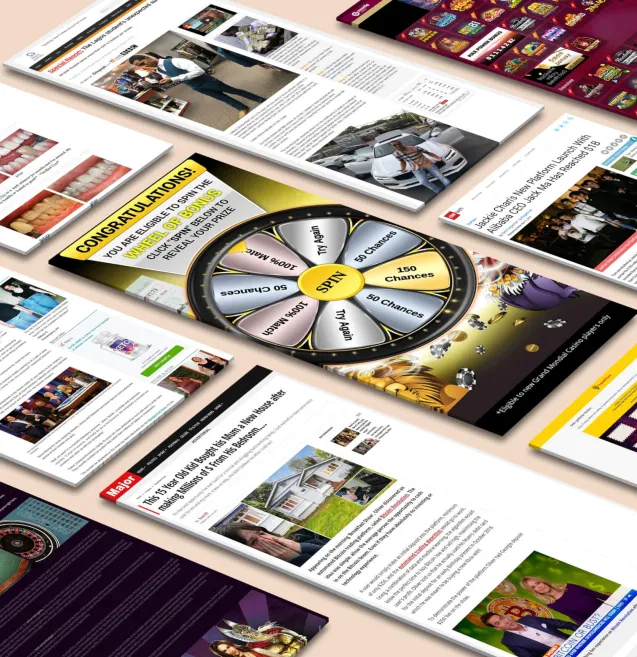
Our spy tools monitor millions of native ads from over 60+ countries and thousands of publishers.
Get StartedMost marketers collect advertisements the way the internet collects browser tabs: constantly, without a clear plan for what happens next.
You see a TikTok with an irresistible opening. You save it. A customer testimonial appears in your feed, so you take a screenshot. You discover an interesting native ad on a publisher website and bookmark the landing page. Later, you photograph a digital billboard that catches your attention.
Over time, those examples accumulate across browser bookmarks, Notion pages, phone albums, Slack messages, and desktop folders with names like "Cool Ads - Final."
Then someone asks a simple question:
"What creative approaches are working in our category right now?"
Suddenly, finding a useful example becomes a search through hundreds or thousands of disconnected files.
This is the problem with traditional swipe file culture: it encourages marketers to collect inspiration without building a system for using it.
Meanwhile, advertising technology has become increasingly structured. Publishers, advertisers, and media platforms use sophisticated systems to organize inventory, audience information, placements, and campaign outcomes. Each impression can generate signals about the content, device, environment, and auction in which it appeared.
Media buyers need to approach competitive research with a similar mindset.
Instead of treating every interesting advertisement as an isolated example, they can build a searchable library that organizes creative patterns, channels, offers, audiences, and funnel stages.
That is the difference between a swipe file and a spy stack.
A swipe file helps you remember advertisements you liked. A spy stack helps you investigate patterns, develop hypotheses, and turn competitive observations into structured experiments.
Here's how to build one.
Your swipe file isn't necessarily failing because the advertisements are bad. It's failing because the information surrounding those advertisements is incomplete.
A screenshot can preserve a headline, image, or video frame. It rarely preserves everything you need to understand why the advertisement appeared, who it was intended to reach, where it was distributed, or how it fits into the advertiser's broader funnel.
That creates four major limitations.
You might remember a TikTok advertisement because its opening three seconds were particularly effective.
But did it generate qualified leads? Did it attract customers who eventually purchased? Was it part of a successful campaign, or did it simply attract attention?
Unless you have access to reliable performance information, you cannot answer those questions from the creative alone.
This is why connecting your own advertising platforms, analytics, and CRM data matters. For example, integrations between TikTok and CRM platforms such as HubSpot can help advertisers connect campaign activity with downstream lead and customer outcomes.
Your competitive library should follow the same principle wherever possible: keep observable creative information separate from verified internal performance results.
Many marketers organize their collections by platform:
This organization is convenient, but it can make broader patterns difficult to identify.
Consider an advertiser using the same underlying message across several environments:
If these examples are stored in separate folders, the shared creative strategy can be difficult to recognize.
A cross-channel library should make it possible to find the same message, hook, or offer across different formats.
An advertisement cannot be evaluated independently of its environment.
A humorous message on a social feed might feel natural, while the same message in a search advertisement could be ineffective. A visually disruptive creative might attract attention in a gaming environment but feel out of place on a news website.
The placement, audience, and moment of exposure all influence how a creative concept should be interpreted.
This is particularly important when researching digital out-of-home advertising. Audience-based planning tools, including JOLT's Spark Intelligence, illustrate the industry's interest in evaluating audience composition and movement rather than relying exclusively on high-traffic locations.
Your library should preserve that context instead of saving only the creative.
Collecting an interesting advertisement is not the same as knowing what to test.
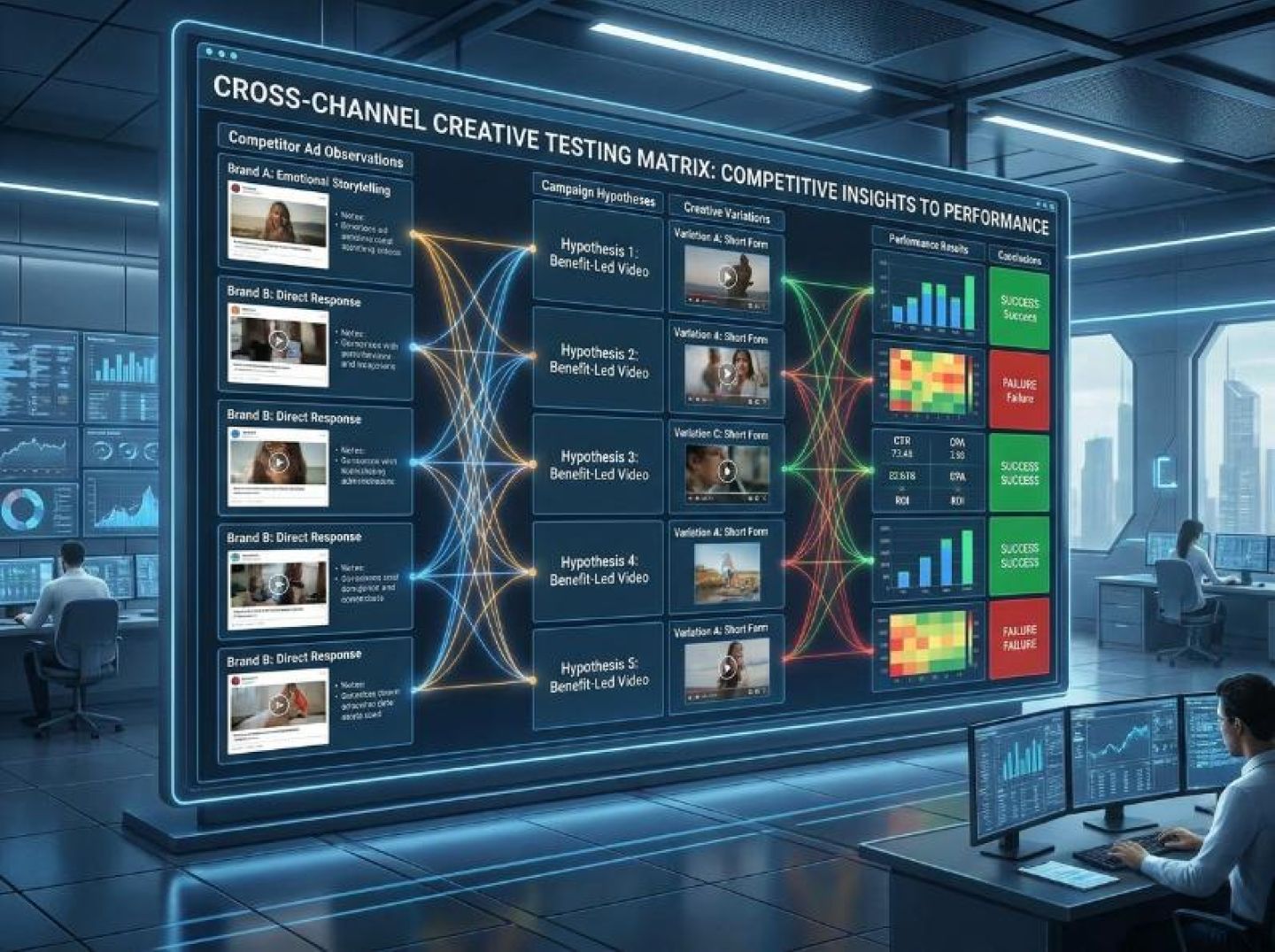
A useful research system should help you turn an observation into a hypothesis.
For example:
The swipe file provides the inspiration. The spy stack provides the structure for testing it.
A spy stack is a living advertising intelligence system that combines competitive research, creative classification, contextual information, and internal performance feedback.
It has four essential layers.
Collection layer: Capture advertisements across relevant channels, including social, search, native, video, retail media, gaming, and digital outdoor placements.
Enrichment layer: Add useful information such as placement, format, offer, landing page, audience context, observation date, and available performance evidence.
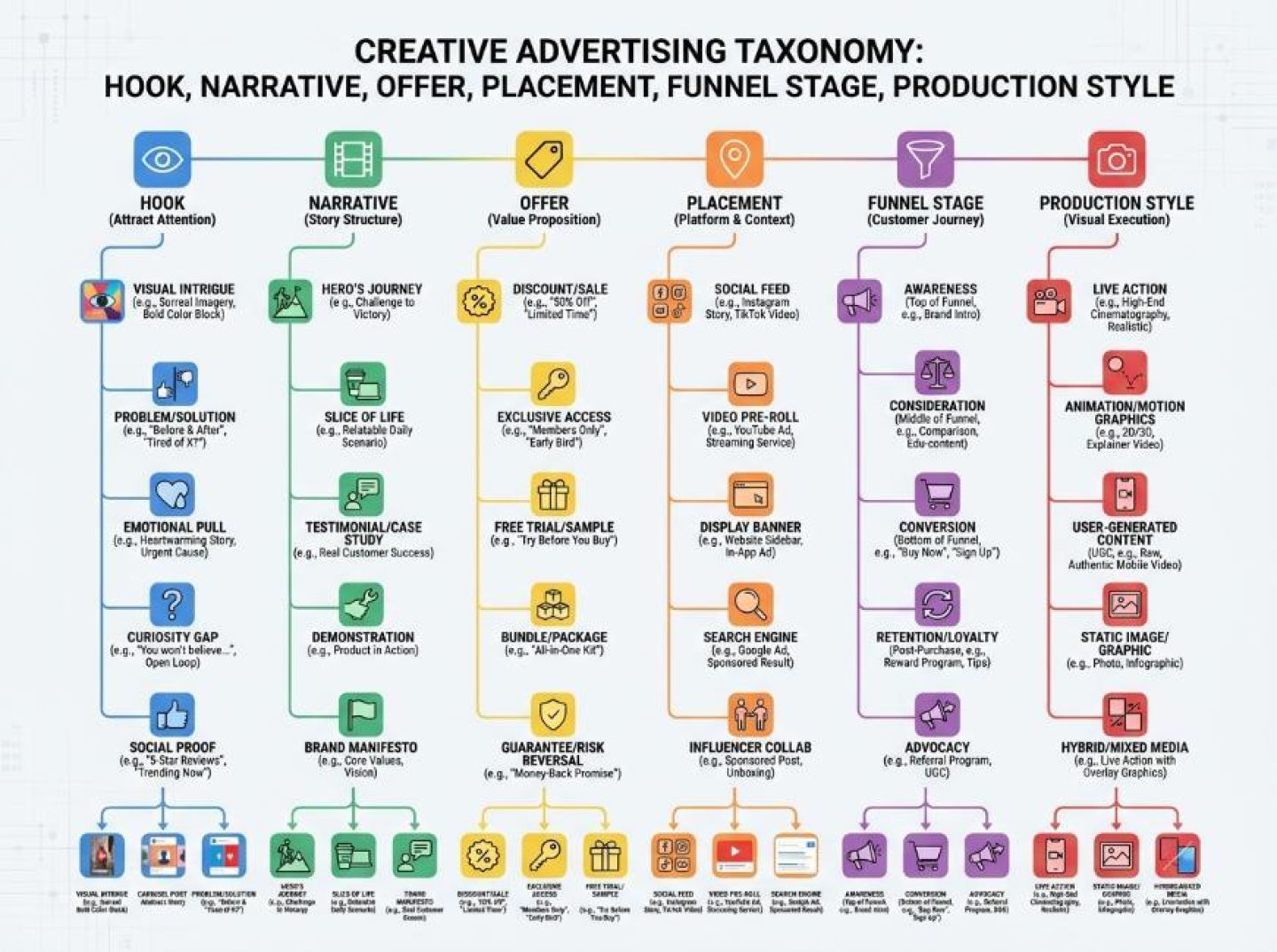
Classification layer: Organize advertisements using consistent categories for hooks, angles, offers, proof types, formats, channels, and funnel stages.
Activation layer: Turn recurring patterns into testable creative hypotheses, campaign briefs, and experiments. Feed your own campaign results back into the library.
The fundamental shift is simple:
A swipe file asks, "What do I like?"
A spy stack asks, "What patterns are appearing, where are they appearing, and how can I test those ideas in my own campaigns?"
A useful spy stack should reflect how your customers encounter advertisements, not simply how advertising platforms categorize their products.
Before choosing tools or building a database, determine which channels matter to your business.
A practical starting point is to organize advertising environments into three groups.
Demand capture — search and retail media
These environments help advertisers reach people who are actively looking for information or products.
Examples include:
Demand generation — social, native, and video
These formats introduce products, create interest, and develop consideration.
Examples include:
Contextual and immersive advertising — environments built around attention
These placements can reach audiences through content, experiences, or physical environments.
Examples include:
This structure helps you compare advertisements based on their function rather than their platform alone.
For example, a sponsored product listing and a native article recommendation are technically different formats. However, both can be examined as ways of capturing attention around a particular interest or moment of intent.
The goal is to build a library that reflects these relationships.
You don't need an expensive enterprise system to get started.
A practical spy stack can combine several types of tools.
Advertising discovery and capture
Use available advertising libraries and research platforms to find examples across channels.
Potential sources include:
The specific sources available will depend on the channel, market, and type of advertising you want to research.
Centralized organization
Store your findings in one searchable repository.
Tools such as Notion, Airtable, Milanote, or a custom internal content management system can hold:
The most important requirement is not the software. It's the consistency of the information you store.
Performance intelligence
Keep competitive observations connected to your own first-party data.
This can include:
Competitive research helps you discover what others are doing. Your own performance data helps you determine what works for your business.
A useful system should allow you to compare a TikTok opening, a native thumbnail, and a CTV commercial's opening frame in one research environment.
If every advertisement is considered important, the library quickly becomes another collection of clutter.
Treat the spy stack as an R&D resource. Each entry should provide a reason to keep it.
Four types of examples are particularly valuable.
Demonstrated performance
These are advertisements supported by reliable case studies, public results, or your own campaign data.
For example, a documented native advertising case study showing improvements in engagement or conversions can provide a useful reference for understanding how a creative and landing page combination was executed.
Record the source and the specific outcome being reported. Don't assume that results from one advertiser will automatically transfer to another business.
Strategic novelty
Some advertisements deserve attention because they introduce a new format or creative mechanic.
Examples might include interactive in-game experiences, branded digital collectibles, augmented reality filters, or creative integrations within entertainment platforms.
These examples can expand your understanding of what is possible within a channel.
Pattern-confirming examples
These are advertisements that reinforce a creative pattern you are already investigating.
For example, you might find:
The executions differ, but the underlying narrative is similar.
Grouping these examples can help you investigate whether the message is being adapted across channels.
Anti-patterns
Not every example should be a potential winner.
Poorly matched creative, confusing offers, weak landing page continuity, or excessive messaging can provide useful lessons.
However, be careful about labeling a competitor's advertisement as a failure. Without access to reliable performance data, you may only be identifying a creative weakness or a potential risk—not proving that the campaign underperformed.
Each entry should have a clear research purpose: validate an idea, challenge an assumption, or introduce a new testing opportunity.
The biggest weakness of many advertising libraries is that everything is described as interesting, creative, or inspiring.
Those descriptions are subjective. They don't make the information easy to compare.
A useful classification system converts creative observations into consistent attributes.
Imagine asking:
"Show me examples of cold-traffic video advertisements that open with a visual problem, use customer testimonials, and introduce a solution within the first 15 seconds."
A properly organized library should make that search possible.
Here's how to build the underlying structure.
Start with a small number of required fields.
You can add more sophisticated categories later, but every advertisement should have enough information to make it searchable.
Channel and placement
Avoid using broad platform labels when more specific information is available.
Examples:
This distinction matters because different placements within the same platform can have different creative requirements.
Funnel role
Classify the advertisement according to its apparent purpose.
Examples:
When the purpose cannot be confirmed, mark it as an inferred funnel role rather than a verified campaign objective.
Offer type
Record the commercial proposition.
Examples:
This makes it easier to compare how different offers appear across channels.
Business model
Add a business model category to avoid comparing campaigns with fundamentally different economics.
Examples:
A creative strategy for a low-cost impulse purchase may not translate directly to a high-ticket consulting funnel.
The next layer captures how an advertisement communicates its message.
Instead of writing "great hook," identify the specific technique.
Hook pattern
Possible tags include:
Narrative structure
Classify how the message develops.
Examples:
Authority or proof device
Record who or what establishes credibility.
Examples:
Production style
Examples include:
These tags make it possible to compare creative decisions without depending on brand names or personal taste.
A screenshot is not a performance report.
However, the library can still preserve useful evidence and distinguish between what is known and what is inferred.
For each advertisement, consider recording:
You can also use directional labels for your internal campaigns:
Keep those labels tied to actual campaign evidence.
For competitor advertisements, use separate observation labels such as:
A competitor advertisement remaining visible for a long time may suggest sustained activity, but it does not prove that the campaign is profitable or generating strong conversions.
One of the most important rules is to keep creative attributes separate from media attributes.
For example:
Don't combine these into one label such as "Gaming Threat-Avoidance Ad."
Why?
Because you may eventually discover that threat-avoidance messaging appears across gaming, native, and social advertising.
If the tags are independent, you can search for the same creative behavior across different environments.
This is what turns a gallery into a research system.
A spy stack only becomes valuable when it changes how you plan and execute campaigns.
You don't need to collect more advertisements for the sake of collecting them. You need a repeatable process that turns research into testable hypotheses.
Here's a practical workflow.
Bring your research sources into one location.
For example, a media buyer might combine:
Store each example with the classification fields established in the previous section.
At this stage, don't worry about analyzing every advertisement individually. First, make sure the information is organized consistently.
Avoid beginning with vague questions such as "What ads look cool?"
Start with a specific research objective.
For example:
"How are advertisers approaching cold-traffic lead generation for quiz-based funnels?"
Or:
"What creative approaches are used to justify a higher product price during retargeting?"
Then narrow your library using filters.
You might select 20–30 relevant advertisements per channel for a deeper review, depending on the size of your market and available research.
For native advertising, campaign walkthroughs and case studies from platforms such as Taboola can provide additional context about campaign objectives, bidding approaches, creative uploads, and placement strategies.
These resources can help you understand execution, but a platform tutorial is not proof that every tactic shown is a winning strategy.
Once you have a focused collection, remove the brand names from the initial analysis.
The goal is to understand the creative decisions behind the advertisements.
Ask questions such as:
These observations can become hypotheses.
For example:
Hypothesis A — Problem-forward UGC
Customer-style videos that demonstrate a recognizable problem in the opening seconds may generate stronger engagement than polished brand footage for a particular audience.
Hypothesis B — Educational native headlines
Educational headlines that introduce a problem or explain a product category may attract more qualified readers than product-first headlines for high-consideration purchases.
Hypothesis C — Cost-of-inaction retargeting
Retargeting messages that explain the consequences of delaying a purchase may perform differently from advertisements focused entirely on discounts.
These are hypotheses, not conclusions. Your own testing must determine whether they are useful.
A strong idea doesn't always need to look identical across every channel.
The underlying message can remain consistent while the execution changes to match the placement.
Consider this example:
Hypothesis A: Problem-forward UGC
| Channel | Test execution |
|---|---|
| TikTok | Four variations: two creator-led openings and two over-the-shoulder demonstrations |
| Meta Reels | Three short edits adapted from the strongest scripts |
| Native | Two headline and thumbnail combinations based on the same problem |
| YouTube Shorts | Vertical video versions with different opening frames |
Hypothesis B: Educational explainer
| Channel | Test execution |
|---|---|
| YouTube | Two longer explainers with three different opening hooks each |
| Native | Educational advertorials that introduce the problem before presenting the product |
| A nurture sequence that uses the same educational message | |
| Retargeting | Short product explanations that reinforce the original lesson |
This approach allows the same strategic idea to be examined across different environments.
However, don't assume that a winning TikTok creative will automatically perform well on native or CTV. Each channel has different audience behavior, placement conditions, and measurement limitations.
Creative performance should be evaluated against the objective of the campaign.
Depending on the business model, useful measures may include:
For lead generation, a low cost per lead isn't necessarily a win if the leads rarely become customers.
For e-commerce, a high click-through rate isn't necessarily a win if the traffic doesn't convert profitably.
Where possible, connect advertising platforms to your CRM and analytics systems so that creative decisions can be evaluated beyond initial engagement.
Once your experiments have produced enough evidence, update the relevant entries.
For example:
You can now search for proven patterns across your own campaigns.
Instead of asking only what competitors are doing, you can also ask:
"Which of our validated creative patterns can be adapted for another channel?"
That is when competitive research starts becoming an operational advantage.
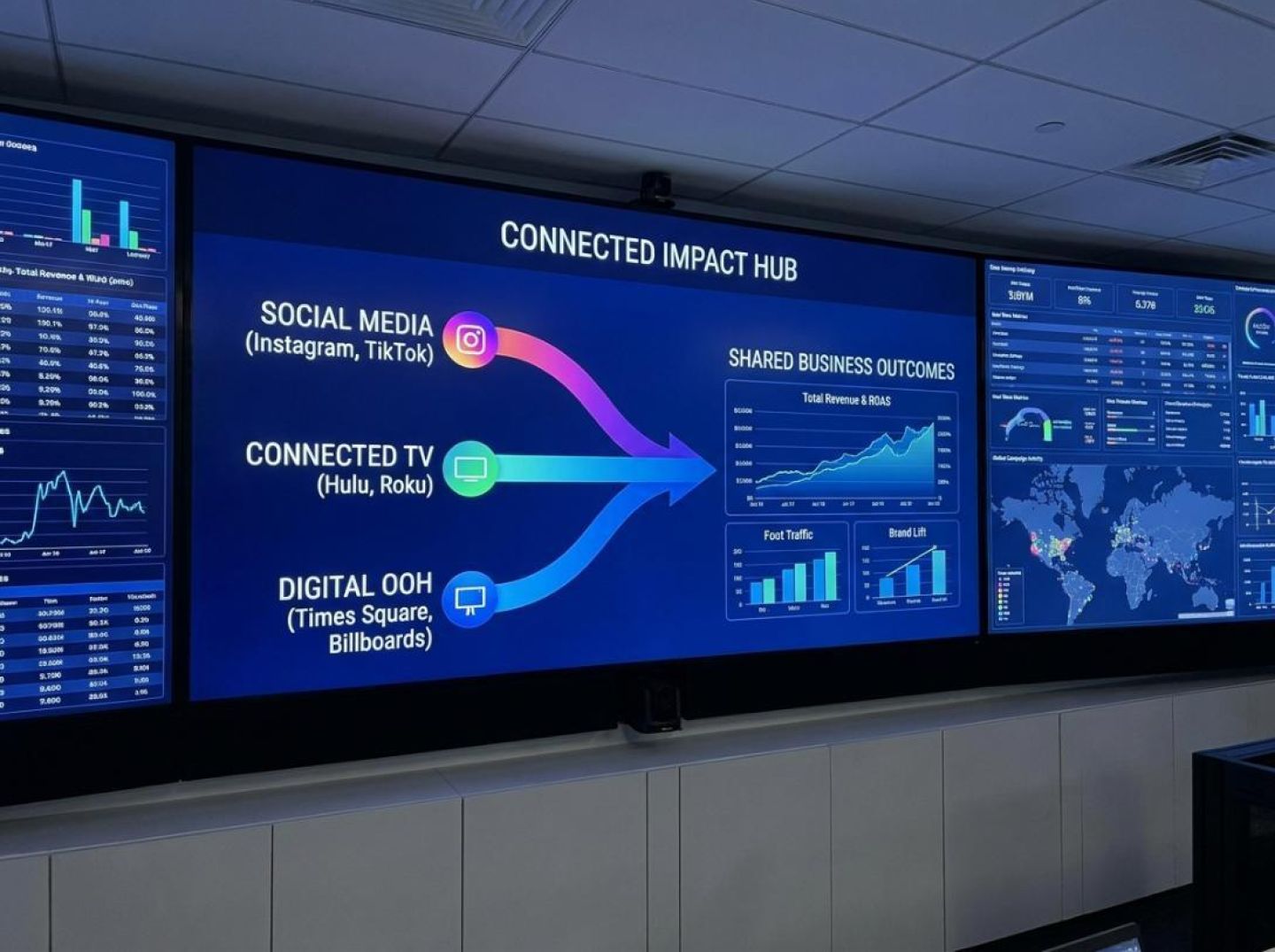
A disciplined media buying process shouldn't automatically exclude channels such as digital out-of-home, connected TV, or gaming advertising.
The challenge is making sure these channels fit into the same strategic framework as the rest of your media plan.
The goal is not to pretend every impression is identical. It's to evaluate each channel according to its role, audience, cost, and contribution to business outcomes.
A TikTok video view, a completed CTV advertisement, and a DOOH exposure are not equivalent events.
They differ in:
However, all three can contribute to a broader customer acquisition strategy.
Rather than forcing them into identical performance measurements, establish common business questions.
For example:
This gives you a consistent way to compare strategic contributions without pretending that every impression has the same meaning.
Traditional outdoor advertising often begins with a location: a busy road, shopping district, or major intersection.
Audience-based DOOH planning takes a different approach.
Tools such as JOLT's Spark Intelligence illustrate how advertisers can use audience, movement, and behavioral information to identify environments that may be more relevant to their target market.
Instead of choosing a screen simply because it receives substantial traffic, planners can investigate whether the surrounding audience and context match the campaign objective.
For your spy stack, record:
Keep the distinction between estimated audience exposure and verified individual behavior clear.
Connected TV offers another opportunity to examine how creative ideas work in a different viewing environment.
A short-form social advertisement may rely on a fast opening, while a longer CTV placement may have more room for storytelling, demonstrations, and product explanations.
Some CTV advertising solutions also offer contextual or dynamic creative capabilities that can adapt advertisements to different content environments.
When researching these campaigns, capture:
You can then compare CTV storytelling with shorter social and native executions.
The objective is to identify which parts of a creative idea can be adapted—not to assume that a longer commercial will behave like a short-form video.
Data integration is one of the biggest challenges in cross-channel advertising.
For social campaigns, pixels, conversion APIs, and CRM integrations can connect campaign activity with downstream outcomes.
For CTV and DOOH, measurement may involve exposure logs, household-level reporting, visitation studies, or other partner-provided measurement solutions, subject to privacy requirements and the capabilities of each provider.
Your measurement framework should make the available evidence clear.
Useful cross-channel questions include:
Be especially careful with cross-channel attribution. A conversion occurring after someone was exposed to an advertisement does not automatically prove that the advertisement caused the conversion.
Where possible, use incrementality testing, controlled comparisons, or other suitable measurement approaches.
Omnichannel optimization platforms are increasingly focused on evaluating campaigns against shared business objectives.
Solutions such as COOL AI have been discussed in industry coverage as examples of systems designed to coordinate campaign optimization across multiple advertising environments.
The underlying principle is useful even when you don't use an automated platform:
Automation can help reduce repetitive reporting and budget-management work. It should not make strategic decisions based on incomplete or misleading signals.
A channel belongs in your performance framework when you can define its audience and context, establish an appropriate measurement approach, and evaluate its contribution against a clear objective.
A sophisticated research library is worthless if nobody updates it.
The best system is not necessarily the one with the most fields, integrations, or dashboards. It's the one that makes research easier to retrieve and decisions easier to communicate.
Start with a simple operating routine.
Assign responsibility for:
For a small team, one person can manage several responsibilities. Larger teams may separate competitive research, creative strategy, and performance analysis.
A practical schedule might look like this:
Daily or several times per week
Capture relevant new advertisements and record important creative changes.
Weekly
Review new examples, identify repeated hooks or offers, and discuss possible experiments.
Monthly
Evaluate internal test results, update validated patterns, and remove outdated or irrelevant entries.
Quarterly
Review whether the library still reflects the channels, audiences, and business objectives that matter.
Avoid turning your spy stack into a collection of information nobody uses.
Every research entry should help answer at least one question:
If an entry cannot help answer a useful question, it may not deserve a place in the active library.
The advertising landscape is becoming more connected, but many media teams still organize their competitive research around disconnected screenshots and saved links.
That creates a gap between what marketers observe and what they can actually use.
A structured spy stack closes that gap.
It brings together creative examples, placement information, offers, funnel stages, audience context, and internal campaign results. It makes it easier to identify patterns across channels, develop more focused hypotheses, and turn competitive observations into practical experiments.
The process doesn't require an expensive enterprise platform or an enormous research team.
Start with the channels that matter most. Build a consistent tagging system. Capture relevant advertisements. Separate observable competitor activity from verified performance data. Then connect your research to your own testing process.
Tools such as Anstrex can support the competitive discovery stage by helping media buyers investigate advertising activity and creative approaches across supported environments.
But the real advantage comes from what happens after discovery.
Don't just save the advertisement. Understand its structure, classify its approach, investigate its context, and decide what you can learn from it.
A swipe file helps you remember what caught your attention. A spy stack helps your team turn that attention into better media buying decisions.
Receive top converting landing pages in your inbox every week from us.
Guide
Stop relying entirely on social media followers. Discover how performance marketers use competitor ad research, landing page analysis, and funnel strategy to turn paid attention into owned customer relationships.
Liam O’Connor
7 minOct 31, 2026
Guide
Move beyond random screenshots and build a structured ad intelligence library that connects competitor research, creative patterns, and cross-channel testing.
Priya Kapoor
7 minOct 31, 2026
In-Depth
AI can analyze competitor advertisements and generate new creative at scale, but not every apparent winner reflects real customer demand. Learn how to filter competitor insights, train AI with business context, and validate campaigns using meaningful human signals.
Samantha Reed
7 minOct 30, 2026