12 minJuly 15, 2026

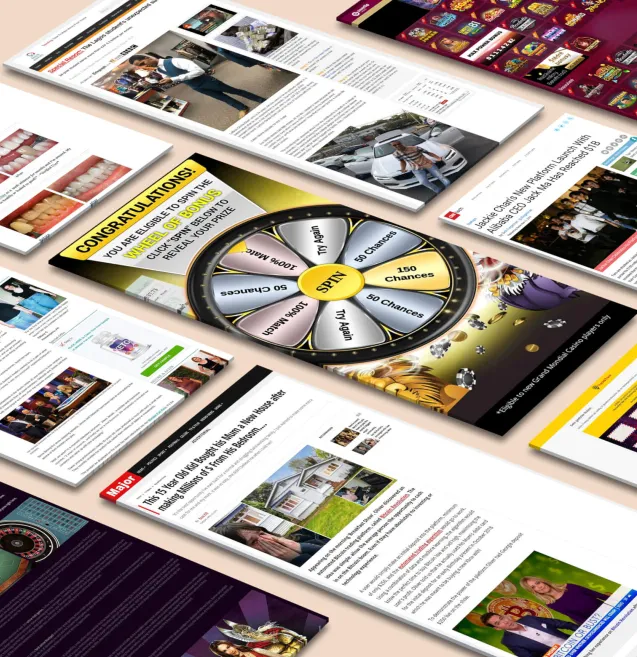
Our spy tools monitor millions of native ads from over 60+ countries and thousands of publishers.
Get StartedLet's be honest about what the AI visibility industry is selling right now: a sophisticated, resource-intensive discipline that was built by enterprise teams, for enterprise teams, and that quietly assumes you have the infrastructure to play along.
The clearest illustration comes from Semrush themselves. In a candid account of their own journey, they described going from invisible in AI answers to consistently showing up for the prompts buyers actually use — a process that took systematic work over months before they nearly tripled their AI share of voice from 13% to 32% for target prompts. That's an impressive result. It's also one that required a dedicated team running their own enterprise tooling, building custom prompt sets, organizing URL portfolios, interpreting citation data across multiple AI platforms, and iterating on content strategy through sustained cycles. They had the people, the platform, and the patience to do it. The playbook they published is genuinely useful. It's also a playbook that presupposes you have a quarterly planning horizon and a content operation that can absorb weeks of foundational measurement work before anyone sees a return.
Neil Patel frames the data challenge with characteristic directness, warning that citation data is inherently noisy and that a single-period dip rarely means anything — only a sustained two-to-three-month trend does. That's sound analytical advice. It's also an implicit admission that this game doesn't yield readable signals for weeks, sometimes months. If you're a performance marketer who needs to justify spend by next Friday, or a lean affiliate team running on a skeleton content budget, being told to wait three months for your data to stabilize isn't a strategy — it's a luxury.
And the overhead doesn't stop at measurement. Patel's guide walks through the operational work of building tracked prompt sets, organizing URL portfolios by content type, and using action centers to identify citation visibility gaps — all before you've rewritten a single page. He's explicit that your tracked prompt set is the foundation of every number your reporting shows, and that misunderstanding what those prompts cover means misreading your data entirely. Getting the inputs right is itself a project.
Meanwhile, a recent Semrush study found that only 22% of marketers have fully integrated AI search and SEO, and among those seeing actual results, the common thread wasn't cleverness — it was operational consistency. They own the work, they measure it, and they execute it relentlessly. Content creation leads planned investment at 49%, brand visibility across channels sits at 46%, and a full 25% are carving out dedicated budget for AI visibility tools — a line item that barely existed two years ago.
None of this is a criticism of these frameworks. Semrush and Patel are building legitimate disciplines for a real shift in how buyers discover brands. But let's name the thing nobody in the AI visibility space is saying out loud: this entire apparatus was designed for well-resourced brands playing over quarters, not for operators who need traction now. The long game is real. It's also exclusionary by design — and if you don't have six months and a content team, you need a different playbook entirely.
Every AI visibility framework rests on the same implicit promise: if you get cited by large language models, good things will happen to your business. But here's the uncomfortable truth that even the architects of these frameworks can't paper over — nobody can actually prove that yet, and the metrics being used to measure success are fundamentally disconnected from the metrics that pay the bills.
Start with the most honest admission in the space. Semrush's own team, writing about the system they built and sell, conceded plainly that standard attribution can't see AI influence because LLMs shape decisions without sending a click or a conversion. Read that again. The company building the tooling to track AI visibility is telling you, in writing, that the downstream impact of that visibility is invisible to your analytics stack. They went further, acknowledging that citations showed reach, not positioning — meaning an LLM could pull a data point from your content while actively recommending a competitor in the same breath. Usage isn't endorsement. Reach isn't revenue. And no amount of "share of voice" reporting changes the fact that you can't draw a line from "ChatGPT mentioned us" to "a customer converted."
Now consider what the industry's response has been to this attribution void. Search Engine Journal's pre-Q3 guidance told marketers to report citations alongside clicks — framing citations as "a second visibility metric that captures brand exposure clicks never record." The phrasing is revealing. They're not saying citations replace clicks. They're not saying citations predict revenue. They're saying citations measure something clicks don't capture, and you should show both numbers to leadership. That's a brand awareness argument dressed in performance marketing language. For a CMO at a Fortune 500 company managing a seven-figure content operation, adding a new line to the executive dashboard is a reasonable ask. For a performance marketer whose commission check depends on cost per acquisition, or an affiliate whose livelihood hinges on earnings per click, a metric that explicitly "captures brand exposure clicks never record" is a metric that can't justify a single dollar of spend.
This is the gap nobody in the AI visibility conversation wants to confront directly. The metrics that define success in this discipline — visibility scores, share of voice percentages, citation counts — are all proxies for awareness. They tell you whether an LLM knows your name. They don't tell you whether a human being read that citation, visited your site, entered a funnel, or bought anything. And when the people building these measurement systems openly admit the attribution chain is broken, you're not looking at a performance strategy with a few kinks to work out. You're looking at a brand play that hasn't yet earned the right to sit in the same planning session as your paid media.
That distinction matters enormously when you're deciding where to allocate limited budget and limited time. Brand awareness has real value — no serious marketer would argue otherwise. But conflating awareness with performance, and selling citation counts as evidence of business impact, is the kind of category error that burns through runway fast. If your business model demands attributable, measurable conversions within a defined payback window, the AI visibility playbook isn't giving you a strategy. It's giving you a hope.
The industry's favorite framing of AI search visibility goes something like this: most brands aren't showing up yet, which means the opportunity is wide open for those bold enough to move first. It's a compelling narrative. It also collapses under the weight of its own data.
The study everyone keeps citing found that only 18 out of 177 brands measured earned any AI search mentions at all. That's roughly 90 percent of brands sitting at zero — not underperforming, not struggling for position, but completely invisible. The standard interpretation, repeated across conference stages and LinkedIn threads, is that this represents white space waiting to be claimed. But there's a more honest reading: this is a channel that currently delivers virtually zero discoverability for the vast majority of participants, including well-known brands with substantial content operations and mature SEO programs. If a paid media channel returned zero impressions for 90 percent of advertisers, no performance marketer on earth would call it an opportunity. They'd call it broken.
The volatility compounds the problem. Even for the brands that do appear in AI-generated answers, consistency is a fantasy. As Neil Patel has argued, citation data is inherently noisy, and the tools used to track it were built for a deterministic world that no longer exists. AI outputs are non-deterministic by design — the same query can produce different citations depending on the platform, the moment, the user's conversation history, and whatever backend updates the model provider pushed that morning. Semrush's own internal data illustrated this vividly: ChatGPT's citation rate for Reddit content plummeted from roughly 60 percent to 10 percent in a matter of weeks, not because Reddit's content changed, but because the model's behavior shifted underneath everyone. That kind of swing would be considered catastrophic instability in any established marketing channel.
This matters because performance marketing demands predictability. Paid search, paid social, and programmatic display all operate on transparent auction mechanics with real-time feedback loops. You can see what you're spending, what you're getting, and adjust in minutes. AI search offers none of that infrastructure. There's no bidding system, no quality score you can optimize, no frequency cap, no reliable attribution chain from citation to conversion. As Search Engine Journal noted, the same AI surfaces are now blending organic citations with paid placements, and the rules governing which appears where are shifting faster than most teams can track, let alone optimize against.
The "first-mover advantage" argument is the last refuge here, and it deserves scrutiny. First-mover advantage assumes the ground you're moving onto is stable enough to build on. When the platform can restructure its citation logic overnight — when your visibility can evaporate not because of anything you did but because a model update changed how sources are weighted — you're not building on open terrain. You're building on quicksand.
None of this means AI search will always be this volatile, or that it won't eventually mature into a channel worth sustained investment. But for marketers who need scalable, consistent results on a timeline measured in quarters rather than years, the honest assessment is that this channel isn't ready for them — and more importantly, they don't need to wait for it. The proven, stable channels that already exist aren't going anywhere, and they still work.
Here's the thing everyone in the AI visibility conversation keeps dancing around: the diagnosis is right, but the prescription is backward for anyone who needs results before the quarterly board meeting.
As MarTech put it, watching competitors and understanding what their moves mean are two different jobs, and most competitive intelligence amounts to nothing more than a rearview mirror — useful, but reactive. That's a sharp observation, and it applies just as well to the AI visibility playbook itself. Tracking whether your brand appears in ChatGPT responses, optimizing for AI Overviews, building topical authority through months of structured content — all of it is rearview-mirror strategy dressed up as forward thinking. You're measuring what happened, adjusting, waiting, and measuring again. The feedback loop is measured in quarters, not days.
Performance marketers don't have quarters. They have budgets that need to produce returns this week, campaigns that need to justify their spend by Friday, and clients who measure success in conversions, not citations. For these marketers, competitive intelligence isn't an abstract exercise in tracking messaging shifts over time — it's an immediate, commercial weapon. And the sharpest version of that weapon is ad spy intelligence across native, push, and pop channels.
Here's why this works: when a competitor has been running the same native ad creative for six weeks straight across multiple traffic sources, that's not an aesthetic choice. That's profitability data. Every day an ad stays live is a day it's clearing its cost threshold. The headline, the image, the angle, the landing page structure behind it — all of it has been market-validated by actual spending. No amount of AI visibility tracking can give you that kind of signal about what's actually moving buying decisions in real time.
This isn't copying. It's market research at the speed of money. And it follows a framework you can execute in 24 to 48 hours:
Identify winning creatives. Use ad spy tools to filter by longevity, network, and vertical. Any creative running for more than three weeks across multiple placements is a signal worth investigating. Sort by duration, not recency — you're looking for survivors, not experiments.
Reverse-engineer the funnel. Click through. Document the landing page structure: headline formula, proof elements, call-to-action placement, page length, form fields. Note whether they're using advertorials, listicles, or direct response pages. The structure tells you what the traffic source's algorithm and audience reward.
Adapt the angle for your offer. You're not cloning the ad — you're extracting the underlying persuasion architecture. If a competitor's winning headline leads with a fear-based hook and a specific number, that's a messaging pattern you can apply to your own offer with your own proof points and your own voice.
Launch a test. Deploy three to five variations within 48 hours. Use the competitor's creative as your control hypothesis — if that angle works for their offer on that traffic source, it has a meaningful probability of working for yours. Let the data confirm or reject within your first budget cycle.
The beauty of this approach is that every dollar you spend generates immediate feedback. There's no waiting for AI systems to recrawl your content, no hoping that schema markup nudges you into an answer engine response, no ambiguity about whether a citation actually influenced a purchase. You see the click, the conversion, and the cost — the metrics that actually matter — within hours of launch.
This is the short game. Not because it's shallow, but because the distance between intelligence and action collapses to almost nothing.
The marketers I respect most aren't choosing between the short game and the long game. They're sequencing them — and the order matters more than most strategy decks acknowledge.
Here's the logic: competitive ad intelligence generates revenue now. That revenue buys you the runway to invest in AI visibility infrastructure that won't pay off for months. Flip the sequence — pour resources into AI optimization first while your pipeline starves — and you'll never survive long enough to see the compounding returns everyone keeps promising. The brands that will dominate AI search in 2027 are the ones generating enough cash flow in 2026 to fund the experimentation.
This isn't a theoretical framework. Neil Patel makes the case that citation data is inherently noisy and that a single-period dip rarely means anything — only sustained two-to-three-month trends carry real signal. That timeline alone tells you everything about why AI visibility can't be your primary revenue driver today. You need a minimum of one full quarter of consistent effort before the data even stabilizes enough to act on with confidence. Meanwhile, your competitors' ad libraries are refreshing weekly, and every insight you extract from them can be deployed into a campaign within days, not months.
The sequencing framework looks something like this: In weeks one through four, you audit competitor creatives, identify messaging gaps, and launch conversion-tested campaigns that generate immediate pipeline. In months two and three, you reinvest a portion of that revenue into building the topical authority, structured content, and entity signals that AI models need to start citing you. By month four, you have both engines running — one funding the other.
What makes this approach especially urgent right now is that the organic and paid sides of AI search are converging faster than most teams realize. As Search Engine Journal reported, AI Mode ads are rolling out and ChatGPT ad testing is in flux, meaning the same surfaces now blend organic citations with paid placements. If your paid and organic teams are operating in separate rooms, you're optimizing half the picture while the other half quietly erodes your visibility. Planning both in the same room isn't a luxury — it's the only way sequencing actually works, because the intelligence you gather from paid performance directly informs which topics deserve your organic AI optimization investment.
The critical mistake is treating these as philosophically opposed strategies. They aren't. competitive ad intelligence tells you what messaging resonates with your audience right now. AI visibility reporting tells you what questions your audience is asking AI systems and whether you're part of the answer. The first gives you conversion data. The second gives you citation data. Together, they form a feedback loop: the keywords and angles that convert in paid campaigns become your highest-priority topics for AI-optimized content, and the citation gaps you discover in AI reporting reveal new paid angles your competitors haven't tested yet.
Stop thinking about this as short game versus long game. Think about it as fuel and engine. The short game is the fuel — without it, nothing moves. The long game is the engine — without it, you burn resources with no compounding return. The brands that win the next eighteen months will be the ones disciplined enough to light the fuel first and build the engine while it's burning.
Receive top converting landing pages in your inbox every week from us.
In-Depth
Explore what Pure Leaf’s “Break Conference” reveals about the gap between polished brand marketing and measurable performance. This guide breaks down how Native, Push, TikTok, and affiliate-style funnels use creative testing, clear offers, first-party data, and hard performance metrics to turn cultural moments into revenue.
Rachel Thompson
7 minOct 1, 2026
Must Read
Explore why traditional OOH experience is no longer enough as out-of-home advertising becomes more data-driven, measurable, and connected to digital channels. This guide outlines the cross-channel, measurement, AI, and competitive-intelligence skills modern OOH employers and candidates need.
David Kim
7 minSep 25, 2026
How-To
Learn how to measure whether sports-star and celebrity advertising actually delivers efficient CPC, CPA, search lift, and downstream conversions. This guide shows how to test celebrity creative against creator alternatives and use competitive intelligence and measurement to turn expensive star power into a measurable performance asset.
Elena Morales
7 minSep 25, 2026