

10 minMay 21, 2026

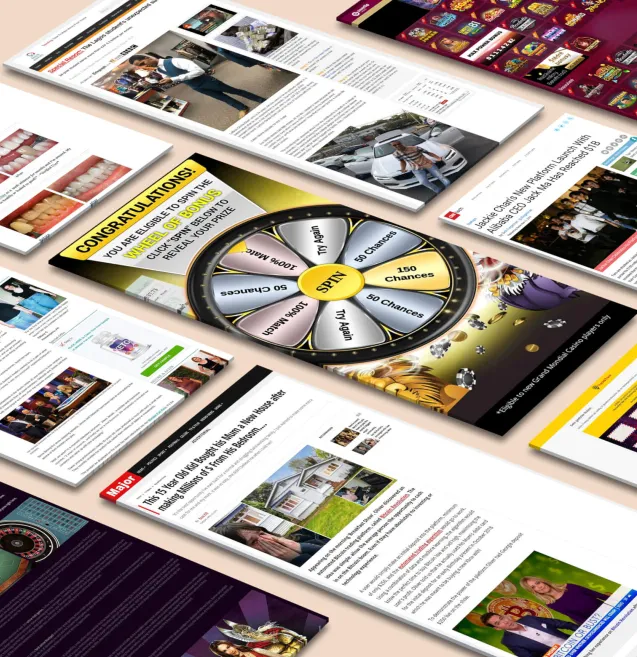
Our spy tools monitor millions of native ads from over 60+ countries and thousands of publishers.
Get StartedMost advertisers think of geo-targeting as a logistics problem. They ask, "Where is my audience?" and then serve the same creative to every market, adjusting little more than language and currency. This is a massive missed opportunity. The smarter question — and the one that unlocks disproportionate returns — is: "What emotional angles are already winning in one region that my competitors haven't thought to try somewhere else?"
That question is the essence of creative arbitrage. The concept borrows from financial arbitrage, where traders exploit price differences for the same asset across markets. In advertising, creative arbitrage means identifying ad creatives — headlines, imagery, storytelling frameworks, emotional hooks — that dominate in one regional market, extracting the underlying psychological structure that makes them work, and redeploying that structure in untapped geographies where the angle feels entirely fresh. You aren't copying an ad. You're reverse-engineering the cultural insight embedded in it and transplanting that insight into a new context where no one else has thought to use it.
Why does this work? Because advertising fatigue is local. An emotional trigger that audiences in São Paulo have seen a thousand times might land with startling novelty in Jakarta or Warsaw. The creative itself isn't the arbitrage — the insight is. And the margin exists precisely because most media buyers never look beyond their own market's creative norms for inspiration.
Native advertising is the ideal vehicle for this strategy, and it comes down to three structural advantages the format holds over display banners and social ads.
First, native ads demand cultural resonance by design. As ExoClick describes it, native is a flexible format that "matches the look and feel of the website content it is surrounded with," attracting users with "editorial content highly targeted to their interests, designed to compel them to click and convert." That editorial camouflage is exactly what makes native ads such a powerful signal for creative arbitrage. A banner ad can brute-force its way to clicks through bright colors and animation regardless of cultural fit. A native ad cannot. If it doesn't feel like it belongs — if the headline doesn't tap into a genuine emotional current running through that audience — it simply gets ignored. This means that when a native creative performs well in a specific geo, it's not just a media-buying win; it's proof that a particular emotional angle resonates deeply with that culture.
Second, native advertising offers an economic profile that makes cross-geo experimentation viable. The same ExoClick case study highlights the format's low bidding prices and big volumes, which together create affordable test beds for transplanting creative frameworks into new markets. When your cost per click is a fraction of what you'd pay on social platforms, you can afford to run twenty variations of a culturally adapted angle and let the data decide which emotional frame travels best.
Third, native ads live in content environments where storytelling matters. Unlike interruptive display formats, native placements like recommendation widgets and in-feed ads blend into a site's original content rather than disrupting the browsing experience. This means the creative must do the heavy lifting through narrative, curiosity, and emotional specificity — the very elements that make regionally successful ads so rich in transferable insight.
Put these three properties together and a clear picture emerges: native ads are both the best detector of regional creative intelligence and the cheapest channel for redeploying it elsewhere. Every high-performing native campaign in a market you're not currently studying is a potential goldmine of angles you haven't tried — angles your competitors in other geos are blind to because they never thought to look.
Before the numbers made sense, nothing else did. The advertiser behind this campaign had already tried other formats and strategies to drive registrations for an online gaming platform in Brazil — and none of them delivered. It was only after a fundamental creative rethink, guided by both format choice and cultural intuition, that the economics flipped. Over a single month in September, the campaign achieved a 132% ROI, turning $845 in spend into $1,998 in revenue and netting $1,100 in pure profit across 556 conversions. Those numbers are impressive on their own. But what makes this case study worth dissecting is why it worked — and why it couldn't have worked the same way in just any market.
The pivot began with format. Native advertising, by its very nature, matches the look and feel of the surrounding website content, which means users encounter it not as an interruption but as a continuation of their browsing experience. For a gaming offer, this distinction matters enormously. Brazilians don't engage with games the way audiences in, say, Germany or Japan do. Gaming in Brazil is deeply communal, shaped by a football culture that treats competition as a social ritual. From neighborhood peladas to packed stadiums on matchday, Brazilians experience games of skill and chance as collective emotional events — moments that are shared, debated, and relived. A banner ad screaming "PLAY NOW" doesn't tap into that psychology. A native unit that feels like editorial content about a game worth trying? That's a different invitation entirely.
The creative decisions layered on top of the format choice are what turned a decent strategy into a standout one. The advertiser used dynamic tokens to automatically personalize ad copy based on the end user's device type, ensuring that someone browsing on a mobile phone in São Paulo saw messaging calibrated for their exact context. This wasn't generic A/B testing — it was granular personalization at the impression level, making every ad feel like it was written for that specific user rather than at a broad demographic. The ad copy itself was localized, not merely translated, and the landing page was optimized to align with how Brazilian users actually behave once they click — favoring visual immediacy, clear calls to action, and a frictionless registration flow.
This is where the cultural layer becomes inseparable from the technical execution. Brazil's massive mobile-first internet population expects speed, personalization, and a sense of belonging. The same instincts that make a Flamengo fan feel ownership over their club's fortunes — that visceral, identity-level attachment to a competitive outcome — are the instincts a well-crafted gaming native ad activates. The advertiser wasn't just buying cheap traffic in a high-volume geo. They were reading a cultural frequency and encoding it into every element of the campaign: the format that blends in rather than disrupts, the copy that speaks to the individual, and the landing experience that rewards the click with immediate relevance.
It's worth noting that this kind of in-feed integration — where the ad sits within the natural content flow and enhances rather than interrupts the browsing experience — is precisely what makes native the ideal vehicle for culturally-tuned creative. The ad doesn't have to fight for attention; it earns it by belonging.
The 132% ROI, then, wasn't a media-buying accident. It was the result of aligning three things simultaneously: a format that rewards subtlety, a geography where gaming resonates on an emotional and cultural level, and creative personalization precise enough to make each impression feel bespoke. This is the anatomy of a regionally excellent campaign — the kind you study before attempting to reverse-engineer it for other markets.
Most affiliates and media buyers treat spy tools the way tourists use guidebooks — they look up the place they're already standing in. They filter for their own geo, scan what competitors are running, and try to build something marginally better. This is the reactive default, and it's why so many native ad campaigns end up in a creative arms race of diminishing returns. The real leverage comes from flipping the workflow entirely: using Anstrex not to monitor your own market, but to systematically scout foreign ones for creative frameworks that haven't yet crossed borders.
Here's how to do it, step by step.
Step 1: Filter by Geo — But Not Your Own
Open the Anstrex native or push spy tool and set the country filter to a market you're not currently advertising in. Start with regions known for high emotional engagement and aggressive direct-response culture — Brazil, Indonesia, the Philippines, India, Turkey. These are markets where advertisers have been forced to develop sharper creative instincts because CPMs are low and only the most compelling ads survive. The kind of native campaigns that achieved a 132% ROI promoting gaming offers in Brazil didn't succeed through budget muscle — they succeeded through creative precision. Your job is to find those precision-engineered creatives before anyone in your market does.
Step 2: Sort by Longevity and Ad Strength
Once you've set the geo, sort results by the number of days a creative has been running. This is the most underrated filter in any spy tool. Duration is a proxy for profitability. No advertiser keeps paying for a native ad that bleeds money for sixty or ninety days straight. If a creative has survived that long, it's generating positive ROI — full stop. Prioritize ads with both high longevity and strong ad-strength scores. These are your signal amid the noise.
Step 3: Identify the Underlying Patterns
Now stop looking at the surface. Don't focus on the specific product, the language, or even the exact images. Instead, catalog the framework. Ask: What emotional hook is the headline deploying — curiosity gap, fear of missing out, identity affirmation, social proof? What kind of imagery dominates — faces with eye contact, action shots, before-and-after contrasts? What's the relationship between the thumbnail and the promise? As Brax's guide to native ad arbitrage emphasizes, the most effective native formats are those that blend seamlessly with editorial content and hold attention long enough to drive engagement. The creatives that do this best in foreign markets often rely on emotional architectures that are universal — even when the cultural dressing is local.
Step 4: Build a Framework Swipe File, Not a Creative Swipe File
This distinction matters enormously. You're not saving ads to replicate them. You're extracting the structural logic — the combination of emotional trigger, visual pattern, and headline formula — and documenting it in a format you can adapt. A single entry might read: "Curiosity gap headline + close-up face showing surprise + implied transformation in subhead. Running 74 days in Brazil, gaming vertical." That entry becomes a creative brief you can hand to a designer or copywriter for any geo, any vertical.
This workflow transforms Anstrex from a competitive surveillance tool into a creative intelligence platform. You're no longer reacting to what your rivals are doing in your market. You're importing proven emotional blueprints from markets they've never bothered to look at — and by the time they notice what's working, you've already captured the arbitrage.
The single most expensive mistake in creative arbitrage isn't picking the wrong geo or bidding too aggressively — it's literal translation. You find a winning ad in Brazil, swap the Portuguese for English, and wonder why your CTR flatlines in India. The problem is that you copied the ad when you should have copied the insight. Separating the two is the foundational skill that makes regional creative intelligence scalable.
Let's dissect the Brazilian gaming campaign to see this in practice. As ExoClick's case study detailed, the advertiser's success rested on three interlocking elements: dynamic token personalization that swapped copy based on device type and other targeting variables, editorial-style creatives designed to match the look and feel of surrounding website content, and emotionally resonant messaging rooted in Brazil's culture of competitive play. Those three elements are not equally portable. Your job as a creative arbitrageur is to determine which pieces belong to the framework — the structural logic that drives performance regardless of geography — and which are window dressing — the culturally specific surface details that made it work in that market.
Framework layer (transferable):
Window dressing layer (must be replaced):
Here's a simple Framework Extraction Template you can apply to any regional winner you find:
| Layer | Question to Ask | Brazil Example | New Geo Adaptation | |---|---|---|---| | Personalization Mechanic | What variable data is being swapped dynamically? | Device-type tokens | Same tokens, localized values | | Format Strategy | How does the ad mimic its surrounding content? | Editorial-style native blending with site feed | Match the dominant content format of the target publisher ecosystem | | Emotional Architecture | What identity or aspiration does the ad activate? | Competitive skill, winning culture (football) | India: cricket mastery. Philippines: esports/basketball pride. Turkey: football passion. | | Cultural Surface | What language, imagery, or references are geo-locked? | Portuguese copy, Brazilian visual cues | Full localization — new language, new imagery, new references |
The first three rows are your portable playbook. The last row is your localization checklist. When you strip a winning campaign down to this skeleton, you stop being someone who copies ads and start being someone who reverse-engineers systems. The Brazilian campaign didn't produce a 132% ROI because of a clever Portuguese headline. It produced that return because the architecture — personalization, native formatting, emotional resonance — was sound. Your job is to rebuild that architecture with locally authentic materials in every new market you enter.
The framework you extracted in the previous section is worthless if it stays pinned to the geo where you found it. The entire point of creative arbitrage is movement — transplanting a proven emotional structure into a market where nobody has seen it yet. But the window between "novel" and "saturated" is narrower than most advertisers realize, which means the playbook has to prioritize velocity over polish. Here's how to run it, step by step.
Step 1: Select the target geo — and verify the white space. Before you invest a single dollar in localization, you need proof that your extracted framework hasn't already migrated. Use a competitive intelligence tool like Anstrex to filter native ad campaigns by your target country and vertical. If you're planning to port a gaming-engagement framework from Brazil into the Philippines, for instance, search for the structural patterns you identified — the emotional hooks, the creative angles, the offer positioning. If the results are flooded with similar approaches, the arbitrage window is already closing. Move to your next candidate geo. The goal isn't to find the "best" market in the abstract; it's to find the best market where your specific framework is still unfamiliar.
Step 2: Localize the emotional hook, not the copy. This is where most operators stumble. In Brazil, football culture creates an ambient emotional layer — community, rivalry, identity — that gaming offers can tap into almost effortlessly. In Southeast Asia, the cultural equivalent might be mobile-first social gaming communities, esports fandom around titles like Mobile Legends, or family-oriented group play. The hook isn't "football"; the hook is tribal belonging channeled through a competitive leisure activity. Your job is to find the local expression of that same psychological driver and rebuild the creative around it.
Step 3: Rebuild ad copy with dynamic tokens. Once you've identified the localized hook, you need creatives that flex across audience segments without requiring dozens of manual variants. The ExoClick case study on native advertising in Brazil demonstrates exactly this approach: the advertiser used dynamic tokens to automatically swap in device-specific and audience-specific language, allowing a single campaign structure to address multiple user segments simultaneously. This is how you keep creative production lean while still achieving the contextual relevance that makes native ads perform. Build your headlines and descriptions with token placeholders for device type, city or region name, and any locally resonant keywords you identified in step two.
Step 4: Test small, measure fast. You do not need a massive war chest to validate a framework in a new market. That same Brazil case study proved a gaming campaign could generate $1,100 in net profit from just $845 in total investment — a 132% ROI across 556 conversions in a single month. The lesson isn't that every campaign will hit those numbers. The lesson is that framework validation doesn't require scale; it requires signal. Run three to five creative variants at minimal daily budgets. Kill the losers within 48 hours. Double down on anything showing early conversion signals.
Step 5: Optimize bids algorithmically, then scale. Manual bid management at the testing phase is a waste of cognitive bandwidth. The ExoClick case study specifically highlights their Smart Bid optimization as a key lever, letting the algorithm adjust bids toward converting traffic zones automatically. Once your test confirms the framework resonates in the new geo, shift budget aggressively — because as Brax's analysis of native ad arbitrage makes clear, the entire model depends on capturing the margin between what you pay for attention and what that attention generates downstream. The moment competitors replicate your framework in that market, the margin compresses.
The full cycle — detect, extract, localize, test small, scale fast — should take days, not weeks. Perfection is the enemy of arbitrage. By the time you've polished your third round of creative revisions, someone faster has already claimed the advantage you spent weeks admiring from a distance.
The real test of any creative arbitrage strategy isn't whether it works once — it's whether the economics hold up at scale across multiple geos simultaneously. This is where most practitioners stall. They nail the insight extraction, they adapt the emotional framework for a new market, and they launch a single campaign that performs. Then they try to replicate the process manually across ten more regions and the whole operation collapses under its own weight. The solution isn't to work harder; it's to build a system where the creative insight you've already validated becomes the raw material for a semi-automated expansion engine.
Start with the ad format that gives you the widest surface area for testing. Recommendation widgets remain the most popular native ad type for a reason — they're platform-agnostic, they exist on virtually every content site globally, and they offer the lowest friction entry point when you're testing a new geo with an unfamiliar audience. When you're deploying a Brazilian-originated insight — say, that community identity hook we extracted earlier — into Southeast Asia or Eastern Europe, recommendation widgets let you validate the emotional structure with minimal creative investment before you commit budget to richer formats like branded video.
But format selection alone doesn't solve the scaling problem. You need a feedback architecture that tells you, within 48 to 72 hours, whether the transplanted insight is resonating or dying. This is where dynamic personalization becomes non-negotiable. One gaming advertiser promoting in Brazil demonstrated this principle powerfully: by using dynamic tokens to automatically swap keywords based on device type and audience segment, they generated 556 conversions on just $845 in spend, netting a 132% ROI across a single month. The insight here isn't about gaming or about Brazil specifically — it's that modular creative, where individual elements can be swapped without rebuilding the entire ad, is the only way to test at the velocity this strategy demands.
Think of each creative as a container with interchangeable parts. The emotional hook — the core insight you extracted from the originating geo — stays constant. The surface-level elements rotate: language, imagery, cultural references, device-specific copy. When you structure your creatives this way, deploying to a new market stops being a creative exercise and becomes a logistics one. You're not ideating from scratch; you're swapping tokens and measuring response.
The practical workflow looks like this. First, take your validated insight and produce a brief that separates the immutable emotional core from the variable cultural shell. Second, create three to five shell variations per target geo, each reflecting a different local expression of the same underlying hook. Third, launch all variations simultaneously using in-feed placements — which blend into a site's original content without interrupting the browsing experience — to get the cleanest read on organic engagement. Fourth, kill the bottom two performers within 72 hours and reallocate that budget to the top variant's lookalike audiences. Fifth, and this is the step most people skip, document which shell elements worked and feed that data back into your brief template for the next geo expansion.
This flywheel effect is what transforms creative arbitrage from a one-off tactic into a compounding advantage. Each new geo you enter makes the next one cheaper to test because your library of validated shells grows. The emotional insight you pulled from a Brazilian football fan's sense of belonging might manifest as cricket tribalism in India, ultras culture in Turkey, or esports clan loyalty in the Philippines — but the container architecture stays identical. The arbitrage isn't just in the creative gap between markets. It's in the operational efficiency gap between you and every competitor who's still building ads from scratch for every new territory they enter.
Receive top converting landing pages in your inbox every week from us.
Guide
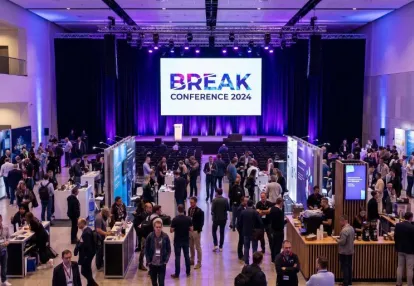
Learn how Pure Leaf’s Amanda Anisimova “Break Conference” can be reverse-engineered into a performance marketing framework for Native, Push, and TikTok advertising. This guide breaks down cultural storytelling, narrative hooks, celebrity-style targeting, format mimicry, and zero-click content to build high-CTR funnels that move audiences toward conversion.
Dan Smith
7 minOct 2, 2026
Recently Updated
Learn how Pure Leaf’s “Break Conference” transformed a celebrity sports moment into a scalable native advertising story. This guide shows performance marketers how to turn brand storytelling into measurable Native, Push, Pop, Affiliate, and TikTok campaigns using ad spy intelligence and narrative-driven creative.
Marcus Chen
7 minSep 29, 2026
Featured
Explore how creative operators and managing directors are shaping modern media buying by connecting creative strategy, AI, channel allocation, experimentation, and governance. This guide examines how leadership decisions influence Native, In-Stream, Creator, and Push campaigns, as well as the contracts and systems that determine how media teams operate.
Dan Smith
7 minSep 29, 2026











 Becomes a Scalable Native Ad Playbook)