9 minSeptember 19, 2026

Our tools monitor millions of native, push, pop, and TikTok advertising campaigns.
Get StartedEvery February, brands burn millions of dollars in 30 seconds. A celebrity steps onto the Super Bowl stage, the spot drops, Twitter/X detonates, search queries spike and YouTube replays stack up. For 24 to 48 hours, intent around that brand, that product category, and even that celebrity’s name turns into a vertical wall of demand.
Almost none of that demand gets harvested by affiliates.
While CMOs talk about “demand creation vs. demand capture,” as John Solomon frames it at Mozilla, most affiliate programs stay parked firmly in the latter. They wait for evergreen queries, evergreen coupons, evergreen reviews. Meanwhile, when a celebrity drives a cultural moment—a Super Bowl ad, a World Cup spot, a buzzy Olympics partnership—there’s a 48‑hour stampede of people Googling “brand + discount,” “brand + reviews,” “brand + alternatives,” and “brand + financing.” Those are performance keywords. But the only one really monetizing them is the brand’s media agency.
Part of the problem is how affiliate performance gets measured and monitored. In paid search, “brand bidding” is usually treated as a threat, not an opportunity. When partners hijack a brand’s own name in search, it can quietly inflate CPCs and siphon commissions on customers the brand already paid to acquire, as Search Engine Journal explains. So brands clamp down: no bidding on our trademarks, no ambush around our slogans, no piggybacking on our hero campaigns. That makes sense when the affiliate is skimming last‑click credit. It makes less sense when everyone just watched the same $7 million spot and the auction is now full of competitors happily monetizing that lift.
The other culprit is budget philosophy. Big tentpole events tempt performance buyers to do the exact opposite of what rigorous media strategy suggests. They frontload spend in a panic, mistaking “big moment” for “blank check.” Yet as one MarTech analysis argues, most campaigns shouldn’t start with cannonballs; they should start with bullets—tight tests that prove where the real performance is before anyone scales. That logic applies just as much to reactive media around a celebrity ad as it does to any planned product launch. When brands dump budget into broad, untested audiences the second a spot airs, CPAs spike and the window closes before anyone learns what actually worked.
Now zoom out and look at what first‑party data and propensity modeling are doing to paid media. When an advertiser trains its models on all organic converters—not just those who saw ads—it can find the 10–15% of people who are dramatically more likely to buy and bend bidding around them. A recent example run through Adobe’s stack, described in AdExchanger’s coverage, showed a precision audience half the size of a broad segment producing 24% more converters at 2.6x the conversion rate. During a celebrity-driven spike, that kind of intelligence becomes lethal: you don’t need to chase every impression during the game; you need to be everywhere your highest‑propensity prospects are searching and scrolling in the days after.
This is the gap the affiliate, dropshipper, and lead buyer should be built to exploit.
Celebrity campaigns manufacture cultural relevance on demand. They turn a product from “thing on a shelf” into “thing my friends are joking about right now.” But most performance marketers treat those moments as branding fireworks to admire, not as traffic patterns to monetize. They either stay on the sidelines, worried about brand rules and auction costs, or they rush in with me‑too ads that drown in copycat clutter.
This article is about a third path: how to systematically ride those waves of attention—legally, profitably, and at scale—without paying Super Bowl prices or fighting 20 other affiliates over the same coupon keyword. You’ll see how to read the short‑term intent graph around celebrity campaigns, where in the funnel affiliates can add net‑new value instead of cannibalizing the brand, and how to structure “bullets first, cannonballs later” plays that turn 48‑hour stampedes into durable, repeatable revenue.
Celebrity campaigns don’t just sell products; they temporarily rewire the entire demand graph.
When a brand drops a Taylor Swift, Messi, or Zendaya campaign, it’s not just their own name that explodes. Category terms (“massage gun,” “energy drink,” “wireless earbuds”), adjacent brands, and even generic queries around “discount,” “promo code,” or “reviews” spike alongside the celebrity’s name. That’s the “free” demand: attention and intent the brand paid to create, but which spills into the wider ecosystem.
From a distance, it feels like a rising tide that should lift all boats. In reality, who captures that demand is governed by three forces: where the campaign runs, how measurement systems are wired, and who’s sitting closest to the conversion event.
First, media mix. Celebrity-driven work is still anchored in big, visible demand-creation channels: TV, premium video, sponsorships, out-of-home, and increasingly digital out-of-home (DOOH). When Therabody’s former CMO reframed budgets as “demand creation vs. demand capture” rather than brand vs. performance, he was naming exactly this split: splashy campaigns create the spike; performance channels harvest it later, often with entirely different tactics, teams, and incentives, as John Solomon has argued.
OOH is a perfect example. When a celebrity-fronted campaign hits billboards, transit shelters, stadium signage, and street-level screens, it floods the real world with signals. According to a recent Cannes panel of major marketers, out-of-home now reaches consumers all along the “daily journey,” including right on the path to purchase and at the literal point of sale, with DOOH growing more than 8% and accounting for $23 billion of global OOH spend as industry leaders emphasized. That physical saturation is what turns a celebrity spot into a search spike an hour later.
The second force is measurement bias. Modern ad systems are structurally tilted toward the channels that sit closest to the checkout button. Platforms and browsers increasingly define “effectiveness” in terms of observable, click-based attribution. As one group of media strategists warned in a critique of the W3C’s proposed standards, attribution frameworks systematically overcredit environments right next to conversion events—search, retail media, retargeting, and click-driven social—while undercrediting probabilistic, longer-lag channels like TV, sponsorships, OOH, and other brand media that actually create the demand in the first place, as AdExchanger’s analysis explained.
In other words, the celebrity campaign does the heavy lifting upstream, but downstream channels get the receipt.
Third, auction dynamics decide who wins the last click. Once a celebrity spot drops, branded and category search queries surge. Brand teams rush to protect those terms, retailers dial up their bids, and affiliates sniff opportunity. Anyone bidding on the brand’s own name or close variants can now ride that artificially elevated intent curve.
When affiliates step into that mix, they often look like heroes in dashboards: high click-through rates, strong conversion, solid ROAS. But much of that performance is arbitrage on demand the brand has already paid to create. As one investigation into affiliate brand bidding showed, a user might first hear about a company via TV, YouTube, or OOH, then later search the brand by name, click an affiliate ad sitting above or beside the brand’s own listing, and complete a perfectly legitimate purchase. Everything tracks cleanly, yet the affiliate has effectively inserted themselves between the brand and a customer who was already intent to buy, in a pattern Search Engine Journal described as hidden revenue leakage.
The economic asymmetry is stark. The brand funds the celebrity, the production, the media, the stadium signage, and the DOOH network that makes the name ubiquitous. Platforms pocket higher auction prices as more players chase the resulting search volume. Affiliates and other last-click actors can then skim a percentage of the final transaction merely by being well-positioned when the user finally types the brand name into Google.
So when the wall of celebrity-induced demand hits, the default outcome is not that the originating brand harvests most of it. It’s that whoever is closest to the point of conversion—search engines, retail media networks, coupon and cashback affiliates—captures the lion’s share of the value, while the big, buzzy campaign remains chronically undercredited in both reporting and budget decisions.
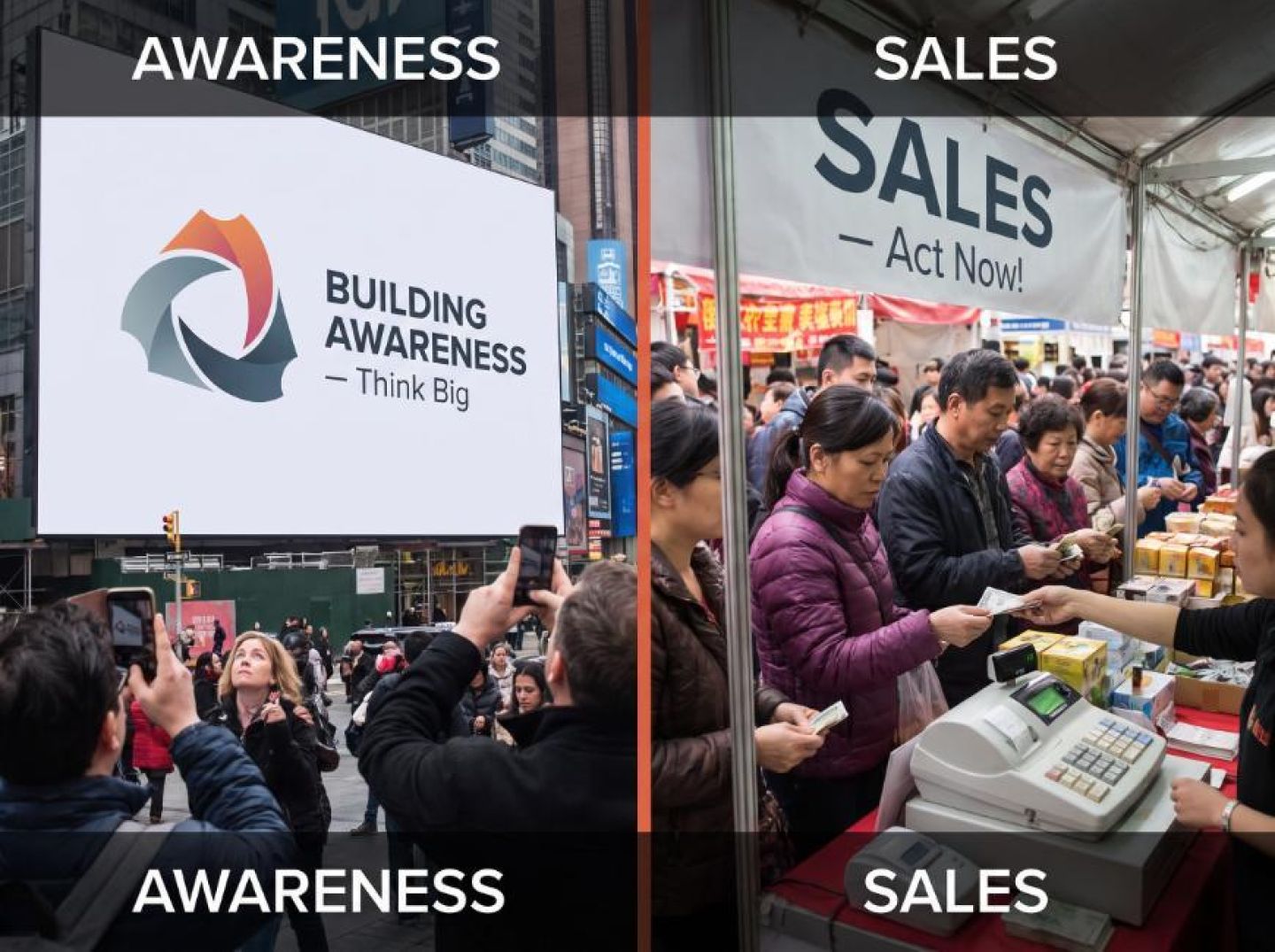
Awareness is not a broken version of sales. It’s a different job entirely. When you piggyback on a celebrity campaign, the fastest way to waste money is to optimize for the wrong part of the funnel just because everything looks “hot.”
Think about what the brand is actually buying when they drop seven figures on a star. They’re buying demand creation: broad cultural presence, mental availability, social chatter. That’s the same logic behind big out‑of‑home and sports sponsorship plays, where brands use physical scale and context to shape perception and memory more than immediate clicks. As out‑of‑home leaders told OOH Today, great IRL placements work because they catch people on their daily journey and at the literal point of purchase, but the outcome is often long‑term brand lift as much as short‑term sales.
Celebrity influencer work usually sits at that same “aspirational billboard” layer. The Poppi campaign that gifted custom vending machines to 32 big creators generated millions of TikTok views, but researchers categorized it as an upper‑funnel awareness tactic, not a conversion engine, as MarTech’s analysis noted. The lesson for affiliates: when the campaign itself is designed to make noise, don’t judge it—or your piggyback strategy—on whether it rings the cash register tomorrow morning.
Affiliates, by contrast, are usually paid to capture demand. You live closer to the cart: discount pages, product roundups, review content, last‑mile remarketing. That’s much closer to what John Solomon describes as “demand capture” versus “demand creation” when he reframes performance and brand marketing for executives, according to his interview with Adweek. When a celebrity spot hits, your upside isn’t in mimicking the brand’s awareness play. It’s in becoming the conversion layer that sits underneath the spike in curiosity they just paid to generate.
Here’s where affiliates get into trouble: they see a celebrity‑driven spike in impressions and try to “scale with the moment” by dumping budget into unproven media, assuming volume alone will translate into revenue. That’s the same trap performance teams fall into when they confuse spend with effectiveness. As one breakdown of media strategy in MarTech points out, front‑loading budget before you’ve validated performance just turns learning into an expensive hobby. The smart move is to fire “bullets” (tight tests around specific intent queries, targeted placements, or a single social creative concept tied to promo searches), see what actually harvests that brand buzz, then fire calibrated cannonballs behind the winners.
You also need to respect the physics of the funnel when you choose metrics. Big‑name influencer placements and national OOH boards are supposed to deliver reach and memory. Affiliates are supposed to deliver revenue and measurable actions. Academic work cited by MarTech makes this explicit: reach and views are valid success metrics at the awareness stage; sales and affiliate‑tracked conversions are valid lower‑funnel metrics. When you piggyback on celebrity noise, your creative might live in the same feed or even the same hashtag, but you should hold it accountable to a different KPI set than the brand’s TV or TikTok hero spot.
This distinction matters more than ever because marketers are under pressure to “do more with less,” a mindset that IPA researchers argue is actually causing brands to underinvest in the broad‑reach activity that drives long‑term profit, as VideoWeek’s coverage of their findings highlights. When brands squeeze awareness budgets, those few moments when they do go big—like a celebrity campaign—become even more critical for filling the top of the funnel. If affiliates insist on judging these moments only by last‑click ROI, they’ll both miss the window and mislead partners about what “success” should look like.
So when should you piggyback? When there’s a visible surge in attention that you can tie to intent: searches for “[brand] discount,” “is [celebrity’s product] worth it,” “best alternatives to [celebrity brand],” or category queries that clearly signal shopping mode. And how should you measure it? Not by how many impressions your reaction tweet got, but by incremental actions: new‑to‑file buyers, higher conversion rates on product comparison pages, fatter email capture from people researching the category.
Celebrity buzz is demand creation. Affiliate is demand capture. When you keep those jobs separate in your head and in your reporting, piggybacking stops being a gamble and starts looking like arbitrage.
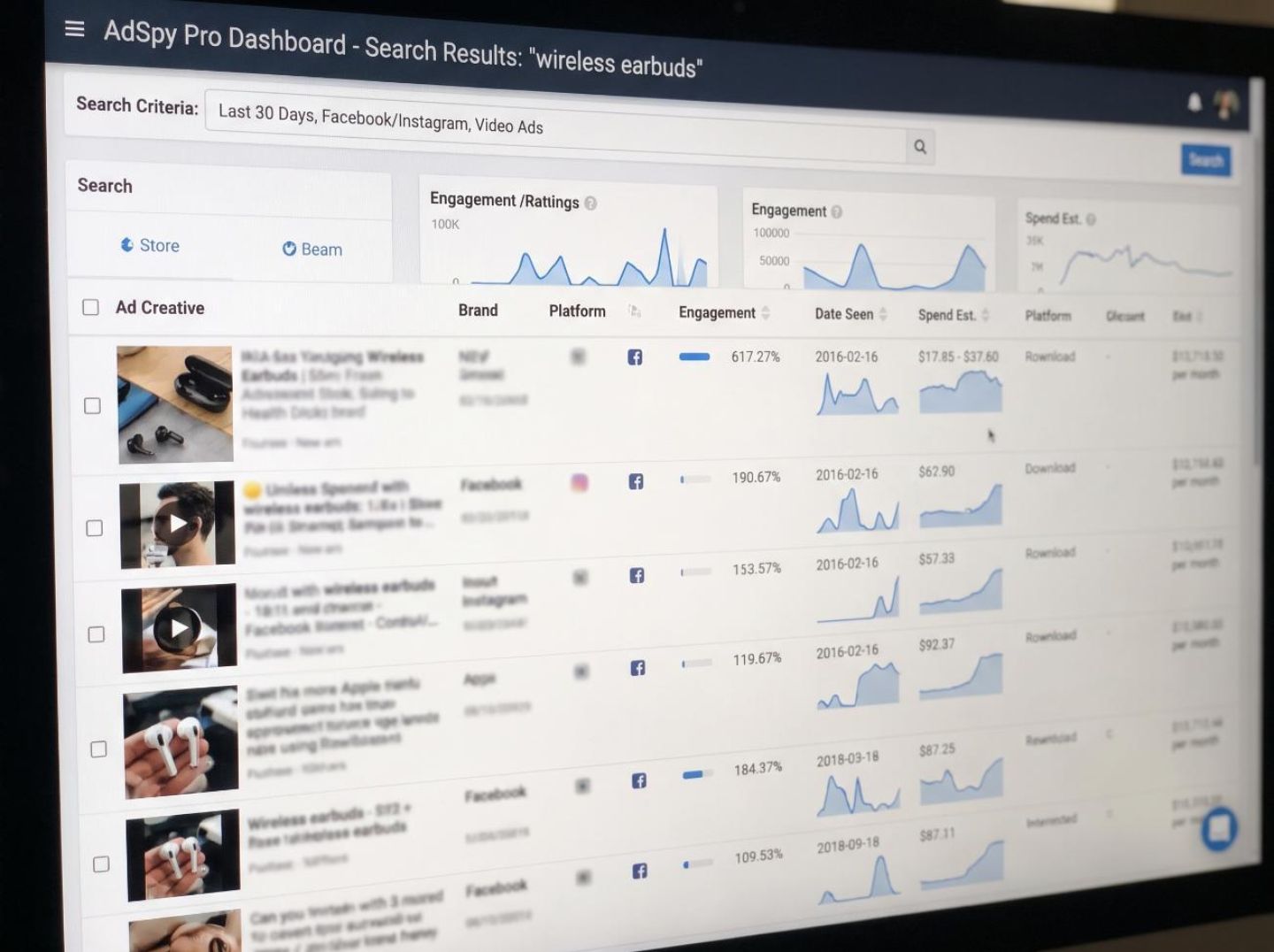
You can’t ride a wave you don’t see forming. The affiliates who make the most from celebrity-driven spikes aren’t guessing; they’re staring at ad spy dashboards and search curves like surfers staring at the horizon.
Think of it as a two-screen setup:
Your job is to watch how those two lines move relative to each other.
Celebrity campaigns rarely arrive out of nowhere. There are tells:
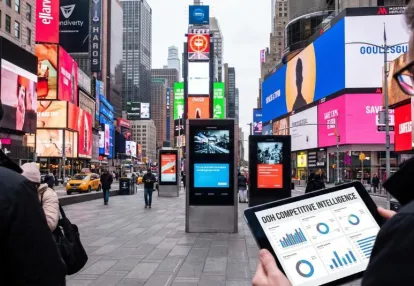
As brands pour more money into digitized out-of-home, those billboards and transit screens have become an early-warning signal. The growth of programmatic DOOH — forecast to push global OOH spend to $57.5 billion, with DOOH alone at $23 billion, according to WPP’s Kate Scott Dawkins — means you can often see rotations and creatives before the broader public notices the campaign. Screenshots from vendors, social photos of new placements, or creative IDs in ad libraries are your first “storm clouds.”
At this stage, you’re not scaling spend. You’re tagging:
You’re building a playbook so that when search demand spikes, you’re not improvising under pressure.
Celebrity spend creates awareness first, then intent. The mistake many affiliates make is assuming that because they see a lot of ads, people are already searching with purchase intent.
Modern attribution systems systematically overcredit lower‑funnel channels that sit right next to observable conversions — think branded search, retail media, and click‑optimised social — because they’re great at harvesting demand that’s already there, not creating it, as one analysis of W3C’s attribution thinking points out. You want to flip that bias to your advantage by being very literal about what the search data is telling you.
Roughly, you’ll see three phases in search:
Use Google Trends or your preferred tool to track these term clusters separately. When phase 1 spikes but phases 2 and 3 stay flat, hold your fire on bottom‑funnel bidding. Instead, lean into mid‑funnel content (YouTube, TikTok, long‑form reviews) that positions you as the explainer and curator.
Once you see category and deal queries moving, that’s your green light to:
When a celebrity drops, almost every line in your dashboard can go up simultaneously: clicks, conversions, affiliate revenue. It’s dangerously easy to misread this as “our campaign is working,” when you’re just intercepting brand‑created demand in ways that may not be sustainable or even program‑compliant.
Affiliate brand bidders, for instance, often look like heroes on paper because they’re intercepting users who were already going to buy after encountering the brand’s own media. As a recent breakdown of hidden affiliate revenue leakage notes, those conversions are technically valid, but they’ll quietly push up the brand’s own CPCs by adding another bidder to the same branded auctions.
Translate that to wave‑riding:
To keep yourself honest, separate reporting for:
Use ad spy intel to explain step-changes. If you see a sudden surge in “[Brand] promo code” the same week that new DOOH creatives go up and TV spots start running, you’re likely surfing the brand’s wave correctly. If results jump without any visible media push, you might just be bidding against a lazy category or leaning on the brand’s evergreen demand.
The goal isn’t to exploit the brand; it’s to align your timing so that you intercept the incremental intent their celebrity budget is creating, in the moments and queries where they’re structurally weakest.
Most affiliates copy celebrity spots literally: same slogans, same visuals, same vibe. Then they wonder why their ROAS looks nothing like the glossy case study. The problem isn’t effort; it’s modeling the wrong thing.
A seven‑figure celebrity campaign is built to create cultural heat, not to close a sale in three clicks. When you piggyback on that, your job is to translate “broad, fuzzy attention” into sharp, conversion‑ready angles—without disappearing into the exact noise the brand just paid to create.
A practical way to think about this is: don’t copy the ad, copy the response patterns the ad is going to trigger.
Celebrity spots reliably spin off four families of curiosity:
Research on TV‑driven search behavior shows that most of this action happens almost instantly. One analysis of broadcast spots found that roughly 75% of incremental search activity hits within the first two minutes of an ad airing, with distinct buckets of branded, campaign, and asset‑driven queries emerging in parallel, such as “Miracle ad,” “song in Fox World Cup ad,” or “who is [celebrity] in that commercial” as documented by a joint TV–search study summarized in MarTech’s work on cross‑channel teams. That pattern holds for celebrity creative too.
Instead of trying to “out‑brand” the brand, structure your angles around those buckets:
The mistake is treating any of these angles as “the one big bet.” Celebrity‑fueled waves are still subject to basic media economics: your first ideas are usually your most expensive and least efficient. Performance‑driven marketers are better off launching multiple lightweight variants—several small bullets—before pouring budget into the winner, a phased approach that growth strategists have likened to firing “bullets before cannonballs” to avoid confusing spend with actual performance, as argued in a piece on scaling paid media in.
Model the curiosity types the celebrity spot creates, then design narrow, testable angles for each one. That’s how you use the brand’s noise as raw material—without becoming indistinguishable from it.
Celebrity-driven campaigns feel like “free money” to affiliates: the brand lights the fuse, culture explodes, and you just need to show up with an ad account and a landing page. But the economics of those moments are closer to a stampede than a sale. If you don’t understand how budgets, bids, and auctions behave under extreme pressure, you’re not piggybacking on brand buzz—you’re getting trampled by it.
The first distortion is attribution gravity. When a celebrity campaign hits TV, OOH, podcasts, and premium video, it’s mostly creating demand, not closing it. Yet the channels that intercept that demand—search, retail media, click‑focused social—get to harvest the last click and take the credit. As one analysis of W3C’s proposed standards points out, modern systems structurally over‑credit lower‑funnel environments already optimized around purchase intent. In a celebrity surge, that bias goes into overdrive: Google Ads and shopping networks look like performance gods, even though the heavy lifting was done by the brand’s GRPs and sponsorships.
For affiliates, that bias creates a seductive illusion. Your dashboards light up, your ROAS spikes, and it’s tempting to respond with the classic performance reflex: raise bids, expand match types, open more geos. But if you’re not careful, you’re just paying more and more to capture demand you didn’t create and can’t sustain.
This is where the “riding a stampede” risk shows up most violently on branded terms. When celebrity buzz hits, branded search volume jumps, and the auctions around those keywords get crowded fast. If you’re bidding on the brand’s name or close variants, you’re effectively stepping into an arms race with the advertiser and other partners. As one breakdown of affiliate brand bidding and hidden revenue leakage explains, adding affiliates into the same branded auctions pushes up CPCs and forces the brand to pay more to win traffic it already generated. That same dynamic can quietly nuke your own margins: CPCs climb faster than conversion rates, and the apparent “lift” from the celebrity campaign evaporates into auction inflation.
So when should you lean in with budget and bids?
A useful rule: only scale where you have an edge that isn’t purely timing. That edge might be:
If your only “advantage” is that you’re willing to bid more aggressively on the same branded and generic queries everyone else is chasing, you’re not capitalizing on the celebrity moment—you’re entering a negative‑sum game.
You also need to sanity‑check your appetite for volatility. Celebrity‑driven bursts can look like the ideal time to “go big or go home,” but underfunded, ultra‑efficient approaches tend to crack under this pressure. Research summarized by IPA analysts shows that an obsession with short‑term ROI and “doing more with less” leads to underinvestment and declining incremental profit, even when in‑platform ROI ticks up. The translation for affiliates: if your whole strategy is thin margins on hyper‑tight targeting, a sudden spike in CPCs and CPMs during a brand surge will wipe out your economics long before it dents the advertiser’s.
Think in terms of “share of voice relative to your size,” not absolute spend. You probably can’t and shouldn’t try to outshout the brand across every touchpoint. But you can punch above your weight in specific pockets the celebrity push is heating up—say, mid‑funnel queries that reference the celebrity plus problem keywords, or placements adjacent to the brand’s DOOH and sponsorship footprint where path‑to‑purchase intent is high but competition is thinner.
Finally, decide in advance where you won’t chase the herd. That might mean:
Celebrity‑driven moments magnify every structural quirk in the ad system: over‑credited channels, under‑credited media, and auctions designed to reward whoever is least disciplined with their money. Your job as an affiliate isn’t to outspend the brand; it’s to pick the lanes where their stampede is creating temporary mispricing—and step aside everywhere else.
Receive top converting landing pages in your inbox every week from us.
Must Read
Celebrity campaigns can create massive short-term demand, but affiliates need to know when and where that attention can be captured without simply cannibalizing brand traffic. This guide explains how to use ad spy data, search signals, creative angles, and disciplined bidding to turn celebrity-driven buzz into measurable affiliate opportunities.
Liam O’Connor
7 minSep 19, 2026
In-Depth
OOH is becoming a data-driven, performance-focused channel, but many job descriptions still overlook competitive intelligence as a core skill. This guide explains how OOH teams can build intelligence loops, use ad spying as market research, and turn competitive signals into smarter sales, planning, and positioning decisions.
Liam O’Connor
7 minSep 19, 2026
Editor’s Pick
More MarTech does not always mean better performance. This guide explains why ad intelligence can give performance marketers faster, more actionable competitive signals while reducing the complexity, data fragmentation, and operational friction of bloated marketing stacks.
Samantha Reed
7 minSep 18, 2026