7 minSeptember 30, 2026

Our tools monitor millions of native, push, pop, and TikTok advertising campaigns.
Get StartedThe most powerful person in a modern creative agency isn’t the smoothest relationship‑builder in the room. It’s the leader who can glance at a media dashboard, read it like a cardiogram and call a cardiac arrest in the funnel before finance has any idea there’s a problem. The job used to be about lunches, chemistry meetings and the annual scope negotiation. Now, the real power seat belongs to the person who can trace a stalling ROAS spike back to a thumbnail variant, a CPM anomaly or a broken creative–audience match, and fix it in‑flight.
Look at where the market is moving. When Unilever tests a 300,000‑influencer model, with 71% of those creators using AI tools to pump out content at industrial speed, the old agency comfort blankets — quarterly brand trackers, post‑campaign debriefs, polite “optimizations” — simply can’t keep up. As Search Engine Journal notes, the real disruption isn’t the number of creators; it’s the fact that the traditional evaluation infrastructure that separated good creative decisions from bad ones stops working altogether at that scale. Human panels are too slow, A/B testing every asset is impossible and surveys are a rear‑view mirror when you need a heads‑up display.
So the leadership mandate is changing. The new agency boss isn’t the person who can tell the most charming origin story of the brand; it’s the person who can build and govern a system that scores creative at scale, links those scores to media performance in real time and reallocates spend before the budget has quietly bled out. That’s exactly the kind of “live loop between creative intelligence and media execution” that DAIVID and ADIN.AI are wiring together, where predictive creative models plug directly into activation platforms so high‑performing assets are automatically scaled and weak ones are paused mid‑flight, and where the history of what worked becomes the brief for what comes next, as their partnership write‑up explains.
This is not a side project for analytics. It’s the operating system of the business. Leaders like Jenny Wall, now chief growth officer at creative optimization firm Swayable, are explicit that the industry “got so obsessed with programmatic that we kind of forgot there’s this creative in the middle and the top of the funnel that you need.” Her remit is to bridge creative and performance so brands can create demand, not just harvest it, a shift she outlined in an interview covered by AdExchanger. That’s a growth officer talking like a data strategist, not a classic TV marketer — and it’s exactly the profile boards are now elevating into the most senior seats.
Holdcos are reorganizing around the same idea. When Dentsu partners with Magnite to power its AMX Premium Video offering, the rhetoric is no longer about cheaper inventory and GRP reach. It’s about “technology, transparency and interoperability” to enable a “more curated, intelligent and outcome‑driven approach” to buying, as Christian Rissel put it in coverage from VideoWeek. That isn’t media operations language; it’s performance‑ops language, lifted straight into the heart of how a network now sells its value to clients.
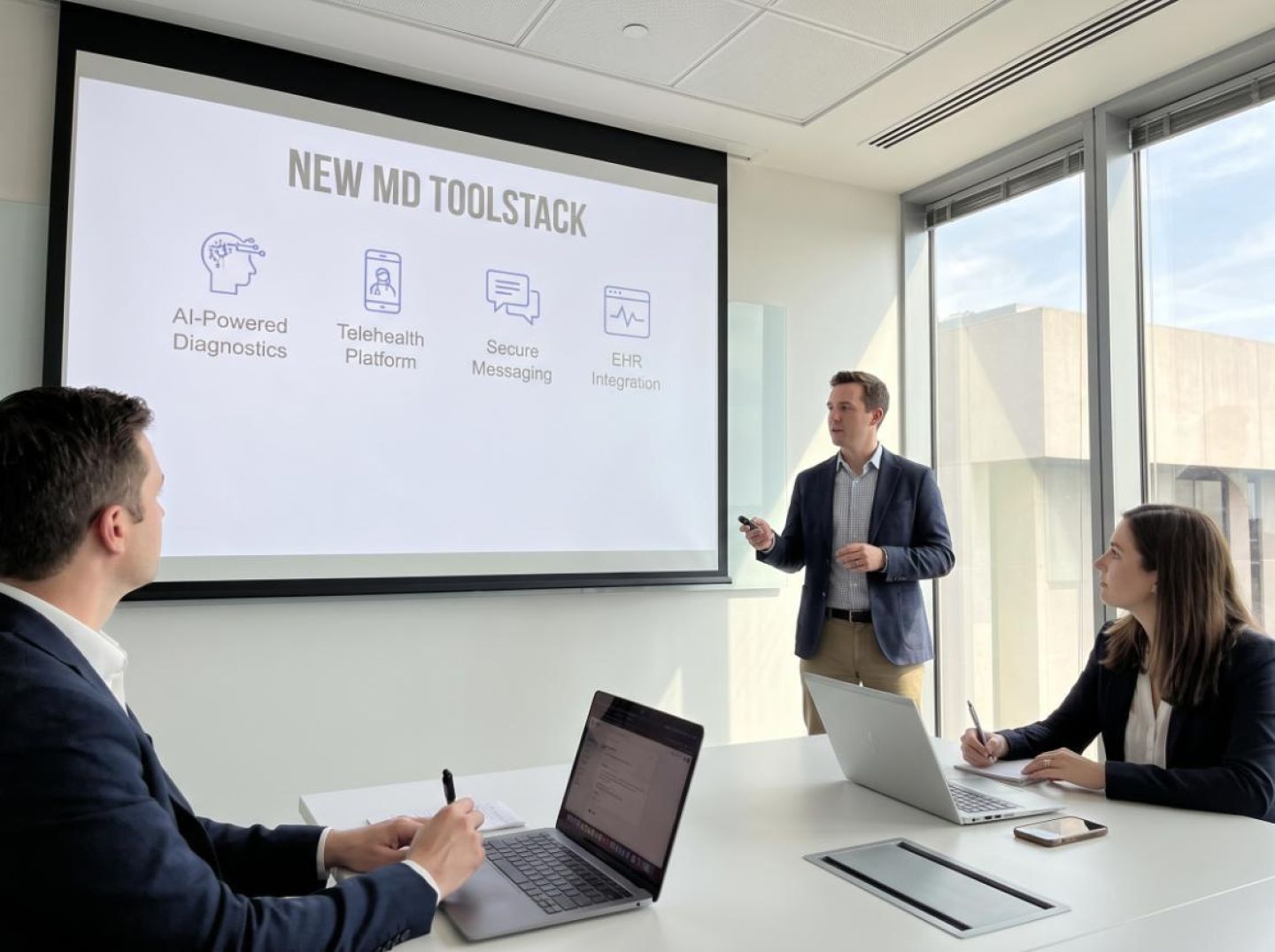
Which is why Rebecca Sharon’s appointment should not be read as an oddity or a token “data person” getting a turn in the big chair. It’s a signal that the managing director role itself is being rewritten under our feet. The new MD is less Don Draper and more air‑traffic controller: orchestrating agentic AI workflows, creative intelligence platforms and real‑time measurement systems, while still translating all that complexity into simple, commercial decisions a CMO and CFO can actually act on. In a world where creative, media and commerce are collapsing into a single, constantly updating graph, the person who can read that graph — and rewire the funnel before anyone else notices it’s failing — is the one who actually runs the agency.
For most of the last three decades, the managing director was the agency’s head of accounts and culture: chief lunch‑buyer, pitch ringmaster, morale barometer, and relationship insurance policy. If the work stumbled, the MD could “manage the client” while the teams scrambled backstage. Commercial performance was important, but it was something you escalated to the CFO, not something you personally modeled in a spreadsheet.
That job description has quietly expired.
In a world where every campaign is a multi‑channel, always‑on machine, the MD has become the primary commercial engine of the creative business—closer in reality to a COO with quota than to an account patriarch. The same forces that make a 12‑channel campaign feel like “12 jobs” for the execution team, as one MarTech analysis put it, have re‑wired what it means to run the P&L. You can’t lead a business whose output is distributed across search, social, CTV, creator content, retail media, and out‑of‑home if your superpower is simply keeping everyone “happy.”
Seth Matlins frames modern marketing leadership as the “primary commercial engine for the entire enterprise,” a role that only works when you can connect “finance, strategy, and human behavior across traditional silos,” as he argued in a recent conversation on marketing’s “horizontal blind spot” for Adweek. Translated into agency reality, that’s the new MD mandate. You are not the escalation path for tricky clients; you are the horizontal function that sees how pricing, staffing, media mix, data architecture, and creative systems compound—or erode—margin and growth across every account.
Look at where real power is accruing inside adjacent businesses. News publishers and platforms are elevating product leaders like Allan Donald into the C‑suite, as he steps into the Chief Product Officer role at The Guardian to “lead end‑to‑end product strategy” across digital properties, according to a recent VideoWeek roundup. In ad tech, boards are recruiting CFOs and executives from AI‑heavy companies, as when The Trade Desk tapped Nate Olmstead, formerly CFO at an AI infrastructure firm, to navigate a market defined by machine‑driven auctions and data economics rather than media schmoozing. These are not ornamental hires; they’re a recognition that the levers of value are now product, data, and decisioning.
The same shift is reshaping creative leadership. When CTV platforms like Keynes roll out tools such as the Kortex system to show advertisers the “why” behind performance and let brands like Tuckernuck re‑cut placements in real time based on engagement and regional response, as AdExchanger reported, it changes what a “good” leader looks like. Someone in the room needs to understand how those levers affect both effectiveness and profitability: which optimizations justify higher fees, which automations compress billable hours, where transparent data becomes a wedge for value‑based pricing instead of FTE time sheets.
MDs who grew up as client‑whisperers now have to behave like operators who own revenue, margin, and cross‑channel performance. That means being fluent in the economics of creator content when Microsoft treats 42 creators and 69 assets as a single, orchestrated growth engine—not just a “social campaign”—and measures it via search lift, foot traffic, and brand lift, as a recent Adweek discussion of creator‑led full‑funnel campaigns laid out. It means being able to interrogate an AI‑driven media recommendation, like the franchise TV and audio mix built from historical and third‑party data that Strategus now predicts and packages for clients, rather than treating it as a black box, as described in.
Crucially, the MD’s span of control is now defined less by who they know and more by what systems they can orchestrate. When AI‑native platforms handle upstream work—automated formatting, two‑way creative sync, and even narrative reporting—execution stops being the bottleneck, as the multi‑channel workflow shift highlighted by MarTech makes clear. The bottleneck becomes leadership’s ability to design the operating model: how teams are staffed against outcomes, which capabilities are productized, how data access and transparency become differentiators rather than risks.
The net effect is that the “power seat” has moved. The modern MD is no longer the person you bring to the quarterly business review to smooth feathers; they are the person who can sit between media, finance, product, and creative, read the patterns in the dashboards and the P&L at the same time, and then change how the whole machine runs.
Being “obsessed with media” used to mean you could rattle off CPM benchmarks, smile through a QBR, and delegate the hard questions to your head of performance. That is table stakes now. The modern MD’s obsession is hands‑on and operational: living inside the same systems that plan, traffic, optimize, and reconcile campaigns across a double‑digit channel mix — and being able to interrogate those systems as rigorously as a quant PM challenges a trading model.
The pivot point is the rise of AI‑native ad management. As one MarTech breakdown of these platforms puts it, the real shift is not prettier dashboards; it’s who — or what — is doing the work your team used to do manually. Campaigns can now be orchestrated from a plain‑English brief that turns “launch a demand gen push to CFOs at mid‑market SaaS companies” into structured tactics across Google, Meta, LinkedIn, CTV, and programmatic without rebuilding logic in every native UI. Creative is automatically resized and versioned to each network’s specs rather than Frankensteined by a trafficker at 11:47 p.m.
Most importantly, those same AI‑native platforms maintain a two‑way sync with live campaigns. Change a headline or offer once and the update pushes across all 10+ channels in real time, while the system archives the old version and redeploys the new one in the background — no hopping between dashboards, no “did we remember TikTok?” anxiety, as the MarTech piece on 12‑channel campaigns makes clear. Reporting is generated automatically as well: normalized data, pacing, and narrative packaged into client‑ready decks. The Sunday‑night Excel ritual is not “streamlined”; it is deleted.
In that environment, an MD who only consumes the output is already behind. You don’t have to be the person wiring the conversions, but you do need to be the person who can sit in front of this stack, flip filters, re‑cut cohorts, and ask, “What assumptions is this interface hiding?” Being media‑obsessed now means you personally know how to:
The frontier is no longer “multi‑touch attribution” as a buzzword; it’s CRM‑native attribution and AI‑built audiences as default behavior. Workweek’s new Partner Platform is a good example of where expectations are heading. It only counts ad engagement when it’s verified and tied to a known user, then pushes that engagement directly into advertisers’ CRMs. In one SaaS case study, 40% of closed deals included at least one user who had interacted with a Workweek placement before sales had ever touched the account — a level of signal fidelity that would have been unthinkable for “newsletter ads” a few years ago.
On the publisher side, Hearst’s Aura IQ platform ingests an RFP and automatically assembles bespoke campaigns, complete with AI‑built audiences composed of Hearst users most likely to engage with the creative. The line between “media plan” and “audience model” is disappearing. You are no longer buying broad demo buckets from a rate card; you are interrogating an algorithm that is proposing which people, on which properties, should see which creative variants first.
This is exactly the kind of loop performance‑oriented measurement companies are building around creative and media. The partnership between DAIVID and ADIN.AI, for example, plugs creative‑effectiveness scoring directly into execution, creating what they describe as a live loop between creative intelligence and media performance. Before a launch, the system surfaces the assets most likely to succeed; while campaigns run, it scales high performers and pauses losers; afterwards, the historical results feed back into future planning, as Search Engine Journal’s coverage of the DAIVID–ADIN.AI model explains. That’s not a “nice to have” add‑on; it is the governance layer that makes large‑scale, AI‑accelerated content ecosystems survivable.
In this context, the effective MD behaves less like an account diplomat and more like a portfolio manager with a Bloomberg terminal. You don’t accept an Aura IQ audience just because it looks smart; you drill into how it was constructed, how its performance is being attributed back to your CRM, and how the model will adapt if macro conditions (or brand strategy) shift. You don’t simply applaud a Partner Platform case study; you ask how lead scoring was configured, what lookback windows were applied, and how multi‑threaded buying committees were handled in the data.
Being “media‑obsessed” now means living at that level of granularity. If you can’t personally manipulate the toolstack — not forever, but often enough to see how the machine thinks — you’re trusting the most important creative and commercial decisions in your business to a black box you don’t actually understand.
When Dentsu talks about moving “beyond transactional media buying towards a more curated, intelligent and outcome‑driven approach” through its partnership with Magnite’s video tools, they are quietly redefining what leadership looks like inside a creative business. That promise of “curated, intelligent, outcome‑driven” doesn’t come from a nicer media plan deck. It comes from a competitive intelligence layer that sees what rivals are doing, interprets it in real time, and turns those insights into actions the media stack can actually take.
That layer is now squarely the MD’s responsibility.
Tools like Anstrex, Ad Spy, and their peers aren’t just “spy tools” in the adolescent sense. They are forensic kits for commercial creativity. They expose funnel structures, creative sequences, landers, and placement strategies with the kind of granularity that used to be reserved for post‑campaign autopsies. A modern MD can look at a competitor’s winning funnel and see, in one screen: which hooks they’re leading with on social, which angles dominate their display mix, what variations of landers they’re rotating, and where those journeys actually terminate.
Used properly, that turns the MD into a media detective.
Instead of asking the performance team, “How are we doing versus the category?” the MD is the one walking into the war room with a live, comparative view: “Our closest rival just shifted 40% of their spend from static to short‑form video in the last 10 days, and they’ve launched a new testimonial‑led lander on CTV retargeting—why?” That “why” is where strategy lives. The discipline is not passive monitoring; it is hypothesis‑driven surveillance.
The broader ecosystem is already heading this way. AI‑native ad management platforms described in MarTech’s analysis of multi‑channel campaign sprawl are taking over the grunt work of trafficking and synchronizing campaigns across a dozen channels. When one edit to a headline propagates everywhere via two‑way sync, and client‑ready reports are generated automatically, the operational excuses for ignorance disappear. The MD is liberated from spreadsheet duty and redeployed to pattern recognition: spotting, validating, and weaponizing competitive signals that the machines can then amplify.
Competitive surveillance is also how the MD keeps creative honest in an environment where content volume and velocity have exploded. As Search Engine Journal’s reporting on AI‑driven creator networks makes clear, when thousands of variants are being produced and distributed simultaneously, the evaluation infrastructure that used to separate good creative decisions from bad ones simply doesn’t scale. Intelligence platforms that let you reverse‑engineer which creative concepts your competitors are doubling down on—and where they’re quietly killing tests—become the external counterpart to your own performance data. The MD’s job is to connect these two worlds so that “what’s working out there” informs “what we make next” inside.
This is a leadership discipline, not a hobbyist’s rabbit hole. The same horizontal, cross‑functional perspective that Seth Matlins argues is now essential for marketing leaders—connecting “finance, strategy, and human behavior across traditional silos,” as he describes on Adweek’s Speed of Culture podcast—applies here. Competitive intel touches revenue modelling (where is margin likely eroding?), product strategy (what promises are competitors willing to make and prove?), and media economics (which channels are they overpaying for to buy share of voice?). Someone has to own the narrative that stitches those signals together. In a creative business, that someone is the MD.
The optics change fast when this mindset is in place. The old “trusted adviser” MD walked into client meetings armed with anecdotes about the category and a few war stories from past campaigns. The new power seat belongs to the leader who walks in with a live dashboard of the competitive landscape: side‑by‑side funnels for the top five rivals, creative rotation in the last seven days, new landers flagged by recency, and estimated spend shifts by channel.
That person can say, with receipts: “While we’ve been debating this brand platform, three competitors have launched performance funnels around a new problem framing. Here’s how they’re doing it, here’s where they’re likely winning, and here’s how we out‑flank them in eight weeks.” In a world where platforms can execute the mechanics and agents can automate the reporting, the scarce value is the surveillance mindset and interpretive judgment at the top.
The MD who masters competitive intelligence isn’t just “good in the room.” They are the room’s source of ground truth.
The reason “head of performance” is no longer the top power seat is simple: performance lives inside a maze. The person who leads now is the one who can walk into that maze of twelve channels, five attribution models, three data warehouses, and a stack of AI tools — and walk out with one clean story about where money should move tomorrow morning.
When MarTech described campaigns that “span 12 channels” but “feel like 12 jobs,” they were naming the operational reality your teams live with every day. Each platform wants to be its own universe: its own creative spec, pacing logic, optimization loop, and success metric. AI‑native ad management can collapse workflows — plain‑English briefs, auto‑sizing creative, two‑way sync so one headline edit propagates to ten placements — but it doesn’t answer the leadership question: which of those ten updates actually matter to revenue this quarter?
That is now the MD’s job. Not to be the best practitioner of any single channel, but to own the integration of all twelve into a coherent operating model.
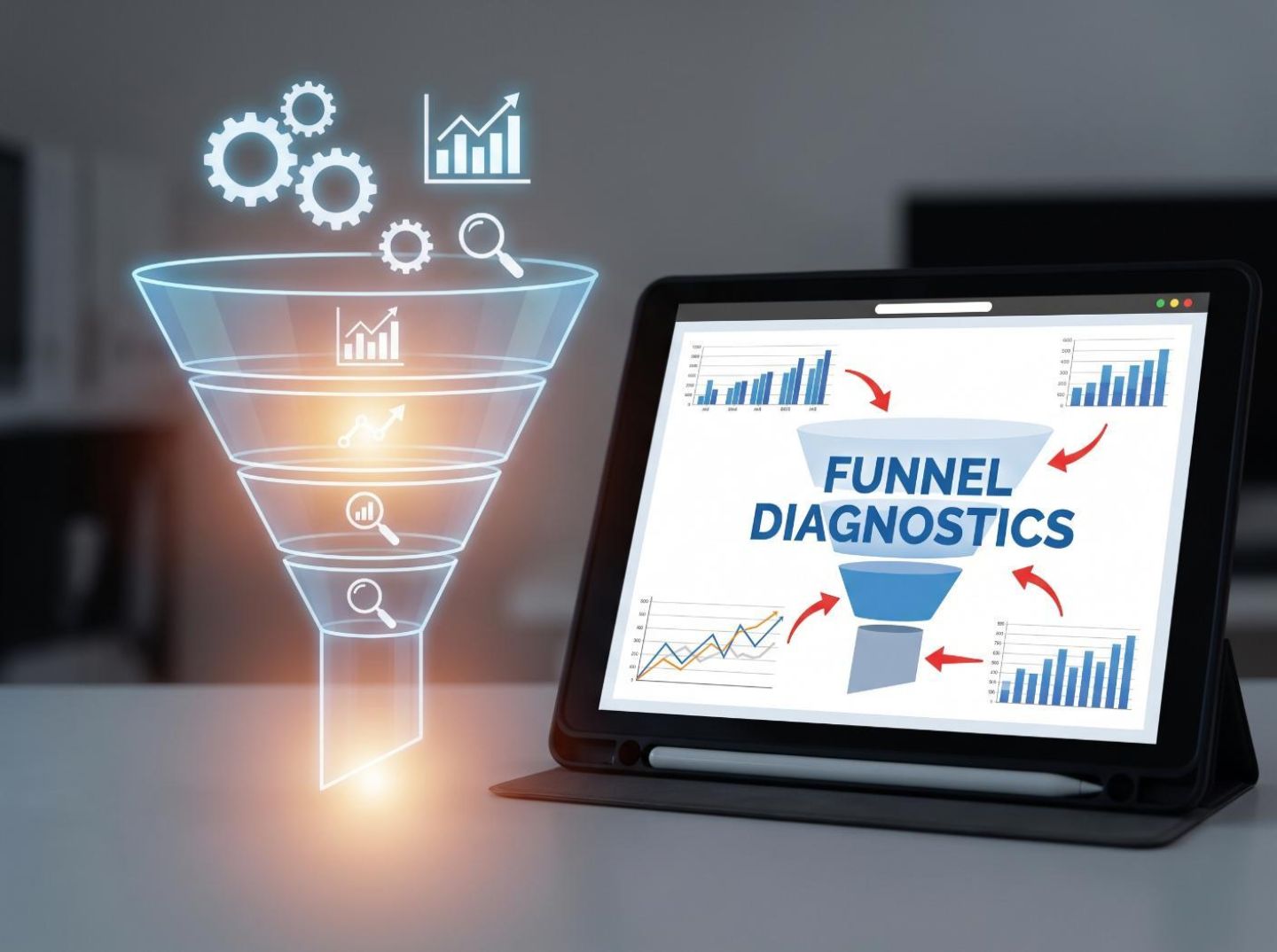
Practically, that means treating funnel diagnostics as a daily ritual, not a quarterly post‑mortem. The MD should be inside the same performance views as the media team, but reading them at a different altitude. Where specialists see rows of campaigns, the MD sees a system: attention, consideration, conversion, and retention stitched together into a single, inspectable flow.
The new CTV tools are a good illustration. Platforms like Keynes’ Kortex promise to show the “why” behind decisions and expose the “nuts and bolts” of creative and placement performance, giving brands like Tuckernuck real‑time insight to swap out under‑performing inventory and regional creative. For a channel owner, that’s gold. For a modern MD, it’s just one panel on the wall. Their job is to decide:
This is why the MD today looks less like a classic account lead and more like a funnel architect with veto power. They hold the picture of how each channel is supposed to contribute, in what order, and against which constraints — and they reserve the right to override what the dashboards claim is “working.”
That override authority matters, because measurement lies all the time. Incrementality tests get under‑powered. CTV vendors tout view‑throughs that double-count what search already captured. Platforms obscure weak spots in their own delivery, as the CEO of Keynes pointed out when criticizing how some ad systems hide unflattering data from clients in the first place, a pattern AdExchanger highlighted. If the MD doesn’t understand where and how those lies creep in, no one is actually running the business — the platforms are.
So the modern MD carries two simultaneous mental models: the official, platform‑reported funnel, and the true funnel reconstructed from behavior. That second model is where real power lives. When Workweek’s analysis found that roughly 40% of closed deals had engaged with ads pre‑sales, it punctured the myth that upper‑ and mid‑funnel touchpoints are nice‑to‑have brand theatre. They are economically causal. A leader who internalizes that doesn’t treat “awareness” as discretionary spend; they design their operating model so that impression pressure, content sequencing, and sales outreach are orchestrated as one motion, not three departments.
This is exactly the gap Jenny Wall was pointing to when she argued that digital teams “got so obsessed with programmatic that we kind of forgot there’s this creative in the middle and the top of the funnel that you need” — you can’t just hammer the bottom, you must “create the demand” that performance feeds on, as she told AdExchanger. The MD’s funnel diagnostics turn that philosophy into operating rules: how much budget is structurally reserved for demand creation; what tests are running to validate mid‑funnel impact; where creative variation is non‑negotiable, even if a single platform’s short‑term ROAS says otherwise.
And because the MD owns the integration, they also own the trade‑offs. They decide when to tolerate short‑term CAC inflation to validate a new mid‑funnel route, when to pull budget out of a high‑CTR but strategically irrelevant placement, when to slow new‑customer acquisition because downstream retention signals are flashing red. This is the opposite of “set and forget” leadership. It is systems stewardship.
Twelve channels feeling like twelve jobs is a staffing problem only if no one is accountable for how they interlock. Once the MD assumes that accountability, those “jobs” stop being a burden and start functioning as levers in a single machine — one story, one funnel, one person with both the information and the authority to change its shape.
When creative intelligence plugs straight into media execution, the whole idea of “creative on one floor, media on another” stops making sense.
Search Engine Journal’s description of DAIVID’s creative effectiveness models wired into ADIN.AI is the clearest signal of this shift. Creative is scored before launch, budget is weighted to the likely winners, and then – crucially – those scores update as media performance comes in. High‑performing assets are scaled automatically, weak ones are paused, and the resulting history becomes the training data for the next round of creative and media planning. That is not “post‑campaign analysis.” It is a live feedback loop where the ad server and the research lab are effectively the same machine.
In that environment, a managing director who still treats “creative” as a pitch‑room event and “media” as a quarterly review is leading blind. Ian Forrester’s complaint that creative has been “measured in isolation, disconnected from media results” stops being a diagnosis and becomes an indictment of any leader who hasn’t moved into the loop where those results are generated.
The same fusion is happening in channels that used to be safely “brand.” On connected TV, Swayable’s combination of AI algorithms with human panels is explicitly designed to bridge the gap between creative and performance. Jenny Wall’s warning that marketers “got so obsessed with programmatic that we kind of forgot there’s this creative in the middle and the top of the funnel that you need” is not nostalgia for storyboard culture; it’s an operational insight. The platform doesn’t just tell you an ad ran; it tells you which narrative actually shifted attitudes, so you can change both messaging and placements mid‑flight.
Similar agentic systems on the media side, like Keynes’ Kortex, show how granular this loop has become. The platform’s network of agents ingests historical CTV results and then optimizes future campaigns by creative, publisher, and even regional context. For Tuckernuck, the “why” behind performance turned out to be not just which audience they bought, but which creative executions resonated in a rainy market versus a beach town. Again, creative and media are no longer parallel workstreams; they are two sides of the same decision engine.
This is where Binet and Davies’ work bites. When marketers are surveyed, they consistently say they believe that creative quality and media choices contribute roughly equally to outcomes. But when you look at the econometric data in studies such as Marketing in the Era of Accountability and Effectiveness in Context, the largest share of profit variation is explained by one unglamorous variable: how much you spend, and for how long. Budget scale – not targeting nuance, not tiny creative tweaks – does most of the heavy lifting.
Put those two realities together and the new mandate for MDs becomes stark:
In other words, the feedback loop is now the P&L.
This is why the power seat in creative is moving to data‑first strategists who live in that loop. The job is no longer to referee turf wars between a “creative department” and a “media department,” or to balance a superstition‑based compromise between them. It is to orchestrate a single system where:
An MD who understands that loop can decide, today, which stories deserve more reach and which should die quietly – and then move the money accordingly. An MD who doesn’t is just approving decks while the real decisions are made by platforms and partners they barely understand.
Receive top converting landing pages in your inbox every week from us.
Guide
Discover how data-first strategists are reshaping the modern creative agency and redefining the Managing Director’s role around performance, media intelligence, and real-time decision-making. This guide explores the new MD toolstack, competitive intelligence, funnel diagnostics, and the feedback loop connecting creative intelligence with media execution.
Elena Morales
7 minSep 30, 2026
In-Depth
Most brands tracking AI search visibility are making the same mistake: they're auditing themselves while ignoring the far richer source of intelligence—their competitors. Every AI-generated answer reveals a map of who owns buyer intent, which content structures AI systems trust, and where visibility gaps remain unclaimed. By combining competitor AI footprint analysis with paid media intelligence and organic search data, marketers can uncover profitable opportunities faster than traditional SEO or AEO approaches alone.
Rachel Thompson
7 minJul 3, 2026
Featured
Google, TikTok, and AI-powered marketing ecosystems are rapidly reshaping how consumers discover, evaluate, and purchase products. While Google's expanding AI ecosystem increasingly rewards brands deeply embedded in its paid and commerce infrastructure, TikTok is creating a temporary arbitrage opportunity through accessible automation and underpriced attention. For performance marketers, the real competitive advantage lies not in relying on a single platform's intelligence layer, but in building diversified competitive intelligence systems across channels that dominant ecosystems cannot fully observe or control.
Samantha Reed
7 minJul 1, 2026