
11 minOctober 6, 2026

Our tools monitor millions of native, push, pop, and TikTok advertising campaigns.
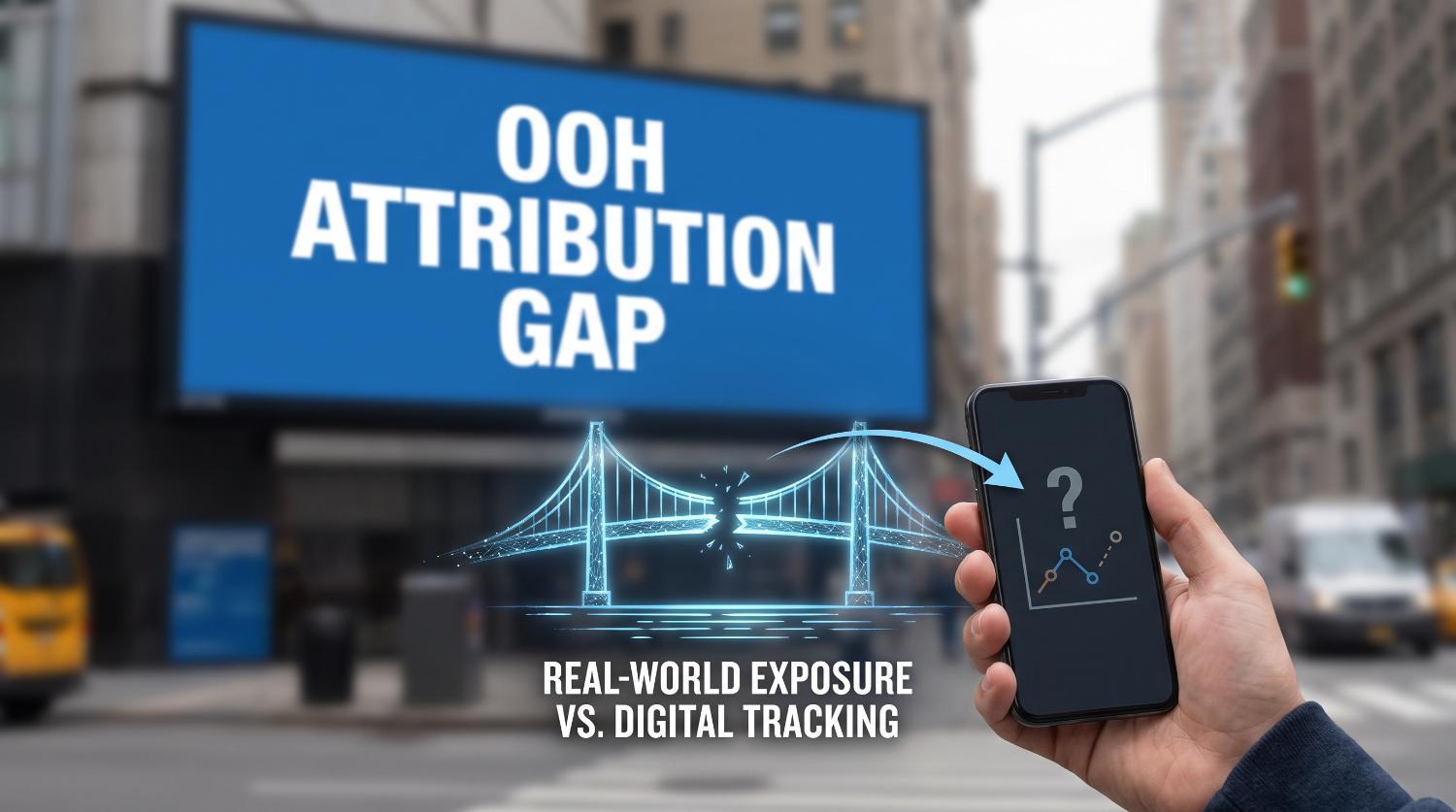
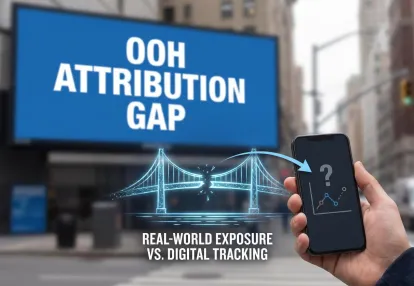
Get StartedThe offline–online attribution gap isn’t just a measurement problem; it’s baked into how most organizations hire and structure their OOH teams.
For the last decade, marketing leaders have treated “offline” and “online” as two separate universes, then hired around that false dichotomy. On one side: performance and growth marketers, optimized for last-click, platform-native dashboards, and channel-specific ROAS. On the other: brand and OOH buyers, optimized for CPM, share of voice, and GRPs. The assumption was simple and wrong: digital drives measurable performance; OOH drives fuzzy awareness. Everything from job descriptions to bonus plans has been built on that split.
Now the plumbing has caught up to reality, and the org chart is the thing that’s obsolete.
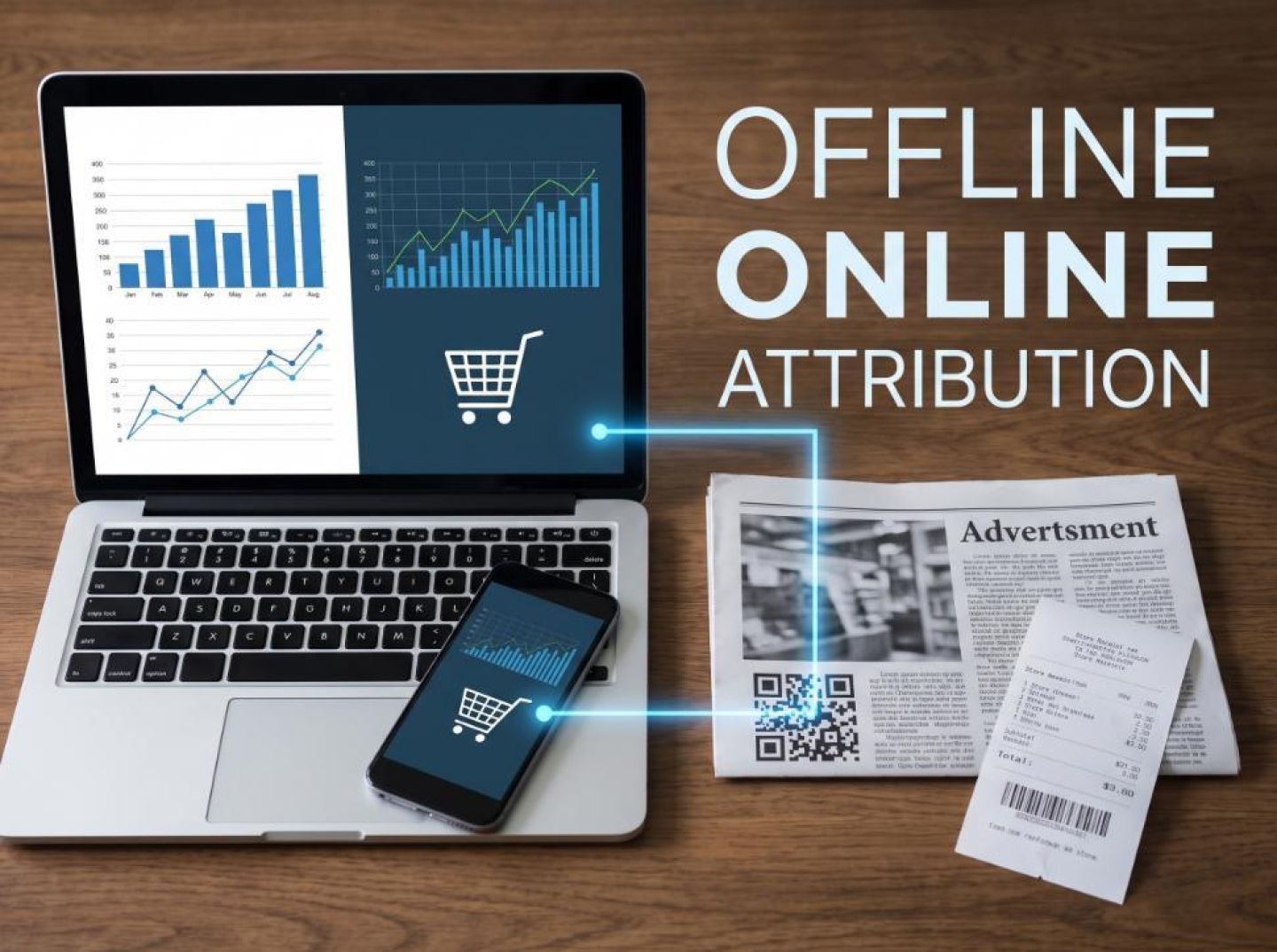
As a recent cross‑media study on misattribution makes painfully clear, the distinction between “offline” exposure and “online” performance has always been artificial. Device-level viewshed mapping, cross‑channel attribution, and synthetic-control models applied to physical exposure data now make it possible to see what’s actually been happening all along: people encounter an OOH message in the physical world and then convert days later through a digital channel that happily takes all the credit. Extended attribution windows running on identity graphs show that what the search dashboard reports as “incremental” performance is often downstream of OOH.
That is existentially uncomfortable for ad tech vendors whose business model depends on defending the offline/online divide and for agencies whose org charts and P&Ls are organized around it. As the same AdQuick analysis points out, CMOs who spent five years siphoning budget out of OOH to feed Search now have to answer to boards who can read the same data and see the misallocation.
Yet most OOH recruiting still assumes this gap is real. OOH roles are scoped as if attribution sophistication is someone else’s job. Job posts for “OOH Media Director” or “Brand Marketing Lead” still emphasize vendor relationships, creative stewardship, and rate negotiation — valuable skills, but disconnected from the systems that now tie physical impressions to digital outcomes. The performance team, sitting somewhere else in the org, is staffed with people who can run incrementality tests, work with pixels and identity graphs, and interrogate log-level data — but who often have zero mandate, or incentive, to attribute that performance back to OOH.
The result is predictable: channels get judged by the tools and talent that happen to “own” them, not by their true contribution. The Saatva example, where a direct attribution model initially “proved” OOH was a failure until a broader framework showed it was actually the top-performing channel, is exactly the kind of misread that happens when teams are hired to defend a narrow metric set. As one OOH Today case study recounts, once the company widened the lens to include in‑store visitation, search lift, brand-direct traffic, and recall over a realistic lag window, OOH flipped from “kill it” to “scale it.”
What’s changed underneath all of this is infrastructure. Over the past decade, companies on both sides of the ecosystem have quietly built the tools that make full‑funnel OOH attribution possible. On the buy side, platforms like AdQuick’s marketplace have turned static inventory into something that behaves more like programmatic media: APIs into major owners, audience data stitched into the planning surface, and production pipelines that sync creative delivery to physical fabrication. On the measurement side, partners like Kochava have assembled device graphs, exposure models, and experimental designs that connect real‑world impressions to digital behaviors at scale.
Crucially, this isn’t just theory or modeling anymore. In one mobile OOH campaign for the San Jose Earthquakes, pixel tags on the team’s site and a purchase-confirmation pixel on their ticketing platform created an end‑to‑end chain from truck exposure to completed order. Every one of the 43 ticket purchases the campaign drove was pixel‑confirmed, not inferred. That’s the level of rigor performance marketers expect from digital — and mobile OOH can now meet it.
The problem is that most OOH hiring hasn’t caught up to this world. Teams are still built as if attribution beyond vanity metrics is someone else’s concern. Performance leaders, meanwhile, are incentivized to attribute as much revenue as possible to “their” channels, not to investigate whether an upstream billboard or LED truck was the real driver.
This is the offline–online attribution gap in its purest form: not just a missing report, but an organizational blind spot codified into who you hire, what they’re measured on, and which tools they’re even allowed to touch. As long as OOH and performance sit in different silos, staffed and compensated to protect their own narratives, the data will keep contradicting the story the org chart wants to tell.
OOH is no longer condemned to “put it up and pray.” The pipes, pixels, and platforms to measure real business impact exist today. The problem is that most OOH teams are still operating as if they don’t.
For decades, out-of-home planning was built on intuition—senior buyers walking a market, “knowing a good board when they see it,” and stitching together plans from spreadsheets and emails. That intuition absolutely has value, but as the team behind AdQuick’s planning platform points out, this gut-driven model emerged because OOH lacked infrastructure, not because guesswork was inherently superior. Once you can plug OOH into the same kind of data fabric that powers your paid search or paid social, the excuse to fly blind disappears.
That infrastructure now exists in two critical layers.
First, the buying layer has been standardized and instrumented. Platforms like AdQuick’s “universal adapter” automate the entire OOH lifecycle—from planning to buying to campaign management—while piping campaign data into the rest of a brand’s stack. What used to take weeks of back-and-forth with dozens of media owners can now be launched in days, sometimes 48 hours, with consistent metadata on locations, formats, flighting, and audiences. More importantly, their API and measurement suite act as connective tissue, feeding daily, granular OOH performance data into multichannel models instead of leaving it trapped in PDFs and post-campaign decks.
Second, the attribution layer has finally caught up to the promise of the medium. Mobile OOH providers like Lime Media now pair GPS-verified trucks and routes with pixel-based tracking that ties exposure to specific downstream actions. In a campaign with the San Jose Earthquakes, pixel tags on the club’s site captured engagement from people exposed to a single LED truck, while a purchase-confirmation pixel on Tixr verified when that traffic bought tickets, creating what OOH Today describes as “an unbroken chain of attribution from truck impression to completed purchase.” That isn’t modeled uplift; it is transaction-level causation. The same infrastructure can support foot-traffic lift studies, web traffic correlation, device ID passback, and retargeting audiences—all the things digital teams take for granted.
Yet despite this, most OOH orgs still behave as if measurement is impossible or optional.
Plans are built around reach and frequency estimates, not outcomes. Reports still lean on vanity metrics (“X million impressions”) instead of the verified store visits, web conversions, and ticket purchases that tools like AdQuick’s attribution suite can surface in near real time. Offline teams are rewarded for negotiation and cost savings rather than incremental revenue, so they rarely push for pixel placements, site tag coordination, or CRM integrations that would close the loop.
The result: OOH remains pigeonholed as a “brand” line item, even as the technology to earn performance budgets is sitting on the shelf. Sales leaders don’t see a clean path from board to booking. Growth teams don’t see OOH in their dashboards or MMPs, so they default to the channels they can measure with a click.
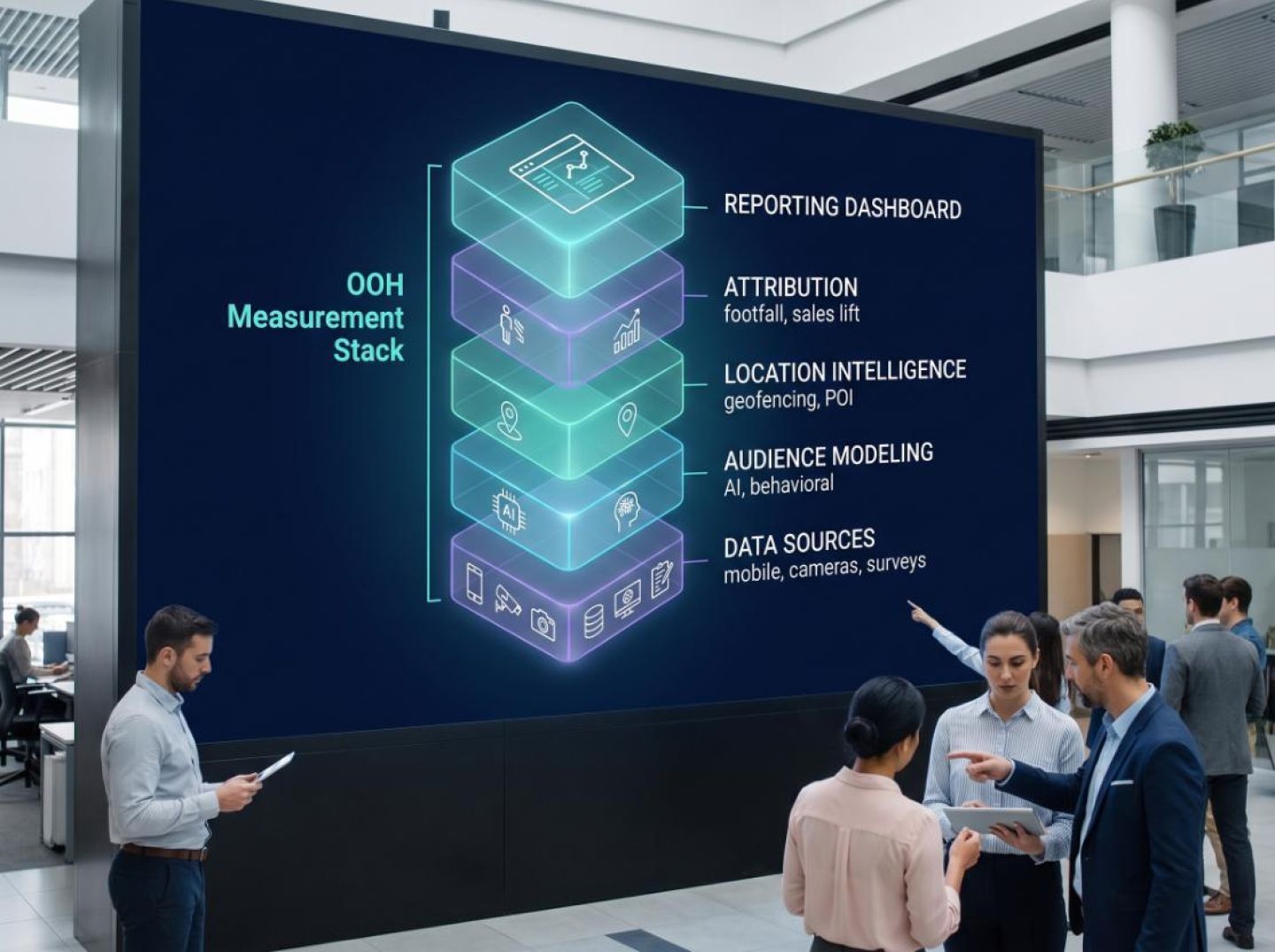
This isn’t a technology gap anymore; it is an adoption gap—and, in many cases, an incentives gap. The measurement stack that companies like AdQuick and mobile OOH operators featured in OOH Today have built can bring OOH into true parity with digital channels. But until OOH recruiters, media directors, and marketing leaders expect their offline teams to behave like performance marketers—to instrument campaigns, insist on tags, and live inside dashboards—the offline–online attribution gap will persist for reasons that have nothing to do with what the medium is capable of.
In other words: OOH is finally measurable. Most teams simply haven’t updated their operating system to act like it.
Most OOH job descriptions still read like it’s 2013: negotiate rates, manage vendors, traffic creative, pull post-campaign reports. What they rarely say out loud is what the role actually needs to be in 2026: part growth marketer, part data engineer, part spy-tool operator.
Here are the critical capabilities OOH recruiters should be hiring for—but almost never write into the JD.
1. Attribution fluency, not just “report pulling”
Most postings ask for “experience with measurement” and call it a day. That’s code for, “You can read a PDF with GRPs and impressions.” It’s nowhere near enough.
Modern OOH hires need to understand how physical exposures get stitched to digital behavior: how location data, pixels, and conversion events combine into a defensible attribution story. When a mobile OOH truck drives past a neighborhood and later 43 ticket orders are tied back through a purchase-confirmation pixel, that’s not a vibe check—it’s a verified chain from impression to revenue, the kind of “pixel-confirmed” causality documented in mobile OOH case studies.
Job descriptions should explicitly ask for:
If a candidate can’t explain the difference between correlation (“search went up near our boards”) and causation (“these sessions and purchases are verified as OOH-driven”), they’re not ready for modern OOH.
2. Working inside the “universal adapter,” not around it
In a fragmented OOH landscape, the winning brands are the ones whose buyers think like integrators. Platforms that act as a “universal adapter” for OOH—standardizing inventory access, workflows, and data—change what the job actually is. Instead of wrangling hundreds of Excel sheets and local reps, the best practitioners sit in a single hub that automates planning, buying, and campaign management, compressing weeks of work into days and sometimes standing up campaigns in as little as 48 hours, as one such platform’s own overview explains.
Recruiters should stop hiring “spreadsheet ninjas” and start hiring:
The JD should call this out: “Experience with OOH planning platforms and API-based data flows” is not a nice-to-have; it’s table stakes if you actually want offline–online attribution.
3. Owning a single source of truth—not just “the OOH deck”
A big reason the offline–online attribution gap persists is structural: OOH measurement is still fragmented across formats, vendors, and methodologies. Industry observers have pointed out how wildly audience estimates and reporting frameworks can vary, making OOH difficult to compare across markets or integrate into unified media planning, and framing this fragmentation as a strategic constraint on growth rather than a mere technical nuisance, as one analysis of OOH measurement argues in detail.
That’s why your OOH hire needs to be the internal champion for a single source of truth. Not just “owns the OOH recap,” but:
If the JD doesn’t explicitly say, “You will be responsible for unifying OOH measurement into our cross-channel reporting,” you’ll default back to siloed slideware.
4. Running “spy tools,” not just reading specs
Finally, the modern OOH practitioner should be comfortable with what are effectively marketing spy tools: competitive intelligence, device ID passback, pathing reports, and real-time heatmaps of where your assets (or your competitors’) are actually seen. The same infrastructure that ties a mobile billboard’s GPS-verified routes to downstream outcomes like foot traffic lift, web traffic correlation, and retargetable device IDs—capabilities that are already being deployed in advanced mobile OOH networks documented in recent case work—is exactly what your team should be exploiting.
Job descriptions should explicitly require:
In other words, stop hiring OOH “buyers” and start hiring OOH attribution strategists—operators who can live inside measurement platforms, plug them into the broader stack, and weaponize spy-grade data to finally close the offline–online loop.
If Section 3 was about the skills, this is where you translate those skills into a repeatable playbook. The goal is simple: build a closed-loop system that ties a physical impression to a digital action with the same confidence you’d expect from paid search.
Here’s how to do it, step by step.
1. Start with a falsifiable hypothesis, not a “brand play”
Before you buy a single board or truck, define one narrow question your attribution setup should be able to answer. For example:
Make the hypothesis specific enough that you can either prove or disprove it using downstream data (career-site traffic, completed applications, recruiter screens, hires).
2. Architect the tracking from the destination backward
Most OOH teams start with locations and formats. The attribution-first recruiter starts with pixels and events:
Only once the digital spine is solid do you move upstream to the media.
3. Give every OOH asset a unique “spy handle”
Spy tools are useless if everyone wears the same uniform. Every placement and cluster needs its own fingerprint so that downstream behavior can be traced back cleanly:
This is the analogue of the “pixel-confirmed” mechanism that allowed every Earthquakes ticket order to be traced from mobile OOH exposure all the way to purchase, as Lime Media’s case study illustrates. You’re just swapping “ticket order” for “application complete.”
4. Use an attribution-ready OOH platform as your “universal adapter”
Trying to stitch together CSVs from vendors, job boards, and analytics manually is where attribution dies. A platform built for this job should:
This is precisely the connective-tissue role that AdQuick’s measurement suite was built to play. Its API pushes OOH exposure, store-visit lift, and web correlations into the rest of the stack, turning static boards and trucks into data-emitting endpoints that performance teams can actually model.
For recruiting, the same pattern lets you correlate:
5. Run controlled tests, not vibe checks
Once the plumbing is in place, design experiments with real control and treatment:
Mobile OOH campaigns can now report verified foot-traffic lift, web traffic correlation, and device ID passback for digital retargeting in a way that closes the full-funnel loop, as the Earthquakes example demonstrates. Your recruiting tests should aim for that same standard: causation, not correlation.
6. Feed the results back into planning—and into the job description
The last mile is making these insights actionable:
What platforms like AdQuick prove is that OOH can now operate with the same data richness as digital. The recruiters who close the offline–online loop aren’t “brand folks who buy billboards.” They’re growth operators who treat every board, truck, and transit wrap as a measurable node in a performance system—and who have the attribution playbook to prove it.
If you want offline–online attribution, you have to design for it in the creative itself. That means every unit needs a built‑in “spy hook” that turns a glance at a board into a traceable digital signal: URL, code, handle, or scan.
The mistake most OOH recruiters make is treating this like an afterthought. They brief “logo + CTA” and assume the analytics team will figure it out later. But as Jawad Hassan notes, the real gap in OOH isn’t inventory or data; it’s the infrastructure that connects exposure to outcomes. That infrastructure starts at the design stage.
Here’s what that looks like in practice.
First, every OOH asset should drive to a campaign‑specific destination, not your homepage. That’s either a unique landing page or a shared page with unique UTM parameters for each cluster of units. Think hire.acme.com/nyc-devs or acme.jobs/?utm_source=ooh&utm_medium=wildposting&utm_campaign=fall_engineering_push&utm_content=soho. When someone visits or converts from that path, your spy tools—analytics, pixels, attribution platforms—know exactly which surface likely drove it.
This isn’t overkill; it’s how you get to the kind of pixel‑confirmed attribution that mobile OOH campaigns are already proving out. In one case, a LED truck program tied impressions all the way to ticket revenue using a consistent tagged journey from exposure to purchase, producing an “unbroken chain of attribution” where each order was verified by a purchase‑confirmation pixel, as a recent case study describes. Recruiters won’t always be selling tickets, but the methodology is identical when you’re selling job applications.
Second, use vanity domains aggressively. They do two things:
Instead of “careers.acme.com/software-engineer?ref=ooh_sf_billboard_14”, run with acme.dev/sf or workwithacme.com/ai. Under the hood, redirect that vanity URL to a full UTM‑tagged destination. To your candidate, it’s a simple phrase. To your measurement stack, it’s a signed confession: “I saw your ad.”
Third, layer SMS shortcodes wherever phones are already in hand—transit shelters, campus kiosks, event signage. “Text DEV to 34123 for open roles” is a single measurable verb. Each keyword can be campaign‑specific (DEV_NYC, DEV_ATL), so even if your tracking pixels fail, your inbound message log becomes a ground‑truth dataset for OOH response.
Fourth, stop treating QR codes as an afterthought. They are one of the cleanest bridges from a physical impression to a digital session. But they only work if you:
When QRs are wired correctly, they compress the attribution chain into a single gesture. That’s especially powerful in OOH because, as one recent analysis highlights, a large share of OOH‑exposed consumers already take mobile actions—searching, visiting, or purchasing—after seeing a compelling creative. Your job is to convert that latent behavior into a measurable, tagged action instead of a dark search you’ll never see.
Finally, think native to where your audience actually lives online. For younger technical talent, a scannable TikTok or IG handle may outperform a URL. A bold @acme.engineering paired with a profile link instrumented for this campaign gives you:
The thread through all of this is intentionality. You’re not decorating boards with techy gimmicks; you’re building a sensor network across your physical footprint. Every URL, code, and handle is a sensor that pings when a real human moves from glance to interest.
In a world where marketers expect “digital proof” for every dollar, and where OOH is quickly being woven into connected‑commerce strategies according to recent industry research, recruiters who design for measurability at the creative level will be the ones whose channel actually shows up on the performance dashboard—right next to search, social, and CTV.
Pixels, conversion APIs, store-visit measurement, and device-ID passback are the plumbing that turns all those clever spy hooks into defensible attribution. If you skip this layer, your vanity URLs and QR codes simply feed a black box.
Think about this as four parallel data pipes you need to lay at the same time.
1. Web pixels: the basic connective tissue
Every OOH‑driven session that lands on your careers site or ATS has to be captured with the same rigor as a paid search click. That means:
When mobile OOH campaigns have tied truck impressions to 43 pixel‑verified purchase orders, they did it by instrumenting both the content site and the checkout flow with tightly coordinated tags. You need the same discipline on your careers funnel: pixel‑confirmed applicants, not modeled “interest.”
2. Conversion APIs: future‑proofing against signal loss
Browser pixels alone are brittle. Ad blockers, iOS privacy, and cookie consent all chew away at your observable conversions. That’s where conversion APIs (CAPI) come in.
For any paid channel you expect to amplify your OOH impact with—Meta, Google, Snap, LinkedIn—set up:
view_job, start_application, complete_application, book_interview, hire.This does two things. First, it closes the gap when browser pixels fail, preserving the attribution continuity that lets you claim credit for incremental applicants driven by OOH‑primed remarketing. Second, it feeds higher‑fidelity conversion data back into the platforms so they can optimize for “quality applicant” or “hire” rather than just clicks. As OOH becomes a more integrated part of “connected commerce” strategies, marketers are gravitating toward channels that can plug into a single, comparable measurement spine; recent research cited by the OAAA and Winterberry Group shows nearly all enterprise buyers now expect that level of connection.
3. Store‑visit and foot‑traffic measurement: proving offline lift
For roles that depend on local presence—retail associates, QSR crew, warehouse staff—you can’t stop at web sessions. You need to show that your boards are driving bodies into locations.
Through measurement partners, mobile OOH platforms are already tying impressions to foot‑traffic lift, using aggregated mobile location data to compare exposed vs. control groups at the store level. When a mobile fleet operator can report GPS‑verified routes and match them to store-visit upticks, as described in case studies of LED truck networks, it transforms “we think it worked” into “this route increased store visits by X%.”
For recruiting, you want a similar setup:
This gives you a way to justify field recruiting programs and “Now Hiring” wraps with the same confidence finance expects from performance media.
4. Device ID passback for retargeting and cross‑channel sequencing
Finally, the spy move that most OOH recruiters miss: device ID passback. When a campaign logs mobile ad IDs or hashed identifiers from exposed devices (in a privacy‑compliant way), it can feed that audience back into your digital stack for:
Leading mobile OOH platforms already offer “device ID passback for digital retargeting” as part of a broader attribution suite that also includes web traffic correlation and purchase‑confirmation pixels, as outlined in their measurement infrastructure overviews. Combined with the industry’s push toward a single, cross‑channel “source of truth” for OOH data that measurement leaders have been advocating, device ID passback is what lets you treat a fleeting glance at a truck as the first touch in a fully trackable, multistep recruiting journey.
Instrument these four layers before your campaign launches, and you stop arguing about whether OOH “helps the brand.” You start arguing about incrementality, cost per qualified applicant, and which routes or boards to scale next—exactly the kind of questions performance recruiters want to be answering.
Receive top converting landing pages in your inbox every week from us.
Guide
Discover how performance marketers are transforming OOH into a measurable, optimizable performance channel. This guide explores the emerging OOH performance strategist, the tools and intelligence loops they use, and how Anstrex data can extend proven digital funnels into physical advertising.
Elena Morales
7 minOct 6, 2026
Guide
Discover why OOH teams still struggle to connect physical advertising exposure with measurable digital outcomes. This guide explains how recruiters can build attribution-ready OOH teams using spy tools, tracking infrastructure, controlled testing, and cross-channel measurement.
Liam O’Connor
7 minOct 6, 2026
In-Depth
Explore the recurring themes and arguments embedded in OOH Today’s job classifieds, from the industry’s sales-first mindset to its reliance on traditional hiring structures. This article examines the tension between OOH’s increasingly digital, experiential media and the limited emphasis on strategy, data, analytics, and future-facing skills in its talent market.
Samantha Reed
7 minOct 5, 2026





)