7 minOctober 4, 2026

Our spy tools monitor millions of native ads from over 60+ countries and thousands of publishers.
Get StartedOut-of-home has a branding problem—but not the one you think. The issue isn’t that people don’t notice billboards, wild postings, or LED trucks. The issue is that too many marketers still treat OOH as “local posters”: a blunt awareness tool that sits off to the side of the performance funnel instead of powering it.
That mental model made sense when OOH was bought on gut feel and measured with vague recall surveys. It’s dangerously outdated in a world where truck routes are planned off device-level movement data, exposures can be tied to verified store visits, and impressions can be stitched directly into CRM audiences and pixel-based attribution models. As the team behind AdQuick’s platform points out, OOH’s historical lag wasn’t about impact; it was about infrastructure. The pipes simply didn’t exist to plug billboards and mobile units into the same performance stack as Meta, Google, and programmatic.
The consequence is predictable: if you measure OOH with the wrong tools, you will almost always underestimate it—and often kill your best channel in the process. Saatva learned this the hard way. Launched in 2010 as a search-only DTC brand, the company grew aggressively until its performance marketing engine hit a ceiling around 2017. They added OOH, evaluated it with a simple direct-response lens, and the early read said “failure.” But when the team applied a broader framework—tying exposure to in‑store visitation, search lift, brand-direct traffic, and aided and unaided recall with a lag that actually matched their sales cycle—the conclusion flipped. As an OOH Today case study recounts, OOH was not just working; it was Saatva’s highest-performing channel, underpinning their evolution into a $100M+ omnichannel marketer.
That story illustrates the core mindset shift OOH needs: from isolated “local buys” to full-funnel performance infrastructure.
Static OOH has always been about geography: pick the right intersections and you’ll reach a decent proxy for your audience. Mobile OOH flips that logic. A Lime Media LED billboard truck doesn’t wait for your audience to drive by; it is routed to follow their real-world behavior—commuter corridors, retail hubs, competitor locations, leisure destinations—built from consumer personas, behavioral segments, and competitive maps before the truck ever leaves the lot. As described in Lime Media’s “Primed to Convert” framework, this is not a billboard on wheels, it’s a precision media vehicle that should be planned and evaluated like a high-intent performance channel, not a generic GRP buy.
Once you view mobile OOH that way, its role in the funnel changes. Instead of “competing” with search and paid social, it amplifies them. Exposure on a truck can be linked to downstream behaviors: website visits, app launches, add-to-cart events, even pixel-confirmed purchases when the conversion trail is clear enough to support it. In the San Jose Earthquakes campaign, a single truck running for two days was tied all the way through to ticket sales, giving the brand something they had never had from OOH before: verified, revenue-level accountability. As the Earthquakes’ Senior Director of Brand Marketing put it, this program finally let them connect OOH “to actual ticket sales,” a shift documented in.
This is why OOH is suddenly earning line items from performance budgets, not just brand slush funds. Platforms like AdQuick’s “universal adapter” are wiring OOH into the same attribution spine as digital, passing exposure data into MMMs and MTA models, correlating it with web analytics, and quantifying the halo effect on adjacent channels. Meanwhile, mobile OOH operators are normalizing device ID passback and full-funnel reporting as table stakes, not nice-to-haves.
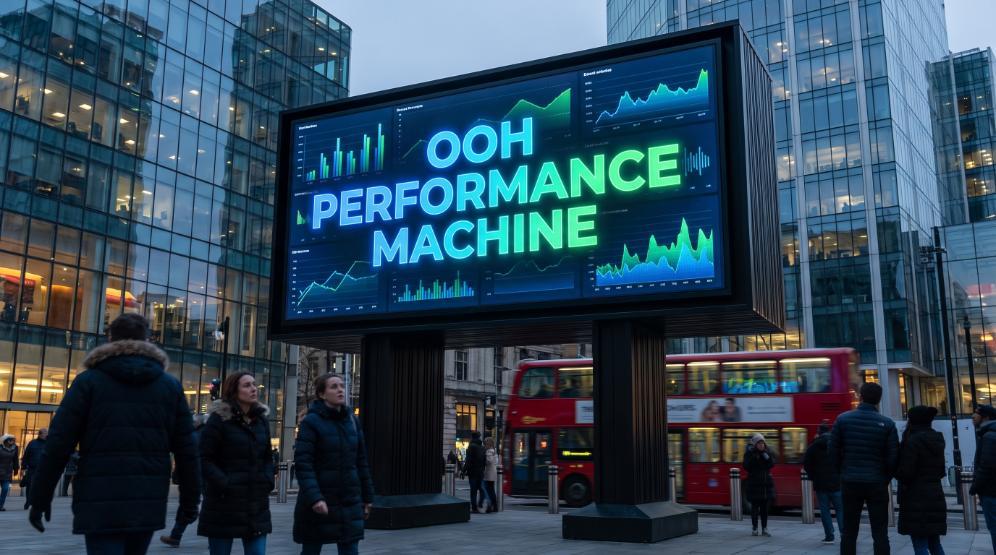
The mental model that follows from all of this is simple but radical: OOH is no longer the billboard at the edge of your plan. It’s a programmable, data-rich surface that can create demand at the top of the funnel and be judged on the same bottom-line metrics as your most sophisticated digital buys—if you stop measuring it like a local poster and start treating it like the performance machine it has already become.
Performance marketers live and die by one assumption: if you can’t see it in the numbers, it didn’t happen. That mindset hasn’t historically existed in OOH. And it’s the missing link that keeps trucks, billboards, and street-level inventory stuck in “branding” budgets instead of running as performance media.
Performance teams don’t buy channels. They buy outcomes, defined in advance and measured ruthlessly. Search, social, programmatic—every dollar is tied to a conversion event, a time window, and a feedback loop. You know exactly what a “good” campaign looks like before it goes live.
OOH, by contrast, has long been bought on “reach, frequency, and a good feeling.” As the team behind AdQuick’s planning platform points out, the category has relied on intuition and gut feel while the rest of marketing moved to granular, always-on analytics. The impact was real; the infrastructure to prove it wasn’t.
Performance marketers would never tolerate that in their world. They insist on five things OOH rarely brings to the table:
1. A clearly defined conversion, not just “awareness.”
In digital, success is specific: email signups, trial starts, app installs, add-to-cart events, ticket purchases. When Saatva first layered OOH onto its search machine, the company initially judged it on direct, last-click attribution and almost killed what turned out to be its best-performing channel. Only when the team reframed success—tracking in-store visitation, brand-direct traffic, and recall over a lag window that matched their buying cycle—did they see that OOH was actually driving profitable, incremental demand, as recapped in an OOH Today case analysis. Performance marketers expect that level of rigor from day one: “What precise action are we trying to move, and over what timeframe?”
2. Granular, person-level signals instead of anonymous “impressions.”
Programmatic teams build audiences from behavior, not broad demographics: lapsed purchasers, cart abandoners, people who visited a competitor’s store in the last 30 days. In OOH, the default is still “18–49, drives this freeway.” Yet the data now exists to change that. Mobile OOH routes can be built around commute patterns, store visits, and competitive hot zones derived from mobile location data—the same behavioral graph performance teams use in their DSPs. That’s why a single LED truck in the San Jose Earthquakes campaign could be routed through high-propensity corridors and tied to verified ticket sales, with GPS traces and device-level exposure feeding into a proper attribution model, as the team behind that initiative described in their full-funnel mobile OOH breakdown.
3. Daily feedback loops, not end-of-flight recaps.
Search and social budgets get reallocated in hours. OOH typically gets a PDF after six weeks. Platforms like AdQuick’s measurement suite are closing this gap by pushing OOH exposure and outcome data into the same dashboards performance teams already use: verified store visits, web sessions from exposed geos, and lift in branded search can now update in near real time. Performance marketers expect to see that data daily so they can double down on high-performing routes, creatives, and markets while the trucks are still rolling.
4. Multi-touch, not last-click, attribution.
Performance teams learned years ago that last-click attribution overvalues bottom-of-funnel channels and undervalues anything that creates demand upstream. The Saatva example illustrates this perfectly: judged on a narrow, direct-response lens, OOH looked weak. Measured as part of a multi-touch journey that included organic search, brand traffic, and recall, it was the growth engine. As a result, OOH is finally being plugged into incrementality tests, geo-lift experiments, and MMM models instead of being graded by coupon codes alone, a shift that both AdQuick’s API and mobile OOH case studies in OOH Today are explicitly enabling.
5. Channel interplay as a core KPI, not a side note.
Performance marketers don’t ask, “Did this channel work in a vacuum?” They ask, “How hard did this channel make everything else work?” When LED trucks drive incremental branded search, lift paid search click-through, or increase conversion rates on retargeting, that amplification is the point. Modern OOH measurement can now quantify that halo—correlating exposures with web analytics and digital campaign performance—turning what used to be a fuzzy “brand lift” story into a clean, media-mix input.
In other words, performance marketers already know how to treat OOH like a performance channel: define the conversion, wire the data, measure incrementality, and optimize in flight. The only thing missing has been OOH’s willingness—and technical ability—to play by those same rules.
If you want your trucks, billboards, and wild postings to behave like performance media, you can’t start with the truck. You start with the offer, the funnel, and the creative that are already working in the most brutally competitive environment on earth: arbitrage-heavy digital channels.
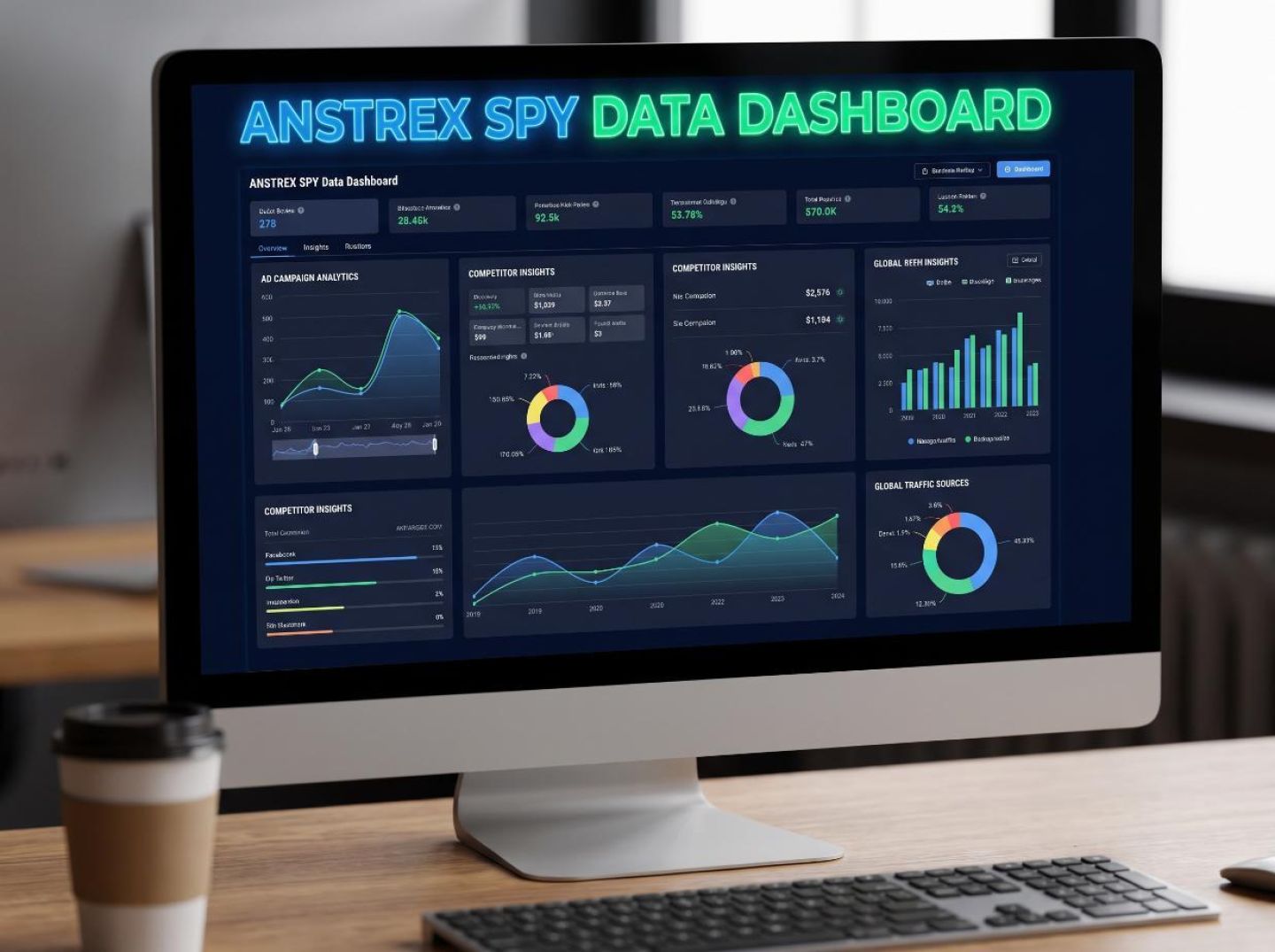
That’s why Anstrex (or any serious ad spy tool) becomes your unfair advantage. You’re not guessing what might work on your rolling LED screen. You’re reverse‑engineering campaigns that are already profitable on native, display, and social, and then rebuilding them for OOH.
Here’s how to do it in practice.
Most OOH creative fails before the printer ever spins up, because the underlying offer is weak. Anstrex lets you skip that learning curve.
Filter for your vertical, geo, and ad networks, then sort by longevity and spend. The ads that have been running for 60–90+ days at scale are the ones paying their own media bills. What you’re really spying on isn’t the banner — it’s the economics: price point, promise, guarantee, urgency, and angle.
You’re looking for patterns like:
Once you see two or three patterns repeating across competitors, you’re no longer brainstorming OOH ideas from scratch. You’re choosing from a short list of proven offer architectures and adapting them to your brand and margin structure.
The win is that those offers have already survived in channels where marketers can see everything down to ROAS and LTV. Performance teams only keep spending when the numbers work, which is the same accountability mindset AdQuick describes as the backbone of modern OOH planning. You’re piggybacking on that rigor.
Clicks are cheap in spy tools. Use them.
From each high‑performing ad in Anstrex, click through into the landing page, then deeper into the funnel:
Screenshot everything. Build a simple funnel map: Ad → LP → Step 2 → Checkout → Upsell.
Your goal is not to copy; it’s to understand what kind of path works for that specific promise and price point. Then you ask: “If my OOH impression replaced that first click, would the rest of this funnel still make sense?”
That’s how you avoid the classic OOH mistake of dumping brand traffic onto a generic homepage. If your spy‑derived pattern shows that all the winning players in your niche drive into a quiz or a tight offer page, your truck creative and QR codes should drive into an OOH‑specific version of that same structure.
This is exactly how mobile OOH operators are now closing the loop between a single truck on the street and real revenue. In the San Jose Earthquakes example, one LED truck, run on tightly defined routes and paired with traced digital paths, was able to connect exposure to verified ticket sales, not just impressions, as Lime Media’s case study details. When your offer and funnel are engineered with that same performance discipline, OOH slots into the system like another acquisition channel instead of a dead‑end.
Once your offer and funnel are modeled, you finally look at the creative itself — but through a very specific lens: what must survive on a moving vehicle or a six‑second glance?
In Anstrex, study:
Then you compress. Anstrex might show a desktop native ad with 15–20 words of copy and multiple elements. Your job is to distill that into:
Think of it as taking what AdQuick calls “precision” from digital and translating it into physical clarity. The creative is not there to tell the whole story; it’s there to tee up the click or scan into a funnel you already know converts.
The point isn’t to run one clever “stolen” campaign. The point is to build the same fast intelligence loop that’s starting to define the next era of OOH.
Platforms like hellOOH, chosen by Trillboards as their sales intelligence layer, exist precisely because the competitive edge is shifting from raw inventory to how quickly you can see and act on market signals. Your Anstrex workflow becomes one of those signals:
Combine that external spy data with your own truck‑level performance and attribution. Over time, you’re not just copying what works; you’re building a proprietary playbook for which kinds of digital‑proven offers, funnels, and creatives translate best into out‑of‑home.
That’s how your OOH inventory stops behaving like local wallpaper and starts acting like a performance media machine — one powered not by opinion, but by the same accountable, data‑rich patterns that already govern the rest of the marketing ecosystem.
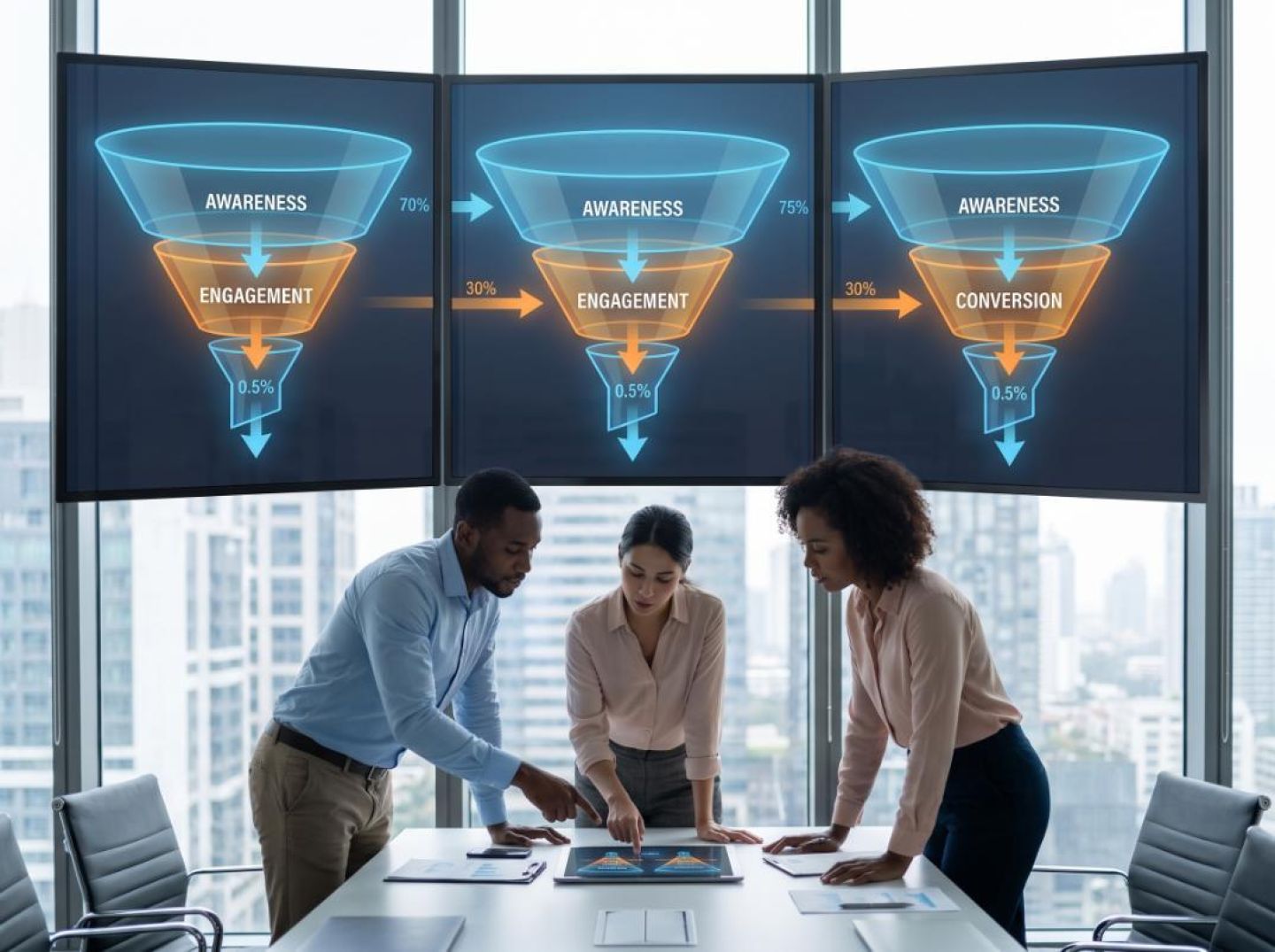
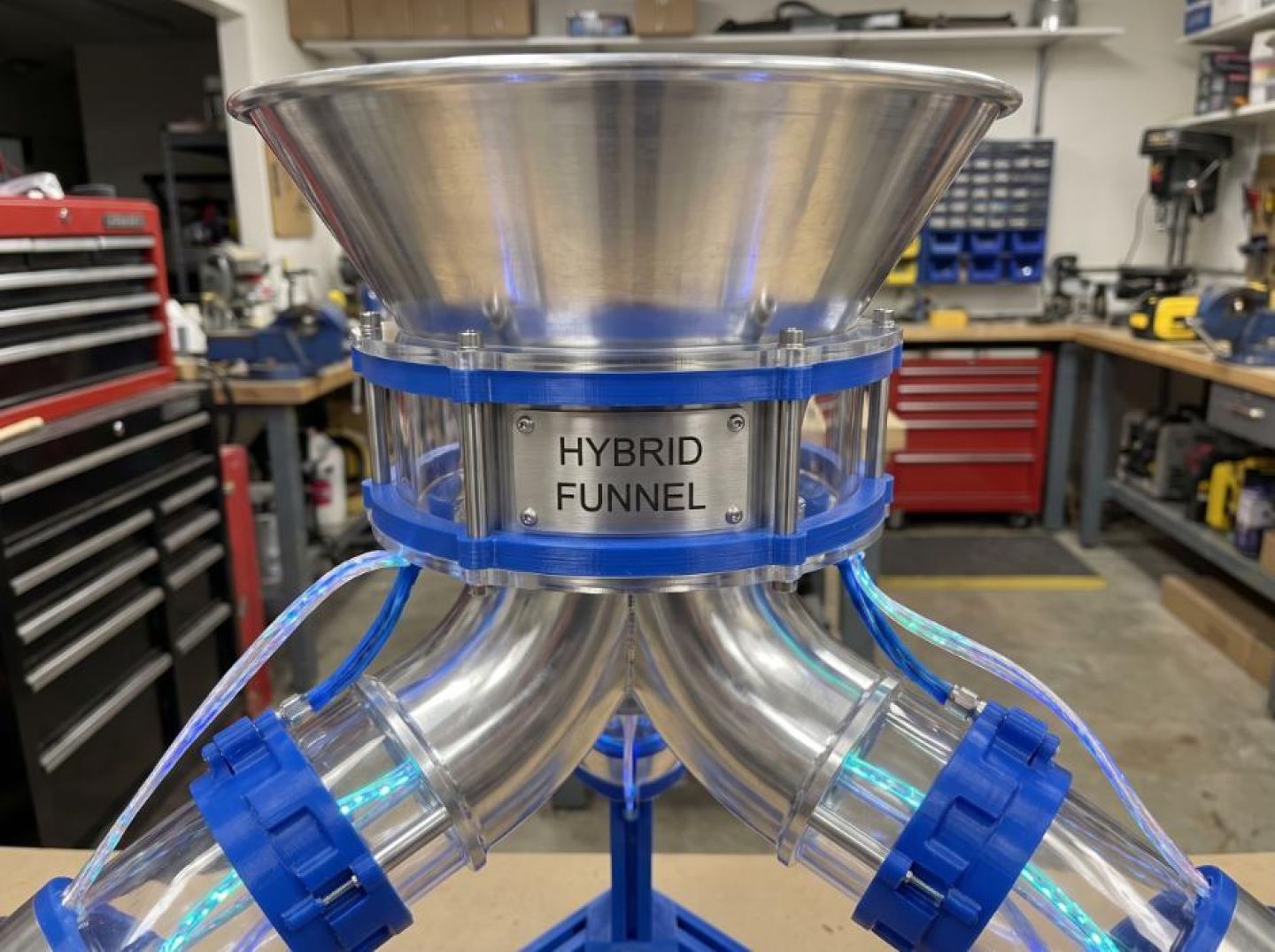
Architecting a hybrid funnel means treating a truck side or billboard as the first click in a performance journey, not the last touch in a fuzzy “awareness” cloud. You’re designing a path where someone sees your OOH, takes a digital action, moves through a proven funnel (lifted from your spy tools), and shows up in your CRM or Stripe dashboard as revenue you can attribute back to that physical impression.
That requires three things working in sequence: intent capture in the real world, intent conversion online, and intent proof in your reporting.
1. Make the billboard a performance entry point, not a logo display
If you’ve already used Anstrex to reverse-engineer high-performing offers and funnels, your OOH creative should be a compressed version of that exact digital pitch. The job of the truck panel or wallscape is not to “tell your story.” Its job is to implant a memory hook that’s easy to act on later.
That means:
When you see mobile OOH used as a performance channel in the wild, that’s exactly what happens. In the San Jose Earthquakes campaign, a single LED truck ran GPS-tracked routes but was paired with a clean, action-oriented offer tied to ticketing, which enabled the team to connect “truck exposure” with “verified ticket purchases,” as detailed in the writeup on full-funnel mobile OOH measurement. Your truck is a moving pre-click environment; design it like the first step of a performance funnel, not a print ad.
2. Build the landing experience as if every visit is paid search
Once someone responds—by searching your brand, visiting the vanity URL, or scanning the QR—they’re no longer a “viewer.” They are a paid click you bought with gas and vinyl instead of CPMs. Treat them that way.
The OOH-specific landing experience should:
Crucially, you give this page its own tracking stack: source parameters baked into the QR code, a dedicated domain or subfolder for direct type-ins, and pixel events tuned to your real outcome (leads, carts, booked demos, app installs). At this stage of the hybrid funnel, your OOH is functionally a top-of-funnel display campaign. There’s no reason you can’t hold it to the same standards as Google or Meta.
3. Connect physical exposure to digital behavior with deterministic signals
The historical knock on OOH was that you couldn’t close the loop between “saw truck” and “bought thing.” That’s no longer true if you design the loop into the campaign from day one.
Modern mobile OOH operators are already using GPS traces, device graphs, and publisher-side identity stitching to do this. In the Earthquakes example, exposure zones along the truck route were matched to devices, and then those devices were tracked through digital engagement and ticket purchase events, proving a full-funnel effect from a single vehicle, as the campaign breakdown on mobile OOH’s full-funnel capabilities describes.
On the planning side, the infrastructure is converging to make this kind of hybrid architecture normal instead of bespoke. Platforms that unify static, digital, and auction-based DOOH into a single workflow are already blurring the line between “offline” and “online,” enabling one set of pixels and one optimization loop to span billboards and browsers, as outlined in an analysis of DSP/SSP convergence in OOH. When your OOH placements live inside the same decisioning fabric as your programmatic and paid social, it becomes straightforward to define and optimize for a single outcome metric across channels.
4. Instrument the funnel like a trading desk, not like a media buy
With that connective tissue in place, the hybrid funnel becomes a live system you can tune:
This is where fast intelligence loops matter more than sheer inventory. As tools like hellOOH show, the next era of OOH advantage will belong to operators and buyers who turn fragmented signals into actionable market understanding, turning raw exposure data into predictive guidance on where performance dollars should flow, a shift that’s spelled out in the partnership announcement between Trillboards and the hellOOH market intelligence platform.
Put together, this architecture transforms OOH from a static line item into a dynamic node in your performance stack. The truck isn’t “brand.” The truck is step one in a measurable, optimizable path from physical impression to digital intent to attributable revenue.
The only reason this entire playbook works is because you can close the loop.
If your truck sides, mobile billboards, or bus wraps only live in an “awareness” bucket, you’re back to the old OOH problem: big spectacle, fuzzy story. Performance marketers will pat it on the head and move their real money back to channels where a spreadsheet can tell a clean story in 30 seconds.
Modern OOH changes that. Not because the media suddenly got more powerful, but because the measurement stack finally caught up.
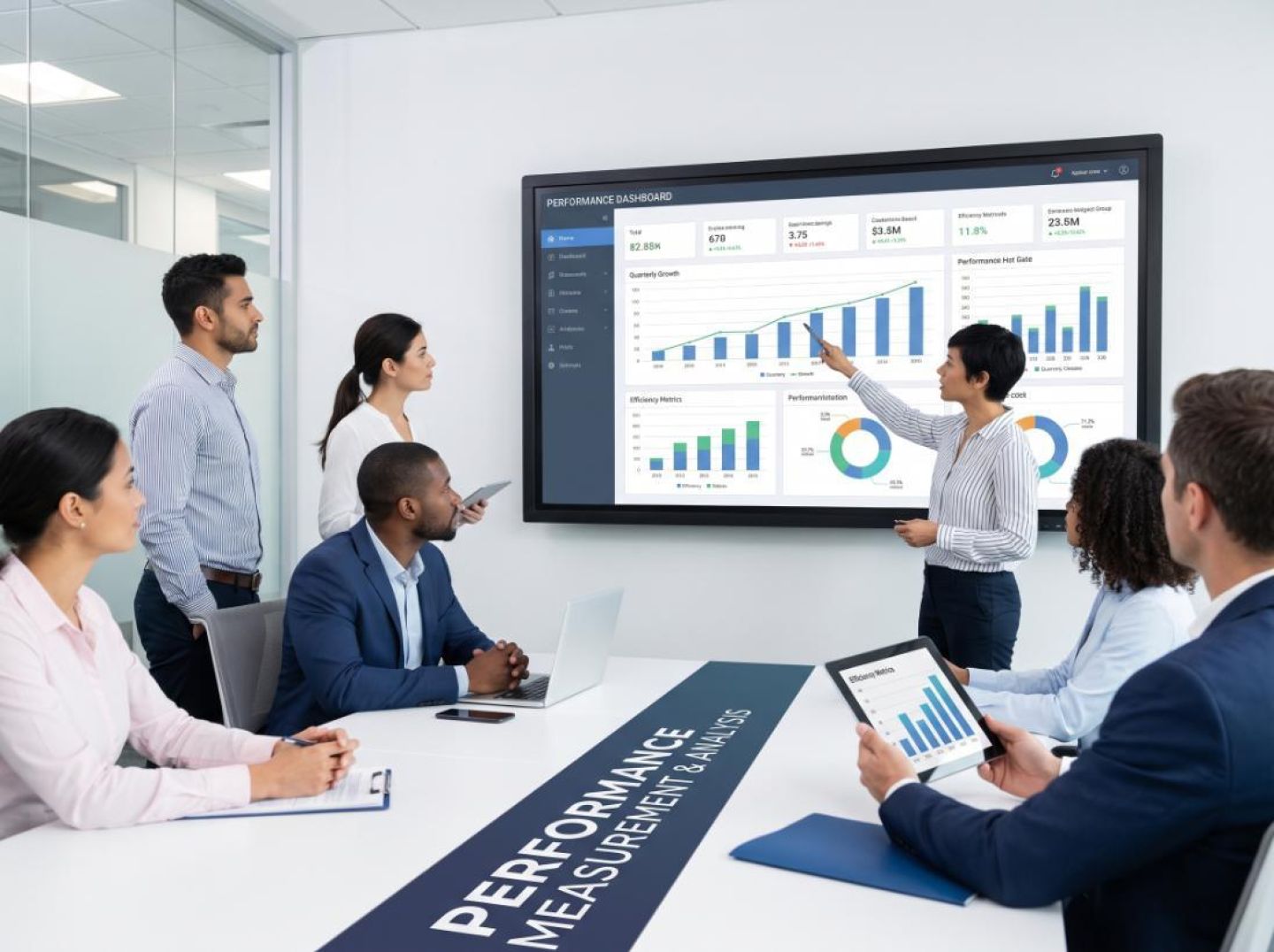
Platforms like AdQuick function as the connective tissue that turns OOH from vibes into a data source. Their measurement suite pipes OOH exposure into the same analytics ecosystem you already use, with APIs that feed into your multichannel models and deliver daily insights on what’s actually happening after someone drives past your creative, as the team behind AdQuick’s universal adapter framing describes it. Instead of guessing that “awareness went up,” you’re seeing:
This is how you make attribution for OOH behave like a performance channel, not a brand tax.
Mobile OOH takes that even further. When a GPS-tracked truck is running a precise route, you’re not just buying impressions, you’re generating a moving geofence. Every device that passes that truck becomes a potential record in your performance dataset. In the San Jose Earthquakes campaign, for example, a single LED truck ran targeted routes while a measurement layer captured exposure, then connected that exposure to downstream actions like web visits and ticket purchases, giving the team “pixel-confirmed purchase attribution” instead of soft estimates, as detailed in Lime Media’s write-up on physical scale and digital proof.
That campaign didn’t just sell tickets; it rewired expectations. The Earthquakes’ marketing lead called out that this approach “directly connect[ed] the campaign to actual ticket sales,” which is precisely the standard performance marketers apply to Meta, Google, or native arbitrage—and now expect from OOH as well, a shift OOH Today notes is driving the channel’s double-digit growth.
Once you’re capturing those device IDs or exposure cohorts, you stop thinking of OOH as a one-and-done touch. You start treating it as audience generation.
The spy-fueled, hybrid funnel you architected in the previous section gives you the offer, the landers, the upsell flows, the email sequences. Now the OOH impression becomes Step Zero in that system. Someone passes your truck, gets logged in your exposure pool, and you:
Because platforms like AdQuick let OOH data flow into your existing stack in near real time, you’re not waiting weeks for a post-campaign PDF; you’re optimizing mid-flight, reallocating budget toward the routes, creatives, and dayparts that are driving the strongest lift in site visits, store visits, and blended ROAS, which is precisely the parity with “modern performance channels” the.
Now you can answer the only three questions that matter to a performance buyer:
At that point, your trucks and billboards stop being “local visibility” and start acting like mobile, high-impact first touches feeding the same ruthless funnel logic you apply everywhere else.
And because the industry’s infrastructure has matured, with OOH revenue crossing $3 billion a quarter on the back of brands that demand this kind of measurable, full-funnel accountability, according to the OAAA’s data highlighted in recent coverage, you’re no longer the weird one for asking, “Show me the sales.”
You’re just the one using trucks and boards like a performance marketer instead of a billboard romantic.
Receive top converting landing pages in your inbox every week from us.
How-To
Discover how competitors turn “great ads” into full-funnel revenue by building an invisible layer of search, native, CTV, social, DOOH, and measurement around their hero creative. Learn how to reverse-engineer these systems using ad intelligence and uncover the signals that reveal how campaigns are actually monetized.
David Kim
7 minOct 6, 2026
How-To
Learn how to turn big brand-building stunts into measurable performance funnels across Native, Push, Pop, and TikTok. This guide breaks down how to repurpose stunt assets, build channel-specific sequences, design story-led landers, and measure their impact on conversions and revenue.
Priya Kapoor
7 minOct 5, 2026
Most Read
Learn how to turn OOH inventory into a measurable performance media machine using digital ad spy data. This guide shows how to borrow proven offers, funnels, and creatives from digital advertising, build hybrid OOH-to-online journeys, and connect physical exposure to measurable revenue.
Dan Smith
7 minOct 4, 2026