

11 minJune 10, 2026

Our spy tools monitor millions of native ads from over 60+ countries and thousands of publishers.
Get StartedEvery performance marketer has internalized the same ritual: launch a campaign, watch the dashboard, kill what doesn't convert by Thursday, and scale what does. It's a ruthlessly efficient process — and it's also creating a slow-motion crisis that most practitioners refuse to acknowledge. By optimizing exclusively for cost-per-acquisition, click-through rate, and return on ad spend, performance marketers have systematically stripped their campaigns of every element that doesn't produce an immediate, measurable action. The result is advertising that functions like a vending machine — transactional, forgettable, and building zero lasting equity in the minds of the people it reaches.
This isn't just a theoretical concern. The obsession with short-term metrics has made digital ads so aggressively conversion-focused that audiences have developed sophisticated defense mechanisms against them. As AdPushup has documented, phenomena like "banner blindness" mean that display ads are simply ignored — audiences have become so accustomed to the visual language of performance-first creative that they unconsciously filter it out before it even registers. Every ad that screams "BUY NOW" with a flashing CTA button trains the audience to look away faster next time. The irony is brutal: the harder performance marketers optimize for clicks, the more they accelerate the very blindness that erodes their returns.
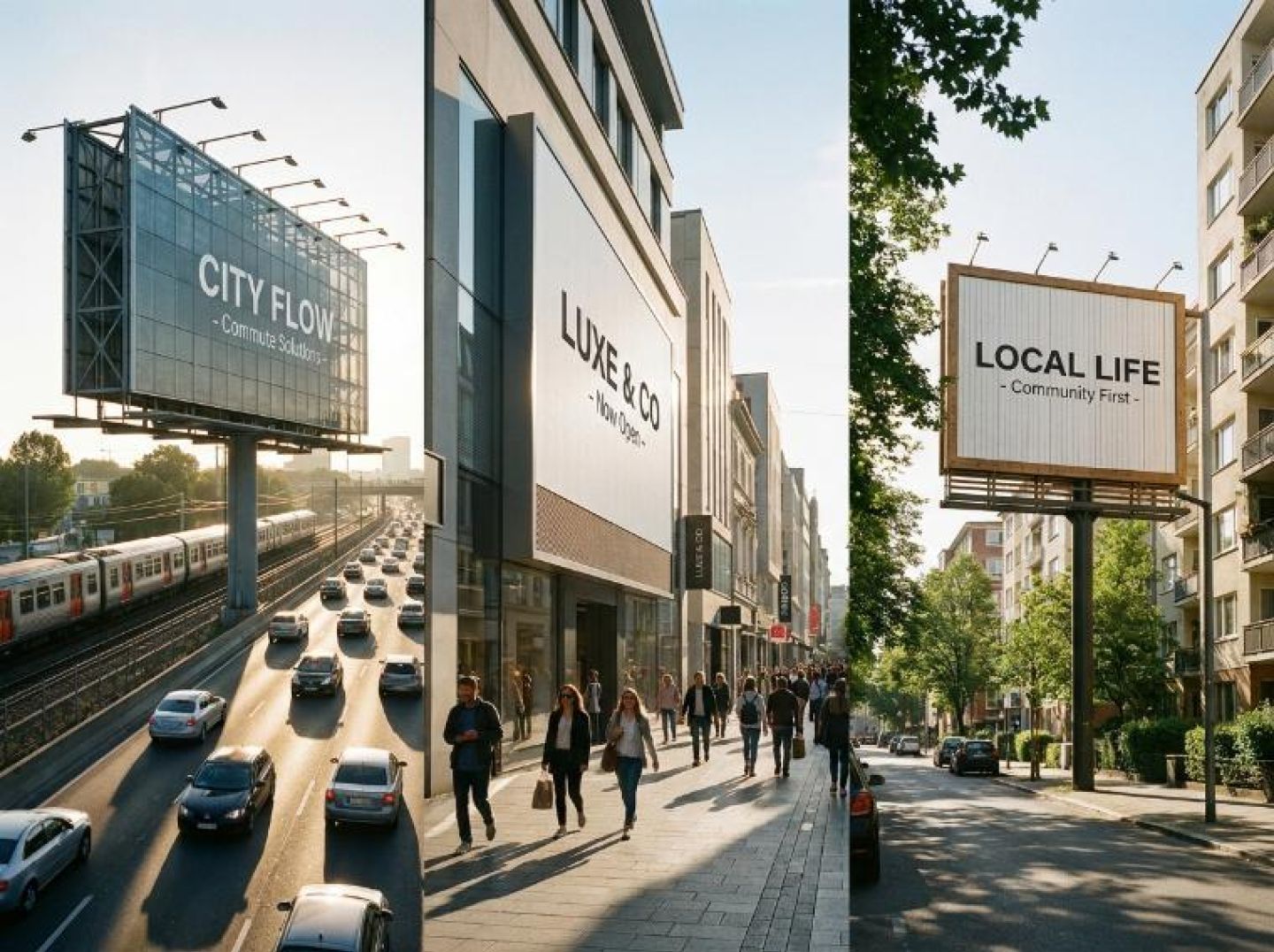
Now consider the unlikely counterpoint: out-of-home advertising. Billboards don't have click-through rates. Bus wraps don't come with UTM parameters. Transit ads will never produce a neat attribution report. And yet OOH has remained one of the most trusted and effective brand-building channels for decades, precisely because the people who create it operate under a fundamentally different philosophy. OOH advertisers don't treat each placement as a disposable test unit. They treat it as a deposit — a carefully designed impression lodged into the audience's memory, compounding over time. They know that someone who drives past the same billboard forty times without taking a single measurable action is not a failure. That person is being primed. And when they finally do need the product, the brand that made those deposits is the one they reach for.
This is the blind spot. Performance marketers have been trained to see any impression that doesn't immediately convert as waste. OOH advertisers know that impression is the work.
Native advertising sits at the rare intersection of both worlds — and that's what makes this gap so consequential. Unlike banners, native ads take root in the consciousness of potential clients by blending seamlessly into the editorial environment, functioning as long-term brand-building tools rather than just direct-response mechanisms. As the Voluum Blog has argued, defining branding campaign objectives in native advertising doesn't force you to choose between awareness and performance — you can merge these ambitions into one big strategy by aligning short-term conversion metrics with long-term brand reputation goals. That's the cheat code most practitioners overlook: native ads can do the memory-deposit work of a billboard and the conversion work of a search ad, simultaneously.
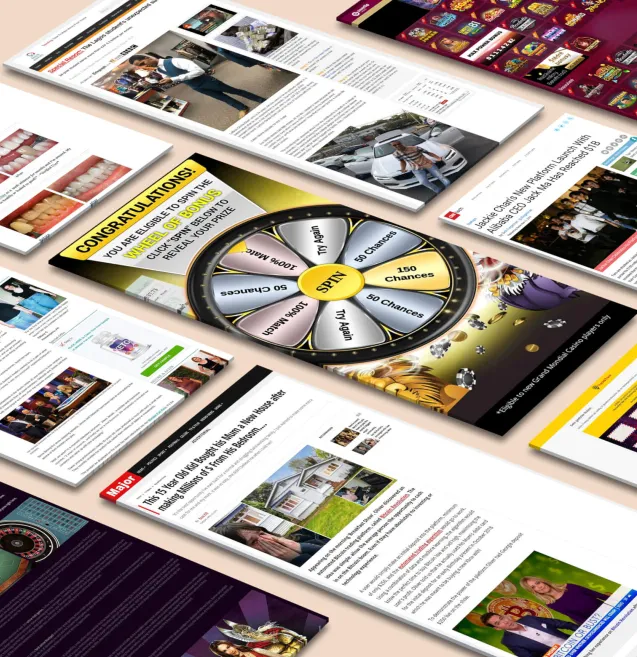
But most native advertisers only use half of that power. They write headlines engineered to bait a click, pair them with stock images chosen for shock value, and run the whole thing through a split-testing gauntlet that rewards immediate CTR above all else. It works — until it doesn't. Until the audience develops blindness to their creative patterns just as they did with banners. Until the cost of acquiring each new click ratchets up because there's no underlying brand gravity pulling people in organically.
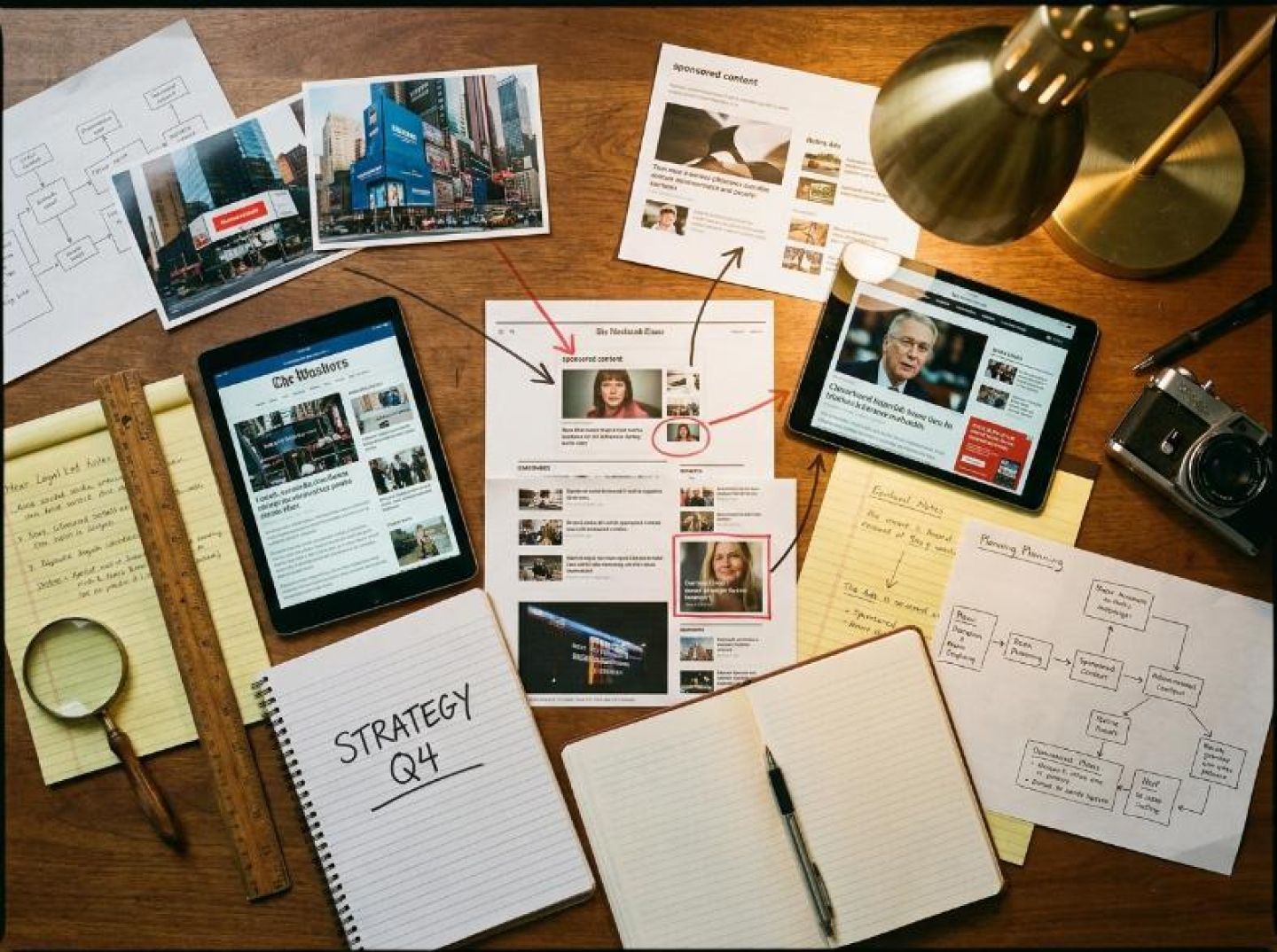
The marketers who recognize this gap first hold an asymmetric advantage, especially when they use competitive intelligence tools like Anstrex to study which competitors have already begun embedding brand-building principles into their native campaigns. Spotting a rival whose creative carries consistent visual identity, emotional resonance, and narrative coherence — the hallmarks of OOH thinking — tells you something their CPA numbers never will: they're playing a longer game, and they're likely winning it.
Out-of-home advertisers have been running the same playbook for decades, and it works because it's rooted in three psychological principles that most digital marketers either underestimate or ignore entirely. Understanding these pillars — repetition, context, and environment — doesn't just explain why a highway billboard sells trucks or why a bus shelter ad moves coffee. It reveals why native advertising, when treated as branding infrastructure rather than a click-harvesting mechanism, can achieve something that performance campaigns alone never will: lasting mental availability.
Repetition: The Billboard You Pass 200 Times
The first principle is deceptively simple. A billboard doesn't need to be clever; it needs to be there. When you drive the same commute five days a week, you pass the same message roughly 200 times a month. Behavioral scientists call this the mere-exposure effect — the well-documented finding that repeated exposure to a stimulus increases preference for it, even when the viewer can't consciously recall the exposure. OOH advertisers have intuitively weaponized this for generations. They don't rotate creative every 48 hours chasing freshness; they let frequency do the heavy lifting, knowing that familiarity breeds trust, not contempt.
Native advertisers have the same opportunity, but most squander it. Instead of building sustained exposure with consistent creative across a curated set of publishers, they fragment campaigns across dozens of networks, chase the lowest CPMs, and cap frequency so aggressively that the brand never gets a chance to become familiar. Frequency capping is a necessary guardrail against annoyance — but treated as a branding lever, strategic repetition across the right sites can build the kind of recognition that turns a unknown brand into a considered one.
Context: Matching Message to Moment
The second pillar is contextual precision. A gym membership ad placed at the intersection nearest the gym. A coffee promotion at a transit stop at 7 AM. OOH planners obsess over matching message to moment because they understand context-dependent memory: information encoded in a specific context is more easily retrieved when that context is encountered again. The ad doesn't just reach you — it reaches you when the problem it solves is already active in your mind.
Native advertising offers an even more powerful version of this principle. As Voluum's branding guide emphasizes, native advertisements succeed when they share the same flow and concept as the website they appear on, with the ad and the site's content speaking in the same voice. A financial planning tool promoted within a personal finance article isn't interrupting — it's answering a question the reader already has. Yet too many native buyers treat publisher selection as an afterthought, optimizing for audience demographics while ignoring the topical and emotional context surrounding the placement.
Environment: Borrowed Prestige and Trust Transfer
The third principle is environmental priming. A luxury watch billboard in an upscale neighborhood borrows the prestige of its surroundings. The same ad at a highway rest stop carries different connotations entirely. The physical environment transfers its associations — quality, taste, credibility — onto whatever appears within it.
Native advertising operates on the exact same mechanism. Because native ads are designed to match the look, feel, and functionality of the host site, they don't just borrow a publisher's layout — they borrow its authority. A brand appearing within The Atlantic carries a different weight than one appearing on a content farm, even if both placements reach the same demographic profile. This practice has historical roots stretching back to the 1920s, when print advertisements were crafted to blend seamlessly with editorial content, leveraging the newspaper's credibility to legitimize the advertiser's message.
The implication is uncomfortable but unavoidable: publisher selection, creative consistency, and frequency strategy aren't media buying logistics. They are branding decisions — the digital equivalents of choosing which intersection gets the billboard, how long it stays up, and what neighborhood it stands in. Treating them as anything less is leaving the most valuable part of native advertising — the part that builds brands — completely on the table.
Here's the uncomfortable truth: most performance marketers aren't failing at native advertising because the channel doesn't work. They're failing because they're importing a direct-response playbook that systematically destroys every quality that makes native ads effective in the first place.
Start with creative. The performance marketer's instinct is to test dozens of headline and image combinations simultaneously, rotating creatives every 48 to 72 hours, killing underperformers, and scaling whatever generates the lowest cost per click. On Facebook or Google, where users expect to be advertised to, that velocity can work. But in a native environment — where the entire premise is that the ad fits into the ecosystem of the publisher's content — relentless creative rotation obliterates the repetition principle that OOH advertisers treat as gospel. You never give any single creative asset enough frequency to build recognition, familiarity, or trust. Every impression starts from zero. The audience never progresses from "I've seen this before" to "I know this brand," because "this brand" looks different every time they encounter it.
Then there's the context problem. Performance marketers trained on programmatic buying optimize for cost efficiency, which usually means chasing the cheapest available traffic regardless of where the ad appears. A supplement brand's native unit might land on a parenting blog, a tech review site, and a celebrity gossip page in the same afternoon — not because those environments are strategically relevant, but because the CPMs were low. This is the exact opposite of what the format demands. As Basis explains, native ads make users more likely to engage specifically because they're placed where audiences are already consuming similar content. Ignore publisher context and you don't just waste impressions — you create an actively unpleasant experience that trains readers to distrust anything labeled "sponsored."
The worst offense, though, is tonal. Performance marketers default to urgency — countdown timers, shock headlines, curiosity gaps, garish before-and-after images — because those tactics reliably inflate click-through rates in isolated split tests. But native advertising succeeds precisely because it is unintrusive and adaptable, leveraging the credibility of the surrounding editorial environment rather than fighting against it. An "ACT NOW — YOU WON'T BELIEVE WHAT HAPPENS NEXT" headline sitting beneath a measured investigative article doesn't just look out of place. It triggers the exact same visceral recoil that made users install ad blockers to escape display banners in the first place.
Native ads, as Voluum's tracking guide notes, work best at a sweet spot where they blend enough to avoid being perceived as intrusive while standing out just enough to be noticed. That balance is delicate, and every aggressive direct-response tactic tips the scale in the wrong direction. The clickbait headline gets the click, sure — but it poisons the well. The reader who feels tricked doesn't convert, doesn't return, and carries a newly formed negative association with the brand into every future encounter.
This is the paradox performance marketers refuse to confront: the toolkit they rely on — urgency, rotation, lowest-cost inventory, and aggressive creative — doesn't just undermine branding. It undermines performance itself. When every impression is treated as an isolated conversion event with no relationship to the one before it or the one after, you're not running a campaign. You're running a slot machine. And the house edge belongs to the audience's growing indifference.
Once you see the parallel, the translation becomes almost embarrassingly straightforward. A billboard campaign is one consistent creative placed in carefully chosen locations along routes its audience travels daily. A native advertising campaign should work exactly the same way — but almost nobody runs them like that. Here's how to change that, principle by principle.
Steal Repetition: Build a Visual Identity System, Not a Creative Free-for-All
The OOH advertiser doesn't swap out their billboard's color palette every week to "avoid fatigue." They know that consistency is the strategy. For native ads, this means designing campaigns around a locked visual identity — a specific color scheme, typography style, image treatment, and brand mark placement — that persists across every creative variation you test. You can and should test headlines. You can rotate images. But the underlying visual signature must remain constant so that even when a reader doesn't click, the brand impression compounds. Think of each creative variant as a different billboard along the same highway: the words might shift slightly, but the driver always knows who's talking. When you rotate creative elements without an anchoring identity system, every impression starts from zero. When you lock the system, impression number fifty builds on the authority of impressions one through forty-nine.
Steal Context: Choose Placements That Build Your Brand, Not Just Your Funnel
Performance marketers typically select placements based on audience demographics and cost-per-click efficiency. OOH advertisers choose locations — and the location itself communicates something about the brand. The native advertising equivalent is selecting publisher categories and specific sites that align with your brand's positioning, not merely your audience's browsing habits. As Voluum's guidance on native campaigns emphasizes, effective tracking starts with setting clear objectives — and one of those objectives should be long-term brand reputation, not just short-term conversions. A financial services brand appearing on a premium business publication isn't just reaching the right demographic; it's borrowing the editorial authority of that environment. A supplement brand running on a respected health and wellness site is doing the same. The placement is part of the message.
Steal Environment: Reverse-Engineer Creatives for Specific Sites
This is where most native advertisers leave the most value on the table. OOH creatives are designed for their specific physical environment — a highway billboard uses massive type and minimal copy because drivers have three seconds; a subway poster can afford a paragraph because riders are captive. Native ads demand the same environmental sensitivity. As Basis explains, effective native advertising matches the look, feel, and functionality of the host site, and sponsored content in particular positions the advertiser as an expert or leader within that editorial context. This means studying the editorial tone, visual design, and content style of your top-performing placements and then reverse-engineering creatives that feel genuinely native to those specific environments rather than deploying one-size-fits-all creative across every site in your network.
Pull up your top five performing publisher placements right now. Look at how each site styles its article thumbnails, what kind of headlines its editorial team writes, what photographic style dominates. Then build five distinct creative sets — one tuned to each environment. This is more work than exporting a single batch of creatives, obviously. But the billboard company doesn't paste a subway ad on a highway sign. The environments are different. The creative should be different. And the brands that understand this will build the kind of compounding recognition that pure performance campaigns never achieve.
Receive top converting landing pages in your inbox every week from us.
Most Read
Discover how performance marketers can build cross-channel verification journeys that turn skeptical prospects into confident buyers across TikTok, native, push, and pop advertising. Learn how to coordinate creative messaging, reinforce trust at every touchpoint, and measure the hidden influence of fragmented customer journeys using competitive ad intelligence.
Elena Morales
7 minOct 20, 2026
Most Read
Discover how performance marketers can combine AI-generated content and competitive ad intelligence to build effective campaigns across native, pop, and push advertising networks without sacrificing originality or consumer trust. Learn how to analyze competitor funnels ethically, develop distinctive landing pages with AI, and establish practical guardrails for transparent, compliant, and sustainable campaign optimization.
Priya Kapoor
7 minOct 19, 2026
Recently Updated
Discover how performance marketers can turn AI-generated answers into profitable creative opportunities for native, push, and TikTok advertising. Learn how to extract customer pain points, validate campaign angles with Anstrex and TikTok ad libraries, and build data-informed creative strategies that stand out from low-quality AI content.
Liam O’Connor
7 minOct 16, 2026









)