6 minJuly 23, 2026

Our spy tools monitor millions of native ads from over 60+ countries and thousands of publishers.
Get StartedFor nearly two decades, organic search operated like a free traffic faucet. You published content, optimized it for the right keywords, and Google rewarded you with a steady stream of visitors who cost you nothing. That era is over — not because SEO stopped working in theory, but because three converging forces have made organic search structurally unreliable in a way it has never been before.
The first force is Google's ongoing wave of unexplained deindexing. Throughout 2024 and into 2025, site owners have watched entire domains — some with years of authority and thousands of indexed pages — vanish from search results with no clear violation, no manual action notification, and no obvious path to recovery. These aren't spammy microsites getting cleaned out. Established publishers and legitimate businesses are waking up to find their content simply gone, as if it never existed. The appeals process is opaque, the timelines are indefinite, and the financial consequences are immediate.
The second force is anstrex.com/blog/your-competitors-ai-overview-problem-is-your-native-ad-opportunity-heres-how-to-exploit-it" target="_blank" rel="noreferrer noopener">AI Overviews. Google's generative AI summaries now sit at the top of results for a growing share of queries, synthesizing answers directly on the search page. For informational content — the backbone of most content marketing strategies — this means users get what they need without ever clicking through. The result is a quiet but devastating cannibalization of click-through rates, even for pages that technically still rank in position one. Your content still feeds the machine; it just doesn't feed your traffic numbers anymore.
The third force is the relentless core algorithm volatility that has defined the last eighteen months. Sites that gained 40% traffic from one core update lose it in the next, with no substantive change to their content or link profile in between. The optimization playbook that worked in January becomes a liability by March. This isn't the normal churn of search rankings — it's a level of instability that makes organic traffic functionally unpredictable as a business input.
Put these three forces together and the picture is clear: organic search is no longer a dependable acquisition channel. It's an algorithmically gated lottery where the rules change without notice and the house can revoke your winnings at any time. As Brax has bluntly put it, "with organic traffic, you're at the mercy of search engines" — and the mercy of search engines in 2025 is a thin and capricious thing. The same analysis emphasizes that this dependency creates an existential vulnerability, because the "ever-changing landscape of online algorithms" can undermine an entire business model overnight.
This isn't a doom-and-gloom SEO obituary. SEO still has a role. But treating organic as your primary acquisition pillar — the foundation upon which your growth model rests — is now a strategic liability. The brands most exposed are the ones that never diversified, the ones that poured everything into content production and link building while assuming Google would always keep the faucet running.
The smarter players are already repositioning. They're looking at channels where, as native advertising experts have noted, the ecosystem is prepared to adapt to disruption — from privacy changes to inventory shifts — without compromising the core value proposition. They're looking at channels where you decide who sees your message, where it appears, and how your brand is portrayed. They're looking, in other words, at the paid side of the ledger — and specifically at the format that doesn't look or feel like an ad at all.
What's happening to organic search isn't a temporary glitch. It's a structural market shift. And for native advertisers, it's the best market opening in years.
When organic traffic dries up, the instinct is predictable: brands pour money into the channels they already know. Google Ads absorbs the first wave, because it feels like staying in the same ecosystem. Meta picks up the next surge, because the targeting is familiar and the creative workflows are already built. The result is a bidding war of attrition. More advertisers chasing the same finite inventory drives cost-per-click higher, compresses margins, and forces brands into a treadmill where they spend more to maintain the same volume they once got for free. It's the logical move, and it's also the wrong one — or at least, the incomplete one.
There is a third path that most mid-market brands still overlook, and the data says it shouldn't be overlooked at all. Native advertising spending reached $97.46 billion in 2023, accounting for over 59.7% of all digital display ad spending in the United States. That is not a niche tactic. That is the majority of display dollars in the country's largest advertising market. Enterprise brands and sophisticated performance marketers have already made the shift — they just haven't been loud about it, which is precisely why the opportunity still exists for everyone else.
The perception problem is stubborn. Say "native advertising" to a mid-market CMO and they picture a content recommendation widget at the bottom of a news article — a "You May Also Like" box that feels like the internet's junk drawer. But native has evolved far beyond that single format. As Jonathan Kim of TripleLift has noted, advertisers often bucket all native formats into a single category when they actually vary dramatically by aesthetic, user experience, pricing, and performance. In-feed placements, in-article units, and promoted listings each operate with distinct economics and distinct audience dynamics, and collapsing them into one mental model causes brands to dismiss the entire channel based on its least sophisticated expression.
What makes native structurally different from the Google and Meta auction crush is the combination of control, scale, and audience quality without the same inflationary pressure. With organic traffic, you're at the mercy of search engine algorithms that can vaporize your visibility overnight. With paid search and social, you're at the mercy of auction dynamics that punish you every time a new competitor enters the market. Native offers something neither of those channels provides: you decide where your ads appear, who sees them, and how you portray your brand, and that control translates into the kind of stability that organic search once offered but no longer can.
The competitive dynamics matter here, too. Google Ads and Meta are saturated battlegrounds where every major brand, every DTC startup, and every agency is fighting for attention in the same auctions. Native advertising networks — Taboola, Outbrain, MGID, TripleLift, and others — operate across vast publisher ecosystems where inventory supply still outpaces advertiser demand in most verticals. That imbalance means lower CPCs, less volatility, and the ability to scale without watching your costs spiral upward every quarter.
The indexing crisis didn't create the migration toward native — nearly $100 billion in annual spending proves the migration was already well underway. What the crisis is doing is accelerating the timeline. Brands that once had the luxury of treating native as an experiment are now facing an urgent gap in their traffic portfolios, and the advertisers who fill that gap now will lock in costs and placements before the inevitable crowd arrives. The window is open, but it won't stay open forever.
The forces dismantling organic reach — deindexing, AI Overviews, algorithmic volatility — all share a common dependency: they require your content to pass through Google's infrastructure to reach an audience. Native advertising doesn't. This isn't a subtle distinction. It's a structural one, and it explains why native operates on what amounts to a parallel distribution layer that is fundamentally untouchable by the very mechanisms eroding organic visibility.
Consider the chain of vulnerability for any piece of organic content. It must be crawled, indexed, ranked, and then survive the gauntlet of AI-generated summaries that increasingly satisfy user intent before a click ever happens. At every stage, Google holds the lever. Native advertising bypasses this chain entirely. Your sponsored content placement lives on a publisher's page — a page that a reader has already navigated to, is already engaged with, and is already consuming. Google can't deindex your native ad because your native ad was never in Google's index to begin with. An AI Overview can't summarize away a sponsored article sitting inside a reader's content feed on a news site. The distribution mechanism is the publisher's audience, not a search engine's algorithmic whim.
This independence from algorithmic gatekeeping is what makes native advertising a sustainable channel that protects against the ever-changing landscape of online algorithms. With organic traffic, you're at the mercy of search engines. With native, you decide where your ads appear, who sees them, and how your brand is portrayed — a level of control that organic search has never offered and, given current trajectories, never will again. That control translates directly into stability: you're not waking up to a 40% traffic drop because Google decided to restructure how it handles your content category.
Then there's the engagement gap. Native doesn't just sidestep the distribution crisis — it outperforms the alternatives advertisers typically flee to. Traditional display ads suffer from banner blindness and abysmally low click-through rates. Native ads, by contrast, outperform traditional display significantly, with mobile native CTRs exceeding 1% compared to desktop display averages that often hover around 0.05%. That's not a marginal improvement; it's an order-of-magnitude difference. And the qualitative data reinforces the quantitative: consumers hold a generally positive attitude toward native advertising, perceiving these placements as less intrusive and easier to understand than other ad formats.
What makes this combination so potent in the current environment is that native advertising doesn't just avoid competing with organic content for search real estate — it actively benefits from the attention migration away from search results pages. As users spend less time clicking through Google's increasingly answer-heavy SERPs and more time consuming content directly on publisher sites, native ads are positioned exactly where that displaced attention lands. Every reader who gets their answer from an AI Overview and never clicks through to a search result is still reading articles somewhere. They're still scrolling through content feeds on the sites they trust. Native lives precisely in those spaces.
This is the strategic moat. Not a tactical workaround, not a temporary arbitrage opportunity, but an architectural advantage. Native advertising's immunity to indexing crises, algorithm updates, and AI-driven zero-click behavior isn't accidental — it's a consequence of operating on infrastructure that Google simply doesn't control. For advertisers watching their organic foundations crack, that independence isn't just appealing. It's existential.
For years, the most persistent objection to native advertising wasn't about performance — it was about process. The argument went like this: native is artisanal, not industrial. Every placement requires a custom creative brief, a publisher relationship, a bespoke integration that looks and feels like it belongs on a specific site. That's fine for a Fortune 100 brand with a dedicated content studio and an agency retainer. For everyone else, it simply doesn't scale. And for a long time, this criticism had teeth.
The criticism no longer does.
The convergence of native advertising and programmatic buying has fundamentally dismantled the operational bottleneck that kept brands out of the channel. As AdPushup has documented, native advertising and programmatic buying historically existed independently of each other, with most native placements being personalized creatives made by publishers in direct consultation with their advertisers. That model was, by definition, unscalable. But it was also only one side of the coin. Beyond sponsored posts and manually implemented integrations, there are multiple native ad formats — in-feed, in-ad, content recommendation, and promoted listings — that lend themselves naturally to automation.
The shift didn't happen at the margins. It happened at the center of the ad tech ecosystem. Google itself accelerated the transition by allowing publisher customers to expose native ad inventory in their mobile apps to buyers on the DoubleClick Ad Exchange, a move observers predicted would bring a flood of new advertiser dollars into native — particularly from large brand advertisers accustomed to buying standardized IAB inventory at scale. When the same exchange infrastructure that powers display and video buying starts supporting native formats, the operational gap between "easy to buy" and "hard to buy" channels effectively closes.
This matters enormously in the context of the indexing crisis we've been discussing. The brands currently scrambling for alternatives to organic are accustomed to scale. They've spent years operating inside platforms — Google Ads, Meta, programmatic display — where a single dashboard governs targeting, bidding, creative rotation, and reporting. Asking those brands to adopt a channel that requires manual publisher outreach and custom content negotiations is asking them to move backward operationally. But that's not what native requires anymore. Programmatic native now offers the same targeting precision, the same real-time optimization, and the same campaign management simplicity that marketers expect from any other digital channel.
The format diversity compounds the advantage. As Jonathan Kim of TripleLift noted in a conversation with Basis, advertisers often make the mistake of bucketing all native formats into a single category, when in reality the IAB's Native 1.2 Spec identifies distinct ad types — from in-feed and in-article to peripheral and recommendation widget placements — that vary dramatically by aesthetic, user experience, pricing, and performance. This isn't a one-size-fits-all channel. It's a spectrum of formats, each with different use cases, and all of them now accessible through the same programmatic pipes brands already use for everything else.
So what's actually keeping most brands out of native? Not technology. Not scale limitations. Not lack of formats. It's inertia — the gravitational pull of familiar channels and the assumption that native still operates the way it did five years ago. That assumption is wrong, and the gap between perception and reality is precisely where the window of opportunity exists. The brands that recognize this shift first won't just find cheaper inventory. They'll lock in audience attention on premium publisher sites while their competitors are still fighting over the same overcrowded search and social auctions, paying more for less with every passing quarter.
Market shifts reward two kinds of players: first movers who arrive before the crowd, and fast followers who let someone else absorb the learning curve and then replicate what works with surgical efficiency. Both strategies are legitimate. But both demand one thing that gut instinct can't provide — intelligence. If you're watching budgets migrate from search and display into native, the worst possible response is to guess your way in. The smartest response is to observe who's already moving and reverse-engineer their playbook before you commit a dollar.
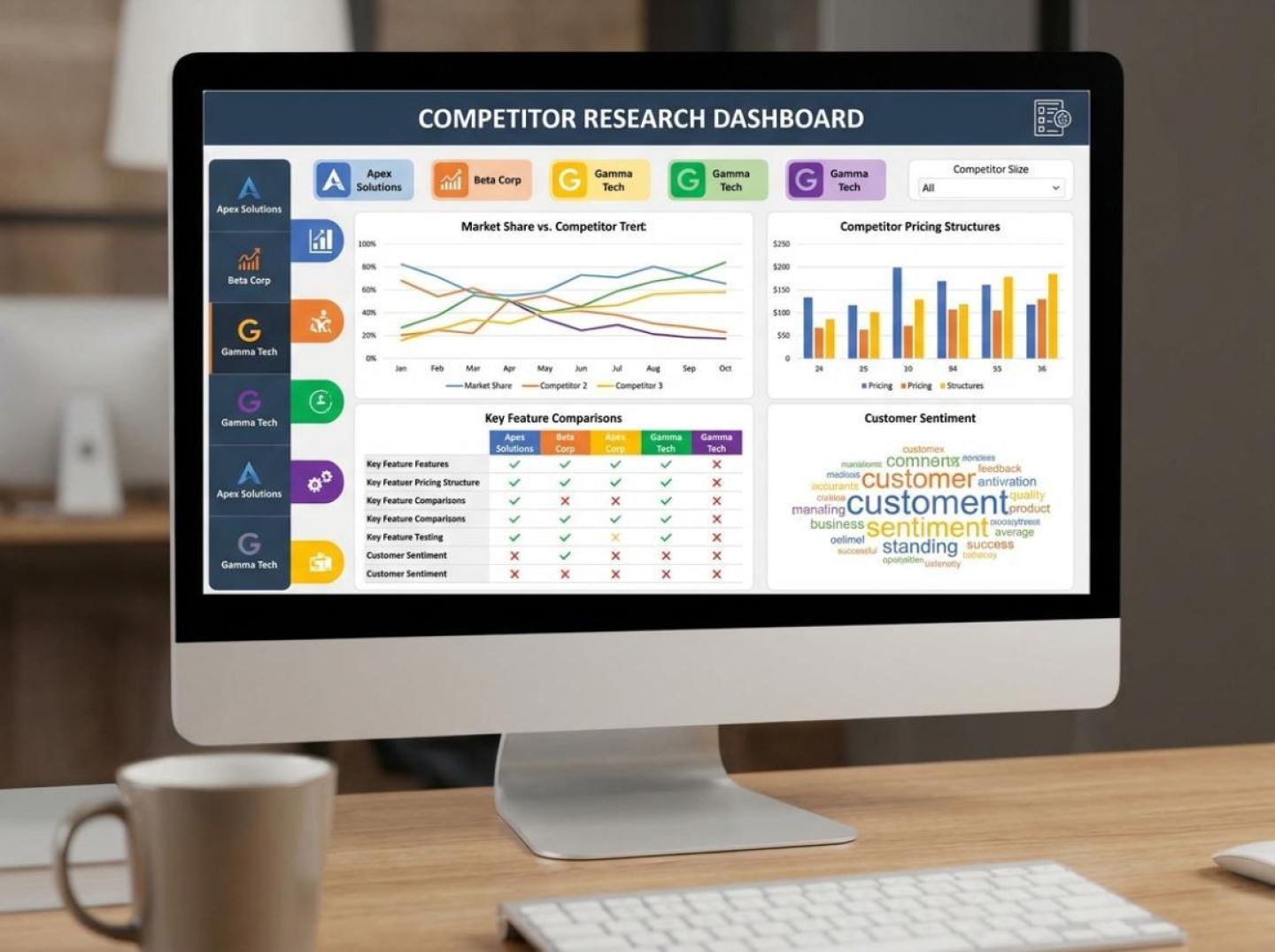
This is where competitive intelligence tools become indispensable. Platforms like Anstrex function as what you might call a "migration radar" for the native advertising ecosystem. They allow you to filter by advertiser, ad network, geographic region, and campaign duration to see exactly which brands and verticals have quietly ramped their native spend. You can identify which creative angles — specific headlines, thumbnail styles, emotional hooks — are earning unusually long campaign runs, which is one of the most reliable proxies for profitability in a performance channel. If a creative has been live for ninety days across multiple publishers, it's not running on hope. Somebody is making money. You can also see which publisher placements are being bought most aggressively, giving you a real-time map of where inventory demand is concentrating.
This matters because native advertising is fundamentally a game of numbers where data-driven decisions determine profitability. Unlike organic channels, where you publish and pray, native gives you granular control over where your ads appear, who sees them, and how you position your offer — but that control only creates value if you know what inputs to feed it. A spy tool gives you those inputs. Instead of testing fifty headline variations from scratch, you can study which formulations are already surviving the market's natural selection process. Instead of spreading budget across a dozen networks to find out which ones deliver quality traffic, you can see where established advertisers are concentrating their spend and follow the money.
The creative dimension is equally critical. As AdPushup has noted, the demand for quality and innovative ad content in native formats is rising, and brands that fail to meet that standard get filtered out by audiences who have grown expert at ignoring anything that feels generic. A competitive intelligence tool lets you study innovation as it happens — not in a case study published six months later, but in the live campaigns running across Taboola, Outbrain, MGID, and RevContent right now. You can see which verticals are experimenting with new formats, which landing page structures are being paired with which creative angles, and which combinations are producing the kind of engagement that justifies sustained spend.
Without this visibility, entering native feels like walking into a poker game blindfolded. You know the stakes, you understand the rules, but you can't see anyone else's cards or even how they're betting. With it, you're operating with an asymmetric advantage — one that compresses your testing timeline, reduces wasted spend, and lets you enter the channel with the confidence of someone who has already studied the terrain. In a market where Google's indexing volatility is pushing more advertisers to explore distribution channels they can actually control, the window of opportunity is real but finite. The advertisers who spy before they spend will capture the best placements, the most responsive audiences, and the creative frameworks that separate profitable campaigns from expensive experiments.
Intelligence without execution is just trivia. You've identified the migration, you've studied what competitors are running, and you've mapped the native landscape in your vertical. Now it's time to build a repeatable system for shifting budget away from increasingly unreliable organic search and into native channels that you actually control. Here's a five-step playbook designed to turn Google's indexing chaos into your competitive advantage.
Step 1: Audit Your Organic Traffic Vulnerability. Before you spend a dollar on native, you need to know exactly where you're exposed. Pull your analytics and isolate every page that derives more than 60% of its traffic from organic search. Cross-reference that list against pages generating meaningful revenue — whether through affiliate commissions, lead capture, or direct sales. These are your highest-risk assets. If Google's AI Overviews cannibalize the query or a deindexing event wipes the page from results, what happens to that revenue line? The pages where the answer is "it disappears entirely" are your migration priorities.
Step 2: Survey the Native Landscape in Your Vertical. This is where the competitive intelligence from Section 5 becomes operational. Use tools like Anstrex to catalog who's already advertising in your space, which networks they're buying on, and what creative formats are generating enough traction to stay in rotation. Document headline structures, image styles, and landing page architectures. You're not copying — you're establishing a baseline so your first campaigns don't start from zero.
Step 3: Match Content to Format. One of the most common mistakes advertisers make is treating native as a monolithic category. As TripleLift's Jonathan Kim explained in an interview with Basis, ad types ranging from in-feed and in-article to recommendation widget placements "vary dramatically by aesthetic, user experience, pricing, and performance." Your audit from Step 1 tells you what content needs new traffic sources; this step determines how that content gets distributed. Evergreen educational pieces often perform well in recommendation widgets, while product comparisons and listicles thrive as in-feed placements on news sites.
Step 4: Launch With Quality and Quantity in Tandem. Native advertising rewards volume, but not at the expense of relevance. As Brax emphasizes, native ads attract quality traffic that translates into profits because they cater to visitors who are genuinely interested in what you offer — unlike organic search, which can sometimes deliver irrelevant clicks. Start with at least five to ten headline and image variations per campaign. Kill underperformers within 48 hours. Scale winners by expanding to additional networks rather than simply increasing spend on a single placement. The goal is a diversified traffic portfolio that no single algorithm change can collapse.
Step 5: Build Feedback Loops and Migrate Budget Incrementally. Don't flip a switch; turn a dial. Allocate 10–15% of your current organic-dependent content promotion budget to native in month one. Measure cost per engaged visit, not just cost per click. As performance data stabilizes, increase allocation against your most vulnerable pages first. Every dollar shifted is a dollar insulated from the next core update, the next wave of AI displacement, the next indexing anomaly. Whether you're a publisher or an advertiser, having a native ad strategy isn't optional anymore — it's the infrastructure that keeps revenue flowing when the search landscape shifts beneath you.
This playbook isn't theoretical. It's the sequence already being executed by the brands showing up in your competitive intelligence scans — the ones whose ads have been running for months while everyone else waits for Google to fix itself.
Receive top converting landing pages in your inbox every week from us.
Most Read
Discover how performance marketers can build cross-channel verification journeys that turn skeptical prospects into confident buyers across TikTok, native, push, and pop advertising. Learn how to coordinate creative messaging, reinforce trust at every touchpoint, and measure the hidden influence of fragmented customer journeys using competitive ad intelligence.
Elena Morales
7 minOct 20, 2026
Most Read
Discover how performance marketers can combine AI-generated content and competitive ad intelligence to build effective campaigns across native, pop, and push advertising networks without sacrificing originality or consumer trust. Learn how to analyze competitor funnels ethically, develop distinctive landing pages with AI, and establish practical guardrails for transparent, compliant, and sustainable campaign optimization.
Priya Kapoor
7 minOct 19, 2026
Recently Updated
Discover how performance marketers can turn AI-generated answers into profitable creative opportunities for native, push, and TikTok advertising. Learn how to extract customer pain points, validate campaign angles with Anstrex and TikTok ad libraries, and build data-informed creative strategies that stand out from low-quality AI content.
Liam O’Connor
7 minOct 16, 2026