10 minAugust 5, 2026

Our tools monitor millions of native, push, pop, and TikTok advertising campaigns.
Get StartedNot long ago, producing a single polished product image meant booking a photographer, renting studio time, hiring a retoucher, and waiting days for deliverables. A small e-commerce brand trying to compete visually with a category leader faced a cost gap that functioned as a moat. That moat has effectively evaporated. As Fraser Cottrell, CEO of direct-to-consumer ad agency Fraggell, has explained, product images that once cost hundreds or thousands of dollars can now be generated for a couple of cents, with current models producing statics that are nearly indistinguishable from professional photographs. A solo operator with a laptop and a subscription can now produce creative at a volume and quality that would have required a full agency team eighteen months ago.
This is a genuine and valuable democratization. The founder selling handmade ceramics on Shopify can produce lifestyle imagery that rivals what a venture-backed competitor puts out. The scrappy supplement brand can iterate on ad concepts as fast as a publicly traded one. The playing field, at least on the production side, has leveled in a way the industry has never seen before.
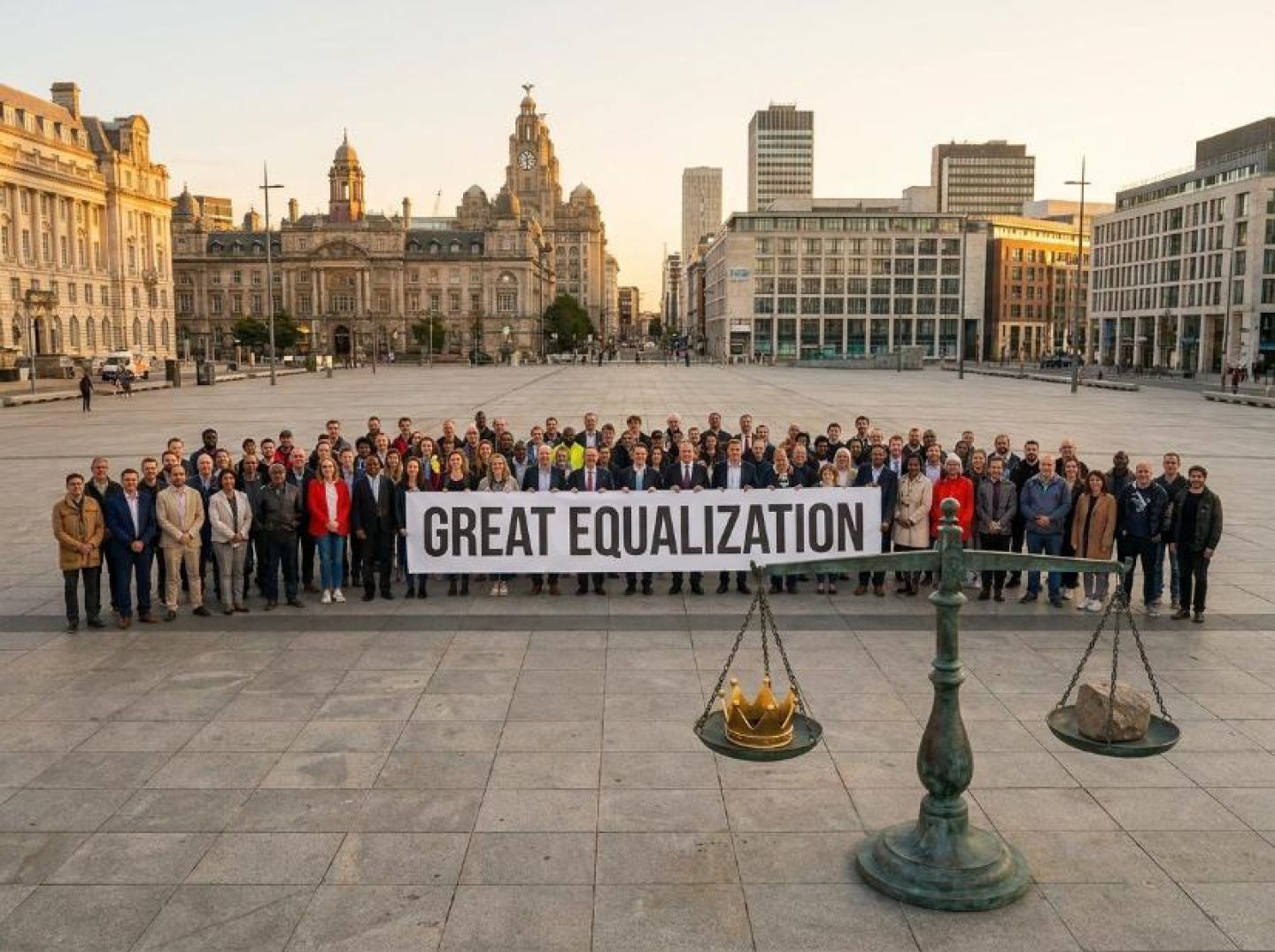
But here's the consequence nobody dwells on long enough: if your barrier to producing high-quality creative has collapsed, so has everyone else's. Every competitor in your category now has access to the same tools, the same models, the same near-zero marginal cost per asset. The result isn't a world where the best creative wins more easily — it's a world where the channels flood with competent-looking ads, and distinguishing signal from noise becomes the central strategic problem.
The platforms themselves are adapting in ways that intensify this pressure. Meta's Andromeda update, for instance, now treats hundreds of slight variations of the same ad as a single creative, which means the old playbook of spinning up minor tweaks to game the algorithm is dead. Advertisers need genuinely different variations — not just more of them. Volume without differentiation is just expensive noise.
And the problem extends beyond any single platform. When 71% of creators in a network are using AI tools to produce content at speed and that content is being distributed across dozens of platforms simultaneously, the traditional evaluation infrastructure — human panels, sequential A/B tests, quarterly brand-tracking surveys — stops working entirely. The machinery designed to separate good creative decisions from bad ones was built for a world where production was slow and distribution was controlled. Neither condition holds anymore.
Meanwhile, the quality floor isn't as uniformly high as the optimists suggest. As AdExchanger has documented, AI-generated creative operating inside performance-optimized systems can produce deeply problematic output — from hypersexualized imagery that no human creative director would approve, to AI-generated product reviews that blur the line between advertising and deception. When production costs drop to near zero and performance metrics become the only governor, the definition of "quality" gets dangerously elastic.
So the real picture is more complicated than the triumphant narrative suggests. Yes, anyone can now produce at scale. Yes, production costs have cratered. But the strategic challenge has migrated. It's no longer about whether you can make the ads — it's about whether you can tell which of those ads are actually doing something. The barrier to entry collapsed. The barrier to clarity skyrocketed. And for most teams, the measurement infrastructure hasn't caught up to the production capability, which means they're flying faster than ever with less visibility than they've ever had.
Consider the scale of what Unilever is actually attempting. The company has built a 300,000-creator network that spans dozens of platforms and hundreds of markets simultaneously. That's not a campaign. That's an entire media ecosystem operating under one brand umbrella — and when roughly 71% of those creators are using AI tools to produce content at speed, the volume of creative assets flowing through that ecosystem on any given day dwarfs what most brands produce in a year.
Now try to evaluate it using the tools marketers have relied on for decades.
Human review panels? They were designed to assess a handful of hero spots, not tens of thousands of creator-generated variations rolling out concurrently across TikTok, Instagram, YouTube, and a dozen regional platforms most Western marketers have never heard of. Sequential A/B testing? As Search Engine Journal reported in its analysis of the DAIVID and ADIN.AI partnership, A/B testing individual pieces of content across a network of that size is "logistically impossible." Traditional brand-tracking surveys? They tell you what happened last quarter, which is roughly as useful as checking the weather forecast for a storm that already passed.
The problem isn't laziness or a lack of sophistication. Most marketing organizations are staffed by sharp people running rigorous processes. The problem is that those processes were architected for a world where a brand might run ten campaigns per quarter, and the competitive set might run a comparable number. In that world, a skilled media director could maintain a reasonable mental model of what was working, what competitors were doing, and where to allocate the next dollar.
That world no longer exists. Leading advertisers are now deploying continuous creative optimization loops in which AI evaluates engagement signals and automatically evolves messaging — testing and adapting hundreds of variations simultaneously rather than sequentially. When your own brand is generating creative at that velocity, human intuition doesn't augment the process; it becomes a bottleneck. No individual, no matter how experienced, can observe hundreds of in-market variations across multiple platforms, synthesize the performance data, and form a reliable judgment about what's actually driving results before the budget has already shifted.
Now extend that logic outward. If you can barely evaluate your own creative output at this scale, how are you supposed to monitor what your competitors are doing? Competitive intelligence used to mean subscribing to an ad-tracking service, reviewing a competitor's latest television spots, and adjusting your positioning accordingly. But when every brand in your category is using the same generative tools to produce the same exponential volume of creative, the competitive landscape becomes functionally unobservable through traditional means. You're not tracking five rival campaigns anymore. You're trying to track five rivals each running hundreds of variations, each adapting in real time, each targeting micro-segments you may not even know exist.
This is the structural gap that no amount of hiring or process refinement can close. The dataset has exceeded what any human team can observe, let alone interpret. And the brands that recognize this aren't just investing in better creative — they're investing in the measurement and evaluation infrastructure that makes operating at this volume governable in the first place.
Most of the conversation around AI slop focuses on the consumer side — the brand-safety risks, the uncanny valley aesthetics, the growing backlash from audiences who can spot machine-generated creative at a glance. And those concerns are real. As AdExchanger has documented, roughly 30% of Gen Zers and millennials now feel negatively about AI-generated ads, nearly double the figure from 2024. Even ad professionals aren't immune to the discomfort — Liam Kristinnsson, head of programmatic strategy at DISH Media, has admitted that he finds himself wishing the "people" in AI-generated ads were real.
But there's a strategic dimension to the slop problem that almost no one is addressing: the way it poisons competitive intelligence.
Think about what competitive analysis used to look like. You'd monitor a rival's ad library, track their messaging across a handful of channels, note when they launched a new creative concept or shifted their positioning. The signal-to-noise ratio was manageable because production costs acted as a natural filter. If a competitor ran an ad, it likely represented a deliberate strategic choice — someone had approved a budget, briefed a team, and decided that message was worth putting into market. You could reasonably assume that what you saw reflected intent.
That assumption is now dangerously outdated. When brands are deploying continuous creative optimization loops where AI evaluates engagement signals and automatically evolves messaging in real time, a significant portion of what shows up in a competitor's ad library isn't a strategic decision at all. It's algorithmic exhaust — variations generated to feed platform volume demands, tested briefly, and discarded without ever reflecting a conscious directional choice by a human strategist. The competitor's ad library, which used to be a relatively clean window into their thinking, is now cluttered with the creative equivalent of junk DNA.
This creates a paradox for competitive intelligence teams. You have more data than ever about what your rivals are running, but less clarity about what any of it means. Is that new messaging angle a genuine repositioning effort you need to respond to, or is it one of two hundred AI-generated variations that ran for thirty-six hours before being killed? Is a competitor's sudden push into video testimonials a strategic bet, or just an algorithm testing formats on its own? With U.S. businesses expected to spend $57 billion on AI-powered advertising this year, the sheer volume of machine-generated creative in market is only going to compound the problem.
The danger isn't just that you might miss a real signal buried under the noise. It's that you might overreact to a false one. Reacting to algorithmic filler — reallocating budget, shifting messaging, rushing to match a creative approach that your competitor never actually committed to — is a costly mistake that looks responsible in the moment. You saw something in the market. You responded. But you responded to nothing, and in doing so, you burned resources and possibly abandoned a positioning strategy that was actually working.
The definition of what counts as "premium" is already blurring as engagement metrics increasingly trump production value. That same blurring is happening in competitive intelligence: the distinction between strategic intent and algorithmic noise is collapsing, and most teams don't yet have frameworks to tell the difference. The brands that build those frameworks first won't just run better ads. They'll make better decisions about which competitor moves deserve a response — and which ones deserve to be ignored.
The infrastructure that DAIVID and ADIN.AI have built to govern a brand's own creative pipeline — what Search Engine Journal describes as a "live loop between creative intelligence and media execution" — is precisely the infrastructure that competitive intelligence now demands. The same capabilities that let a marketer score creative before launch, scale winners mid-flight, and bank historical performance data as benchmarks are exactly what's needed to make sense of what every other brand in your category is doing at machine speed. The only difference is the direction of the lens.
Think about what the competitive landscape actually looks like right now. Every serious advertiser is flooding channels with AI-generated variations. Meta's algorithm rewards creative volume and genuine novelty, which means competitors aren't running three ads anymore — they're running thirty or three hundred, with continuous testing to find winners and scale. Periodically auditing a rival's ad library tells you what they published last month. It tells you nothing about which of those hundreds of creatives actually moved the needle, which were paused after forty-eight hours, and which scaled to seven figures of spend. The static snapshot is dead. What replaces it is exactly the kind of real-time scoring and performance-linking system that DAIVID CEO Ian Forrester identified as the solution to creative being "measured in isolation, disconnected from media results."
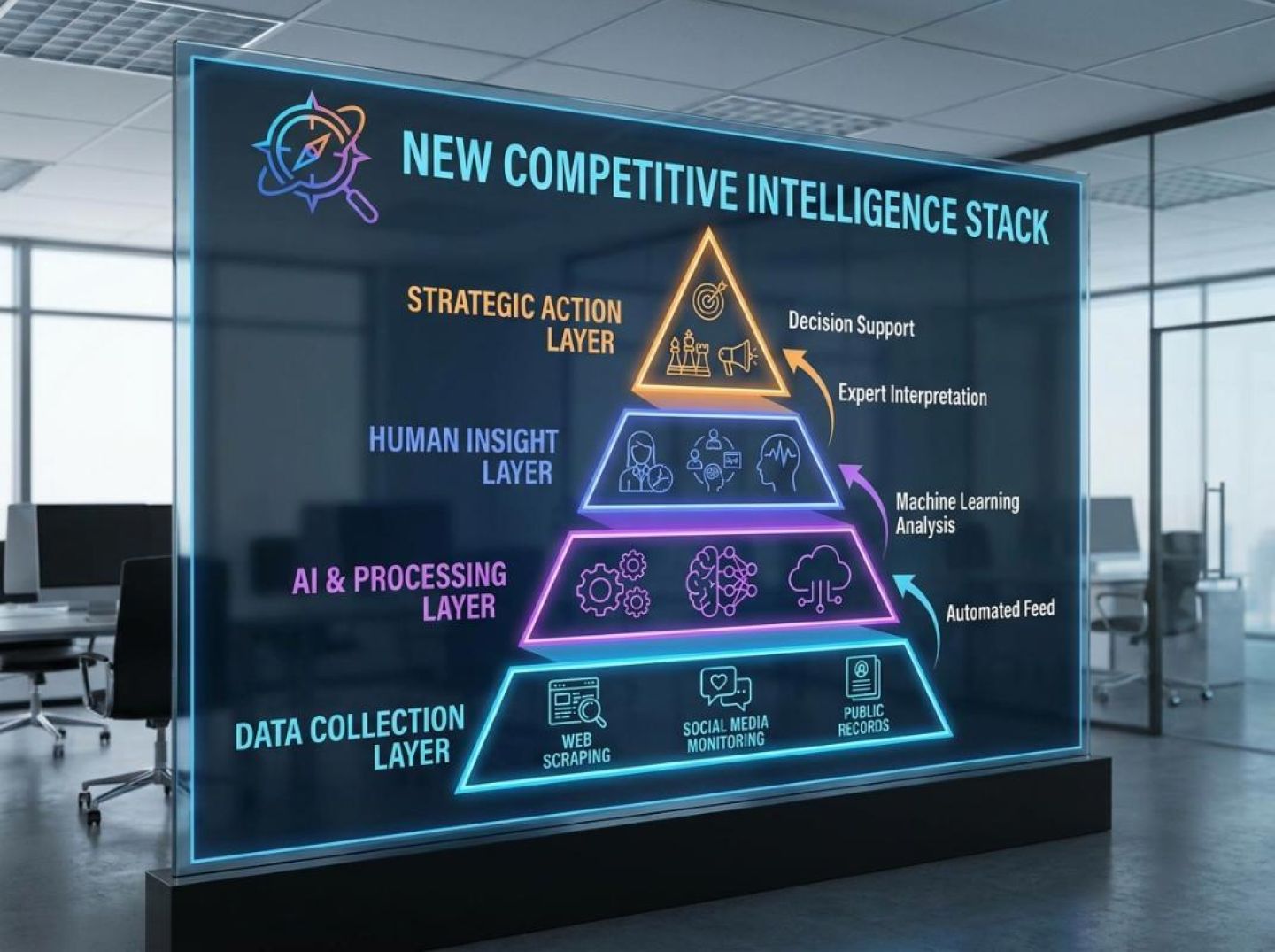
Apply that logic outward. An effective competitive intelligence stack in 2026 needs to do three things simultaneously. First, it needs to ingest creative at scale — not sampling a competitor's top-performing ads manually, but continuously capturing the full breadth of what's running across platforms, formats, and markets. Second, it needs to score that creative against performance signals: estimated spend velocity, duration in market, engagement patterns, frequency scaling, and platform-specific distribution signals that indicate algorithmic favor. Third, and most critically, it needs to surface patterns — the structural elements, hooks, visual treatments, and messaging frameworks that separate genuine winners from the overwhelming mass of mediocre AI-generated noise.
This is where the competitive intelligence problem mirrors the internal creative governance problem almost perfectly. When your own brand is producing hundreds of AI-generated variations, you need automated signal extraction to know which creative patterns actually drive outcomes. When your competitors are doing the same thing, you need that identical capability pointed at them. The brands that build this outward-facing interpretation layer gain something that no amount of traditional competitor monitoring can provide: a real-time read on which creative strategies are actually working in the market, not which ones merely exist.
The alternative is what most brands are still doing — treating competitive intelligence as a periodic exercise conducted by humans scrolling through ad libraries and assembling PowerPoint decks. That approach was already inadequate when competitors ran a dozen campaigns a quarter. In an environment where AI enables the kind of volume and velocity we're now seeing, it's not just slow. It's functionally blind. You're trying to read a battlefield with binoculars when the battlefield is moving at machine speed.
The brands that gain a genuine competitive edge won't just be the ones producing better AI-generated creative. They'll be the ones who build the continuous, automated intelligence layer that tells them — in something close to real time — what "better" actually looks like across the entire competitive landscape, and who's already figured it out before they did.
Here's the subtlest trap in the AI-ad era, and it has nothing to do with creative quality: the metrics that feel most reassuring are the ones most likely to mislead you.
AI-generated creative is extraordinarily good at producing engagement. Clicks, views, shares, saves — generative tools can optimize for all of them with remarkable efficiency. A well-prompted image model can produce thumb-stopping visuals in seconds. A well-tuned copy agent can iterate headlines until click-through rates spike. But engagement and conversion are diverging, and the gap between them is where competitive intelligence goes to die.
The problem is structural. Platforms like Meta reward engagement because engagement keeps users on-platform. Their algorithms surface creative that generates interaction, and AI tools — trained on those same feedback signals — have become increasingly adept at producing exactly the kind of content the algorithm wants to amplify. The result is a system that selects for attention, not action. An ad can accumulate impressive engagement metrics while driving negligible downstream revenue. And because Meta's Andromeda update now treats slight variations of the same ad as a single creative, the old trick of flooding the zone with near-identical variants to game engagement signals no longer works either. The platform demands genuinely different creative — but "different" in a way that captures attention is not the same as "different" in a way that converts.
This creates a specific danger for competitive intelligence. When you're watching competitors, the signals that are easiest to observe — ad spend estimates, creative volume, engagement rates, share counts — are precisely the signals most susceptible to this distortion. A competitor running high-engagement, low-conversion creative looks like they're winning. Their ads appear everywhere. Their estimated spend is climbing. Their creative library is enormous. But none of that tells you whether anyone is actually buying.
The most dangerous competitive error in this environment isn't ignoring your competitors. It's misreading their results.
The real edge comes from reading the signals that correlate with conversion rather than engagement — and those signals are almost always indirect. Creative longevity is one: an ad that runs for weeks or months is almost certainly converting, because no media buyer keeps spending on creative that doesn't pay back. Spend scaling patterns matter too: when a competitor gradually increases budget behind a specific creative or campaign, that's a far stronger signal of performance than raw volume. Variant evolution tells a story — when you see a competitor iterating on a specific angle, refining the hook while preserving the core offer, that suggests they've found something that works and are optimizing around it. Landing page changes are another underappreciated signal: if a competitor redesigns a landing page to match a specific ad's messaging, they're investing in the conversion path, not just the click.
As MarTech has argued, the future of advertising belongs not to the brands producing the loudest ads but to those delivering the most useful answers at the right moment. The same principle applies to competitive intelligence. The loudest competitor — the one with the most visible creative, the highest estimated spend, the most engagement — may not be the one actually winning. Autonomous optimization agents are already lowering acquisition costs for early adopters by making decisions that prioritize conversion efficiency over surface-level metrics, which means the competitors you should worry about most may be the ones whose ads you barely notice.
The discipline, then, is resisting the gravitational pull of visible signals. In a landscape flooded with AI-generated creative optimized for engagement, the ability to infer conversion-level performance from behavioral patterns — not vanity metrics — is what separates strategic intelligence from expensive noise.
Receive top converting landing pages in your inbox every week from us.
Quick Read
OOH is increasingly becoming a measurable performance channel, but many industry roles are still built around selling inventory rather than outcomes. This guide explores how OOH careers can evolve toward performance marketing through attribution, ad intelligence, funnel design, landing-page data, and measurable campaign optimization.
David Kim
7 minSep 20, 2026
Featured
Testing only inside Google Ads and TikTok can hide platform bias, attribution problems, and misleading performance signals. This guide shows how to combine spy-tool intelligence with controlled experiments across Google, TikTok, Native, Push, and Pops to identify which creative and funnel patterns actually drive incremental results.
Priya Kapoor
7 minSep 18, 2026
Editor’s Pick
Generic AI output is becoming easier to recognize and harder to differentiate in performance marketing. This guide shows how to turn competitor spy data into structured AI inputs, build expert-backed creative workflows, and generate original ads that use market intelligence without copying competitors.
Marcus Chen
7 minSep 18, 2026