10 minSeptember 20, 2026

Our tools monitor millions of native, push, pop, and TikTok advertising campaigns.
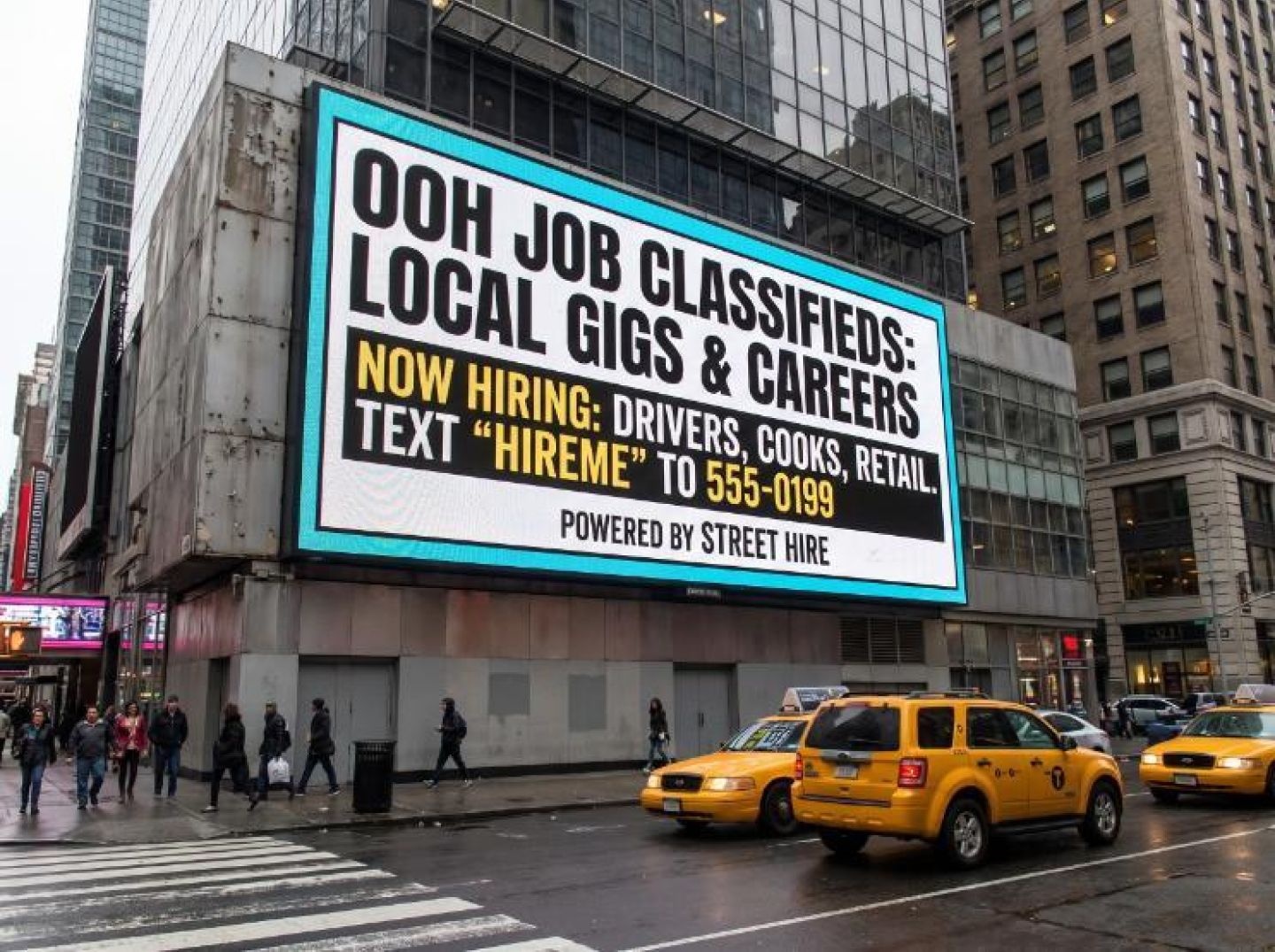
Get StartedOut-of-home job boards read like a time capsule. Scroll through the latest classifieds and you’ll see a familiar parade of titles: Account Executive – Billboard Ad Sales, Sign Installer, LED Video Screen Service & Installation Tech, Printing Services. The listings on sites like OOH Today’s employment board are stacked with roles selling faces, installing structures, servicing LEDs, and managing local markets. A Business Development Representative in New York is hired to pitch “digital spectacular signage” and wallscapes; a General Manager in Green Bay is expected to bring “billboard industry experience” to oversee a classic roadside portfolio, as another OOH classifieds roundup makes clear.
It’s a world still organized around metal, vinyl, and market territories.
Meanwhile, the rest of advertising is hiring for a different language entirely. On digital job boards, growth teams want media buyers who can optimize TOFU/MOFU/BOFU funnels, turn CAC into a board metric, and defend ROAS in a budget meeting. They’re less interested in who can “sell boards” and far more obsessed with who can turn intent data into attributable revenue. The titles may be similar—Account Executive, Media Buyer, Growth Lead—but the expectations are completely different: one side is trained to hit quarterly sales quotas on inventory, the other to pull levers on performance.
That disconnect isn’t just cosmetic. It signals how OOH still markets itself—internally and externally—as a legacy inventory business rather than a performance channel.
Look closely at the language in OOH roles and it becomes obvious. A Business Development Representative posting promises access to “digital interactive kiosks” in lifestyle centers and large-format spectaculars in entertainment districts. Another listing highlights mobile billboards, truck sides, and experiential activations. These are powerful placements, but they’re framed as products to be sold—not as data-rich, testable inputs in a customer acquisition machine. Even senior leadership roles like the General Manager position at Link Media Outdoor emphasize market oversight and billboard operations, not the ability to model incrementality or tie impressions to conversions.
In digital, that would be unthinkable. A head of performance who doesn’t talk about attribution, cohort retention, or cross-channel lift wouldn’t get past the first interview.
The irony is that out-of-home is sitting on some of the most potent real-world intent data available. Owners of digital kiosks in shopping districts know exactly when high-value foot traffic spikes. Operators of place-based networks in gyms, bars, and office towers can map messaging to routines and micro-moments. Transit and roadside operators can correlate dayparts, routes, and contextual creative with store visits and app activity. The same “high profile digital interactive kiosks” and “lifestyle center networks” described in OOH Today’s classifieds are, in practice, dense streams of behavioral signals waiting to be plugged into performance models.
Yet the talent being recruited to run these assets is rarely asked to think in terms of funnel stages, cost per incremental visit, or multi-touch attribution. They’re hired to sell space, not outcomes.
That’s the quiet, compounding opportunity hiding in plain sight. As privacy pressures squeeze digital identifiers and paid social gets more expensive and less predictable, marketers are desperately searching for measurable, brand-safe, real-world channels that can move the needle on performance. OOH has the inventory, the locations, and increasingly the technology. What it lacks—judging by how the industry still writes its job descriptions—is a workforce that is explicitly positioned, trained, and compensated as performance marketers.
The gap between “billboard sales” and “performance media” isn’t a matter of buzzwords. It’s a strategic blind spot. For OOH companies, it means underselling what their networks can do in a world obsessed with measurable growth. For OOH professionals, it means leaving money and career mobility on the table by clinging to titles and skill sets that recruiters outside the industry don’t recognize as part of the performance ecosystem.
This is the inflection point: either OOH keeps hiring like it’s selling signs, or it starts recruiting and retraining as if it’s running one of the most powerful offline performance channels on earth. The job boards haven’t caught up yet—but the market is about to force the issue.
Scroll through a recent batch of out-of-home classifieds and you can almost hear the rustle of newsprint. The roles clustered on OOH Today’s employment board read like a roll call of traditional OOH: Account Executive – Billboard Ad Sales, Sign Installer, LED Video Screen Service & Installation Tech, Printing Services. Another weekly roundup of “12 OOH Employment Opportunities” features a familiar mix of General Manager, Sales Manager – Outdoor Advertising, Ad Sales Account Executive, and Sales Representative positions, alongside real-estate and operations titles anchored in “billboard industry experience required,” as one Link Media Outdoor listing puts it.
Taken together, these listings reveal an industry that still defines itself first and foremost by its physical inventory and its sales force. The most common job archetype is fundamentally about selling space: Business Development Representative (Media Sales) for a company like Liquid Outdoor Media, National Account Executive at SILVERCAST Media, Local Media Sales Executive at Social Indoor, Ad Sales Account Executive for EyeCatch Media. The verbs are telling: “take your career to new heights,” “expanding its sales team,” “heavily on new business development,” “results-oriented leader.” This is the language of territory, hustle, and relationship-driven selling, not the language of attribution windows, conversion lift, or multi-touch models.
Even when the roles move beyond pure sales, they remain anchored in the physical plant of OOH. Positions like Sign Installer and LED Video Screen Service & Installation Tech at Formetco underscore how much organizational energy is still devoted to hardware—structures, screens, and service routes. Real-estate roles such as VP/Director/Associate – Real Estate at Red Rock Outdoor, featured in the August classifieds roundup, focus on securing locations, permitting, and market coverage. These are all essential disciplines, but they orbit around the asset, not the outcome.
Creative and marketing roles echo the same mindset. A posting for a Graphic Designer/Brand Marketing Specialist – OOH at SILVERCAST highlights brand storytelling and visual impact, aligning with an era when OOH success was measured by “does it pop from the highway?” rather than “does it reduce customer acquisition cost?” Even the “free agent” section, where individuals list themselves as available, is organized along legacy craft lines: printing, mobile billboards, photos, truck sides, experiential. On the surface, that variety feels modern and diversified. Underneath, it’s still framed as a menu of formats and services—not a portfolio of performance capabilities.
What’s striking is not just what’s present, but what’s missing. In roundups that span sales, operations, creative, printing, and real estate, you’ll rarely see titles like Growth Marketer, Attribution Analyst, Head of Performance, or even Marketing Operations. The word “programmatic” is conspicuously absent from many of these employment listings, despite the rapid rise of programmatic DOOH across the broader ad-tech ecosystem. You see “Digital” and “Experiential” framed as descriptors of inventory—digital spectacular signage, interactive kiosks, on-site activations—not as signals of data-driven, closed-loop marketing.
This doesn’t mean the industry is asleep at the wheel. If anything, the detailed descriptions for roles like the Green Bay General Manager at Link Media Outdoor, which emphasizes leading “a high-performing team” in “a rapidly expanding organization,” or the Liquid Outdoor Media sales role, which targets “larger regional advertisers and ad agencies across key markets,” show that OOH companies understand they’re competing in a more sophisticated, national marketplace. The focus on lifestyle centers, entertainment districts, and experiential activations in Liquid Outdoor’s own description shows a clear awareness of where brand budgets are headed.
But the job taxonomy still reveals a mindset: success is defined as filling screens and boards, growing markets, and adding more locations. Data, measurement, and performance are implicit at best, buried under labels like “innovative digital” or “sponsorship opportunities.” If you’re a marketer used to dashboards overflowing with ROAS and LTV metrics, these classifieds feel like a parallel universe—one where the most important qualification is still “billboard industry experience required,” and where the pathway into OOH runs through physical inventory and sales quotas long before it touches performance marketing.
If Section 1 is about reading the classifieds as a cultural artifact, this section is about reading the subtext: the skills that used to close OOH deals no longer match the way marketing budgets get approved.
For decades, “location and impressions” were the entire value proposition. A rep could point at a board on the interstate, cite traffic counts, and expect the client to take it on faith that reach would translate into results. The job titles clustered in the recurring “Employment Listings” on OOH Today’s classifieds — General Manager – Outdoor, Sales Manager – Outdoor Advertising, Account Executive – Billboard Ad Sales — are built around that model. They assume that if you can secure locations, sell impressions, and keep the steel and vinyl in good order, you can grow revenue.
The problem is that most modern marketers don’t buy media that way anymore.
On the client side, budgets are increasingly controlled by performance marketers who live inside dashboards all day. They are trained to think in cost per acquisition, cost per lead, and return on ad spend — not “10 million weekly impressions near a busy highway.” In a world where a paid search manager can log into Google Ads and see exactly how many purchases yesterday’s campaign drove, “your board is on a great corner” sounds like a vague promise.
Look again at the roles promoted across multiple issues of OOH Today’s employment board. You see Sales Representative, National Account Executive, Local Media Sales Executive, Real Estate VP/Director/Associate, Sign Installer, LED Video Screen Service & Installation Tech. What you do not see are titles like Attribution Analyst, Marketing Data Strategist, Performance Marketing Manager, or Measurement Lead – OOH. The center of gravity is still hardware, inventory, and relationships — not attribution, incrementality, or cross-channel optimization.
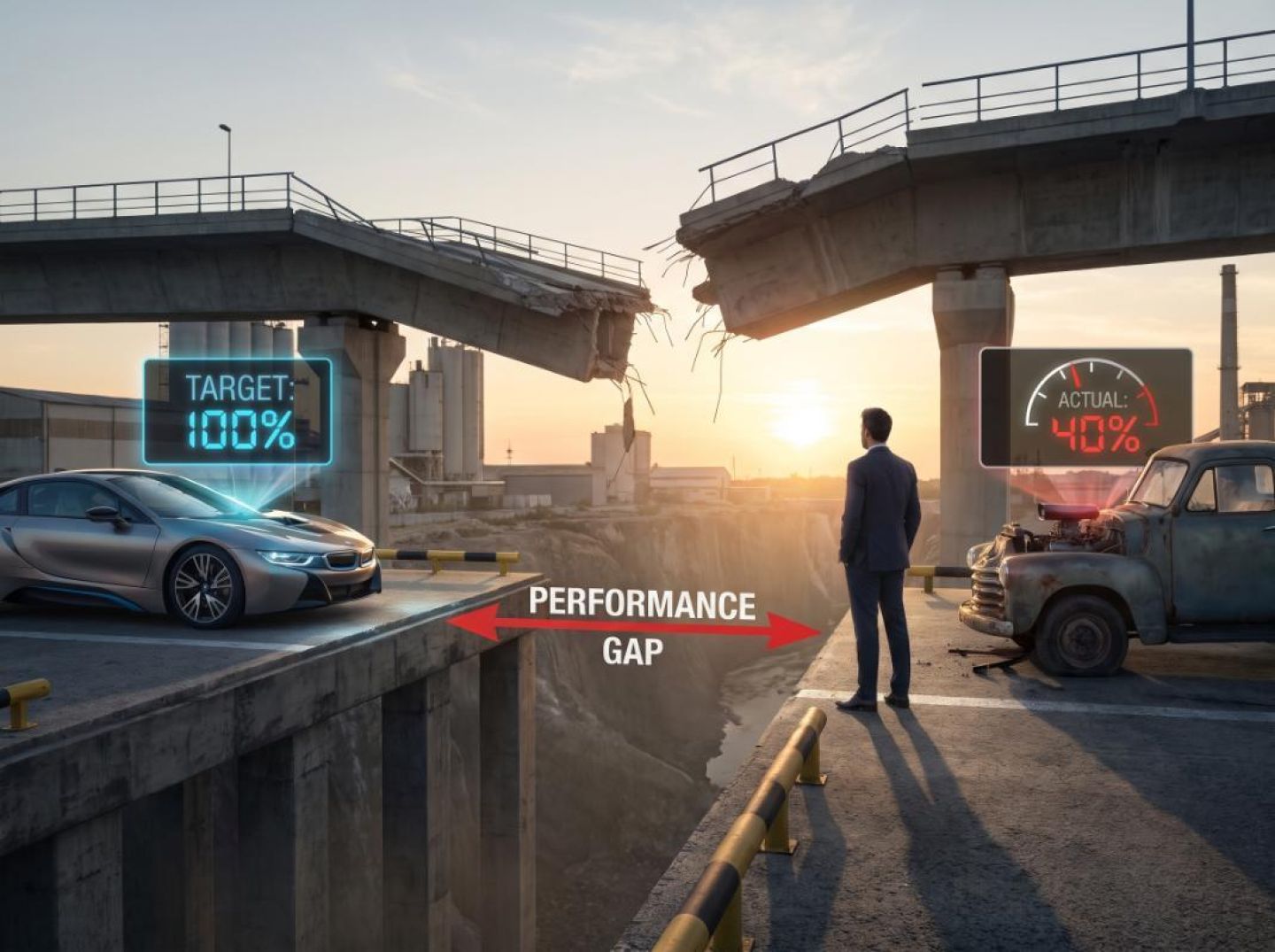
That’s the performance gap.
Digital channels filled that gap years ago. A social media buyer can A/B test creative, pause underperforming ad sets, and feed the learnings back into strategy in real time. A search marketer can see which keywords drove sales by the hour. A programmatic trader can target specific audiences and optimize bids based on conversion data. These are not abstract “impressions”; they are measurable, attributable outcomes.
OOH, by contrast, still tends to pitch on reach and presence. Even when networks install high-tech screens and smart furniture, the jobs around them — from Director of Operations to Graphic Designer/Brand Marketing Specialist – OOH listed in the same classified roundups — are mostly about keeping the assets running and making them look good, not proving how they move the numbers inside a client’s CRM. It is telling that “Billboard industry experience required” is a recurring phrase in leadership listings, while experience with attribution platforms, MMM, or multi-touch analytics is rarely (if ever) mentioned.
This disconnect shows up most painfully at the moment of budget justification. A CMO who has to explain to a CFO why they’re shifting dollars from a fully trackable paid social campaign into an OOH buy cannot walk into that meeting with “location, frequency, and a great rate” as their only talking points. They need to show how those boards drive search lift, brand queries, store visits, app installs, or online sales. If their OOH partner cannot help them bridge that gap — with data, experiments, and clear hypotheses — the money will default back to the channels that can.
In other words, the competitive set for OOH is no longer just other OOH providers. It is the Facebook rep, the Google partner manager, the programmatic DSP, the influencer agency — all of whom speak fluently about KPIs, testing, and optimization. As long as OOH talent pipelines are optimized for selling square feet of steel rather than outcomes on a dashboard, “location and impressions” will keep opening conversations but fail to close the biggest, most strategic deals.
The opportunity, and the looming threat, is simple: the brands are ready to treat OOH as a performance channel. The question is whether the people selling, operating, and leading in OOH are ready to meet them there.
On paper, the jobs on OOH Today’s employment board still look like the industry we’ve always known: sales reps, installers, operations, the occasional general manager. But if you look just beneath the titles, the real story is how the work itself is sliding from “sell space” to “prove performance” — and ad intelligence tools are the rails that make that transition possible.
The traditional OOH value chain was linear and physical: find locations, sell locations, maintain locations. A Sales Manager in Southern Illinois or a General Manager in Green Bay, like the roles listed for D.O.T. Outdoor and Link Media Outdoor on OOH classifieds, would focus on occupancy, rate cards, and relationships with local advertisers. Once the contract was signed, the “measurement” was essentially a traffic count and a handshake.
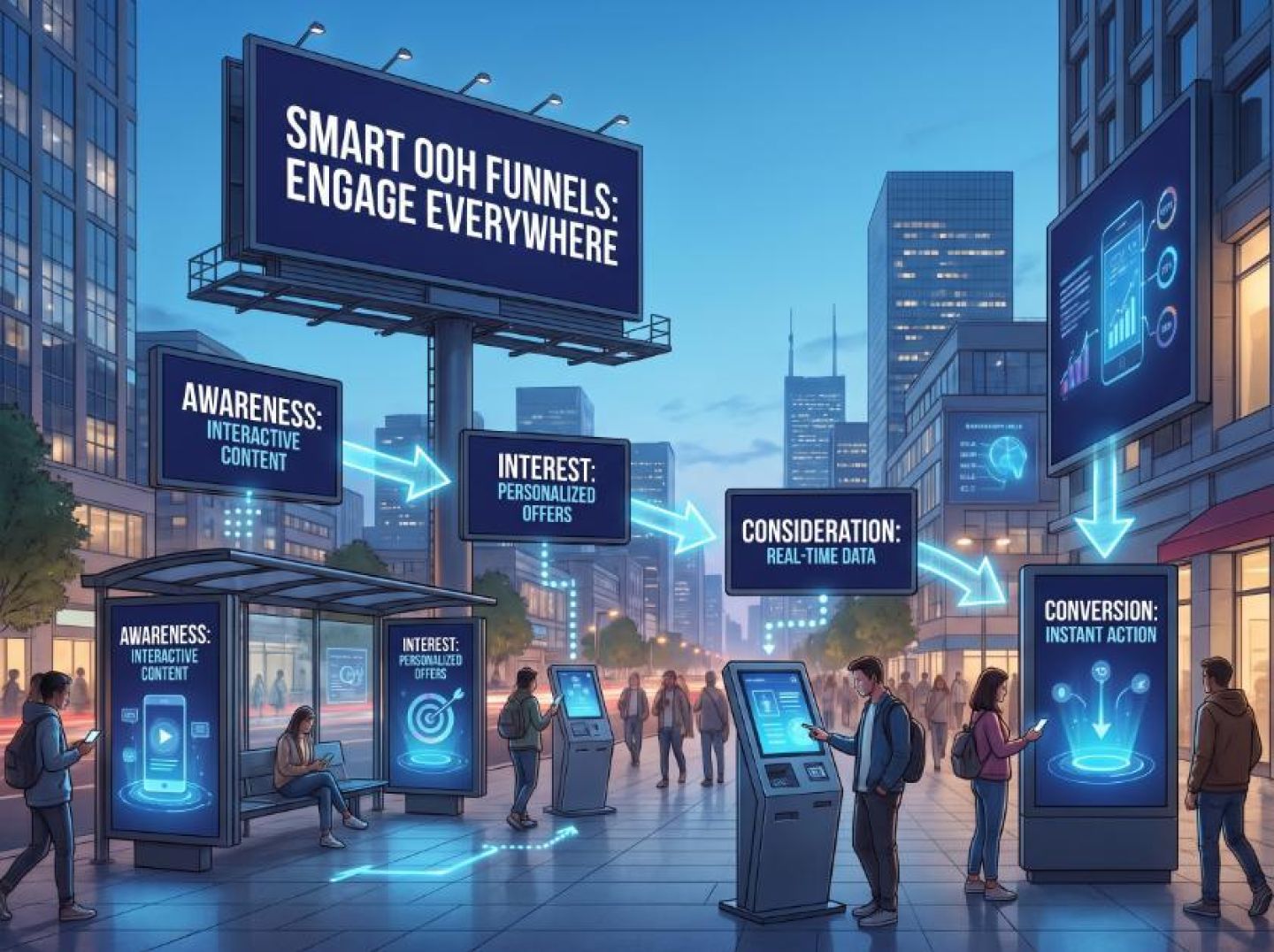
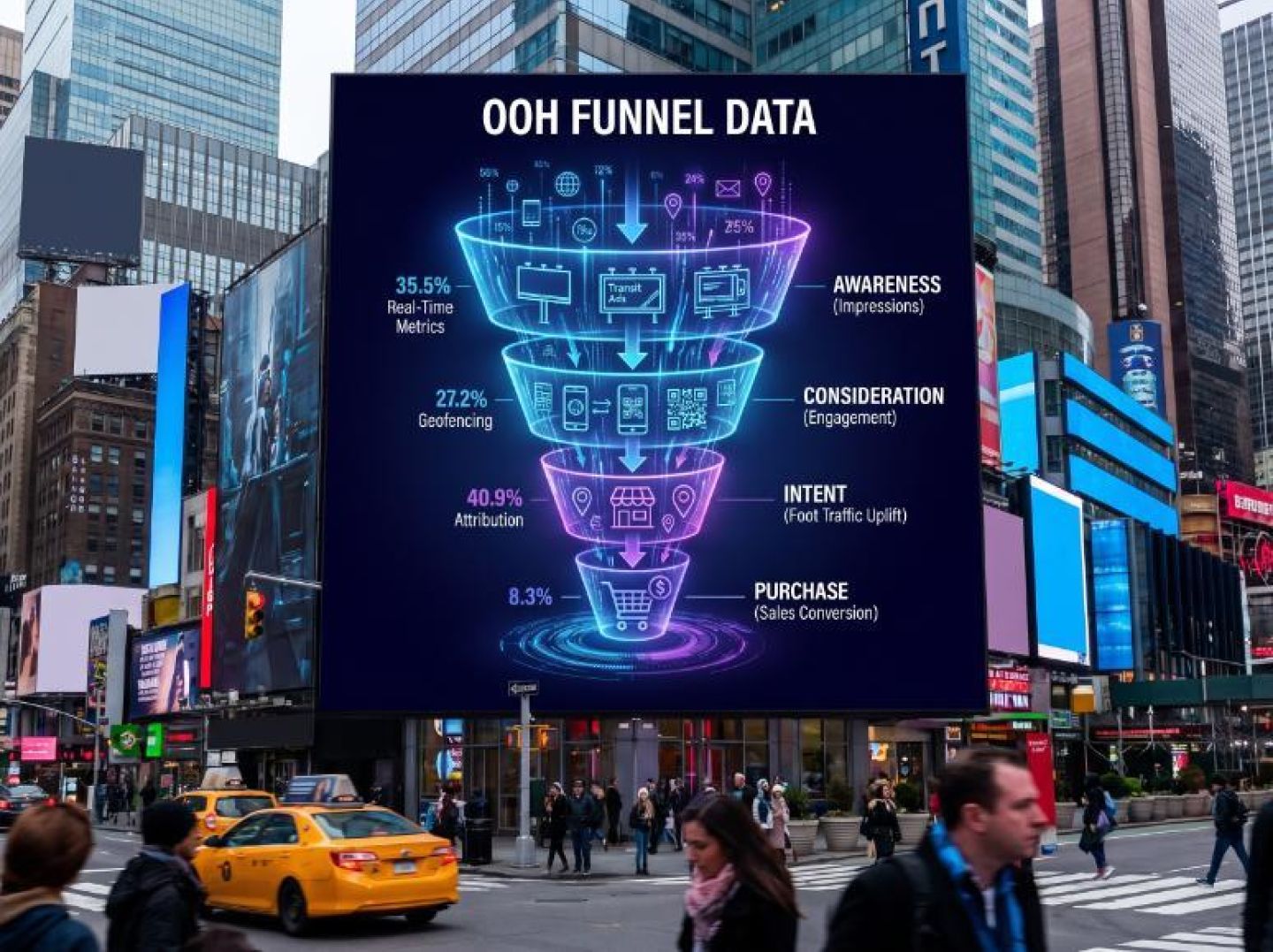
ad intelligence tools rewrite that script by inserting a full funnel between the steel structure and the signed IO. Instead of pitching “a billboard on I‑95,” reps are increasingly expected to walk into the room with modeled reach, audience segments, mobile retargeting plans, and projected business outcomes. OOH inventory becomes the top of a measurable funnel, not the end of the story.
The companies hiring for “Business Development Representative (Media Sales)” in New York or “Ad Sales Account Executive” in Miami, as described in Liquid Outdoor Media’s and EyeCatch Media’s listings, are tacitly acknowledging this shift. These roles are framed around “new business development” with larger regional advertisers and agencies — code for clients who expect performance dashboards, not just proof-of-posting photos. Those reps will be judged on their ability to plug static and digital faces into a broader, data-driven media plan.
Here’s where ad intelligence tools bridge the gap:
4. Making creative testable, not just visible.
Once placements are tied to measurable outcomes, creative stops being a fixed vinyl and becomes a variable. Digital spectaculars and indoor networks, like those sold by Social Indoor or SILVERCAST Media in the OOH employment listings, can run A/B tests on copy, offers, or dayparts and see which variant drives more store visits or site traffic downstream. The “Graphic Designer/Brand Marketing Specialist – OOH” is no longer just making it “pop”; they’re designing assets that live inside an optimization loop.
4. Feeding the dashboards clients actually use.
Marketers don’t budget in isolation. They compare CPA, ROAS, and incremental lift across channels. Ad intelligence tools give OOH data outputs that can sit next to paid search and social: impression delivery validated by third parties, device-based visitation lift studies, modeled brand lift. When a Local Media Sales Executive in Denver can walk into a meeting with dashboards that speak the same language as the client’s performance marketing stack, they’re no longer “the billboard person”; they’re part of the growth team.
This doesn’t mean everyone in OOH suddenly needs to become a data scientist. It does mean that the value of every role — from Account Executive to Director of Operations — increasingly depends on whether the company’s infrastructure can trace a line from board to behavior. The quiet revolution is that the tech stack, not the skyline, is becoming the real competitive advantage. In the next section, we’ll look at how that reality is reshaping the job descriptions themselves, and why OOH veterans may be closer to performance careers than they think.
Look closely at today’s “traditional” OOH postings and you can already see the outlines of hybrid performance roles peeking through the old titles. Job ads for “Business Development Representative (Media Sales)” and “Local Media Sales Executive” on OOH Today’s employment board still lean on familiar language—relationships, territory growth, closing new business—but the actual expectations sit much closer to digital performance marketing than legacy billboard sales.
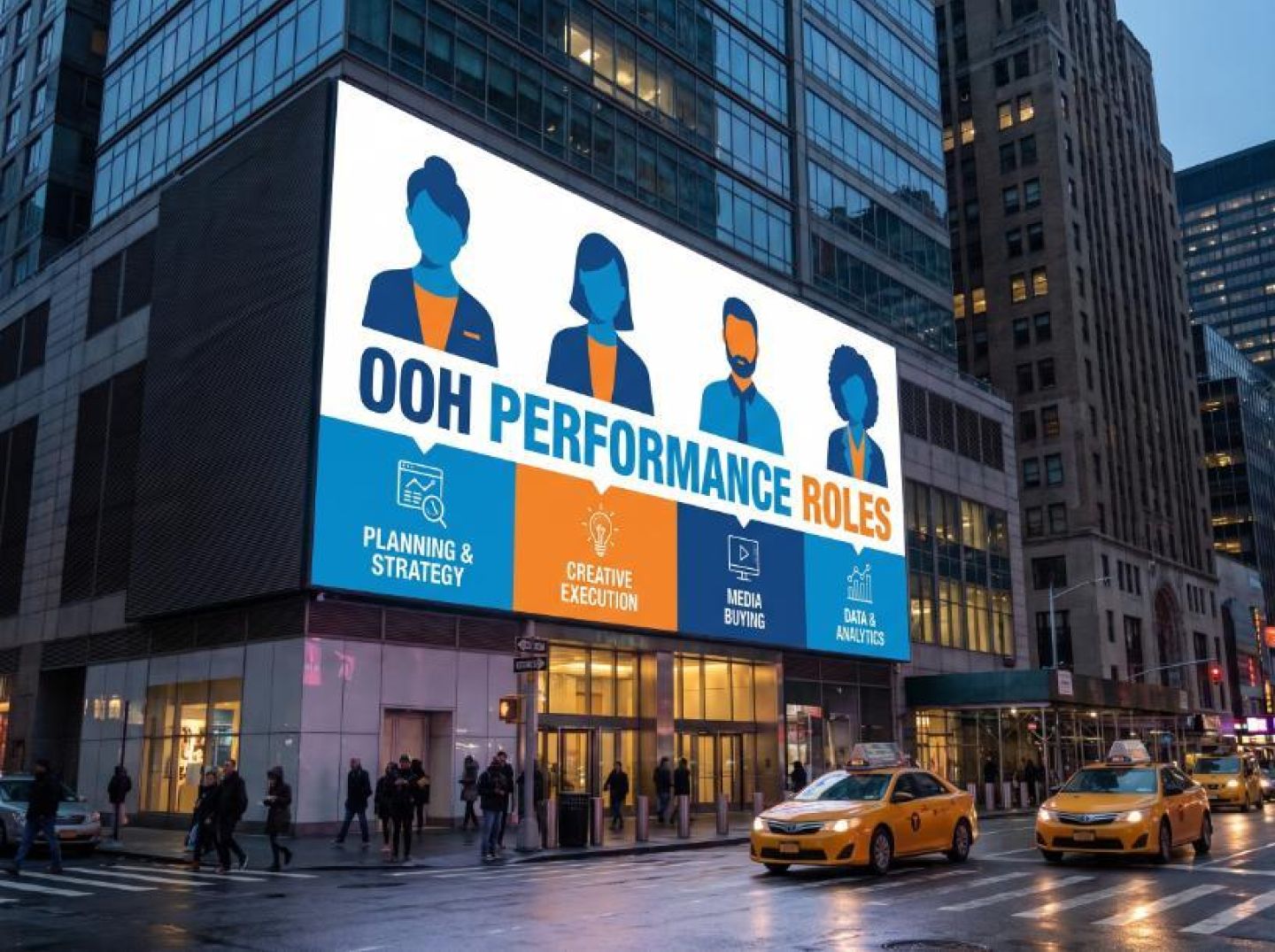
The real shift is this: OOH careers are no longer about selling surfaces; they are about selling outcomes. To stay relevant in a performance-driven budget process, OOH roles have to be redefined around three core responsibilities: architecting measurable campaigns, interpreting data for non-OOH buyers, and feeding results back into a broader media mix.
First, OOH sellers need to act like funnel designers, not just inventory brokers. When a “Business Development Representative” is tasked with pitching a mix of digital kiosks, large-format spectaculars, and experiential activations across a national footprint, as described in a posting for Liquid Outdoor Media’s sales role, they’re no longer just assembling a location list. They’re constructing an attention pathway: which formats drive awareness, which placements trigger mobile searches, which locations correspond with store visits or app installs. That is funnel thinking—and it aligns much more naturally with how performance marketers architect journeys than with how old-school OOH reps filled an avail grid.
Second, managers and executives are being hired to translate that funnel into language a CMO or performance director actually recognizes. A “General Manager” posting for a fast-growing OOH operator like Link Media Outdoor doesn’t just ask for billboard experience; it emphasizes leading a “results-oriented” team and driving a market’s growth. In a world where budgets are unlocked by spreadsheets, “results-oriented” can’t just mean hitting internal sales quotas. It has to mean equipping clients with tangible performance stories: incremental reach against a digital plan, uplift in branded search around key locations, or store traffic lifts correlated to flight dates.
That changes what a “good” OOH professional does every week. Instead of only prospecting and proposing packages, they now:
In that sense, the most valuable OOH sellers are becoming translators between the physical and digital performance worlds. They don’t merely say, “this board gets 1.2 million weekly impressions.” They say, “this cluster of screens will add incremental reach to your CTV buy and is measurable in the same multi-touch attribution platform your media team already uses.”
Organizationally, that means titles that look the same on paper start to behave differently in practice. A “Sales Manager – Outdoor Advertising” in a regional market might lead weekly pipeline reviews today, but in a hybrid future they also lead weekly performance reviews: which clients saw measurable lift, what targeting or creative patterns emerged, how those insights can be packaged for renewals, and which case studies should be built for the next RFP. A “Graphic Designer/Brand Marketing Specialist – OOH,” like the role described for SILVERCAST’s creative team, isn’t only responsible for bold visuals—they become a conversion-minded creative partner, testing layouts that make QR scans effortless or calls-to-action legible at real-world distances.
This hybridization also reorders career paths. Someone who starts in “billboard ad sales” now has a plausible trajectory into digital media strategy or growth marketing leadership, because they’ve learned to think in cohorts, attribution, and optimization cycles rather than one-off flights. Conversely, performance marketers who can speak credibly about physical-world context, traffic patterns, and zoning constraints suddenly have a competitive edge in omnichannel roles.
The job, in other words, is quietly being rewritten. The titles may still read “Account Executive” or “General Manager,” but the people who will thrive in these roles are those who treat every OOH placement as one line in a performance dashboard—and every campaign as a testable, optimizable part of a larger growth engine.
If Section 4 was about redefining roles, this is where those roles actually go to work. Integrating landing-page and funnel data into OOH isn’t a moonshot; it’s a process you can operationalize with today’s tools and tomorrow’s hires.
Start with the people and the pitch. When a seller in a “Business Development Representative (Media Sales)” role at a company like Liquid Outdoor Media prospects a regional advertiser, the conversation has to move immediately from “eyeballs” to “events.” Instead of “We’ll reach 1.2M weekly impressions,” the offer is “We’ll help you generate 5,000 incremental visits to this campaign-specific landing page and report what those visitors actually do.” That framing forces you to design the measurement stack before the first insertion order is signed.
A practical sequence looks like this:
1. Define the conversion hierarchy before creative. For a local bank, a “conversion” might be a pre-qualification form; for a QSR, it might be a coupon download; for a healthcare client, a completed appointment request. The Southern Illinois “Sales Manager – Outdoor Advertising” role described as results-driven in OOH Today’s job listings should be trained to walk clients through a simple funnel map: impression → visit → engaged session → lead or sale.
2. Create OOH-specific digital destinations. Never send OOH traffic to a brand’s generic homepage. Build lightweight, campaign-tagged landing pages or microsites with:
A Miami “Ad Sales Account Executive” selling for EyeCatch Media, the kind of role highlighted alongside national accounts in OOH Today’s classified board, should be walking into meetings with example landing-page templates for restaurants, auto dealers, and local attractions, not just spec art for billboards.
3. Instrument every possible path from board to browser. OOH response rarely comes from a single channel. Someone might:
Your job is to make all of these attributable. That means:
4. Structure analytics to reflect the OOH reality. Site analytics and CRM platforms are built for digital-first funnels, but they can be adapted. A Denver “Local Media Sales Executive” at Social Indoor, whose listing sits among other sales roles on OOH Today’s employment page, shouldn’t need to be a data scientist, but they should know how to:
The operations and marketing specialists behind those roles—including hybrid creatives like the “Graphic Designer/Brand Marketing Specialist – OOH” noted in OOH Today’s career roundups—can then use that instrumentation to tie design decisions and placements to concrete funnel outcomes.
5. Close the loop with simple, repeatable reporting. Clients do not need a data warehouse; they need a narrative. For each campaign, your dashboard should answer three questions in one page:
A Sales Manager or National Account Executive who can send a monthly recap email that says, “This network of six boards drove 3,214 visits to your loan-application page at a $27 cost per completed form,” will outperform the rep still talking about “viewability” and “wow factor.”
The playbook is not about turning OOH sellers into full-stack engineers. It’s about making sure every role—from front-line reps in New York to operations leaders in Denver, like those sprinkled across OOH Today’s classifieds—is aligned around one idea: billboards are no longer just media assets; they are triggers at the top of a measurable, optimizable funnel. The landing page is where that trigger becomes data, and the team that learns to own that junction will own the next decade of OOH revenue.
Receive top converting landing pages in your inbox every week from us.
Quick Read
OOH is increasingly becoming a measurable performance channel, but many industry roles are still built around selling inventory rather than outcomes. This guide explores how OOH careers can evolve toward performance marketing through attribution, ad intelligence, funnel design, landing-page data, and measurable campaign optimization.
David Kim
7 minSep 20, 2026
Featured
Testing only inside Google Ads and TikTok can hide platform bias, attribution problems, and misleading performance signals. This guide shows how to combine spy-tool intelligence with controlled experiments across Google, TikTok, Native, Push, and Pops to identify which creative and funnel patterns actually drive incremental results.
Priya Kapoor
7 minSep 18, 2026
Editor’s Pick
Generic AI output is becoming easier to recognize and harder to differentiate in performance marketing. This guide shows how to turn competitor spy data into structured AI inputs, build expert-backed creative workflows, and generate original ads that use market intelligence without copying competitors.
Marcus Chen
7 minSep 18, 2026