9 minAugust 8, 2026

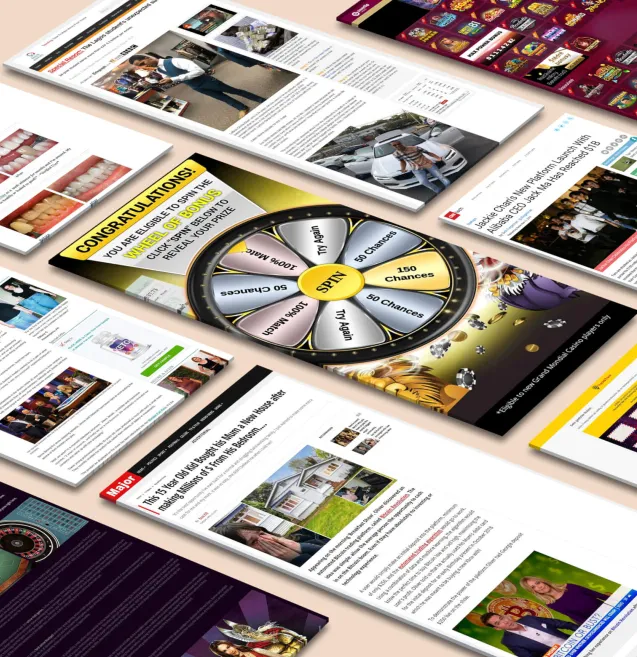
Our tools monitor millions of native, push, pop, and TikTok advertising campaigns.
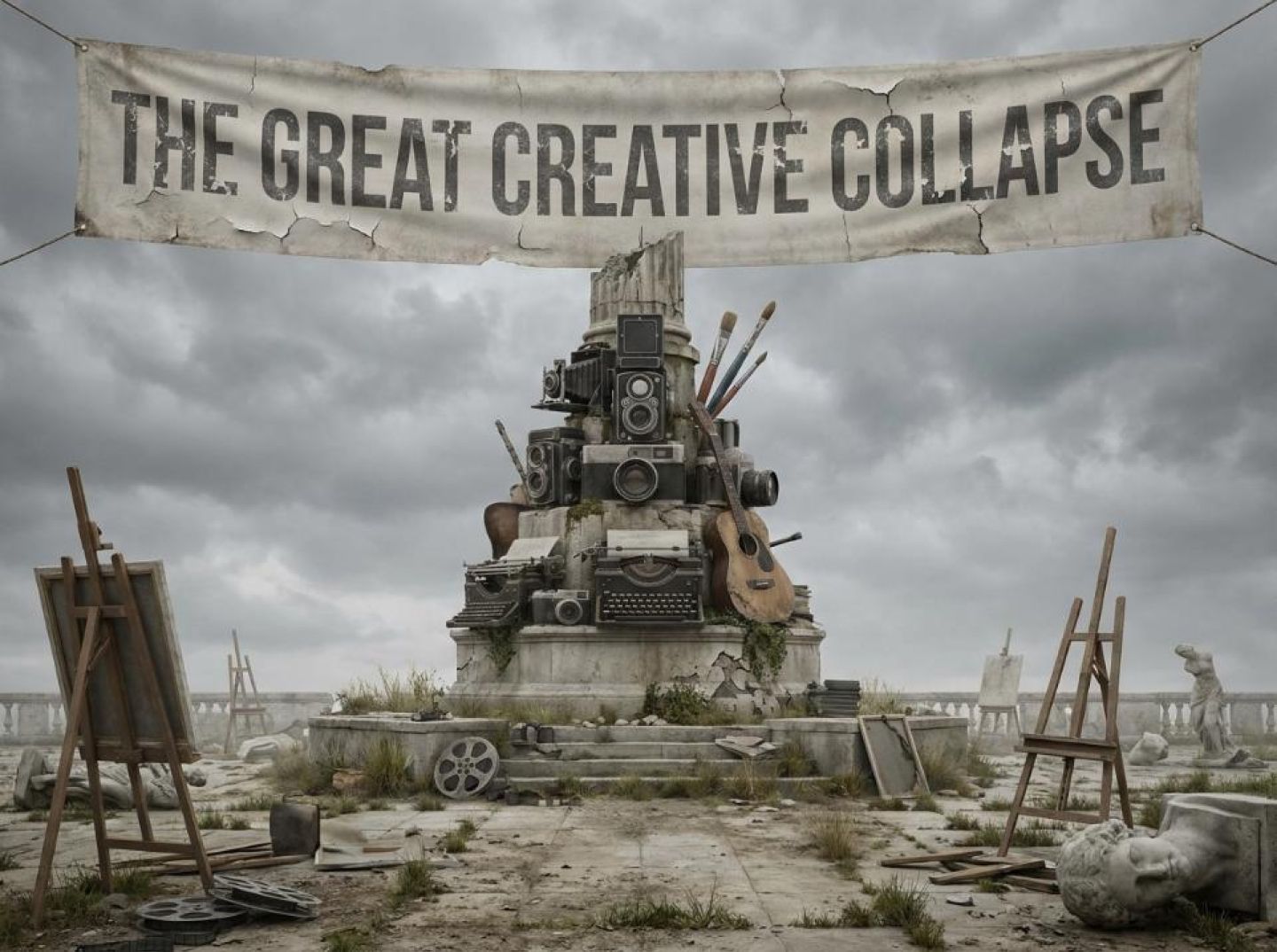
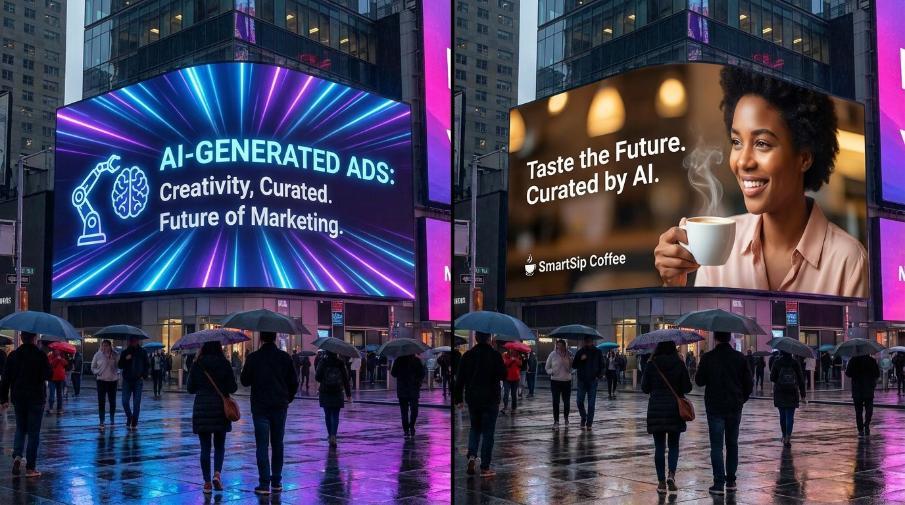
Get StartedSomething strange happened on the way to the AI creative revolution. The same generative tools that were supposed to unleash an explosion of visual diversity across performance advertising have instead produced something closer to a monoculture — a vast, scrollable wasteland of soft gradients, uncanny product shots, and blandly optimistic copy that all seems to emanate from the same algorithmic mind. Because, of course, it does.
The math is brutally simple. When thousands of advertisers feed similar prompts into the same foundational models, trained on the same data, the output converges toward a statistical mean. Every DTC brand's "lifestyle hero image" starts to rhyme. Every SaaS company's LinkedIn ad shares the same synthetic warmth. The result isn't just aesthetic fatigue — it's a market-wide convergence problem that consumers have already learned to name, mock, and scroll past.
The data on that consumer rejection is stark. Seventy percent of consumers now say they can usually spot an AI-generated ad because it feels like it is "missing its soul," according to Canva's 2026 state of marketing report as covered by MarTech. Even more damning, 65% said AI ads are "so obvious it's laughable," and 69% worry the future of advertising will become a sea of "AI-generated slop." These aren't edge-case opinions from Luddites. Seventy-four percent of consumers said they are more likely to buy from an ad they believe was created entirely by humans, and 87% insist the best advertising still needs a human touch. The skepticism is already shaping purchase behavior, not just sentiment surveys.
What makes this especially painful is that the promise was real. For e-commerce brands that previously had to pay for a studio shoot or hire a freelancer, AI represented a fundamental shift — product images that once cost thousands of dollars could suddenly be generated for pennies. The playing field didn't just level; it flattened. And flattened is the operative word, because when everyone has access to the same cost-free creative engine, the competitive advantage shifts from production capability to creative differentiation — the very thing most teams are skipping.
The temptation, naturally, is to compensate with volume. If one AI-generated ad doesn't work, test a hundred. If a hundred don't work, test two hundred. But as experienced creative director Nick Shackelford has observed, he's watched teams test massive batches of AI creatives, get no results, and feel like they were lied to — because they keep producing the same mediocre-looking ad at mass scale. His framing cuts to the bone: AI amplifies you. If your ideas are weak, AI just helps you produce more weak material faster. When his team tests fewer creatives but with genuine intention to make something new and different, performance jumps. Volume without differentiation is just expensive noise.
This is the paradox the industry refuses to confront. The creative collapse isn't a quality problem — the fidelity of AI-generated images is now nearly indistinguishable from professional photographs. It's an input problem. Same models, same training data, same default aesthetic instincts, same outputs. And as Meta's Andromeda update now treats hundreds of slight variations as a single creative, even the brute-force workaround of flooding the algorithm with near-duplicates has been shut down. The system is demanding genuine creative divergence at the exact moment the tools are optimized to produce convergence. Something has to break the loop.
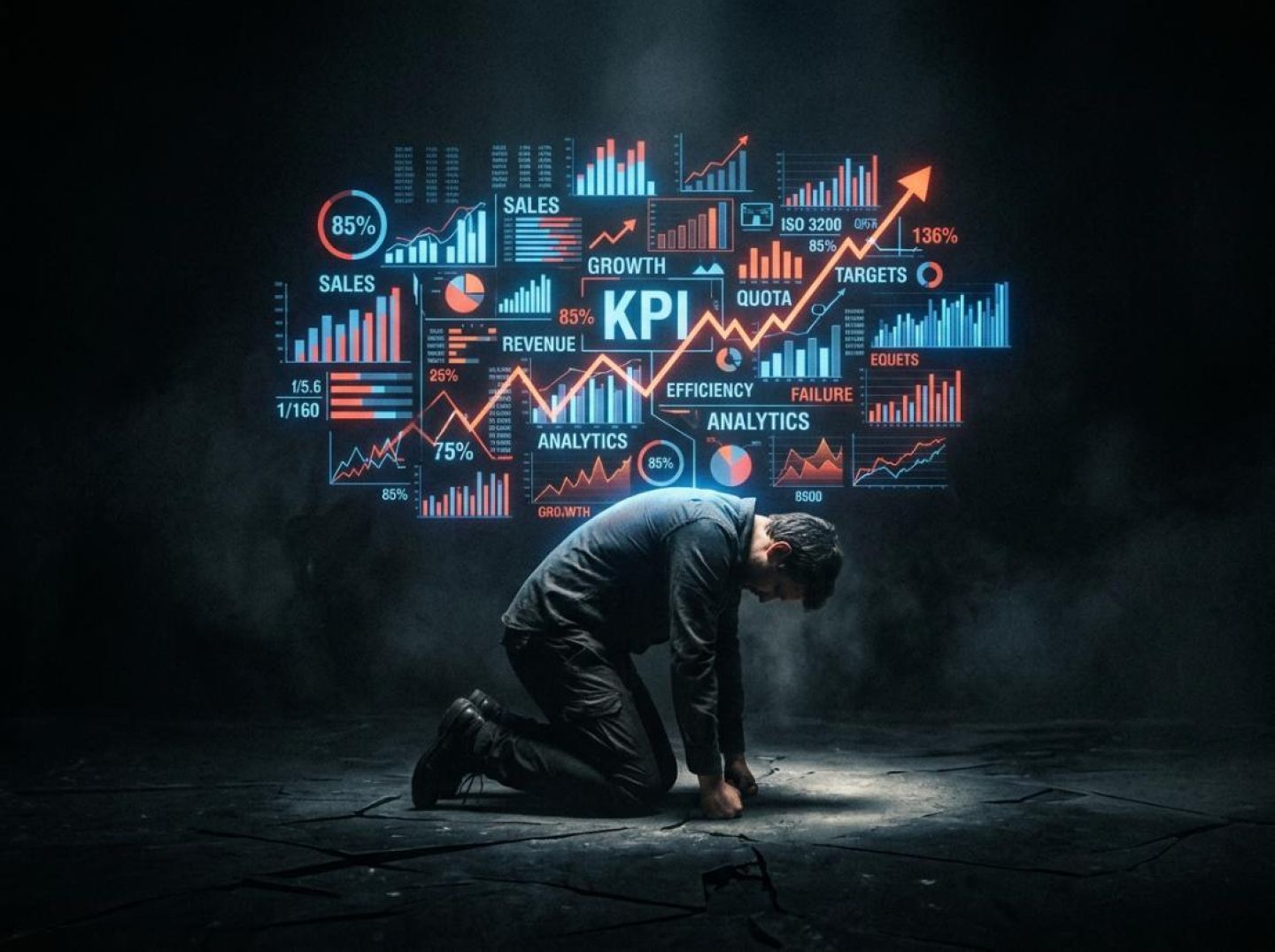
The performance marketing industry has a religion problem. As AdExchanger has argued, marketers have become devoted followers of a cult of performance — one that elevates CTR, ROAS, and CPA into sacred metrics and subordinates every other consideration, including brand identity, creative integrity, and basic common sense. When you combine that obsessive short-term focus with AI systems that autonomously generate and optimize creative, you don't get a renaissance. You get a feedback loop that systematically strips away everything that makes a brand distinctive.
Here's how the loop works. Tools like Google's Performance Max, Meta's Advantage+ Shopping Campaigns, and Amazon's Performance+ are designed to maximize conversion signals. They test creative variations at scale, identify what stops thumbs, and double down on winning patterns. The problem is that "winning" is defined narrowly — by immediate engagement and click-through — and every brand's algorithm is drawing from the same pool of behavioral data. The result is convergence. When AI learns that a particular combination of bold text, urgency-driven copy, and oversaturated product imagery outperforms alternatives, it pushes every advertiser toward that formula simultaneously. Differentiation becomes a casualty of optimization.
This dynamic is compounded by the rise of continuous creative optimization loops, which MarTech describes as systems where "AI evaluates engagement signals and automatically evolves messaging to improve performance." On paper, the ability to test and adapt hundreds of creative variations in real time sounds like a competitive advantage. And it is — briefly. The catch is that when every brand deploys the same optimization architecture against the same engagement signals on the same platforms, they all converge on the same "winning" creative patterns at roughly the same time. The competitive advantage evaporates the moment it becomes table stakes.
Meanwhile, AI-driven DCO systems are being adopted precisely because they can "significantly improve conversion performance by dynamically selecting optimal creative combinations." But optimization toward conversion performance and optimization toward creative differentiation are not the same thing — and in practice, they increasingly work against each other. The algorithm doesn't care whether your brand looks like every other brand in the feed. It cares whether someone clicked.
The consequences are systemic, not just brand-level. When the entire competitive set converges on identical creative patterns, ad fatigue stops being a campaign problem and becomes a market-wide condition. Consumers develop pattern blindness — not to your ads specifically, but to the entire visual language that AI-optimized performance advertising has settled on. CPMs inflate because platforms need more impressions to generate the same engagement, and brands respond by feeding more budget into the same optimization loops that created the problem, accelerating the spiral.
What makes this particularly insidious is the autonomy gap. As AdExchanger notes, once you train the machine to worship performance above all else and allow it to generate creative, "AI doesn't need a product image in a catalogue" — it will produce whatever stops scrolling, regardless of whether a human creative director would ever approve it. Brands are effectively ceding their visual identity to algorithms that have no concept of brand equity, no memory of positioning strategy, and no incentive to be different. They're optimizing themselves into indistinguishability, one conversion at a time. And when every brand's AI is running the same playbook, the only sustainable edge left is knowing what your competitors are actually doing — before the algorithm figures it out on its own.
There's a school of thought — increasingly popular among AI-savvy media buyers — that the cure for generic AI output is simply better input. Feed the model more brand context. Write tighter briefs. Structure your prompts with more discipline. Fraser Cottrell, whose three-step framework for AI ad creative has become a touchstone in performance marketing circles, makes a genuinely compelling case: build a brand knowledge base that captures your voice, your positioning, your visual identity; layer in deep customer research so the AI understands who it's speaking to and what motivates them; then use structured prompting to channel all of that context into output that actually sounds like your brand, not like a generic content mill. It's smart advice. It works. And it is categorically insufficient.
The reason it's insufficient has nothing to do with the quality of the framework and everything to do with what it leaves out. Cottrell's system — and every variant of it circulating through marketing Twitter and agency Slack channels — is entirely inward-facing. You're training AI on your brand guidelines, your customer personas, your historical winners. The model learns to speak in your voice, which is a meaningful upgrade over default output. But it has zero visibility into what your competitors are currently running, which creative angles are already saturated in your vertical, what hooks are generating fatigue among the exact audiences you're targeting, or where genuine whitespace opportunities exist. You're optimizing inside a closed loop, and no amount of prompt engineering can break you out of it, because the missing variable was never in your brand bible to begin with.
This matters more now than it did even a year ago. Meta's tools, including its evolving suite of AI-powered ad products, are designed to reward creative distinctiveness and penalize redundancy. The Andromeda ranking update, which reshaped how Meta's ad auction evaluates creative, explicitly downgrades slight variations of the same concept. If your AI-generated ads are remixing the same angles that every other brand in your category is also remixing — because you're all drawing from the same inward-facing inputs and, increasingly, the same foundational models — the algorithm doesn't see three fresh creatives. It sees one idea wearing three hats.
Even the most sophisticated brand knowledge bases can't solve this, because the problem isn't a deficit of self-knowledge. It's a deficit of market knowledge. As DAIVID's Ian Forrester has observed, "Creative is a key driver of advertising outcomes, but for too long it has been measured in isolation, disconnected from media results." The same logic applies to creative generation: for too long, it has been developed in isolation, disconnected from the competitive landscape in which it has to perform. You can build the most meticulously detailed brand knowledge base in the world, but if you don't know that seven of your competitors just launched campaigns using the same "problem-agitation-solution" framework with the same pastel color palette and the same aspirational UGC-style hook, your beautifully on-brand AI output is going to land in a feed full of near-identical ads and disappear.
The missing input layer isn't brand data. It's market data — real-time competitive intelligence about what's actually running, what's working, and what's been so thoroughly exploited that it's become invisible. Better prompts can make your AI output more you. They can't make it more different. And in an auction-based system that algorithmically rewards novelty, different is the only thing that actually compounds.
Better prompts give AI better instructions. Brand knowledge bases give it better context. But neither gives it the one thing that actually determines whether your creative will stand out in market: awareness of what the market already looks like.
This is the core thesis that separates AI as a production tool from AI as a strategic weapon. The critical missing ingredient in most AI-generated ad workflows isn't better brand guidelines or more elaborate persona documents — it's real-world competitive intelligence. What's actually running right now, across thousands of campaigns and dozens of networks? What creative formats are scaling? Which angles are oversaturated to the point of invisibility? Which emerging approaches are gaining traction but haven't yet been strip-mined into cliché? Without answers to these questions, even the most sophisticated AI system is generating creative in a vacuum.
As MarTech notes, "speed becomes a competitive advantage" when brands can "test and adapt hundreds of variations quickly" and "respond to cultural moments, seasonal shifts, and competitive moves." But here's the obvious problem that rarely gets stated explicitly: you cannot respond to competitive moves you cannot see. And most advertisers are functionally blind. They know their own campaigns intimately. They might catch a competitor's ad in the wild once in a while. But they have no systematic visibility into the creative landscape they're competing within.
This is where competitor ad intelligence — tools like Anstrex that aggregate real native and push ad campaigns running across networks — becomes the strategic layer that sits before AI creative generation. It fundamentally reorders the workflow. Instead of the default loop of "generate creative → test → iterate," the process becomes something far more intentional: analyze what's converting in the wild, identify both underexploited angles and oversaturated ones, brief your AI with genuine competitive context, generate creative that's deliberately differentiated, then test and iterate from a position of informed strategy rather than guesswork.
The distinction matters enormously. Using AI without competitive intelligence is using it as a production tool — you get faster, cheaper versions of whatever ideas you already had, which are probably the same ideas everyone else already had too. Using AI with competitive intelligence transforms it into a strategic tool, one capable of producing novel creative informed by actual market conditions.
Consider what becomes possible when you combine these capabilities. When illumin describes how AI can "analyze the meaning, sentiment, imagery, audio, and broader context" of content in real time, the implications extend far beyond optimizing your own campaigns. Imagine applying that same analytical power to the thousands of competitor campaigns visible through spy data. Suddenly you're not just understanding your own performance — you're pattern-matching at scale across an entire competitive landscape, identifying the white space that no amount of prompt engineering could reveal.
This isn't about copying. In fact, it's the opposite of copying. Spy data, used correctly, is reconnaissance that makes originality possible. A military strategist doesn't study the enemy's positions in order to occupy the same ground — they study those positions to find the undefended territory. When you can see that every competitor in your vertical is running the same fear-based headlines with the same dark color palettes and the same urgency-driven CTAs, you don't need AI to generate another variation on that theme. You need AI to generate something that breaks the pattern entirely — and you can only break a pattern you can actually see. The advertisers who understand this will be the ones whose AI-generated creative doesn't just perform — it performs differently.
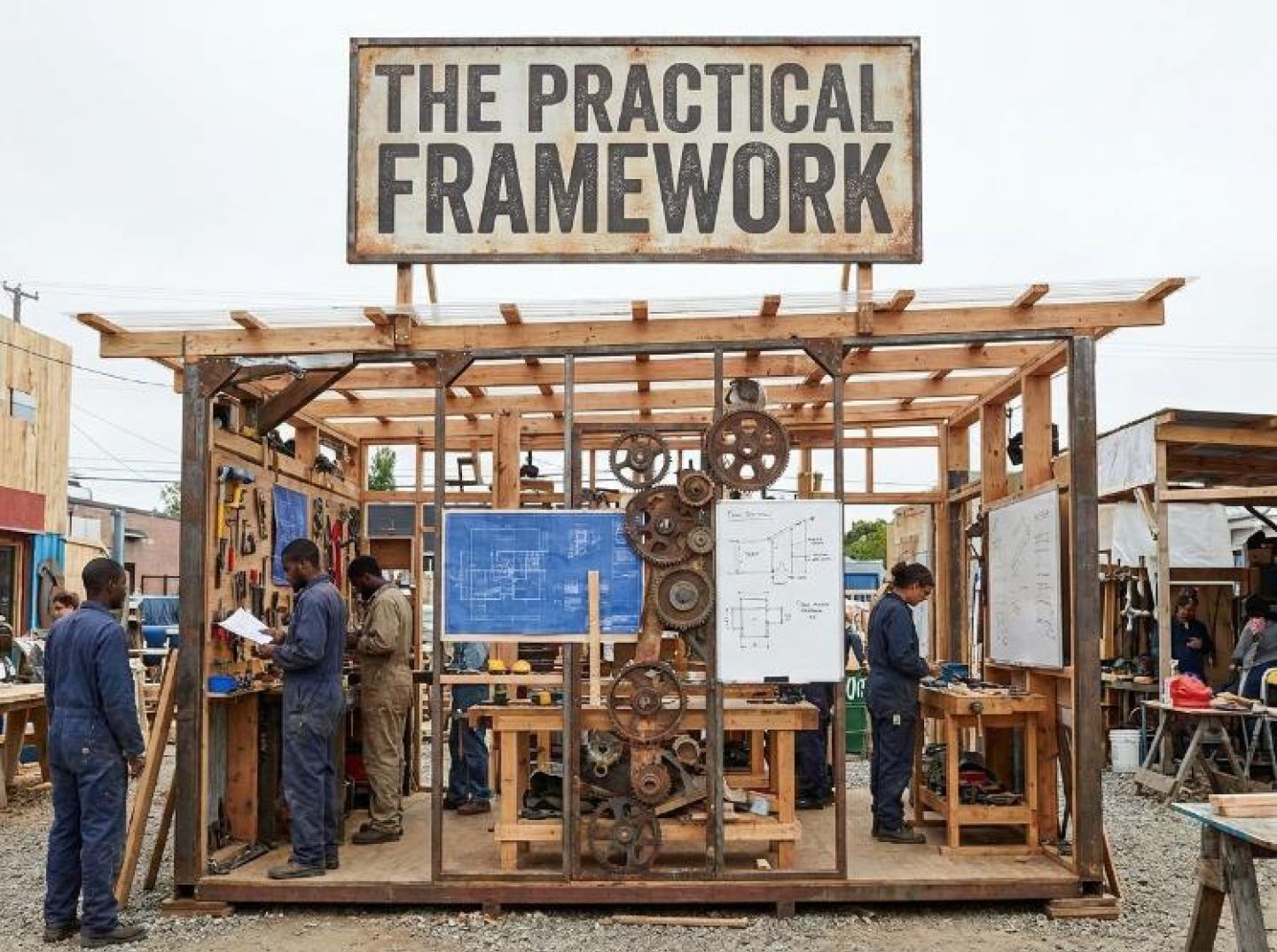
Here's where theory meets execution. The previous sections established why competitive intelligence is the missing input layer for AI-generated creative. Now let's translate that into a repeatable workflow that performance marketers can implement this week — not next quarter.
Step One: Harvest the Competitive Landscape. Before you open any generative AI tool, spend thirty minutes inside an ad spy platform — Meta Ad Library, Foreplay, AdSpy, or any comparable tool. Your goal isn't casual browsing. You're cataloging the dominant visual patterns, hook structures, and format conventions in your category right now. Screenshot or save the top fifteen to twenty active ads from your three closest competitors and the three brands your audience also follows. Organize them by format: static product shots, UGC-style testimonials, before-and-after comparisons, listicle carousels. What you'll almost certainly discover is a clustering effect — the same palette, the same layout logic, the same emotional register appearing again and again. That cluster is your avoidance zone.
Step Two: Build a Contrast Brief, Not a Creative Brief. Traditional briefs tell AI what to make. A contrast brief tells it what already exists and instructs it to diverge. Take the patterns you've identified — say, every competitor is running muted earth tones, centered product placement, and aspirational lifestyle copy — and write explicit constraints: "Do not use earth tones. Do not center the product. Do not use aspirational language." Then define your divergence vectors. Maybe you go maximalist color. Maybe you lead with a problem statement instead of an aspiration. Maybe you break the fourth wall. The point is that your prompt now contains competitive context, which is exactly the input layer most marketers skip entirely. This approach pairs naturally with the brand knowledge base methodology that Fraser Cottrell advocates, but it adds the crucial external dimension his framework leaves implicit.
Step Three: Generate Variations Against the Contrast Brief. Now — and only now — do you engage your generative AI tools. Feed the model your brand knowledge base, your contrast brief, and your specific format requirements. Generate in batches of ten to fifteen variations per concept direction, but evaluate each output against your spy data, not against your brand guidelines alone. The question isn't "Does this look like us?" It's "Does this look like nothing else currently running in our category?" Any variation that passes brand review but fails the differentiation test goes back into the generation cycle with tightened constraints.
Step Four: Validate Before You Scale. Launch your top three to five divergent concepts as test creatives with modest spend. Here's the critical feedback loop most teams miss: after seventy-two hours, go back to your spy tools and check whether competitors have launched anything visually similar in the interim. The convergence cycle moves fast. As Canva's research revealed, seventy percent of consumers already report they can spot AI-generated ads because they feel soulless, which means the window between a distinctive concept and a commoditized one is shrinking constantly. If your winning creative starts to see visual echoes from competitors within two weeks, it's time to run the entire workflow again.
Step Five: Institutionalize the Cadence. This isn't a one-time exercise. Build a biweekly competitive audit into your creative operations calendar. Assign someone — a strategist, a media buyer, even an intern with good visual instincts — to update your pattern library and refresh your contrast brief. The teams that outperform won't be the ones with the best AI models or the most elaborate prompts. They'll be the ones who never stop watching what everyone else's AI is producing and deliberately steering away from it.
The workflow is simple. The discipline to maintain it is not. But that discipline is precisely what separates creative that performs from creative that simply exists.
Receive top converting landing pages in your inbox every week from us.
Most Read
Discover how digital ad intelligence is reshaping OOH by connecting proven digital creative, audience signals, and performance data with physical media. This guide explores how ad-spy insights, mobile billboards, and intelligence layers can turn OOH into a measurable, iterative performance channel.
David Kim
7 minSep 22, 2026
Featured
AI-driven ad intelligence is changing how brands evaluate creative, shifting the focus from individual creative leaders to scalable, data-driven systems. This guide explores how competitive ad intelligence, automated testing, and large-scale advertiser data can help teams generate, evaluate, and optimize creative faster.
Samantha Reed
7 minSep 21, 2026
Quick Read
OOH is increasingly becoming a measurable performance channel, but many industry roles are still built around selling inventory rather than outcomes. This guide explores how OOH careers can evolve toward performance marketing through attribution, ad intelligence, funnel design, landing-page data, and measurable campaign optimization.
David Kim
7 minSep 20, 2026