

8 minJune 13, 2026

Our spy tools monitor millions of native ads from over 60+ countries and thousands of publishers.
Get StartedEvery awards show encodes its values in its language, and if you read D&AD's own words carefully, the encoding is remarkably transparent. When 2026 president Lisa Smith described the winning work, she celebrated "sheer creative bravery and excellence," praising teams for pushing into genuinely new territory across storytelling, craft, emerging technologies, and new forms of expression. CEO David Patton echoed her, calling the awards "more global or more vital" than ever and framing the expansion as proof that "world-class creative ambition" is spreading to every continent. Notice what neither of them mentioned: conversion rates, cost per acquisition, return on ad spend, or any other metric that a performance marketer would recognize as a success signal. This isn't an oversight. It's the design.
The judging apparatus is calibrated for one thing — novelty that advances the craft. Smith said it plainly: "the work that won did so because it moved the standard of creative excellence forward." That is a perfectly legitimate mission for a professional body that exists to elevate the advertising discipline. But it is an entirely different mission from driving measurable business outcomes, and confusing the two is where performance teams get into trouble. When you import a scoring system built around boundary-pushing originality into a media environment governed by click-through rates, you are, quite literally, optimizing for the wrong objective function.
The 2026 ceremony made the divergence between prestige and accountability even more visible. Entries arrived from a record 89 countries, up from 86 the previous year, and the new Culture discipline — featuring debut categories in Sport Entertainment, Cultural Influence, and Brand Transformation — saw entry growth of 49 percent year on year, earning 27 Pencils across its three categories in the first year alone. D&AD is expanding its own prestige surface area at impressive speed, creating more stages on which "creative bravery" can be recognized. What it is not expanding is any mechanism for tying those recognitions back to revenue, retention, or lifetime value.
Compare that philosophy with the direction the performance world is actually heading. As DAIVID CEO Ian Forrester recently observed, "creative is a key driver of advertising outcomes, but for too long it has been measured in isolation, disconnected from media results" — a gap his company is attempting to close by linking creative intelligence directly to media execution in real time. The entire infrastructure Forrester describes — pre-launch scoring, in-flight optimization, post-campaign benchmarking — exists precisely because the award-show model of evaluating creative after the fact, by peer consensus, is insufficient for marketers who need to know what is working before the budget is gone.
None of this means D&AD is wrong. It means D&AD is playing a different game. Its leaders are building an institution that rewards ambition, global participation, and the advancement of craft — a worthy endeavor for the industry's creative class. But if you are a growth marketer studying Yellow Pencil reels for landing-page inspiration, you are consulting a scoreboard that was never designed to measure your wins. The sooner you internalize that distinction, the sooner you can stop chasing trophies and start chasing results.
There's a reason the same campaigns keep showing up on stage in May and then again in June. As More About Advertising noted in its coverage of this year's Yellow Pencil winners, D&AD results are "often a good indicator of what might win at Cannes," and the article explicitly flagged several campaigns as Cannes-bound: Mother London's controversial Super Bowl spot for Anthropic, adam&eve's Expedition Impossible for Columbia, and Uncommon's Periodic Fable for The Ordinary. These aren't isolated observations. They reflect a deeply entrenched pipeline — a festival circuit where agencies engineer work to travel from one jury room to the next, accumulating trophies the way frequent flyers accumulate miles.
Look at the creative species these campaigns represent. A cinematic Super Bowl film. A high-concept brand narrative built around exploration mythology. A beautifully art-directed product story for a skincare brand. Each one is a big-budget, narrative-driven brand play designed to make judges feel something in a darkened screening room. They are masterfully crafted. They are also almost entirely disconnected from the channels where the vast majority of advertising budgets actually live — the native placements, sponsored content units, programmatic display slots, and direct-response feeds that dominate modern media plans.
This creates a self-reinforcing echo chamber. Agencies study last year's Pencil winners to reverse-engineer this year's entries. Juries — composed of peers who aspire to the same recognition — reward work that conforms to the aesthetic and structural conventions the circuit has already validated. The audience for these campaigns isn't really consumers; it's other advertising professionals. The work is optimized for a room full of creative directors, not for a thumb scrolling through a content feed at 11 p.m.
Meanwhile, the people actually responsible for making ads perform operate in an entirely different reality. Success in native advertising, for instance, is measured against industry-specific CTR benchmarks, CPC, and conversion rates — metrics drawn from platform reports and competitive analysis, not creative intuition. As Brax's guide to tracking native ad performance makes clear, effective campaign management requires setting measurable goals, identifying relevant KPIs, and benchmarking against industry standards published by platforms like Taboola. These are the numbers that determine whether a campaign gets renewed or killed, and not one of them has ever appeared on a D&AD scorecard.
The disconnect runs deeper than a simple difference in format. The award pipeline actively discourages the kind of creative that works in performance environments — iterative, data-responsive, often visually plain, and designed for volume rather than singularity. A Yellow Pencil winner is singular by definition; a high-performing native campaign might involve dozens of headline and image variations tested simultaneously against real audience behavior. These are fundamentally incompatible creative philosophies, yet the industry treats the award-circuit version as the aspirational standard.
The result is what you might call inspiration porn: work that makes you feel creatively inadequate when you see it on LinkedIn, but offers zero transferable insight for the media buyer trying to lower cost-per-acquisition on a Taboola campaign or the growth marketer split-testing Facebook ad hooks. When the same piece of creative is engineered to win at D&AD in May and then at Cannes in June, you're not looking at a playbook. You're looking at a trophy case built for an audience of judges — and the rest of the industry is left applauding from the cheap seats, mistaking spectacle for strategy.
If the Cannes Pipeline is the industry's aesthetic feedback loop, the deeper structural issue is mechanical: the advertising world has never had reliable infrastructure connecting what a creative looks like to what it actually does. And the biggest players on earth are finally admitting it out loud.
DAIVID CEO Ian Forrester put the problem in stark terms when announcing his company's partnership with ADIN.AI: "Creative is a key driver of advertising outcomes, but for too long it has been measured in isolation, disconnected from media results." That quote isn't a hot take from a contrarian blog post. It's the thesis behind an entirely new infrastructure layer designed to integrate creative effectiveness scoring directly into media buying — a live loop where creative intelligence and media execution finally talk to each other in real time. Before a campaign launches, marketers using the system can identify which assets are most likely to succeed and allocate budget accordingly. While campaigns run, they can scale winners and pause underperformers instantly. After campaigns end, historical performance data feeds back into benchmarks that guide the next round. It's the antithesis of how award shows work, where creative judgment is rendered once, by a panel, months after the campaign ran, with no feedback loop at all.
What makes this story especially instructive is the context surrounding it. The DAIVID/ADIN.AI partnership was built, in part, to serve the kind of scale that Unilever's now-infamous 300,000-creator network demands. When 71% of those creators are using AI tools to produce content at speed and that content is being distributed across dozens of platforms in hundreds of markets simultaneously, as Search Engine Journal reported, the old evaluation infrastructure simply stops working. Human panels are too slow. A/B testing individual assets across a network that massive is logistically impossible. And traditional brand-tracking surveys capture what happened last quarter, not what's working right now.
This isn't a niche concern for enterprise advertisers. It's the same fundamental problem performance marketers face every day, just at a different scale. The question "Is this creative good?" is meaningless without a follow-up: "Good at what, for whom, in which placement, against which objective?" Award juries answer the first question and ignore the rest. They evaluate creative divorced from targeting, sequencing, platform context, and — most critically — measurable outcomes.
Even at the tactical level, the industry is moving toward outcome-linked evaluation. As Social Media Examiner explored in a recent deep dive on AI-generated ad creative, platforms like Meta have already rendered the old "spray and test" approach obsolete. With Meta's Andromeda update treating hundreds of slight variations as a single creative, the game has shifted from volume of iterations to quality of creative decisions — decisions that can only be made well when they're measured against actual performance signals, not peer applause.
Here's the uncomfortable implication: if the largest advertiser on the planet has concluded that subjective human judgment can't reliably evaluate creative at scale and is investing millions in systems to replace that judgment with data, then the performance marketer studying D&AD annuals for inspiration is relying on a weaker version of the exact evaluation method that Unilever just admitted doesn't work. The gap between "celebrated creative" and "effective creative" isn't a matter of taste or opinion. It's a measurable infrastructure failure — one that award shows don't just fail to solve but actively obscure by conferring authority on judgments made without any connection to results.
So if award annuals are unreliable and the measurement infrastructure connecting creative to outcomes is still being fought over at the standards-body level, what should a performance-minded marketer study?
The answer is deceptively simple: study what's actually running — and, more importantly, what keeps running.
An ad that survives four, six, or twelve weeks of live spend has passed a test no jury can replicate. It has weathered daily budget reviews, platform algorithm shifts, rising CPMs, and the ruthless attention economics of a real feed. Every day an advertiser continues to fund a specific creative is an implicit vote that the ad is pulling its weight. Accumulate enough of those votes across enough advertisers and you start to see patterns that no benchmark report or awards shortlist can surface — patterns grounded not in taste but in sustained commercial performance.
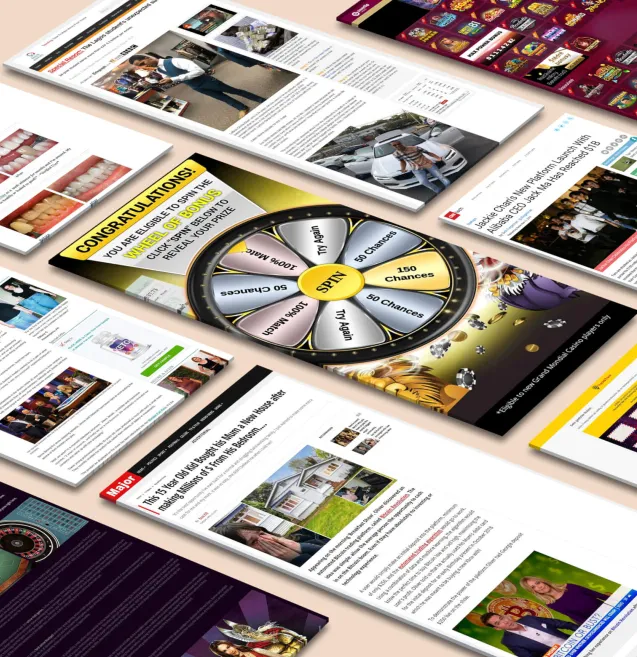
This is where competitive intelligence tools change the game. The concept is straightforward: instead of guessing what works, you look at what competitors and category leaders are actually spending on right now. You filter by duration, ad network, geography, and vertical. You reverse-engineer the headlines, image treatments, calls to action, and landing-page structures that survive the Darwinian pressure of daily ROI scrutiny. The result isn't inspiration in the vague, Pinterest-board sense. It's evidence — a dataset of creative decisions that real markets have validated with real dollars.
The value of that dataset becomes even more critical in a landscape that demands creative volume at a pace most teams can't sustain through traditional production alone. As Social Media Examiner has detailed, Meta's Andromeda update fundamentally changed the math: the platform now treats hundreds of slight variations of the same ad as a single creative, meaning advertisers need genuinely different ad variations, not just color-swap permutations. AI tools can help produce that volume, but they still require a strategic input layer — a clear picture of what a "great ad" looks like in your category right now, not what won a Pencil two years ago.
This is the gap Anstrex fills. Its live campaign database lets you search across native, push, and display networks to find ads that are actively spending — then sort by how long they've been running, which networks they're buying on, and what creative patterns they share. Instead of starting from a blank canvas or a Cannes case-study reel, you start from a library of market-tested creative structures you can analyze, adapt, and riff on at the speed your media plan demands.
The advertising industry's own measurement experts keep reinforcing why this kind of evidence-based approach matters. Even AdExchanger's recent critique of the W3C's attribution framework warned that weak measurement assumptions, once embedded in infrastructure, "can shape advertiser behavior, media allocation and competitive dynamics for years." The same logic applies to creative development: if the inputs you study are shaped by jury aesthetics rather than market performance, every ad you produce inherits that bias.
Competitive intelligence doesn't eliminate the need for originality — it grounds originality in reality. You still need a sharp hook, a distinctive brand voice, and an offer that matters to the audience. But when those creative instincts are informed by what's actually surviving in the wild rather than what looked beautiful on a projection screen in London, the gap between "award-worthy" and "revenue-generating" starts to close. And unlike a D&AD annual that refreshes once a year, a tool like Anstrex refreshes continuously — giving you a living, breathing map of what the market rewards today, not what a panel applauded last quarter.
Theory is useful; a repeatable workflow is better. Here are five steps that replace award-show browsing with a creative research loop anchored in what the market is actually rewarding with spend.
Step 1: Mine live campaigns for longevity signals. Open Anstrex and filter by your vertical, target geography, and preferred ad network — whether that's a native platform like Taboola or Outbrain, or push networks. The critical filter most people skip is run duration. Sort by the longest-running ads first. As we established in the previous section, an ad that has survived weeks or months of live spend has already been validated by the only jury that matters: the advertiser's own P&L. An ad running for eight weeks on a cost-per-click network is almost certainly profitable, because no rational media buyer funds a loser that long. That longevity signal is your starting line.
Step 2: Extract recurring creative patterns. Don't fixate on any single ad. Instead, look across twenty or thirty long-running creatives in your category and catalog what repeats. What headline structures keep appearing — listicles, questions, curiosity gaps, direct benefit statements? What image styles dominate — close-up product shots, before-and-after comparisons, lifestyle scenes, or raw UGC-style photography? Where does the CTA sit, and what emotional register does the copy use — fear, aspiration, urgency, social proof? These patterns are the market's consensus on what converts. Document them in a simple swipe file organized by element type, not by individual ad.
Step 3: Feed those patterns into an AI-assisted creative production process. This is where volume becomes feasible without a sprawling team. Fraser Cottrell's three-step system outlined on Social Media Examiner provides the best operational blueprint: first, build a brand knowledge base that teaches the AI model who your customers are, what your brand stands for, and what a high-performing ad in your space looks like (your Anstrex pattern library feeds directly into this). Second, create structured prompts that combine your brand context with the winning patterns you've extracted. Third, generate variations at scale — genuinely different creative concepts, not the micro-tweaks that Meta's Andromeda update now collapses into a single asset. The patterns you mined in Step 2 give the AI guardrails; your brand knowledge base keeps the output on-voice.
Step 4: Benchmark against live competitor data, not industry averages. This is a distinction most marketers get wrong. As Brax has noted, platform-published benchmarks like average CTRs and CPCs are useful directional guides, but they are blunt averages shaped by factors that may have nothing to do with your specific product, audience, or geography. When you have access to live competitive intelligence — actual ads from direct competitors with observable run durations and network placements — you own a far sharper yardstick. Compare your click-through rates and landing-page engagement not against "the health-and-wellness industry average" but against the specific creative approaches your closest competitors are sustaining in market right now.
Step 5: Iterate continuously. Creative intelligence is perishable. The patterns that dominate your vertical this month may shift next quarter as audiences adapt and competitors adjust. Set a recurring calendar reminder — biweekly works for most teams — to return to Anstrex, refresh your competitive scan, and note which patterns have emerged, which have faded, and which of your own ads are outperforming or underperforming relative to the new landscape. Feed those learnings back into your brand knowledge base and prompt library, and the loop closes: live data informs creative production, performance data refines the next round, and the cycle accelerates.
This five-step loop won't win you a Pencil. It will, however, give you something far more valuable — a creative pipeline that responds to the market in near-real time instead of chasing last year's award reel.
Receive top converting landing pages in your inbox every week from us.
Most Read
Discover how to connect ad spy data with on-site behavior, CRM insights, and revenue outcomes to uncover the real drivers of ROI. Learn how to turn Anstrex from a creative swipe tool into a closed-loop system for testing winning ad angles, funnels, and customer journeys.
Dan Smith
7 minSep 9, 2026
Must Read
Agentic AI is moving product research and comparison upstream, often before buyers ever click a native or push ad. This article explains how marketers can adapt to the shift by making product feeds, offers, creative angles, proof points, and landing experiences easier for AI systems to understand and recommend. It also explores how high-intent clicks are changing, why AI-generated recommendations are reshaping creative angles, and how advertisers can optimize for both AI-mediated decisions and human action.
Samantha Reed
7 minAug 30, 2026
Editor’s Pick
As organic clicks decline and paid acquisition becomes more competitive, advertisers need to look beyond CTR and CPC and focus on the conversion architecture connecting ad creative, landing pages, offers, and post-click experiences. This article explains how to reverse-engineer competitor funnels, identify patterns that have survived real-world testing, and use those insights to build stronger, original conversion systems.
Dan Smith
7 minAug 29, 2026











)