
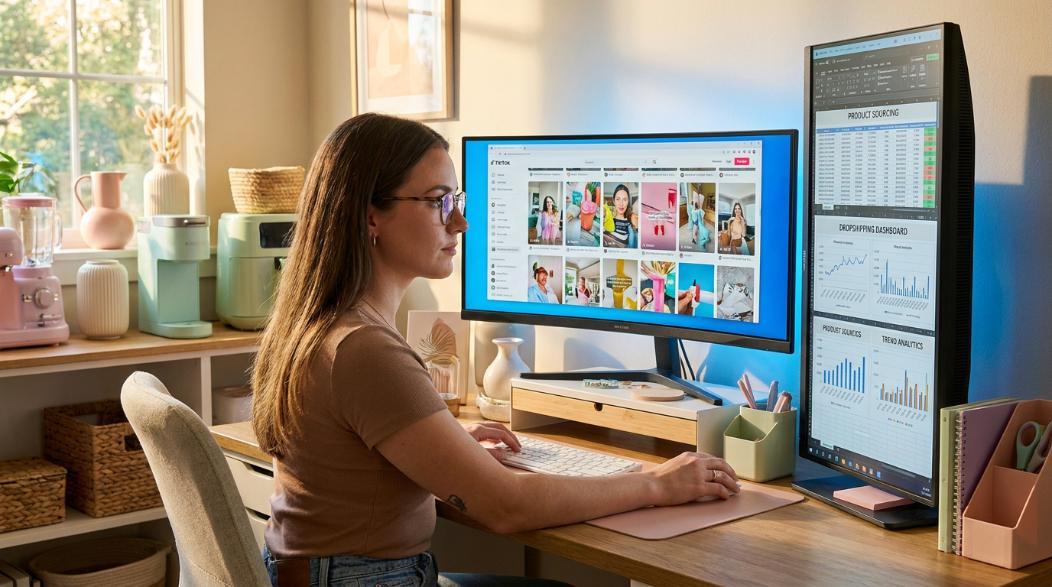
10 minJuly 6, 2026

Our spy tools monitor millions of TikTok ads from over 55+ countries. Biggest TikTok Ad Library in E-commerce and Mobile Apps!
Try It FREEFor years, the prevailing wisdom among e-commerce entrepreneurs was that TikTok sat at the top of the funnel — a place to build brand awareness, seed cultural moments, and hope that some fraction of those eyeballs eventually migrated to a Shopify storefront to convert. That read was always incomplete, but today it's flatly wrong. TikTok has structurally reinvented itself as a live commerce engine where the distance between a viewer's dopamine hit and their credit card confirmation is measured in taps, not sessions.
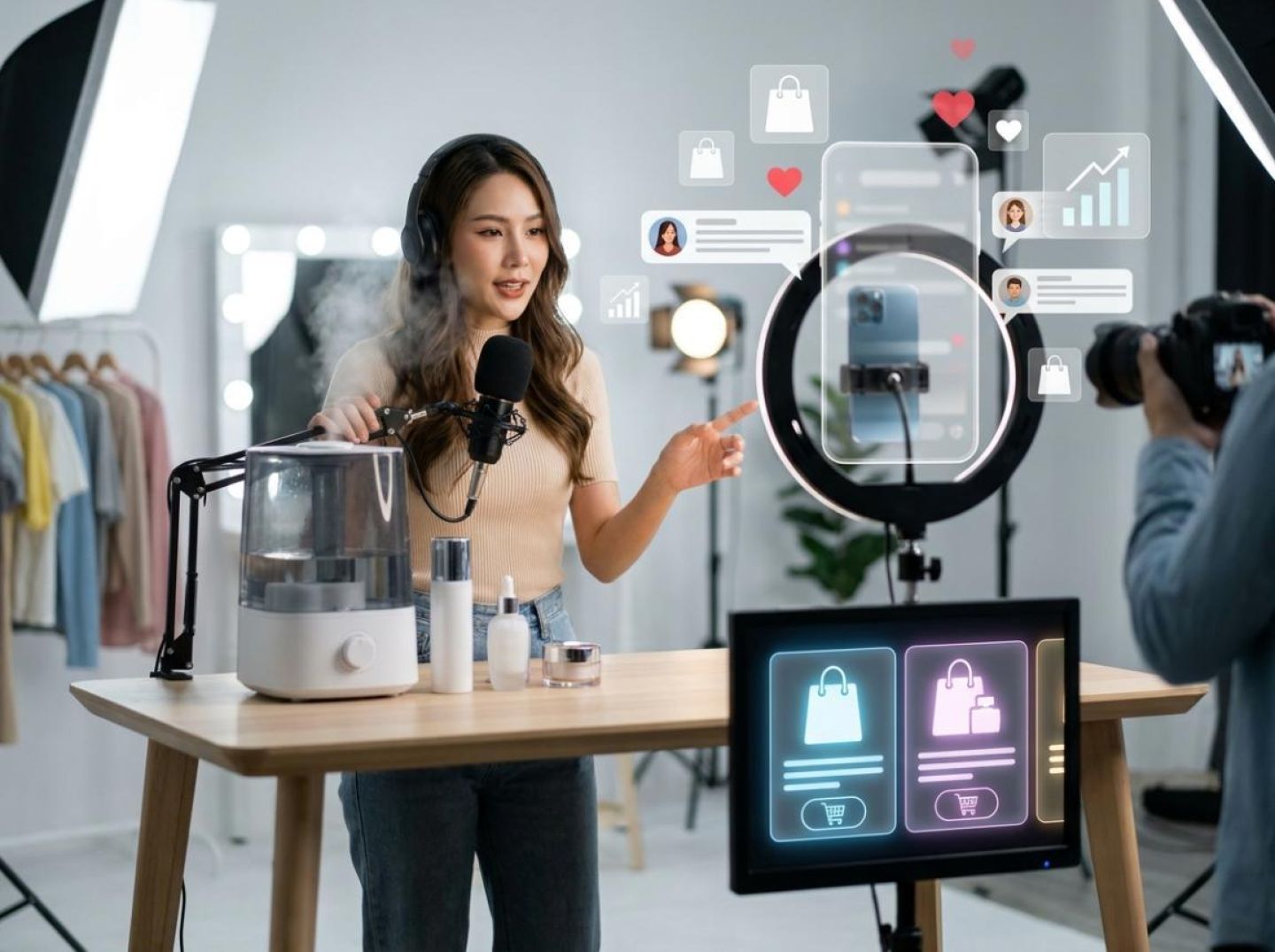
The inflection point is TikTok Shop, the e-commerce platform embedded directly inside the app, which has collapsed the entire purchase journey into a single interface. A creator can demonstrate a product during a live stream, answer real-time questions, and close the sale — all without the viewer ever leaving the feed. That live-streaming function does something traditional product pages never could: it manufactures trust and community in real time, turning passive scrollers into active buyers in minutes. But it's the way TikTok Shop capitalizes on the platform's viral trends that matters most for dropshippers. When a product gets featured in a widely viewed video — think a pink waffle maker riding the Barbiecore wave or a miniature hotel-style toiletry set that makes a bathroom "look expensive" — the algorithm doesn't just surface it once. It compounds exposure, layering entertainment and commerce into a feedback loop that conventional marketplaces cannot replicate.
The scale behind this loop is staggering. More than 200 million Americans are now on TikTok, and the platform reaches 1.99 billion monthly active users globally. Those aren't passive accounts; TikTok's engagement rate of 3.7 percent is nearly eight times higher than Instagram and twenty-five times higher than Facebook. When a lifestyle aesthetic trends on a platform with that kind of participatory energy, the purchase intent embedded in the attention is categorically different from what a static Instagram carousel or a Facebook ad can generate. People don't just watch TikTok content — they act on it. More than half of users have purchased from brands after seeing products featured on the platform, and TikTok Shop generated $15.82 billion in U.S. sales in 2025, growing at 108 percent year over year.
For dropshippers, these numbers reframe the entire product-research process. If a "hotel bathroom aesthetic" video racks up two million views, you're no longer looking at a cultural curiosity — you're looking at a live demand signal with a built-in checkout. LED room décor, cloud-shaped shelves, pastel kitchen gadgets: each viral lifestyle niche is effectively a point-of-sale terminal broadcasting what people want to buy right now. Meanwhile, as Semrush notes, the most effective social commerce content shows products solving a real problem or fitting into a real moment — precisely the format that TikTok's algorithm rewards. A creator demonstrating how a compact luggage organizer fits a weekend trip, or how a set of gold-rimmed plates transforms a dingy apartment kitchen, isn't just entertaining; they're performing a live product demo for an audience already primed to purchase.
The foundational takeaway is simple but consequential: TikTok is no longer a place where trends happen and commerce follows later, elsewhere. The trend is the transaction. Dropshippers who still relegate the platform to "awareness" are leaving money on the table while competitors read the feed as a real-time product catalog — and ship accordingly.
Every viral TikTok lifestyle video is a product catalog in disguise. The trick is learning to read it like one. When a creator walks you through their "Barbie dreamhouse" bedroom transformation, the content isn't really about Barbie — it's a demand signal broadcasting exactly which SKUs millions of viewers want to buy. And when you learn to decompose these videos into their constituent shoppable parts, you unlock a product discovery method that moves faster and with more precision than any keyword research tool on the market.
Start with the aesthetic room transformation archetype. A typical "Barbie dreamhouse" video follows a reliable formula: a creator shows a bland room, then cuts to a hyper-curated pink-and-gold space while trending audio plays underneath. The comment section explodes with "link?" and "where did you get that?" What the viewer actually wants is not a licensed Mattel product. They want the pink acrylic organizers stacked on the desk, the LED vanity mirror mounted above the dresser, the velvet storage boxes corralling jewelry on the nightstand, the brushed-gold decorative hardware on the dresser drawers, and the specific shade of blush-pink peel-and-stick wallpaper lining the accent wall. Each of those items is a discrete, sourceable, dropship-friendly SKU — typically priced between eight and thirty dollars at the supplier level — bundled together by a creator who has, without realizing it, performed live market validation for the entire product set.
Now take the "hotel bathroom hack" archetype. A creator films their apartment bathroom, then transforms it into something resembling a boutique hotel suite. The product signals are just as legible: wall-mounted soap dispensers in matte black, white waffle-weave towels rolled and stacked on a marble tray, miniature toiletry bottles decanted from bulk products, a bamboo bath caddy, and a frameless LED mirror. Again, every single item is lightweight, inexpensive to source, and high-margin — the exact profile that makes dropshipping viable.
A third archetype, the "that girl" morning routine, reveals yet another product bundle. The slow-motion shots of journaling, green smoothies, and yoga mats are really showcasing sunrise alarm clocks, glass water bottles with time markers, minimalist planners, matcha whisks, and resistance band sets. The specificity is the signal. Because TikTok's algorithm rewards creativity and authenticity over polished production, the products featured in these videos tend to be affordable and accessible rather than aspirational luxury items — which is precisely what makes them viable for a dropship catalog.
What makes these signals more reliable than traditional keyword research is the feedback loop baked into TikTok's distribution mechanics. As Brax's analysis of low-cost viral campaigns explains, engagement-driven content on TikTok generates massive user-generated content loops: one transformation video inspires dozens of duets, stitches, and copycat versions, each one reinforcing demand for the same product categories. A Google Trends spike is a lagging indicator; by the time search volume registers, early movers have already saturated paid channels. But a TikTok trend cluster — dozens of creators independently featuring the same marble tray or the same LED strip light — is a leading indicator. It tells you that demand is forming in real time, across a demographic that is actively looking to purchase.
The takeaway for dropship operators is tactical: stop watching viral lifestyle content as entertainment and start treating each video as a bill of materials. Pause the frame, identify every visible product, cross-reference it against supplier catalogs, and you have a pre-validated bundle that the audience has already told you it wants. Each viral lifestyle niche is, in effect, a curated storefront assembled by creators who did the merchandising work for free.
Hundreds of thousands of people see the same viral TikTok video at the same time. The trend itself is never a secret — it's playing on a screen in every scroll session across the platform. So the competitive advantage for a dropshipper was never about spotting the trend first. It's about validating faster than everyone else, turning a gut-level hunch into a data-backed inventory decision before the window closes. Here's the cross-referencing method that makes that possible.
Step 1: Extract the product signal from TikTok. When you land on a viral lifestyle video — a "Barbie dreamhouse" room makeover, a hotel-hack toiletry organizer, a pastel kitchen gadget haul — pause and decompose it. Identify every discrete, purchasable SKU that appears on screen. Write down the most specific product keywords you can: "acrylic pink drawer organizer," "mini projector ambient light," "magnetic spice rack travel size." Precision matters here because generic searches produce generic results. Note the engagement metrics on the video — views, shares, saves — and scan the comments for purchase-intent language ("where did you get this," "link please," "I need this"). TikTok has matured into a platform where more than half of users have purchased from brands after seeing products featured in the feed, so high save counts aren't vanity metrics; they're pre-purchase signals.
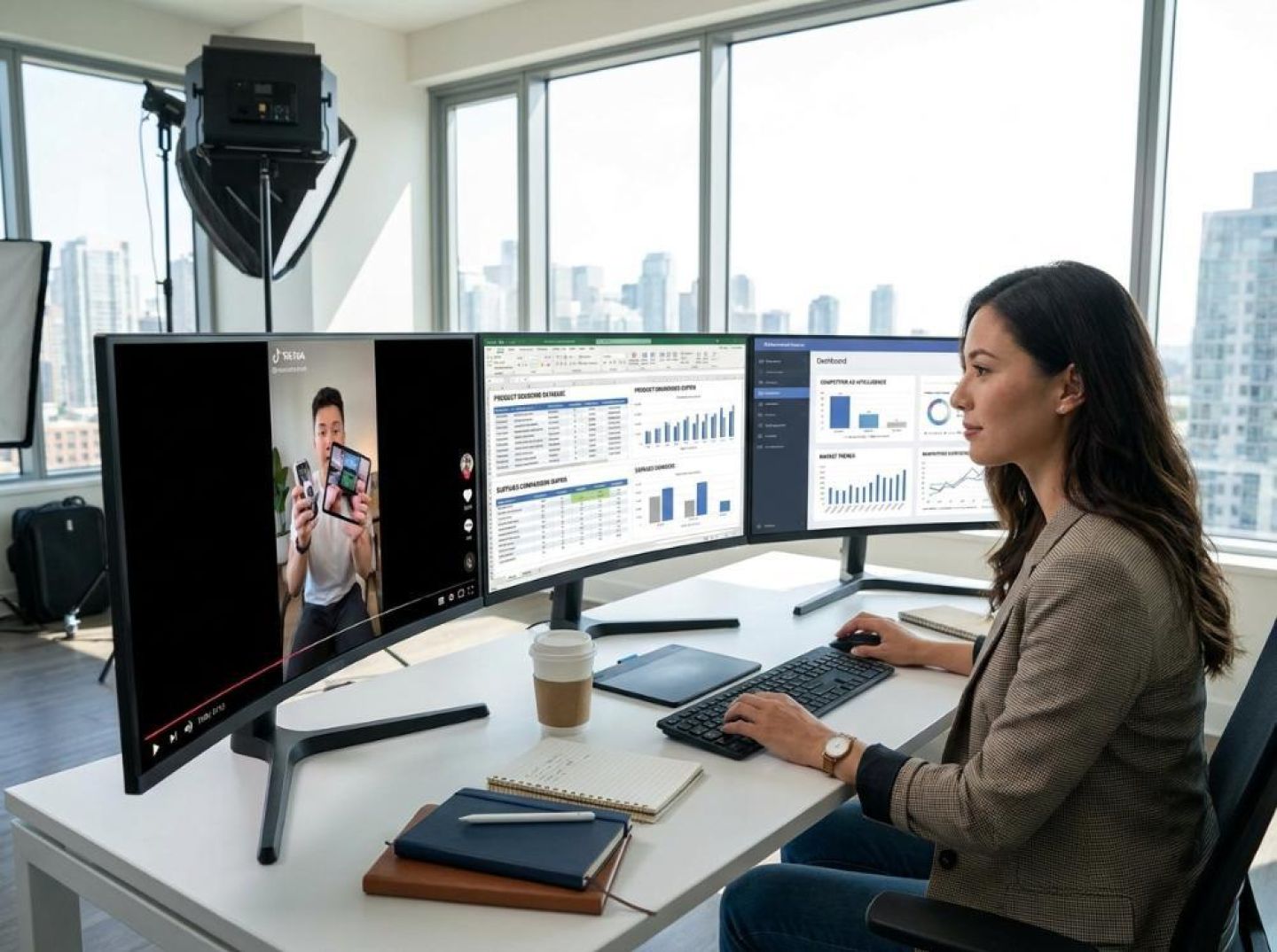
Step 2: Validate supply through Anstrex Dropship. Take your extracted keywords into the Anstrex Dropship database and search for matching products. You're looking for three things: supplier availability (do multiple suppliers carry this item or just one?), margin math (what's the cost relative to the price point you've seen in TikTok Shop or competitor stores?), and shipping windows (can you deliver fast enough that the trend is still warm when the package arrives?). If the product appears from several suppliers at competitive costs, you have the logistics to move. If no supplier carries it yet, you've either misidentified the product or found something too niche to dropship profitably at scale.
Step 3: Check advertiser activity on Anstrex Instream. This is where the method earns its edge. Search for your product keywords — and close variations — in Anstrex's native and in-stream ad intelligence. If established advertisers are already running creatives, study their angles, hooks, landing page structures, and calls to action. You're not copying; you're reading the competitive terrain. If you find no ad presence for a product that is already generating viral engagement on TikTok, you've identified an early-mover window where demand exists but paid acquisition hasn't caught up.
Step 4: Read the ad-volume trajectory. A product showing a rapid increase in the number of unique ad creatives on Anstrex signals an influx of competitors — margins will compress and ad costs will rise. A product with strong TikTok virality but a flat or nonexistent ad footprint signals untapped opportunity. The sweet spot is a product that has just started to appear in a handful of ad campaigns — enough to confirm commercial viability, few enough that the auction isn't yet saturated. Timing ad exposure to high-engagement cultural moments is critical, and Anstrex's historical data lets you map whether you're arriving at the front of that wave or its tail.
What this four-step loop produces is a confirmation layer. TikTok gives you the demand signal; Anstrex Dropship tells you whether the supply chain can support it; Anstrex Instream tells you whether competitors have already operationalized it. The entire cycle — from spotting a video to making an inventory decision — can happen in under thirty minutes if your workflow is disciplined. And in a commerce environment where TikTok Shop generated $15.82 billion in U.S. sales in 2025 with growth accelerating, thirty minutes of systematic validation is worth more than thirty days of guessing.
Every TikTok product trend has a heartbeat, and most dropshippers only feel the pulse after the patient is already flatlining. The lifecycle is remarkably compressed — far shorter than what e-commerce sellers trained on Amazon seasonality or Google Trends curves expect — and understanding its phases is the difference between riding a wave and drowning in its wake.
The typical arc unfolds across roughly ten to twenty-one days. During the first three days, a handful of organic creators seed the concept. Maybe it's a hotel-room hack involving a portable door lock, or a "coastal grandmother" kitchen restocked with matching amber glass containers. At this stage, the videos are genuine, unsponsored, and algorithmically untested. Engagement is real but small. Then, between days four and ten, TikTok's recommendation engine does what it was built to do: the For You Page explosion begins. The algorithm identifies strong completion rates and share velocity, then pushes the content to exponentially larger audiences. This is the golden window — demand is surging, but supply-side competition among sellers is still thin because most haven't noticed yet. Days eleven through sixteen bring the copycats: reaction videos, duets, stitch compilations, and the first wave of commercial adoption from brands running paid promotions. By days seventeen through twenty-one, the trend is saturated. Ad costs spike as dozens of sellers bid on the same audience segments, margins compress to single digits, and consumers who wanted the product already bought it from whoever showed up first.
The problem with curated "trending product" lists, AliExpress bestseller pages, and weekly roundup newsletters is structural: they are lagging indicators by design. A newsletter published every Friday is summarizing what already went viral on Monday. An AliExpress bestseller ranking reflects orders that were placed days ago by sellers who spotted the trend during its amplification window. By the time a dropshipper reads that roundup and begins sourcing, the trend is deep into the copycat phase or already past its plateau.
TikTok's own advertising infrastructure accelerates this compression further. The platform's sequential ad formats are engineered to capitalize on cultural moments and high-engagement windows, which means that the moment a trend crosses a visibility threshold, well-funded brands can flood the feed with polished creative, instantly crowding out smaller dropshippers who lack the budget to compete on CPMs. The advertising system itself becomes a trend-compression machine: it detects the same engagement signals that made the organic content viral, then lets big spenders amplify on top of the wave, shortening the window in which lean operators can profitably ride organic discovery.
TikTok Shop compounds the velocity problem. Because the platform enables products to gain rapid popularity through in-app viral features, the distance between "I saw this in a video" and "I just bought this without leaving the app" has collapsed to a single tap. That seamless purchase path means demand doesn't linger — it converts almost instantly, and by the time traditional dropship infrastructure catches up, the addressable audience of impulse buyers has already been harvested.
The implication is clear: if your product-discovery workflow begins with someone else's curated list, you are systematically arriving at the party after the best margins have already walked out the door. The only reliable way to capture value from a TikTok-driven product trend is to be present during the organic seeding phase — days one through three — and to validate fast enough to launch during the algorithmic amplification window. As Semrush's ecommerce research emphasizes, brands that show the product solving a real problem in a real moment are the ones that convert — and on TikTok, that moment is measured in days, not weeks. Waiting for confirmation from a bestseller list doesn't reduce your risk. It guarantees you've already missed the trade.
Receive top converting landing pages in your inbox every week from us.
Guide
Most dropshippers treat TikTok virality as a buying signal when it is often already a late-stage indicator. This article explains how to look upstream at paid ad activity, advertiser entry, creative maturity, spend acceleration, and rate-of-change metrics to identify product opportunities earlier. It provides a practical scoring system and 48-hour audit to help dropshippers decide whether a viral product still has enough margin and market runway before entering.
Priya Kapoor
7 minAug 19, 2026
Guide
TikTok's booming sports creator ecosystem is creating new opportunities for dropshippers who know where to look. By tracking creator-led product demonstrations alongside competitor ads, sellers can identify emerging products before they become saturated. Combining organic creator trends with ad intelligence enables faster product validation, stronger creatives, and better margins in fast-moving sports niches.
Liam O’Connor
7 minAug 5, 2026
In-Depth
Performance marketers are winning bigger marketing budgets because they can prove ROI quickly, communicate in financial metrics executives trust, and leverage competitive intelligence to make smarter investment decisions. As brand teams struggle with attribution and internal influence, data-driven performance marketing continues to gain organizational advantage.
Liam O’Connor
7 minJul 23, 2026






 Is a Goldmine Signal for Dropship Product Discovery)