9 minMay 29, 2026

Our dropship tool integrates with Shopify and Woo-Commerce stores and automates your entire dropshipping business!
Get StartedGoogle just handed marketers something they've been jury-rigging for themselves with regex filters and custom channel groups: a dedicated AI Assistant channel inside GA4's Default Channel Group reports. As Semrush detailed in its breakdown, the update automatically classifies visits from recognized AI assistants using a new ai-assistant medium value, slots them into an "AI Assistant" channel group, and tags each session with an (ai-assistant) campaign name. No manual configuration required. If someone clicks through to your site from ChatGPT, Gemini, or Claude, GA4 now handles the categorization that used to demand ongoing maintenance as AI platforms changed domains and spawned new traffic sources.
This matters less for what it does and more for what it signals. By placing AI referral traffic alongside Organic Search in standard reports, Google is effectively telling the market that AI assistants are a distribution surface worth optimizing for — not an edge case to monitor passively. That legitimizing gesture is the real news. The underlying data, as Semrush itself acknowledged, is largely a repackaging of information GA4 was already collecting. It's a UI upgrade dressed in strategic clothing.
And that's where the dashboard trap springs shut.
The moment a new default channel appears in your GA4 reports, the instinct is to celebrate. You finally have a number. You can track it over time, benchmark it against organic, report it in your monthly deck. But the limitations are significant, and they're precisely the kind that breed false confidence. As MarTech noted in its coverage, the AI Assistant channel only works when GA4 can detect a referrer — meaning traffic from copied links, mobile apps, or in-app browsers may still collapse into the Direct bucket with no AI attribution whatsoever. Google also hasn't published a complete list of supported AI referrers; MarTech flagged the uncertainty around whether platforms like Perplexity or Microsoft Copilot are included in the initial rollout.
So what you're actually looking at is a partial count of your own inbound AI traffic, with unknown coverage gaps, on a platform-by-platform basis that Google hasn't fully disclosed. That's useful as a baseline. It's dangerous as a strategy.
Here's the intelligence gap that no amount of GA4 configuration will close: the channel tells you nothing about your competitors. It can't show you which rival pages are earning citations in ChatGPT responses for the queries you care about. It can't reveal whether a competitor restructured their content to improve AI discoverability, or whether they're running experiments with schema markup, entity optimization, or conversational content formats that make them more citable. GA4 is a rearview mirror bolted to your own car. It confirms that AI traffic exists and gives you volume trends for sessions that made it through the referrer-detection gauntlet — but it's entirely backward-looking and self-contained.
The risk is that marketing teams treat this channel the way many treated the Knowledge Panel years ago: as proof of presence rather than a prompt for deeper competitive analysis. You check the number, see it growing, and assume you're keeping pace. Meanwhile, a competitor whose AI referral traffic you can't see is systematically earning citations in the responses your prospects are reading before they ever reach a search engine. The GA4 update is a lagging indicator. To understand what your competitors are actually doing to capture AI-driven demand, you need to look well beyond your own analytics dashboard.
Not all traffic is created equal, and the visitors arriving from AI chatbots are proving that in ways that should make every competitive analyst sit up and reconsider their dashboards. The emerging data doesn't just show that AI referral traffic is growing — it shows that this traffic is fundamentally more valuable on a per-visit basis than nearly any other channel in your mix.
The numbers are striking. Simon Heaton, Director of Growth Marketing at Buffer, shared that his team observed conversion rates 185% higher than organic search from AI chatbot referrals. That's not a marginal lift you can afford to table for next quarter's roadmap — it's a near-tripling of conversion efficiency from a single channel shift. And Buffer's experience isn't an outlier. Adobe's Q2 2026 AI traffic report found that AI-referred traffic generated conversion rates 42% higher than traditional search traffic across the broader web, even as the volume of that traffic surged 393% year-over-year. Whether you take the more conservative Adobe figure or the more dramatic Buffer data, the directional conclusion is the same: visitors who arrive via AI recommendation are disproportionately likely to take action.
The reason has everything to do with how the journey works before the click ever happens. When someone asks ChatGPT or Perplexity for a product recommendation, the AI synthesizes options, weighs trade-offs, and presents a curated answer. By the time a user clicks through to your site, they've already had their questions answered by the model. As Ahrefs explains, someone who clicks a citation in a chatbot response has already received an AI-generated answer and decided they want more — making it a deliberate click rather than an exploratory one. This is what researchers are calling the "verification click": the user isn't browsing, they're confirming a decision that's effectively already been made.
Kevin Indig's study of 48 participants making high-stakes purchases underscores just how filtered this intent really is. Sixty-four percent of AI Mode users clicked nothing at all — they got what they needed without leaving the chatbot. Of the 23% who did click through, most visited to confirm a choice already made, not to explore alternatives. That means the thin slice of traffic that actually reaches your site represents the most committed, highest-intent segment of an already-purposeful audience.
Now translate that behavioral insight into competitive terms. If AI-referred visitors convert at roughly double the rate of organic search visitors, then every citation your competitor earns — and you don't — represents not just a lost visit but a lost visit that was twice as likely to generate revenue. The asymmetry compounds over time. A competitor who earns consistent AI citations builds a reinforcing loop: more conversions fund more content investment, which builds more authority, which earns more AI citations. Meanwhile, the brand that's absent from AI recommendations doesn't just miss out on incremental traffic — it misses out on the best-converting incremental traffic, widening the revenue gap with each quarter.
This is why treating AI visibility as a nice-to-have or a future initiative is so dangerously miscalibrated. HubSpot's own research notes that AI-referred visitors already convert at 4.4 times the rate of organic visitors from traditional search in some categories, yet only 22% of marketers currently track AI visibility at all. That gap between the channel's value and the industry's attention to it is the competitive window — and it's closing faster than most teams realize. The brands that read their competitors' moves in this space today will be the ones setting the pace everyone else scrambles to match tomorrow.
GA4's new AI Assistant channel is a genuine step forward, but it's important to be honest about what it actually gives you: a view of your own data, nothing more. It's a mirror, and mirrors are useful — you can see your own reflection clearly enough. But the most consequential moves in any competitive landscape happen outside your line of sight, in the strategies your rivals are testing, the citations they're earning, and the audiences they're capturing before those visitors ever consider your brand.
The blind spots are significant. First, GA4 tells you nothing about your competitors' AI traffic volumes. You can see that your own AI Assistant channel drove 2,000 sessions last month, but you have no idea whether your closest competitor received 200 or 20,000. Without that comparative context, your own numbers are nearly meaningless — you can't tell whether you're leading the category or falling catastrophically behind. Second, you can't see which specific pieces of competitor content earn citations from AI systems. When ChatGPT recommends a rival's product guide or Perplexity surfaces a competitor's comparison page, that citation event is invisible to your analytics entirely. Third, you have no visibility into what prompts trigger those citations — the actual questions users are asking that cause AI models to recommend one brand over another. And fourth, as MarTech noted in its coverage of the update's limitations, GA4 can't even reliably capture all of your own AI traffic, since visits from copied links, mobile apps, or in-app browsers often appear as Direct traffic when referral data gets stripped before the session reaches your site.
This is precisely where external competitive intelligence tools become essential. Platforms designed for AI visibility monitoring can surface the data GA4 structurally cannot provide — tracking which brands appear in AI-generated responses across categories, identifying the content formats and topical authority signals that correlate with citation frequency, and benchmarking your share of AI visibility against specific competitors. As HubSpot's analysis of AI search analytics tools explains, competitive intelligence in this space means seeing which competitors appear alongside your brand — or instead of it — for high-intent prompts, giving you the directional data needed to reallocate resources before traffic gaps widen.
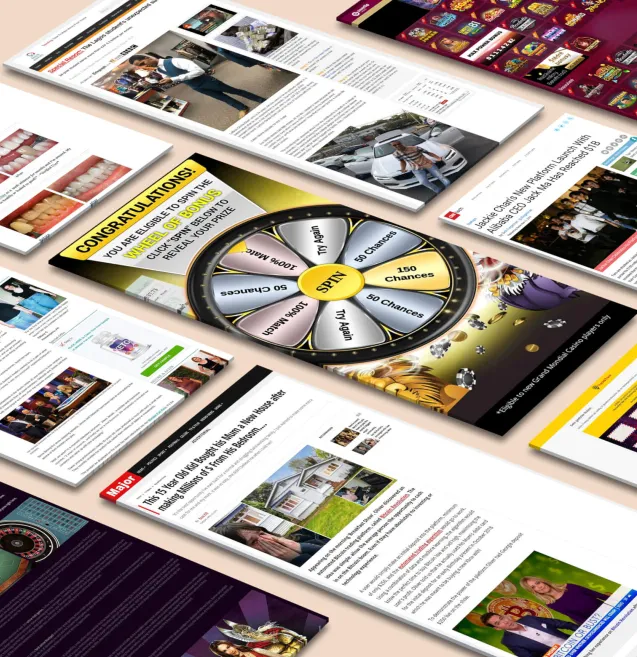
But there's an even more immediate signal most teams overlook: competitor ad creative. When a rival shifts paid budget toward content formats, messaging themes, or landing page structures that align with AI citation patterns — emphasizing structured comparisons, authoritative Q&A formats, or semantically rich product narratives — that creative shift is a leading indicator of strategic intent. You can observe these moves through native ad monitoring and push ad tracking before they manifest as traffic advantages in any analytics platform. A competitor investing in long-form comparison content distributed through native channels isn't just chasing clicks; they're building the kind of semantic authority that AI models favor when assembling recommendations.
The distinction matters because AI traffic advantages compound. A competitor that earns consistent citations today builds the topical authority that earns even more citations tomorrow. By the time that advantage shows up as a widening gap in your own GA4 reports, you're already several strategic cycles behind. The question that should drive your competitive analysis isn't "how much AI traffic am I getting?" It's "how much are my competitors getting, what are they doing to earn it, and what signals can I read right now — in their ad creative, their content distribution, their landing page architecture — that reveal their strategic bets before those bets fully pay off?" GA4 gives you the mirror. Competitive intelligence gives you the window. In a channel growing at 393% year over year, the window is where the leverage lives.
Your GA4 dashboard is a rearview mirror. By the time AI referral traffic shows up in your own reports, the market has already moved — and the competitors who moved it have been running tests for weeks. The real leading indicator isn't your analytics; it's what your competitors are doing with their ad creative right now.
Start with messaging shifts. When a competitor who previously ran benefit-driven native ads — "Save 30% on project management" — suddenly pivots to headlines like "The #1 Cited Tool by Industry Analysts" or "Recommended by Leading Research," that's not a random copywriting experiment. They're engineering authority signals. AI assistants synthesize recommendations based on perceived expertise and consensus, and 73% of B2B buyers now use AI tools in their purchase research, which means competitors who front-load credibility markers in their ads are optimizing for a discovery channel that traditional click-through metrics don't fully capture. Watch for language that mirrors how AI tools present recommendations: phrases like "top-rated," "expert-verified," or "compared across categories" are tells that a brand is aligning its paid messaging with the formats AI systems favor.
Next, monitor landing page structure behind those ads. If a competitor's native ad used to send traffic to a short-form product page and now routes to a long-form comparison guide, an FAQ-structured resource, or a page dense with cited statistics and named expert quotes, they're building citation-friendly assets. These formats — structured data, clear entity references, comprehensive topical coverage — are precisely the content architectures that earn AI platform citations. As Semrush has documented, brands that optimize for citation are the ones compounding their advantage as AI channels grow. A landing page redesign visible through ad monitoring tells you a competitor has internalized that logic and is investing in dual-purpose content: pages that convert paid traffic and attract AI crawlers simultaneously.
Then look at content type rotation. Pull up any competitive ad intelligence tool and track the mix over 30, 60, and 90-day windows. A sudden increase in promoted comparison content, "versus" articles, definitive guides, or expert roundups signals strategic intent. These are the exact content formats that AI chatbots prefer to cite — because as Ahrefs has shown, users who click through from AI tools have typically already decided and are visiting to verify a choice, meaning the content that earned the citation did the heavy persuasion work before the click ever happened. A competitor flooding native networks with this kind of content isn't just buying traffic; they're seeding the information ecosystem that AI models draw from.
Finally, track budget reallocation signals. When a competitor's ad frequency spikes on specific publisher categories — technology review sites, industry publications, trusted media outlets — while declining on broader programmatic inventory, they're likely concentrating spend where AI crawlers index most aggressively. Higher frequency on authoritative placements costs more per impression but builds the citation footprint that drives AI referral traffic.
Build a simple monthly audit: screenshot competitor ad creative, catalog landing page formats, log content type distribution, and note placement concentration. This surveillance playbook won't just tell you what competitors are doing — it will tell you why they're doing it, often months before the results show up in anyone's GA4 channel report. The advertisers who treat creative monitoring as competitive intelligence, rather than mere inspiration, are the ones who'll own the AI discovery layer before the rest of the market even notices it exists.
The marketers who pull ahead in the AI traffic race won't be the ones with the prettiest dashboards — they'll be the ones who built an intelligence system that connects their own performance data to what competitors are doing in the market right now. The setup cost is a few hours of configuration. The delay cost is losing ground every week you don't have visibility into a channel that, according to Adobe's Q2 2026 data, surged 393% year-over-year and converts at rates 42% higher than traditional search. Here's how to build the stack, step by step.
Step 1: Establish your GA4 AI Assistant benchmark. Before you can measure progress, you need a clean starting line. GA4's new AI Assistant channel gives you a dedicated view of traffic arriving from ChatGPT, Gemini, Perplexity, and other AI platforms, but as Semrush notes, the rollout is gradual and the channel may not yet be visible in every account. If you don't see it, build the baseline manually: create a custom segment in GA4 filtering referral sources against a regex pattern covering chatgpt.com, perplexity, gemini.google.com, copilot.microsoft.com, claude.ai, and other major AI domains. This won't capture every visit — Ahrefs has documented that some AI chatbot traffic still lands in your direct or unlabeled referral buckets, particularly from mobile apps — but it gives you a workable baseline to measure against. Record your current weekly AI referral sessions, conversion rate, and top landing pages. That's your benchmark. Everything else in this stack is designed to move those numbers.
Step 2: Audit your AI crawler access. Your robots.txt file is quietly determining whether AI platforms can even find your content. Run a site audit checking whether you're inadvertently blocking crawlers like ChatGPT-User, OAI-SearchBot, Perplexity-User, or Claude-SearchBot. As Semrush's guidance on the new GA4 channel puts it bluntly: if AI bots can't crawl your site, they can't cite it, and your AI Assistant channel will reflect that gap. While you're at it, check your competitors' robots.txt files — they're publicly accessible. A competitor who recently unblocked AI crawlers is signaling a strategic pivot you should know about.
Step 3: Set up competitor ad creative monitoring. As we covered in the previous section, ad creative shifts are leading indicators. Use competitive intelligence tools to track messaging changes across native, push, and paid social channels. When competitors start running creative that mirrors AI-generated recommendation language — "top-rated," "most recommended," "expert-verified" — they're adapting their funnel to capture the high-intent visitors that AI platforms send.
Step 4: Track competitor AI citation patterns. This is where the system gains its edge. Tools like Semrush's AI Visibility Toolkit let you see which competitor URLs are being cited by AI platforms, the prompts triggering those citations, and citation volume by platform. Cross-reference this with what HubSpot's analysis confirms: only 22% of marketers currently track AI visibility, meaning the competitive window for early movers remains wide open.
Step 5: Close the loop. None of these steps matter in isolation. The power is in the feedback cycle: GA4 shows your baseline performance → competitor ad monitoring reveals where rivals are placing bets → AI citation tracking confirms which of those bets are earning visibility → you adjust your own content and creative before the window closes. Review this loop weekly. The brands that compound their advantage aren't reacting to quarterly reports — they're reading signals in real time and adapting before the data even hits their own dashboards.
Every channel in digital marketing has a lifecycle: a brief window where early adopters gain outsized returns before the tactic matures, commoditizes, and becomes something everyone does. AI referral traffic optimization is squarely in the "early majority" phase right now — visible enough that sophisticated marketers are acting on it, but not yet standardized enough to be table stakes. The data makes this positioning unmistakable. Despite AI-referred visitors already converting at 4.4 times the rate of organic visitors, only 22% of marketers currently track AI visibility at all. That gap between impact and adoption is the definition of a first-mover window.
And this particular window has a structural feature that makes it more consequential than most: compounding returns through citation persistence.
When a traditional search algorithm ranks your page, that ranking is recalculated with every crawl. A competitor can publish something better tomorrow and displace you by next week. AI citations don't work the same way. Once an AI model learns to reference your content as a reliable source for a given topic, that citation tends to persist across future conversations on the same subject. The model has, in effect, absorbed your authority into its training data or retrieval index. Dislodging an established citation requires a competitor to not just match your content but to build enough semantic authority and structured data presence that the AI system updates its understanding of who the definitive source is. That process is slower and harder than outranking a page in traditional search.
This is why waiting carries a cost that compounds in the opposite direction. Every month a competitor spends optimizing their content for AI discoverability — structuring it with schema markup, building machine-readable product data, and establishing themselves as what Real FiG Advertising + Marketing describes as "trusted sources of information that AI systems can easily interpret and reference" — is a month their citations are hardening into the AI ecosystem while yours remain absent.
The infrastructure signals confirm the timing. Google's decision to build a dedicated AI Assistant channel directly into GA4 tells you everything about where this is headed. When the dominant analytics platform creates a first-party tracking mechanism for a traffic source, that source has crossed from experimental curiosity to strategic priority. It also means the measurement barrier — one of the last legitimate excuses for inaction — has been largely removed. The data is now arriving automatically; ignoring it is a choice.
Consider the trajectory in raw numbers. AI-referred traffic surged 393% year-over-year according to Adobe's Q2 2026 report, and Google AI Overviews now appear in roughly a quarter of all searches. ChatGPT alone has surpassed 800 million weekly active users. These are not projections about a future state — they describe the current landscape. And because AI shopping assistants are actively shortening the path from discovery to purchase through automated product comparisons and recommendation filtering, the brands that get cited early in that compressed journey capture a disproportionate share of high-intent traffic.
The uncomfortable truth is that the compounding nature of AI citations means the cost of delay isn't linear. Each quarter you wait doesn't just mean missing that quarter's AI traffic — it means letting competitors cement their position in a system that rewards incumbency. The window where optimization effort translates into durable competitive advantage is open now. It won't stay open indefinitely. And unlike most marketing channels, you won't get a second chance to be the source an AI model learned to trust first.
Receive top converting landing pages in your inbox every week from us.
In-Depth
Explore what Pure Leaf’s “Break Conference” reveals about the gap between polished brand marketing and measurable performance. This guide breaks down how Native, Push, TikTok, and affiliate-style funnels use creative testing, clear offers, first-party data, and hard performance metrics to turn cultural moments into revenue.
Rachel Thompson
7 minOct 1, 2026
Must Read
Explore why traditional OOH experience is no longer enough as out-of-home advertising becomes more data-driven, measurable, and connected to digital channels. This guide outlines the cross-channel, measurement, AI, and competitive-intelligence skills modern OOH employers and candidates need.
David Kim
7 minSep 25, 2026
How-To
Learn how to measure whether sports-star and celebrity advertising actually delivers efficient CPC, CPA, search lift, and downstream conversions. This guide shows how to test celebrity creative against creator alternatives and use competitive intelligence and measurement to turn expensive star power into a measurable performance asset.
Elena Morales
7 minSep 25, 2026