11 minJuly 10, 2026

Our spy tools monitor millions of native ads from over 60+ countries and thousands of publishers.
Get StartedThe numbers are stark enough that they should have escaped the SEO silo months ago. According to HubSpot's analysis of AI search behavior, roughly 60 percent of Google searches now end without a single click to any website. Zero-click searches, which hovered around 54 percent just a few years ago, have surged toward 72 percent as AI Overviews swallow the real estate that used to belong to ten blue links. And the damage isn't distributed evenly: Google serves AI Overviews for non-branded queries 1.9 times more often than for branded ones, which means the category-level discovery searches — "best project management tool," "CRM for small teams," "how to automate invoicing" — are exactly where the click collapse hits hardest.
Every marketer who has encountered these stats has probably also encountered the same prescription: optimize for AI citations, build topical authority, pursue answer-engine optimization alongside traditional SEO. That advice isn't wrong, but it's written for a specific audience — the SEO practitioner whose job is to win organic visibility. If you're a media buyer, a growth lead, or a CMO allocating budget across channels, the actionable signal is completely different, and almost nobody is spelling it out for you.
Here's the signal: the organic warm-up layer your paid strategy quietly depended on is disintegrating.
Think about how the funnel actually worked for most B2B and high-consideration B2C brands over the past decade. A prospect searched a category term, clicked through to two or three blog posts, maybe downloaded a guide, and landed in your retargeting pool. By the time they saw your paid ad — on Instagram, in a YouTube pre-roll, in a display placement — they already had context. They knew your name, had a rough sense of your positioning, and could be nudged toward conversion with a well-timed offer. Your ad didn't have to introduce the brand and close the deal. Search did the warming; paid did the converting.
That handoff is breaking. As Search Engine Journal reported, the real risk emerging from Google's latest AI investments isn't that links will disappear — it's that fewer users will need them. Simple-answer content, the very material that once generated those early-funnel blog visits, is now the most exposed category, satisfied entirely inside the AI-generated response. Information agents launching this summer threaten to compress what used to be multiple search sessions into a single synthesized update that never routes a visitor to your site at all.
Meanwhile, the traffic that does arrive from AI-referred sources is three times more likely to convert — precisely because those visitors have already self-educated inside the answer engine and are arriving with purchase-level intent. That's a smaller, hotter audience, and it reshapes what your ads need to accomplish. You can no longer assume a prospect has read your thought-leadership piece before they encounter your paid creative. Increasingly, your ad is the first touchpoint and the last one, compressed into a single frame that must establish credibility, communicate differentiation, and drive action all at once.
Recognizing this shift is step one. Step two — and the one that separates brands gaining ground from those losing it — is studying who among your competitors has already restructured their advertising to account for a world where the click-through warm-up never happens. Their ad creative, landing pages, and media mix are leaving clues. You just have to know where to look.
For years, the middle of the funnel ran on autopilot. A prospect would Google "best project management software for remote teams," click through three or four comparison articles, skim a couple of "X vs. Y" breakdowns, and arrive at your retargeting pixel already half-convinced. By the time your paid ad appeared in their Instagram feed, they understood the category, knew the key differentiators, and just needed a nudge — a discount code, a free trial, a case study — to convert. That entire warming process happened organically, powered by blog posts and editorial roundups your team may not have even paid to produce. AI search has collapsed that journey into a single conversational exchange, and the downstream effects on paid media are only beginning to surface.
The mechanism is straightforward. When someone asks an AI assistant to compare options or explain the pros and cons of a product category, the system fans out across dozens of sources, synthesizes the most relevant findings, and delivers a consolidated answer — all before the user visits a single webpage. As the Moz Blog detailed in its analysis of AI visibility, the user journey now unfolds within the answer itself, with AI systems summarizing options, citing sources, and even enabling agentic checkout flows that reduce the incentive to click through at all. The shift from deterministic to probabilistic clicks means your carefully constructed consideration-stage content — the comparison pages, the educational guides, the "best X for Y" listicles — may still be feeding the AI's synthesis, but it is no longer feeding your analytics or your remarketing audiences. Prospects are making shortlist decisions inside a chat window, and your pixel never fires.
This hollowing out is especially punishing for paid media buyers who relied on organic content as a silent qualification layer. Direct-response campaigns have historically assumed a certain baseline of category awareness: the prospect knows what the product does, understands roughly what it costs, and has at least a passing familiarity with the brand. That assumption was never the product of the ad itself — it was the residue of three blog visits and a YouTube review that happened days earlier. Now that AI is absorbing and re-presenting those intermediate touchpoints, advertisers are essentially serving performance creative to audiences that are colder and less informed than their historical benchmarks would suggest.
The data supports the concern. Neil Patel has documented how some publishers have experienced traffic declines of up to 60 percent as AI platforms absorb search volume, and even though AI referral visits surged 357 percent year-over-year, they still account for less than one percent of total web traffic. The practical takeaway is blunt: the organic content that once pre-qualified your paid audiences is generating a fraction of the page views it used to, while the AI systems consuming that content return almost no measurable traffic in exchange.
For performance marketers, this creates an uncomfortable new mandate. Your ad creative can no longer lean on the assumption that the viewer has done their homework. It must either compress the education — the category context, the differentiators, the social proof — into the ad unit itself, or it must find entirely new ways to warm audiences before ad exposure. The brands already adapting to this reality are visible in their creative: longer video ads that teach before they sell, carousel formats that walk through comparison criteria, and landing pages that replicate the mid-funnel journey a blog post used to provide. They have recognized that the unpaid workhorse of the consideration stage has been quietly retired, and they are rebuilding that function inside the media they control.
Most competitive intelligence playbooks still revolve around keyword gaps, backlink profiles, and content overlap. Those signals matter, but they're lagging indicators — they tell you what a competitor built six months ago to capture search traffic that may no longer arrive. The richest real-time signal of how your competitors are responding to the collapse of organic discovery isn't hiding in their blog strategy or their SERP rankings. It's sitting in plain sight inside ad libraries and spy tools: Facebook Ad Library, native ad platforms like Taboola and Outbrain, push notification databases, and the creative archives that track every variation a brand tests.
Here's the pattern worth watching. A competitor that spent the last three years running tight retargeting ads — "You left something in your cart," "Come back and finish your purchase," "Still thinking it over?" — suddenly pivots to long-form, advertorial-style native ads that educate a cold audience on the problem, walk them through the solution, and convert them at the bottom of the same page. That's not an A/B test on headline copy. That's a strategic response to losing the organic warm-up funnel we discussed in the previous section. They've realized their retargeting pool is shrinking because fewer people are clicking through mid-funnel content in the first place, and they're compensating by building self-contained ad experiences that don't assume any prior search-driven touchpoint.
The data supports why most brands are blind to this shift. According to HubSpot's analysis of AI search analytics tools, only 22 percent of marketers currently track AI visibility — meaning the remaining 78 percent aren't even measuring how much organic exposure they've lost to AI-generated answers. If you aren't quantifying the erosion, you certainly aren't connecting that erosion to the downstream need for a fundamentally different paid creative strategy. You're still running retargeting campaigns against a warm audience that is quietly evaporating, wondering why cost per acquisition keeps climbing.
But that 22 percent who are tracking it? Their ad creatives tell a different story. Watch what those brands are doing in native and push channels. You'll see education-heavy direct-response ads that function as complete micro-funnels: a hook built around a specific pain point, a narrative that establishes credibility and context (the work that blog content used to do organically), and a conversion mechanism embedded directly in the experience. They've internalized what WordStream's study on AI Overviews made painfully clear — that increased AI mentions deliver minimal traffic impact and that citations in AI-generated answers are inconsistent enough that you can't bank your pipeline on them. So instead of optimizing for a citation that might disappear tomorrow, these brands are buying the attention they used to earn and packaging the education they used to distribute across three blog posts into a single paid touchpoint.
This is why ad spy tools have become the most underrated competitive intelligence asset in 2026. Keyword gap analysis tells you a competitor is targeting "best CRM for small business." Their ad library tells you they've stopped assuming anyone will ever find that article organically. When you see a brand shift budget from short retargeting units to long-form native advertorials, you're watching a company re-architect its entire acquisition model in real time. The creative is the strategy memo — you just have to know how to read it.
Once you know what to look for, competitor ad creatives become a remarkably precise diagnostic tool. The shifts aren't subtle — they follow four distinct patterns, and spotting even two of them in a single competitor's ad library means they've internalized the new reality and restructured accordingly.
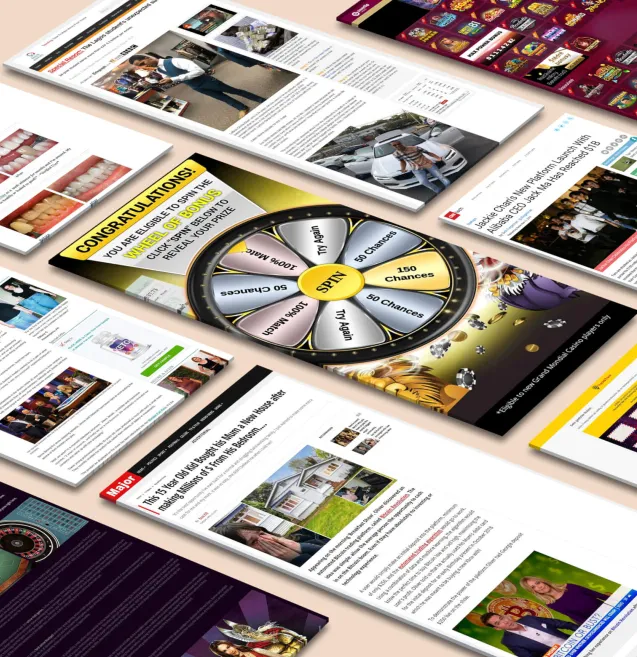
Longer ad formats and advertorials replacing short click-bait headlines. When a competitor that once ran punchy five-word native headlines starts publishing 800-word advertorials or extended carousel ads that walk readers through an entire problem-solution arc, they're compensating for a loss upstream. The educational content that used to live on their blog — the "what is X" and "how to choose Y" guides — no longer reliably attracts organic visitors because AI systems now synthesize those answers before anyone clicks. So the ad itself has to do the teaching. Watch for competitors buying sponsored content placements on publisher sites or running Facebook ads that link to long-form "story" landing pages rather than product pages. The ad unit has absorbed the middle of the funnel.
Problem-aware rather than solution-aware messaging. This is the subtlest shift, but it's the most telling. Ads that open with "Tired of juggling spreadsheets across three time zones?" instead of "Try the #1 project management tool" are written for an audience that never completed the category-research phase on their own. As HubSpot's research on AI search behavior has documented, branded search is holding up while category-term discovery is collapsing — meaning prospects still search for names they already know but are far less likely to browse their way through a "best tools for X" listicle. Competitors using problem-aware copy are acknowledging that their ads may be the prospect's first encounter with the entire product category, not just their brand.
Embedded social proof and comparison directly inside ad creative. Screenshot a competitor's ad and look for star ratings, pull quotes from reviews, "vs." framing, or language like "recommended by" and "chosen over." All of that context used to live on landing pages, third-party review sites, and organic comparison articles that prospects found mid-funnel. Now, as Moz's analysis of agentic commerce flows makes clear, AI platforms are introducing e-commerce integrations and even agentic checkout that shift where conversions occur — sometimes the buyer never reaches your comparison page at all. Smart advertisers respond by compressing the entire trust-building layer into the ad unit itself. If you see a competitor's push notification or native ad containing a mini-comparison table or an embedded testimonial, they're not being lazy with design — they're assuming the prospect will never visit a separate review page.
Branded creative increasing relative to category-term creative. Pull a competitor's Meta Ad Library history or review their display network presence over the past six months. If the ratio of brand-name ads to category-keyword ads is climbing, that's a strategic bet on the one search behavior that still reliably generates clicks. Category queries increasingly terminate inside AI Overviews, but when someone searches a specific brand name, they almost always click through. Competitors flooding the zone with brand-awareness creative — logo-forward video, founder-story content, tagline repetition — are investing in the query that bypasses the AI summary entirely.
When you see a competitor executing two or more of these shifts in parallel, resist the temptation to dismiss it as random creative testing. They've read the data. They understand that the funnel no longer has a free organic education layer in the middle, and they're rebuilding that layer inside paid media. The question is whether you'll recognize the pattern before their restructured funnel starts pulling your prospects away from a discovery journey that, increasingly, no longer exists.
Every metric you're using to evaluate ad performance is under siege from a problem most marketers acknowledge privately but rarely confront publicly: a substantial and growing share of the clicks, impressions, and engagement signals feeding your dashboards are generated by bots, not humans. This isn't a peripheral issue — it's the foundational crack that makes the entire click-based measurement paradigm unreliable, and it's precisely why understanding what your competitors are actually doing (rather than what their metrics appear to show) has become non-negotiable.
The scale of the problem is staggering. Industry estimates suggest that invalid traffic — encompassing everything from simple crawler bots to sophisticated click farms — accounts for anywhere between 20 and 40 percent of all digital ad interactions in certain channels. When AdExchanger reported that the biggest buyers of garbage made-for-advertising inventory are AI-powered platform ad products, which target people in cheap and often discreditable locations around the web to generate attributable clicks and impressions, they exposed a systemic incentive problem: the very algorithms optimizing your campaigns are drawn to the cheapest available signals, and those signals are disproportionately fraudulent. When platforms report that a campaign "performed," a meaningful portion of that performance may have been manufactured by non-human traffic that will never convert, never remember your brand, and never buy your product.
This contamination doesn't just waste budget — it poisons your ability to learn. If 30 percent of the clicks on a landing page variant are bots, your A/B test results are meaningless. If bot traffic inflates engagement on one channel over another, your media mix modeling sends you in exactly the wrong direction. And if your competitors appear to be getting massive engagement on certain ad formats, you can't trust that signal at face value without understanding whether the engagement is real.
This is where spy tools become not just useful but essential for survival. When you examine a competitor's actual creative evolution — what messages they're running, what formats they're investing in, how their landing page strategy has shifted — you're looking at decisions made by humans with access to their own first-party data. Those decisions are the cleansed signal. A competitor who has moved from click-optimized short-form ads to long-form advertorials with embedded lead capture isn't doing so because their bot-inflated click metrics told them to. They're doing it because their first-party conversion data — the revenue, the pipeline, the qualified leads that actually materialized — told them the clicks were hollow.
The information-agent future that Search Engine Journal described — where AI systems monitor content, synthesize it, and deliver answers without generating a visit that shows up in analytics — compounds this further. When legitimate human visits decline because AI intermediaries satisfy queries before a click happens, bot traffic represents an even larger proportion of whatever clicks remain. Your click-through rates may look stable or even healthy, but the composition of those clicks has shifted dramatically toward non-human actors.
The logical response, and the one your most sophisticated competitors have already embraced, is to stop treating third-party engagement metrics as a source of truth entirely and instead build measurement systems around first-party data: email signups with verified domains, phone calls that actually connect, demo requests from real companies, purchases from real payment methods. When you see a competitor's ads driving toward gated content, community enrollment, or direct-response mechanisms that require genuine human identity, you're witnessing their answer to the bot traffic crisis. They've accepted that the only trustworthy signal is one they collect themselves, verified through interactions that bots cannot easily fake. The spy tool doesn't just show you their creative strategy — it reveals which competitors have stopped believing their own dashboards and started building systems that actually work.
Receive top converting landing pages in your inbox every week from us.
In-Depth
Explore what Pure Leaf’s “Break Conference” reveals about the gap between polished brand marketing and measurable performance. This guide breaks down how Native, Push, TikTok, and affiliate-style funnels use creative testing, clear offers, first-party data, and hard performance metrics to turn cultural moments into revenue.
Rachel Thompson
7 minOct 1, 2026
Must Read
Explore why traditional OOH experience is no longer enough as out-of-home advertising becomes more data-driven, measurable, and connected to digital channels. This guide outlines the cross-channel, measurement, AI, and competitive-intelligence skills modern OOH employers and candidates need.
David Kim
7 minSep 25, 2026
How-To
Learn how to measure whether sports-star and celebrity advertising actually delivers efficient CPC, CPA, search lift, and downstream conversions. This guide shows how to test celebrity creative against creator alternatives and use competitive intelligence and measurement to turn expensive star power into a measurable performance asset.
Elena Morales
7 minSep 25, 2026