

9 minJuly 10, 2026

Our spy tools monitor millions of native ads from over 60+ countries and thousands of publishers.
Get StartedThere are two clocks ticking in modern advertising, and they are badly out of sync. On one side sits the brand advertiser: campaign timelines measured in quarters, creative processes gated by concept reviews and brand-safety committees, and media plans locked months before the first impression ever serves. On the other side sits the performance marketer — the affiliate buyer, the direct-response specialist, the solo operator running native ads or push traffic — who launches a campaign at breakfast, kills the losers by lunch, and scales the winners before the brand team has even scheduled its next status meeting.
This gap is not merely stylistic. It is structural, and it explains why performance marketers have been able to dominate channels that brand advertisers still treat as exotic or disreputable. Native advertising, push notifications, pop traffic, in-page push — these formats were never featured in Cannes Lions case studies, never earned glossy write-ups in brand strategy decks. They were dismissed as "below the line," too scrappy and too transactional to warrant serious attention from CMOs chasing awareness lifts and emotional resonance. That snobbery, however reasonable its origins, created a massive vacuum — and performance marketers filled it not with bigger budgets but with a fundamentally faster feedback loop.
The irony is that the very measurement infrastructure the broader industry has been building actually fuels the performance marketer's advantage. As On Device Research's Daniel Hill has argued, the recent emphasis on outcomes measurement and attribution models has "put people into a short-termist mindset," causing brands to sell more in any given quarter while the long-term power of their brands deteriorates. Hill's critique is aimed at the largest advertisers — the ones with budgets for sustained brand-building — but the observation cuts both ways. The short-termist infrastructure he describes (rapid testing, real-time attribution, granular creative feedback) is precisely the machinery that gives performance marketers their structural speed advantage on channels that reward iteration over contemplation. Brand advertisers adopted the language of performance without adopting its metabolism, and the result is an awkward middle ground: they measure like direct-response operators but still plan like television buyers.
Meanwhile, the tools that once separated big brands from scrappy competitors are converging. When every advertiser has access to the same AI-powered creative generation, the same automated bidding algorithms, and the same audience-modeling platforms, the old brand toolkit alone stops functioning as a moat. As MarTech has noted, speed itself has become a competitive advantage — brands that can test and adapt hundreds of creative variations quickly can respond to cultural moments, seasonal shifts, and competitive moves far faster than those locked into traditional production cycles. When execution is automated, differentiation comes from stronger inputs: clearer positioning, sharper messaging frameworks, and the willingness to let data reshape creative direction in real time rather than at the next quarterly review.
This is the central tension animating the rest of this article. Brand advertisers are not failing because their instincts about storytelling and emotional resonance are wrong — Hill himself notes that video and TV ads remain "incredibly good at moving those really hard metrics" like consideration. They are failing on certain channels because their operational tempo cannot keep pace with environments that reward relentless iteration. Performance marketers, unburdened by institutional inertia, built their entire practice around that tempo. Understanding how they did it — and what brand advertisers can borrow without abandoning long-term brand equity — is the key to closing the gap.
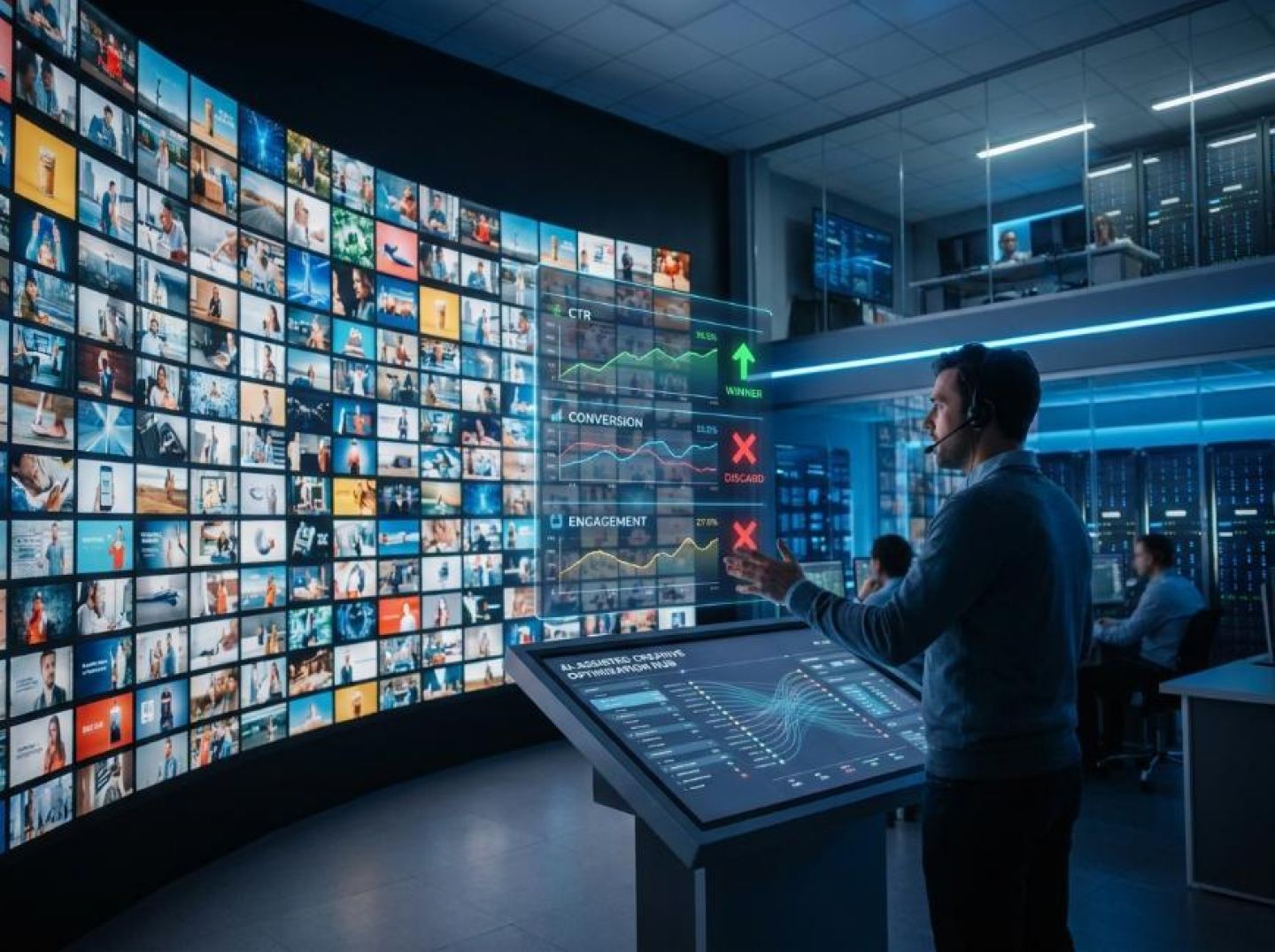
Before a performance marketer ever opens a blank page, they've already seen what's working. The traditional creative process — brief the team, brainstorm concepts, produce assets, test, learn, iterate — assumes you're starting from zero. Performance marketers don't start from zero. They start from a live, constantly updating map of what their competitors are running, where they're running it, how long it's been live, and how much they're likely spending to keep it live. The creative brief didn't die. It got replaced by a spy tool dashboard.
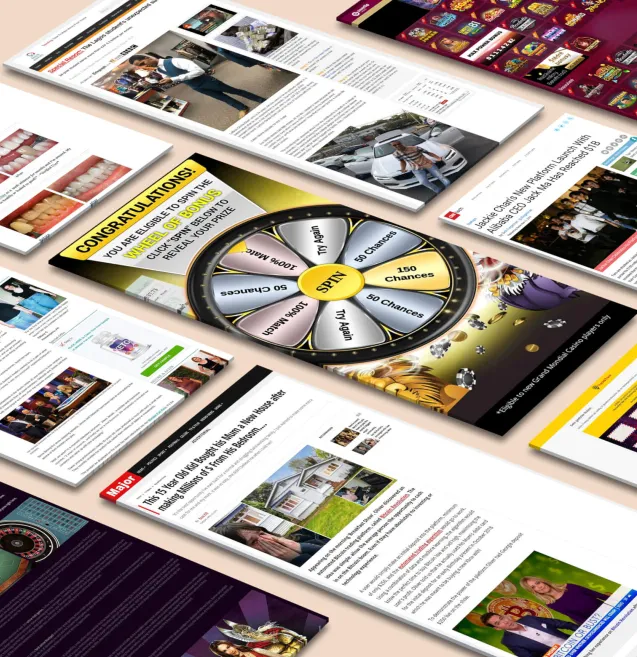
This inversion of the ideation process has deep roots in the affiliate marketing world, where tools like AdPlexity, Anstrex, and SpyPush became standard-issue software for anyone buying traffic on native, push, pop, or social channels. These platforms crawl ad networks at massive scale, cataloging creatives, landing pages, ad copy, geographic targeting, and traffic sources — then surfacing the campaigns that have been running longest, which serves as a reliable proxy for profitability. If a landing page has been active across multiple geos for sixty days, it's almost certainly making money. Performance marketers don't need to guess. They replicate the structure, improve the angle, and launch their own variation within hours.
What's changed is that this methodology is no longer confined to the fringes. Enterprise-grade competitive intelligence is catching up. As AdExchanger detailed in a recent analysis of Polaris AI's capabilities, "the most valuable signals in modern advertising are hidden in media allocation decisions, efficiency trends, placement strategies and channel shifts" — and critically, "they appear first in the auction," not in earnings calls or trade press. Polaris AI tracks competitor ad activity across social channels and the open web, delivering creative performance metrics including CTR, CPM, share of voice, and spend efficiency in real time. Its AI layer surfaces proactive alerts when competitor activity shifts and can be queried in natural language for on-demand competitive answers. This is the affiliate spy tool concept, rebuilt for brand-scale budgets and cross-channel visibility.
The strategic implication runs deeper than just copying ads. When you can see that a competitor's CPM is falling in a specific placement, or that they've suddenly concentrated budget in a new geography, you're not just gathering creative inspiration — you're reading their strategy in real time. And the response window is shrinking. As MarTech emphasized in its breakdown of AI-native advertising, "speed becomes a competitive advantage" because "brands that can test and adapt hundreds of variations quickly can respond to cultural moments, seasonal shifts, and competitive moves far faster than those relying on traditional production cycles." Performance marketers internalized this principle years before the trade press articulated it. The ability to test hundreds of creative variants and surface winners within days isn't a future aspiration for them — it's Tuesday.
This is what makes the gap between performance and brand so structural rather than merely tactical. Brand advertisers are still largely operating on the "imagine what might work" model: consumer insights decks, focus groups, creative concepting rounds, and production timelines that stretch across weeks or months. Performance marketers have flipped the sequence entirely. They observe what already works, deconstruct why it works, produce variations at speed, and let live traffic data arbitrate the winner. The creative insight isn't upstream of the campaign — it's embedded inside a feedback loop that never stops running. And when your competitors are operating inside that loop while you're still debating storyboards, you're not just slower. You're flying blind while they have radar.
Picture a typical Tuesday for a native advertising affiliate: they wake up, review overnight data from the 80 creatives they launched the day before, kill the 70 that didn't hit their CTR threshold, duplicate the 10 survivors into new variations with tweaked headlines and images, and push 60 fresh combinations live before lunch. By Friday, they've cycled through 200-plus creative permutations. The three or four that survived the gauntlet are now scaling hard, and the affiliate has learned more about what resonates with that audience in a single week than most brand teams learn in an entire campaign flight.
This is the iterate-or-die loop, and it's the engine behind performance marketing's dominance in channels like native, push, and programmatic display. The logic is brutally simple: creative fatigue is the default state, not the exception. Every ad begins dying the moment it goes live. The only defense is relentless variation — not variation for its own sake, but systematic hypothesis testing where each headline, each image crop, each call-to-action represents a discrete bet on audience psychology. Winners get budget. Losers get cut. Sentiment and internal opinion are irrelevant; the data decides.
Compare this to the brand world's standard operating procedure. A hero campaign starts with a strategic brief, moves through rounds of agency concepting, endures multiple internal reviews, enters a production phase that can stretch weeks or months, and finally launches as a single polished execution — often protected from real scrutiny by the sheer sunk cost of bringing it to life. The creative might be beautiful. It might win awards. But it's one bet, placed once, with limited ability to pivot if the market doesn't respond.
The gap between these two approaches is widening because of AI. As MarTech has reported, brands that can test and adapt hundreds of creative variations quickly gain a decisive speed advantage, responding to cultural moments, seasonal shifts, and competitive moves far faster than those relying on traditional production cycles. When generative AI handles the execution layer — producing image variations, rewriting headlines, reformatting assets for different placements — the bottleneck shifts. It's no longer about how fast you can produce; it's about how clearly you can think. As MarTech frames it, "when execution is automated, differentiation comes from stronger inputs: clearer positioning, sharper messaging frameworks, and more distinctive brand narratives."
This is where the brand camp pushes back. Nutrafol CMO Deena Bahri made the case on Adweek that when every competitor has access to identical AI ad products and data infrastructure, emotional brand storytelling becomes the true competitive moat. She's not wrong — at the top of the funnel, distinctive brand narrative is what separates a category leader from a commodity player. But the argument misses a critical distinction at the channel level. Performance marketers haven't abandoned brand thinking. They've decoupled creative production from creative strategy.
The "big idea" — the emotional insight, the unique positioning angle, the brand story — still exists in the performance marketer's workflow. It just lives upstream, as the hypothesis that spawns 200 tests rather than a single execution shielded from accountability. The angle might be "overwhelmed new mothers seeking control," and from that single strategic seed, a media buyer will generate dozens of headlines, images, and landing page combinations, each probing a different facet of that emotional territory. The ones that resonate survive. The ones that don't teach something.
The real competitive advantage isn't choosing between the big idea and mass variation. It's using one to fuel the other — and having the operational infrastructure to do it at a pace that traditional creative pipelines simply cannot match.
If performance marketers have cracked the code on rapid iteration and competitive intelligence, the obvious question is: why haven't brand advertisers simply copied the playbook? The answer isn't a lack of awareness or even a lack of budget. It's that the entire organizational machinery surrounding brand advertising — the agency relationships, the approval hierarchies, the philosophical commitments to consistency — creates friction that makes adoption structurally difficult.
Start with the agency layer, which for most major brand advertisers is the primary interface with the media landscape. A recent survey by the Association of National Advertisers and research firm K2 found that 43% of ANA members remain concerned about a lack of transparency from their agency partners. That number would be troubling on its own, but what makes it damning is context: in a similar survey conducted in 2016, the figure was 46%. A decade of industry hand-wringing about transparency has produced a three-percentage-point improvement. The ANA was "absolutely hoping for more progress," as the organization's group EVP Bill Duggan acknowledged.
The roots of that stagnation aren't mysterious. Agencies have powerful financial incentives to steer budgets toward channels where they capture margin, not necessarily where brands capture performance. Principal media deals — arrangements in which agencies buy ad inventory wholesale and resell it to clients at a markup — are a growing part of the business model. As AdExchanger reported, WPP generated $713 million from principal media in 2024 alone, according to court filings from a former GroupM executive's lawsuit. When an agency can pocket hundreds of millions by directing spend toward inventory it controls, there's little structural incentive to recommend the scrappier, self-serve native ad networks and push notification platforms where performance marketers routinely outperform. Those channels don't generate agency margin. They generate advertiser results — which, perversely, is a different value proposition entirely.
But incentive misalignment is only half the story. The other half is psychological, and it runs deeper than most brand leaders admit. The prospect of spinning up hundreds of creative variants across fragmented, unfamiliar channels feels to many brand teams like an act of narrative surrender — a dilution of the carefully curated identity they've spent years constructing. As Branding Strategy Insider has argued, however, "there is nothing new about this concern." It was the fear of inconsistency that kept the Coca-Cola Company from putting its flagship name on its first diet cola, opting for Tab instead. It was the same anxiety that greeted Larry Light's brand journalism approach to McDonald's "I'm Lovin' It" campaign. And it has surfaced again with every subsequent wave of media fragmentation, from social platforms to the modern-day army of independent influencers that brands deploy as consumer gateways.
Each time, the fear proved to be overblown — not because consistency didn't matter, but because brands learned to manage it differently rather than retreating from the new channel altogether. The ones that hesitated longest didn't preserve their brand. They preserved their irrelevance.
This is the trust gap in its fullest form: a compounding loop where agency economics discourage exploration, institutional culture punishes experimentation, and the channels that actually deliver measurable results get dismissed as too downmarket for "real" brands. Meanwhile, performance marketers — unburdened by these structural constraints — continue to colonize those same channels, building data assets and audience relationships that compound over time. The gap isn't closing. Every quarter that a brand team waits for permission, the performance marketers who don't need permission pull further ahead.
Start with the approval chain. A performance marketer can swap a headline, test a new hook, or kill an underperforming ad set with a single click. A brand marketer proposing similar changes typically navigates a gauntlet: the internal brand team reviews for guideline compliance, the agency account manager packages the request, the creative director weighs in on visual consistency, legal flags potential claims, and someone in the C-suite wants to see the revised asset before it goes live. What takes a performance team forty-five minutes takes a brand organization forty-five days — and by then, the cultural moment or competitive window has closed entirely.
This isn't hypothetical dysfunction. The emphasis on outcomes measurement and attribution models has, as On Device Research's Hill argues, "put people into a short-termist mindset," yet brand teams remain paradoxically slow to act on the short-term signals that performance marketers exploit every day. The result is a peculiar organizational paralysis: brand advertisers acknowledge they need to move faster, measure more granularly, and iterate more aggressively, but the structures they've built over decades resist precisely that kind of behavior.
Agency incentives compound the problem. Most brand agencies still operate on project-based or retainer models that reward scope, not speed. A comprehensive brand campaign — with its tentpole creative, media plan, and coordinated rollout — justifies months of billable hours. A performance-style approach that tests fifty variations in a week, kills forty-seven, and scales three doesn't generate the same revenue for the agency, even if it generates better results for the client. The economic logic of the agency model actively discourages the kind of rapid experimentation that performance marketers treat as baseline practice.
Then there's the philosophical divide. Brand marketers have been trained to think in terms of narrative arcs, emotional territory, and long-term equity building. These are genuinely valuable disciplines — and they're not wrong. As Nutrafol CMO Deena Bahri noted in a recent conversation with Adweek, when competitors have access to identical AI ad products and data infrastructure, emotional brand storytelling becomes the true competitive moat. The problem isn't the philosophy itself; it's that brand teams use it as a reason to avoid the operational rigor that would make their storytelling more effective. "We're building a brand" becomes a shield against accountability, a justification for not knowing which of their fifteen-second cuts actually moved consideration and which ones were expensive wallpaper.
The irony is that the data increasingly supports brand advertising's value — but only when it's measured with the same discipline performance marketers apply to everything. CTV, for instance, is proving remarkably effective at moving consideration, which is actually the biggest driver of a brand's future growth. The opportunity is real. But seizing it requires brand organizations to adopt measurement frameworks, creative testing cadences, and decision-making speeds that feel foreign to teams raised on quarterly campaigns and annual brand trackers.
The trust gap, then, isn't really about trust at all. It's about identity. Brand marketers know what performance marketers do works. They've seen the dashboards, heard the case studies, watched the DTC insurgents eat into their market share. What they haven't done is reconcile that knowledge with a professional identity built on craft, narrative, and institutional prestige. Until that reconciliation happens — until brand teams stop treating iteration as the enemy of creativity and start treating it as creativity's most powerful accelerant — the gap will persist.
Receive top converting landing pages in your inbox every week from us.
In-Depth
Explore what Pure Leaf’s “Break Conference” reveals about the gap between polished brand marketing and measurable performance. This guide breaks down how Native, Push, TikTok, and affiliate-style funnels use creative testing, clear offers, first-party data, and hard performance metrics to turn cultural moments into revenue.
Rachel Thompson
7 minOct 1, 2026
Must Read
Explore why traditional OOH experience is no longer enough as out-of-home advertising becomes more data-driven, measurable, and connected to digital channels. This guide outlines the cross-channel, measurement, AI, and competitive-intelligence skills modern OOH employers and candidates need.
David Kim
7 minSep 25, 2026
How-To
Learn how to measure whether sports-star and celebrity advertising actually delivers efficient CPC, CPA, search lift, and downstream conversions. This guide shows how to test celebrity creative against creator alternatives and use competitive intelligence and measurement to turn expensive star power into a measurable performance asset.
Elena Morales
7 minSep 25, 2026










)