6 минмая 25, 2026

Наши инструменты отслеживают миллионы рекламных кампаний в форматах native, push, pop и TikTok.
НачатьСкорость, с которой ИИ изменил производство рекламы, поражает. Всего за два года генеративные инструменты перешли от любопытного новшества к ключевому элементу — теперь бренды могут создавать сотни вариантов рекламы за часы вместо недель, массово персонализировать тексты и запускать целые кампании, имея лишь краткое описание и несколько правил бренда. Когда Unilever объявила о переходе к сети из 300 000 создателей контента, 71% которых используют ИИ-инструменты для быстрого создания контента на десятках платформ и в сотнях рынков, это почувствовалось как логичный финал концепции эффективности: больше креатива, быстрее, повсюду.
Но потребители называют приходящий им в ленты контент иначе. Они называют его бездушным.
Согласно исследованию Canva за 2026 год, освещённому MarTech, семьдесят процентов потребителей говорят, что обычно могут распознать рекламу, созданную с помощью ИИ, потому что она, как им кажется, «лишена души». Шестьдесят пять процентов описывают рекламу ИИ как «настолько очевидную, что смешно». И шестьдесят девять процентов обеспокоены тем, что будущее рекламы движется к морю «каши, созданной ИИ». Это не маргинальные мнения технофобов — они отражают общее мнение потребителей, и уже сейчас влияют на поведение при покупках. Семьдесят четыре процента потребителей сказали исследователям, что с большей вероятностью купят товар по рекламе, которую они считают полностью созданной людьми, а восемьдесят семь процентов заявили, что лучшая реклама всё ещё требует человеческого прикосновения.
Интуитивной реакцией индустрии было рассматривать эту проблему как вопрос качества креативов — лучшие промпты, шаблоны и обучение моделей голосу бренда. Но такой диагноз упускает структурную проблему. Дело не в том, что ИИ не способен создавать хорошие креативы. Проблема в том, что маркетологи формируют контент лишь на основе промптов и руководств по бренду, не опираясь на конкурентную разведку, показывающую, что именно на данный момент находит отклик у реальной аудитории. Они работают в вакууме, руководствуясь внутренними предположениями, а не внешними данными.
Это и есть слепое пятно, возникшее в результате бума рекламы, создаваемой ИИ: отрасль спутала скорость создания контента с его качеством и, таким образом, незаметно отказалась от системы оценки, которая ранее позволяла отличать правильные решения от ошибочных. Как отмечало издание Search Engine Journal в своём анализе модели Unilever-ADIN.AI, живые экспертные группы работают слишком медленно, чтобы успевать за процессом, A/B-тестирование в сети из 300 000 авторов логистически невозможно, а традиционные опросы для отслеживания эффективности бренда показывают, что происходило в прошлом квартале, а не то, что работает сейчас.
Пример Unilever поучителен как раз потому, что он иллюстрирует обе стороны уравнения. Успешный шаг заключался не только в создании большего количества контента; он заключался в создании того, что глава DAIVID Ян Форрестер назвал отсутствующим звеном — инфраструктуры, способной оценивать креативы в масштабах, связывать эти оценки с результатами размещения медиа в реальном времени и выявлять сигнал на фоне шума, пока бюджет еще не был выделен на неправильные направления. Креативы, утверждал Форрестер, "слишком долго измерялись изолированно, без связи с результатами медиа".
Этот разрыв и есть проблема. И это тот же самый разрыв, в котором сейчас находятся большинство закупщиков рекламы — вооруженные большим креативным потенциалом, чем когда-либо, но действующие вслепую, не зная, как на самом деле выглядит «хорошая» реклама, до того как нажмут кнопку публикации. Машины могут создать вашу рекламу. То, что они не могут сделать, по крайней мере без соответствующего интеллектуального уровня, — это сказать вам, есть ли у этой рекламы шанс сработать.
Процесс стал почти ритуалом: в понедельник создается пятьдесят креативных вариантов, к среде они запускаются в кампанию Advantage+ или Performance Max, затем в течение двух недель алгоритм выбирает победителя, после чего проигравшие отключаются, а оставшиеся масштабируются. Медиапокупатели называют это «тестированием креативов». На практике это дорогостоящее гадание, маскирующееся под стратегию, — процесс, при котором каждый новый запуск кампании начинается с чистого листа, будто никто в вашей категории раньше не запускал рекламу.
Одна лишь математика должна заставить команды задуматься. Каждый вариант должен получить достаточно показов для достижения статистической значимости, что означает, что бюджет распределяется слишком тонко между десятками непроверенных концепций. Учитывая рост CPM, штрафы платформы за собственный обучающий период и ускоряющееся выгорание контента на коротких форматах, вы получаете реальную стоимость, которая выходит далеко за рамки статьи расходов на рекламу. Однако более серьёзные потери труднее поддаются количественной оценке: упущенная выгода от того, что две-четыре недели тратятся на тестирование ради данных, которые ваши конкуренты уже получили несколько месяцев назад. Пока ваша команда всё ещё выясняет, насколько эффективнее видеоролик с выступающим экспертом по сравнению с вступлением с текстовыми вставками, конкурирующий бренд уже проверил этот вопрос на собственных затратах — и доказательства лежат на виду в любой приличной рекламной базе данных или сервисе конкурентной разведки.
Основная проблема, как утверждает AdExchanger, заключается в том, что без обширных и последовательных данных о кросс-медиа и кросс-рынках «ИИ просто ускоряет неполную аналитику». Создание большего количества вариантов быстрее не поможет, если сами гипотезы по креативам непродуманны. Вы просто автоматизируете неверную отправную точку. Когда основа данных фрагментирована — когда результативность креативов находится в одном изолированном сегменте, затраты на медиа — в другом, а конкурентный контекст отсутствует вообще — ИИ становится ускорителем для догадок, а не реальным стратегическим преимуществом.
Этот разрыв глубже, чем неэффективность рабочих процессов. Генеральный директор DAIVID точно описал структурный недостаток, отметив, что креатив является ключевым фактором результатов рекламы, но слишком долго он оценивался изолированно, без связи с результатами медиа. Эта изоляция означает, что «победители», выявленные в ходе тестирования, являются победителями только по сравнению с другими не протестированными идеями, которые у вас случайно возникли, а не по сравнению с тем, что уже доказало свою эффективность на рынке. Вы оптимизируете в замкнутом цикле, в котором отсутствует внешний сигнал.
Тем временем даже основы управления аккаунтами подтверждают, почему тестирование с нуля настолько расточительно. Недавний анализ более чем 15 000 аккаунтов Google Ads, проведенный WordStream, показал, что базовые элементы — соответствие ключевых слов, рейтинг качества, поддержание чистоты негативных ключевых слов — оказывают непропорционально большое влияние на конверсию, независимо от степени участия ИИ в таргетинге и оптимизации. Вывод очевиден: наложение большого объема творческих материалов, созданных ИИ, на слабую стратегическую основу не приводит к прорыву. Оно порождает дорогостоящий шум.
Конкурентный анализ полностью меняет это уравнение. Когда вы изучаете уже существующие решения — какие крючки сохраняются на протяжении нескольких недель расходов, какие форматы конкуренты продолжают масштабировать, какие предложения они тестировали и отменили — вы не исключаете тестирование полностью, но устраняете старт с нуля. Первый раунд вариантов начинается из обоснованной позиции, а не с чистого листа. Фаза обучения сокращается с двух недель, потому что вы тестируете улучшения уже проверенных шаблонов, а не действуете вслепую. А бюджет, который мог бы быть потрачен на заведомо проигрышные концепции, перенаправляется на масштабирование креативов, в основе которых уже лежат рыночные проверенные элементы. Это не просто незначительное повышение эффективности. Это структурное преимущество, которое возрастает с каждым запуском.
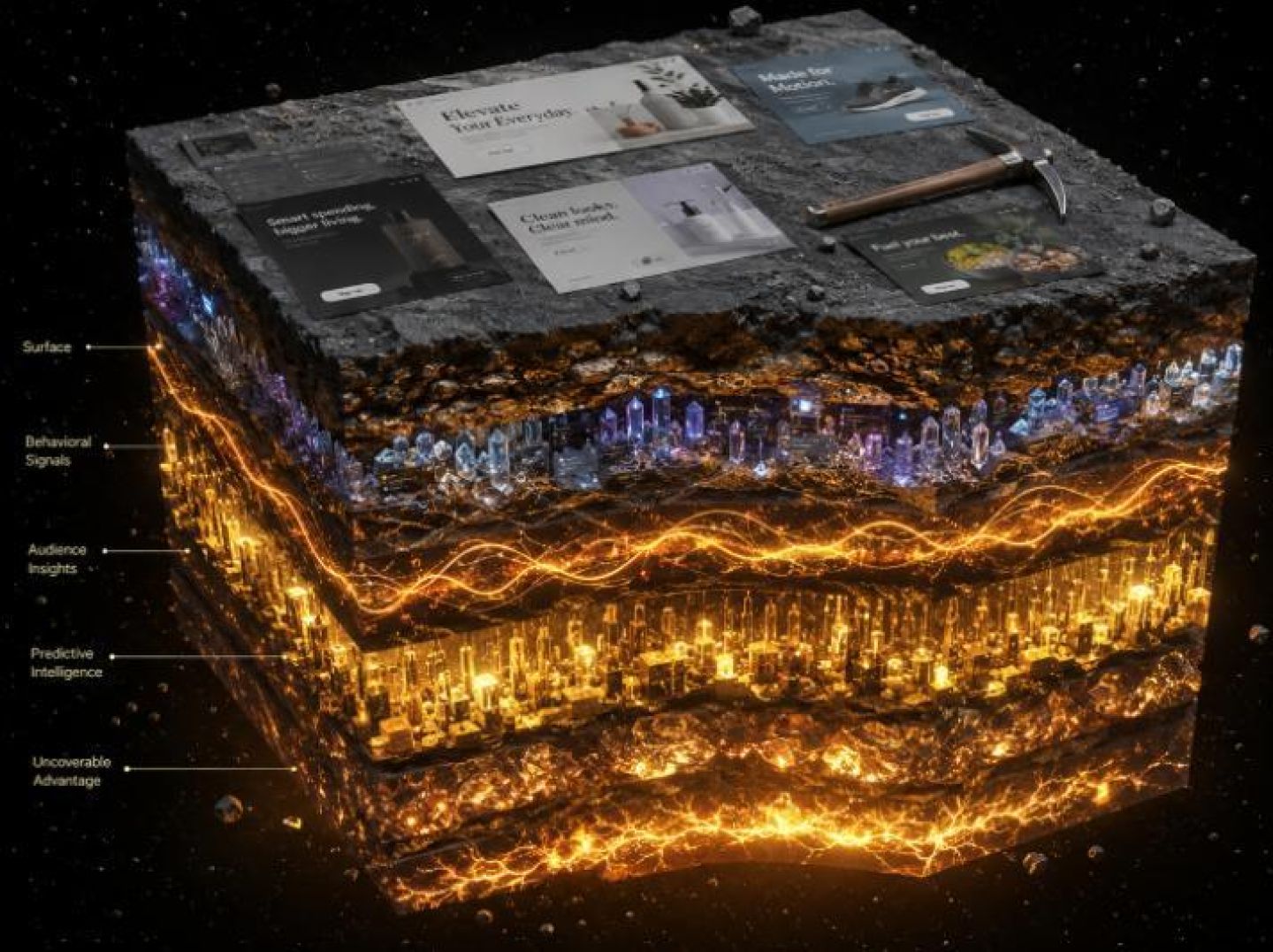
Прежде чем какой-либо инструмент ИИ сгенерирует хотя бы один заголовок или кадр раскадровки, должен существовать уровень интеллекта, который формирует техническое задание, — и почти никто не включает его в свой рабочий процесс. Выигрышная рекламная аналитика — это не отдельный показатель или ежемесячный отчет о конкурентах. Это комплексная картина, собранная как минимум из пяти различных категорий сигналов: креативные шаблоны, уже демонстрирующие результат в вашей категории (конструкции завлекающих элементов, визуальное оформление, темп, тон), архитектура посадочных страниц, конвертирующих трафик на последующих этапах, сигналы расходов конкурентов, показывающие, куда и почему соперники перераспределяют свой бюджет, структуры сообщений, раскрывающих конкретные ценовые предложения и эмоциональные акценты, набирающие популярность, и предпочтения форматов и платформ, показывающие, используют ли ваши ближайшие конкуренты короткие видео, статичные карусели или подключаемое телевидение.
Каждый из этих входных данных должен влиять на то, что генерирует ваш генеративный ИИ. Вместо этого большинство команд просто передают своим инструментам ИИ руководство по бренду и расплывчатую цель — «создайте высокоэффективные рекламные объявления в Facebook для нашей весенней распродажи» — и задаются вопросом, почему результат выглядит шаблонным. ИИ не подводит. Он просто голодает.
Проблема не в том, что такого интеллекта не существует. Дело в том, что он был разработан для другой эпохи. Как утверждает AdExchanger, современная парадигма рекламного интеллекта создавалась для аналитиков, формирующих отчеты, а не для питания генеративных систем. Маркетолог должен иметь возможность спросить, какие конкуренты увеличили инвестиции в CTV в Германии, какие креативы поддерживали этот сдвиг и как стратегия сравнивается с их подходом в Великобритании, — и получить структурированный, пригодный для действий ответ за секунды, а не после дней ручного просмотра дашбордов. Технологии, способные обеспечить такой разговорный, основанный на ИИ интеллект, появляются, но базовая архитектура большинства маркетинговых стеков по-прежнему рассматривает конкурентные данные как отдельную, изолированную исследовательскую функцию, а не как активный элемент в производство креативов.
Почему команды маркетинга эффективности регулярно пропускают этот этап? Причина в совокупности трёх факторов. Во-первых, давление по срокам: когда задача состоит в запуске пятидесяти новых креативов к пятнице, никто не останавливается, чтобы создать правильный брифинг по конкурентам. Во-вторых, избыточное доверие к ИИ платформ: медийные покупатели полагают, что алгоритмы Meta или Google сами отфильтруют сигнал от шума в процессе оптимизации показов, из-за чего аналитика на начальных этапах кажется лишней. В-третьих — и это наиболее важно — существует проблема с инструментами. У большинства команд открыты инструменты для шпионажа в одной вкладке браузера, генераторы на базе ИИ — в другой, а рекламная платформа — в третьей, и между ними нет передачи данных. Как подчеркивала команда Нила Пателя, разница между системой, которая масштабируется, и той, что разваливается под давлением, заключается не в бюджете, а в инфраструктуре — в частности, в «связующем элементе между уровнями данных, активации и оптимизации», который большинство организаций так и не создали.
Этот раскол означает, что даже команды, которые проводят конкурентный анализ, редко используют его на практике. Инсайты остаются в презентации, которую показывают один раз, по которой кивают в знак согласия и забывают к тому времени, когда креативная команда открывает свой инструмент на основе ИИ. Эти данные никогда не превращаются в структурированный ввод — набор параметров, проверенных подходов или подтверждённых предпочтений в формате, — который формировал бы то, что генеративная модель действительно создаёт.
Команды, которые вырываются вперёд, поняли, что настоящая точка опоры — это не просто лучшая генерация ИИ или лучший сбор разведданных по отдельности. Ключ — в соединении этих двух элементов. Они создали или выбрали системы, в которых конкурентные сигналы автоматически обогащают творческие брифы — где ИИ начинает не с пустого запроса, а с брифинга, дополненного проверенными рыночными данными: какие заголовки работают, какие форматы масштабируются, какие конкуренты только что удвоили расходы на сообщение, которое ваш бренд ещё не пробовал. Именно в этой интеграции кроется нарастающее преимущество, и именно этот этап рабочего процесса большинство медиапокупателей до сих пор считают необязательным.
Команды, которые первыми поймут это, получат не просто однократное повышение эффективности — они запустят преумножающееся преимущество, которое увеличивается с каждым циклом кампаний. Представьте это как маховик: аналитика определяет творческий бриф, бриф обеспечивает создание более эффективной рекламы, такая реклама генерирует более богатые данные об эффективности, а эти данные, в свою очередь, используются для получения более четкой аналитики на следующем этапе. Каждый оборот опирается на предыдущий. В это время конкуренты, застрявшие в режиме генерации и тестирования, фактически каждый раз возвращаются к нулю при запуске кампании, надеясь, что алгоритм в итоге случайно наткнется на что-то работающее.
Эта динамика отражает то, что уже происходит в естественной видимости ИИ. Исследования показали, что 90% брендов не упоминаются в поиске ИИ, а это означает, что небольшой процент тех, кто появляется, наращивает свою видимость быстрее, чем более поздние участники могут догнать. Тот же принцип применим и к платной рекламе, если в основе лежит генерация креативов с использованием искусственного интеллекта. Бренды, начинающие с конкурентной аналитики, создают не просто лучшую первую рекламу — они создают лучшие циклы обучения. Их данные о производительности чище, понятнее и полезнее как обучающий сигнал, потому что они сгенерированы на основе гипотезы, а не методом проб и ошибок. Со временем эти собственные данные превращаются в преимущество, которое ни один конкурент не сможет воспроизвести, просто получив лицензию на тот же инструмент генерации ИИ.
Как отметило AdExchanger, следующая эра рекламной аналитики «будет определяться не только тем, у кого больше данных, но и тем, кто может» сократить путь от сигнала к решению. Скорость важна, но скорость без направления — это просто дорогостоящий хаос. Впереди вырываются те команды, которые создали связующие звенья между конкурентной разведкой, производством креативов и измерением эффективности, с тем чтобы каждый элемент постоянно информировал остальные. Они не ждут квартальных отчетов, чтобы скорректировать стратегию. Они задают вопросы вроде «какие конкуренты увеличили инвестиции в СТV в Германии» и получают структурированные ответы с контекстом за секунды, после чего превращают эти ответы в ориентиры для креативов ещё до запуска следующей кампании.
Особую значимость этому окну придаёт то, что на самом деле немногие конкуренты вообще занимаются систематическим анализом рекламы. Точно так же, как подавляющее большинство брендов не появляются в результатах поиска, основанных на ИИ, большинство команд в сфере платного медиа не проводят структурированного анализа конкурентов перед тем, как давать задания своим инструментам генеративного ИИ. Они создают контент в вакууме. Это свободное пространство означает, что преимущество первого хода по-прежнему доступно — но оно не продлится вечно. По мере совершенствования инструментов и роста их распространения стоимость наверстывания упущенного будет расти в геометрической прогрессии. Команда Нила Пателя выразилась прямо: разрыв между брендами, которые создают ИИ-системы сейчас, и теми, кто будет ждать, быстро увеличится, и разница заключается не в бюджете — а в инфраструктуре.
Именно эта часть делает маховик настолько трудным для обратного проектирования. Конкурент может скопировать ваш формат рекламы, имитировать структуру зацепки и даже использовать ту же платформу генеративного ИИ. Но он не сможет скопировать восемнадцать месяцев данных о производительности, основанных на аналитике, которые непрерывно улучшают ваше понимание того, что работает, для кого и почему. Эти корпоративные знания — закодированные в ваших данных, рабочих процессах и способности вашей команды распознавать шаблоны — становятся настоящим конкурентным преимуществом. ИИ — это просто двигатель. Интеллект — это топливо. А команды, которые первыми начали заправлять бак, уже начали отрываться.
То, что интеллект должен направлять ваш творческий процесс — это одно. А реально внедрить его в свою повседневную работу — так, чтобы это не добавляло три часа к каждому запуску кампании, — это другое. Вот практичная, повторяемая структура, которую любая команда по покупке медийной рекламы может внедрить уже на этой неделе.
Шаг 1: Анализ конкурентной среды до составления брифа
Прежде чем написать хотя бы строчку текста объявления или обратиться к ИИ-инструменту, потратьте 30 минут на сбор конкурентной информации из библиотек объявлений, анализаторов рекламы и встроенных функций прозрачности платформ. Вы не ищете рекламу для копирования — вы систематизируете закономерности. С какими хуками выступают конкуренты? В каких форматах наблюдается устойчивое финансирование (надёжный показатель эффективности)? Какие эмоции они задействуют, а какие, напротив, игнорируют? Данный шаг заменяет бриф, основанный на интуиции, брифом, опирающимся на факты. Как утверждает AdExchanger, основное изменение происходит тогда, когда аналитика рекламы переходит от отчётов о прошлом к рекомендациям относительно будущих действий, — и этот переход начинается ещё до появления креативного брифа.
Шаг 2: Составление запросов, основанных на собранных данных
Теперь возьмите выявленные закономерности и преобразуйте их в структурированные запросы для ИИ. Вместо того чтобы просто сказать инструменту генерации: «создай пять вариантов рекламы в Facebook для нашей летней распродажи», задайте конкретные ограничения на основе проведённого анализа: «Напиши пять вариантов с использованием заголовка, основанного на проблеме и её обострении, в краткой форме не более 90 слов, с тоном, сочетающим срочность и дружелюбие — именно такие комбинации в настоящий момент демонстрируют лучшие результаты по сравнению с рекламой, апеллирующей к идеальной жизни, в нашей категории». Чем точнее входные данные, тем качественнее результат. Шаблонные запросы порождают именно тот тип контента, который отвергается потребителями — 70% говорят, что легко распознают рекламу, созданную с помощью ИИ, потому что креативу не хватает «души».
Шаг 3: Создайте объем контента, затем отфильтруйте с помощью человеческого суждения
Позвольте ИИ делать то, что у него лучше всего получается: быстро генерировать большой объем материала. Создайте от 15 до 20 вариантов, охватывающих различные аспекты, выявленные в ходе анализа. Затем примените творческое суждение человека, чтобы отобрать из них пять или шесть самых сильных вариантов. На этом этапе исключаются все шаблонные, эмоционально бедные формулировки или те, что слишком похожи на рекламу конкурентов. Цель — найти пересечение между тем, что уже доказало свою эффективность, и тем, что остаётся уникальным для вашего бренда.
Шаг 4: Запуск с использованием структурированных тестовых протоколов
Запустите выбранные рекламные материалы в структурированные A/B или многофакторные тесты с четкими гипотезами, основанными на данных аналитики, которые повлияли на их создание. "Мы считаем, что заголовок, акцентирующий проблему, покажет лучшие результаты, чем вдохновляющий заголовок, поскольку конкуренты, использующие такой подход, удерживают высокий бюджет уже более 6 недель" — это проверяемая гипотеза. Здесь же следует использовать автоматическое управление ставками и функции кампаний. Как отметила команда Нила Пателя, побеждают те бренды, где инструменты делятся данными, а не функционируют в отдельных отсеках, напрямую связывая тестирование креативов со слоями оптимизации.
Шаг 5: Замкните цикл — Внесите результаты обратно в информацию
Это тот шаг, который пропускают почти все, и он приносит сопоставимые доходы. После каждого цикла тестирования зафиксируйте, что победило, почему вы предполагали, что это победит, и выдержали ли информацию конкурентов, которая лежит в основе задания. Обновите свою базу данных. Со временем вы создаете собственную хронику того, что работает на вашем конкретном рынке, — не только то, что ИИ может сгенерировать по требованию, но то, на что настояще реагируют зрители. Этот живой реестр станет самым ценным активом в ваших креативных процессах, поскольку он недоступен для копирования конкурентам и такой моделью ИИ, которая не может выдумать его из ничего.
Весь цикл — от сбора разведывательных данных до создания контента и анализа результатов — должен занимать дни, а не недели. Структура несложная. Сложна дисциплина, необходимая для её постоянного применения, — сопротивление искушению пропустить этап исследований, когда сжимаются сроки, или отказаться от цикла обратной связи, когда следующая кампания уже требует внимания.
Получайте лучшие конверсионные лендинги каждую неделю на свою почту.
Инструкция
Узнайте, как превратить масштабные мероприятия по продвижению бренда в измеримые воронки продаж на платформах Native, Push, Pop и TikTok. В этом руководстве рассказывается, как использовать активы мероприятий повторно, создавать специализированные последовательности для каждого канала, разрабатывать посадочные страницы на основе сторителлинга и измерять их влияние на конверсии и выручку.
Priya Kapoor
7 минокт. 5, 2026
Самое читаемое
Узнайте, как команды OOH могут использовать данные о Native-, Push- и TikTok-рекламе, чтобы выйти за рамки планирования, основанного на местоположении, и создавать более продуманные кампании, ориентированные на аудиторию. В этом руководстве показано, как преобразовать цифровые креативы, таргетинг и показатели эффективности в идеи для OOH, тестировать их в реальном мире и использовать полученные результаты для улучшения цифровых кампаний.
David Kim
7 минокт. 4, 2026
Недавно обновлено
Узнайте, как превратить отмеченные наградами кампании бренда в масштабируемые кампании с оплатой за показ, всплывающей рекламой, нативной рекламой, TikTok и дропшиппингом. В этом руководстве показано, как анализировать проверенные воронки, выявлять психологию успешных креативов, адаптировать идеи крупных брендов под прямые призывы к действию и использовать ИИ для создания высокотемповых вариантов, которые можно оценивать по ROAS и CPA.
Liam O’Connor
7 минокт. 3, 2026