11 minJuly 7, 2025

Our spy tools monitor millions of push notification ads from over 90+ countries and thousands of publishers.
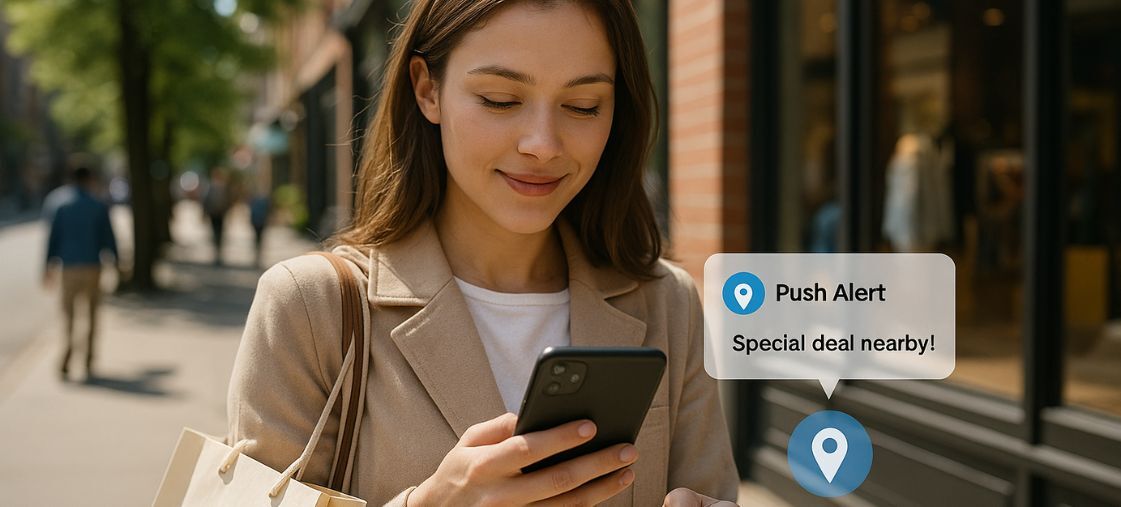
Get StartedLocation-based push alerts, a key component of location-based push notifications, have transformed retail marketing by establishing strong connections between businesses and customers. These targeted messages utilize geofencing technology to reach shoppers at exactly the right time and place.
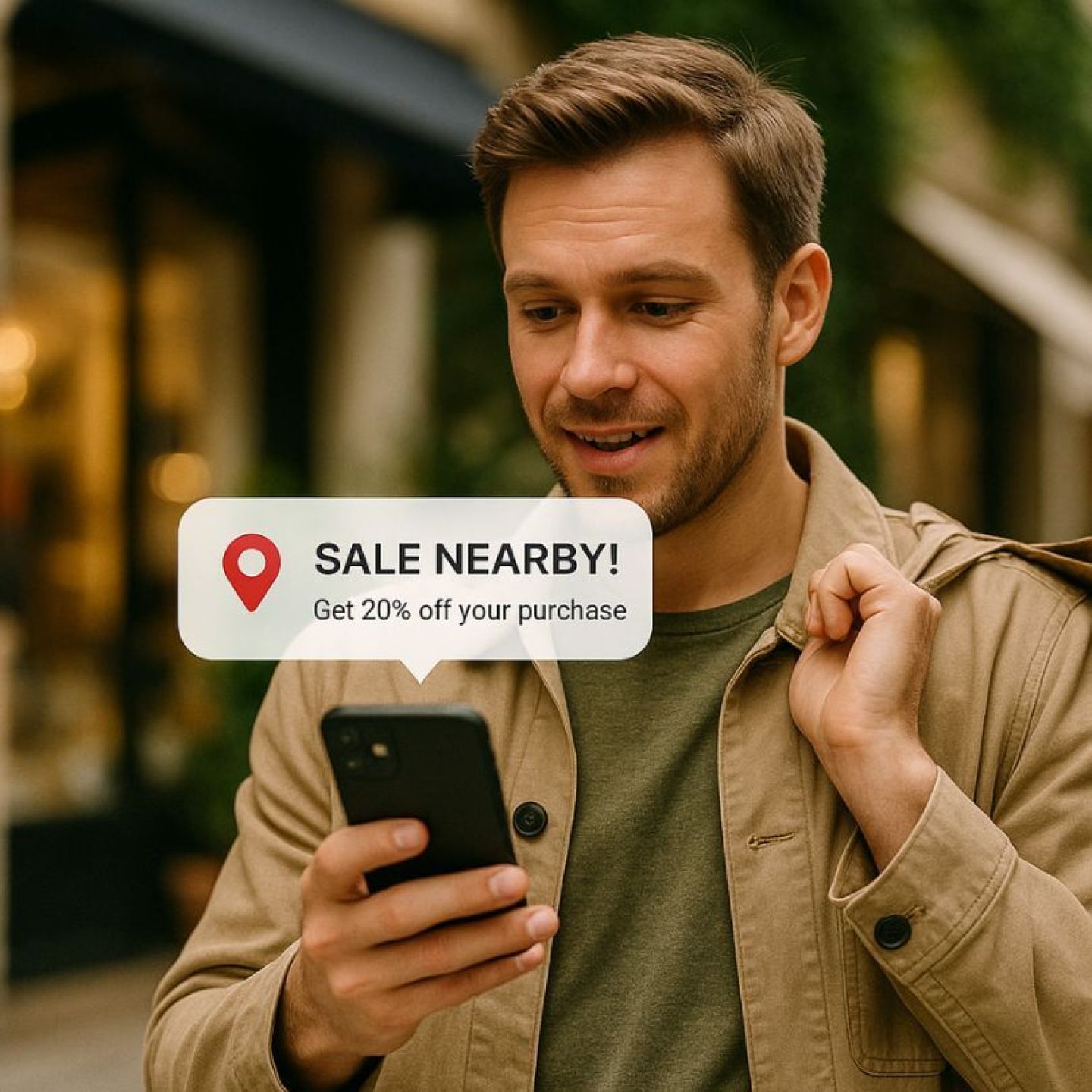
Imagine this: A customer walks within 500 feet of your store, and their phone lights up with a personalized offer they can't resist. That's the magic of geofencing push notification campaigns.
This location-based technology has experienced rapid growth in retail, with 78% of consumers stating that they are more likely to respond to offers when they are near a store. Retailers now create virtual boundaries around their locations, allowing them to:
The strength of these location-triggered messages lies in their accuracy and timing. By targeting customers based on their current geographic location, retailers can create meaningful interactions that drive engagement and sales. This technology has evolved from being an innovative marketing tool to becoming a crucial strategy for achieving success in modern retail.
Personalized push notifications through geofencing create meaningful connections between retailers and their customers. These location-triggered messages achieve engagement rates up to 45% higher than traditional push notifications by delivering hyper-relevant content at the perfect moment.
Here's how retailers leverage personalized push notifications to boost engagement:
The power of proximity marketing lies in its precision timing. When a customer receives a relevant message while they're already near your store, the likelihood of them acting on that message increases dramatically. Data shows that 76% of consumers are more likely to visit a store after receiving a location-based notification.
Retailers like Sephora demonstrate this effectively by sending personalized beauty tips and product recommendations to loyalty program members when they enter shopping districts. These targeted messages see conversion rates 3x higher than standard promotional notifications.
Location marketing campaigns create powerful opportunities for retailers to convert digital interactions into physical store visits. Geofencing push campaigns deliver impressive results, with retailers reporting up to 85% higher conversion rates compared to traditional marketing methods.
Here's how retailers leverage location-based campaigns to boost foot traffic:
Real-world success stories demonstrate the impact:
The key lies in strategic radius targeting. Data shows optimal engagement when:
These targeted approaches help retailers maximize their physical presence while delivering measurable ROI through increased store visits and sales.
Geotargeting takes location-based marketing to the next level by allowing retailers to segment and target customers based on specific geographic parameters. This precision targeting method combines real-time location data with customer behavior patterns to deliver hyper-relevant push notifications.
Key Targeting Parameters:
Push notification geotargeting enables retailers to create micro-moments that resonate with local customers. A coffee shop can target morning commuters who pass by their location three times a week. A boutique store might reach out to shoppers who spend time in complementary retail locations nearby.
The power of precise targeting lies in its ability to create contextual relevance. When you reach customers at the right place and right time, conversion rates can increase by up to 200%. For example, a bookstore can target customers who linger in competing stores, offering a 20% discount valid for the next hour.
Maximizing Conversion Opportunities:
Retailers using advanced geotargeting techniques report up to 3x higher engagement rates compared to traditional push notifications. The key is understanding local customer movement patterns and creating targeted campaigns that align with their daily routines.
A/B testing takes geofencing campaigns from good to great. By systematically testing different elements, retailers can find out which combinations work best to get customers interested and make them buy.
Campaign analytics provide valuable insights into how customers behave. Data shows that push notifications containing emojis have 50% higher open rates, while personalized messages see a 42% higher engagement rate.
To ensure effective A/B testing, keep these best practices in mind:
Retailers can use these insights to continuously improve their geofencing strategies. For example, Starbucks conducted tests on different message timings and discovered that morning notifications outperformed afternoon ones by 20% for their breakfast promotion campaigns.
Leading retailers have mastered geofencing strategies to create powerful customer experiences. Here's how major brands leverage this technology:
These implementations showcase how retailers transform location data into meaningful customer interactions and measurable business results.
Running effective geofencing push notification campaigns requires a strategic approach. Here are essential practices retailers should implement:
These practices help create campaigns that respect customer preferences while maximizing engagement and conversion rates.
Geofencing push notification campaigns are a game-changing tool in modern retail marketing. The data speaks for itself - with engagement rates soaring up to 42% and ROI reaching 3500%, these location-based strategies deliver measurable results for retailers ready to embrace them.
The power lies in the perfect blend of timing, relevance, and personalization. Your customers receive the right message at the right place, creating meaningful connections that drive real business growth.
Ready to transform your retail marketing strategy? Start small with a pilot geofencing campaign in your highest-performing locations. Test, measure, and refine your approach based on customer responses. The future of retail marketing is location-aware - position your brand at the forefront of this revolution.
Receive top converting landing pages in your inbox every week from us.
Trending
This article explores how zero-click search experiences powered by AI Overviews, featured snippets, and answer engines are steadily eroding traditional landing page traffic from organic search. It explains why channels like native advertising and push notifications remain structurally resilient because they generate demand proactively instead of relying on search engines to pass users downstream. The article also highlights how tools like Anstrex help marketers uncover profitable native and push ad angles, identify audience attention patterns, and build traffic acquisition systems independent of increasingly closed AI search ecosystems.
David Kim
7 minMay 28, 2026
Guide
This article explores how AI-generated advertising has shifted the competitive battleground away from simple creative production and toward the quality of the intelligence marketers use to guide AI systems. It explains why advertisers relying solely on automation and mass creative generation are increasingly trapped in cycles of generic messaging, rising acquisition costs, and declining differentiation. The article also highlights how tools like Anstrex help marketers combine AI efficiency with real-world competitive data, uncover profitable campaign structures, and build more strategically differentiated advertising systems.
David Kim
7 minMay 28, 2026
Recently Updated
This article explores the hidden blind spot created by the AI-generated ad boom: marketers now have unprecedented creative production speed but often lack the competitive intelligence needed to know what actually works in live markets. It explains why “generate and test” workflows are often just expensive guesswork and how intelligence-fed AI systems create compounding advantages through better creative hypotheses, faster learning loops, and stronger performance data. The article also highlights how tools like Anstrex help media buyers connect competitive ad intelligence directly into AI-driven creative workflows to produce campaigns grounded in real market signals instead of isolated assumptions.
David Kim
7 minMay 25, 2026