Native Ads, Pop Ads, Push Ads, TikTok Ads
11 minOctober 5, 2026

Our spy tools monitor millions of native ads from over 60+ countries and thousands of publishers.
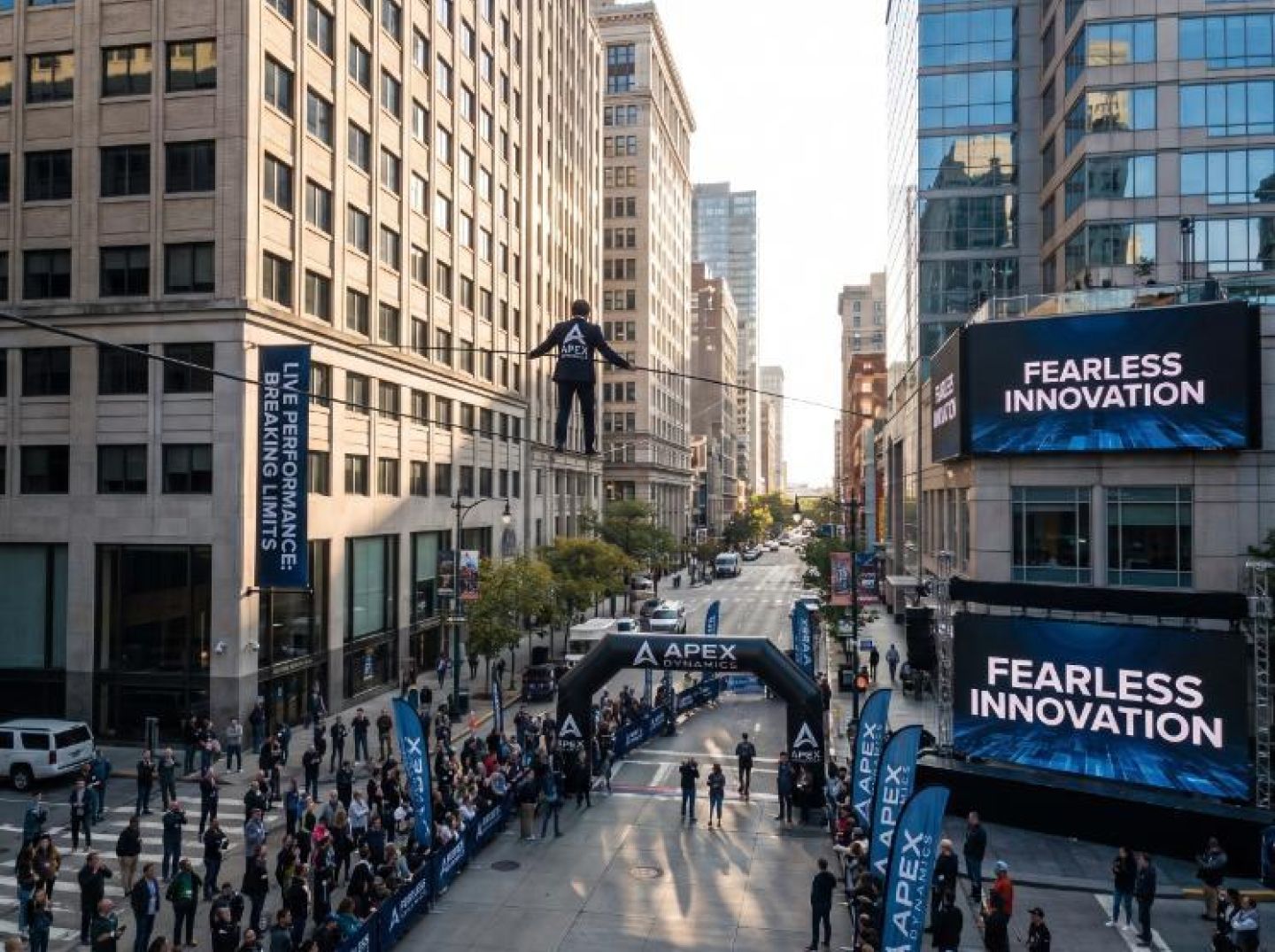
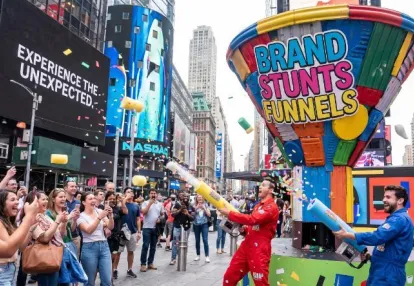
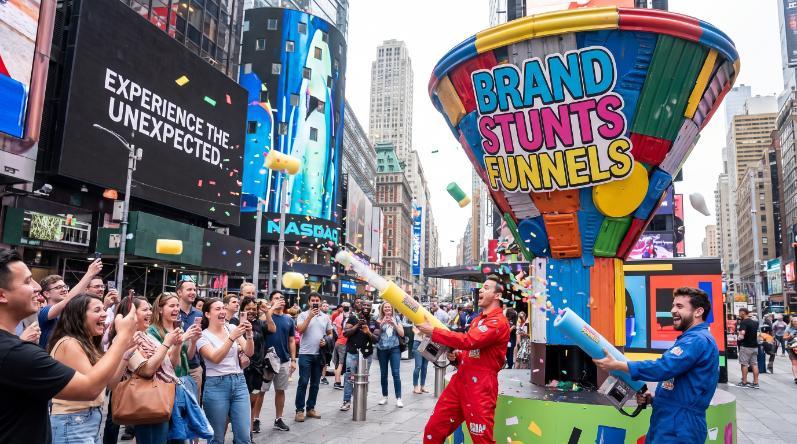
Get StartedBrand teams love a big moment: a Times Square takeover, a viral creator stunt, a TikTok trend that “puts the brand on the map.” Performance teams, on the other hand, love numbers: ROAS, CPA, LTV. The tension between those instincts is why so many “brand stunts” look like expensive fireworks to performance marketers—bright, loud, and gone in seconds.
The problem is rarely the idea itself. It is the way those ideas are briefed, bought, and measured.
Most organizations still manage channels—and therefore objectives—like separate fiefdoms. Paid social is one report. Search is another. Email, affiliates, influencers, and video live in their own silos. That makes it deceptively easy to ask, “Which channel drove the sale?” and almost impossible to see how channels helped each other. As one analysis of cross‑channel strategy points out, your first task is to define the role each channel plays in creating demand, building trust, or capturing intent, and then evaluate performance against that role rather than a single last‑click metric, according to this framework from.
Brand stunts usually live at the very top of the funnel. They introduce a problem or category, build familiarity, and give people an emotional reason to care. But inside most dashboards, they are judged as if they were bottom‑funnel work. A splashy creator stunt, CTV flight, or TikTok push gets stacked against the same cost‑per‑acquisition expectations as branded search. When the inevitable happens—high spend, soft immediate ROAS—leadership concludes, “Brand doesn’t work.”
Researchers in influencer marketing call this the “aspirational billboard” problem. Poppi’s much‑debated 2025 vending‑machine giveaway to 32 influencers generated millions of TikTok views, but the tactic was built for broad visibility, not direct response. As the campaign breakdown in MarTech notes, those impressions are totally valid if the goal is awareness. They are almost meaningless if the goal is in‑period sales. Scaling spend does not transform an awareness play into a performance engine; it just makes the misalignment more expensive.
On top of that, the consumer journey has outpaced the way most brands plan media. People discover a product on TikTok, search it on Google, read reviews in a forum, and click a retargeting ad—all in the span of a few minutes. The classic awareness‑consideration‑conversion funnel has not disappeared; it has become fluid and non‑linear. As Digitas’ Liane Nadeau argued at Cannes, channel‑by‑channel planning no longer maps to how people actually move through the world, and programmatic itself is better understood as a mechanism that stitches together networked experiences than as a standalone channel, as she explained in an interview covered by.
In that fluid reality, it is not that big awareness plays “don’t work” for performance marketers. It is that they are rarely designed as the first touch in a connected sequence that native, push, pops, and TikTok can pick up and drive to action. Upper‑funnel executions launch without a defined handoff into mid‑ and lower‑funnel messages, without shared audiences, and without agreement on which signals will prove they worked.
When top‑of‑funnel efforts are measured only by immediate CPA, they are almost guaranteed to be cut. Yet those same brands are often surprised months later when branded search volume stalls, retargeting pools shrink, and conversion costs rise. If instead you treated stunts as demand creation and tracked branded search lift, direct traffic, first‑party audience growth, and assisted conversions as primary success signals, you’d see early whether they are actually making every downstream click cheaper and more efficient, just as the multi‑channel benchmarks from Search Engine Journal recommend.
Brand stunts do not have to be the enemy of performance. When they are architected as the opening move in a measurable, multi‑step journey—and when leadership agrees on how to judge them—they become fuel. The task for modern performance marketers is not to kill the big idea, but to refit it into a fluid funnel where every impression, view, and click can be captured, nurtured, and converted across native, push, pops, and TikTok.
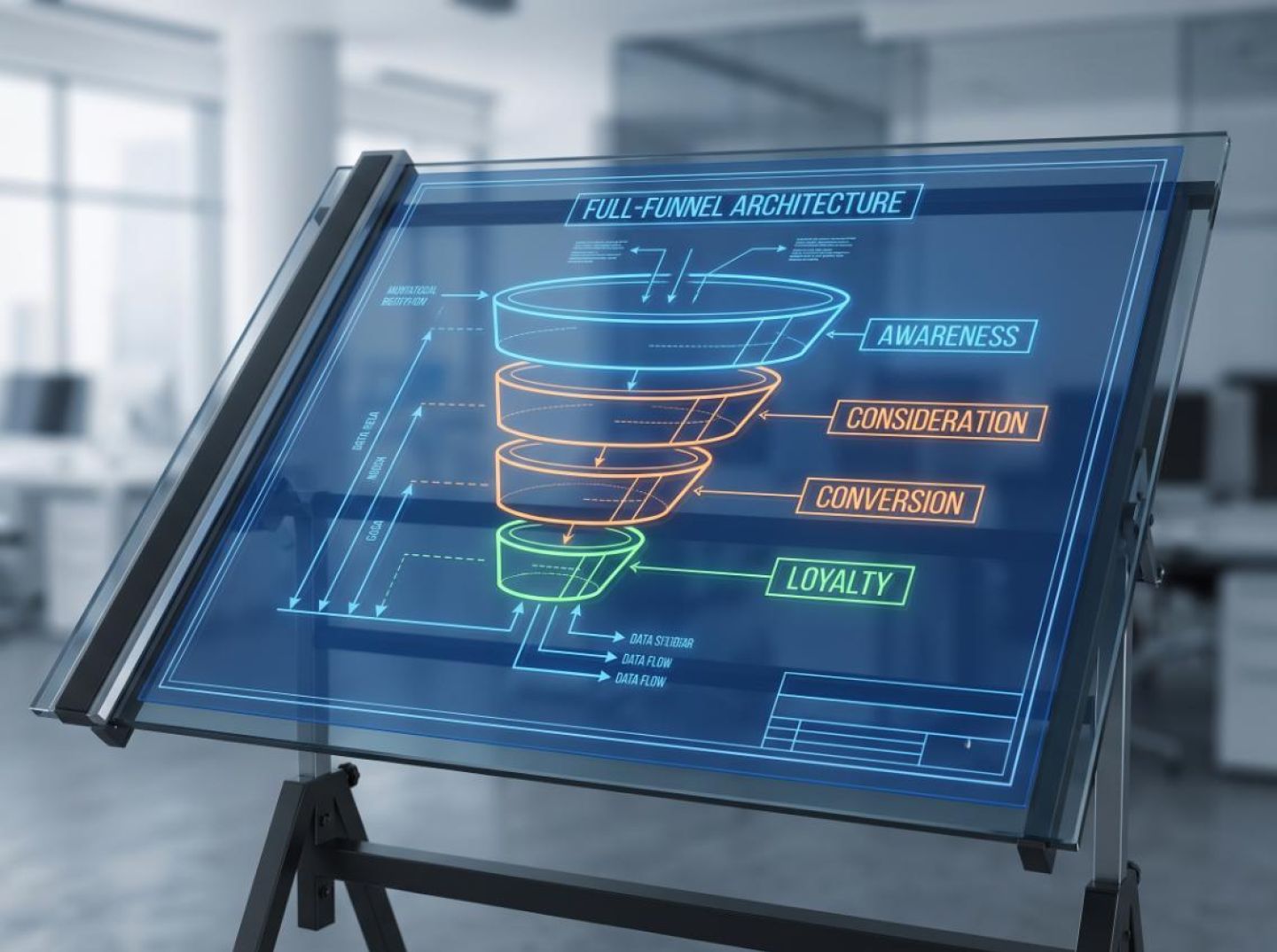
If Section 1 was about mindset, this section is about mechanics: taking a one-off “wow” moment and reverse‑engineering it into a full funnel you can actually scale across native, push, pops, and TikTok.
The simplest way to think about it: every good stunt already contains the raw materials for a funnel. You just haven’t labeled the pieces yet.
Start by stripping the stunt down into modular components:
This becomes your “creative parts list.” Just like effective native campaigns start with clear objectives and structure before they launch, as outlined in Brax’s framework for tracking native performance, you need this inventory before you can design a funnel that isn’t random.
Now assign each component to TOFU, MOFU, or BOFU. This is where you turn chaos into architecture.
This mirrors how smart optimization frameworks connect content types to funnel stages. For instance, the HubSpot marketing team’s breakdown of campaign optimization separates awareness metrics like reach and engagement from mid‑funnel signals such as video completion rate and downstream actions. You’re doing the same thing here, but starting from a stunt instead of a spreadsheet.
With funnel stages defined, you decide what each channel is for.
At this stage, you’re not designing individual creatives yet. You’re declaring, “This is the job of each channel in this funnel,” so you don’t end up judging a TikTok hook on last‑click ROAS or a push notification on “brand lift.”
Now stitch it all together:
3. Deep proof (late MOFU):
4. Conversion offers (BOFU):
Think of it as encoding the stunt’s story into a sequence where every touchpoint has a measurable job. As Brax’s guidance on native objectives emphasizes, SMART goals per campaign are non‑negotiable; here, you’re effectively setting SMART goals per stunt fragment.
Finally, a stunt‑driven funnel only works if you can see what each piece is doing.
When the architecture is this explicit, a “brand stunt” stops being a one‑time event and starts functioning as a reusable engine: a story broken into pieces, each engineered to move someone one step closer to becoming a customer.
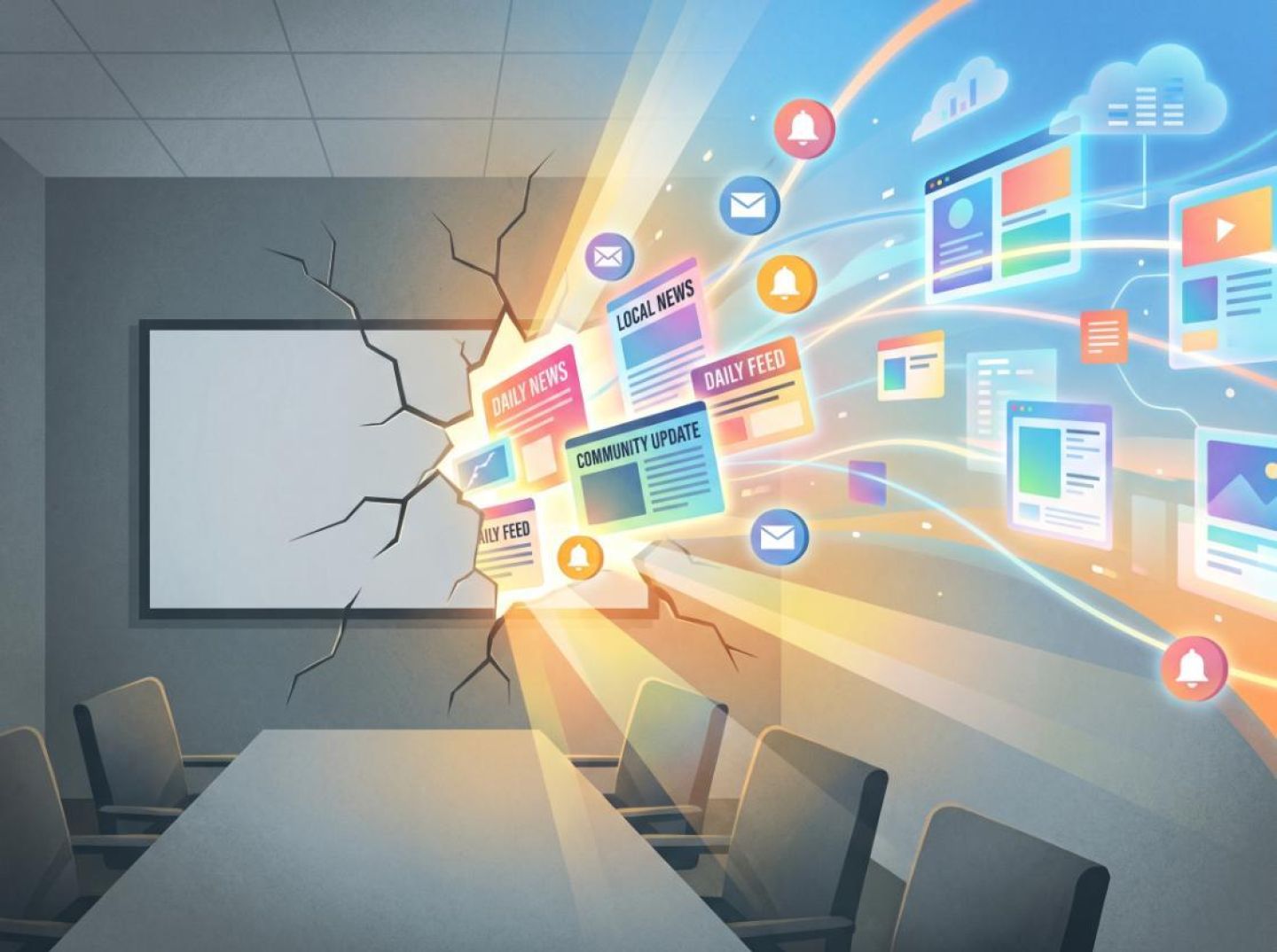
Imagine the original “Break Conference” stunt: shutting down a conference room or hijacking a stage to dramatize how your product helps people break out of boring, broken ways of working. It’s loud, visual, and inherently upper‑funnel. To make it work on native and push, you need to rebuild that drama into a sequenced, trackable funnel instead of a one‑time spectacle.
The key is to stop thinking “campaign” and start thinking “chaptered narrative.” On native and push, nobody experiences your stunt in one sitting. They see fragments: a headline, a notification, a prelander, a lander. Your job is to assign each fragment to a stage of the funnel and make the handoff between them frictionless.
On native, the “Break Conference” moment becomes the attention magnet at the very top. Lead with a thumbnail or hero image that freezes the most disruptive frame of the stunt: a keynote interrupted, a projector smashed, a “BREAKING: Conference Canceled” stage graphic. Pair that with curiosity‑first headlines that feel like editorial, not ads:
Research on influencer and creator campaigns shows that “aspirational billboard” style content lives at the awareness end of the funnel and shouldn’t be confused with a sales driver, no matter how many views it generates, as MarTech’s analysis of Poppi’s vending‑machine stunt points out. Treat your Break Conference creative the same way on native: its job is reach, scroll‑stopping power, and emotional pattern break—nothing more.
From there, your native prelander plays the consideration role. Instead of repeating the stunt, translate it into a structured narrative: what the stunt symbolized, the “broken” status quo you’re rebelling against, and the simple alternative your product offers. This is where you shift from “watch this crazy thing” to “here’s why this problem matters to you.” Think in terms of the mid‑funnel metrics HubSpot recommends: time on page, scroll depth, and video completion rate on embedded clips from the stunt. Use those signals to tune how much story versus how much product you show before the CTA.
Push traffic plugs into this same architecture as an acceleration layer, not a separate universe. Push messages are tiny billboards you can sequence over days to move a user from curiosity to intent:
At the awareness stage, push KPIs mirror top‑funnel optimization levers like reach and open rate that HubSpot’s campaign optimization framework highlights: delivery, opens, initial click‑through. As users progress to later pushes, re‑orient your measurement toward lower‑funnel behavior—repeat visits, return from notifications, and conversions attributed to specific sequences.
Where native gives you room to tell the story, push gives you precision for timing and urgency. Your segmentation should reflect that. Reserve the most “stunty” messages for cold and lapsed audiences; move subscribers who have already clicked or engaged into more direct, product‑driven sequences. This mirrors the distinction between broad, high‑reach placements and tighter, conversion‑oriented efforts in TikTok’s ad ecosystem, where creator‑led, native‑feeling content drives purchase behavior more effectively than repurposed TV spots, as Neil Patel’s breakdown of TikTok’s premium formats explains.
Finally, close the loop between channels. Use native’s rich storytelling pages to capture emails or push opt‑ins with messaging that extends the Break Conference metaphor: “Want to break out of broken marketing events for good? Get the blueprint.” Then use push to bring those same people back into progressively more performance‑oriented experiences—case studies, ROI calculators, and trial offers that translate your original stunt’s emotional charge into measurable revenue.
When you treat “Break Conference” as a modular narrative instead of a one‑time show, native becomes your stage, push becomes your follow‑up engine, and the stunt itself becomes the emotional throughline tying awareness and acquisition into a single performance system.
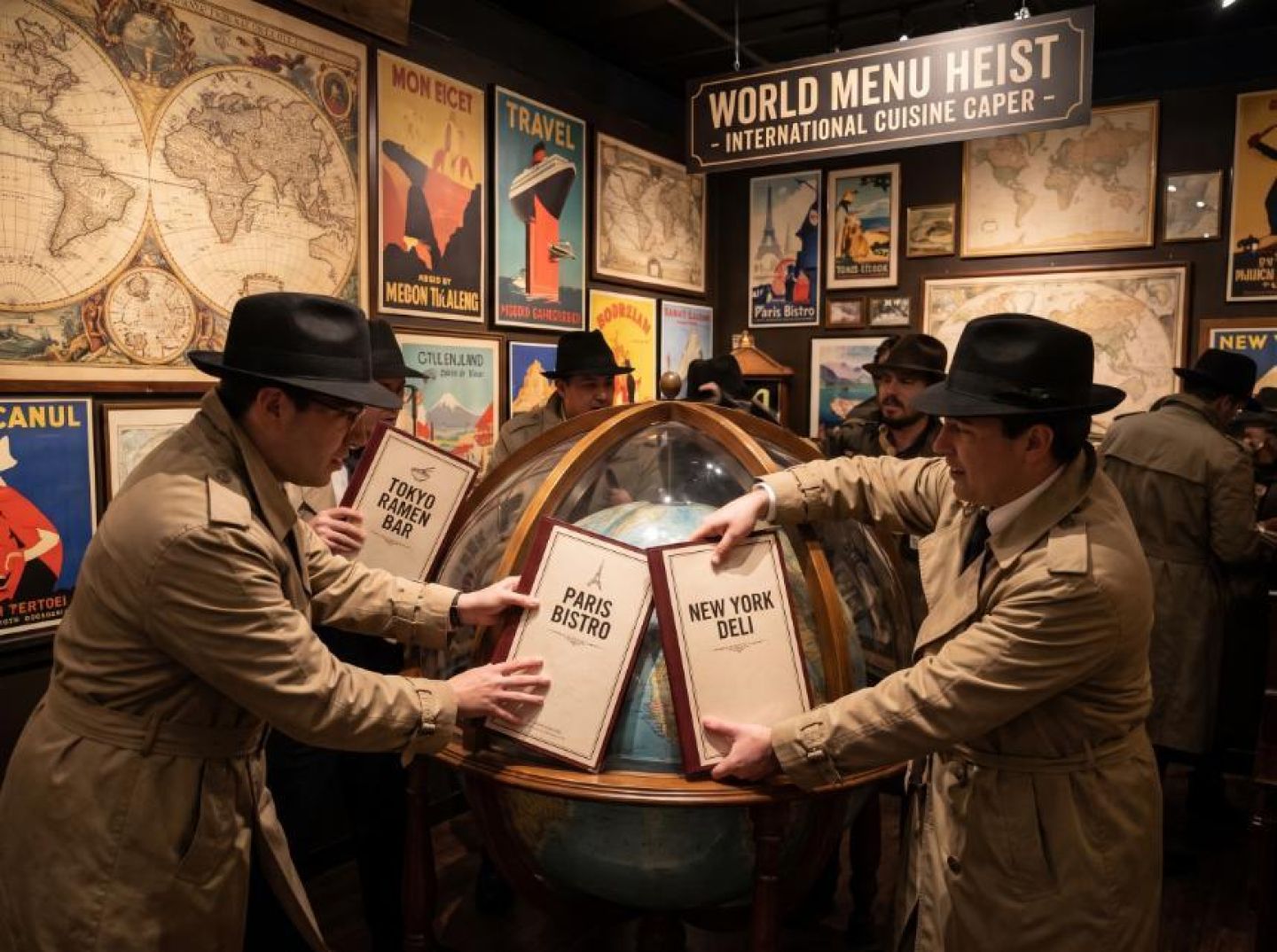
Start with the “World Menu Heist” premise: a brand “steals” the best dishes from iconic restaurants around the world, then serves them all in one place (or app). In stunt form, that’s a pop‑up, a film crew, and a PR blast. To turn it into a performance engine for pops and TikTok, you have to break that single, cinematic moment into modular scenes, hooks, and offers that can be recombined and tested at speed.
For pops, your first job is not persuasion — it’s interruption. Someone’s trying to stream or browse; your ad is an unwelcome surprise. So take the most “illegal” emotional beat from the stunt and compress it into a three‑second visual crime: a chef ripping a signature dish off a rival menu, a gloved hand swapping table tents, a “menu jailbreak” animation. Pops work when the concept is instantly legible even with zero sound and near‑zero patience. That’s why you build 10–20 micro‑visuals from the original stunt and rotate them aggressively, treating each as a different “offense” in the heist.
From there, your pop traffic should never be dumped into a generic homepage. Think of the landing experience as the vault: one page, one promise, one action. The menu‑heist story becomes a single, mechanical headline: “We Stole 27 Signature Dishes So You Don’t Have To Cross Town Tonight.” Mid‑funnel belongs on this page, not in the creative. Use it to answer the exact objections people have when they arrive from a disruptive format: “Is this real?”, “What’s the catch?”, “Is this available in my city?” This mirrors the way mid‑funnel should reduce uncertainty by shifting from drama to proof, as Search Engine Journal describes for channels like Meta and YouTube.
Retargeting from pops is where the original stunt footage comes back in. Anyone who bounced from the landing page without converting can be bucketed into a warm audience for sequenced TikTok, where the world of the heist is allowed to breathe. TikTok’s “fluid funnel” reality — discovery, consideration, and purchase collapsing into a single scroll — means you shouldn’t think of “awareness” and “retargeting” as different channels so much as different nodes in one networked experience, exactly the kind of planning shift Liane Nadeau argues for in the so‑called fluid funnel era.
On TikTok, rebuild the stunt as a serialized narrative deliberately structured to support performance:
Within that spine, individual posts become testable ads. One creative focuses on shock (“We got banned from three restaurants for this idea”), another on aspiration (“Date‑night without decision fatigue”), another on mechanics (“Tap this button, choose ‘World Menu,’ and your first dish is 50% off”). Because TikTok’s commerce stack and creator‑led storytelling now support real lower‑funnel measurement and conversion, the stunt’s “wow” moments can be directly tied to sales instead of just views, something Neil Patel points out as TikTok evolves from pure reach into a performance‑ready channel.
Creators are the accelerant. Instead of paying macro influencers to recreate your pop‑up as a glossy “aspirational billboard,” which research cited by MarTech places squarely at the awareness end of the funnel, you recruit food‑obsessed TikTokers who will actually order from the “World Menu.” Their brief is not “say this line,” but “film your real attempt to break the menu.” That firsthand familiarity with the product is exactly what makes creator content persuasive; nearly half of consumers expect influencers to be longtime or at least real users, according to Sprout Social data referenced in MarTech’s analysis. Your job is to frame their experience with the heist narrative (secret menus, contraband dishes, “passport stamps” for each cuisine) while letting their genuine reaction carry the mid‑ and lower‑funnel weight.
Measurement and optimization then close the loop between pops and TikTok. Pops and top‑of‑funnel TikTok episodes are judged on assisted conversions, branded search lift, and first‑party audience growth — the kinds of signals Search Engine Journal recommends for upper‑funnel campaigns — while creator‑driven TikTok ads and retargeting episodes are held to direct CPA, cart adds, and repeat purchase. The same storyline powers all of it; only the hook, the proof, and the offer change by surface.
In that configuration, “World Menu Heist” stops being a party trick and becomes a machine: pops supply cheap attention, TikTok serializes the narrative and drives consideration, creators inject trust and conversion, and every piece is built from the same original stunt assets — just labeled, sliced, and optimized for the channels you actually have to scale.
Your stunt only pays off if the story survives the click.
Most brands design pre-sells, landers, and follow-up sequences like paperwork: fields, features, a price, and a button. That works fine when users arrive already sold. But when they’ve been hooked by a “World Menu Heist”–level idea, a dead, offer-only page snaps them out of the spell. The job of your funnel is to carry the scene you started in the ad — and keep translating that emotion into specific, trackable actions.
Think of every asset as a new “shot” in the same film, not a new campaign.
The pre-sell (or pre-lander) is where native and push traffic decide whether this wild premise is worth more of their time. Treat it as Act II:
From a measurement standpoint, treat your pre-sell like a mid-funnel asset, not just a bridge. Monitor scroll depth, click maps, and “story completion” (reaching the core reveal) alongside CTR. If reach is your only hero metric, you’re making the same mistake many influencer campaigns make when they celebrate views while ignoring consideration or sales, a gap MarTech highlights in their critique of broken influencer strategies.
Once users click through, the worst move is to throw them onto a generic homepage that bears no resemblance to the ad they just saw. In a fluid-funnel world where people can discover, evaluate, and purchase in a few swipes, your lander has to behave like a continuation of that same moment, not a reset, echoing the “networked experiences” approach Liane Nadeau argues for in her take on the fluid funnel.
Anchor the lander in the story with three structural choices:
For pops, where intent is chaotic and accidental, landers should default to shorter, higher-friction stories that can hold cold traffic for 10–20 seconds and push a single decisive action (tap-to-call, map, or quick checkout). For TikTok in-feed clicks, design vertically and assume skim: bold pull-quotes from the stunt, looping GIFs of the heist moments, and sticky mobile CTAs.
Email, SMS, and push sequences are where you either deepen the relationship or expose the stunt as hollow. Sequence creative should feel like extra chapters of the same documentary, not an unrelated promo calendar.
A simple framework:
Because AI is already making it easier to atomize creative across channels, you can use TikTok-style “skills” to rough out variations of these sequences, then add the specific product proof and narrative nuance manually, similar to how marketers are using TikTok’s Symphony tools and creative skills as a 70% starting point before layering in human storytelling.
Across all of this, your KPI stack has to mirror the story arc. Top-of-funnel stunts still care about reach; pre-sells add engagement and scroll completion; landers focus on CTR to CTA and on-site conversion; sequences optimize for reply, click, and revenue per recipient. When every step carries the same story forward and every step has its own performance metrics, you’re no longer running a stunt with some ads attached — you’re running a narrative funnel that can scale across native, push, pops, and TikTok without losing the plot.
If you can’t prove that a stunt makes money, it’s just an expensive morale booster.
Turning spectacle into a repeatable performance asset starts with treating measurement as part of the creative brief, not a post‑mortem. You’re not just asking, “Did people like it?” You’re asking, “Exactly where, how, and for whom did this idea move the needle across native, push, pops, and TikTok?”
A big awareness play doesn’t live in a neat TOFU/MOFU/BOFU sequence anymore. People see a TikTok clip of your stunt, screenshot a push notification, click a popunder three days later, and convert from a creator’s Spark Ad. As Digitas’ Liane Nadeau points out, consumers move through a “fluid funnel” of networked experiences, not channel silos.
Your measurement has to mirror that:
The key is consistency: you should be able to follow one creative concept from first view to final purchase across channels with a common ID (UTMs, click IDs, or postback parameters).
If every execution of your stunt looks totally different, you won’t know what’s actually working. Instead:
STUNT_THEME | HOOK_TYPE | OFFER | FORMAT. That lets you pivot performance across platforms to find patterns like “social-proof hook + scarcity offer” outperforming everything else regardless of placement.Big brand moments are noisy. To prove the stunt is a performance asset (and not just riding seasonal demand), you need structure:
Metrics only matter if they change what you make.
Set up daily or weekly stunt performance reviews where media and creative look at the same dashboards: which TikTok clips are finishing the most? Which native pre-sell variant drives the highest add-to-cart? Which stinger in your pushes correlates with higher AOV?
With AI-driven reporting, you can automate the grunt work. Practitioners recommend starting with automated routines that pull performance reports, flag winning hooks, and monitor fatigue so teams can spend their time iterating, not exporting CSVs.
When you can point to a chart and say, “This one ridiculous stunt storyline cut our CPA by 32% on pops, lifted TikTok view-through conversions by 18%, and added $4 to AOV for stunt-exposed cohorts,” the conversation changes. The stunt stops being a bet and becomes an asset class you can scale, optimize, and defend in every budget meeting.
Receive top converting landing pages in your inbox every week from us.
How-To
Discover how competitors turn “great ads” into full-funnel revenue by building an invisible layer of search, native, CTV, social, DOOH, and measurement around their hero creative. Learn how to reverse-engineer these systems using ad intelligence and uncover the signals that reveal how campaigns are actually monetized.
David Kim
7 minOct 6, 2026
How-To
Learn how to turn big brand-building stunts into measurable performance funnels across Native, Push, Pop, and TikTok. This guide breaks down how to repurpose stunt assets, build channel-specific sequences, design story-led landers, and measure their impact on conversions and revenue.
Priya Kapoor
7 minOct 5, 2026
Most Read
Learn how to turn OOH inventory into a measurable performance media machine using digital ad spy data. This guide shows how to borrow proven offers, funnels, and creatives from digital advertising, build hybrid OOH-to-online journeys, and connect physical exposure to measurable revenue.
Dan Smith
7 minOct 4, 2026